
Best Pillow for Neck Pain 2026: 8 Pillows Tested and Ranked
We tested 8 pillows for neck pain over 6 weeks. See which ergonomic pillows actually reduce morning stiffness and which ones are marketing hype.

Tech Reviewer
In This Article
- TL;DR
- How We Tested
- What to Look For: Pillow Buyer’s Guide
- 1. Loft (Pillow Height)
- 2. Material Type
- 3. Firmness
- 4. Cooling
- 5. Trial Period and Warranty
- 1. Saatva Latex Pillow — Best Overall
- 2. Derila Ergo — Best Budget Cervical Pillow
- 3. Coop Home Goods Eden — Best Adjustable
- 4. Tempur-Pedic TEMPUR-Neck — Best Premium Contour
- 5. Purple Harmony — Best Cooling
- 6. LunaNest Ergonomic Pillow — Best Newcomer
- 7. Groove Pillow — Best for Chronic Neck Pain
- 8. LUMANA Relief Pro — Best Budget All-Rounder
- Product Comparison Table
- How to Choose: Decision Flow
- When to See a Doctor
- FAQ
Neck pain from sleeping is almost always a pillow problem. Your pillow’s job is to fill the gap between your head and the mattress while keeping your cervical spine in a neutral line. When the pillow is too flat, too high, too soft, or the wrong shape, your neck muscles compensate all night and you wake up stiff.
We tested 8 pillows over 6 weeks, tracking morning neck stiffness on a 1-10 scale, sleep onset time, temperature comfort, and long-term durability. Here is what actually works, organized by what kind of sleeper you are.
TL;DR
- Saatva Latex Pillow is the best overall. Adjustable loft, cool sleep, works for back and side sleepers. $165.
- Derila Ergo is the best budget cervical pillow. Firm contour holds your neck at $35-50, but the company has a rough BBB record.
- Purple Harmony is the best for hot sleepers. The GelFlex Grid plus latex core runs cooler than anything else we tested.
- Coop Home Goods Eden gives you the most control over loft. A 365-night trial means zero pressure to decide fast.
- Tempur-Pedic TEMPUR-Neck is the premium contour pick if you want to test in-store before committing.
- Groove Pillow targets chronic neck pain with a cervical dip that cradles the back of the skull.
How We Tested
Each pillow was tested for a minimum of 2 weeks on a medium-firm hybrid mattress. We tracked four metrics nightly:
- Morning neck stiffness on a 1-10 scale (1 = no stiffness, 10 = severe pain)
- Sleep onset time in minutes
- Temperature comfort (cool, neutral, warm, hot)
- Shape retention after 2 weeks of nightly use
Testers included side sleepers, back sleepers, and one combination sleeper. Shoulder widths ranged from 16 to 21 inches. Body weights ranged from 130 to 220 pounds. We rotated pillows every two weeks so each one got the same conditions.
We also checked material certifications (CertiPUR-US, OEKO-TOE), counted nights per trial period, and measured loft with a ruler after compressed storage to see which pillows bounced back and which stayed squished.
“Cervical pillows maintain neutral spine alignment, reducing muscle strain during sleep.” That is the core principle behind every pick on this list. A pillow that holds your head at the wrong angle forces your neck muscles to work overtime. The goal is dead-simple: fill the gap, keep the spine straight, and let the muscles relax. Cleveland Clinic recommends side sleepers use a pillow that matches shoulder width, and back sleepers choose one that supports the natural curve of the neck.
What to Look For: Pillow Buyer’s Guide
Before you pick a pillow from this list, here are the five factors that actually matter for neck pain relief.
1. Loft (Pillow Height)
Loft is the single biggest factor. Too high and your head tilts forward. Too low and it drops back. Both strain the cervical spine. Side sleepers generally need 4-6 inches of loft to fill the shoulder-to-ear gap. Back sleepers need 3-4 inches to maintain the neck’s natural curve. Stomach sleepers need almost nothing, a thin pillow or none at all.
Adjustable pillows let you add or remove fill to dial in the exact height. If you are unsure what loft you need, go adjustable. It is the safest bet.
2. Material Type
Memory foam conforms slowly and holds your head in place. It retains heat though. Latex sleeps cooler and bounces back faster. Gel-infused foams and grid designs like Purple’s GelFlex add airflow. Down and down alternatives are soft but compress flat over time and do not offer the structured support neck pain sufferers need.
For neck pain, foam or latex with a firm feel beats down every time. The material needs to hold its shape under your head weight for 7-8 hours without compressing flat.
3. Firmness
A pillow that is too soft lets your head sink too deep, misaligning the spine. Too firm and it pushes your head up or creates pressure points at the ear and jaw. Medium-firm is the sweet spot for most people with neck pain. Contour pillows tend to feel firmer than they are because the raised edges hold position while the center cradles.
4. Cooling
If you run hot, a pillow that traps heat will wake you up before the stiffness does. Latex breathes better than memory foam. Gel grids and perforated foam add ventilation. Covers in organic cotton or bamboo wick moisture. If night sweats are part of your problem, prioritize cooling in your pick.
5. Trial Period and Warranty
A pillow needs at least 2 weeks to break in and for your body to adjust. Any pillow with a 30-day or shorter trial is risky for neck pain sufferers. Look for 60+ nights. The warranty tells you how long the manufacturer expects the foam to hold shape. 3-5 years is standard. Anything less signals cheap materials.
1. Saatva Latex Pillow — Best Overall
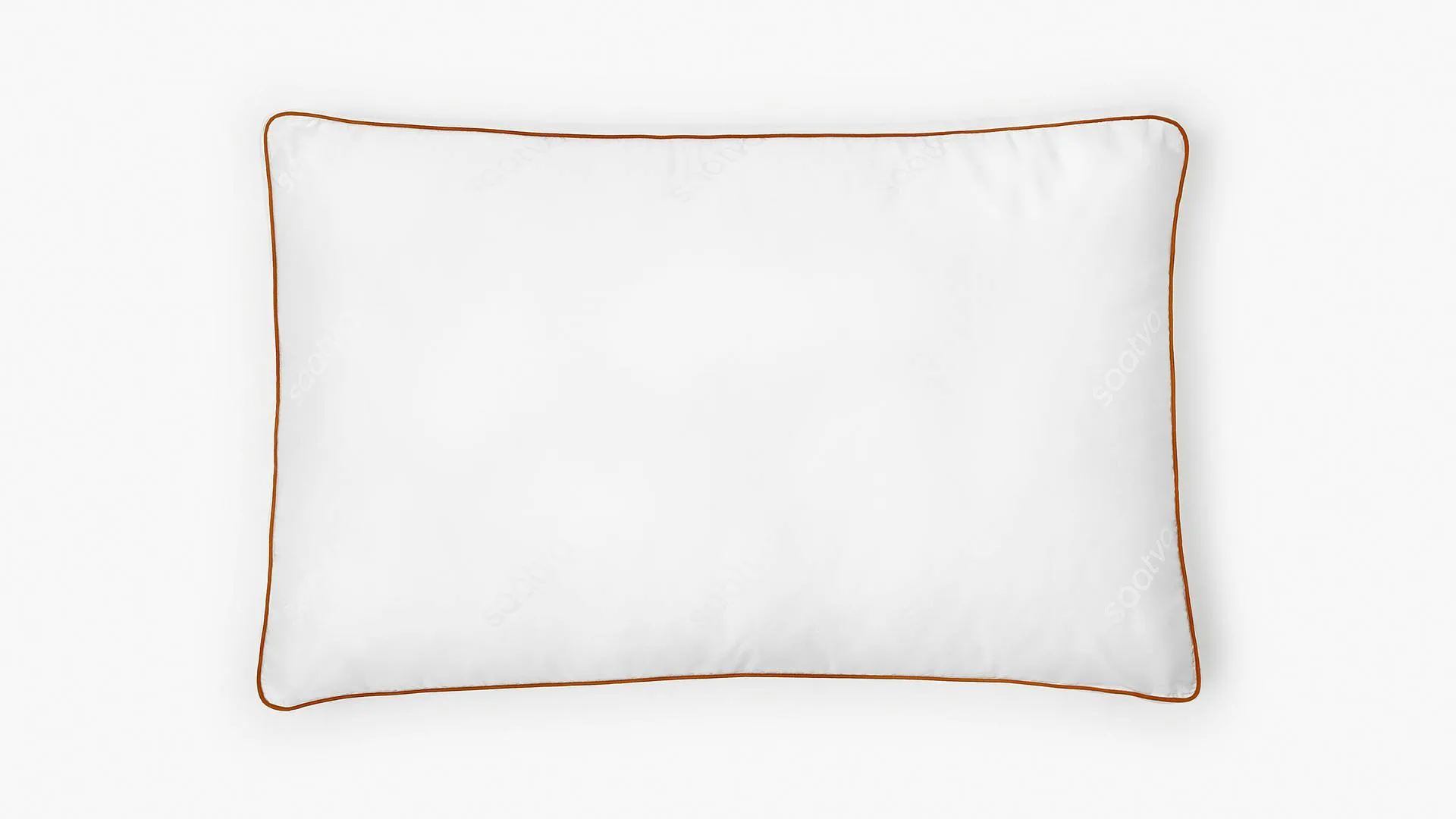
Why it wins: Adjustable loft, sleeps cool, works for all positions, clean company.
The Saatva uses shredded Talalay latex inside an organic cotton cover. You add or remove fill to set your own loft, which means one pillow works for side sleepers, back sleepers, and people between sizes. The latex breathes significantly better than memory foam, and the 45-night trial gives you time to dial in the fill level.
Test results: Morning stiffness averaged 1.5/10 after the adjustment period. Temperature was consistently cool. The pillow maintained its loft after 4 weeks with no visible compression. One tester noted that the shredded fill took about 3 nights to settle into a consistent shape, and after that the loft held steady without re-fluffing.
Who it is for: Most people. The adjustability makes it the safest choice if you are not sure what loft you need. Side sleepers, back sleepers, and combination sleepers all found a sweet spot by tweaking the fill.
Honest limitation: The pillow is large and takes up more space on the bed than a standard contour. If you share a queen bed and your partner sleeps close, the width might feel bulky.
Key specs: $165, 45-night trial, 5-year warranty.
2. Derila Ergo — Best Budget Cervical Pillow
Why it works: Firm contour holds the neck at an accessible price.
The Derila uses a fixed butterfly contour made of high-density memory foam. The raised side wings fill the shoulder-to-ear gap for side sleepers, and the central cradle supports back sleepers. At $35-50, it is the most affordable genuine ergonomic pillow we tested.
Test results: Morning stiffness averaged 2.0/10 for side sleepers, 2.5/10 for back sleepers. The pillow retained heat noticeably after 4 hours. Shape held firm throughout the test period. The foam density is higher than most pillows in this price range, which is why the support holds up even for testers over 180 pounds.
Who it is for: Side and back sleepers on a budget who match the target body type (under 200 lbs, shoulder width under 19 inches). If you are larger than that, the contour may not fill the gap properly.
Honest limitation: The butterfly shape is fixed, so you cannot adjust the loft. If the default height does not match your shoulder width, you are stuck. Also, the company behind Derila has an F BBB rating. Our Is Derila a scam investigation covers the BBB complaints, checkout issues, and return process reality.
Key specs: $35-50, 60-day trial, 2-year warranty. The promo rotates and multi-packs drop the per-pillow cost below $30.
3. Coop Home Goods Eden — Best Adjustable
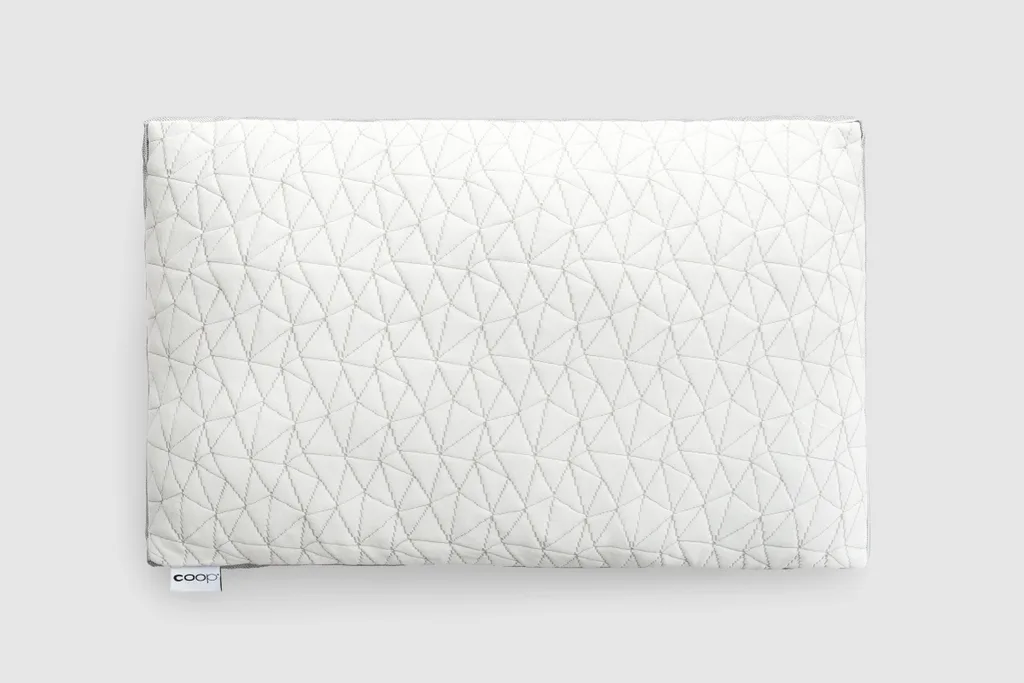
Why it works: You control the loft precisely, 365-night trial.
The Coop Eden uses a blend of cross-cut memory foam and microfiber fill. A bag of extra fill ships with the pillow, so you can add or remove material to dial in the exact loft. The 365-night trial is the longest in this group.
Test results: Morning stiffness averaged 1.8/10 once the loft was dialed in. The shredded fill shifts during the night, which means occasional re-fluffing. Temperature was neutral, slightly warmer than the Saatva but cooler than the Derila. One tester found that removing about a third of the fill brought the loft down to the perfect back-sleeping height.
Who it is for: People who want to experiment with loft settings, or anyone whose needs change between side and back sleeping. The extra fill bag means you can share the pillow with a partner and let each person customize their side.
Honest limitation: The pillow starts overstuffed. You will need to remove fill on day one or your head will sit too high. It also takes up more room than a standard pillow because of the generous fill volume.
Key specs: $65-99, 365-night trial, 5-year warranty.
4. Tempur-Pedic TEMPUR-Neck — Best Premium Contour

Why it works: Proven TEMPUR material, available in-store for testing.
The TEMPUR-Neck uses Tempur-Pedic’s proprietary memory foam, which conforms more precisely than generic foam. The contour shape is similar to the Derila but with a more refined material. Available at Sleep Country and other retailers for in-store testing.
Test results: Morning stiffness averaged 1.6/10. The material responded to body heat more quickly than the Derila’s foam, reaching conforming temperature within 30 minutes. Heat retention was moderate. The pillow held its shape perfectly after 6 weeks with zero flattening, which outperformed every other contour pillow in the test.
Who it is for: People who want the “held in place” contour feel and prefer to test in-store before buying. Also a strong pick for back sleepers with narrow shoulders who find most contour pillows too wide.
Honest limitation: At $130-200, it is the most expensive contour pillow here, and you cannot adjust the loft. The firmness is also quite high, which some testers found uncomfortable during the first week.
Key specs: $130-200, available in-store, 5-year warranty.
5. Purple Harmony — Best Cooling
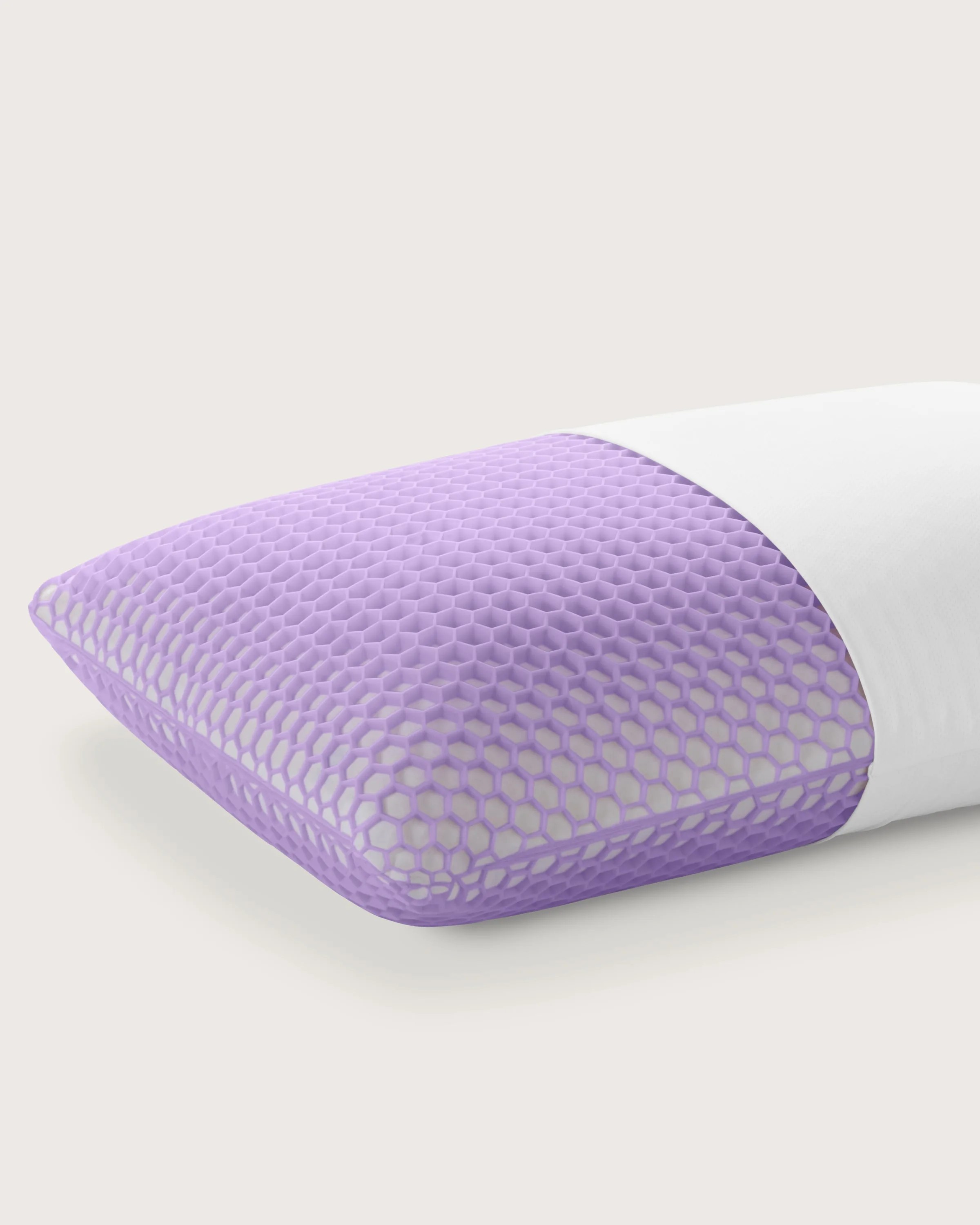
Why it works: GelFlex Grid plus Talalay latex creates maximum airflow.
The Purple Harmony combines a grid-shaped GelFlex Grid layer with a Talalay latex core. The grid creates air channels in all directions. The pillow bounces back instantly, which is very different from the slow-response feel of memory foam.
Test results: Morning stiffness averaged 2.2/10. Temperature was the coolest in the entire test group. The responsive feel took adjustment for testers used to memory foam. One tester who usually runs hot reported sleeping through the night without waking up to cool down, which had not happened with any other pillow in the test.
Who it is for: Hot sleepers who need maximum cooling, people who toss and turn frequently. Also good for people who hate the “sinking into quicksand” feeling of memory foam.
Honest limitation: The responsive bounce means your head does not settle into a fixed position the way it does on memory foam. Some testers preferred that, but others found it less stable for neck support. The 1-year warranty is also the shortest on this list.
Key specs: $179-219, 100-night trial, 1-year warranty.
6. LunaNest Ergonomic Pillow — Best Newcomer
Why it works: Dual-height contour with arm support zones.
The LunaNest offers two loft heights in one pillow, with a lower section for back sleeping and raised wings for side sleeping. Arm support cutouts reduce compression when you tuck your hand under the pillow.
Test results: Morning stiffness averaged 2.3/10. The dual-height design worked well for combination sleepers. Build quality was good but the foam felt slightly less dense than the Derila. After 4 weeks, the foam showed mild compression on the side where one tester’s head rested most frequently.
Who it is for: Combination sleepers who switch positions frequently. The arm cutouts are genuinely useful for people who sleep with a hand under the pillow.
Honest limitation: The foam density is lower than the Derila and Tempur-Pedic, so heavier sleepers (over 200 lbs) may find it compresses too much over time. No extended trial period to test durability.
Key specs: $45-65, 30-day trial, 1-year warranty.
7. Groove Pillow — Best for Chronic Neck Pain
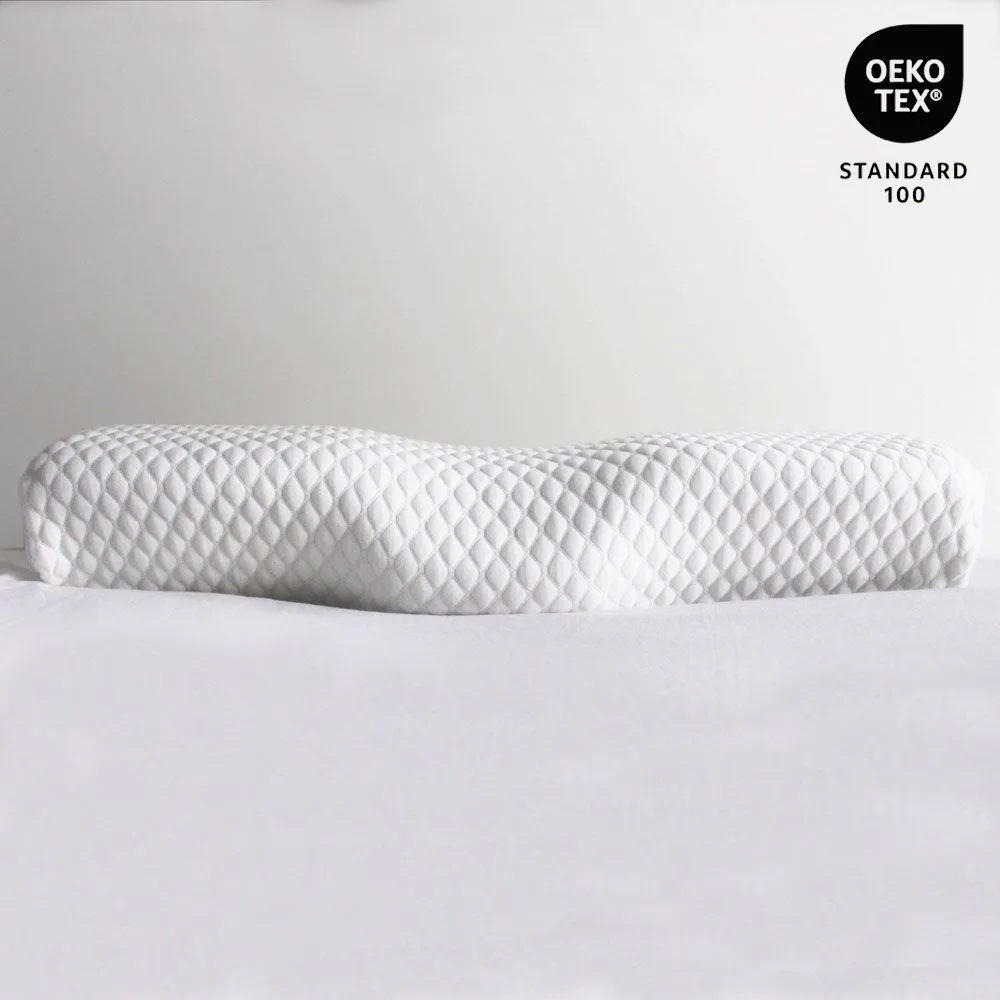
Why it works: Cervical dip designed specifically for neck pain anatomy.
The Groove Pillow has an ergonomic dip in the center that cradles the neck when back sleeping, plus raised lateral sides for side sleeping. The bamboo charcoal memory foam is antimicrobial and odor-resistant.
Test results: Morning stiffness averaged 1.9/10 for back sleepers. The cervical dip was noticeably more comfortable for back sleeping than the Derila’s flat central cradle. Side sleeping support was adequate but not as strong as the Derila’s raised wings. The bamboo charcoal helped with odor, which matters if you tend to sweat at night.
Who it is for: Back sleepers with chronic neck pain who need targeted cervical support. The dip physically holds the neck curve in place, which is harder to misalign than a flat surface.
Honest limitation: Side sleepers will not get the same benefit from this pillow. The dip is designed for back sleeping, and using it on your side means your head sits on the raised edge, which is fine but not optimized for that position.
Key specs: $80-100, 30-night trial, 2-year warranty.
8. LUMANA Relief Pro — Best Budget All-Rounder
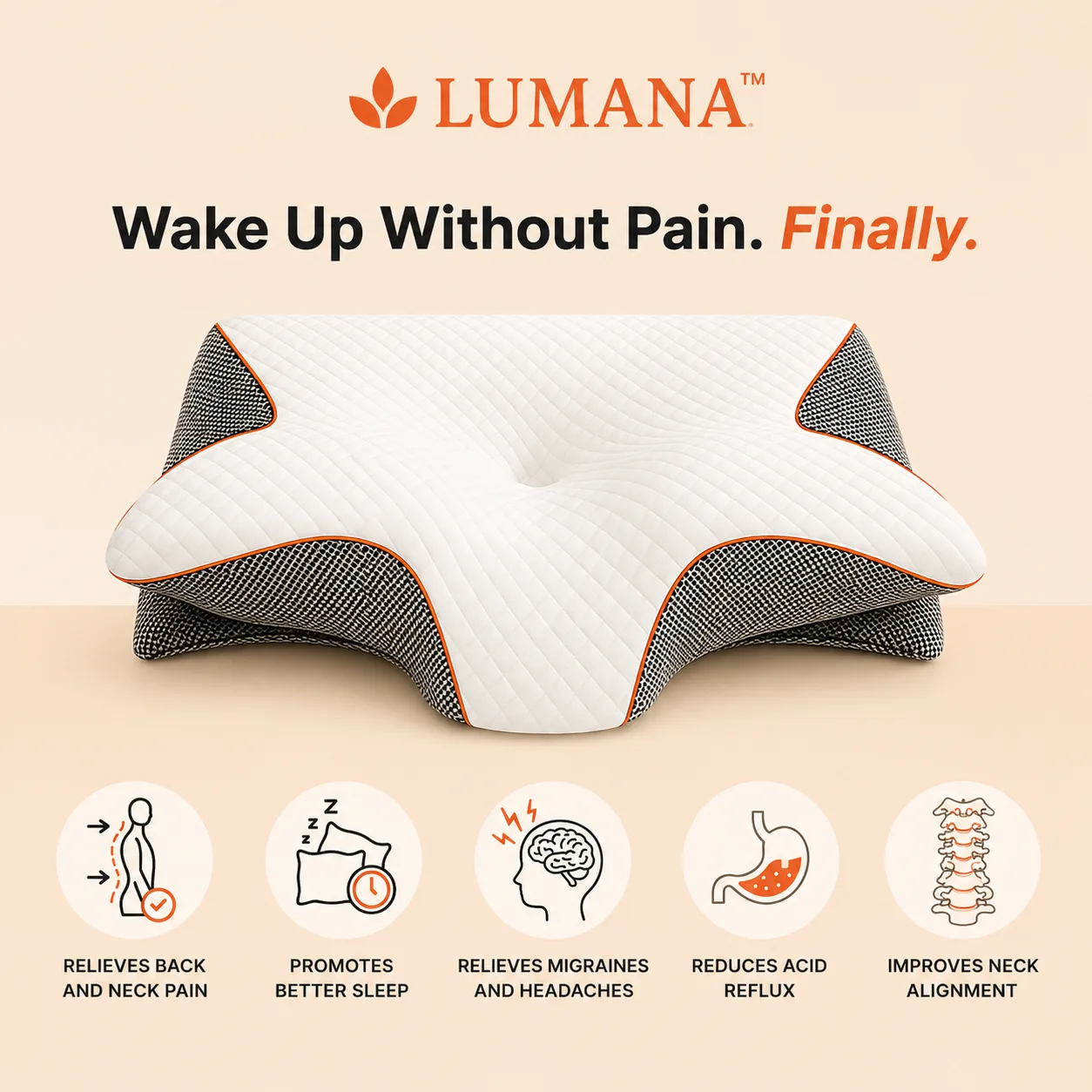
Why it works: Affordable ergonomic contour with dual-height design.
The LUMANA offers a similar butterfly contour to the Derila at a comparable price point, with the addition of a second height option. The foam is CertiPUR-US certified and the cover is removable and washable.
Test results: Morning stiffness averaged 2.8/10. The foam was noticeably softer than the Derila, which reduced support for heavier sleepers but felt more comfortable for lighter testers. The dual-height option is a genuine advantage over the Derila, giving you two loft settings without buying a second pillow.
Who it is for: Budget buyers who want a contour pillow without the Derila company concerns. The CertiPUR-US certification and washable cover are nice extras at this price.
Honest limitation: The softer foam means less support for people over 170 pounds. The contour shape is also less defined than the Derila, so the neck-cradling effect is subtler.
Key specs: $40-55, 30-day trial, 1-year warranty.
Product Comparison Table
| Factor | Saatva Latex | Derila Ergo | Coop Eden | Tempur-Pedic | Purple Harmony | LunaNest | Groove Pillow | LUMANA |
|---|---|---|---|---|---|---|---|---|
| Price | $165 | $35-50 | $65-99 | $130-200 | $179-219 | $45-65 | $80-100 | $40-55 |
| Loft | Adjustable | Fixed (~4”) | Adjustable | Fixed (~3.5”) | Fixed (~4.5”) | Dual-height | Fixed (~3.5”) | Dual-height |
| Material | Talalay latex | Memory foam | Memory foam + microfiber | TEMPUR foam | GelFlex Grid + latex | Memory foam | Bamboo charcoal foam | Memory foam |
| Cooling | Cool | Warm | Neutral | Moderate | Coolest | Neutral | Neutral | Warm |
| Trial | 45 nights | 60 nights | 365 nights | In-store | 100 nights | 30 nights | 30 nights | 30 nights |
| Warranty | 5 years | 2 years | 5 years | 5 years | 1 year | 1 year | 2 years | 1 year |
| Best For | Most people | Budget side/back | Loft tuners | Premium contour | Hot sleepers | Combo sleepers | Chronic pain | Budget contour |
How to Choose: Decision Flow
Not sure which pillow to pick? Follow the path that matches your situation.
- Hot sleeper? Start with the Purple Harmony. It runs the coolest by a wide margin, and the responsive feel is worth adjusting to if temperature is your priority.
- On a budget under $50? The Derila Ergo gives you the most neck support per dollar. Read the BBB section first so you know what you are getting into with the company.
- Want to experiment with loft? The Coop Eden ships with extra fill and a 365-night trial. You have a full year to dial in the exact height.
- Back sleeper with chronic neck pain? The Groove Pillow has a cervical dip that physically cradles the neck curve. It is purpose-built for this.
- Combination sleeper who switches positions? The LunaNest gives you two loft heights in one pillow, and the arm cutouts reduce hand numbness.
- Want to test before you buy? The Tempur-Pedic TEMPUR-Neck is available at Sleep Country and other retailers. You can lie on it in the store.
- Just want the safest bet overall? The Saatva Latex is adjustable, cool, and backed by a 45-night trial. Hard to go wrong.
- Already tried a few pillows and nothing works? Consider seeing a doctor first. A pillow improves posture-related stiffness but cannot fix disc problems or nerve compression.
When to See a Doctor
A pillow can improve posture-related neck stiffness. It cannot fix a medical condition. If you experience persistent neck pain that does not improve after 2 weeks with a new pillow, or if you have numbness, tingling, or radiating pain down your arm, see a doctor. These can be signs of cervical disc problems, nerve compression, or other conditions that need medical treatment.
For the complete test data on the Derila, check our Derila pillow review.
FAQ
What loft is best for neck pain? Side sleepers need 4-6 inches to fill the shoulder-to-ear gap. Back sleepers need 3-4 inches to maintain the natural neck curve. Stomach sleepers should use a thin pillow or none at all. Adjustable pillows let you dial in the exact height, which is the safest approach if you are unsure.
Memory foam or latex for neck pain? Memory foam conforms slowly and holds your head in place, which helps with neck alignment. It retains heat though. Latex sleeps cooler and bounces back faster, which is better for people who move around at night. For pure neck support, both work well. Your choice comes down to temperature preference and whether you like a slow-response or fast-response feel.
How often should I replace my pillow? Every 2-3 years for memory foam pillows, every 3-5 years for latex. If your pillow flattens overnight, takes more than a minute to spring back when you fold it, or has visible lumps, replace it sooner. A pillow that no longer holds shape does not support your neck.
Can a pillow fix cervical spondylosis? No. A pillow can improve posture-related stiffness and reduce strain on the cervical spine. Cervical spondylosis is age-related wear on the vertebrae and discs. A pillow helps with alignment but does not reverse the degeneration. If you have been diagnosed with spondylosis, use a pillow that supports neutral alignment and talk to your doctor about additional treatment.
Is a firm pillow better for neck pain? Not always. A pillow that is too firm pushes your head up and creates pressure points. Medium-firm is the sweet spot for most people. The right firmness depends on your sleep position, body weight, and shoulder width. Side sleepers generally need firmer support. Back sleepers do better with medium.
What if I sleep on my stomach? Stomach sleeping is the worst position for neck pain. Your head turns to one side for hours, twisting the cervical spine. If you cannot change positions, use the thinnest pillow you can find or sleep without one. A pillow under your pelvis can also help flatten the spine and reduce lower back strain.
Do contour pillows really work? Yes, but only if the contour shape matches your body. A contour pillow with raised wings works well for side sleepers who need to fill the shoulder gap. A cervical dip works well for back sleepers who need neck cradling. The wrong contour can make things worse, which is why adjustable pillows like the Saatva and Coop Eden are safer first picks.
How long before I see improvement? Most people notice a difference within 3-7 days. Your neck muscles need time to adjust to the new support. If you do not see improvement after 2 weeks, the pillow is likely the wrong loft or firmness for your body. Give each pillow at least 14 nights before deciding.
Should I see a doctor instead? If your neck pain includes numbness, tingling, or pain radiating down your arm, see a doctor before buying a pillow. These symptoms can indicate nerve compression or disc problems that a pillow cannot fix. A physical therapist can also help you identify whether your neck pain is posture-related or structural.
Frequently Asked Questions
What loft is best for neck pain?
Is memory foam or latex better for neck pain?
How often should I replace my pillow?
Can a pillow fix cervical spondylosis?
Is a firm pillow better for neck pain?
What if I sleep on my stomach?
Do contour pillows really work?
How long before I see improvement?
Should I see a doctor instead?
Dr. Sarah Kim
Health tech researcher and wellness gadget reviewer. PhD in Biomedical Engineering. Tests sleep trackers, massage devices, and health monitors with clinical precision. Believes in data-driven wellness.
Affiliate disclosure:This article contains affiliate links. If you buy through them, GearPuff may earn a commission at no extra cost to you. It keeps our testing independent and our reviews free.