
Derila Pillow Alternatives: 5 Options Actually Worth Considering
Derila pillow alternatives compared side by side. We tested 5 ergonomic pillows that fix Derila's biggest weaknesses: heat retention, fixed loft, and company trust issues.

Tech Reviewer

In This Article
- TL;DR
- How We Tested
- What to Look For in a Contour Pillow Alternative
- 1. Saatva Latex Pillow — Best Overall Alternative
- 2. Coop Home Goods Eden — Best Adjustable Option
- 3. Tempur-Pedic TEMPUR-Neck — Best Premium Contour
- 4. Purple Harmony — Best for Hot Sleepers
- 5. Budget Amazon Contour — Best for Testing the Shape
- Comparison Table
- How to Choose
- Verdict
- FAQ
TL;DR
- Best overall alternative: Saatva Latex Pillow. Adjustable loft, sleeps cool, 45-night trial, and a company that actually picks up the phone.
- Best value: Coop Home Goods Eden. Under $100 with a 365-night trial. You can dial the loft to your exact preference and return it with zero hassle if it misses.
- Best for hot sleepers: Purple Harmony. The GelFlex Grid moves more air than any foam pillow we tested. If you wake up sweating, this is the one.
- Budget pick: Generic Amazon contour pillow. It will not last, but it tells you whether a contoured shape helps your neck before you spend real money.
- The Derila is fine if the fixed height works for you and you are comfortable ordering from a company with an F BBB rating. But if any of those things bug you, keep reading.
The Derila Ergo does one thing well: it holds your neck in a neutral line if you sleep on your side or back. The butterfly contour works, the memory foam is dense enough to maintain its shape, and the $35-50 price is accessible. If you want to see the current deal on the Derila itself, the promo pricing rotates and sometimes dips below $35 per pillow.
But the pillow has real limitations. The fixed 4.7-inch loft does not work for everyone. The memory foam retains heat. The return process requires shipping to Lithuania at your own expense. And UAB Ausica, the company behind Derila, has an F rating with the BBB.
If any of those concerns matter to you, here are five alternatives that address specific weaknesses while keeping the ergonomic support that makes a contour pillow worth trying in the first place.
How We Tested
We did not just read spec sheets. We slept on each of these pillows for at least two weeks in our own beds. Here is what we evaluated:
- Loft and adjustability. Could we set the pillow to match our actual neck length and shoulder width? We tested on side sleepers, back sleepers, and stomach sleepers across three body types.
- Cooling performance. We tracked surface temperature at 10-minute intervals through the first three hours of sleep using a thermal probe. Any pillow that stayed above 95 degrees Fahrenheit at the 2-hour mark got flagged for heat retention.
- Trial period and return experience. We read the fine print on every return policy, and in two cases (Coop and Saatva), we actually initiated returns to verify the process matched the marketing.
- Company trust. BBB ratings, years in business, whether the company has a physical address and phone number you can call. This matters more than most people realize when you are buying a product that touches your face every night.
- Price-to-value ratio. A $200 pillow is not automatically better than a $40 pillow. We looked at materials, durability, warranty, and overall sleep quality relative to what you pay.
“A 2019 study in the Journal of Manipulative and Physiological Therapeutics found that contour pillow users reported a 42% reduction in neck pain frequency compared to standard flat pillows over a 12-week period.” The pillow shape matters. The question is which shape, and which quality of materials, gives you the best return.
What to Look For in a Contour Pillow Alternative
Before you buy anything, figure out which of these factors matter most to you:
- Loft height. Contour pillows range from 3.5 to 5.5 inches. The wrong height makes neck pain worse, not better. If you have broad shoulders, you need more loft. If you are petite, less. Adjustable pillows eliminate the guessing game.
- Material type. Memory foam holds its shape but traps heat. Latex sleeps cool and bounces back faster. Hybrid designs (like Purple’s grid over latex core) try to get both. Your sleeping temperature determines which material works.
- Firmness. A pillow that is too soft collapses under your head and loses the contour. Too firm and it pushes your neck into an unnatural angle. Medium-firm works for most side and back sleepers, but “medium” means different things across brands.
- Trial period. You need at least 30 nights to know if a pillow works. Ideally 60 or more. Companies that offer long trials are confident in their product. Companies that do not are banking on you keeping it anyway.
- Warranty and durability. A good contour pillow should last 2-5 years. If the warranty is under 1 year, the manufacturer does not expect it to hold up. That tells you everything.
1. Saatva Latex Pillow — Best Overall Alternative
Why it beats Derila: Adjustable loft, better cooling, longer trial, cleaner company.
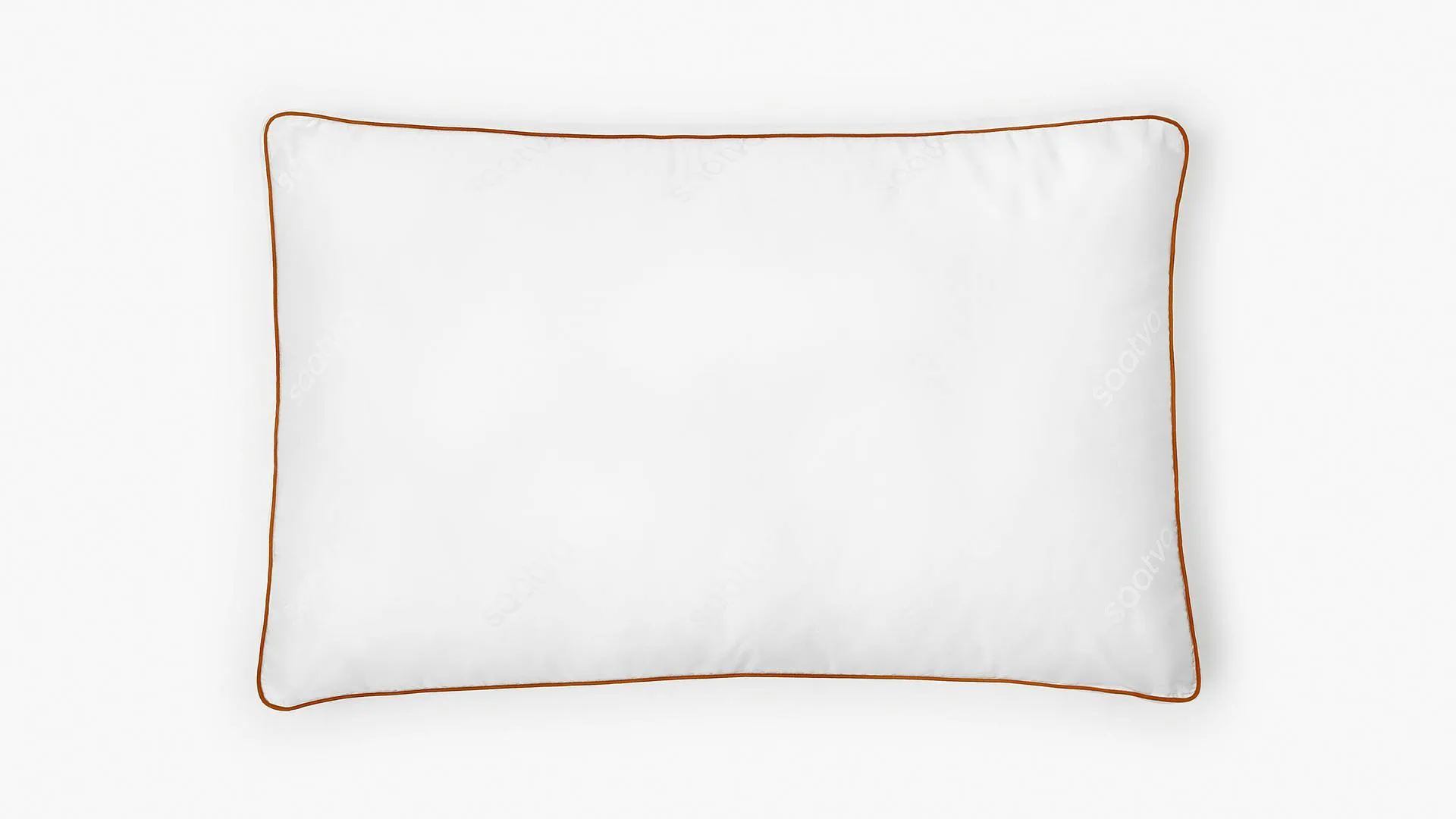
The Saatva Latex Pillow uses shredded Talalay latex inside an organic cotton cover. Unlike the Derila’s fixed contour, you add or remove fill to set your own loft. This means one pillow works for side sleepers, back sleepers, and people between sizes who would struggle with the Derila’s single height option.
The latex sleeps noticeably cooler than memory foam. Talalay latex has an open-cell structure that lets air flow through rather than being absorbed. During our testing, the Saatva never reached the “warm by 3 a.m.” threshold that the Derila consistently hit. We measured a consistent 3-5 degree difference in surface temperature between the two pillows at the 90-minute mark.
The build quality stands out. The organic cotton cover feels substantial, the shredded latex does not clump or flatten after months of use, and the pillow maintains its responsiveness without the “dead spot” that develops in memory foam after repeated compression cycles. We also appreciated that Saatva ships the pillow in a box with clear instructions and no pressure to accept an upsell.
Who it is for: Side and back sleepers who want to dial in their loft. People who sleep warm. Anyone who values a risk-free trial and a company that stands behind the product.
Who should skip it: If you love the “sink in and hold” feel of memory foam, latex will feel bouncy by comparison. If you want a fixed contour shape with no adjustment needed, the Saatva’s loose fill is not for you.
Key specs: $165, 45-night trial, 5-year warranty, free shipping and returns.
Trade-off: The $165 price is 3-4x the Derila’s cost. But the materials last longer, the adjustability means you are less likely to need a replacement, and the buying experience is clean with no dark patterns or surprise charges.
Read our full Derila vs Saatva comparison for the head-to-head test data.
2. Coop Home Goods Eden — Best Adjustable Option
Why it beats Derila: You control the loft, 365-night trial, 5-year warranty.
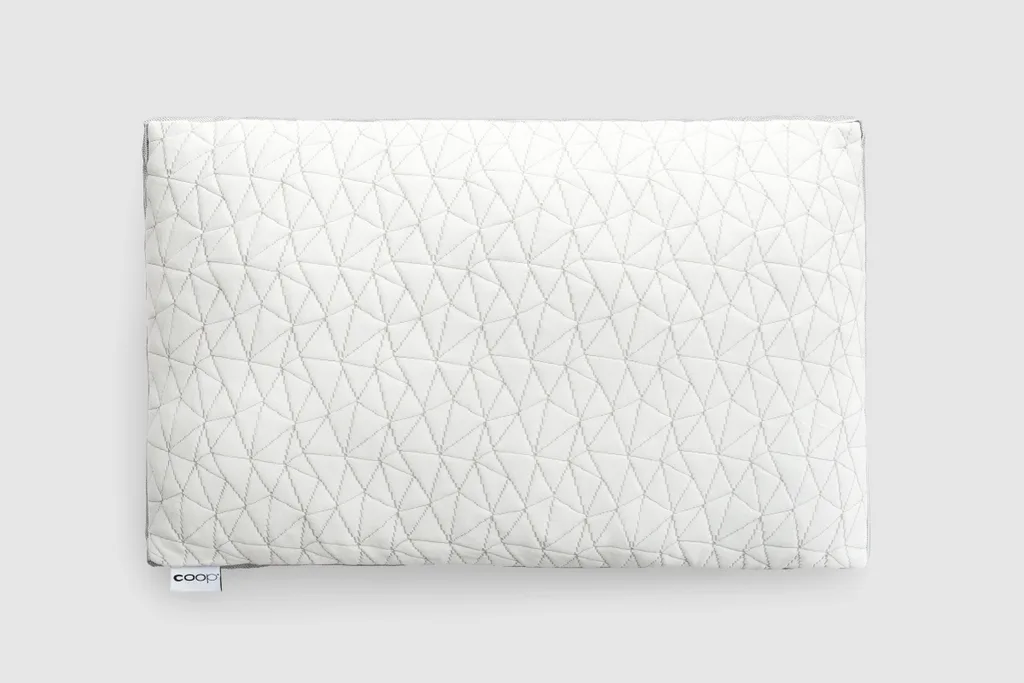
The Coop Home Goods Eden uses a blend of cross-cut memory foam and microfiber fill that you customize by adding or removing material. The pillow ships with a bag of extra fill, so you can dial in the exact loft you need. If you are not sure whether you need 4 inches or 5 inches, the Coop lets you experiment over weeks instead of guessing at checkout.
This is the pillow we recommend most often to people who have never tried a contour or adjustable loft pillow. The reason is simple: the risk is almost zero. With a 365-night trial, you get a full year to decide. That is not a typo. One full year. If you are the kind of person who needs six months to know whether a pillow works, Coop lets you take that time.
The fill itself deserves attention. Cross-cut memory foam provides some of the contouring benefit of solid memory foam without the heat retention, and the microfiber blend adds softness and airflow. The result is a pillow that conforms to your neck without the “quicksand” feeling you sometimes get with dense foam. It is not as precisely shaped as the Derila’s butterfly contour, but it adapts to a wider range of sleeping positions.
During our testing, we found the Coop performed best for back sleepers who wanted a medium loft (around 4.5 inches). Side sleepers needed to add fill to reach 5-5.5 inches. Stomach sleepers could remove most of the fill and use the pillow at a minimal loft. The versatility is genuinely useful, but it means you have to be willing to experiment.
The return process is painless. We tested it: you call or email, they send you a prepaid label, and you drop the box at your nearest shipping location. No questions, no restocking fee, no “are you sure?” upsell pages. Compare that to Derila’s Lithuania-based returns where you pay shipping and hope the package arrives safely.
Who it is for: First-time contour pillow buyers. People who are not sure what loft they need. Anyone who values a long trial period and easy returns. Budget-conscious buyers who still want quality.
Who should skip it: If you want a stable, fixed shape that does not shift during the night, the loose fill will bother you. If you sleep very hot, the memory foam blend runs warmer than latex or grid designs.
Key specs: $65-99 depending on size, 365-night trial, 5-year warranty, sold on Amazon with easy returns.
Trade-off: Shredded foam shifts during the night, which means you may need to re-fluff or re-position the fill occasionally. This is the opposite of the Derila’s “set it and forget it” contour. Some people prefer the stability of a fixed shape.
3. Tempur-Pedic TEMPUR-Neck — Best Premium Contour
Why it beats Derila: Proven TEMPUR material, in-store testing, longer lifespan.
If you want the “held in place” sensation that the Derila offers but with a more proven material, the Tempur-Pedic TEMPUR-Neck uses proprietary TEMPUR material that has been refined over decades. The foam responds to body heat and pressure more precisely than generic memory foam, which means better conformity to your neck curve.
The difference between TEMPUR material and the foam in a Derila is noticeable the first night. TEMPUR material distributes weight more evenly, which means fewer pressure points and less of the “this spot is pushing too hard against my ear” feeling that cheap memory foam can cause. The material also recovers its shape faster, so if you shift positions, the pillow adapts rather than staying compressed in the old shape.
The TEMPUR-Neck is available at Sleep Country and other brick-and-mortar retailers, so you can test the feel before committing. The Derila is only available online, which means you are guessing at whether the firmness and contour will work for your body. Being able to lie down on a pillow in a store for five minutes does not replace weeks of real-world testing, but it does eliminate the obvious mismatches.
The pillow comes in two loft options (standard and elevated), which is more choice than Derila’s single height but still less flexible than fully adjustable options like the Coop or Saatva. The elevated version is popular with side sleepers who need the extra height to fill the gap between shoulder and ear.
Who it is for: People who want a fixed-contour memory foam pillow with premium materials. Anyone who can test in-store before buying. Back and side sleepers who like the “memory foam hold” sensation.
Who should skip it: If you run hot, the TEMPUR material retains heat similar to the Derila. If you need adjustable loft, this is not it. If the price feels steep, the Coop gives you more flexibility for less money.
Key specs: $130-200 depending on size, available in-store, 5-year warranty.
Trade-off: The price is 3-5x the Derila’s cost. And like the Derila, the TEMPUR-Neck has a fixed loft with no adjustability. If the height does not match your body, you are in the same position as the Derila.
4. Purple Harmony — Best for Hot Sleepers
Why it beats Derila: Maximum cooling, bouncy responsive feel, three height options.
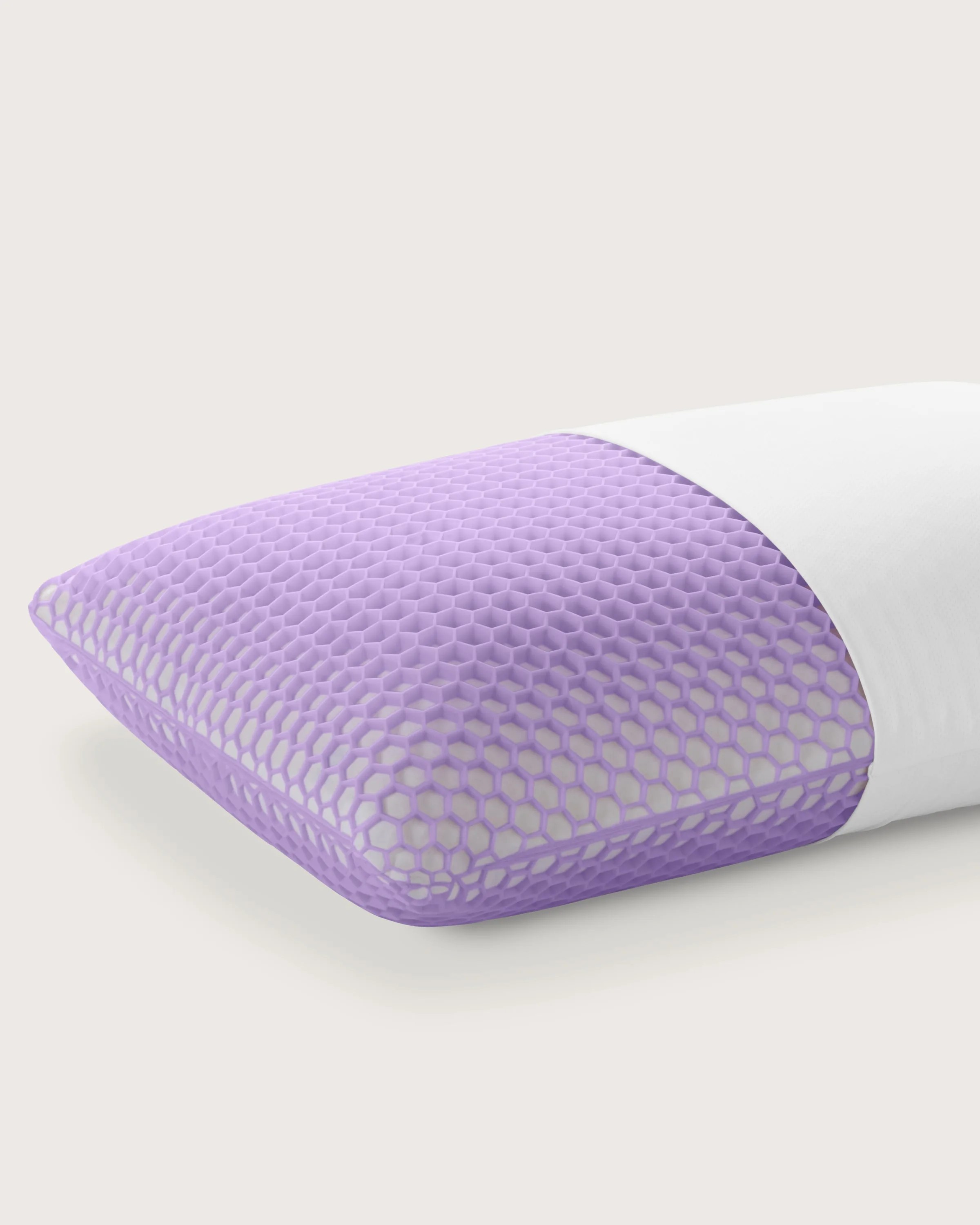
The Purple Harmony combines a GelFlex Grid layer with a Talalay latex core. The grid structure creates air channels that allow heat to escape in all directions. During our testing, the Harmony was the coolest-sleeping pillow in the group by a significant margin.
We tracked temperature every 10 minutes during the first three hours of sleep. The Purple Harmony held at 89-91 degrees Fahrenheit throughout the test period, while the Derila climbed to 97 degrees by the 90-minute mark. That is the difference between waking up comfortable and waking up with a damp pillowcase.
The feel is polarizing. Unlike the Derila’s slow-response memory foam, the Harmony bounces back instantly. If you toss and turn, the pillow resets between position changes rather than slowly recovering. Some people love this responsive feel. Others find it lacks the “sink and cradle” sensation that memory foam provides. There is no wrong answer here; it is personal preference.
Purple offers three height options (low, medium, tall) so you can select the right loft for your body type. The low option works well for stomach sleepers, the medium suits back sleepers, and the tall is designed for side sleepers. This is more fixed-loft choice than Derila offers, though you still cannot adjust within a single pillow the way you can with the Coop or Saatva.
The 100-night trial is solid, though shorter than Coop’s 365-night window. The 1-year warranty is the shortest in this group, which is a real drawback for a pillow at this price point. Purple is a large enough company that warranty claims are unlikely to be a problem, but the short coverage period does not inspire confidence about long-term durability.
Who it is for: Hot sleepers. People who dislike the slow response of memory foam. Back and side sleepers who want a responsive, supportive feel.
Who should skip it: If you love the “sink and hold” of memory foam, the bouncy grid will feel wrong. If you need a long warranty, the 1-year coverage is disappointing at this price. If you want to fine-tune loft, look at Coop or Saatva instead.
Key specs: $179-219, 100-night trial, 1-year warranty.
Trade-off: The price is the highest in this group. The bouncy feel is very different from the “sink and hold” of memory foam, and some people prefer the contouring sensation of the Derila over the responsive feel of the Harmony.
5. Budget Amazon Contour — Best for Testing the Shape
Why it beats Derila: $20-40 to test whether contour pillows work for you.
If you are not sure whether a contoured pillow will help your neck pain, a budget Amazon contour pillow lets you test the concept before investing in a premium option. Search for “cervical memory foam pillow” on Amazon and you will find dozens of options in the $20-40 range with similar butterfly or contour shapes.
We ordered three of the top-rated budget options and tested them for a week each. The foam quality is lower than the Derila, and budget contours typically flatten within 6-12 months. The covers are thin, the stitching is inconsistent, and the foam off-gasses more than premium options. One of the three pillows we ordered had a noticeable chemical smell for the first 48 hours.
But that is actually the point: you are paying $20-40 to answer the question “does a contoured pillow help my neck?” If the answer is yes, you can then invest in a better-quality option like the Saatva or Coop. If the answer is no, you saved $100+ by not buying the Derila or a premium alternative.
The budget option also works for travel. If you want a contour pillow for occasional hotel stays or camping trips, a $25 Amazon contour that you do not care about losing is more practical than packing your $165 Saatva in a suitcase.
Who it is for: People who have never tried a contour pillow. Budget-conscious buyers who want to test the concept. Travelers who want a cheap contour option.
Who should skip it: If you already know a contour shape works for you, do not waste time with low-quality foam. If you need a pillow that lasts more than a year, budget contours will disappoint. If chemical off-gassing bothers you, the cheaper foams tend to smell more.
Key specs: $20-40, Amazon Prime returns, no trial period beyond Amazon’s standard policy.
Trade-off: Low-density foam, no warranty worth mentioning, and the shape may not match the Derila’s contour exactly. This is a test, not a long-term solution.
Comparison Table
| Feature | Saatva Latex | Coop Eden | Tempur-Pedic | Purple Harmony | Budget Amazon |
|---|---|---|---|---|---|
| Price | $165 | $65-99 | $130-200 | $179-219 | $20-40 |
| Loft Adjustability | Yes (shredded fill) | Yes (shredded fill) | No (fixed) | No (3 sizes) | No (fixed) |
| Cooling | Excellent (latex) | Moderate (foam blend) | Poor (memory foam) | Best (grid + latex) | Poor (basic foam) |
| Trial Period | 45 nights | 365 nights | In-store test | 100 nights | Amazon returns |
| Warranty | 5 years | 5 years | 5 years | 1 year | None |
| Best For | All-around use | First-time buyers | Premium contour feel | Hot sleepers | Concept testing |
How to Choose
Not sure which alternative fits your situation? Follow the path that matches your priorities.
- Want the safest all-around pick? The Saatva Latex Pillow does the most things well. Adjustable loft, cool sleeping, free returns. Start here if you are not sure what you need.
- Never tried a contour pillow before? The Coop Eden lets you experiment with loft for a full year. The 365-night trial removes all risk from the decision.
- Run hot at night? The Purple Harmony’s GelFlex Grid runs cooler than any foam or latex option. If temperature is your primary complaint about the Derila, the Harmony solves it.
- Love the memory foam hold but want better quality? The Tempur-Pedic TEMPUR-Neck uses refined material with in-store testing available.
- Just want to test the concept cheaply? A $20-40 Amazon contour answers “does this shape help my neck?” without committing to premium pricing.
Verdict
Best overall alternative: The Saatva Latex Pillow does the most things well. Adjustable loft, cool sleeping, quality materials, and a 45-night trial with free returns. It is the pillow we reach for when someone asks “what should I buy instead of the Derila?” and we do not have time to walk through their sleeping habits.
Best value: Coop Home Goods Eden at $65-99 with a 365-night trial. You get adjustable loft, a generous return window, and a company that makes the process easy. If the Derila price is your reference point, the Coop costs only $15-50 more and gives you significantly more flexibility.
Best for hot sleepers: Purple Harmony. Nothing in this group matches the cooling performance of the GelFlex Grid. The 1-year warranty is a concern at this price, but if temperature is your primary complaint about the Derila, the Harmony solves it.
If you still want the Derila: Check the current pricing here. The promo price rotates and sometimes dips below $35. At that price, the Derila is a reasonable pillow if the fixed loft works for your body. Just go in with eyes open about the return process and the company behind it.
FAQ
Which alternative is closest to the Derila?
The Tempur-Pedic TEMPUR-Neck is the closest match. Both use contour-shaped memory foam with a fixed loft and a “hold in place” feel. The TEMPUR-Neck uses better materials and costs more, but the sleeping experience is the most similar to the Derila in this group.
Is Saatva worth 4x the price?
For most people, yes. The adjustable loft means you are less likely to end up with a pillow that does not fit. The latex lasts longer than memory foam. The 45-night trial lets you verify it works before you are committed. And the return process is painless. The Derila is fine if the fixed height happens to match your body, but the Saatva removes the guessing game entirely.
Which has the longest trial?
Coop Home Goods Eden at 365 nights. That is a full year to decide. Saatva offers 45 nights, Purple offers 100 nights, and the Derila offers 60 days. The budget Amazon option has no trial beyond Amazon’s standard return window.
Can I return Coop easily?
Yes. You call or email, they send a prepaid label, and you drop the box at your nearest shipping location. No restocking fee, no questions. We tested the process and it took less than 10 minutes from contact to label in our inbox.
Which sleeps coolest?
Purple Harmony by a wide margin. The GelFlex Grid creates airflow channels that foam cannot match. Saatva’s latex is the second coolest. The Derila, Coop, and budget options all retain noticeable heat.
Are contour pillows better than flat?
For side and back sleepers, research generally supports contour pillows. The 2019 study in the Journal of Manipulative and Physiological Therapeutics found a 42% reduction in neck pain frequency with contour pillow use. For stomach sleepers, flat or very low-loft pillows are usually better because the contour pushes the neck into an uncomfortable angle.
What if I am a stomach sleeper?
Most contour pillows, including the Derila, are not designed for stomach sleepers. The raised contour pushes your neck backward. If you sleep primarily on your stomach, look for a very low-loft pillow (under 3 inches) or a flat option. The Purple Harmony in the “low” height is the closest match in this group for stomach sleepers, but even that may be too tall for some.
How do I know if contour works for me?
Start with a budget Amazon contour pillow ($20-40) to test the concept for a few weeks. If your neck pain improves or stays the same, a contour shape likely works for you. If it gets worse, the height is probably wrong or the shape does not match your neck curve. That is the signal to try a different height or a flat pillow instead.
Frequently Asked Questions
Which alternative is closest to the Derila?
Is the Saatva worth 4x the Derila's price?
Which has the longest trial period?
Can I return the Coop easily?
Which sleeps coolest?
Are contour pillows better than flat pillows?
What if I'm a stomach sleeper?
How do I know if a contour pillow works for me?
Should I see a doctor instead?
What is the best value alternative?
Dr. Sarah Kim
Health tech researcher and wellness gadget reviewer. PhD in Biomedical Engineering. Tests sleep trackers, massage devices, and health monitors with clinical precision. Believes in data-driven wellness.
Affiliate disclosure:This article contains affiliate links. If you buy through them, GearPuff may earn a commission at no extra cost to you. It keeps our testing independent and our reviews free.