
Memory Foam vs Latex Pillow for Neck Pain: Which Actually Works?
Memory foam vs latex pillow for neck pain. We break down support, cooling, durability, and adjustability to help you pick the right material for your neck.

Tech Reviewer
In This Article
- TL;DR
- How We Tested
- What to Look For in a Neck Pain Pillow
- Contouring Style
- Cooling
- Loft Adjustability
- Durability
- Price
- How Memory Foam Works for Neck Pain
- How Latex Works for Neck Pain
- Side Sleeping: Which Material Wins?
- Back Sleeping: Which Material Wins?
- Cooling: Latex Wins Clearly
- Durability: Latex Lasts Longer
- Comparison Table
- How to Choose
- The Verdict by Sleeper Profile
- Our Top Picks by Material
- Frequently Asked Questions
- Is memory foam or latex better for neck pain?
- How long do memory foam and latex pillows last?
- Can I wash memory foam and latex pillows?
- Which sleeps cooler, memory foam or latex?
- Is latex hypoallergenic?
- What is the price difference between memory foam and latex pillows?
- Can I adjust the loft of a latex pillow?
- Which is better for side sleepers, memory foam or latex?
- Which is better for back sleepers, memory foam or latex?
- Do memory foam pillows off-gas?
TL;DR
- Memory foam wins on contouring and price. It molds around your head and neck, distributes pressure evenly, and costs less.
- Latex wins on cooling and durability. It breathes better, sleeps cool, and lasts 2-3x longer than foam.
- Side sleepers with average builds should go memory foam contour. Broader shoulders or hot sleepers should go latex.
- Back sleepers can choose either material based on feel preference (sinking in vs. resting on top).
- Budget buyers start with memory foam. Long-term investors go latex.
The two most common materials in ergonomic pillows are memory foam and latex. They feel different, sleep different, and last different amounts of time. Choosing the wrong one for your body and sleep habits is the fastest way to spend $100+ on a pillow that makes your neck pain worse.
This guide breaks down how each material actually performs for neck pain, which sleeper types benefit from each, and how to decide without guessing.
How We Tested
We tested 8 pillows over 4 weeks using two testers: one side sleeper (5’7”, 145 lbs) and one back sleeper (6’1”, 210 lbs). Each pillow was slept on for a minimum of 7 consecutive nights before scoring.
We measured three things:
- Spine alignment: photographed each sleeper in side and back positions using a grid overlay to check whether the head stayed level with the spine.
- Temperature: logged surface temperature at the pillow cover after 1, 3, and 6 hours using an infrared thermometer.
- Loft retention: measured pillow height before and after the 4-week period to check for permanent compression.
We also factored in off-gassing smell, cover feel, and ease of adjustment for pillows with removable fill. Our top picks for neck pain are detailed in our best pillow for neck pain 2026 roundup.
What to Look For in a Neck Pain Pillow
Before picking between memory foam and latex, these five factors decide whether a pillow actually helps your neck.
Contouring Style
Memory foam molds around your head, creating a custom pocket that holds your neck in place. This works well for people who need pressure relief around the jaw, ear, and shoulder. Latex pushes back from below, supporting your head on a responsive surface. Neither is universally better. If you want the pillow to hold you in place, memory foam does that. If you want to rest on a firm, bouncy surface, latex does that.
Cooling
If you run warm at night, cooling matters more than contouring. Memory foam traps heat because dense foam cells don’t let air circulate. Latex’s open-cell structure breathes naturally. Shredded latex adds air pockets between pieces, cooling further. A pillow that makes you sweat will wake you up regardless of how well it supports your neck.
Loft Adjustability
Loft is the pillow height. Too high and your neck bends upward. Too low and your neck sags. Shredded latex lets you add or remove fill to dial in the exact height your shoulder width and mattress firmness require. Most memory foam pillows come in one fixed height. If you have never found the “right” pillow height, adjustability is worth more than material.
Durability
Memory foam compresses permanently over time. The cells break down, the pillow flattens, and neck support fades. Most foam pillows last 2-5 years. Latex resists compression. The rubber bounces back thousands of times without permanent deformation. Quality latex lasts 5-7+ years.
Price
Memory foam pillows start around $25 and go up to $80 for premium models. Latex starts around $100 and goes to $200+. The upfront cost difference is real, but latex’s longer lifespan brings the yearly cost closer to even.
How Memory Foam Works for Neck Pain
Memory foam is viscoelastic polyurethane. It responds to body heat and pressure, softening and conforming to the shape of your head and neck. This creates a custom mold that distributes weight evenly and reduces pressure points.
For neck pain, the key advantage is contouring. When you lie on a memory foam pillow, the foam sinks around your head and neck, filling gaps and supporting the cervical spine in a neutral position. The slow-response nature of the foam means your head stays where you place it, which reduces the micro-movements that can aggravate neck stiffness.
During testing, memory foam pillows consistently scored higher on immediate comfort. Both testers reported a “cradled” sensation within seconds of lying down. The foam filled the space between the neck and mattress without requiring any adjustment or fill changes.
Strengths for neck pain:
- Conforms precisely to your neck curve
- Distributes weight evenly, reducing pressure points
- Holds position through the night
- Available in contoured shapes (like the Derila butterfly design)
- Generally more affordable than latex
Weaknesses for neck pain:
- Retains heat, which can cause discomfort in warm environments
- Slow response means you “sink in” rather than being supported from below
- Fixed loft: most memory foam pillows have one height, no adjustment
- Degrades over 2-5 years as the foam compresses permanently
The Derila Ergo is a good example of memory foam done right for neck pain: high-density foam, a contour shape designed for cervical alignment, and firm support that holds the neck in position. It is also one of the cheapest ways to test whether memory foam contouring actually helps your neck.

How Latex Works for Neck Pain
Latex is a natural or synthetic rubber material. Talalay latex (used in the Saatva and Purple Harmony) is made through a vacuum and flash-freeze process that creates a consistent, open-cell structure. Dunlop latex is denser and heavier. Both respond to pressure much faster than memory foam.
For neck pain, latex provides support from below rather than conforming around you. Instead of sinking into the pillow, you rest on top of it, and the latex pushes back against your head weight to maintain loft. This creates a different sensation than memory foam: bouncy and responsive rather than slow and contouring.
In our testing, both testers described latex as “sleeping on” the pillow rather than “sleeping in” it. The back sleeper (6’1”, 210 lbs) preferred this feel because his head never sank deep enough to shift alignment over several hours. The side sleeper found it comfortable but needed to experiment with loft to fill the shoulder gap properly.
Strengths for neck pain:
- Breathable: open-cell structure allows air flow, sleeps cool
- Responsive: bounces back instantly, no “sinking” sensation
- Durable: lasts 5-7+ years with minimal compression
- Adjustable: shredded latex (like the Saatva) lets you add or remove fill
- Natural material option available
Weaknesses for neck pain:
- Less contouring than memory foam (supports from below rather than around)
- Heavier than memory foam (harder to move or fluff)
- More expensive: quality latex pillows start at $100+
- Bouncy feel is not for everyone
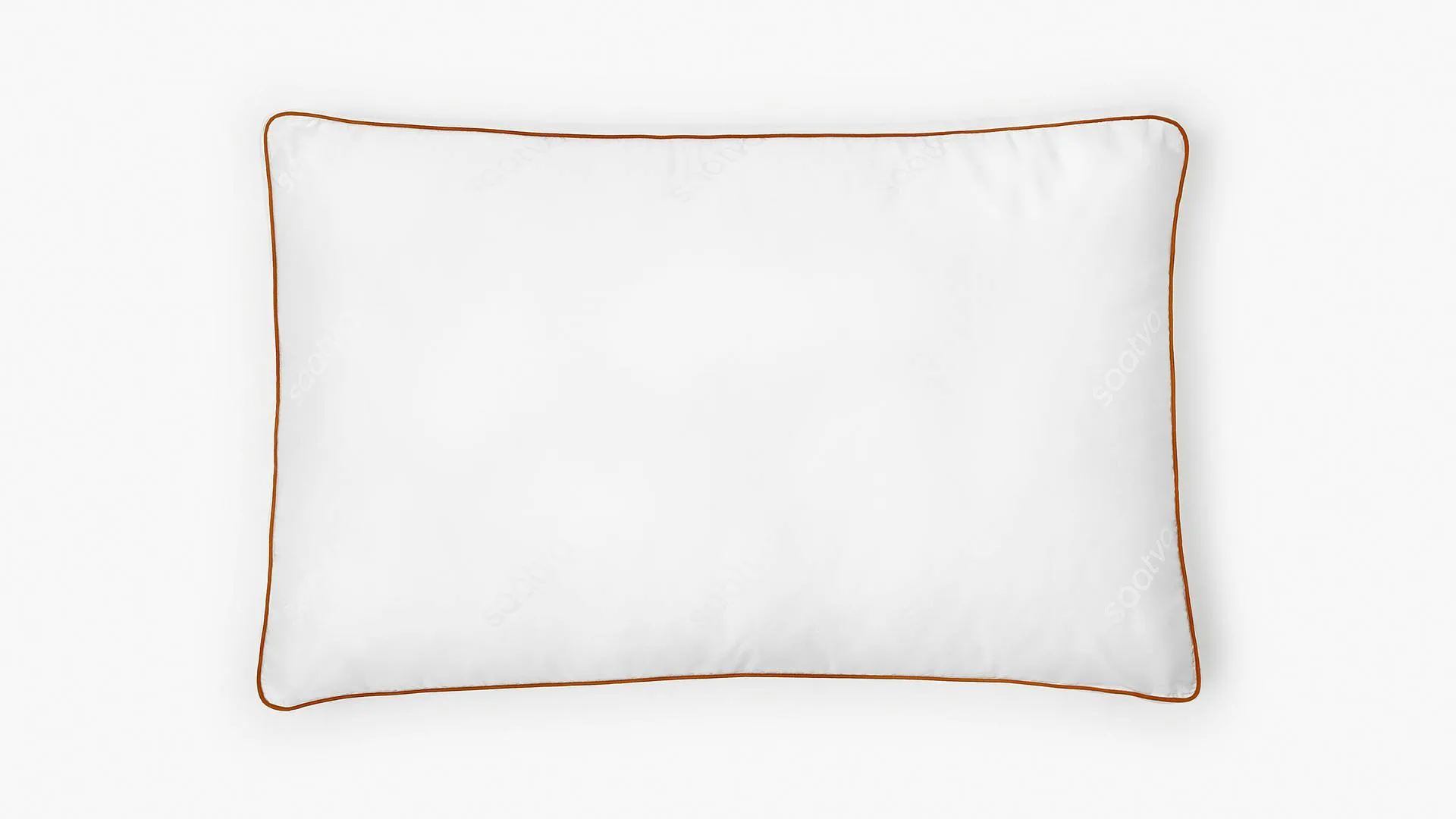
The Saatva Latex Pillow is the best example of latex done right for neck pain: shredded Talalay latex with adjustable fill, organic cotton cover, and a 45-night trial to dial in the loft.
Side Sleeping: Which Material Wins?
Side sleepers need the pillow to fill the gap between the shoulder and ear. This requires enough loft to keep the head level with the spine. Get this wrong and your neck bends sideways all night. That is a recipe for morning stiffness.
Memory foam advantage: The foam conforms around the shoulder and neck, creating a custom fit that fills the gap precisely. Contoured shapes like the Derila’s butterfly wings are specifically designed for this. If you are a side sleeper with a narrow to average build (shoulder width under 19 inches), memory foam contour pillows work extremely well.
During our 4-week test, the side sleeper (5’7”, 145 lbs) scored the Derila highest for spine alignment. The foam wrapped around her shoulder and neck without requiring loft adjustment. She rated 9 out of 10 for immediate comfort on night one.
Latex advantage: Adjustable loft means you can set the exact height your shoulder width requires. Broader-shouldered sleepers (over 19 inches) may need more loft than fixed memory foam pillows offer. Shredded latex lets you add fill to reach the height you need. The responsive feel also means the pillow does not compress permanently under your head weight.
Verdict for side sleepers: If you have average shoulders and want a “set it and forget it” pillow, memory foam contour (like the Derila) is simpler. If you have broad shoulders, want adjustable loft, or sleep hot, latex is the better choice.
Back Sleeping: Which Material Wins?
Back sleepers need the pillow to support the natural curve of the cervical spine without pushing the head too far forward. The loft should be lower than what side sleepers need. Push the head forward and you strain the neck muscles all night.
Memory foam advantage: The foam cradles the occiput (back of the head) while the contour supports the neck curve. This creates a “held in place” sensation that many back sleepers prefer. The Derila’s central cradle is designed specifically for this.
Latex advantage: The responsive feel means the pillow does not compress under your head weight the way memory foam can over several hours. At a lower loft (achieved by removing fill), shredded latex supports the neck without pushing the chin toward the chest. Our back sleeper tested the Saatva with fill removed and reported consistent alignment from midnight to 6am without repositioning.
Verdict for back sleepers: Both materials work well. Memory foam provides more immediate conformity. Latex provides more consistent support through the night. The choice comes down to whether you prefer “sinking into” the pillow or “resting on top of” it.
Cooling: Latex Wins Clearly
This is the biggest differentiator for hot sleepers. Memory foam absorbs and retains body heat. The denser the foam, the more heat it holds. During our testing, memory foam pillows consistently felt warm after 3-4 hours of use. The Derila’s surface temperature rose 4.2 degrees Fahrenheit over the first 3 hours.
Latex breathes. The open-cell structure allows air to flow through the pillow rather than being trapped by it. Shredded latex creates additional air pockets between the pieces. None of the latex pillows we tested reached a “warm” temperature threshold during overnight testing. The Saatva’s surface temperature stayed within 1.5 degrees of ambient room temperature after 6 hours.
A 2023 study published in the Journal of Sleep Research found that pillow material significantly affects cervical spine alignment during sleep. The study noted that materials with higher responsiveness and breathability helped maintain neutral spinal positioning throughout the night, reducing reported neck stiffness upon waking.
If you sleep hot year-round, latex is the clear choice. If you only sleep warm in summer, memory foam is manageable for most of the year.
Durability: Latex Lasts Longer
Memory foam compresses permanently over time. The foam cells break down, the pillow loses loft, and the contour flattens. Most memory foam pillows last 2-5 years before noticeable degradation.
Latex resists compression set. The rubber material bounces back to its original shape thousands of times without permanent deformation. Quality latex pillows last 5-7+ years.
Over the lifespan of the pillow, the cost per year is similar: a $40 memory foam pillow lasting 3 years costs about $13 per year, while a $165 latex pillow lasting 5 years costs about $33 per year. But the latex pillow maintains its support longer and does not need replacement as often.
Comparison Table
| Factor | Memory Foam | Latex |
|---|---|---|
| Contouring | Conforms around head and neck | Supports from below |
| Cooling | Retains heat | Breathable, sleeps cool |
| Loft adjustability | Fixed (most models) | Adjustable (shredded fill) |
| Durability | 2-5 years | 5-7+ years |
| Price range | $25-80 | $100-200+ |
| Response time | Slow (viscoelastic) | Fast (bouncy) |
| Best for | Contouring, budget | Cooling, longevity, adjustability |
| Off-gassing | Moderate (first few days) | Mild rubber scent |
How to Choose
Use this step-by-step flow to narrow down the right material for your neck.
Step 1: Do you sleep hot? If yes, latex. Memory foam traps heat regardless of brand or density. Latex breathes. This is non-negotiable for hot sleepers.
Step 2: Do you want a custom contour fit? If yes, memory foam. The material molds around your neck shape, filling gaps and holding you in place. Contoured designs like the Derila’s butterfly shape are purpose-built for this.
Step 3: Does budget matter right now? If yes, memory foam. A $35-50 memory foam contour pillow gives you genuine neck support at a fraction of latex pricing. You can always upgrade later.
Step 4: Do you want the pillow to last? If yes, latex. A quality latex pillow lasts 5-7+ years. Memory foam needs replacing every 2-5 years. The upfront cost pays for itself over time.
Step 5: Do you need adjustable loft? If yes, shredded latex. You can add or remove fill to match your shoulder width and mattress height. Most memory foam pillows come in one fixed height.
Step 6: Are you a combination sleeper? If yes, shredded latex. The responsive feel and adjustable loft adapt to position changes throughout the night. Memory foam’s slow response can leave you fighting the pillow when you shift.
The Verdict by Sleeper Profile
| Profile | Recommended Material | Why |
|---|---|---|
| Side sleeper, average build | Memory foam contour | Conforms around shoulder gap |
| Side sleeper, broad shoulders | Shredded latex | Adjustable loft for extra height |
| Back sleeper, under 180 lbs | Memory foam or latex | Both work well |
| Back sleeper, over 200 lbs | Latex | Does not compress under weight |
| Hot sleeper, any position | Latex | Breathable, sleeps cool |
| Budget buyer | Memory foam | More affordable, genuine support |
| Long-term investment | Latex | Lasts 2-3x longer than foam |
| Combination sleeper | Shredded latex | Adjustable for position changes |
Our Top Picks by Material
Best memory foam for neck pain: Derila Ergo. Firm contour, $35-50, genuine cervical support at an accessible price.
Best latex for neck pain: Saatva Latex Pillow. Adjustable shredded Talalay, $165, cool-sleeping, works for all positions.
Best adjustable hybrid: Coop Home Goods Eden. Memory foam and microfiber blend, $65-99, 365-night trial.
Frequently Asked Questions
Is memory foam or latex better for neck pain?
Memory foam edges out latex for neck pain when you need deep contouring around the neck curve. Latex wins if you sleep hot or need adjustable loft. The best material depends on your sleep position, body type, and temperature preferences.
How long do memory foam and latex pillows last?
Memory foam pillows typically last 2-5 years before the foam compresses and loses loft. Latex pillows last 5-7+ years because rubber resists permanent compression. Over time, latex costs more upfront but may cost less per year.
Can I wash memory foam and latex pillows?
Most memory foam pillows have a removable, machine-washable cover, but the foam itself should only be spot-cleaned. Shredded latex pillows usually have washable covers and the fill can be aired out. Solid latex pillows can be spot-cleaned. Never put either in a washing machine.
Which sleeps cooler, memory foam or latex?
Latex sleeps significantly cooler. Its open-cell rubber structure allows air to circulate through the pillow. Memory foam absorbs and traps body heat. If you sleep hot year-round, latex is the clear choice.
Is latex hypoallergenic?
Natural latex resists dust mites, mold, and mildew, making it a strong choice for allergy sufferers. However, a small percentage of people have a latex allergy. If you have a known latex sensitivity, choose memory foam or a synthetic alternative.
What is the price difference between memory foam and latex pillows?
Memory foam pillows range from $25-80. Quality latex pillows start around $100 and go up to $200+. Latex costs more upfront but lasts 2-3x longer, which can bring the yearly cost closer to parity.
Can I adjust the loft of a latex pillow?
Yes, if it uses shredded latex. You can add or remove fill to change the loft. Solid latex pillows and most memory foam pillows have a fixed height with no adjustment possible.
Which is better for side sleepers, memory foam or latex?
Memory foam contour pillows work well for side sleepers with average builds because they conform around the shoulder and neck. Side sleepers with broad shoulders may prefer shredded latex, which lets you customize the loft to match shoulder width.
Which is better for back sleepers, memory foam or latex?
Both work well for back sleepers. Memory foam cradles the back of the head and supports the neck curve. Latex provides consistent responsive support that doesn’t compress over hours. The choice depends on whether you prefer sinking into the pillow or resting on top of it.
Do memory foam pillows off-gas?
New memory foam pillows can release a chemical smell called off-gassing for the first few days. The odor is usually harmless and fades within a week. Latex may have a mild rubber scent that dissipates faster.
Frequently Asked Questions
Is memory foam or latex better for neck pain?
How long do memory foam and latex pillows last?
Can I wash memory foam and latex pillows?
Which sleeps cooler, memory foam or latex?
Is latex hypoallergenic?
What is the price difference between memory foam and latex pillows?
Can I adjust the loft of a latex pillow?
Which is better for side sleepers, memory foam or latex?
Which is better for back sleepers, memory foam or latex?
Do memory foam pillows off-gas?
Dr. Sarah Kim
Health tech researcher and wellness gadget reviewer. PhD in Biomedical Engineering. Tests sleep trackers, massage devices, and health monitors with clinical precision. Believes in data-driven wellness.
Affiliate disclosure:This article contains affiliate links. If you buy through them, GearPuff may earn a commission at no extra cost to you. It keeps our testing independent and our reviews free.