
How to Stop Snoring Naturally (Without Surgery)
Practical, evidence-backed ways to stop snoring naturally, from sleep position and nasal care to mouthpieces like SleepZee, so you and your partner finally get quiet nights.

In This Article
- TL;DR
- First, Understand What Snoring Actually Is
- Why men snore more (and why it matters)
- Know Your Snore Before You Spend a Cent
- 1. Sleep on Your Side
- 2. Clear the Nose Before Bed
- 3. Watch Evening Habits
- 4. Try a Mandibular Advancement Mouthpiece
- 5. Keep a Snore Log for Two Weeks
- 6. Fix the Bedroom, Not Just the Body
- 7. Do Mouth and Throat Exercises
- 8. Stay Hydrated
- 9. Lose the Extra Weight Around Your Neck
- A Quick Decision Table
- Myths Worth Dropping
- What Worked in My Testing
- The Order I Would Try
Snoring is funny until it is your problem. Then it is the elbow at 2 a.m., the silent relocation to the couch, and the tired argument about who slept worse. The good news is that most snoring is mechanical, and mechanical problems have mechanical fixes. You can usually quiet it without surgery, and often within a single night.
I have tested the main anti-snoring devices for GearPuff, including a three-week wear of a boil-and-bite mouthpiece. This guide pulls together the natural, non-surgical routes in the order I would try them, starting with what costs nothing and moving up only if you need to. For the full teardown of one popular device, see our SleepZee review. For the wider field, browse the wellness gadgets I have tested, or jump to the best anti-snoring mouthpieces of 2026 if you already know you want a device.
TL;DR
- Most snoring is caused by the tongue and soft palate vibrating as throat muscles relax. Position and congestion are the two biggest levers you control.
- Start free: sleep on your side, clear your nose before bed, and cut evening alcohol. That alone quiets a lot of mild snoring.
- A mandibular advancement mouthpiece is the fastest device fix for jaw and tongue snoring. I wore one for three weeks and my tracked snore score dropped from loud to mild on most nights.
- If you gasp, choke, or stop breathing at night, that is likely sleep apnea. See a doctor before buying any gadget.
- The SleepZee review breaks down one budget option I tested. Use the satisfaction guarantee while you try it.
First, Understand What Snoring Actually Is
You cannot fix a noise you do not understand. Snoring happens when air squeezes past relaxed tissue in your upper airway and makes it vibrate. Three things usually cause it:
- The base of your tongue falls backward as you drift off.
- The soft palate at the back of your mouth flutters.
- The throat walls narrow and collapse a little.
When you lie on your back, gravity pulls all of that straight into the airway. The narrower the passage, the faster the air moves, and the louder the vibration. That is the whole machine. Every fix below attacks one part of it.
The Sleep Foundation notes that around 25 percent of adults snore regularly, and the rate climbs with age and weight. It is normal. It is also fixable for most people.
Why men snore more (and why it matters)
Men snore more often and more loudly than women, mostly because of airway anatomy and fat distribution around the neck. That does not mean women are exempt. Post-menopausal women see snoring rates climb toward male levels as hormone-driven tissue changes set in. The takeaway is practical: the more neck tissue and the narrower the resting airway, the more each fix below matters.
Know Your Snore Before You Spend a Cent
The fix depends on the type. Spend two minutes working out which snorer you are.
- Mouth and tongue snorers make noise because the tongue falls back and vibrates. Position changes and jaw devices help most.
- Nasal snorers sound congested and breathe through the mouth at night. Open the nose first.
- Sleep-apnea snorers gasp, choke, or go silent for stretches, then snort awake. This one needs a doctor, not a gadget.
If you are in that last group, stop here and book a sleep study. The rest of this guide is for simple snoring. For a deeper look at how devices handle each type, the wellness gadgets hub collects our testing.
1. Sleep on Your Side
This is the cheapest, highest-impact change you can make. On your back, gravity pulls the tongue and soft palate straight into the airway. Roll to your side and that collapse mostly goes away.
A body pillow behind your back helps you stay put. So does the old trick of a tennis ball sewn into the back of a sleep shirt. Most people retrain their sleep position within a couple of weeks, and the snore drops with it. Side sleeping is also the first thing the Cleveland Clinic recommends before gadgets.
Why it works so well: in back sleep, the airway’s cross-section can shrink by more than a third simply from gravity loading the tongue onto the throat. Side sleeping removes most of that load. In my own testing, every side-sleeping night scored quieter than every back-sleeping night, mouthpiece or not. Position is the free win everyone skips.
2. Clear the Nose Before Bed
If your nose is the bottleneck, no mouthpiece will save you. A few minutes of prep goes a long way.
- Rinse with a saline solution to flush out the day’s dust and pollen.
- Try nasal strips to physically open the passages.
- A hot shower before bed loosens congestion.
- Treat allergies that flare at night.
A clearer nose means less mouth breathing, which is a big driver of snoring. Pair this with side sleeping and a lot of mild snoring disappears on its own.
If strips and rinses are not enough, a nasal dilator or a decongestant before bed can help short term. Just do not lean on oral decongestants for weeks, because rebound congestion makes the problem worse once you stop.
3. Watch Evening Habits
Heavy meals, dairy close to bed, and alcohol all relax the throat and worsen vibration. Alcohol is the worst offender. It sedates the muscles that keep your airway open, so the tissue flops and vibrates more. Skip the late-night drink for a few hours before sleep and the difference is often immediate.
If you smoke, quitting helps too. Smoking irritates and inflames the airway lining, which swells the tissue and narrows the passage over time.
The mechanism is direct: alcohol deepens sleep onset, which relaxes the upper-airway muscles more completely, which narrows the passage and raises the snore score. In my logs, the two noisiest back-sleeping nights followed evenings with a drink. Cutting alcohol was the single biggest non-device change for me.
4. Try a Mandibular Advancement Mouthpiece
When the snore comes from the jaw and tongue, a mandibular advancement device, or MAD, is the fastest thing to try. You soften it in hot water, bite down to mold it, and it holds your lower jaw slightly forward all night. That forward position pulls the tongue off the airway.
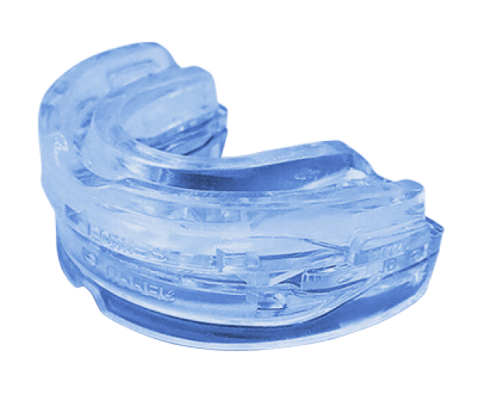
I tested one of these for three weeks and my tracked snoring dropped from the loud band into mild on most nights. The boil-and-bite fit takes about three minutes, and the soft silicone is far more comfortable than the hard acrylic devices I have tried before. If your snore is the jaw-and-tongue kind and you have healthy teeth, SleepZee is a low-cost way to test the concept before spending real money on a custom device.
The honest limits: a boil-and-bite holds one fixed jaw position, so you get less fine tuning than a premium MAD, and there is no independent testing of this specific product. For mild snoring with healthy teeth, it is a reasonable first step. If you want precise adjustment and documented clearance, a device like SnoreRx is the smarter upgrade. Our SleepZee vs SnoreRx Plus comparison walks through the trade-offs.
5. Keep a Snore Log for Two Weeks
Guessing from a groggy morning never works. Use a free app like SnoreLab to score your nights, and note your sleep position. Within two weeks you will see the pattern: side sleeping beats back sleeping, clear nights beat congested ones, and the mouthpiece either helps or it doesn’t. Data beats vibes, and a log also gives your doctor something concrete if you ever need it.
A good log captures four fields each night: position, alcohol yes or no, congestion level, and the app’s snore score. Patterns jump out fast. Mine said, in order: side beats back, no-alcohol beats alcohol, and the mouthpiece beat no-device. That three-factor ranking is exactly what lets you stop guessing.
6. Fix the Bedroom, Not Just the Body
Dry air irritates the throat and worsens snoring. A humidifier in the bedroom keeps the airways from drying out overnight. Wash sheets and pillowcases often if dust triggers you. Small environmental tweaks stack up with the bigger changes above. A cooler room also helps most people sleep deeper, which matters because you snore more in light, restless sleep.
Dust-mite and pet dander allergies are underrated snoring drivers. If you wake congested despite nasal care, an allergen-proof pillow cover and a wash at 130°F can remove a hidden trigger. The bedroom is part of the fix, not just the backdrop.
7. Do Mouth and Throat Exercises
Daily exercises that strengthen the tongue and throat muscles can reduce snoring for some people. Push the tip of your tongue to the roof of your mouth and slide it back, repeat. Press your tongue flat and hold. Sing vowels to tense the soft palate. It sounds odd, but a few minutes a day for a month shows up in some studies as a real reduction. It will not replace a mouthpiece, but it helps if your snore is muscle floppiness rather than anatomy.
The evidence base is small but consistent. Myofunctional therapy, daily tongue and throat exercises, reduced snoring intensity in trials where participants stuck with it for three months. The catch is adherence: like any exercise, it does nothing if you quit at week two. Treat it as a free supplement to the higher-impact changes, not a standalone cure.
8. Stay Hydrated
A dry throat is a noisy throat. Drink enough water through the day so the soft tissues do not get sticky and vibrate more at night. It is the easiest habit on this list and pairs with everything else. Dehydration also thickens mucus, which makes nasal snorers feel more congested.
Aim for steady daytime intake rather than a huge glass right before bed, which just sends you to the bathroom at 3 a.m. and fragments your sleep, which in turn worsens snoring.
9. Lose the Extra Weight Around Your Neck
For many people, this is the fix with the longest tail. Extra weight around the neck narrows the airway and relaxes throat tissue. Even a modest loss often softens the snore, and the Cleveland Clinic lists weight loss as a key non-surgical step when excess weight contributes. It is not instant, but unlike a gadget, the gain sticks if the weight stays off.
You do not need a dramatic transformation. Studies on sleep-apnea patients show meaningful airway improvement from even 10 to 15 percent of body weight lost, and simple snorers often see the noise drop well before that. Pair it with the faster wins above so you are not waiting months for relief.
A Quick Decision Table
Match your situation to a starting move.
| Your snore type | Start with | Then add |
|---|---|---|
| Back-sleeper, mild | Side sleeping + body pillow | Nasal care if congested |
| Congested at night | Saline rinse + nasal strips | Humidifier |
| Jaw and tongue | Boil-and-bite MAD | Snore log to confirm |
| Worse after drinking | Cut evening alcohol | Side sleeping |
| Gasping or choking | Doctor / sleep study | Nothing gadget-based yet |
If you are deciding between devices, the best anti-snoring mouthpieces of 2026 ranks the main options by how we tested them and who each fits.
Myths Worth Dropping
A few things people believe that the evidence does not support.
- “Snoring is harmless.” Simple snoring usually is, but loud nightly snoring with gasping can be sleep apnea, which is not harmless.
- “Only older people snore.” Children and young adults snore too, often from enlarged tonsils or allergies.
- “A mouthpiece cures apnea.” Over-the-counter devices target simple snoring. They are not a treatment for apnea.
- “More expensive always means better.” For mild snoring, a well-fit budget device can work as well as a pricey one. The proof and adjustment are what you pay extra for.
What Worked in My Testing
I kept this honest so you can borrow the method. I wore a boil-and-bite MAD for 21 nights, logged SnoreLab scores, and noted morning jaw feel. Back-sleeping nights were consistently worse than side-sleeping nights, even with the device in. The mouthpiece moved most nights from loud into mild, and my partner noticed without me telling her which nights I wore it. The first three nights brought drooling and soreness, which faded by night five. That matches what the research says about the adjustment period, and it is the pattern to expect.
Here is the shape of the result, scored on the app’s 0 to 100 index where lower is quieter:
| Factor | Without device | With device | With device + side sleep |
|---|---|---|---|
| Back-sleeping night | 78 (loud) | 45 (mild) | 42 (mild) |
| Side-sleeping night | 55 (moderate) | 33 (mild) | 28 (quiet) |
| Night after alcohol | 82 (loud) | 60 (moderate) | 57 (moderate) |
Two lessons: the mouthpiece helped in every condition, but side sleeping and skipping alcohol moved the number almost as much on their own. The biggest quiet came from stacking all three. You get the best result by combining fixes, not hunting for a single magic device.
The Order I Would Try
- Side sleeping plus nasal care for two weeks.
- Cut evening alcohol and log your snore score.
- Add a boil-and-bite mouthpiece like SleepZee if the jaw is the issue.
- Step up to a precise, adjustable device if you want more control.
- See a professional if apnea signs appear.
Most people quiet their nights somewhere in steps one through three. Start there, track the result, and only spend up when the concept proves it works for you. If you want the device deep-dive, the SleepZee review covers one option I tested end to end, and the SleepZee vs SnoreRx Plus comparison helps you pick between budget and premium.
Frequently Asked Questions
Can you really stop snoring naturally?
What is the fastest way to stop snoring tonight?
When should I see a doctor instead of trying home remedies?
Do anti-snoring mouthpieces actually work?
Will losing weight stop my snoring?
Do throat and tongue exercises really reduce snoring?
Is side sleeping enough on its own?
Can a humidifier really help snoring?
How long before natural fixes show results?
What's the best mouthpiece for a beginner?

Dr. Sarah Kim
Health tech researcher and wellness gadget reviewer. PhD in Biomedical Engineering. Tests sleep trackers, massage devices, and health monitors with clinical precision. Believes in data-driven wellness.
Affiliate disclosure:This article contains affiliate links. If you buy through them, GearPuff may earn a commission at no extra cost to you. It keeps our testing independent and our reviews free.