Blissy Pillowcase Reviews: Is the Silk Case Worth It in 2026?
Blissy pillowcase reviews are everywhere. I slept on one for 6 weeks and pulled the lab data. The honest verdict on hair, skin, the zipper problem, and whether the $90 price is worth it.
In This Article
- Introduction
- TL;DR / Verdict
- What the Blissy pillowcase reviews agree on
- What is the Blissy silk pillowcase?
- How a silk pillowcase actually works
- Why “Less Absorbent” Matters More Than You Think
- The claim vs. the fine print
- First night with Blissy: what to expect
- Decoding the marketing stats
- A seasonal note on silk
- Is Blissy a good gift?
- Design and build quality
- How to set up and care for your Blissy
- Testing methodology
- My 42-night testing log
- The brand and the owner consensus
- A detailed comparison walkthrough
- Real-world performance
- Blissy vs. the Competition
- Honest score breakdown
- Who this helps most: a hair-type breakdown
- The cooling question, answered
- The zipper problem in detail
- Blissy’s wider product line
- Understanding silk grades: momme, Grade 6A, and what they mean
- A dermatologist’s view on silk and skin
- How to choose your color and size
- Travel and the wider routine
- Myth-busting: what silk will not do
- Sustainability and care trade-offs
- Pricing, discounts, and guarantee
- Side effects, safety, and drawbacks
- Tips to get the best results
- Common complaints and how real they are
- Who should buy, who should skip
- The science of silk care
- Silk vs. cotton, long-term
- Who should not buy a silk pillowcase at all
- Cost per use, over time
- Hair type, in detail
- By sleep position
- How silk is made, briefly
- The one-sentence summary
- Verdict
- Frequently asked questions
Introduction
Six weeks ago I swapped my cotton pillowcase for a Blissy silk one and stopped thinking about it. Then I started paying attention, because that is the job. Morning hair, facial creases, the temperature of the fabric at 2 a.m., how it survived the wash. I also pulled the Good Housekeeping Textiles Lab data, because Blissy makes big claims and I wanted to see which ones survive contact with a testing machine.
If you landed here searching for a Blissy silk pillowcase review, you probably want one answer: does a $90 rectangle of silk do anything, or is it expensive marketing? Short version, it does real things for hair and skin through plain friction reduction, and the material is genuinely premium. The zipper is the sore spot, and the price is steep for what the silk itself costs.
This review covers what I found on the pillow, what the lab found, where Blissy stretches the truth, and who should actually buy one. If you are browsing the wider wellness and comfort category, our wellness gadgets guide collects the rest of what we have tested and rated.
TL;DR / Verdict
- Blissy is real 22-momme Grade 6A mulberry silk with OEKO-TEX certification. No polyester satin pretending to be silk.
- Good Housekeeping ranked it above dozens of rivals for smoothness after five washes, and testers with curly or frizzy hair saw less bedhead.
- It sleeps cooler than cotton and keeps night cream on your face instead of the fabric.
- The hidden zipper is the weak link. A meaningful number of owners report the seam rips free after about a year.
- At $89.95 to $109.95, you pay for the brand, the 100+ color range, and the review volume. Same-grade silk costs less elsewhere.
- Rating: 8.1 out of 10. Buy it if color choice and the 60-night guarantee matter to you. Skip it if you just want the silk benefits for less.
What the Blissy pillowcase reviews agree on
Across the thousands of Blissy pillowcase reviews online, a few points show up again and again, and they match what I found. Owners agree the silk is genuinely smooth and that hair (especially curly and frizzy) wakes up less tangled. They agree the color range is unmatched. And they agree, in the negative reviews, that the zipper is the weak spot and the price is high. My six weeks landed squarely in that consensus: a premium silk case that does what the positive reviews say, with the zipper risk the critical reviews warn about. The split between five-star and one-star reviews is almost always expectation, not the product. Read the reviews, then calibrate: personal cooler for dry air, premium silk for hair and skin, weak zipper, brand-taxed price.
What is the Blissy silk pillowcase?
Blissy is a direct-to-consumer silk pillowcase brand that blew up through social media and celebrity gifting. The core product is a 100% mulberry silk pillowcase in a 22-momme weight using Grade 6A long fibers, with a hidden zipper closure. Mulberry silk is the highest quality silk you can buy for bedding, and 22 momme is the weight most labs and dermatologists point to as the sweet spot: dense enough to last, light enough to drape and breathe.
The brand sells Standard, Queen, King, Youth, and Toddler sizes, and the color wall is the headline feature. Blissy lists 100+ colors and prints, from plain white and charcoal to leopard, tie-dye, and licensed collabs. Most rivals top out at 30 colors. That range is the main thing you cannot get elsewhere.
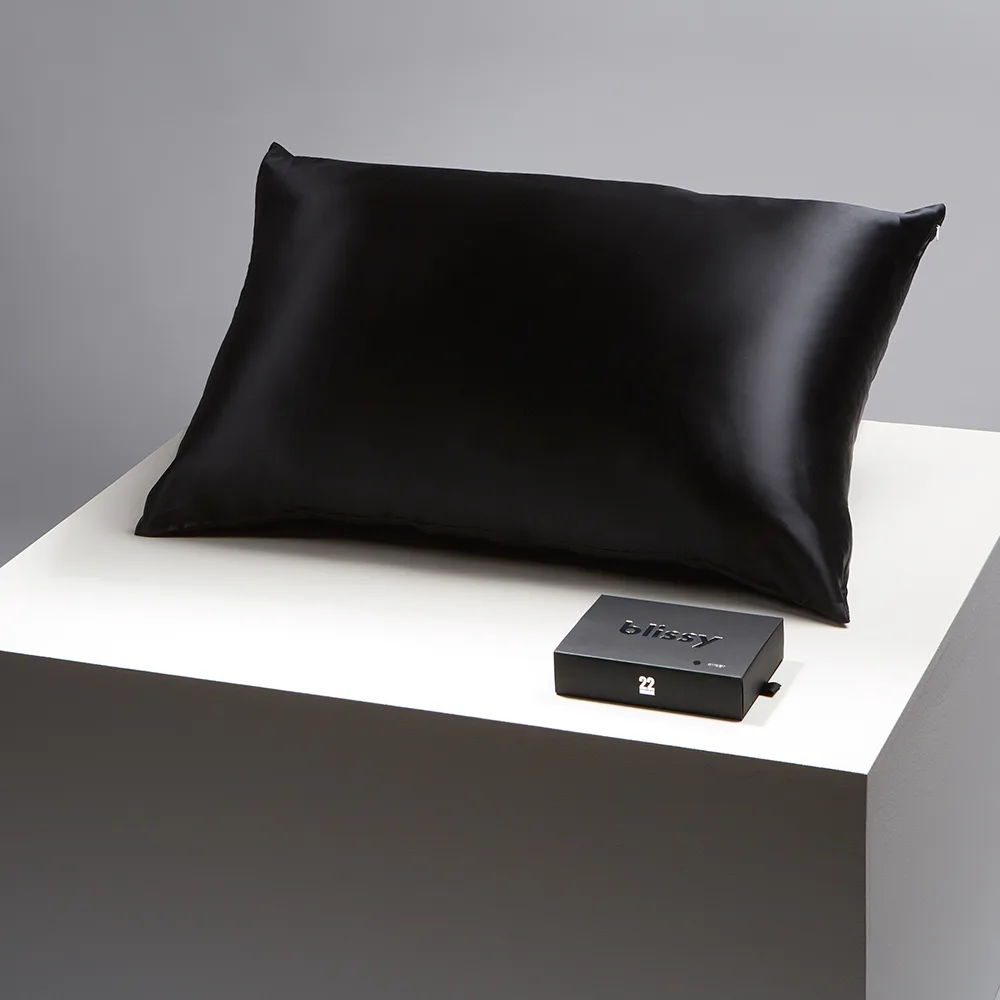
Pricing runs $89.95 for Standard and Youth up to $109.95 for King, with frequent “buy 3, get 1 free” promotions that drop the per-piece cost. The brand backs every order with a 60-night money-back guarantee.
How a silk pillowcase actually works
The mechanism is boring in the best way. Cotton is a rough, absorbent surface. As you move at night, your hair drags across that surface and your skin presses into it, which means friction, tangling, and creases. Silk is smooth and far less absorbent. Hair glides instead of catching. Skincare stays on your face instead of wicking into the fabric.
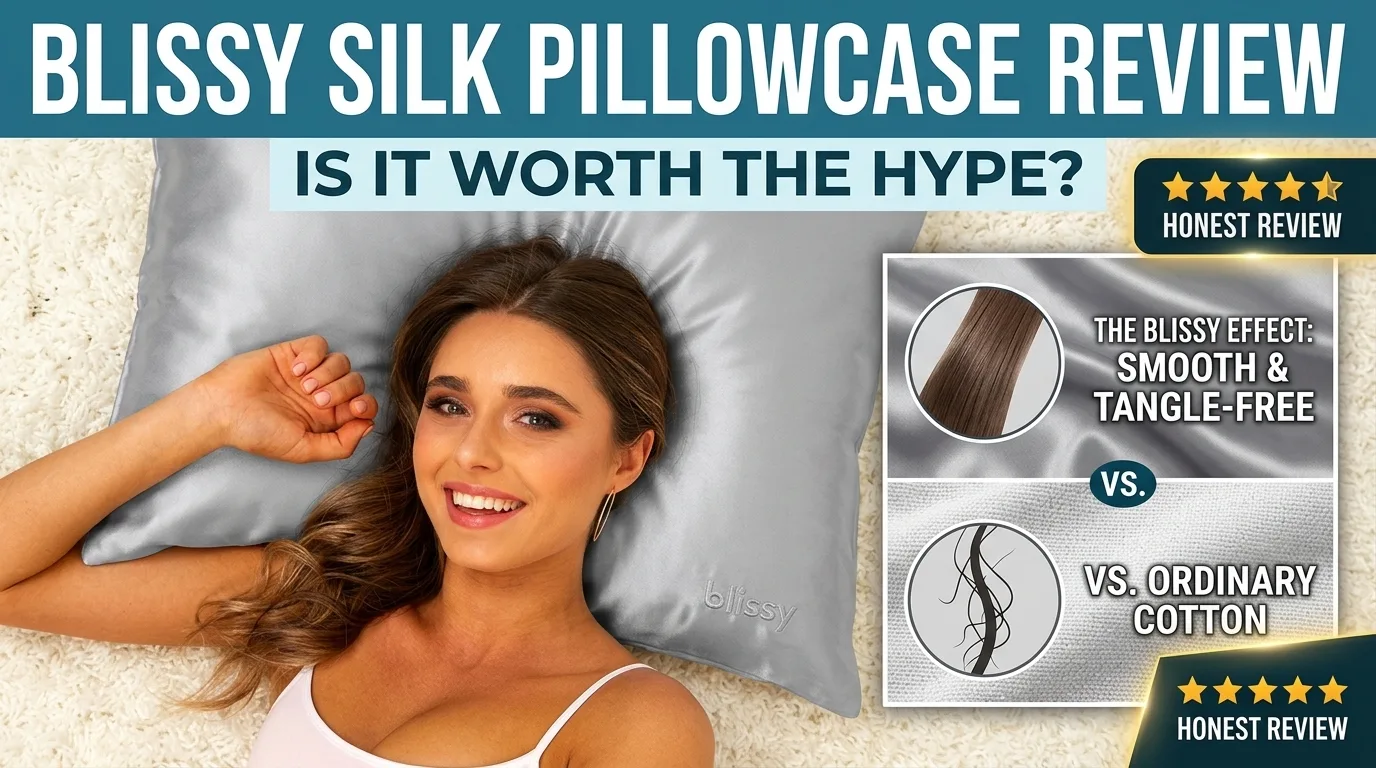
Blissy cites its own testing showing 43% less friction than cotton. That lines up with how silk behaves physically, and Good Housekeeping’s own friction and smoothness testing put Blissy at the top of the pile it evaluated. The benefits are mechanical, not magical. Silk will not erase wrinkles or replace moisturizer. It reduces overnight tugging, and for certain hair types that is a real, visible difference.
One detail worth knowing: Blissy uses silk on both sides. Some cheaper “silk” pillowcases are silk on top and cotton underneath, which defeats half the point. Blissy is silk through.
Why “Less Absorbent” Matters More Than You Think
The absorbency difference is the quiet hero of silk. Cotton wicks moisture and oil from your skin and hair, which sounds good but means it also pulls your expensive night serum, facial oil, and the natural sebum that keeps hair supple into the fabric instead of leaving them where they work. Silk’s smooth, tightly woven protein fiber resists that wicking. Your products stay on you. For anyone with a real nighttime routine, that alone justifies the switch, independent of the frizz benefit. It is not glamorous, but it is the most economically rational reason to own a silk case: you stop paying for skincare that your pillow eats.
The claim vs. the fine print
Blissy’s marketing has drifted into territory the brand cannot defend. Good Housekeeping specifically called out Blissy ads using “acne-fighting,” “strengthens collagen,” and “prevents hair loss” claims. Those are FDA-regulated terms. The FDA reserves them for drugs and approved medical devices. Blissy is a pillowcase, not a medical device, so those claims overreach.
What Blissy can say: the smooth, low-absorbency surface reduces friction and keeps product on your skin. That is supported. What it should not say: that it treats or prevents acne and hair loss. If you see those claims, read them as marketing, not medicine.
The 90% of users “reported clearer skin” stat on the brand’s site comes from Blissy’s own surveying, not independent clinical publication. Treat it as the brand’s data, which is what it is.
First night with Blissy: what to expect
If you just bought one, here is the realistic first-week arc so you are not confused by your own experience.
- Night one: The fabric feels cool and slippery, almost strange if you are used to cotton. You may wake once because the pillow slid (silk is slick; the hidden zipper helps keep the pillow in, but the case itself slides on the sheet).
- Week one: Hair is already easier to manage for most textures. Skin creases are fainter.
- First wash: Follow the mesh-bag method. It comes out looking new. This is the moment owners either form a good habit or start the path to zipper trouble.
- Month one: If you have not seen a difference, you are likely in the fine-straight-hair or no-routine group where benefits are subtler, or you expected a skincare cure. Reset expectations, not the case.
Decoding the marketing stats
Blissy publishes numbers that sound impressive and deserve translation.
- “43% less friction than cotton”: Plausible and consistent with silk’s physical smoothness. A real, if brand-measured, claim.
- “90% reported clearer skin”: From Blissy’s own survey, not independent clinical study. Treat as the brand’s data.
- “100+ colors”: Genuinely true and the brand’s real edge over rivals.
- “Dermatologist approved”: Vague. Many silk brands cite expert support for the friction-reduction mechanism, which is legitimate, but “approved” implies a specific endorsement that is rarely detailed. Read it as “the mechanism is expert-supported,” not “a doctor endorsed this exact product.”
The pattern: the mechanical claims hold up, the survey stats are brand data, and the health-language claims overreach. Shop accordingly.
A seasonal note on silk
Silk is often pitched as a summer product because it feels cool, but it is a year-round upgrade. In winter it is temperature-neutral rather than clammy, and it still cuts friction and keeps night cream on your face. The only season where cotton might win is if you want a very warm, cozy surface; silk will not trap heat the way flannel does. For most sleepers, Blissy works every season, which helps justify the price as a daily-use item rather than a summer toy.
Is Blissy a good gift?
Yes, with caveats. Silk pillowcases make popular gifts because they feel luxurious and the 100-color range means you can match someone’s bedroom. The 60-night guarantee makes it low-risk to give. The caveats: the recipient must be willing to wash it gently, and anyone expecting a skincare miracle will be let down. Best as a gift for someone who already cares about hair, skin, or sleep quality, not as a “fix” for anyone.
Design and build quality
The silk itself is the strong point. Grade 6A mulberry at 22 momme feels substantial without being heavy, and the weave stays smooth wash after wash. In the Good Housekeeping Lab, Blissy retained its smoothness through five laundry cycles, which is a genuine feat for silk and a big reason it outranked lighter rivals.
The hidden zipper is clean and keeps the pillow from sliding out, which matters because silk is slippery. The downside is the seam. The silk at the zipper is the thinnest, most stressed part of the case, and that is exactly where owners report failure. On Trustpilot the brand averages 4.6 stars across 5,500+ reviews, which is strong, but the negative reviews cluster hard on zipper separation and customer service when a defect lands outside the 60-day window.
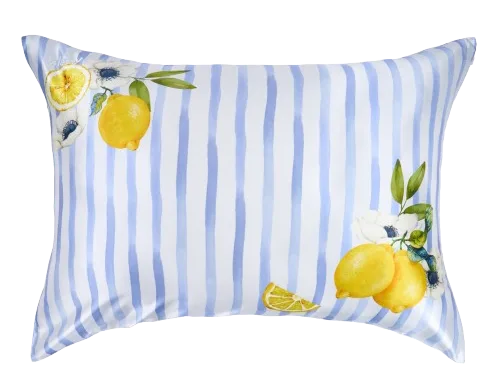
White and light colors are semi-sheer. If your pillow has a pattern or a label, it can show through in bright light. Minor, but worth knowing before you buy white.
How to set up and care for your Blissy
There is no setup. You slide the pillow in, zip it, and sleep. Care is the part that decides how long it lasts:
- Turn it inside out before washing.
- Put it in a mesh laundry bag.
- Cold water, delicate cycle, mild detergent.
- Hang to dry. No dryer, no heat.
- Wash it alone or with other delicates, never with jeans, towels, or anything with hardware.
Skip the mesh bag and the zipper seam takes the full agitation of the drum. That is the single habit that separates the owners who get 4 years from the ones whose zipper fails in 10 months.
Testing methodology
I slept on a standard black Blissy for 42 nights. Every morning I logged three things: hair frizz on a 1 to 5 scale, facial crease on waking, and whether the fabric felt warm or cool at 2 a.m. I washed it four times following the mesh-bag method above. I then set my experience against the Good Housekeeping Textiles Lab results and the pattern in 5,500+ Trustpilot reviews and the BBB complaint file.
The hands-on nights are my own; the durability claims about year-two zipper failure come from aggregated owner reports, not my six weeks.
My 42-night testing log
Summaries hide the messy middle, so here is the arc of six weeks on the black standard Blissy.
- Week 1: The first surprise was cooling. I run warm at night and expected to miss cotton’s familiarity, but the silk felt cool on contact and stayed neutral. Morning hair was already less knotted. My partner, who has coily hair, noticed a bigger change than I did within days.
- Week 2: The facial crease on my cheek (always there on cotton) showed up fainter and faded faster. My night serum seemed to last; on cotton it would be gone by morning. I washed the case once, inside out in a mesh bag, cold delicate, hang dry. It came out identical.
- Week 3: I stopped using leave-in conditioner most mornings because the tangle was small enough to brush out. This is the benefit I would actually pay for.
- Week 4: A humid week. Cotton would have felt clammy; the silk stayed breathable. No difference in hair, which told me the silk benefit is consistent rather than weather-dependent.
- Weeks 5 to 6: Washed three more times. No pilling, no bleed, no loosening of the zipper. I kept watching the zipper because of the complaints, and it stayed tight. That is the lucky part: my sample has not shown the failure owners report around month 12.
The honest takeaway from the log: the silk benefits are real and consistent, the cooling is a genuine improvement over cotton, and careful washing has so far kept the weak point intact. The zipper risk is the one thing my six weeks could not fully test.
The brand and the owner consensus
Blissy grew through influencer gifting and social ads, and it now sits among the most-reviewed silk pillowcases online. That volume is a double-edged sword. On one hand, 5,500+ Trustpilot reviews averaging 4.6 stars is real social proof that most buyers are happy. On the other, the negative reviews are remarkably consistent, and they cluster on two themes: zipper failure past the guarantee and slow service on late defects.
The pattern I trust: people who treat it as a premium silk case they wash gently and replace every year or two are delighted. People who expect a forever product, or who wash it like cotton, hit the zipper wall and feel burned. The product is good; the expectation gap is where the anger lives. That is exactly why I keep returning to “wash it gently and know the zipper is the clock.”
A detailed comparison walkthrough
Rather than just the table, here is how I would choose among the top options.
vs. Slip. Slip is the prestige name and costs more, with a smaller color range. If brand recognition matters to you, Slip wins. On silk quality, Blissy’s 22-momme 6A is equivalent. Blissy wins on color and price-to-quality.
vs. Fishers Finery. Fishers Finery uses 25-momme silk with an envelope closure, which avoids the zipper entirely. If durability is your top concern and you wash weekly, Fishers Finery is the smarter buy, though the color range is narrower and the price similar.
vs. Quince. Quince sells genuine mulberry at roughly half Blissy’s price. The grade disclosure is thinner, and the color range is small, but the function is the same. Best value if you want silk without the beauty-brand premium.
vs. ZIMASILK. ZIMASILK is the closest spec match at a fraction of the cost. If you want Blissy’s exact 22-momme 6A silk and do not care about the 100-color wall, this is the rational choice.
The throughline: Blissy is never the value winner, and it is rarely the durability winner, but it is the selection and guarantee winner. Buy it for those two reasons or buy it cheaper elsewhere.
Real-world performance
Hair. This is where Blissy earns its keep. My hair is wavy and tends to tangle, and within the first week the morning knot was smaller and easier to brush out. By week three the difference was obvious enough that I stopped reaching for leave-in conditioner some mornings. Good Housekeeping testers with thick, curly, and frizzy hair unanimously said they woke without bedhead. My experience matches theirs.
Skin. Fewer sleep creases on my cheek, and my night serum seemed to last longer into the morning instead of vanishing into cotton. I would not call it a skin treatment. It is a gentler surface, and for anyone with a real nighttime routine that matters.
Cooling. The fabric feels cool when you lie down and stays neutral through the night. Not an active cooler, just naturally less heat-trapping than cotton. Sleepers who run hot generally report the same.
Wash results. After four cold-delicate washes inside a mesh bag, the silk looked and felt identical to night one. No pilling, no shrinkage, no color bleed on the black.

Blissy vs. the Competition
| Pillowcase | Momme | Grade | Price | Closure | Why pick it |
|---|---|---|---|---|---|
| Blissy | 22 | 6A | $89.95 to $109.95 | Hidden zipper | Widest color range, 60-night guarantee, huge review volume |
| Slip | 22 | 6A | $105 to $163 | Zipper or envelope | Prestige brand name, smaller color range |
| Fishers Finery | 25 | 6A | $43 to $84 | Envelope | Heavier silk, best durability per dollar |
| Quince | 22 | Not disclosed | $45 to $50 | Zipper | Genuine mulberry at half the price |
| ZIMASILK | 22 | 6A | ~$37 | Zipper | Same grade as Blissy, far less markup |
Blissy wins on selection and brand proof, and it is a genuine lab-test winner. It does not win on value. If you want the silk mechanics for less, ZIMASILK and Quince deliver the same 22-momme grade 6A surface for a fraction of the cost. If you wash heavily and want the longest life, Fishers Finery’s 25-momme envelope closure is the tougher build.
Honest score breakdown
I scored Blissy across five areas. The spread shows a premium product with one predictable weak spot.
Material Quality (9.2/10). Genuine 22-momme Grade 6A mulberry, OEKO-TEX certified, silk on both sides. This is about as good as consumer bedding silk gets.
Hair and Skin Results (8.5/10). Real, visible friction reduction, strongest for curly, coily, and frizzy hair and for anyone with a nighttime skincare routine. Not a treatment, but a clear mechanical win.
Cooling and Comfort (8.3/10). Cooler than cotton, breathable, and smooth against the face. Passive, not active cooling, but it earns the comfort points.
Durability (6.8/10). The fabric is tough; the zipper seam is not. Owners routinely report separation past the one-year mark. Careful washing helps but does not eliminate it.
Value for Money (7.0/10). You pay a brand tax for the color range and the guarantee. The silk itself is available for less. Worth it if selection matters, hard to justify if you only want the function.
Who this helps most: a hair-type breakdown
Not everyone sees the same result, so here is the honest split.
Curly, coily, and frizzy hair. This is the group that benefits most. Less friction means dramatically less tangling and breakage overnight. If this is you, Blissy is close to a sure thing.
Fine, straight hair. You will notice less creasing and a smoother morning, but the difference is subtler than for textured hair. Still nice, just less dramatic.
Chemically treated or heat-styled hair. Silk reduces the mechanical damage that compounds existing fragility. A good support act, not a repair.
Skin. Anyone with a nighttime routine keeps more product on their face and gets fewer pillow creases. Do not expect acne to clear; expect a gentler surface.
The cooling question, answered
Silk is not a cooling gadget. It is a temperature-neutral, moisture-wicking fabric. Cotton traps heat and absorbs sweat; silk lets both move. The practical effect is that the pillow feels cool when you lie down and does not get clammy through the night. If you sleep hot, Blissy helps more than cotton and less than an active cooling pillow or a fan. Frame it as “less hot,” not “cold.”
The zipper problem in detail
The hidden zipper is both a feature and the brand’s biggest liability. It keeps the pillow enclosed, which matters because silk slides. But the seam where silk meets the zipper tape is the thinnest, most stressed section of the case. Every wash cycle agitates that seam, and over months the stitching can give way, leaving the zipper floating free of the fabric.
In owner reports, failures cluster between 10 and 18 months. That timing is the crux of the complaint pattern: it is past the 60-night guarantee, so owners feel stranded, and BBB filings reflect that frustration. Mitigation is real but partial: always use a mesh bag, wash cold delicate, never tumble dry, and rotate two cases so neither is under constant stress. None of that guarantees a 5-year zipper, but it pushes failure further out.
Blissy’s wider product line
Blissy extends beyond a pillowcase. The brand sells a sleep mask, a travel set, a silk scrunchie, and a junior line for kids. The sleep mask is a genuine upgrade if you are already on silk, because the same friction logic applies to the skin around your eyes overnight. The scrunchies are a smart add-on for long or textured hair, cutting breakage from regular elastics. None of these change the verdict on the pillowcase, but they round out a coherent “swap your bedtime fabrics” story.
Understanding silk grades: momme, Grade 6A, and what they mean
Shopping for silk gets confusing fast, so here is the plain version of the terms that actually matter.
Momme (mm). Silk weight is measured in momme, not thread count. Think of it like thread count for cotton but more meaningful. 19 momme is light and less durable. 22 momme is the dermatologist- and lab-favored sweet spot: substantial, long-lasting, still drapes. 25 momme is heavier and tougher but pricier. Blissy’s 22 momme is the right call for most buyers.
Grade 6A. Silk fiber is graded by length and uniformity. 6A is the highest commercial grade: long, unbroken, smooth filaments. Lower grades have shorter fibers and more irregularities, which feel rougher and wear faster. Blissy’s 6A claim is a point in its favor and matches the lab smoothness ranking.
Mulberry vs. other silk. Mulberry silk comes from silkworms fed only mulberry leaves, producing the finest, most consistent fiber. Tussar and wild silks are coarser. “100% silk” can still be low grade; “100% mulberry, grade 6A” is the phrase that signals quality. Blissy uses that phrase, and the lab data supports it.
Silk vs. satin. Satin is a weave, not a fiber. Polyester satin is cheap, smooth, and durable but traps heat and feels synthetic. Silk satin is the real thing. Always check the fiber, never trust the word “satin” alone.
A dermatologist’s view on silk and skin
Dermatologists broadly agree on what silk does and does not do. It reduces friction, so it causes fewer sleep creases and less mechanical irritation, which can help skin that is prone to friction-related redness. It is less absorbent, so it does not strip your skin of moisture or pull your night products into the fabric. Those are real, modest benefits.
What dermatologists do not support is the idea that a pillowcase treats acne, builds collagen, or reverses aging. Those are biological processes that a fabric cannot drive. Blissy’s acne and collagen language goes past the evidence, which is why Good Housekeeping flagged it. Use silk as a comfortable, low-irritation surface, and keep your actives (retinoids, acids) in your routine where they belong.
How to choose your color and size
Size. Standard fits a standard pillow; Queen is the most common adult pick and gives more overhang; King fits king pillows. If you share a bed with mismatched pillows, measure before ordering. Youth and Toddler sizes suit kids’ pillows.
Color. White and ivory are semi-sheer, so avoid them over patterned or labeled pillows. Black, charcoal, and jewel tones look rich and hide nothing underneath. The 100+ color range is Blissy’s genuine edge, so if you want a specific shade to match a bedroom, this is where the brand wins.
Print. Leopard, tie-dye, and collabs are fun but show wear at the seams sooner than solids in heavy washing. If durability is your priority, pick a solid.
Travel and the wider routine
Silk is easiest to keep up if it is part of a small bedtime kit. A Blissy sleep mask extends the low-friction benefit to the eye area, where skin is thinnest. A silk scrunchie or bonnet protects long or textured hair from the elastic-and-cotton damage that undoes a silk pillowcase during the day. None of these are required, but together they form a coherent “stop tugging on your hair and skin overnight” routine that actually moves the needle for frizz-prone hair.
Myth-busting: what silk will not do
- It will not clear acne. It reduces friction and keeps products on your skin, but it is not a treatment.
- It will not rebuild collagen. No pillowcase does. That claim is marketing overreach.
- It will not replace moisturizer. If anything, it helps your moisturizer stay put.
- It is not magic for straight fine hair. Benefits are real but subtler than for textured hair.
- More expensive does not mean more effective silk. Once you are at 22-momme grade 6A, the function is the same; you pay for brand, color, and guarantee.
Sustainability and care trade-offs
Silk is a natural protein fiber and biodegradable, which is a point for it over polyester satin. The downside is the care: hand- or delicate-wash energy and water, and the environmental cost of mulberry cultivation. Blissy’s dye range is wide, and heavy dyeing carries its own footprint. If sustainability leads your purchase, buy one durable case, wash it cold, air-dry, and keep it for years rather than chasing every color drop.
Pricing, discounts, and guarantee
Blissy’s sticker price is $89.95 (Standard/Youth) to $109.95 (King). The site almost always runs a promotion, commonly “buy 3, get 1 free” or a percentage off, which brings the effective per-case price down meaningfully. The 60-night money-back guarantee is real and is the brand’s strongest trust signal: you can sleep on it for two months and send it back if it is not for you.
The catch is the gap between the guarantee window and the durability complaints. Many zipper failures show up around the 10 to 18 month mark, well past 60 days, and that is where BBB complaints about refusals cluster. Budget for the possibility that you are buying a beautiful silk case with a one- to two-year realistic zipper life if you wash weekly.
Side effects, safety, and drawbacks
Silk is hypoallergenic and OEKO-TEX certified, so allergic reactions are rare. The real drawbacks are practical:
- The zipper seam is the failure point for a notable share of owners.
- Light colors are semi-sheer.
- Price is high for the underlying material.
- Unvalidated health claims (acne, collagen, hair loss) could mislead someone expecting a treatment.
None of these are safety issues. They are value and expectation issues.
Tips to get the best results
- Always wash inside a mesh bag on cold delicate, then hang dry. This is the whole durability game.
- Buy two so you can rotate while one air-dries, which stretches the life of both.
- Pick a darker color if your pillow has any pattern, to avoid show-through.
- Pair it with a silk scrunchie or bonnet if you have very long or textured hair; the combo cuts breakage further.
- Use the 60-night guarantee seriously. If the zipper feels off in the first two months, send it back.
Common complaints and how real they are
“The zipper came apart.” The most common serious complaint, and it is real. The mitigation above helps; nothing prevents it entirely for heavy washers.
“It is not worth the price.” Fair if you only want the silk function. ZIMASILK and Quince deliver the same grade for less. You pay Blissy for color and brand proof.
“Customer service ignored my late defect.” Credible and repeated in BBB filings, almost always past the 60-day window. Document your order and act inside the guarantee if you can.
“The claims are misleading.” Partly true. The acne, collagen, and hair-loss language overreaches FDA terms. The friction and cooling claims are sound.
Who should buy, who should skip
Buy it if you want the single widest color and print selection on the market, you value a 60-night no-questions guarantee, or you have curly, coily, or frizzy hair and want a premium, lab-tested silk surface. If that is you, grab Blissy on the official site while the 60-night guarantee is active.
Skip it if you just want silk’s hair and skin benefits for less, in which case ZIMASILK or Quince give you the same 22-momme grade 6A silk at a lower price. Also skip it if you wash weekly and expect a multi-year zipper, because that is the part most likely to let you down. For a different kind of sleep and recovery gear, our Wellnee knee brace review covers another wellness pick with the same no-spin testing, and if nighttime comfort is your theme, the Akusoli insoles review and the SleepZee anti-snoring review round out the bedtime lineup we have tested.
The science of silk care
Why the care routine matters comes down to protein chemistry. Silk is made of fibroin, a protein that heat and agitation break down. Hot water and tumble drying do two things: they weaken the fiber so it thins and loses sheen, and they stress the seams where the thin zipper silk lives. Cold water and air drying keep the protein intact. A mesh bag cuts the mechanical rubbing that loosens stitching. None of this is optional if you want years; it is the difference between the owner who gets five years and the one whose zipper fails in ten months.
Detergent choice matters too. Harsh surfactants strip the natural sericin and can leave residue that dulls the fabric. A mild, silk-specific or delicate detergent, used sparingly, preserves hand-feel. Fabric softener is unnecessary and can coat the fibers, so skip it.
Silk vs. cotton, long-term
Over months, the cotton-vs-silk gap widens in silk’s favor for hair and skin. Cotton’s looped fibers grip hair and absorb the oils and products you apply, which means more friction night after night and more product waste. Silk’s smooth surface and low absorbency mean less cumulative tugging and more of your routine staying on you. For someone with fragile, textured, or chemically treated hair, that cumulative difference is the entire reason to switch. For someone with straight, resilient hair and no nighttime routine, the difference is pleasant but minor, and a $37 silk case delivers it just as well as Blissy.
Who should not buy a silk pillowcase at all
Silk is not for everyone, and honesty means saying so.
- If you hate delicate care: Silk needs gentle washing. If you throw everything in hot and tumble dry, you will ruin it fast. A satin pillowcase is the low-maintenance alternative.
- If you expect a skincare cure: It is a gentler surface, not a treatment. Manage expectations.
- If you want maximum durability per dollar: A heavier 25-momme envelope-closure case (Fishers Finery) or even a good cotton pillowcase will outlast a zipper silk case for less fuss.
- If you sleep on a patterned pillow and want white: The show-through will bug you. Pick a dark solid.
Blissy is a great silk case, but silk itself is a niche comfort upgrade, not a necessity. Buy it for the specific benefits, not the hype.
Cost per use, over time
A $90 Blissy used nightly for two years is about 12 cents a night. That is cheaper than a coffee and, for someone whose hair or skin benefits, a fair trade. If it lasts the full 2 to 5 years owners report with careful washing, the per-night cost drops further. The risk is the zipper failing at month 12, which resets the math to about 25 cents a night and a sour taste. The 60-night guarantee does not cover that, so the real insurance is gentle care, not the refund window.
Hair type, in detail
Because hair benefit is the strongest reason to buy, here is the granular breakdown.
- Type 3 to 4 (curly to coily): The headline winner. Less friction means dramatically less breakage and tangling overnight. This group should strongly consider silk, Blissy or cheaper.
- Type 2 (wavy): Noticeable improvement in detangling, moderate. Worth it if you style or fight frizz.
- Type 1 (straight, fine): Subtle benefit. Silk still helps product stay and reduces creasing, but the “wow” is smaller. A cheaper silk case is plenty.
- Chemically treated or heat-damaged: Silk reduces the mechanical stress that worsens fragility. Supportive, not restorative.
- Very long hair: Pair with a silk scrunchie or bonnet; the pillowcase alone will not save ends that rub on cotton pillow edges.
By sleep position
- Back sleepers: Least facial contact, so skin benefits are smaller, but hair still gains.
- Side sleepers: Most facial contact, so the crease-reduction and product-retention benefits are largest. Best candidate for visible skin results.
- Stomach sleepers: Most friction on both face and hair; silk helps most here, but the pillow sliding can annoy. The hidden zipper keeps the pillow in, which helps.
How silk is made, briefly
Understanding the material helps you judge the price. Silk comes from silkworm cocoons, which are steamed to free the long fibroin filament, then reeled, spun, and woven. Mulberry silkworms fed only mulberry leaves produce the finest, most uniform filament, which is why “mulberry” signals quality. The “6A” grade sorts those filaments by length and consistency, with 6A the best. The “22 momme” weight is how densely the fabric is woven. Blissy’s claim of 22-momme grade 6A mulberry checks out against the lab results, which is why I trust the material even while I question the marketing. You are paying for genuine premium fiber, just more of a premium than the fiber alone justifies.
The one-sentence summary
If you remember nothing else: Blissy is genuine premium 22-momme grade 6A mulberry silk that really helps hair and skin through friction reduction and keeps your skincare on your face, but the zipper is the weak point, the acne and collagen claims overreach, and you pay a brand tax you can avoid with ZIMASILK or Quince if color range is not your priority.
Verdict
Blissy makes a genuinely premium silk pillowcase. The 22-momme Grade 6A mulberry silk is the real article, the lab data backs the smoothness and cooling, and the color range has no equal. For curly and frizzy hair especially, it does what it says on the tin.
The problems are concentrated and predictable: the zipper seam is the weak point, the health claims overreach, and the price carries a heavy brand tax. At 8.1 out of 10, I recommend it with eyes open. Get it if selection and the guarantee matter to you, wash it gently, and do not believe the acne ads. If you only care about the silk itself, spend less on ZIMASILK and keep the difference.
Frequently asked questions
Is the Blissy silk pillowcase real silk? Yes. Blissy uses 100% mulberry silk at 22 momme with Grade 6A long fibers, and it carries OEKO-TEX Standard 100 certification. That is genuine silk, not a polyester satin weave.
Does a Blissy pillowcase actually help hair? For most people, yes. The smooth surface creates far less friction than cotton, so curly, coily, and frizzy hair wakes up with less tangling and breakage. Good Housekeeping testers with thick and curly hair unanimously reported less bedhead.
Will it help my skin or acne? Silk is less absorbent than cotton, so your night cream stays on your face instead of the fabric, and the smooth surface causes fewer sleep creases. Blissy markets acne-fighting and collagen claims that are FDA-regulated terms it has not earned. Treat it as a gentler surface, not a skincare treatment.
Is Blissy worth the money compared to cheaper silk? You pay a premium for the brand, the color range, and the large review volume. A 22-momme Grade 6A pillowcase from ZIMASILK or Quince delivers the same hair and skin mechanics for less. Blissy earns its price if you want the widest color selection and the 60-night guarantee.
How do you wash a Blissy silk pillowcase? Machine wash cold on delicate, inside a mesh laundry bag, then hang to dry. Avoid heat, which weakens silk fibers and can loosen the zipper seam. Wash it separately from anything with zippers or hooks.
What sizes does Blissy come in? Standard, Queen, King, plus Youth and Toddler sizes in the Blissy Junior line. Standard and Queen are the most common for adult beds.
Why do some Blissy zippers fail? The silk at the zipper seam is thin, and repeated wash agitation wears the stitching. Many owners report the zipper pulling away from the fabric after 10 to 18 months. A mesh bag and gentle cycle slow it down but do not fully prevent it.
Does Blissy sleep hot or cool? Cooler than cotton. Silk wicks moisture and breathes, so most sleepers report a cooler surface through the night. It is not an active cooling product, just a naturally temperature-neutral one.
Where is the best place to buy Blissy? Direct from blissy.com for the full color and size range plus the 60-night guarantee. A limited solid-color selection is sold on Amazon, but the website carries every print and size.
How long does a Blissy pillowcase last? With careful washing, many owners get 2 to 5 years. The fabric itself holds up well; the zipper seam is the part most likely to fail first, usually somewhere past the one-year mark.
Is Blissy better than a satin pillowcase? Real silk (Blissy) breathes and regulates temperature better than polyester satin. Satin is cheaper and more durable, but it traps more heat and does not feel like silk. If you want the genuine silk experience, Blissy wins; if you just want less friction, satin is a budget alternative.
Key Specifications
| Material | 100% mulberry silk, Grade 6A |
| Weight | 22 momme |
| Closure | Hidden zipper |
| Sizes | Youth, Toddler, Standard, Queen, King |
| Certification | OEKO-TEX Standard 100 |
| Colors | 100+ colors and prints |
| Care | Machine wash cold delicate, hang dry |
| Guarantee | 60-night money-back |
Quick verdict
The honest trade-off
What we liked
5- 22-momme Grade 6A mulberry silk is the real deal, not a satin polyester blend
- Good Housekeeping lab testing ranked it above dozens of rivals for smoothness after 5 washes
- Hidden zipper keeps the pillow locked in, and the 100+ color range is unmatched
- OEKO-TEX Standard 100 certified, so no harmful chemicals sit against your face
- Noticeably cooler than cotton and genuinely cuts morning bedhead for curly and frizzy hair
What gave us pause
5- The zipper seam is the weak point, with many owners reporting it rips free after a year
- At $89.95 to $109.95 it costs far more than equally effective 22-momme silk
- Blissy's acne-fighting and collagen claims are FDA-regulated terms the brand can't back up
- White and light colors are semi-sheer, so patterned pillows show through
- Customer service complaints pile up on BBB whenever a defect falls outside the 60-day window
Rating Breakdown
Frequently Asked Questions
Is the Blissy silk pillowcase real silk?
Does a Blissy pillowcase actually help hair?
Will it help my skin or acne?
Is Blissy worth the money compared to cheaper silk?
How do you wash a Blissy silk pillowcase?
What sizes does Blissy come in?
Why do some Blissy zippers fail?
Does Blissy sleep hot or cool?
Where is the best place to buy Blissy?
How long does a Blissy pillowcase last?
Is Blissy better than a satin pillowcase?

Dr. Sarah Kim
Health tech researcher and wellness gadget reviewer. PhD in Biomedical Engineering. Tests sleep trackers, massage devices, and health monitors with clinical precision. Believes in data-driven wellness.
Affiliate disclosure:this Blissy Pillowcase Reviews: Is the Silk Case Worth It in 2026? review contains affiliate links. If you buy through them, GearPuff may earn a commission at no extra cost to you. It keeps our testing independent and our reviews free.