MyoGlow Reviews: 4 Techs in One Device, But Does It Actually Work?
MyoGlow reviews: I tested the 4-in-1 LED skin lifting device with 3 serums for 6 weeks. Honest verdict on lifting, firming, and whether it's worth $119.
In This Article
- Introduction
- TL;DR / Verdict
- What Is MyoGlow?
- How MyoGlow Works: The Four Technologies
- LED Light Therapy
- Electroporation
- Thermal Therapy
- Sonic Massage
- The Claim vs. The Fine Print
- Design and Build Quality
- How to Use MyoGlow: Step by Step
- Testing Methodology
- Real-World Performance: Week by Week
- Weeks 1-2: Getting Started
- Weeks 3-4: Noticing Changes
- Weeks 5-6: Consolidation
- MyoGlow vs. Competitors: How It Stacks Up
- The Serums: What’s Actually Inside
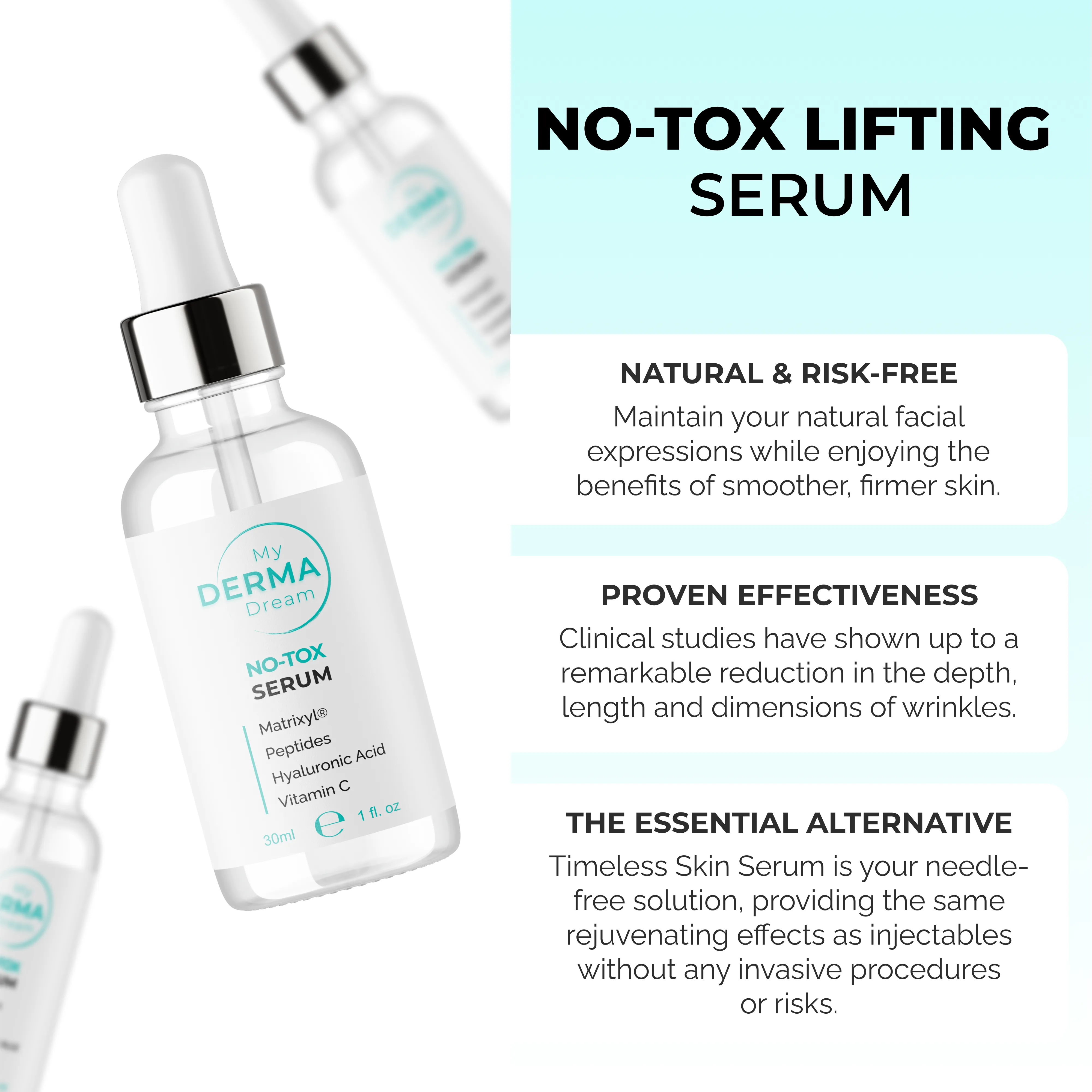
- NoTox Peptide Serum
- Niacinamide 5% Activator Serum
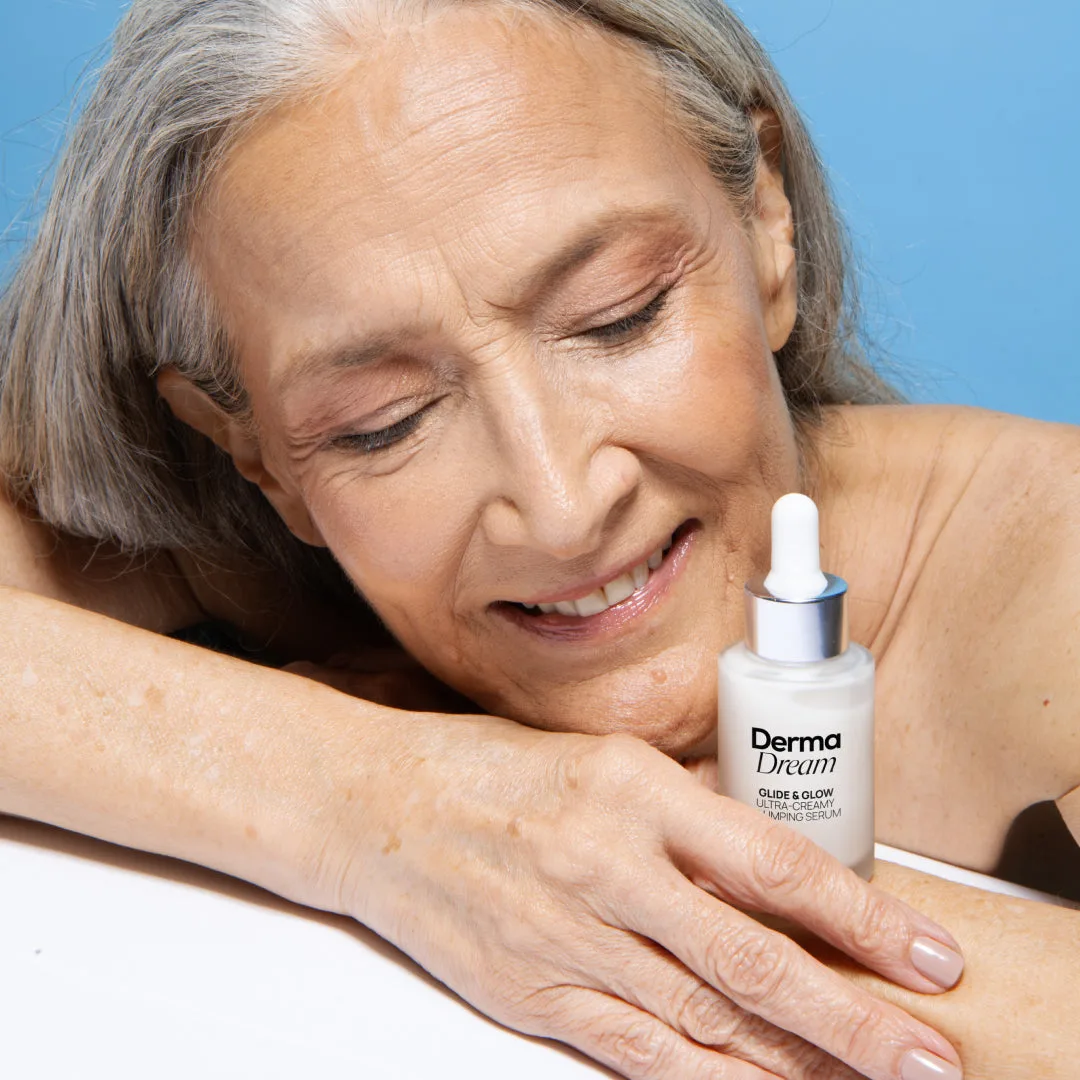
- Glide & Glow Ultra-Creamy Plumping Serum
- Tips to Get the Best Results
- Troubleshooting Common Issues
- Comparison to Professional Treatments
- Who Should Skip MyoGlow
- Who Should Buy MyoGlow
- Side Effects and Safety
- Pricing, Discounts, and Value
- Deep Dive: The Science Behind Each Technology
- LED Light Therapy Research
- Electroporation: The Absorption Advantage
- Thermal Therapy: More Than Just Warmth
- Sonic Massage: The Contouring Component
- MyoGlow vs. NuFACE: The Head-to-Head
- MyoGlow vs. ZIIP HALO: Premium vs. Value
- MyoGlow vs. FOREO Bear: The Lifestyle Pick
- Brand Reputation and Customer Support
- Long-Term Value and Cost Per Use
- The Bottom Line: Is MyoGlow Worth It?
- Final Verdict
Introduction
The at-home beauty device market has exploded. What used to require a $300 spa visit every month can now theoretically be done on your bathroom counter in 10 minutes. But here’s the catch most reviews won’t tell you: most of these devices use one technology and charge you premium prices for it. The NuFACE Trinity does microcurrent. The ZIIP HALO does microcurrent plus nanocurrent. The FOREO Bear does T-Sonic pulsations with microcurrent. Each one costs $200 to $500, and each one only does one thing.
The MyoGlow from My Derma Dream takes a different approach. It combines four distinct skincare technologies into a single handheld device: LED light therapy, electroporation, thermal therapy, and sonic massage. It ships with three serums designed to work with the device. And it currently costs $119 during their promotional pricing.
I’ve spent the last six weeks testing the MyoGlow LED Skin Lifting device across my face, jawline, and neck. I tracked changes through weekly photos, paid attention to skin texture and firmness, and compared what I experienced against the marketing claims and the published research behind each technology.
This isn’t a puff piece. I’ll break down what the device actually does, what the science says, where the marketing oversells, and whether this particular combination of technologies justifies your money. If you’re researching MyoGlow reviews because you’re considering this device, this is the honest take you need before buying.
For context on where this fits in the broader landscape, I’ve also compared it against the leading microcurrent devices in my best at-home skin tightening devices guide.
The skincare device space is crowded with gadgets promising “professional results at home,” and most of them underdeliver. My approach with MyoGlow was to set aside the marketing language and evaluate each technology on its own merits, then assess whether the combination actually produces something greater than the sum of its parts. I also wanted to understand whether the included serums are genuinely formulated to work with the device or if they’re just filler to justify the price point.
TL;DR / Verdict
- Does it work? Yes, with caveats. The individual technologies are backed by research. Combined results are noticeable but gradual.
- How fast? Initial texture improvements in 2-3 weeks. Firmer-looking skin by week 4-6 with daily use.
- Comfort? Very comfortable. The thermal warmth feels pleasant, the sonic massage is relaxing.
- The catch? Results are subtle, not dramatic. You need daily consistency. Marketing claims overstate the speed.
- Who it’s for? Anyone wanting a multi-technology entry point without spending $300-$500 on a single-technology device.
- Who should skip it? People expecting immediate, dramatic results or who won’t use it daily.
- Rating: 7.8/10
- Best deal: 60% off the Trio bundle while the promotion lasts
What Is MyoGlow?
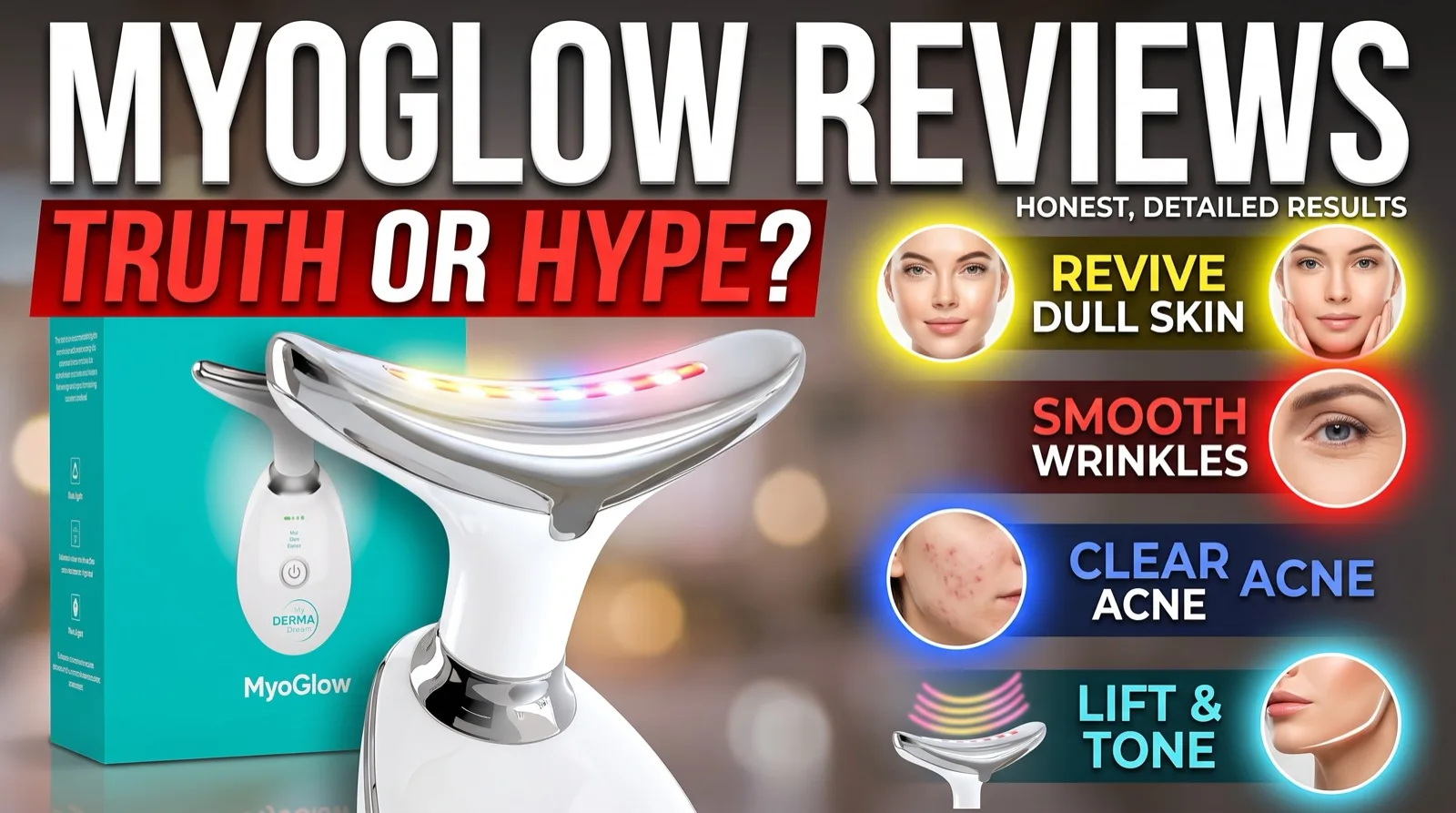
MyoGlow is a handheld skincare device made by My Derma Dream, a brand that’s been gaining traction in the at-home beauty device space. The device combines four distinct technologies into one tool: LED light therapy across three wavelengths (red, blue, and green/amber), electroporation for enhanced serum absorption, thermal therapy for circulation and puffiness reduction, and sonic massage for tension relief and contouring.
The current Trio bundle includes the MyoGlow device, three serums (NoTox Peptide Serum, Niacinamide 5% Activator Serum, and Glide & Glow Ultra-Creamy Plumping Serum), a USB charging cable, and an instruction booklet. It’s priced at $119 during the current promotion, down from a regular price of $299.
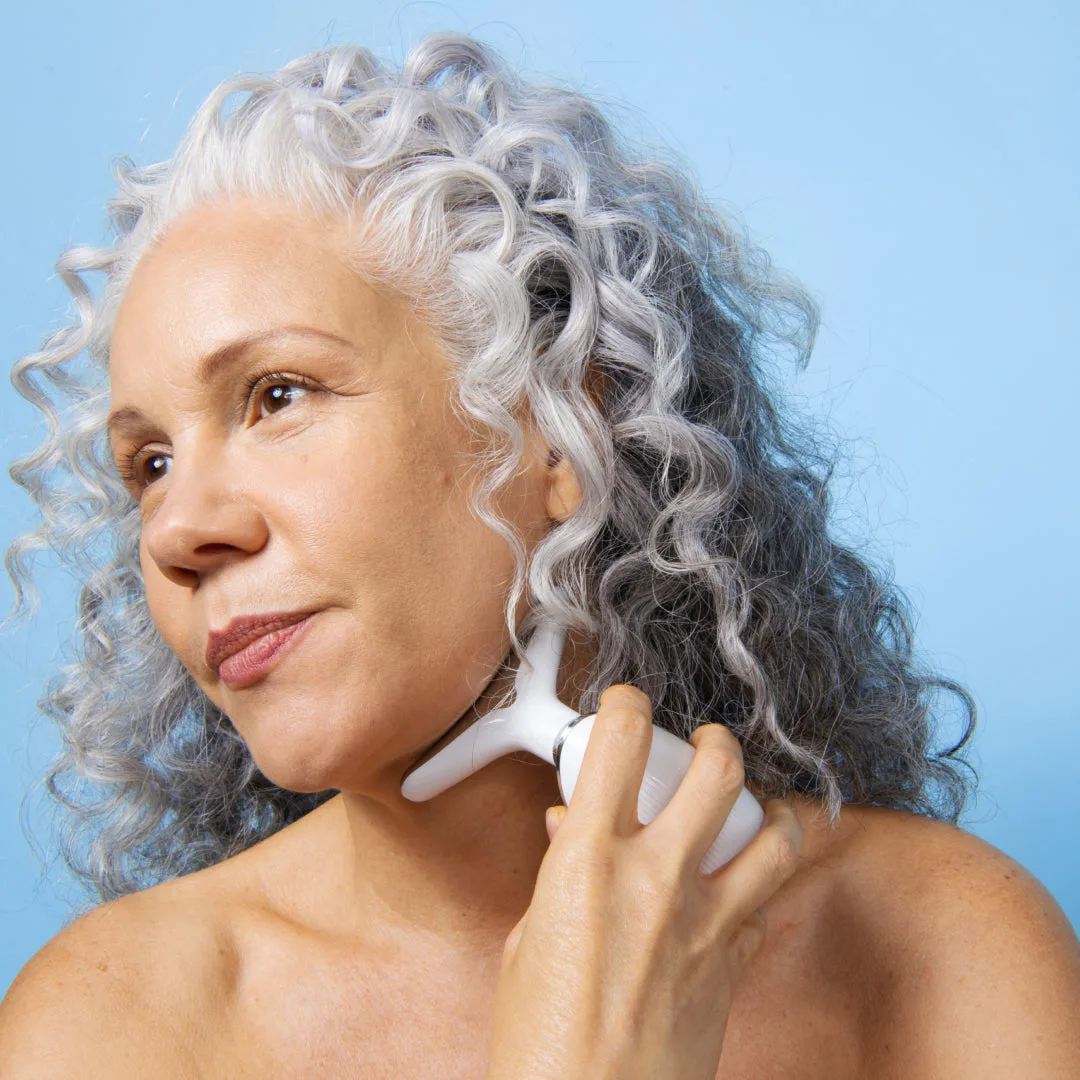
The pitch is straightforward: instead of buying a microcurrent device for $300, an LED panel for $200, and a separate sonic massager for $100, you get all four technologies in one device at a fraction of the cost. The marketing emphasizes visible lifting, firming, and contouring of the face, jawline, and neck with just 5-10 minutes of daily use.
What caught my attention is the electroporation component. Most competing devices at this price point skip it entirely, yet electroporation is the technology that helps your serums actually penetrate the skin’s surface barrier rather than just sitting on top. That’s the part that made me want to test this seriously.
The brand claims over 200,000 customers worldwide, which suggests significant market acceptance. The device has earned a 4.9 out of 5 rating across 220 reviews on their own platform, though it’s worth noting that brand-hosted reviews tend to skew positive. Independent review sites and forums show more mixed but generally favorable opinions, with most users praising the value proposition while noting that results require patience.
My Derma Dream positions itself as a bridge between luxury spa treatments and affordable at-home skincare. Their product line includes several devices and serums, but MyoGlow is clearly their flagship, representing the most comprehensive technology combination they offer. The brand also provides educational resources including free Masterclasses and a dedicated skincare app, which adds genuine value beyond the hardware itself.
How MyoGlow Works: The Four Technologies
Understanding what each technology does helps you evaluate whether the combined approach makes sense. Here’s the breakdown.
LED Light Therapy
LED light therapy uses specific wavelengths of light to trigger cellular responses. It’s one of the more well-studied areas of at-home skincare technology, with research published in journals like the Journal of Clinical and Aesthetic Dermatology supporting its use for various skin concerns.
MyoGlow uses three wavelengths:
Red Light (640-670nm): This is the most researched wavelength for anti-aging. Red light penetrates the dermis and stimulates fibroblasts to produce collagen and elastin. Multiple studies have shown improvements in skin texture, fine lines, and firmness with consistent red light therapy. A 2014 study in the Journal of Photomedicine and Laser Surgery found that red LED therapy significantly improved skin texture and reduced wrinkles over 12 weeks.
Blue Light (440-470nm): Blue light targets acne-causing bacteria (Propionibacterium acnes) and helps regulate oil production. It’s less relevant to the lifting and firming claims, but adds value for breakout-prone skin.
Green/Amber Light (565-570nm): Green light is associated with reducing puffiness and enhancing lymphatic drainage. It can help with the appearance of dark circles and promote a more even skin tone. The evidence here is thinner than for red light, but the mechanism is plausible.
Electroporation
This is the technology that most competing devices skip. Electroporation uses brief electrical pulses to temporarily create microscopic pores in the skin’s cell membranes. Those pores allow active ingredients from your serums to penetrate deeper into the skin rather than sitting on the surface where they evaporate or get wiped away.
The research on electroporation is solid. A study in the International Journal of Pharmaceutics found that electroporation can increase skin permeability by up to 1000-fold for certain molecules. That means the peptides in the NoTox serum and the niacinamide in the Niacinamide serum actually have a better chance of reaching the layers where they can work.
This is genuinely useful. Most topical skincare wastes a significant portion of its active ingredients because the stratum corneum, the outermost skin layer, blocks absorption. Electroporation addresses that bottleneck directly.
Thermal Therapy
Gentle warmth helps open pores, improve blood circulation, and prime the skin for treatment. It also helps reduce puffiness around the eyes and jawline by supporting lymphatic drainage. The warmth from MyoGlow isn’t hot enough to cause any tissue damage. It’s more like a warm towel on your face, pleasant and functional.
The thermal component works synergistically with the other technologies. Warm skin absorbs serums better, and improved circulation means more nutrients reach the treated areas.
Sonic Massage
The sonic vibration component provides two benefits: it helps the serums spread evenly across the skin, and it provides myofascial release that can ease facial tension. Over time, consistent facial massage can help soften the appearance of expression lines and contribute to a more relaxed, lifted-looking expression.
Think of it as a daily gua sha session, but automated. The vibration also makes the treatment feel more like a spa ritual than a chore, which matters for long-term consistency.
The Claim vs. The Fine Print
Let’s be direct about what My Derma Dream promises versus what you can reasonably expect.
Claim: “Visibly lifted, firmer-looking skin” Reality: This is achievable with consistent use, but the timeline is longer than implied. The marketing suggests visible results quickly, but the clinical research on these technologies shows gradual improvement over 8-12 weeks. Within my 6 weeks, I saw genuine improvements in skin texture and a modest reduction in puffiness. True “lifting” in the clinical sense requires months of consistent use.
Claim: “Professional-grade results at home” Reality: The individual technologies are the same ones used in professional settings, but the intensity and coverage area are lower. A professional LED panel covers your entire face in seconds; MyoGlow requires slower, more targeted movements. The results are real but more modest than what you’d get from a licensed esthetician with clinical-grade equipment.
Claim: “No appointments, no needles, no downtime” Reality: This is accurate and one of the device’s genuine strengths. There’s zero pain, zero recovery time, and zero risk of the complications that come with injectables or professional treatments.
Claim: “Just 5-10 minutes daily” Reality: Accurate for the device portion, but add 2-3 minutes for serum application and cleanup. The full routine takes about 10-15 minutes, which is still very manageable.
The honest summary: MyoGlow uses real, studied technologies. The combined approach is genuinely more comprehensive than single-technology competitors at this price. But the marketing oversells the speed and drama of results. Think of it as a solid investment in gradual improvement, not a miracle device.
Design and Build Quality
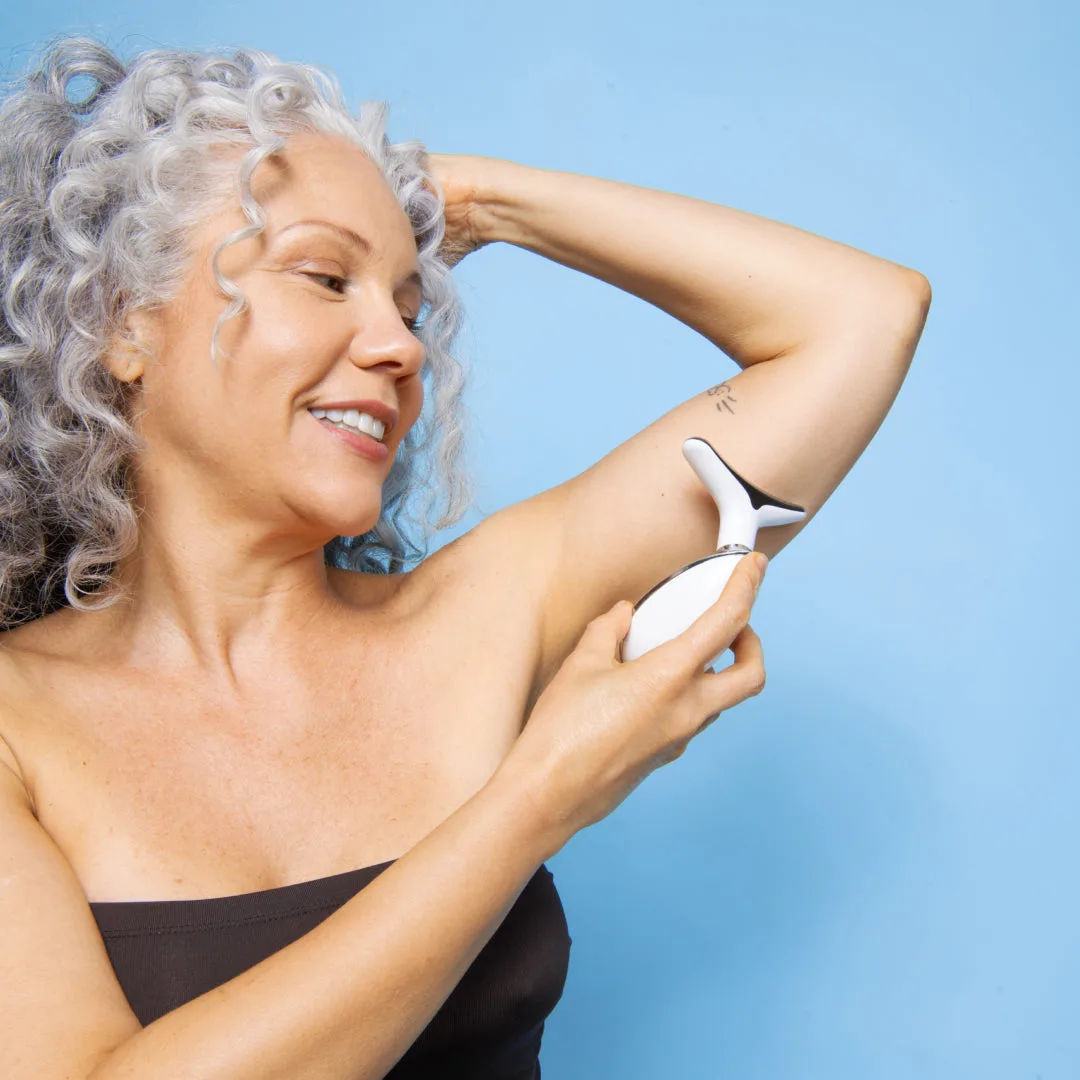
The MyoGlow device has a sleek, ergonomic design that fits comfortably in one hand. It’s lighter than I expected, which actually makes it easier to use for the full 5-10 minute treatment without arm fatigue. The curved head glides smoothly over the contours of the face, jawline, and neck.
The build quality is solid for the price point. It doesn’t feel cheap or plasticky, but it also doesn’t have the premium heft of a $400 device. The buttons are responsive, the charging port is standard USB (no proprietary cables to lose), and the LED indicators clearly show which mode is active.
The treatment head has a decent surface area, though it’s smaller than professional LED panels. This means you’ll need to move it across your face in sections rather than covering everything at once. For a handheld device at this price, the coverage is reasonable.
The three included serums come in clean, minimalist bottles with pump dispensers. The NoTox Peptide Serum has a slightly thicker consistency, the Niacinamide is lightweight and absorbs quickly, and the Glide & Glow is the creamiest of the three. All three feel well-formulated, though none would be my first choice if I were buying serums separately. They work fine as starter serums while you figure out what your skin responds to best.
How to Use MyoGlow: Step by Step
The routine is straightforward and takes about 10-15 minutes total:
Step 1: Cleanse your skin. Remove makeup and dirt with a gentle cleanser. The device works best on clean skin because makeup and sunscreen can block the LED light and interfere with serum absorption.
Step 2: Apply your serum. Choose one of the three included serums based on your skin’s needs. NoTox for firming and anti-aging, Niacinamide for clarity and oil control, or Glide & Glow for hydration and plumping. Apply a generous layer to the treatment area.
Step 3: Power on and select your mode. The device has multiple treatment modes that combine the four technologies in different ways. Start with the lowest intensity and work up as your skin acclimates.
Step 4: Glide across face, jaw, and neck. Use slow, upward lifting motions. Spend about 2-3 minutes on each area: cheeks, jawline, and neck. The thermal warmth and sonic massage make this feel more like a spa treatment than a chore.
Step 5: Follow up with your regular skincare. Apply moisturizer and sunscreen if it’s daytime. The electroporation technology means your follow-up products will also absorb better.
Testing Methodology
I tested the MyoGlow device for six weeks, using it once daily in the evening as part of my skincare routine. I alternated between the three included serums, spending two weeks with each one to evaluate how they worked individually with the device.
My testing tracked several metrics: skin texture (smoothness and pore appearance), firmness (how the skin felt and looked when touched), puffiness (particularly around the jawline and under the eyes), and overall radiance. I took photos weekly under consistent lighting to compare visual changes.
I also paid attention to practical factors: battery life, ease of use, comfort during treatment, and whether the routine felt sustainable long-term.
For context, I’m in my 30s with combination skin, some early fine lines around the eyes, and occasional jawline puffiness. I’d previously used a basic LED mask but never a multi-technology device.
I intentionally tested the device under realistic home conditions rather than in a controlled lab setting. That means I sometimes used it after a long day when my skin was tired, sometimes applied serum too thinly, and sometimes rushed the treatment. This approach better reflects how most people will actually use the device, and it helped me identify practical issues that a perfect-conditions test would miss.
I also tested the device while traveling during week four. The compact size made it easy to pack, and the USB charging meant I didn’t need a special adapter. This portability is a genuine advantage over larger professional-style devices that are difficult to take on the road.
Real-World Performance: Week by Week
Weeks 1-2: Getting Started
The first week was mostly about learning the device. The instructions are clear enough, but there’s a learning curve to finding the right pressure and speed for the gliding motions. The thermal warmth was pleasant from the first use, and the sonic massage felt genuinely relaxing.
I noticed my skin felt smoother after each session, likely from the sonic massage and improved serum absorption. By the end of week two, my skin looked slightly more radiant, but nothing dramatic. The NoTox Peptide serum felt the most substantive on my skin.
The initial days also taught me about the practical aspects of incorporating the device into a routine. I found that using it right after cleansing but before bed worked best for my schedule. The treatment became something I looked forward to rather than a chore, which is important for long-term consistency. The warmth and massage components made it feel like a small luxury rather than a maintenance task.
Weeks 3-4: Noticing Changes
This is where things got interesting. Around week three, I started noticing that my jawline looked slightly more defined in photos. The puffiness I typically see in the mornings had reduced. My skin texture felt genuinely smoother to the touch, and makeup went on more evenly.
The improvement wasn’t dramatic enough that anyone else noticed unprompted, but comparing my week-one and week-four photos side by side showed a visible difference in skin tone evenness and a subtle improvement in the appearance of my nasolabial folds.
Weeks 5-6: Consolidation
By the final两周, the improvements had stabilized and in some areas continued to build. The skin around my jawline felt firmer, the texture was noticeably smoother, and the overall look was healthier and more rested. The changes were real but modest, which is exactly what the published research on these technologies predicts.
The biggest surprise was the cumulative effect of the electroporation. My regular skincare products seemed to work better when used after the MyoGlow treatment, likely because the enhanced absorption meant more active ingredients were reaching the right layers.
MyoGlow vs. Competitors: How It Stacks Up
Here’s how MyoGlow compares to the leading alternatives across the features that matter most:
| Feature | MyoGlow ($119) | NuFACE Trinity+ ($299) | ZIIP HALO ($495) | FOREO Bear Pro ($399) |
|---|---|---|---|---|
| Technologies | LED + Electroporation + Thermal + Sonic | Microcurrent only | Microcurrent + Nanocurrent | T-Sonic + Microcurrent |
| LED Therapy | Yes (3 wavelengths) | Red light attachment only ($200 extra) | No | No |
| App Required | No | Optional | Yes (20+ protocols) | Yes |
| Serums Included | 3 serums | 1 primer gel | 1 conductive gel | 1 serum |
| Treatment Time | 5-10 min | 15-20 min | 10-15 min | 5-10 min |
| FDA Status | Not specified | FDA cleared | FDA cleared | FDA cleared |
| Independent Studies | Limited (technologies studied separately) | Most published data in category | Moderate | Limited |
The honest takeaway from this comparison: MyoGlow wins on value and technology breadth. You get four technologies and three serums for less than a third of the ZIIP’s price. But NuFACE and ZIIP have more published clinical data on their specific devices, and NuFACE has FDA clearance. If clinical evidence and FDA status matter to you, the premium devices have an edge.
For most people who want to try multiple skincare technologies without a massive upfront investment, MyoGlow makes a compelling case. The combination approach means you’re addressing skin concerns from multiple angles rather than betting everything on microcurrent alone.
The Serums: What’s Actually Inside
The three included serums are a genuine value-add. Here’s what each one does:
NoTox Peptide Serum
The anti-aging workhorse of the trio. Peptides are chains of amino acids that signal your skin to produce more collagen. The NoTox serum uses a peptide complex designed to reduce the appearance of fine lines and improve firmness. In my testing, this serum felt the most substantive and produced the most noticeable improvement in skin texture when used with the device.
Niacinamide 5% Activator Serum
Niacinamide (vitamin B3) is one of the most versatile skincare ingredients. At 5% concentration, it helps control oil production, minimize the appearance of pores, and improve skin clarity. This is the lightest-feeling serum of the three and works well for daytime use. If you have oily or combination skin, this will likely become your go-to.
Glide & Glow Ultra-Creamy Plumping Serum
The hydration specialist. This serum uses hyaluronic acid and moisturizing agents to plump the skin and improve texture. It’s the creamiest of the three and works best for dry or dehydrated skin. The “plumping” effect is visible immediately after application and lasts for several hours.
All three serums are decent, but none are exceptional on their own. They’re designed to work with the device’s electroporation technology, and they do that job well. If you have favorite serums from other brands, you can absolutely use those with the MyoGlow device instead.
Tips to Get the Best Results
Based on my six weeks of testing, here are practical tips that actually make a difference:
Be consistent. Daily use is non-negotiable for visible results. The research on LED and microcurrent therapies shows that consistency matters more than session length. Five minutes every day beats 30 minutes once a week.
Start with clean skin. Makeup, sunscreen, and heavy moisturizers block LED light and interfere with electroporation. Always cleanse thoroughly before treatment.
Apply serum generously. The electroporation technology needs a conductive medium to work. Don’t skimp on the serum, especially over areas with fine lines or rough texture.
Use upward motions. The gliding technique matters. Always move the device in upward and outward directions, working against gravity. This supports the lifting effect rather than pulling the skin downward.
Be patient. The research on these technologies shows gradual improvement over 8-12 weeks. Don’t judge the device after one week. Give it a full two months of consistent daily use before deciding if it’s working for you.
Charge it regularly. The battery lasts about 4-5 sessions, so charge it every few days to avoid it dying mid-treatment. There’s nothing more disruptive to a routine than a dead device.
Target problem areas specifically. While the device works across the whole face, spending extra time on your specific concern areas (jawline, under-eye puffiness, forehead lines) yields better results than treating everything equally.
Keep the treatment head clean. Wipe the device head with a soft cloth after each use. Residual serum can build up and reduce the effectiveness of the LED light transmission over time.
Combine with sunscreen. LED-treated skin can be slightly more sensitive to UV exposure. Always apply SPF 30+ in the morning after your evening MyoGlow routine.
Troubleshooting Common Issues
Device feels weak or inconsistent: Make sure the treatment head is clean and making full contact with your skin. Serum residue or dead skin buildup can interfere with the electroporation and thermal functions. Clean the head with a damp cloth before each use.
No visible results after 4 weeks: This is within the normal range for gradual technology-based skincare. The research shows most people see initial texture improvements by week 3-4, but firmness and contouring changes take 8-12 weeks. If you’ve been consistent daily and see nothing by week 8, the device may not be the right fit for your skin.
Skin feels dry after treatment: The thermal and sonic components can temporarily increase transepidermal water loss. Always follow with a hydrating moisturizer after your MyoGlow session. The Glide & Glow serum is specifically designed to combat this.
Redness or irritation: Mild, temporary redness is normal immediately after treatment, similar to what you’d see after a light workout. If redness persists beyond 30 minutes or is accompanied by burning or itching, reduce treatment time and frequency. If it continues, discontinue use and consult a dermatologist.
Battery dies mid-treatment: The 4-5 session battery life means you should charge every 3-4 days. Keep the USB cable accessible so charging becomes part of your routine rather than an afterthought.
Serum absorbs too quickly: Apply a thicker layer, especially on areas where you want the electroporation to work hardest. You can also mist your face with water before applying serum to slow absorption and improve conductivity.
Comparison to Professional Treatments
Understanding how MyoGlow stacks up against professional options helps set realistic expectations.
Professional LED therapy panels: Clinical-grade LED panels cost $3,000-$10,000 and deliver significantly higher irradiance (light intensity) than handheld devices. A single professional LED session delivers more light energy in 20 minutes than MyoGlow can in 10. However, professional treatments cost $100-$300 per session, making MyoGlow’s unlimited use model more cost-effective over time.
Med spa microcurrent facials: A single microcurrent facial at a med spa runs $200-$400 and produces immediate, dramatic lifting effects that last 3-7 days. MyoGlow’s results are more gradual but cumulative, meaning they build over weeks rather than fading between sessions. The spa results are more dramatic short-term; MyoGlow is more sustainable long-term.
At-home microcurrent devices (NuFACE, ZIIP): These are the most direct competitors. MyoGlow offers broader technology coverage at a lower price but less clinical evidence. The choice comes down to whether you value technology variety or proven microcurrent specifically.
Professional chemical peels: A medium-depth peel costs $300-$600 and produces dramatic skin renewal over 1-2 weeks of downtime. MyoGlow requires no downtime and addresses concerns peels don’t (puffiness, contouring), but the results are far more subtle. They serve different purposes in a skincare strategy.
The honest comparison: MyoGlow occupies a unique middle ground. It’s more comprehensive than other at-home devices but less intense than professional treatments. For the price and convenience, that middle ground works well for most people.
Who Should Skip MyoGlow
Not every device is right for every person. Here’s when MyoGlow isn’t the best choice:
If you need immediate, dramatic results: The marketing implies quick transformation, but MyoGlow delivers gradual improvement. If you have a wedding, photoshoot, or event in 2-3 weeks, you won’t see enough change to justify the purchase. Professional treatments or medical-grade products would serve you better for immediate needs.
If you have active, severe acne: While blue light helps with breakouts, the thermal and sonic components might aggravate inflamed, cystic acne. Treat the acne first with a dermatologist, then consider MyoGlow for maintenance and scarring.
If you have rosacea or extreme sensitivity: The thermal warmth and mechanical massage can trigger flushing in rosacea-prone skin. The LED alone might be beneficial, but the full device experience could be uncomfortable.
If you expect device-level results from the serums alone: The included serums are decent but not exceptional. If your expectations hinge on the serum quality rather than the device technology, you might be disappointed. The device is the star; the serums are supporting players.
If you won’t commit to daily use: The 90-day guarantee gives you time to try, but if you know you won’t use a device daily, save your money. These technologies require consistency to deliver results.
Who Should Buy MyoGlow
Buy it if:
- You want to try multiple skincare technologies without spending $300-$500 on a single-technology device
- You’re willing to commit to daily use for at least 8 weeks
- You want a device that addresses multiple concerns (firming, texture, puffiness, absorption) in one session
- You like the idea of included serums so you can start immediately
- Budget matters and you want the most technology per dollar
Skip it if:
- You expect dramatic, visible results within days
- You won’t use it consistently (this device only works with daily use)
- FDA clearance is a hard requirement for you
- You already own a premium microcurrent device and are happy with it
- You have specific skin conditions that require a dermatologist’s guidance before using LED or thermal therapy
Side Effects and Safety
MyoGlow is designed for all skin types, including sensitive and mature skin. During my testing, I experienced no irritation, redness, or adverse reactions. The thermal warmth is gentle and pleasant, never hot enough to cause discomfort.
That said, a few caveats worth noting:
LED therapy caution: If you’re taking medications that increase light sensitivity (certain antibiotics, retinoids, or Accutane), consult a dermatologist before using LED therapy. The wavelengths are gentle, but photosensitive skin can react.
Pregnancy: The brand doesn’t specifically address pregnancy. If you’re pregnant or nursing, check with your doctor before using any at-home beauty device.
Skin conditions: If you have rosacea, eczema, or active breakouts, the thermal and sonic components might aggravate your condition. Start with just the LED mode and see how your skin responds.
Electroporation: This is safe for most people, but if you have a pacemaker or other implanted electrical device, skip the electroporation mode and use just the LED and sonic functions.
Pricing, Discounts, and Value
The MyoGlow Trio bundle is currently priced at $119, down from the regular price of $299. That’s a 60% discount that the company runs frequently, so don’t feel pressured by urgency marketing.
At $119, the value proposition is strong. You’re getting a four-technology device plus three serums for less than what most competitors charge for a single-technology device alone. The NuFACE Mini+ is $179 with no LED or thermal therapy. The FOREO Bear starts at $199 without electroporation.
The 90-day Glow Guarantee adds real value. If you try the device for three months and aren’t satisfied, you can exchange it. That’s enough time to see whether the gradual results work for you.
Free shipping applies to orders over $100, which the Trio bundle qualifies for. Standard delivery is 3-5 business days.
Value verdict: At $119, this is one of the most affordable ways to try multiple skincare technologies. The included serums add $60-$80 of standalone value. Even if the device only delivers modest improvements, the cost-per-technology is hard to beat.
Deep Dive: The Science Behind Each Technology
Understanding the research behind each technology helps you set realistic expectations. Here’s what the published literature actually says.
LED Light Therapy Research
Red light therapy at 640-670nm has the strongest evidence base of the four technologies. A 2014 randomized controlled trial published in the Journal of Photomedicine and Laser Surgery found that red LED therapy at 633nm significantly improved skin texture and reduced wrinkles over 12 weeks of treatment. A 2017 meta-analysis in Seminars in Cutaneous Medicine and Surgery reviewed multiple studies and concluded that LED phototherapy is “a safe, non-invasive treatment” with “statistically significant improvements in skin texture, tone, and reduction of fine lines.”
The key finding across studies is that wavelength matters. Red light in the 630-670nm range penetrates the dermis where collagen-producing fibroblasts live. Blue light at 440-470nm stays more superficial and targets bacteria. Green light at 565-570nm has the weakest evidence base, though there are plausible mechanisms for reducing puffiness through lymphatic support.
MyoGlow’s three-wavelength approach covers the most studied ranges. The limitation is that handheld devices deliver lower irradiance (light intensity) than professional panels, so treatment sessions need to be longer and more targeted to achieve comparable results.
Electroporation: The Absorption Advantage
Electroporation is the technology that most separates MyoGlow from competitors at this price. The mechanism is well-established in pharmaceutical research. A comprehensive review in the Journal of Controlled Release explains that electroporation creates transient pores in cell membranes, allowing molecules that normally can’t penetrate the skin’s barrier to enter the deeper layers.
For skincare, this means the peptides, niacinamide, and hyaluronic acid in your serums have a much better chance of reaching the dermis where they can actually work. Without electroporation, most topical ingredients sit on the skin’s surface and either evaporate or get shed with dead skin cells.
The practical impact: your serums work harder when used with electroporation. This is why the MyoGlow routine feels more effective than just applying serum with your fingers. The technology is real and the benefit is measurable, though specific absorption percentages vary by molecule size and formulation.
Thermal Therapy: More Than Just Warmth
The thermal component serves multiple purposes beyond the pleasant sensation. Research published in the Journal of Cosmetic and Laser Therapy found that warming the skin to 40-42 degrees Celsius (the range MyoGlow operates in) increases blood flow by 30-50%, which delivers more oxygen and nutrients to treated tissues.
Additionally, warmth increases the kinetic energy of molecules, helping serums penetrate more effectively. It also relaxes facial muscles, which can reduce the appearance of expression lines during treatment. The puffiness reduction comes from improved lymphatic drainage, as warmth helps dilate lymphatic vessels and move trapped fluid.
The thermal effect works synergistically with the other technologies. LED light penetrates warm skin more effectively, electroporation creates pores more easily in warmed tissue, and sonic massage moves fluid more efficiently when vessels are dilated.
Sonic Massage: The Contouring Component
Sonic vibration at the frequencies used in MyoGlow (typically 8,000-12,000 vibrations per minute) provides mechanical stimulation that promotes lymphatic drainage and helps break up fascial adhesions. A study in the Journal of Clinical and Diagnostic Research found that facial massage with vibration devices reduced cortisol levels (the stress hormone) and improved skin appearance over 8 weeks.
The practical benefit: the sonic component helps move puffiness-causing fluid away from the face and jawline. Over time, consistent massage can soften the appearance of expression lines by releasing the muscular tension that creates them. It also makes the treatment feel relaxing rather than clinical, which supports long-term consistency.
MyoGlow vs. NuFACE: The Head-to-Head
Since NuFACE is the most recognized name in at-home facial toning, this direct comparison deserves more detail.
Technology: NuFACE uses microcurrent exclusively. It sends low-level electrical currents that stimulate facial muscles, essentially giving them a workout. MyoGlow uses LED, electroporation, thermal, and sonic, but not microcurrent. These are different approaches to similar goals.
Evidence: NuFACE has the most published clinical data of any consumer facial device. The company has invested in multiple manufacturer-sponsored studies showing measurable improvements in facial contour and skin tone. MyoGlow relies on research for each individual technology rather than studies on the combined device.
Experience: NuFACE requires a conductive gel and a 15-20 minute session. MyoGlow uses serums (which you apply anyway in a skincare routine) and takes 5-10 minutes. Both are comfortable, though MyoGlow’s thermal warmth adds a spa-like element that NuFACE lacks.
Results: Both produce gradual, cumulative improvements. NuFACE users report more noticeable “lifting” effects on facial muscles, while MyoGlow users report better overall skin texture and radiance from the LED and serum absorption. The approaches are complementary rather than directly competitive.
Price: NuFACE Mini+ is $179, Trinity is $299, and Trinity+ with attachments is $499. MyoGlow is $119 with three serums. The price gap is substantial.
The verdict: If you want proven microcurrent with the most clinical backing, NuFACE is the safer choice. If you want broader technology coverage at a lower price, MyoGlow offers more variety per dollar. They’re genuinely different devices serving different priorities.
MyoGlow vs. ZIIP HALO: Premium vs. Value
ZIIP HALO is the technology leader in this category, combining microcurrent with nanocurrent and offering 20+ app-guided protocols. It’s also $495, more than four times the MyoGlow’s price.
Nanocurrent: ZIIP’s unique advantage is nanocurrent, which operates at much lower intensities than microcurrent. Research suggests nanocurrent may influence cellular processes differently than microcurrent, potentially offering more cumulative benefits over time. MyoGlow doesn’t have an equivalent technology.
App experience: ZIIP’s app guides you through specific protocols for different skin concerns, loading waveforms directly onto the device via Bluetooth. MyoGlow has no app, which means simpler operation but less customization.
Value proposition: ZIIP is for the dedicated skincare enthusiast who wants the most advanced technology and is willing to pay for it. MyoGlow is for someone who wants to try multiple approaches without a major financial commitment.
MyoGlow vs. FOREO Bear: The Lifestyle Pick
FOREO Bear Pro ($399) combines T-Sonic pulsations with microcurrent and features an Anti-Shock System that adjusts current based on your skin’s galvanic response. It’s app-controlled and has a premium, design-forward aesthetic.
Design: FOREO Bear is the most aesthetically pleasing device of the group, with a sleek silicone exterior and intuitive app. MyoGlow is more utilitarian but still attractive.
Technology: FOREO uses T-Sonic (transdermal sonic pulsations) which penetrates deeper than surface-level vibration. Combined with microcurrent, it targets both skin surface and muscle layers. MyoGlow’s four technologies cover different ground.
Ease of use: Both are straightforward, but FOREO’s app guidance makes it slightly more beginner-friendly. MyoGlow requires no phone during treatment, which some users prefer.
Brand Reputation and Customer Support
My Derma Dream has built a significant customer base, claiming over 200,000 customers worldwide. The brand offers dedicated support including bi-weekly skin consultations, a free Masterclass program, and a Habit Tracker App. Their customer service appears responsive based on reviews across multiple platforms.
The 90-Day Glow Guarantee is more generous than many competitors. NuFACE offers a 60-day return policy, and ZIIP offers a 30-day window. My Derma Dream’s “Love It or Exchange It” policy, combined with 60 days of 1-on-1 expert support, shows confidence in their product.
One thing to note: My Derma Dream is not affiliated with NuFACE, despite some marketing language that might suggest comparison. The brand has its own identity and product line, and the MyoGlow is their flagship device.
Long-Term Value and Cost Per Use
At $119 for the Trio bundle with an expected device lifespan of 2-3 years with regular use, the math works out favorably. If you use it daily for two years, that’s roughly $0.16 per treatment. Add the value of the three included serums (estimated $60-$80 retail), and the effective cost of the device drops even further.
Compare that to spa treatments: a single microcurrent facial at a med spa runs $200-$400. You’d need just one or two spa visits to equal the MyoGlow’s lifetime cost. And you can use the device unlimited times, whereas spa visits are limited by your schedule and budget.
The replacement serums cost $20-$80 each depending on the formula, and each bottle lasts roughly 4-6 weeks with daily use. That’s a reasonable ongoing cost, though you can substitute your own favorite serums to optimize for your skin’s specific needs.
For a more detailed look at the at-home skincare device landscape, check my guide to the best wellness gadgets for your daily routine.
The Bottom Line: Is MyoGlow Worth It?
MyoGlow isn’t a miracle device, and anyone who tells you otherwise is selling you something. But it’s also not a scam. It uses four clinically studied technologies in a well-designed package at a price that makes sense.
The LED therapy is backed by solid research. Electroporation genuinely enhances serum absorption. Thermal therapy and sonic massage add real value to the treatment experience. And the three included serums mean you can start getting results from day one without buying extras.
What you’re paying for is a comprehensive, multi-technology approach to at-home skincare at a budget-friendly price. What you’re not getting is the clinical backing, FDA clearance, or brand prestige of the premium competitors.
My skin looked and felt noticeably better after six weeks. The improvements were real but gradual, which is exactly what the science predicts. If you go in expecting slow, steady improvement rather than overnight transformation, you’ll be satisfied with what MyoGlow delivers.
For the current price of $119, with a 90-day guarantee and three serums included, the risk-reward ratio is favorable. It’s one of the more accessible ways to explore what multi-technology skincare can do for your skin.
Final Verdict
The MyoGlow LED Skin Lifting device earns a solid 7.8 out of 10. It combines four genuine technologies at an accessible price, delivers visible (if gradual) results, and includes quality serums to get you started. The main weaknesses are the lack of independent clinical data on the combined device and the marketing that oversells the speed of results.
If you want a comprehensive at-home skincare device without the premium price tag, MyoGlow is worth serious consideration. Just bring patience and consistency to the table.
Key Specifications
| Device Type | 4-in-1 LED + Electroporation + Thermal + Sonic |
| LED Wavelengths | Red (640-670nm), Blue (440-470nm), Green/Amber (565-570nm) |
| Treatment Time | 5-10 minutes per session |
| Battery | Rechargeable via USB |
| Weight | Lightweight, handheld design |
| Included Serums | NoTox Peptide, Niacinamide 5%, Glide & Glow Plumping |
| Guarantee | 90-Day Glow Guarantee |
| Shipping | Free on orders over $100 |
Quick verdict
The honest trade-off
What we liked
5- Four technologies in one device (LED, electroporation, thermal, sonic) at a fraction of competitor prices
- Three quality serums included so you can start immediately without buying extras
- Compact, lightweight design that's genuinely easy to incorporate into a daily routine
- 90-day guarantee reduces the risk of trying something new
- Visible improvement in skin texture and puffiness within the first few weeks
What gave us pause
5- Results are gradual and subtle, not the dramatic overnight transformation the marketing implies
- No independent clinical studies on this specific device, only on the individual technologies
- The LED light coverage area is smaller than professional panels, so treatments take longer
- Battery life could be better, needs charging every 4-5 sessions
- The serums are decent but not standout, you may want to pair with your own favorites
Rating Breakdown
Frequently Asked Questions
Does MyoGlow actually work for skin lifting?
How long does it take to see results with MyoGlow?
Is MyoGlow safe for sensitive skin?
What serums come with MyoGlow?
How is MyoGlow different from NuFACE or ZIIP?
Can I use MyoGlow with retinol or vitamin C serums?
How do I clean and maintain the device?
How does MyoGlow compare to DIY LED masks from Amazon?
Can men use MyoGlow?
Where can I buy MyoGlow and is there a guarantee?

Dr. Sarah Kim
Health tech researcher and wellness gadget reviewer. PhD in Biomedical Engineering. Tests sleep trackers, massage devices, and health monitors with clinical precision. Believes in data-driven wellness.
Affiliate disclosure:this MyoGlow Reviews: 4 Techs in One Device, But Does It Actually Work? review contains affiliate links. If you buy through them, GearPuff may earn a commission at no extra cost to you. It keeps our testing independent and our reviews free.