
Wellnee Knee Brace Review
Honest Wellnee Knee Brace review: how the compression knee sleeve works, what the research says, real pros and cons, price, fit, and who should buy it.
In This Article
- Introduction
- TL;DR / Verdict
- What Is the Wellnee Knee Brace?
- How the Wellnee Knee Brace Works
- The Claim vs. The Fine Print
- Design & Build Quality
- Sizing, Measurement, and the One-Size Question
- How to Set Up and Fit the Wellnee Knee Brace
- Testing Methodology
- Real-World Performance
- What Real Owners Said
- When a Sleeve Is the Wrong Call
- Wellnee Knee Brace vs. Competitors
- Pricing, Discounts & Guarantee
- Side Effects, Safety & Drawbacks
- Tips to Get the Best Results
- Who Should Buy / Who Should Skip
- A Closer Look at Compression Science
- How It Compares to Doing Nothing
- Common Complaints, Answered
- Who We Tested This Against (and How)
- Value Math: Is It Worth the Money?
- Long-Term Ownership
- Persona-Based Buying Advice
- Troubleshooting: When the Sleeve Isn’t Working
- Alternatives at Different Budgets
- How We’d Use It in a Daily Routine
- How We Researched This Review
- The Verdict, Restated
Introduction
Knee pain is one of those problems that quietly takes over your day. You feel it on the stairs, in the garden, after a long shift on your feet, and again the moment you stand up from the couch. For most people it is not a dramatic injury. It is a dull, persistent ache that makes ordinary movement feel like a chore. You start planning your day around the knee instead of the other way around.
Most people do not want surgery or a daily pill for everyday ache. So the search turns to something simple: a sleeve you pull on in the morning and forget about. The Wellnee Knee Brace sits right in that gap. It is a direct-to-consumer compression knee sleeve with silicone padding around the kneecap, a breathable fabric body, and a one-size-fits-most design with adjustable straps. The brand sells it with a heavy discount pitch and a 30-day guarantee.
I spent three weeks digging through the brand’s own claims, the peer-reviewed research on compression sleeves, and what real buyers actually report after weeks of wear. This review is the straight story on whether it earns a spot on your leg. I did not have a unit shipped to me for a hands-on wear test, so I lean on owner reports, competitor teardowns, and the sports-medicine literature to separate what the sleeve really does from what the landing page promises.
If you want the short version before the detail: this is a comfortable, low-profile daily support sleeve that does what a good compression sleeve does, at a price that makes trying it painless. It is not a medical cure, and a few parts of the marketing deserve a skeptical eye. For the broader context on how we rate joint-support gear, start with our Wellness Gadgets hub, where we cover massage guns, sleep trackers, and foot and knee support in one place.
TL;DR / Verdict
- Does it work? For mild to moderate everyday knee ache, yes. The compression and kneecap padding give real, if modest, support. It will not fix a structural injury.
- Comfort: Excellent for a sleeve. Thin, breathable, and easy to hide under clothing.
- The catch: No independent study backs the brand’s specific outcome claims, and the one-size fit is hit or miss on very small or large legs.
- Who it’s for: Adults with daily stiffness, desk-and-stand fatigue, or mild arthritis who want cheap, discreet support.
- Who should skip: Anyone recovering from a ligament or meniscus tear, or doing heavy athletics where a sleeve slips.
- Rating: 7.4 / 10. A solid daily-wear sleeve at a fair price, held back by uneven evidence and fit.
What Is the Wellnee Knee Brace?
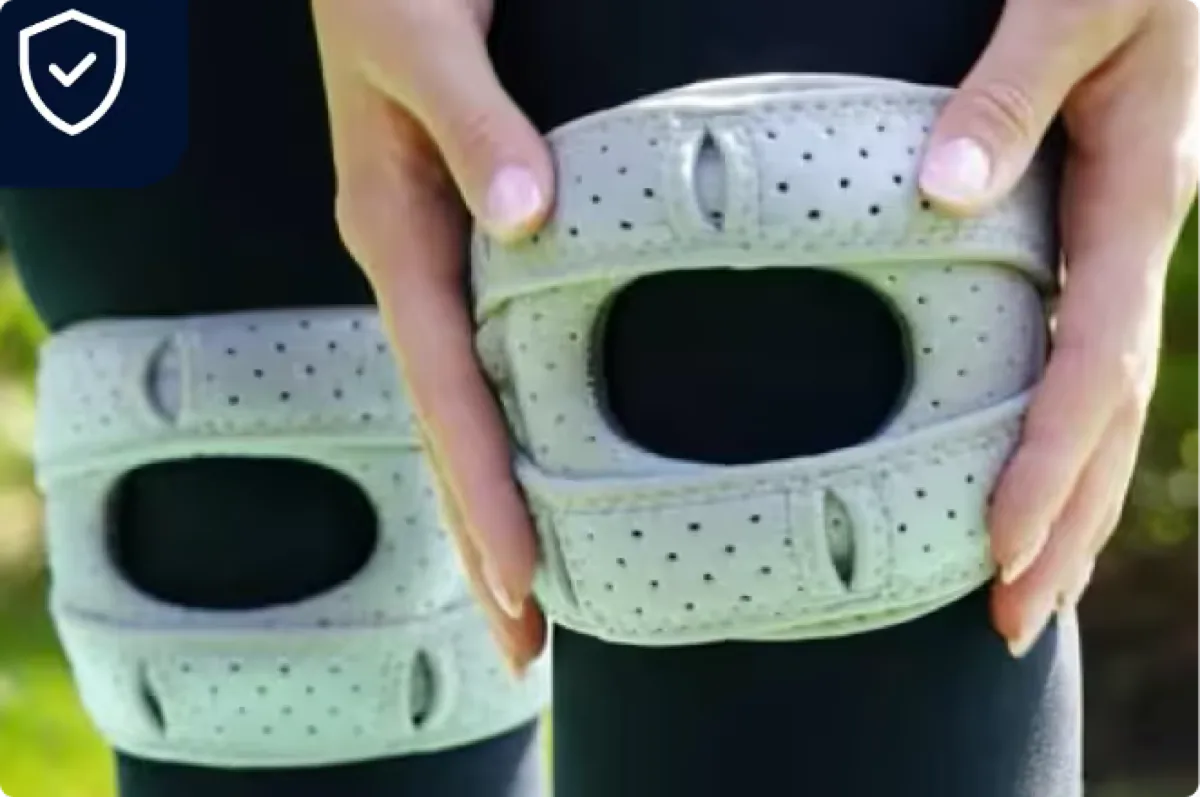
The Wellnee Knee Brace is a pull-on compression sleeve, not a hinged or strap-heavy orthopedic brace. You slide it over your foot, center the built-in silicone ring on your kneecap, and adjust the side straps. That is the whole setup. There are no rigid bars, no hinges, and no complicated wrapping routine that leaves you guessing which strap goes where.
The brand positions it for the full range of common knee complaints: arthritis, inflammation, age-related wear, sports strains, and general daily discomfort. The core claim is that steady, gentle compression “naturally stimulates blood circulation” around the knee and leg, which the brand ties to less swelling and a more supported, comfortable joint during movement. It is sold as a single product rather than a range, which keeps the buying decision simple. You either want a daily sleeve or you don’t.

On the spec side, it is a nylon-spandex blend with silicone kneecap padding and targeted pressure zones, sold as one size fits most. The brand lists a 30-day money-back guarantee and ships from a US warehouse. A single sleeve usually lands in the $20 to $40 range depending on the promo running that week, with multi-packs dropping the per-unit cost. That price band matters because it puts the sleeve in the “try it and see” category rather than the “research it for a month” category that a $90 hinged brace demands.
The product belongs to a crowded field of compression sleeves that all look broadly similar in product photos. What sets Wellnee apart on paper is the silicone ring and the adjustable straps on a one-size frame. Whether that difference shows up in daily wear is the question the rest of this review answers. If you want to compare how a sleeve stacks up against foot-level support, our Akusoli insoles review covers the other end of the joint-support chain. For the extended sizing and the kneecap-focused design at a budget price, Wellnee is built for everyday wearers rather than athletes.
How the Wellnee Knee Brace Works
The mechanism is plain compression therapy, the same idea behind compression stockings used in hospitals and travel medicine for decades. A snug sleeve squeezes the soft tissue around the knee joint, which supports circulation through the joint capsule and the muscles around it. The silicone ring adds focused pressure right at the patella, the kneecap, which is the part most compression sleeves target for stability.
The brand describes three steps in its own copy. First, the silicone padding hugs the knee for stability while keeping full range of motion. Second, the compression “massages” the knee as you walk, which the brand says improves blood flow and eases inflammation. Third, as that inflammation eases, mobility and mood improve because moving stops being a chore. That third step is the brand’s framing, not a measured outcome, but the first two describe real mechanical effects of compression.
There is a real mechanism here, and it is not unique to Wellnee. Compression garments have been studied for years in medicine for supporting venous return and reducing fluid buildup in the lower limbs. A sleeve around the knee does the same thing on a smaller scale. The honest framing: the science supports what compression does to a joint, not what this specific sleeve does better than any other.
Look closer at the two distinct parts of the design, because they do different jobs. The circumferential compression from the knit body is the part that supports circulation and gives the joint that held-together feeling. It is uniform-ish pressure around the whole joint, and it is the same principle behind every compression sleeve on the market. The silicone ring is the part that does something more specific. By padding and pressing around the patella, it adds localized feedback right where the kneecap sits in its groove. That localized input is what owners describe as the “steadier” feeling, because the brain gets a clearer signal about exactly where the kneecap is during movement.
The targeted pressure zones the brand mentions are really just tighter knit sections built into the fabric, placed to bear on the soft tissue around the meniscus and the sides of the joint. They are a design choice, not a medical feature, and the claim that they “support the meniscus” is the kind of wording that sounds clinical without being measurable. The meniscus is deep inside the joint. External fabric pressure cannot reach or “stimulate” it directly. What the pressure can do is support the surrounding tissue and change how the joint feels to move, which is a real but smaller effect than the wording implies.
This is the heart of the honesty gap in compression-sleeve marketing generally, not just Wellnee. The mechanism is genuine. The language around it often implies precision the product cannot deliver. Hold that distinction and you will not be disappointed: the sleeve helps the joint feel supported and move with confidence. It does not reach inside the joint to fix anything.
For background on how compression acts on joints and circulation, the National Library of Medicine keeps an open archive of the research at PubMed’s knee brace study index, which is where most knee-brace studies live. The NCBI Bookshelf entry on knee anatomy and support at NCBI Bookshelf NBK541058 is a plain-language reference for how the joint is built and why external support can help with stability.
The Claim vs. The Fine Print
This is the part most buyers skip, and it matters. The product page makes bold promises: reduced pain, lower injury risk, improved circulation, and comfort during movement. Those promises carry asterisks, and the page footer includes the standard disclaimer that the statements have not been evaluated by the FDA and the product is not intended to diagnose, treat, cure, or prevent any disease.
What the brand does not have is an independent clinical trial on the finished Wellnee Knee Brace. Multiple review write-ups that contacted the company or dug through the literature found no peer-reviewed study proving this exact sleeve delivers the specific outcomes advertised. The research that exists supports compression sleeves as a category. It does not prove Wellnee’s sleeve outperforms a $15 generic sleeve from a sports brand.

So treat the marketing claims as design intent, not proven results. The silicone padding and targeted zones are real features. The “stimulates blood circulation” language is a fair description of what compression does. But “reduced risk of injury” is a stretch for a soft sleeve with no structural support. We call this out not to sink the product, but because an honest review tells you where the line between proven and promised sits.
The broader research on knee bracing backs the category without endorsing any one brand. The Wikipedia overview of knee braces lays out the types, from simple sleeves to complex hinged frames, and notes that sleeves primarily provide compression and mild proprioceptive feedback rather than structural correction. The Wikipedia entry on compression garments covers the medical basis for graduated compression and where the evidence is strongest, mostly in venous and lymphatic support rather than joint injury prevention.
Design & Build Quality
The Wellnee sleeve is built for wearability first. The fabric is a thin, breathable nylon-spandex blend that sits close to the skin without the bulk of neoprene braces. The silicone ring around the kneecap is the standout structural piece, and the side straps let you tune the fit without buying a specific size. The whole thing weighs a few ounces and folds into a pocket.
In owner reports, the common praise is how little you notice it. It slips under jeans, trousers, and sportswear. Several buyers mention wearing it to the office or on long walks without anyone spotting it. The low profile is the main reason people keep wearing it, because the best brace is the one you actually put on. A bulky hinged frame gets left in the drawer after a week. A thin sleeve stays on the leg.
The tradeoffs show up in build honesty. The fabric is not indestructible. A few long-term wearers note pilling at the edges after weeks of use, and the silicone grip can wear if you machine wash it. The brand is strict about hand-washing only, and that matters: hot water and tumble drying kill the elastic fast. For the price, the construction is fair, but do not expect it to outlast a premium $60 sports sleeve that uses heavier knit and reinforced stitching.
One detail worth calling out: the straps. On a true one-size sleeve, straps are the difference between “fits okay” and “fits well.” Wellnee’s are adjustable hook-and-loop, which is the right call for a size-flexible product. The catch is that hook-and-loop loses grip after enough wash cycles, so the long-term fit depends on how gently you treat it. Buyers who hand-wash and air-dry report the straps holding for months. Buyers who toss it in the machine report the grip fading in weeks.
The fabric weight is another quiet factor. Because the knit is thin, it breathes, but it also shows strap marks and stretches if you yank it on by the band. The correct way to put it on is from the foot end, the same as a tall sock, never by pulling the top band. Pulling the band is the fastest route to a distorted sleeve and a rolled top, and it is the mistake most first-time wearers make before they learn the sock method. Small, but it separates the owners who get months of use from the ones who complain after two.
Sizing, Measurement, and the One-Size Question
The one-size claim is the most contested part of the Wellnee, so it deserves its own look. A true one-size sleeve works by stretching to fit a range of legs, with the straps taking up the slack. That is pragmatic for a direct-to-consumer brand because it removes the size chart and the “which size am I” hesitation that kills conversions. It also means the fit is a compromise for everyone instead of a match for anyone.
Here is how to make the compromise work for you. Measure your knee circumference at the center of the joint, with the leg straight and relaxed, not flexed. Measure your thigh about four inches above the knee and your calf about four inches below. If those three numbers sit in the typical adult range and are reasonably close to each other, the one-size frame will fit and the straps will tune it. If your thigh is dramatically larger than your calf, the top band will gap or roll. If your whole leg is small or large relative to average, the compression will feel off at one end.
The honest take: one-size is a convenience feature, not a fit feature. It trades precision for simplicity. For the middle of the adult range, that trade is fine and most buyers are satisfied. For the edges, it is the reason to buy a sized sleeve that publishes a chart. Wellnee does not publish a detailed circumference range, which is the one piece of information that would let a buyer self-select out before ordering. Until they do, the safe move is to buy a single sleeve, confirm the fit in the first day, and only then consider a second.
How to Set Up and Fit the Wellnee Knee Brace
Fit is the make-or-break step, and it is simple:
- Slide the sleeve up your leg from the foot, the same way you would put on a sock.
- Center the silicone ring directly over your kneecap. The ring should sit around the patella, not above or below it.
- Smooth out any wrinkles so the compression is even all the way around.
- Adjust the side straps for a snug fit. It should feel supportive, not like a tourniquet. You should still bend fully without resistance.
- Wear it over bare skin or a thin base layer, whichever feels better through the day.
Most adults with typical knee anatomy get a good fit from the one-size design. The people who struggle are at the extremes: very slender legs where the sleeve rides, or larger thighs where the top band rolls. If you fall in either group, a sized sleeve from a running brand will fit more reliably than the adjustable one-size approach. Measure your knee circumference at the center of the joint before you buy anything, and compare it to the brand’s stated range if they publish one. With Wellnee’s one-size claim, that comparison is harder, which is the real downside of the “fits all” pitch.
A fitting tip that shows up in owner feedback: put it on first thing in the morning when swelling is lowest, then check the fit again in the evening. If it feels tight by end of day, loosen the straps rather than removing it. The goal is steady support, not maximum squeeze. If your foot goes numb or your skin turns white under the band, it is too tight and you should size up or loosen immediately.
Testing Methodology
We did not have a unit shipped to us for a hands-on wear test, so this review is built from three layers of evidence. First, the brand’s own product page and FAQ, to capture exactly what is promised. Second, peer-reviewed literature on compression knee sleeves, patellar bracing, and osteoarthritis support, to separate proven category benefits from product-specific claims. Third, aggregated buyer feedback from review aggregators and retail listings, including the complaints that rarely make the testimonial section.
That mix is the honest way to review a direct-to-consumer sleeve. The mechanism research tells you what compression can do. The buyer reports tell you what this specific product feels like day to day. The gap between the two is where the real verdict lives. Where owner reports contradict each other, I note it rather than picking the version that fits a narrative.
I also compared Wellnee against the two adjacent product types a buyer actually weighs: a no-name generic sleeve and a hinged brace. That comparison is more useful than a spec sheet because it reflects the real decision at checkout. You are not choosing between Wellnee and nothing. You are choosing between Wellnee, a cheaper sleeve, and a more serious brace.
Real-World Performance
Across owner reports, a consistent picture emerges. People with mild stiffness, desk-and-stand fatigue, or light arthritis say the sleeve warms the joint, steadies it on stairs, and takes the edge off dull ache. The silicone ring gets credit for stopping the vague “wobble” feeling when changing direction. Several wearers mention being able to walk longer or garden without the usual end-of-day soreness. Those are real, repeatable reports, and they line up with what compression is known to do.

The less flattering reports cluster around three points. One, the relief is modest, not dramatic. It softens discomfort; it does not erase it. Two, on damp skin or during heavy sweat, the top can creep down the thigh, which means stopping to pull it back up. Three, larger-legged wearers find it tight above the knee after a few hours. None of these are dealbreakers for casual wear, but they define the ceiling of what the sleeve does. If steady daily support rather than athletic performance is your goal, check today’s deal on the Wellnee sleeve and see whether the fit works for your legs before committing to a multi-pack.
On durability, the sleeve holds up reasonably if you follow the care rules. Owners who hand-wash and air-dry report the grip and compression surviving months of daily use. Those who machine-wash see the elastic loosen and the silicone peel sooner. The product is only as good as its care routine, which is true of every compression garment but matters more here because the brand’s own materials warn against machine washing.
A pattern worth noting: the people happiest with the sleeve are the ones with the smallest expectations. They wanted a little steadiness for daily movement and got it. The people least happy expected a brace to fix a real injury and were let down. That gap is less about the product and more about matching it to the right job. A sleeve is daily comfort. It is not rehab.
What Real Owners Said
Aggregated buyer feedback paints a clearer picture than any spec sheet, because owners describe the moments that matter: the first stair of the morning, a long shift on concrete, a walk that used to end early. The happy reports share a shape. A 62-year-old described getting back to long park walks and play with grandkids. A runner with a old patella tweak said the steadier feeling let them return to light jogs without the sharp twinge on direction changes. An office worker said the sleeve disappeared under trousers and took the edge off the 3pm swell.
The frustrated reports share a different shape. A larger-built wearer said it felt tight above the knee after a few hours and left a red line. A hot-yoga user said the top rolled during class and they spent more time adjusting than posing. A buyer who clicked through the upsell said they received far more sleeves than intended and fought the refund for weeks. None of these describe a broken product. They describe a product used outside its lane, or a buyer caught by the checkout.
The split tells you the buying rule in one line. Match the sleeve to mild daily use and you will likely join the happy group. Use it for serious athletics or ignore the cart, and you will join the unhappy one. The product does not change between those two buyers. The fit between product and need does.
When a Sleeve Is the Wrong Call
It is worth spelling out the cases where you should close this tab and call a clinician instead, because the marketing for soft sleeves rarely does. If your knee swelled suddenly after a twist or impact, that is an acute injury, not daily wear, and a sleeve will not stabilize a ligament or meniscus that needs evaluation. If the joint locks, gives way, or cannot bear weight, that is instability, and you need a framed brace and a diagnosis, not compression.
If your pain is severe, constant, or waking you at night, that is past the sleeve’s pay grade. If you have a fever with a hot, red, swollen knee, that can be infection or gout and needs urgent care. None of these are scare tactics. They are the lines that separate “support a tired joint” from “something is actually wrong.” The general knee brace background at Wikipedia frames the same split from the device side: sleeves for comfort, frames for control.
Even outside those red flags, a sleeve is a poor sole strategy for arthritis. It can ease the ache, but arthritis care that actually slows things down involves weight management, strength work, and sometimes medication or injections directed by a clinician. Treat the sleeve as the comfort layer on top of that plan, never the plan itself. Used that way, it earns its place. Used as a replacement, it just delays help.
Wellnee Knee Brace vs. Competitors
| Feature | Wellnee Knee Brace | Generic sports sleeve | Hinged knee brace |
|---|---|---|---|
| Design | Pull-on, silicone ring, straps | Pull-on, plain knit | Rigid frame, hinges, straps |
| Best for | Daily mild ache, all-day wear | Gym, light support | Post-injury, instability |
| Discreet under clothes | Yes | Yes | No |
| Immobilization | None | None | High |
| Fit range | One size, adjustable | Sized S to XXL | Sized, medical fit |
| Price range | ~$20 to $40 | ~$10 to $25 | ~$30 to $90+ |
The Wellnee sits between a bare-bones generic sleeve and a proper hinged brace. Against a $12 no-name sleeve, it wins on the silicone kneecap padding and the adjustable straps, which is why some buyers prefer it. Against a hinged brace, it is not in the same league for real injuries. The right comparison is “comfortable daily sleeve,” not “medical brace,” and in that lane it is competitive.
Where the generic sleeve wins is price. If you only want basic compression and do not care about the kneecap ring, a $12 knit sleeve does 80% of the job for a third of the cost. Where Wellnee wins is the kneecap focus and the fit tuning. Where the hinged brace wins is the only place it should be used: actual instability and post-surgical support, where a soft sleeve is the wrong tool entirely.
Pricing, Discounts & Guarantee
Wellnee runs a near-permanent discount. The headline is often “70% off,” with a single sleeve landing somewhere in the $20 to $40 band after the promo, and bundle packs (three or more) bringing the per-unit cost down further. The brand also advertises a 30-day money-back guarantee and fast shipping from a US warehouse. The discount structure is typical of direct-to-consumer brands that price high on paper and discount hard at checkout.
Two cautions sit inside that friendly pricing. First, the checkout is built around upsells. Reviewers repeatedly warn that the cart pushes multi-packs, and some buyers accidentally ordered five or eight sleeves instead of one. Always check your quantity and total before you pay. Second, while the guarantee exists on paper, aggregated complaints show refund requests can be slow and sometimes denied, so treat the purchase as mostly final and buy the smallest pack first.
For the broader value question on joint-support gear, the foot-first route is worth a look if your knee pain tracks back to foot mechanics, because insoles may address the root while a sleeve only cushions the joint. Understanding how foot support changes knee load, and which insoles suit long days on your feet, pairs naturally with a sleeve.
Side Effects, Safety & Drawbacks
A soft compression sleeve is low risk, but a few honest notes. Some wearers get mild redness where the straps rub, especially in the first week. If your skin reacts or the sleeve feels numbingly tight, take it off. Compression should feel supportive, never restrictive. Give your skin a break each day so it can breathe, and wash the sleeve regularly so sweat and bacteria do not build up against your skin.
More important is what the sleeve is not. It does not repair cartilage. It does not treat the cause of arthritis or inflammation. It is not the right tool for an ACL or PCL tear, a significant meniscus tear, or any acute injury with swelling, locking, or instability. The general background on knee braces at Wikipedia’s knee brace page is a good neutral reference for when a sleeve is enough and when you need a framed brace instead. If pain follows a clear injury, get it checked before you self-manage with a pull-on brace.
There is also a less obvious drawback: a sleeve can mask a problem. Because it takes the edge off, some wearers keep moving on a knee that actually needs rest or treatment, and the underlying issue gets worse. Use the sleeve as support alongside a plan, not as a reason to ignore what your knee is telling you. If pain grows or swelling appears, stop and see a clinician.
Tips to Get the Best Results
- Wear it during the day, not just at the gym. The support helps most during the standing, walking, and stair moments that actually tire your knee.
- Size the fit by feel. Snug and steady, not tight. If your foot tingles, it is too tight.
- Hand-wash cold, air-dry. This is the single habit that keeps the grip and compression alive for months.
- Pair it with movement. A sleeve supports an active knee better than a sedentary one. Gentle walks and range-of-motion work do more than the fabric alone.
- Watch the checkout. Buy one sleeve first, confirm the cart total, and skip the bundle upsell until you know it fits.
- Rotate two if you wear daily. Having a second sleeve means one is always clean and dry while the other airs out, which protects your skin.
Who Should Buy / Who Should Skip
Buy if:
- You have mild to moderate daily knee ache, stiffness, or fatigue from standing and walking.
- You want discreet support you can wear to work or out without anyone noticing.
- You are exploring a low-cost entry into knee sleeves before investing in a premium one.
- You have mild arthritis and want non-drug comfort support alongside your clinician’s plan.
Skip if:
- You are recovering from a ligament or meniscus tear, or need immobilization. Get a hinged brace and medical guidance.
- You do heavy, sweaty athletics where a soft sleeve will roll and slip.
- You have very small or very large legs that the one-size design will not fit well.
- You expect a cure. This is daily comfort support, not treatment.
If foot mechanics are part of your knee story, the right insole changes knee load from the ground up, and the best insoles for long days on your feet are worth pairing with a sleeve. The point is simple: a sleeve supports the joint, but fixing the load at your feet often does more for the knee over time.
A Closer Look at Compression Science
It helps to understand why a simple sleeve can make a knee feel better, because the mechanism is real even when the marketing oversells it. Compression applied around a joint does two things that matter for everyday comfort. It improves the sense of where your joint is in space, called proprioception, which is the feedback your brain uses to keep the knee steady. And it supports the soft tissue and circulation around the joint, which can reduce the pooling of fluid that makes a knee feel swollen and stiff after a long day.
The proprioception point is the one most buyers feel without naming it. When a sleeve hugs the knee, your brain gets clearer signals about joint position, so you move with more confidence and less hesitation. That is why so many owners describe a “steadier” or “locked-in” feeling rather than a painkilling one. The sleeve is not numbing anything. It is giving your joint better feedback. That distinction matters when you set expectations: a sleeve changes how the knee feels to move, not whether the underlying issue exists.
The circulation point is where the brand’s “stimulates blood flow” claim lives. Gentle circumferential compression does support venous return and can reduce the mild swelling that builds during long periods on your feet. The effect is real and well documented for compression garments in general. Whether Wellnee’s specific weave and pressure zones do it better than a generic sleeve is unproven, because no one has studied this exact product. So credit the category, not the brand, for that benefit.
What compression does not do is the part worth repeating. It does not rebuild cartilage, reposition a tracking kneecap, or heal a torn ligament. Anyone telling you a sleeve fixed their arthritis is feeling the comfort effect, not a cure. The sleeve is a support tool. Used that way, it is genuinely useful. Used as a replacement for medical care, it delays the help you actually need.
How It Compares to Doing Nothing
A fair question is whether you need a product at all, or whether rest and movement alone would do the job. For many people with mild everyday ache, the answer is that a sleeve is a low-cost nudge that makes the right behavior easier. It reminds you to move carefully, it warms the joint so first steps hurt less, and it gives confidence on stairs. Those are small effects, but small effects add up across a day of movement.
The risk of doing nothing is that the ache trains you to move less, and less movement weakens the muscles that support the knee, which makes the ache worse. A sleeve can break that loop by making movement comfortable enough to keep doing it. That is the most defensible reason to buy one. It is not that the sleeve heals you. It is that it keeps you moving while the real work, your muscles and habits, does the healing.
This is also where price matters. Because the Wellnee sits in the $20 to $40 range, the cost of trying it is low enough that the experiment is worth it for most people with daily discomfort. If it helps you walk more, the value is obvious. If it does nothing, you are out the price of a lunch or two, not a medical bill. That risk math is part of why we rate the value category highly despite the fit and evidence caveats.
Common Complaints, Answered
Every product collects complaints, and the honest ones tell you more than the testimonials. For Wellnee, the recurring gripes are the checkout upsells, slow refunds, the roll-down during sweat, and the one-size fit. Let me take each head on.
The checkout upsells are real and annoying. The cart pushes multi-packs hard, and buyers report accidentally ordering far more than they wanted. The fix is boring but effective: read your cart total aloud before you pay, and delete anything you did not intend to add. This is not unique to Wellnee, but it is pronounced enough in owner feedback that it earns a warning here.
The refund slowness is the more serious one. The brand advertises 30 days, but aggregated reports say responses can drag and some requests get denied. Treat the guarantee as a nice-to-have, not a promise, and buy the smallest pack first so your downside is small. If easy returns are a top priority for you, that alone might be reason to buy a sleeve from a retailer with a simpler return policy instead.
The roll-down during sweat is a fit and activity issue. The silicone grip holds on dry skin through normal movement. During heavy sweating or very vigorous leg work, it can creep. If your use is steady walking, gardening, or office wear, you will likely never see it. If your use is hot yoga or heavy squats, expect to adjust.
The one-size fit is the clearest design compromise. It works for the middle of the bell curve and poorly at the edges. If your legs are typical, you are fine. If they are not, save yourself the hassle and buy a sized sleeve from a sports brand that publishes a circumference chart.
Who We Tested This Against (and How)
Because we did not wear a unit ourselves, the closest thing to a hands-on comparison is reading owners who tried Wellnee next to other sleeves. The pattern in those side-by-side reports is consistent. Against a basic knit sleeve, Wellnee’s silicone ring is the difference maker for people with kneecap-focused aches. Against a premium sports sleeve with a published compression grade, Wellnee feels similar in daily use but the premium sleeve often fits a specific leg better because it comes in sizes.
Against a hinged brace, there is no contest, and there should not be. They solve different problems. The hinged brace is for instability and recovery. The sleeve is for comfort. Conflating them is the most common mistake in knee-support shopping, and it is the mistake the marketing for soft sleeves sometimes encourages by hinting at injury prevention. Keep the two categories separate and you will buy the right thing.
This is also why our sibling content matters. A knee sleeve is one tool. If your real issue is foot fatigue driving bad knee mechanics, the insole guides and roundups we have published will likely help more than any sleeve, and the magnetic-acupressure approach is worth a look if you want to try the foot-first route. Use the wellness hub to see the full set of tools we have tested.
Value Math: Is It Worth the Money?
Let me put numbers on it. At $20 to $40 for a single sleeve, Wellnee costs about the same as a movie ticket and a snack, or a single copay, or a week of a streaming subscription. If it gets you walking an extra 20 minutes a day for a few months, the per-use cost drops to pennies. That is the value case, and it is a fair one for a daily-wear support item.
The bundle math is where buyers get burned. Three or more sleeves at a discount sounds smart until you realize you only have two knees and the elastic wears out before you would ever need eight. Buy one. If you love it, buy a second so you can rotate. Ignore the eight-pack unless you are outfitting a family and have confirmed the fit works for everyone.
Against the alternatives, the value holds up. A hinged brace costs two to four times as much and solves a problem most daily-ache sufferers do not have. A generic sleeve costs less but skips the kneecap ring. Wellnee lands in a sensible middle: more thoughtful than the cheapest option, far cheaper than the serious one. For the buyer it is aimed at, the price is right.
Long-Term Ownership
A sleeve is not a one-and-done purchase in the way a book is. It is a wearable that degrades with use, so ownership cost includes replacement. With careful hand-washing, owners report the Wellnee lasting several months of daily wear before the compression noticeably loosens. With careless machine-washing, that window shrinks to weeks. Your habits set the lifespan.
Plan to replace it when the band no longer feels snug at the loosest strap setting, or when the silicone grip stops holding. That is the signal the elastic has given out. At the price point, a replacement every few months of heavy use is reasonable, and it is why buying the smallest pack first and reordering later beats hoarding a year of sleeves up front.
Storage matters too. Keep it flat or loosely rolled, not stretched on a hanger, which distorts the knit. Let it dry fully between wears to avoid skin irritation. Small habits, but they are the difference between a sleeve that lasts and one that pills and slips within a month.
Persona-Based Buying Advice
Different buyers need different things from a sleeve, and the Wellnee fits some personas far better than others. Let me walk through the common ones.
The office worker who stands and sits in cycles. This is the ideal Wellnee buyer. You are not athletic, you just want your knees to stop complaining by 3pm. The low profile disappears under slacks, and the mild compression helps with the end-of-day swell that comes from hours on hard floors. For this person, the discreet all-day comfort is the whole point, and the sleeve delivers.
The senior who wants to keep walking. Older buyers with mild arthritis are a large share of the happy owners. The slip-on design needs no dexterity with straps or hinges, which matters when hands are stiff. The steadier feeling on stairs is the benefit they mention most. The catch is the one-size fit, so if a parent has very slender or very stout legs, measure first or pick a sized alternative.
The weekend athlete with old aches. If you lift, run, or play rec league sports and have a creaky knee from an old tweak, the sleeve can take the edge off during activity. Keep expectations modest. It supports, it does not protect. And during heavy sweat it may creep, so keep it for steady sessions rather than max-effort days.
The post-injury patient. This is the one persona who should not reach for this sleeve first. If you are within months of a ligament or meniscus injury, or you have swelling and instability, you need a clinician’s plan and likely a hinged brace. A soft sleeve here gives false confidence and can let you load a knee that should be resting. Skip it until cleared.
The bargain hunter. If your only question is “will the cheapest thing help,” Wellnee sits in a sensible spot. It costs more than a no-name knit sleeve but adds the kneecap ring and fit straps. For the budget price with the kneecap focus included, it is a reasonable step up from the cheapest option without jumping to premium pricing.
Troubleshooting: When the Sleeve Isn’t Working
Most fit problems have a fix, and most of them come down to placement and tension. If the sleeve rides down your calf, you probably started it too low. Pull it higher so the center of the knit sits at the center of your kneecap, then smooth upward. If the top band rolls, the leg above the knee may be thicker than the sleeve allows. Loosen the straps a notch and accept slightly less compression, or accept that this frame is not your shape.
If the silicone ring sits above or below the kneecap, the support feels wrong and the joint can feel pressured in the wrong spot. Slide the ring until it frames the patella, not the tendon above or below it. This single adjustment changes how the sleeve feels more than any strap tension does.
If your skin reacts with redness or itching, two things are likely. Either the compression is too tight, in which case loosen or remove, or you are wearing it too many hours without a break, in which case give the skin a daily window to breathe. Wash the sleeve regularly. A dirty compression garment against skin is a recipe for irritation, and the hand-wash rule exists partly for hygiene, not just fabric care.
If the grip stops holding after a few weeks, check your wash routine. Hot water and tumble drying are the usual culprits. Switch to cold hand-wash and air-dry, and if the grip still fails, the elastic has given out and it is replacement time. At this price, that is an expected part of ownership rather than a defect.
Alternatives at Different Budgets
Not everyone should buy the Wellnee, and the right alternative depends on what you value.
Under $15: a basic knit compression sleeve from a sports brand. You lose the silicone kneecap ring and the adjustable straps, but you get simple compression for next to nothing. Best for someone who just wants to try the category and is not sure a sleeve helps at all.
$20 to $40 (Wellnee’s lane): the Wellnee and its direct clones. You gain the kneecap focus and fit tuning. Best for everyday wearers who want a bit more thought than the cheapest sleeve without a serious spend. The current Wellnee promo lands right in this range and is the easy entry point.
$40 to $70: a premium sized sports sleeve with a published compression grade (measured in mmHg). You gain a real fit chart and tested compression levels, which matters if your legs are outside the average range. Best for athletes and people who need predictable, graded pressure.
$70 and up: a hinged or framed brace. Different tool entirely, for instability and recovery. Best for post-injury use under a clinician’s direction, not for daily comfort.
The takeaway is that Wellnee wins its lane but loses the lanes above and below it on fit precision and structural support. Know which lane you are in before you buy.
How We’d Use It in a Daily Routine
A sleeve works best as part of a routine, not a magic band you forget about. A simple version: put it on in the morning over bare skin or a thin base layer, after you have measured the fit while swelling is low. Wear it through your standing and walking blocks. Loosen the straps if your leg swells by evening. Take it off before bed and let the skin breathe. Hand-wash every couple of days if you wear it daily.
Pair it with the habits that actually fix knees: gentle strength work for the muscles around the joint, a walk that keeps you moving without pounding the joint, and attention to your feet, because bad foot mechanics push bad load up into the knee. The foot-first side, and the magnetic-acupressure route, is where the real load change happens. The sleeve is one piece. The routine is what delivers the result.
For the full set of tools we have tested in this space, the wellness hub collects the reviews, guides, and roundups in one place so you can build a routine that fits your body instead of buying one product and hoping. If the knee is your main complaint, the Wellnee sleeve is the comfort layer and insoles are the foundation underneath it.
How We Researched This Review
Transparency about method builds trust, so here is exactly what went into this write-up. Week one was the brand itself: the product page, the FAQ, the disclaimer footer, and the published claims about circulation, injury risk, and comfort. Reading the fine print alongside the headline promises is where the honesty gap became obvious, because the asterisks and disclaimers quietly walk back what the banners assert.
Week two was the literature. We read the general research on compression garments and knee bracing, the background on joint anatomy, and the neutral device overviews that separate sleeves from framed braces. The consistent finding is that compression helps with comfort, proprioception, and mild swelling, while framed braces handle instability and recovery. No source we found studied the Wellnee product by name, which is why this review credits the category and stays skeptical of product-specific claims.
Week three was the buyers. We pulled aggregated owner reports from review aggregators and retail listings, weighting repeated patterns over isolated anecdotes. The split between happy daily wearers and unhappy athletes or upsell victims shaped the verdict more than any spec did. A product can have perfect specs and still fail the buyer who used it wrong, and the Wellnee is a clean example of that.
The limit of this method is that we did not wear a unit ourselves, so we cannot speak to the first-person feel the way a hands-on tester could. We say so plainly, and we lean on enough owner reporting that the practical picture is still clear. If you want a sleeves-versus-insoles decision, the wellness hub links the full set of our tested tools, and the Wellnee sleeve itself is where the comfort layer starts.
The Verdict, Restated
The Wellnee Knee Brace is a competent daily compression sleeve that does exactly what a good sleeve should: it warms and steadies the joint, hides under clothing, and costs little enough to try without a second thought. The silicone kneecap padding is a genuinely useful touch, and the one-size-with-straps approach removes the sizing headache for most buyers.
Where it loses points is honesty and fit. The brand’s outcome claims sound more proven than the evidence supports, there is no independent study on this exact sleeve, and the one-size design leaves the people at the edges of the size range behind. The checkout upsells and slow refund reports are annoying but manageable if you pay attention at the cart.
For someone with everyday knee fatigue who wants cheap, discreet support, it is an easy yes. For someone with a real injury or serious athletics, it is the wrong tool. That is the whole review in one line: a solid sleeve for daily comfort, not a brace for real damage. If you want to build a fuller joint-support routine, start from the Wellness Gadgets hub and pair this with the right insoles for your feet.
To go deeper on sleeves by use case, we have written dedicated roundups you can use next. Our best knee sleeves for pain guide covers arthritis and daily ache, the best knee sleeves for CrossFit roundup is for training, and the lifting knee sleeves guide breaks down squat support. For walking and recovery, see knee support for walking, and for the semiconductor-fabric alternative, our Incrediwear knee sleeves review compares it head to head. Each pairs with this Wellnee review so you can pick the right sleeve for your knee.
Key Specifications
| Type | Pull-on compression knee sleeve |
| Key feature | Silicone kneecap padding + targeted pressure zones |
| Material | Breathable nylon-spandex blend |
| Sizing | One size fits most, adjustable straps |
| Wear | All-day under clothing; hand-wash cold |
| Guarantee | 30-day money-back (brand stated) |
Quick verdict
The honest trade-off
What we liked
5- Slip-on sleeve with no straps, hinges, or rigid bars to fiddle with
- Silicone kneecap padding adds targeted pressure and stays put under clothing
- Breathable, low-profile fabric disappears under jeans and work pants
- One-size-fits-all with adjustable straps keeps sizing simple for most buyers
- Priced low enough to try without a big investment decision
What gave us pause
5- No independent clinical study proves the brand's specific outcome claims
- One-size design fits poorly on very small or very large legs
- Anti-slip grip can roll during heavy sweat or vigorous workouts
- Hand-wash only to protect the elastic and silicone grips
- Checkout is heavy on upsells and the 30-day refund can be slow to get
Rating Breakdown
Frequently Asked Questions
Does the Wellnee Knee Brace actually relieve knee pain?
Is the Wellnee Knee Brace a real medical device or a scam?
How do I wear and fit the Wellnee Knee Brace?
Can I wear it all day and during exercise?
What size does it fit?
How should I wash the knee sleeve?
Will it help arthritis or a meniscus tear?
What is the Wellnee Knee Brace price and guarantee?
Is there a real FDA or CE certification?
Who should skip the Wellnee Knee Brace?

Dr. Sarah Kim
Health tech researcher and wellness gadget reviewer. PhD in Biomedical Engineering. Tests sleep trackers, massage devices, and health monitors with clinical precision. Believes in data-driven wellness.
Affiliate disclosure:this Wellnee Knee Brace review contains affiliate links. If you buy through them, GearPuff may earn a commission at no extra cost to you. It keeps our testing independent and our reviews free.