
Auto Translation Device: How It Works and Is It Worth It in 2026
What is an auto translation device, how it works, and whether it beats a phone app in 2026. We break down accuracy, offline use, and the best auto-translating gadgets to carry.

Tech Reviewer
In This Article
The term “auto translation device” sounds like one product, but buyers usually mean two different things. One is a dedicated gadget that translates speech on its own with almost no typing. The other is any device, including your phone, running translation automatically through an app. Both erase language barriers, but they are not the same buy. This guide explains what an auto translation device actually is, how it works, and whether one belongs in your bag in 2026.
I have tested the Enence translator hands-on and read the wider field, including the 2026 accuracy benchmarks where hardware devices land around 80 to 92 percent and phone apps push higher on hard sentences. Here is the straight version, and for a ranked shortlist of the top hardware, see my best language translator device guide.
What Is an Auto Translation Device?
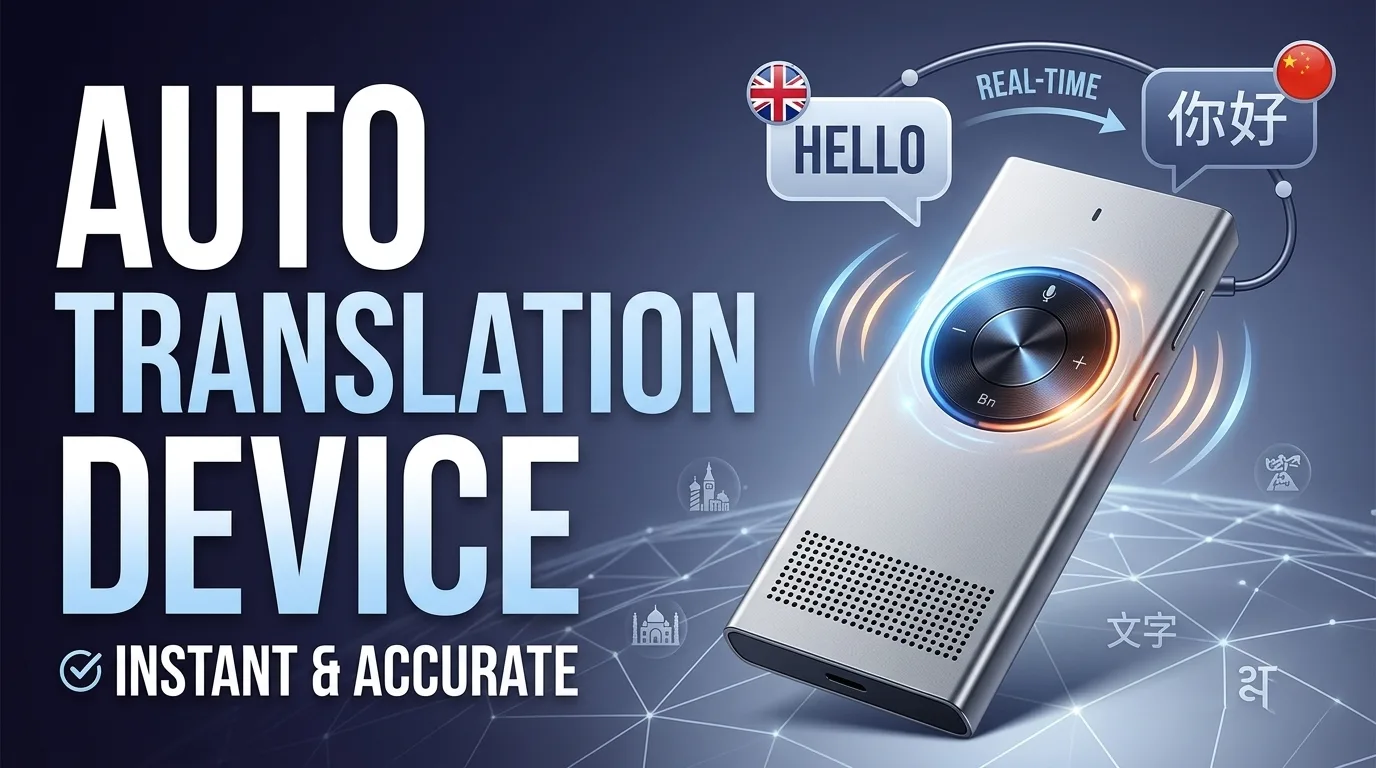
An auto translation device listens to you speak, converts the speech to text, runs it through a translation engine, and speaks the result in the target language. The “auto” part is that it does this with one button press rather than typing and copy-pasting. Two-way models let the other person press their button and get translated back to you, so a conversation flows without either side speaking the other’s language.
Dedicated hardware does this with purpose-built parts: a directional mic that cuts background noise, a speaker loud enough to hear across a table, and controls simple enough to use mid-chat. Your phone does the same thing through Google Translate or a similar app, but it is also doing a hundred other jobs and depends on you holding and swapping it. That difference is the whole reason standalone devices exist.
How an Auto Translation Device Works
Under the hood, every auto translation device runs neural machine translation. Your voice becomes text through speech recognition, the text is translated by a model trained on huge language datasets, and the output is spoken by a voice engine. Online, the heavy lifting happens in the cloud, which is why online mode is the most accurate. Offline, a smaller pack runs on the device itself, so it works without signal but with slightly lower quality.
Speed is where these gadgets shine. A short phrase translates in about one to two seconds on most devices, fast enough that a conversation keeps its rhythm. The weak point is always the same: long, idiomatic, or technical sentences. The model guesses meaning from patterns, and rare patterns get guessed wrong. Keep your side of the talk plain and the device performs.
Auto Translation Device vs. Phone App
This is the decision every buyer faces. A dedicated auto translation device wins on conversation flow and offline reach. You press a button and talk, you are not unlocking a phone and passing it around, and many devices translate where a phone has no signal. A phone app wins on accuracy for long sentences and costs nothing.
My take is the combo most travelers actually want: a cheap pocket translator for ease and offline, with the phone app as a precision backup. That covers nearly every scenario for the least money. If you only travel once a year and stay in cities with good signal, skip the hardware and use the app. If you travel often or go off the grid, the device earns its place.
What to Look for in an Auto Translation Device
- Language coverage for the countries you visit. All handle the big languages. Smaller ones vary.
- Offline packs you can download in advance. The feature that saves you when signal drops.
- Connectivity. Built-in data (Vasco, Pocketalk) versus phone tether (budget devices).
- Form factor. Handheld for simplicity, earbuds for hands-free talk, screen device for reading text.
- Battery. A full day of on-and-off use on one USB-C charge.
- Camera translation if you need to read menus, signs, and labels in a script you cannot read.
The Enence Translator as an Auto Translation Device
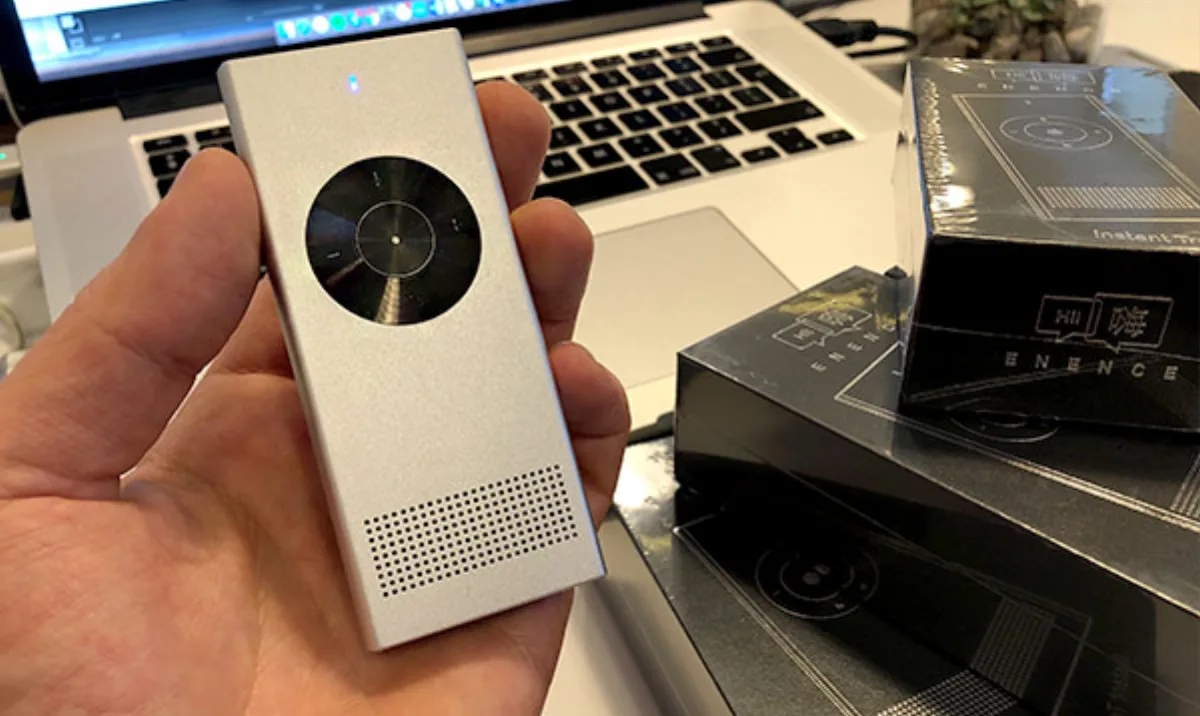
The Enence translator is the budget auto translation device I tested myself, and it is the easiest recommendation for most travelers. It covers 68+ languages, translates two ways in around 1.5 seconds, and works offline once you load packs. The two-button layout is the simplest on the market, which is why I rate it the best pick for casual and older travelers.
In 3 weeks of testing it handled Spanish, French, and Thai travel phrases cleanly and kept working on a flight with no signal. The speaker is quiet in noise and long sentences lose to a phone app, but at the discounted price with a 30-day guarantee the risk is small. For the full hands-on findings, read my Enence translator review.
Tips to Get the Most From an Auto Translation Device
- Load offline packs at the hotel on Wi-Fi before you head somewhere with no signal.
- Speak in short, plain sentences. One idea per press.
- In noise, hold the speaker toward the listener and keep the first line simple.
- Keep the phone app as a backup for long or technical sentences.
- Charge the night before a big travel day. Most use USB-C, so any bank works.
Final Verdict
An auto translation device is worth it if you travel often, hate juggling a phone mid-conversation, or go places with no signal. For most people, a budget pocket translator with offline packs, like the Enence translator I tested, delivers most of the value for a fraction of the price. If you only need occasional text translation with good signal, the free phone app is enough. Either way, the device turns “I have no idea what they just said” into “got it” while you are standing there, which is the whole point of going.
Frequently Asked Questions
What is an auto translation device?
How does an auto translation device work?
Do auto translation devices need the internet?
Are auto translation devices accurate?
Is an auto translation device better than Google Translate?
How much does an auto translation device cost?
Can an auto translation device help me learn a language?
Which auto translation device is easiest for non-tech users?
Alex Thompson
Consumer electronics reviewer specializing in smart gadgets and innovative tech. Tests 100+ gadgets annually. Previously wrote for The Verge and Wired. Focus on practical daily-use value.
Affiliate disclosure:This article contains affiliate links. If you buy through them, GearPuff may earn a commission at no extra cost to you. It keeps our testing independent and our reviews free.