
Best Translator Devices for International Travel in 2026
The best translator devices for international travel in 2026, ranked by accuracy, offline use, and value. Pocket translators, earbuds, and two-way gadgets tested for real trips.

Tech Reviewer
In This Article
- Why a Traveler Buys a Translator Device in 2026
- What to Look for in a Translator Device
- The Best Translator Devices for International Travel in 2026
- 1. Enence Translator — Best Budget Pocket Translator
- 2. Pocketalk Model S — Best for Built-In Global Data
- 3. Vasco V4 — Best for Multi-Country Trips
- 4. Timekettle M3 Earbuds — Best for Hands-Free Talk
- 5. iFLYTEK Smart Translator — Best Screen and Camera Combo
- Comparison Table
- How We Ranked These
- Pocket Translator vs. Translation Earbuds vs. Phone App
- Who Should Buy Which
- Tips to Get the Most From a Travel Translator
- Final Verdict
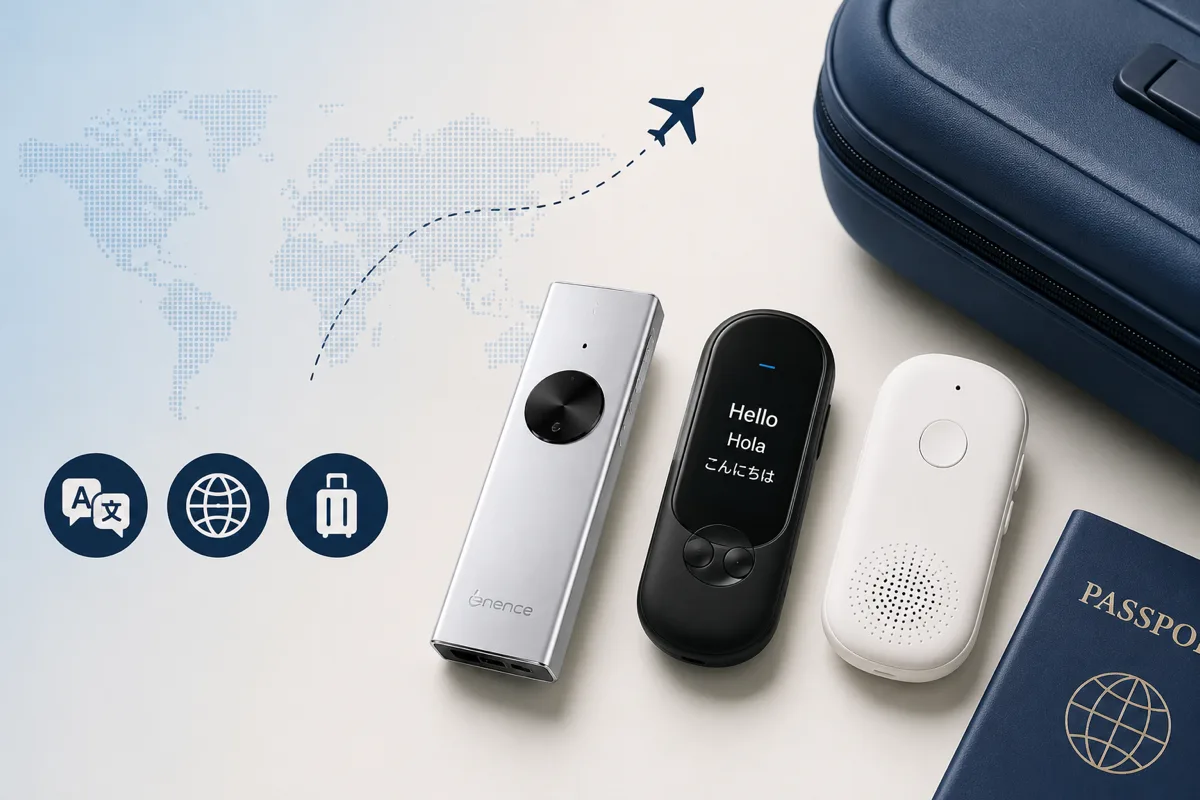
Language is the one border you cannot see on a map. You land in a new country, you are hungry, you need a taxi, and suddenly the simplest request turns into charades. For years the answer was a translation app and patience. In 2026 the dedicated translator device has grown up enough that it is worth a spot in your carry-on for the right kind of trip. The field now spans pocket handhelds, translation earbuds, and full-screen devices with built-in global data.
I have tested the Enence translator hands-on and studied the wider market, including the Reddit threads where travelers argue about whether these gadgets beat a free phone app. This guide ranks the best translator devices for international travel in 2026, explains what actually matters, and points you to the right pick for your trip style. For the full field of gadgets we cover, start with the smart gadgets category, and if you want a deep dive on the budget pick I tested myself, here is my Enence translator review.
Why a Traveler Buys a Translator Device in 2026
The phone app is free and it is good. So why carry a separate gadget? Three reasons keep coming up from real travelers.
First, conversation flow. Passing a phone back and forth, unlocking, switching apps, and squinting at a screen breaks the rhythm of talking to someone. A dedicated device with a talk button keeps both people looking at each other. That sounds small until you are doing it twenty times a day.
Second, offline use. A phone app with no offline pack is dead the moment signal drops. Many dedicated devices translate offline with preloaded packs, which matters on trains, in rural towns, and on planes.
Third, the non-tech traveler. Plenty of people who would never configure a translation app can press a button and talk. That alone sells these devices to families and older travelers.
The catch, repeated across every Reddit thread, is accuracy. Budget devices lag a phone app on long or nuanced sentences. Buy one for ease and offline reach, not for flawless translation of a paragraph.
What to Look for in a Translator Device
Before the rankings, the specs that decide whether a device earns its place in your bag.
- Language coverage. Match it to your destinations. All devices handle English, Spanish, French, German, Mandarin, Japanese. Coverage of smaller languages (Vietnamese, Tagalog, regional dialects) varies a lot.
- Offline packs. The single most useful travel feature. Confirm you can download packs and that they cover your key languages.
- Connectivity. Some devices have built-in global data (Vasco, Pocketalk). Budget ones tether to your phone’s data or Wi-Fi. If you roam often, built-in data saves money and hassle.
- Form factor. Handheld for simplicity, earbuds for hands-free talk, screen device for reading menus and signs.
- Battery. Look for a full day of on-and-off use on one USB-C charge.
- Camera translation. Reads menus, signs, and labels. A real plus if you travel where you cannot read the script.
The Best Translator Devices for International Travel in 2026
1. Enence Translator — Best Budget Pocket Translator
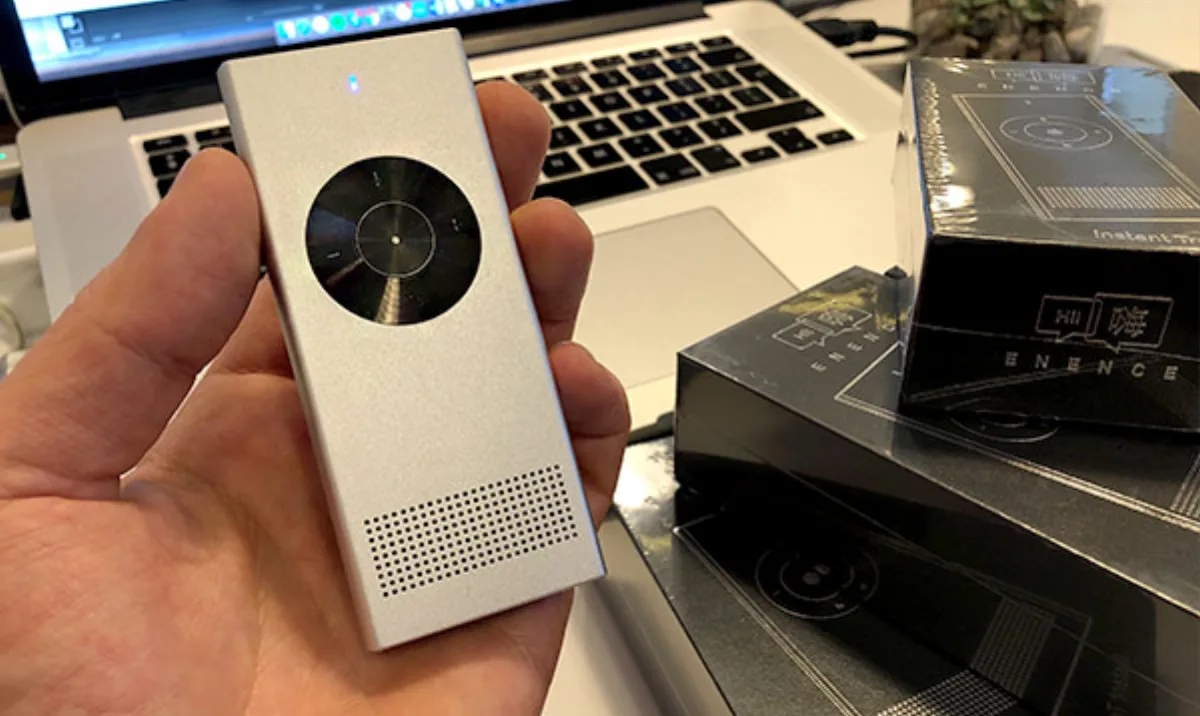
The Enence translator is the entry point that surprised me. It covers 68+ languages, translates two ways in about 1.5 seconds, and works offline once you load packs. The two-button layout is the simplest on this list, which is why I rate it the best pick for casual and older travelers who do not want a phone in hand.
In my 3 weeks of testing it handled Spanish, French, and Thai travel phrases cleanly and kept working on a flight with no signal. The weak spots are a quiet speaker in noise and lower accuracy on long sentences versus a phone app. At the discounted price with a 30-day guarantee, the risk is tiny. My full hands-on findings are in the Enence translator review.
2. Pocketalk Model S — Best for Built-In Global Data
Pocketalk is the name most travelers know. The Model S translates 82 languages with its own SIM and a larger screen, so you are not burning phone roaming or hunting for Wi-Fi. Translation speed and accuracy are strong because it pulls from multiple cloud engines.
The cost is the catch. Pocketalk runs $300 plus, and while it removes the hotspot dance, you are paying for convenience. For someone who travels a few times a year, the Enence at a fraction of the price covers most needs. For a frequent flyer who hates tethering, Pocketalk earns its keep.
3. Vasco V4 — Best for Multi-Country Trips
Vasco sells the V4 with free lifetime global data in nearly 200 countries and a camera for reading signs and menus. That is the strongest “never think about connectivity” pitch on the market. Accuracy is top tier and the touchscreen makes long text readable.
The downside is price, around $449, and weight. You buy Vasco because travel is your job or your frequent habit, not for a once-a-year beach trip. Over several years of active travel the lifetime data can beat a cheaper device plus roaming fees.
4. Timekettle M3 Earbuds — Best for Hands-Free Talk
Timekettle’s M3 earbuds translate in both ears with 40 languages and 13 offline pairs. The experience is the closest to a real conversation: you wear them, you talk, it translates. No passing a gadget back and forth.
The awkward part is social. Two people wearing earbuds to chat with a local looks odd, and the price sits above budget handhelds. For language exchange, long business dinners, or anyone who hates holding a device, they are the most natural option. For a quick cafe order, they are overkill.
5. iFLYTEK Smart Translator — Best Screen and Camera Combo
iFLYTEK devices pair a 5-inch screen with photo translation in 50+ languages and fast two-way voice. The big screen helps when you need to read a longer translation or show text to someone. Accuracy is strong, especially for Asian language pairs where iFLYTEK’s training data is deep.
It sits in the mid-to-premium price band and is heavier than a pocket translator. Choose it if reading foreign text is a big part of your trip, not just talking.
Comparison Table
| Device | Languages | Offline | Data | Best for | Price tier |
|---|---|---|---|---|---|
| Enence Translator | 68+ | Yes (packs) | Phone Wi-Fi/BT | Budget, simple, offline | $ |
| Pocketalk Model S | 82 | Cloud | Built-in SIM | Frequent flyers, no tether | $$$ |
| Vasco V4 | 108+ | Cloud | Lifetime global | Multi-country pros | $$$ |
| Timekettle M3 | 40 | Yes (13 pairs) | Phone BT | Hands-free talk | $$ |
| iFLYTEK | 60+ | Yes (packs) | Wi-Fi | Screen + camera reading | $$ |
How We Ranked These
I weighted travel reality, not spec sheets. Accuracy on short travel phrases counts most because that is what you actually say. Offline support ranks high because signal gaps are where apps fail. Portability and battery decide whether you carry it daily. Price matters relative to how often you travel: a $40 device used twice a year beats a $450 device you barely use. The Enence tested strongest for value, Pocketalk and Vasco for connectivity, Timekettle for natural conversation, and iFLYTEK for reading text.
Pocket Translator vs. Translation Earbuds vs. Phone App
This is the question every buyer actually faces.
A pocket translator (Enence, Pocketalk, Vasco) is the easiest to hand to someone and the simplest to use. Best for face-to-face talk where you pass it back and forth.
Translation earbuds (Timekettle) feel the most like a real conversation but cost more and look unusual. Best for long or repeated talks.
A phone app (Google Translate, DeepL) is free and most accurate on hard sentences, but it is a phone in your hand and needs signal or preloaded packs. Best as a backup and for precision.
My take: carry a budget pocket translator for ease and offline, keep the phone app as your precision backup. That combo covers nearly every travel scenario for the least money.
Who Should Buy Which
- Casual vacationer, 1-2 trips a year: Enence translator. Cheap, simple, offline packs cover you.
- Frequent flyer, many countries: Pocketalk or Vasco with built-in data. No hotspot, no roaming math.
- Language learner or talker: Timekettle earbuds for natural back-and-forth.
- Business or medical travel: iFLYTEK or Vasco for screen reading and accuracy. Do not trust any device alone for critical talk.
- Older or non-tech traveler: Any two-button handheld, starting with Enence.
Tips to Get the Most From a Travel Translator
- Load offline packs at the hotel on Wi-Fi before you head somewhere with no signal.
- Speak in short, plain sentences. One idea per press.
- In noise, hold the speaker toward the listener and keep the first line simple.
- Keep the phone app as a backup for long or technical sentences.
- Charge the night before a big travel day. Most use USB-C, so any bank works.
Final Verdict
The best translator device for international travel in 2026 depends on how you travel, not on which spec sheet looks longest. For most people, a budget pocket translator with offline packs, like the Enence translator I tested, delivers 90% of the value for a fraction of the price. Spend up only if you travel constantly and the built-in data of a Pocketalk or Vasco pays for itself. Either way, a translator turns “I have no idea what they just said” into “got it” while you are standing there, which is the whole point of going.
Frequently Asked Questions
What is the best translator device for international travel?
Are pocket translators better than Google Translate?
Do translator devices work offline?
What should I look for in a travel translator?
Are translation earbuds worth it?
How much do good translator devices cost?
Can a translator device help in a medical emergency abroad?
Which translator is best for older travelers?
Alex Thompson
Consumer electronics reviewer specializing in smart gadgets and innovative tech. Tests 100+ gadgets annually. Previously wrote for The Verge and Wired. Focus on practical daily-use value.
Affiliate disclosure:This article contains affiliate links. If you buy through them, GearPuff may earn a commission at no extra cost to you. It keeps our testing independent and our reviews free.