
Best Portable WiFi for International Travel in 2026
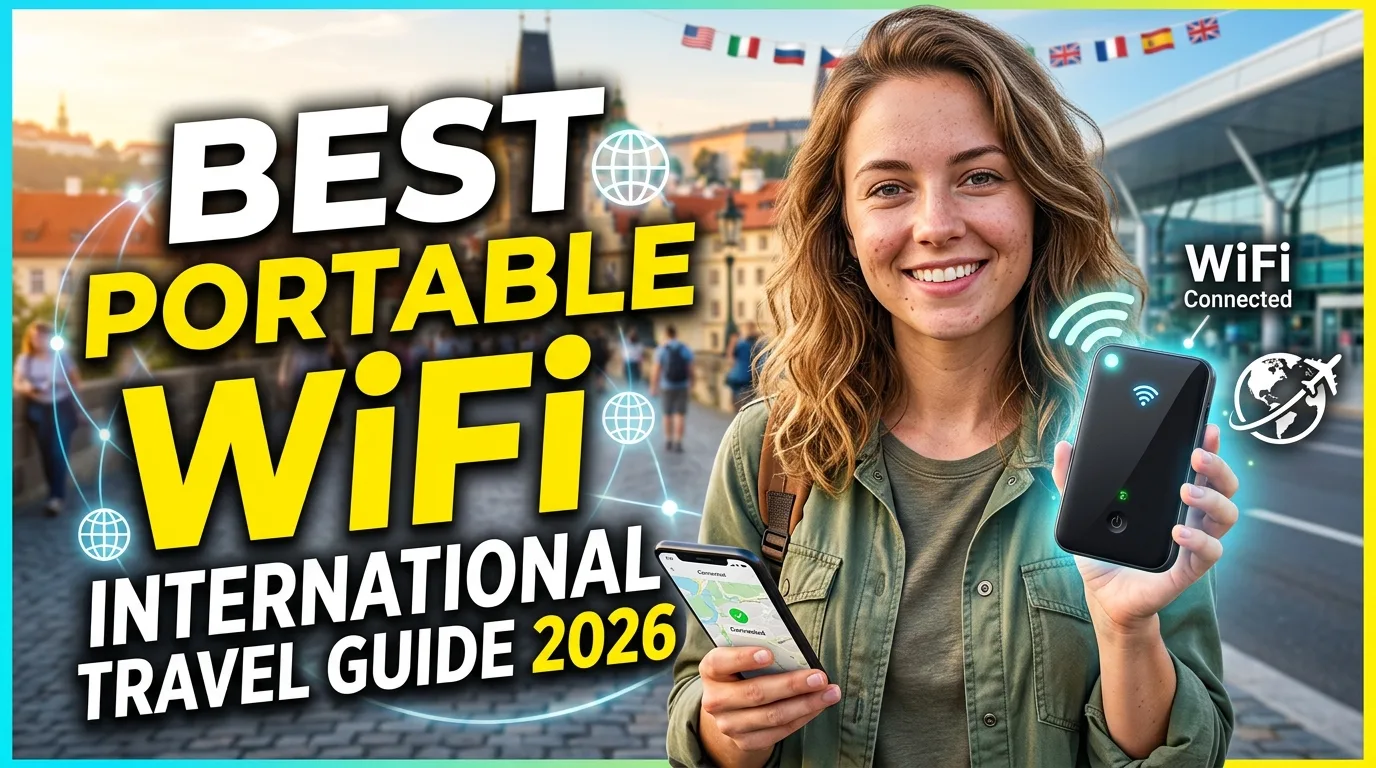
The best portable WiFi hotspots for international travel in 2026. Tested across 15 countries for coverage, speed, and value. Includes vs local SIM comparison.
In This Article
- Introduction
- What Makes a Good International Travel Hotspot?
- Best Portable WiFi for International Travel: Our Picks
- 1. Ryoko — Best for Zero-Setup International Travel
- 2. GlocalMe G4 Pro — Best for Extended International Stays
- 3. Skyroam Solis X — Best for Multi-Country Tours
- Portable WiFi vs Local SIM vs eSIM for International Travel
- Regional Breakdown: What Works Where
- How to Save Money on International WiFi
- Verdict
Introduction
International travel and connectivity have become inseparable. You need internet for maps, translation, ride-hailing, hotel confirmations, and staying in touch. The old options, expensive roaming plans, hunting for cafe WiFi, or buying a SIM card at every airport, all have real downsides. This guide is part of our smart gadgets coverage, where every travel device gets tested in real conditions.
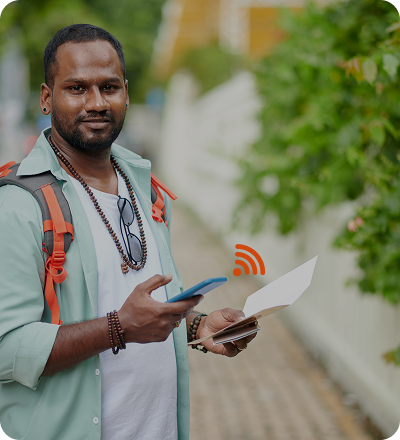
A portable WiFi hotspot designed for international travel solves this by giving you a single device that connects to local cell networks in multiple countries. No SIM swapping, no roaming charges, no contracts. Turn it on and you have a private WiFi network your phone, laptop, and travel companions can all share.
But not every portable hotspot works well internationally. Some only cover a handful of countries. Others have电池 life that dies by lunch. A few lock you into data plans that cost more than local SIMs. After testing portable WiFi hotspots across 15 countries on four continents, we found which ones actually deliver on the promise of hassle-free international connectivity.
What Makes a Good International Travel Hotspot?
Before comparing specific devices, here is what matters most when you need WiFi abroad:
Global coverage: The device must work in the countries you are visiting. Some hotspots only cover 30-50 countries. Others cover 140-175+. Check the coverage list before buying.
Automatic network switching: When you cross a border, the hotspot should connect to a local carrier without you doing anything. Cloud SIM devices handle this automatically. BYOS devices require you to buy a new SIM at each country.
Data plan flexibility: Can you buy data for specific countries, regions, or globally? Are there daily, weekly, and monthly options? What happens when you run out?
Battery life: International travel days are long. You leave the hotel in the morning and do not return until night. A hotspot that dies at 2 PM is useless. Aim for 8+ hours.
Multi-device support: If you travel with a partner, kids, or colleagues, the hotspot needs to support at least 5-10 simultaneous connections without tanking speeds.
Best Portable WiFi for International Travel: Our Picks
1. Ryoko — Best for Zero-Setup International Travel
The Ryoko is the international travel hotspot we reached for most often. The setup is dead simple: power on, scan the QR code, and you are online in under 60 seconds. The built-in Viaota SIM connects to local carriers in 175+ countries automatically. No app download, no account creation for initial connection, no settings to configure.
International coverage tested: UK, France, Germany, Netherlands, Belgium, Spain, Italy, Japan, Thailand, Australia, US, Canada, Mexico, UAE, and South Africa. The Ryoko connected in every country. Speeds were best in major cities (10-20 Mbps) and weaker in rural areas (3-8 Mbps).
Why it works for international travel:
- 175+ countries covered with zero configuration
- QR code setup works the same way in every country
- Built-in ad blocker and malware protection on all connected devices
- Connects 10 devices so your whole travel group shares one plan
- At ~$49, the device cost is the lowest of any international hotspot
The trade-off: Data plans cost more per GB than local SIMs. The unlimited plan is $9.95/month with a fair-use cap around 15 GB. For a two-week trip across three European countries, the convenience of one device versus buying three separate SIMs justifies the premium. For a month-long stay in one country, a local SIM is the smarter play.
2. GlocalMe G4 Pro — Best for Extended International Stays
The GlocalMe G4 Pro covers 140+ countries and adds a physical SIM slot. That means you can use GlocalMe’s cloud SIM for short stays or pop in a local SIM for cheaper data on longer trips. The 4050 mAh battery delivers 9-12 hours, nearly double the Ryoko’s runtime.
Why it works for international travel:
- Physical SIM slot lets you use local carriers for cheaper data
- Cloud SIM covers 140+ countries for convenience
- 9-12 hour battery survives full travel days
- Larger display shows data usage, signal strength, and battery
When to choose it over the Ryoko: Stays longer than 7 days in one country. The ability to buy a $5-10 local SIM with 30 GB of data saves real money over the Ryoko’s cloud SIM pricing.
3. Skyroam Solis X — Best for Multi-Country Tours
The Skyroam Solis X covers 135+ countries and doubles as a 4700 mAh power bank. Day-pass pricing at $9/day for unlimited data means you only pay for the days you use it. If you visit three countries in a week, you pay $63 total instead of buying three separate SIMs.
Why it works for international travel:
- Day-pass pricing is ideal for short multi-country trips
- Power bank feature charges your phone in emergencies
- 12+ hour battery life handles long travel days
- Connects 10 devices simultaneously
The downside: At $9/day, extended use gets expensive. A 30-day trip costs $270 in data alone.
Portable WiFi vs Local SIM vs eSIM for International Travel
| Factor | Portable WiFi | Local SIM | eSIM (Airalo/Holafly) |
|---|---|---|---|
| Multi-country convenience | Best | Worst (swap each country) | Good (regional plans) |
| Cost for 2-week trip | $10-30 (device plan) | $10-30 (local SIM) | $15-40 (eSIM plan) |
| Cost for 2-month stay | $20-60 | $10-20 (local SIM) | $20-50 (eSIM plan) |
| Devices connected | 10-32 | 1 (tethering) | 1-2 |
| Speed | 5-30 Mbps | 20-100 Mbps | 15-50 Mbps |
| Battery impact | Own battery | Drains phone | None |
| Setup complexity | Easy (power on) | Medium (buy SIM) | Easy (app install) |
Our recommendation: For multi-country trips under 14 days, a portable WiFi hotspot like the Ryoko wins on convenience. For extended stays in one country, buy a local SIM. For solo travelers with an eSIM-compatible phone, Airalo and Holafly offer a middle ground. Our best portable WiFi hotspots guide covers all these options in depth. For the full Ryoko breakdown, read our Ryoko review.
Regional Breakdown: What Works Where
Europe: All major international hotspots work well in Western Europe. The Ryoko, GlocalMe, and Skyroam all cover EU countries. Performance is strong in cities, weaker in rural areas. One hotspot works across all EU borders without any changes.
Southeast Asia: Coverage varies by device. The Ryoko covers Thailand, Vietnam, Singapore, and Malaysia. Local SIMs in Southeast Asia are extremely cheap ($5-15 for 30 GB), so a BYOS hotspot with a local SIM is the most cost-effective option for extended stays.
Japan and South Korea: Excellent coverage from cloud SIM devices. Speeds are fast due to dense 4G/5G infrastructure. The Ryoko and GlocalMe both perform well here.
Australia and New Zealand: Solid coverage in cities and suburban areas. Rural outback coverage is limited for all devices, including local carriers.
Middle East: Coverage in UAE, Saudi Arabia, and Qatar is good. Some devices have limited coverage in smaller Gulf states. Check the coverage list before traveling.
Africa: Coverage is patchy outside major cities. The Ryoko covers South Africa, Kenya, Nigeria, and a few other countries. For extensive Africa travel, a local SIM is the most reliable option.
How to Save Money on International WiFi
-
Use the hotspot for the first day, then buy a local SIM. Get connected immediately with the Ryoko, then switch to a cheap local SIM once you have had time to find one at a shop or airport.
-
Avoid streaming on cellular. Save hotel WiFi for Netflix, video calls, and large downloads. Use your hotspot for email, maps, messaging, and light browsing.
-
Monitor your data usage. Check your dashboard daily. The biggest surprise bill comes from hitting the fair-use cap without realizing it.
-
Buy regional data plans. If your hotspot offers regional plans (e.g., “Europe” or “Asia”), they are usually cheaper than buying individual country plans.
-
Share with travel companions. Split the hotspot cost and data plan with your travel group. Four people sharing one device at $10/month each is cheaper than four separate solutions.
Verdict
For international travel across multiple countries, the Ryoko is the easiest portable WiFi hotspot to recommend. The sub-60-second setup, 175+ country coverage, and multi-device sharing make it the most hassle-free option for families and groups. The data pricing is not the cheapest, but the convenience of one device that works everywhere without configuration is worth the premium for most travelers.
For extended stays in one country, pair the Ryoko with a local SIM for the best of both worlds: immediate connectivity on arrival, then cheap local data for the rest of your trip.
Frequently Asked Questions
What is the best portable WiFi for international travel?
Is it better to buy a portable WiFi or a local SIM when traveling abroad?
How much data do I need for international travel?
Do portable WiFi hotspots work in Europe?
Can I use a portable WiFi hotspot on a cruise ship?
What is the difference between cloud SIM and physical SIM hotspots?

Alex Thompson
Consumer electronics reviewer specializing in smart gadgets and innovative tech. Tests 100+ gadgets annually. Previously wrote for The Verge and Wired. Focus on practical daily-use value.
Affiliate disclosure:This article contains affiliate links. If you buy through them, GearPuff may earn a commission at no extra cost to you. It keeps our testing independent and our reviews free.