
How to Choose a Portable Tire Inflator
Everything you need to know before buying a portable tire inflator: PSI, battery vs 12V, gauge accuracy, hose length, and the features that actually matter for roadside use.
In This Article
Introduction
A low tire pressure light is one of those small problems that turns into a bad day if you’re not ready for it. The fix is simple: a portable tire inflator you keep charged in the car. But the category is crowded, and the specs on the box don’t tell you what actually matters on a cold Tuesday night. This guide is part of our smart gadgets coverage, where we test everyday carry tools in real conditions.
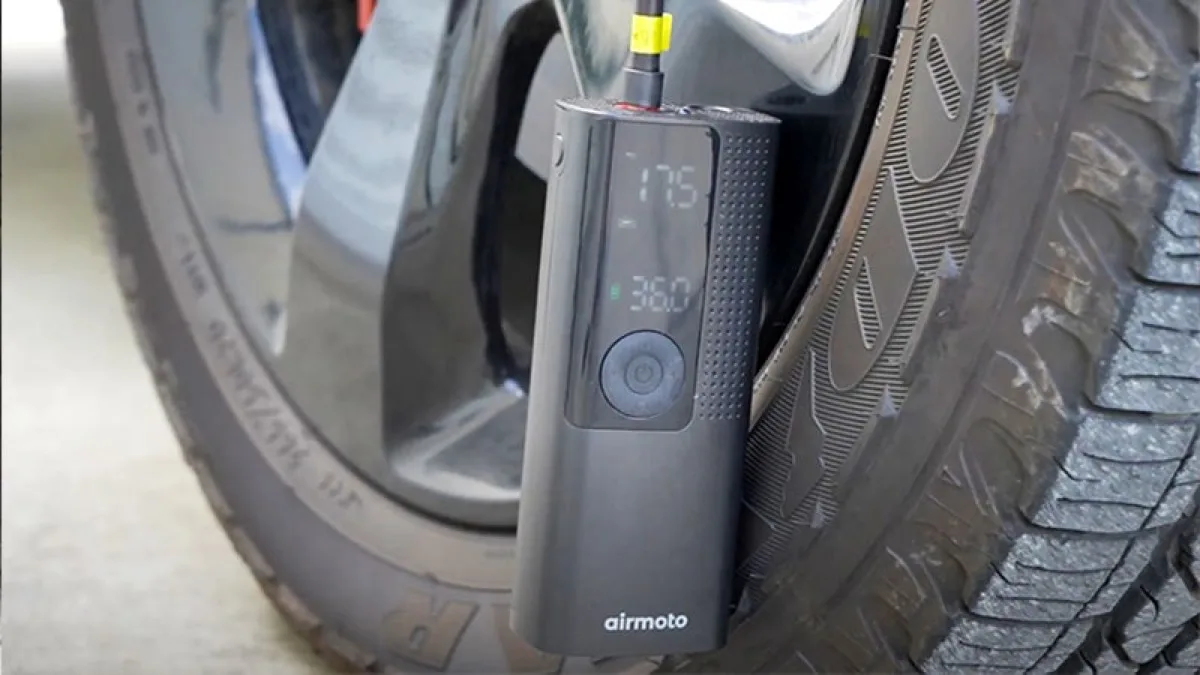
This guide walks through how to choose a portable tire inflator without overthinking it. We’ll cover power source, PSI and air volume, battery life, gauge accuracy, hose length, and the extras that earn their place in your trunk. If you want a worked example, our Airmoto review puts these points against a real cordless unit.
The goal is to match the tool to how you actually drive. A daily commuter wants something different from an RV owner, and the right answer for a cyclist is different again. Let’s get specific.
Cordless vs 12V: Pick Your Power First
The first fork in the road is how the inflator gets its power, because that decides everything else.
Cordless (battery) inflators run on an internal cell, usually charged over USB-C. They live in your glove box, need no socket, and work at the trailhead or on a shoulder at midnight. The trade-off is air volume and battery: they’re slower on big jobs and a small cell handles about four top-offs or one flat tire per charge.
12V inflators plug into your car’s socket. They fill faster and never run out of battery while the engine runs, but you need the cord, a working socket, and usually more storage space.
If convenience is the priority, go cordless. If speed and unlimited runtime matter more, go 12V. For most car owners who want peace of mind, cordless wins because it removes the socket dependency entirely.
PSI and Air Volume: Read the Right Number
Every inflator advertises a max PSI, and most stop at 120. That’s enough for passenger cars, motorcycles, and bikes, plus balls and small inflatables. You will rarely need more PSI than that for personal vehicles.
What the box hides is air volume. A pocket inflator can reach 120 PSI, but moving that pressure into a large tire takes time because the motor is small. That’s why a fully flat car tire can take 15-26 minutes on a cordless unit while a 12V pump does it faster. If you run truck, RV, or trailer tires, volume is the limit, not the PSI ceiling. Buy a heavier, higher-volume unit for those.
Battery Life and Charge Time
For cordless units, battery is the real constraint. A small 2000 mAh cell typically covers about four routine top-offs, adding 5-10 PSI each, or exactly one fully flat passenger tire before it needs a recharge. A full recharge runs roughly 2.5 to 3 hours over USB-C.
Two practical rules: keep it topped to full monthly so it’s ready, and don’t expect one charge to rescue multiple flat tires. If your use case involves repeated flats, a 12V inflator or a larger battery model is the honest buy. USB-C charging is worth insisting on, because it lets you top up from a car port or a power bank on the road.
Gauge Accuracy and Auto Shut-Off
The gauge is what you’ll stare at, so it matters. Built-in digital gauges are usually within 1-2 PSI of a standalone gauge and tend to read slightly low. The fix is free: set your target about half a PSI to a full PSI above the number you want, and keep a separate gauge in the kit for bikes or anything precision-sensitive.
Auto shut-off is the single feature that earns its keep. You dial in your target, press start, and walk away. The pump stops on its own, which prevents over-inflation and removes the babysitting. Any inflator without it forces you to watch the screen the whole time. Treat auto shut-off as mandatory, not a nice-to-have.
Hose Length and Build
A short hose is a small annoyance that shows up every time you use the tool. On a wheel with the valve at the top, a short hose means the unit dangles and vibrates, and you end up crouching or repositioning the car. Measure the hose against your wheels before you buy, and favor one long enough to reach without strain.
Build quality tracks price loosely. Matte plastic bodies hold up fine for casual use, and a housed hose compartment keeps the connector from vanishing into the glove box. Read owner reports on heat during long runs, because a small motor pushing 120 PSI gets warm and wants cooling breaks on big jobs.
Adapters and Portability
The kit should include Schrader (cars), Presta (bikes), a needle (balls), and a general adapter (inflatables). That one set turns a tire tool into a general pump for the whole family. Skip any inflator that only does car valves if you ride or play sports.
Portability is the point. Check the dimensions against your storage space. A unit that’s 1.25 pounds and glove-box-sized gets used; a brick that lives in the garage gets forgotten. The best inflator is the one you actually keep in the car.
Extras Worth Paying For
- LED light: Cheap insurance for night fills. It doesn’t need to be bright, just enough to find the valve.
- Deflate mode: Lets you bleed air down to a target, handy for bikes and storage inflatables.
- Carrying bag: Keeps the unit, cable, and adapters together so nothing gets lost.
- Auto shut-off: Already covered, but it belongs on this list because it’s the one extra that changes daily use.
Skip inflated claims about “virtually anything in minutes.” Read that as car-sized and smaller, slow from flat, and wrong for trucks.
Common Mistakes First-Time Buyers Make
- Chasing the highest PSI. You’ll never use 150 PSI on a car tire. Volume matters more than the ceiling.
- Ignoring battery limits. A cordless unit is a top-off and emergency tool, not a shop compressor. Know the one-flat-tire-per-charge reality.
- Forgetting the wall plug. Many kits ship with a USB-C cable and no brick. You supply the charger.
- Skipping the checkout fine print. Some brands pre-check a recurring membership at checkout. Uncheck it and read your order total.
- Buying too big to carry. The inflator you leave in the garage doesn’t help you at 7 a.m.
Who Should Buy What
- Daily commuter or cyclist: A cordless unit like the one in our Airmoto review covers top-offs, bikes, and minor emergencies.
- Frequent road-tripper: Cordless for the kit, plus a 12V unit as backup if you want speed.
- Truck, RV, or trailer owner: A 12V or heavy-duty battery inflator with real air volume. A pocket unit will frustrate you.
- Budget hawk who rarely needs air: A basic 12V plug-in is cheapest, as long as you have a working socket.
Final Take
Choose a portable tire inflator by starting with power source, then matching PSI and volume to your real tires, then confirming battery life, auto shut-off, and adapters. A cordless 120 PSI unit with auto shut-off and a readable gauge is the right answer for most car owners and cyclists. Keep it charged, uncheck any checkout upsell, and it will bail you out the first time a tire goes soft.
For a hands-on look at these points on a real cordless unit, read our full Airmoto review. For ranked options across brands, see our best portable tire inflators 2026 roundup.
Frequently Asked Questions
Should I buy a battery or 12V portable tire inflator?
How much PSI do I need in a portable tire inflator?
Are built-in tire gauges accurate?
How long does a portable tire inflator take to fill a tire?
What extras are worth paying for?

Alex Thompson
Consumer electronics reviewer specializing in smart gadgets and innovative tech. Tests 100+ gadgets annually. Previously wrote for The Verge and Wired. Focus on practical daily-use value.
Affiliate disclosure:This article contains affiliate links. If you buy through them, GearPuff may earn a commission at no extra cost to you. It keeps our testing independent and our reviews free.