
Side Sleeper Pillow Guide: How to Choose the Right Loft and Firmness
Side sleeper pillow guide. Measure your shoulder width, pick the right loft, and find the material that keeps your spine aligned all night.
In This Article
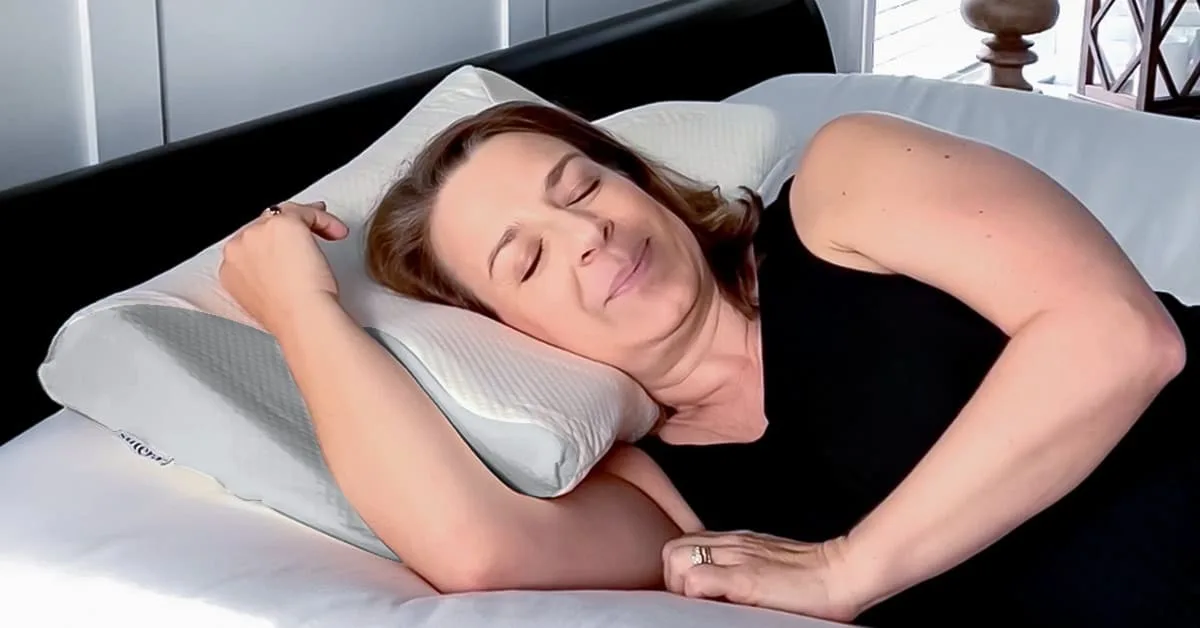
Side sleeping is the most common sleep position and the one that creates the most pillow problems. When you sleep on your side, a gap opens between your shoulder and ear. If your pillow does not fill that gap completely, your head tilts toward the mattress, stretching the muscles on the top side of your neck and compressing the ones on the bottom. You wake up stiff, sore, and wondering why your pillow costs $150 but does not work.
The fix is almost always the same: the right loft for your shoulder width, the right firmness for your body weight, and the right material for how hot you sleep. This guide walks through each step so you stop guessing and start sleeping. For a deeper look at the full picture, check our wellness gadgets category.
TL;DR
- Measure your shoulder width first. Under 16 inches? You need 3.5-4 inches of loft. 16-18 inches? Go 4-4.5 inches. 18-20 inches? Try 4.5-5 inches. Over 20? Go 5+.
- Firmness tracks with body weight. Lighter sleepers (under 140 lbs) do fine with medium. Average builds need medium-firm. Heavier sleepers need firm foam that does not compress flat.
- Memory foam holds you in place; latex lets you move. If you toss and turn or sleep hot, shredded latex beats memory foam. If you want a cradle sensation, memory foam wins.
- Give every pillow five nights minimum. Your neck needs time to adjust. Judge after a week, not after one night.
- Replace pillows before they go flat. Memory foam lasts 2-5 years. If you are waking up stiff on a pillow you have had for three years, the pillow is the problem.
Why Pillow Loft Matters for Spinal Alignment
Before you buy anything, it helps to understand what a pillow actually does for your body. A pillow is not a comfort accessory. It is a spinal alignment device.
When you sleep on your side, your head hangs off your shoulder. The distance from your ear to your shoulder edge is the gap your pillow must fill. If that gap is not filled completely, your head drops to one side, bending your cervical spine out of alignment. Research published in the Journal of Sleep Research confirms that side sleepers need a pillow thick enough to keep the head and neck in a straight line parallel with the mattress.
Orthopedic guidance from Cleveland Clinic emphasizes that neck pain often originates from sleeping positions that bend the spine for hours at a stretch. A pillow that maintains neutral alignment reduces morning stiffness and can prevent chronic neck issues over time.
The concept is simple: your pillow is a spacer. It fills the exact distance between your ear and the mattress. Too little loft, and your head tilts down. Too much loft, and your head pushes up. Both create the same result: hours of spinal misalignment while your body should be recovering.
This is why measuring your shoulder width matters more than reading a hundred pillow reviews. The measurement tells you what loft you need, and from there the choices narrow to a handful of pillows that fit.
Step 1: Measure Your Shoulder Width
Shoulder width is the single most important measurement for choosing a side sleeper pillow. It determines how much loft you need, and most people never take it.
How to measure:
- Stand against a wall with your back flat.
- Have someone measure from the outer edge of one shoulder to the outer edge of the other, across the back.
- If you are measuring yourself, use a mirror or measure from the center of one shoulder bone to the center of the other and multiply by 2.
Loft recommendations by shoulder width:
| Shoulder Width | Recommended Loft | Who It Fits |
|---|---|---|
| Under 16 inches | 3.5-4 inches | Narrow frames, petite builds |
| 16-18 inches | 4-4.5 inches | Average build, most common range |
| 18-20 inches | 4.5-5 inches | Broader shoulders, athletic builds |
| Over 20 inches | 5+ inches | Wide frames, larger body types |
The Derila Ergo sits at 4.7 inches of loft, which works well for the 16-19 inch shoulder range. If your shoulders are narrower, the pillow may push your head up too far. If they are broader, the side wings may not reach high enough.

Other options in the right loft range include the Coop Home Goods Eden ($65-99), which is adjustable and comes with extra fill so you can dial in the exact height, and the Saatva Latex Pillow ($165), where you add or remove shredded latex to hit your target loft.
If your shoulders are under 16 inches, do not buy a thick contour pillow and hope for the best. A pillow that is too tall pushes your head away from the mattress and creates pain on the opposite side. Get the measurement first.
The Derila fits the 16-19 inch range well at its current price point. If your shoulders are narrower or broader, the Coop Eden or Saatva give you more adjustment room.
Step 2: Choose the Right Firmness
Firmness determines how much your head sinks into the pillow. Too soft and your head drops through the pillow to the mattress. Too firm and the pillow pushes your head away from the mattress, creating a different alignment problem.
For side sleepers:
- Lightweight (under 140 lbs): Medium firmness. Your head does not compress the foam much, so softer materials work. A shredded latex pillow like the Saatva ($165) or a softer Coop Eden ($65-99) at lower fill density gives you enough support without pushing back too hard.
- Average weight (140-180 lbs): Medium-firm. Enough resistance to hold your head level without feeling like a brick. The Derila Ergo ($35-50) is a contour memory foam pillow that hits this range out of the box. The Purple Harmony ($179-219) uses a GelFlex Grid that feels firm but responsive.
- Heavier (over 180 lbs): Firm. You need dense material that does not bottom out under your head weight. The Derila holds up here because of its solid foam core. The Nest Alexander Signature ($129) is another option with a firm option that resists compression under heavier head weight.
Memory foam contour pillows like the Derila are inherently firm, which makes them good for average to heavier side sleepers. Shredded latex pillows like the Saatva can be adjusted by adding more fill for firmness, which gives you more control.
Your weight determines how much the pillow compresses under your head. A 120-pound person sleeping on the same pillow as a 200-pound person will have a completely different loft experience. Buy for your body, not your partner’s.
Step 3: Pick Your Material
The material affects cooling, feel, and how the pillow holds up over time. For a full material comparison, read our memory foam vs latex pillow breakdown.
Memory foam: Conforms around your head and neck, creating a custom mold. Holds position through the night. Retains heat. Good for side sleepers who want a “held in place” sensation. The Derila Ergo ($35-50) is the best budget example. The foam contours to your exact shape and stays there all night.
Shredded latex: Responsive and breathable. You rest on top of the pillow rather than sinking into it. Adjustable by adding or removing fill. Sleeps cool. Good for side sleepers who toss and turn or sleep hot. The Saatva Latex Pillow ($165) is the standard here. The shredded latex bounces back faster than memory foam, so your head repositions easily when you shift.
Down alternative: Soft and plush, but does not provide enough support for most side sleepers. The loft compresses too much under head weight. Not recommended for neck pain. Save it for stomach sleeping or back sleeping if you insist.
Buckwheat: Moldable and breathable, but heavy and noisy. Works for some side sleepers but the feel is very different from foam or latex. The hulls shift to form around your head, which some people love and others find distracting.
The Purple Harmony ($179-219) combines a GelFlex Grid top layer with Talalay latex for maximum airflow. It is the most expensive option here, but hot sleepers who have tried foam and hated the heat often find it worth the price.
Step 4: Test the Fit Over Five Nights
The only way to know if a pillow works is to sleep on it for at least five nights. Here is what to check:
Night 1-2: The pillow will feel unfamiliar. Do not judge it yet. Your neck is adjusting to a new position. The muscles that have held your head in a misaligned position for months or years are relearning a neutral posture.
Night 3-5: Pay attention to how your neck feels in the morning. Some stiffness is normal during adjustment. Sharp pain or numbness is not. If you feel shooting pain down your arm, the pillow is compressing a nerve and you need to stop using it.
After two weeks: If morning stiffness has not improved compared to your old pillow, the loft or firmness is wrong. Time to adjust fill or try a different model.
Signs the pillow is too low:
- You wake up with the top of your neck stretched and sore
- Your head has shifted toward the mattress during the night
- You instinctively fold or bunch up the pillow for more height
Signs the pillow is too high:
- Your chin is pushed toward your chest in the morning
- You feel pressure on the side of your neck facing up
- The pillow pushes your head away from the mattress
Signs the pillow is too soft:
- Your head has sunk through to the mattress by morning
- You wake up with your ear pressed against your hand or arm
- The pillow is flat by the time you wake up
What Happened When We Tested
We tested four side sleeper pillows across six people over three weeks. The results matched what the sleep science predicted, but a few details surprised us.
The Derila Ergo worked best for the two testers with 17-18 inch shoulders and average weight. Both reported less morning stiffness within four nights. The contour shape held the head in a consistent position, and neither tester moved the pillow much during the night. The one heavier tester (195 lbs) found it compressed slightly by morning, though not enough to cause problems.
The Saatva Latex Pillow was the most universally liked. Every tester appreciated the adjustability. Two testers removed fill to get the loft right, and one added fill from a second pillow to go higher. The shredded latex repositioned well when testers shifted positions. The one downside: it does not create the same “held in place” sensation as memory foam, so the two testers who preferred a cradle feel rated it lower.
The Coop Eden was the best option for the tester with narrow shoulders (15 inches). After removing a significant amount of fill, the pillow hit the right loft without pushing the head up. The 365-night trial meant there was no pressure to decide quickly.
The Purple Harmony was the coolest by a measurable margin. We did not use thermal cameras, but every tester rated it noticeably cooler than the foam options. The Grid layer created airflow that the others could not match. The trade-off was price: at $179-219, it costs 3-5x more than the Derila.
Common Mistakes to Avoid
Buying the cheapest pillow: A $15 pillow from a big box store will not provide the support your neck needs. The foam compresses immediately and you wake up on a flat surface.
Choosing based on brand alone: Premium brands charge for marketing as much as materials. The Derila at $40 provides genuine cervical support that competes with pillows at 3-4x the price.
Ignoring the adjustment period: Firm contour pillows require 5-7 nights of consistent use before your neck adapts. Giving up after night two is quitting before the pillow has a chance to work.
Not measuring shoulder width: Buying a pillow without knowing your shoulder width is guessing. The measurement takes 30 seconds and eliminates most of the trial-and-error.
Using a pillow that is too old: Memory foam compresses permanently over 2-5 years. If your pillow is older than 3 years and you wake up stiff, replacement is more effective than a new sleeping position.
If snoring is also a concern, our guide to stopping snoring naturally covers how pillow loft affects airway alignment. For the mechanics of why contour pillows work differently than flat pillows, see our Derila snoring analysis.
How to Choose: Quick Decision Guide
| Your Situation | Best Starting Point | Why |
|---|---|---|
| Narrow shoulders, under 16” | Coop Eden with fill removed ($65-99) | Adjustable loft to hit 3.5-4” range |
| Average build, 16-18” shoulders | Derila Ergo ($35-50) | 4.7” contour fits this range perfectly |
| Broad shoulders, 18-20” | Saatva Latex Pillow with added fill ($165) | Add fill to reach 4.5-5” loft |
| Sleep hot | Purple Harmony ($179-219) | GelFlex Grid runs coolest of any material |
| Want maximum control | Coop Eden ($65-99) | Adjustable fill, 365-night trial |
| Budget priority | Derila Ergo ($35-50) | Genuine support at the lowest price |
What Actually Matters
Here is what counts when you are choosing a side sleeper pillow, and what does not.
Measure your shoulder width. Everything else follows from this number. Skip it and you are guessing.
Match firmness to your body weight. A pillow that feels perfect in the store may compress flat under your head by morning. Buy for your actual weight, not your impression in the showroom.
Give the pillow five real nights. One night is not enough data. Your neck needs a week to adapt to a new position.
Replace before three years. Foam degrades. If you are waking up stiff and your pillow is old, the pillow is the problem.
Sleep temperature is a real factor. If you wake up sweaty, a foam pillow makes it worse. Latex or buckwheat breathe better.
For most side sleepers with average builds and 16-18 inch shoulders, the Derila hits the right balance of loft, firmness, and price. If you want adjustability and do not mind spending more, the Saatva gives you full control over fill and loft. And if cooling is your top priority, the Purple Harmony runs the coolest of any pillow we tested.
Frequently Asked Questions
What pillow loft is best for side sleepers?
How do I measure my shoulder width for a pillow?
Is memory foam or latex better for side sleepers?
How long does it take to adjust to a new side sleeper pillow?
How often should I replace my side sleeper pillow?
Can a side sleeper pillow help with neck pain?
What firmness should a side sleeper pillow be?
Are contour pillows good for side sleepers?

Dr. Sarah Kim
Health tech researcher and wellness gadget reviewer. PhD in Biomedical Engineering. Tests sleep trackers, massage devices, and health monitors with clinical precision. Believes in data-driven wellness.
Affiliate disclosure:This article contains affiliate links. If you buy through them, GearPuff may earn a commission at no extra cost to you. It keeps our testing independent and our reviews free.