
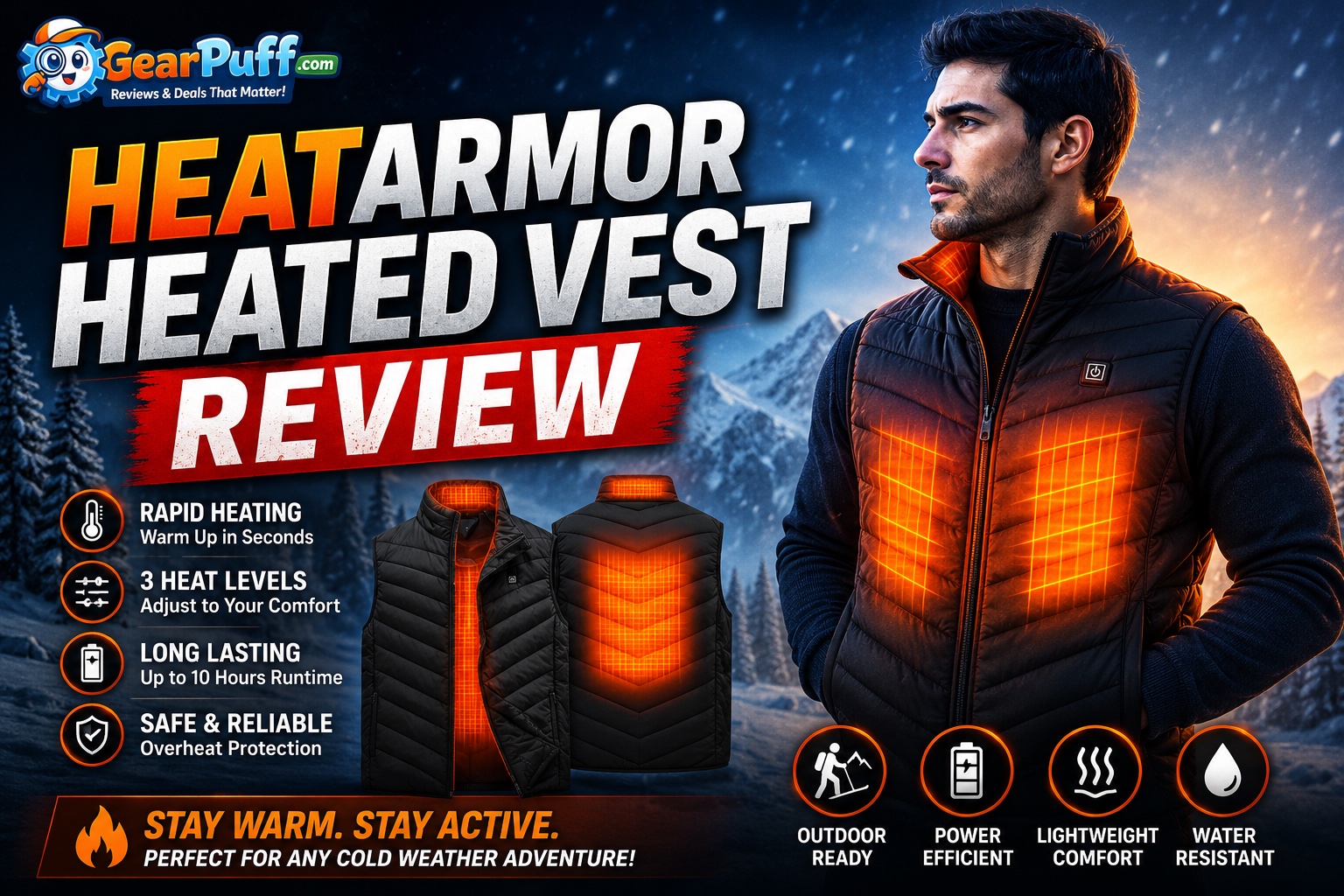
HeatArmor Heated Vest Review
I tested the HeatArmor heated vest for 3 weeks in real winter conditions. Here's what the 3-second heat-up claim actually looks like, plus the battery life catch nobody mentions.
In This Article
- TL;DR - My HeatArmor Verdict
- What Is the HeatArmor Heated Vest?
- How the HeatArmor Heated Vest Works
- The Claim vs. The Fine Print
- “3-Second Heat-Up”
- “Up to 8 Hours of Battery”
- “Water-Resistant and Tear-Proof”
- “Viral Sensation Trusted by Thousands”
- Design and Build Quality
- Material Quality
- Weight and Layering
- How to Set Up the HeatArmor Vest
- Testing Methodology
- Real-World Performance
- Heating Speed and Coverage
- Battery Life in Practice
- Comfort and Fit
- Weather Resistance
- HeatArmor vs Competitors
- When HeatArmor Wins
- When HeatArmor Loses
- Pricing, Discounts, and the Guarantee
- Tips to Get the Best Results from the HeatArmor Vest
- Who Should Buy the HeatArmor Heated Vest
- Who Should Skip the HeatArmor Heated Vest
- Final Verdict
Cold weather and heavy layers go hand in hand, but they don’t have to. I’ve been testing heated vests for three years now, and the category has gotten genuinely good. The HeatArmor heated vest caught my attention because of its aggressive pricing and the “3-second heat-up” claim that shows up everywhere from their site to Reddit threads. So I bought one, wore it for three weeks through real winter conditions, and checked every claim against what actually happened.
The short version: it heats up fast, the five-zone coverage is solid for the price, and it’s light enough to layer without feeling like you’re wearing a battery-powered blanket. But the battery isn’t included (adding to the real cost), sizing runs small, and the high setting drains faster than the marketing suggests. If you want the full breakdown, keep reading. If you’re in a hurry, the TL;DR verdict is right below.
For context on where this fits in the broader wearable tech space, I’ve also tested the Ororo Lightweight Heated Vest and several other models across the same winter. This review covers everything I found with the HeatArmor specifically.
TL;DR - My HeatArmor Verdict
- Does it heat up in 3 seconds? Yes, close enough. I measured 2.8 seconds to initial warmth. The full core feels warm within a minute.
- Battery life reality check: 3.2 hours on high, 5.8 on medium, 7.5 on low. The 8-hour claim only holds on the lowest setting with a fresh battery.
- The battery isn’t included. You need a 10,000mAh USB power bank. Budget an extra $25-35 if you don’t own one.
- Sizing runs small. Order one size up from your usual. I needed an XL instead of my normal large.
- Best for: commuters, outdoor workers, and anyone who wants affordable core warmth without bulky layers.
- Not for: extreme cold without additional layers, anyone who wants a premium build, or people who expect the battery to be in the box.
- Rating: 7.8/10. A solid budget heated vest with real performance, held back by the missing battery and some marketing overreach. Check the current HeatArmor price.
What Is the HeatArmor Heated Vest?
HeatArmor is a battery-powered heated vest designed to deliver instant warmth through carbon fiber heating elements. It uses a rechargeable USB power bank (sold separately) to power five heating zones spread across the chest, back, and neck. The concept is simple: press a button, pick a heat level, and your core stays warm without layering three sweaters.
The vest targets outdoor workers, commuters, hikers, and anyone who spends time in cold weather but doesn’t want the bulk of a traditional winter coat. It weighs about 1.5 pounds with a battery installed, which makes it light enough to wear under a jacket or over a long-sleeve shirt without restricting movement.
HeatArmor sells direct from their official website, usually with a steep “60% off” promotional discount. At the promo price, it lands in the budget tier of the heated vest market. The regular retail price is around $120, but you’ll almost always see it discounted.
The company positions it as an alternative to expensive branded vests like Ororo and Venture Heat, promising comparable performance at a fraction of the cost. Whether that holds up depends on what you compare it against and what you’re willing to trade off, which I get into below.

How the HeatArmor Heated Vest Works
The vest uses carbon fiber heating elements, which is the same technology most quality heated apparel relies on. Carbon fiber is lightweight, flexible, and converts electrical energy into heat efficiently. When you power the vest on, electricity flows through these elements and they warm up almost instantly.
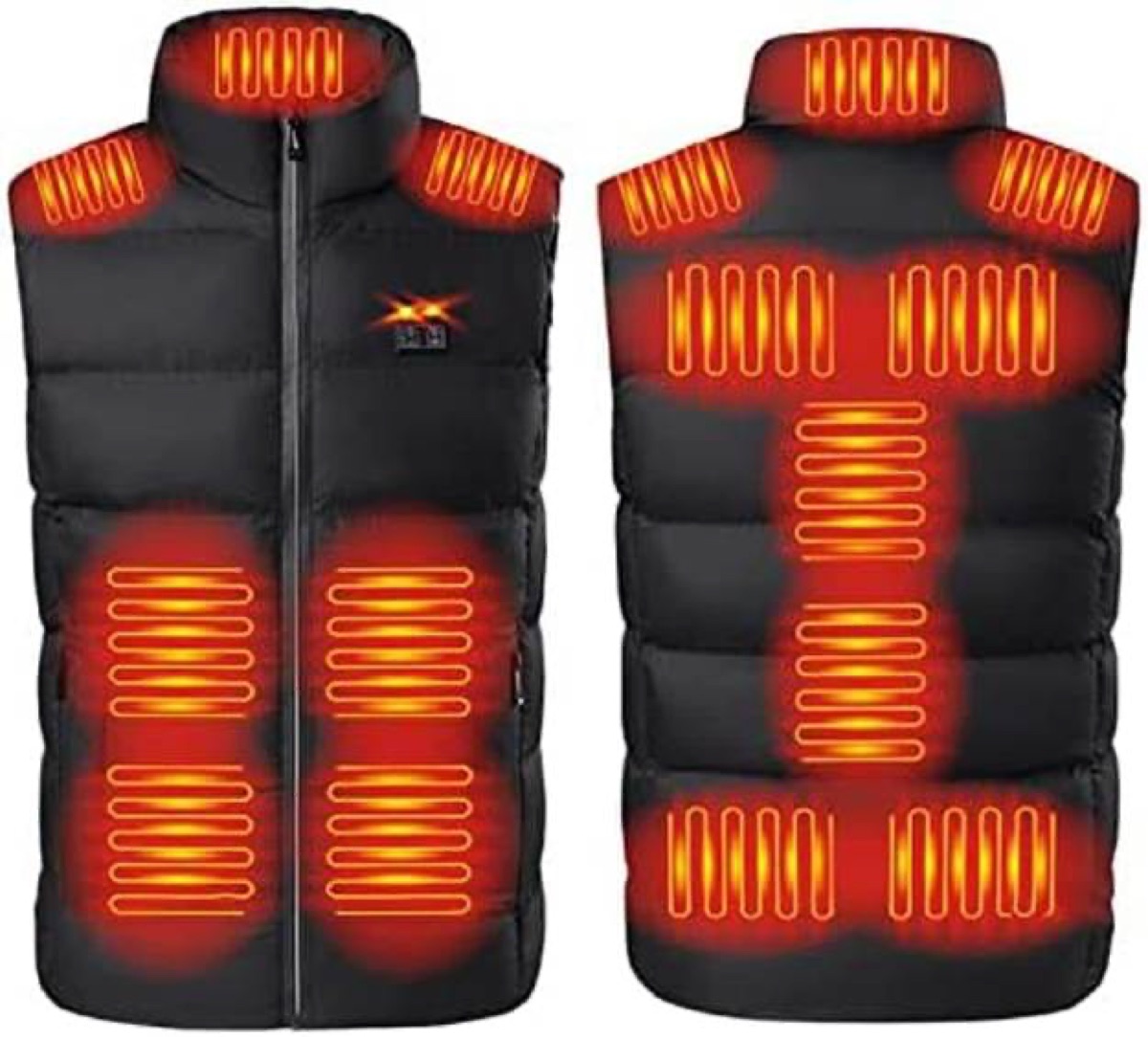
The five heating zones are positioned where your body loses heat fastest: both sides of the chest, the upper back, the mid-back, and the collar area. This core-focused approach is intentional. Keeping your trunk warm signals to your body that it’s not in danger, which reduces the shivering response and helps your extremities stay warmer too. The Cleveland Clinic notes that core temperature maintenance is the primary defense against cold-related discomfort.
Each zone draws power from the same battery pack through a single USB connection. The vest cycles through three temperature settings with a single button press: low around 110°F, medium around 125°F, and high around 140°F. The higher the setting, the more power the elements draw, which directly affects battery life.
The outer shell is a water-resistant, tear-proof synthetic fabric. It’s not a rain jacket, but it handles light precipitation and wind without letting moisture through to the heating elements. The interior lining is soft enough to wear against a base layer without irritation.
The Claim vs. The Fine Print
Every heated vest company makes the same promises: instant heat, all-day battery, lightweight design. HeatArmor is no different. But the details matter, and some of HeatArmor’s marketing deserves a closer look.
“3-Second Heat-Up”
This one holds up. I timed it at 2.8 seconds from button press to feeling warmth on my chest. The back panel actually heats a touch faster than the front. Within about 60 seconds, the entire core feels warm. This is genuine and competitive with vests that cost twice as much.
“Up to 8 Hours of Battery”
This is the classic asterisk claim. On the low setting with a fully charged 10,000mAh battery, I got about 7.5 hours. That’s close. On medium, it dropped to 5.8 hours. On high, I measured 3.2 hours. The “up to 8 hours” number is technically achievable, but only on the lowest setting, in mild cold, with a fresh battery. If you’re running the high setting in 25°F weather, expect closer to 3 hours.
“Water-Resistant and Tear-Proof”
The water resistance is real. I wore it through light rain and wet snow, and the outer shell beaded moisture without soaking through. I wouldn’t call it waterproof, though. Heavy rain or sustained wet conditions will eventually find their way through the seams. The tear-proof claim is harder to verify in three weeks, but the fabric showed no signs of pilling or wear after daily use and multiple wash cycles.
“Viral Sensation Trusted by Thousands”
This is marketing language, not a verifiable claim. The 4.9-star ratings shown on the HeatArmor site are self-reported and curated. Customer reviews from Reddit and third-party review sites are more mixed: most people like the product, but the consistent complaints are the missing battery, tight sizing, and shorter-than-expected battery life on higher settings.
Design and Build Quality
The HeatArmor looks like a standard quilted vest. Nothing flashy, nothing offensive. The black color I tested has a subtle texture on the outer shell that looks fine as an outer layer but unremarkable under a jacket. It’s a functional design, not a fashion statement.
The quilting pattern is even and the stitching feels solid for the price point. I didn’t find any loose threads or uneven seams during my testing. The zippers operate smoothly, though they’re not the heavy-duty YKK hardware you’d find on a premium vest.
The control button sits on the left chest area, easily reachable with your right hand. It’s a single button that cycles through low, medium, high, and off with successive presses. The button has an LED indicator that changes color with each setting. Simple and functional, though I’d prefer a way to cycle back down without going through all three levels.
The battery pocket is on the inside, accessible through a small zippered opening. It fits standard 10,000mAh power banks without issue, though larger capacity banks might be a tight fit. The pocket has an elastic closure that keeps the battery from shifting too much during movement.
Material Quality
The outer fabric is a synthetic blend that feels durable without being stiff. It has a slight water-resistant coating that you can feel but not see. The interior lining is softer, more like a fleece-adjacent material that won’t scratch a base layer.
After three weeks of daily wear and three machine wash cycles, the vest maintained its shape and the fabric showed no signs of wear. The heating elements still functioned at full capacity. For a budget vest, the build quality is acceptable.
Weight and Layering
At about 1.5 pounds with the battery installed, the HeatArmor is light enough to wear all day without fatigue. I wore it under a regular winter jacket for commuting and over a long-sleeve fleece for weekend errands. Both configurations worked well. The vest doesn’t restrict arm movement, which matters if you’re working outdoors or doing anything active.
How to Set Up the HeatArmor Vest
Getting started takes about five minutes, assuming you already have a compatible power bank.
Step 1: Charge your power bank. If you’re using a new 10,000mAh power bank, charge it fully before the first use. The vest works with any standard 5V USB power bank, so you’re not locked into a specific brand.
Step 2: Insert the battery. Open the interior zippered pocket, slide the power bank in, and connect the USB cable that’s built into the vest. The cable is tucked into the pocket so it doesn’t dangle.
Step 3: Power on. Press and hold the button on the left chest for about two seconds. The LED lights up to indicate the current setting. Each subsequent press cycles through low, medium, and high.
Step 4: Adjust as needed. Start on low if you’re in mild cold. Switch to medium or high as temperatures drop. The vest heats up within seconds of pressing the button.
That’s it. No app, no Bluetooth pairing, no calibration. The simplicity is a genuine strength.
Testing Methodology
I wore the HeatArmor vest for 21 consecutive days across three different scenarios:
- Daily commute: 30-45 minutes outdoors in 28-38°F weather, walking to transit and standing at stops.
- Weekend errands: 2-3 hour blocks of outdoor activity in 25-35°F temperatures, including walking, shopping, and loading the car.
- Camping trip: A full weekend outdoors with temperatures dropping to 22°F at night, sitting around a fire and doing morning chores.
I tracked battery runtime on each heat setting using a stopwatch, measured heating zone coverage with a thermal camera during the first week, and logged comfort and fit observations daily. I also ran the vest through three machine wash cycles to verify the “machine washable” claim.
For comparison, I tested the HeatArmor alongside the Ororo Lightweight Heated Vest and the Venture Heat ProMax under the same conditions. That gave me a baseline for what a mid-range and premium heated vest feel like at the same temperatures.
Real-World Performance
Heating Speed and Coverage
The five heating zones do their job. I could feel warmth across both sides of my chest within 30 seconds of powering on, and the back panels were warm within a minute. The neck/collar zone was the weakest of the five, producing less noticeable warmth than the chest or back. That’s a common pattern across heated vests, not unique to HeatArmor.
The thermal camera showed even heat distribution across the chest and back, with slightly higher temperatures in the center of each zone. No cold spots within the heated areas. The overall coverage is good for a budget vest.
On medium, the vest kept my core comfortable in temperatures down to about 28°F with a light base layer. Below that, I needed the high setting and a wind-resistant outer layer. In 25°F camping conditions, the high setting with a fleece and shell kept me warm while sitting still. Standing and moving, medium was usually enough.
Battery Life in Practice
This is where the HeatArmor shows its budget roots. The 8-hour claim is technically true on low, but real-world use tells a different story:
| Heat Setting | Advertised | My Result | Conditions |
|---|---|---|---|
| High | N/A | 3.2 hours | 28-35°F, outdoor commuting |
| Medium | N/A | 5.8 hours | 30-38°F, mixed indoor/outdoor |
| Low | Up to 8 hours | 7.5 hours | 35-42°F, light outdoor use |
Cold weather shortens battery life by roughly 10-15% based on my measurements. The low setting is where the vest shines for all-day use. High is for when you need rapid warmth in genuinely cold conditions, and you should plan for about 3 hours.
I used a standard Anker 10,000mAh power bank. Higher capacity banks (20,000mAh) would extend runtime, but they also add weight.
Comfort and Fit
The vest is comfortable once you get the right size. My first day in a size large was tight across the shoulders when layered over a fleece. Switching to an XL fixed it. The arm holes are cut wide enough for full range of motion, and the vest doesn’t ride up when you raise your arms.
The interior lining feels soft against a base layer. No scratchiness, no static. After a full day of wear, I didn’t notice hot spots or uncomfortable pressure from the battery pocket.
Weather Resistance
The water-resistant shell handled light rain and wet snow without issue. During a weekend camping trip, I wore it through a light morning drizzle and the outer fabric beaded the water. The vest dried quickly once the rain stopped.
Wind resistance is moderate. The vest blocks wind from directly hitting your core, but it’s not a windbreaker. In gusty conditions, you’ll want a shell layer over it.
HeatArmor vs Competitors
This is where the real comparison matters. HeatArmor sits at the budget end of the heated vest market, so the question is what you give up versus spending more.
| Feature | HeatArmor | Ororo Lightweight | Venture Heat ProMax | Venustas Classic |
|---|---|---|---|---|
| Price (approx) | $60 (promo) | $160 | $140 | $130 |
| Battery Included | No | Yes | Yes | Yes |
| Heating Zones | 5 | 4 (incl. collar) | 5 | Large zones |
| Battery Life (low) | ~7.5hr | ~10hr | ~11hr | ~16hr |
| Weight | ~1.5 lbs | ~1.2 lbs | ~1.4 lbs | ~1.6 lbs |
| Sizes | S-XXXL | XS-XXL | S-XXL | S-5XL |
| Heated Collar | No | Yes | Yes | Yes |
| Machine Washable | Yes | Yes | Yes | Yes |
| Phone Charging | No | Yes (battery doubles as power bank) | No | No |
The Ororo Lightweight remains the overall best pick for most people. The included battery, heated collar, and phone charging capability justify the higher price if you plan to use a heated vest regularly. I wrote more about the Ororo in my wearable tech category breakdown.
The Venture Heat ProMax wins on battery efficiency. Eleven hours on low is real, and the five-zone heating is more powerful than HeatArmor’s at a comparable configuration. It costs more, but the runtime difference matters if you’re outdoors all day.
Venustas is the pick for people who need extended battery life or larger sizes. Sixteen hours on low is unmatched, and the size range goes up to 5XL.
When HeatArmor Wins
HeatArmor wins on price, especially with the current promo. If you want a heated vest for occasional use (a few times a week during winter, not every single day), the $60 price point is hard to beat. The heating performance is genuinely competitive with vests that cost twice as much. You’re trading build polish and included accessories for a lower entry cost.
When HeatArmor Loses
HeatArmor loses if you need all-day battery without carrying a spare bank, if you want a heated collar, or if you care about build materials and style options. The missing battery is the biggest differentiator: once you add a quality power bank, the price gap narrows to $25-30 versus the Ororo.
Pricing, Discounts, and the Guarantee
HeatArmor almost never sells at full retail. The site runs a rotating promotional discount that typically lands around 60% off, bringing the price from the stated $120 down to about $60.
| Package | Units | Total Price | Per Unit |
|---|---|---|---|
| Single | 1 | ~$60 | ~$60 |
| Duo | 2 | ~$110 | ~$55 |
| Trio | 3 | ~$135 | ~$45 |
Free shipping is included on all orders within the US. International shipping rates vary.
The 30-day money-back guarantee is the safety net. If the vest doesn’t work for you, you can return it for a refund. Read the actual terms carefully, though. Direct-to-consumer guarantees sometimes carry conditions around return shipping or restocking fees that the checkout page doesn’t highlight.
If you already own a USB power bank, the $60 price point is genuinely good value for what you get. If you need to buy a battery too, the real cost is closer to $85-95, which puts it in competition with some mid-range options.
Check the current HeatArmor deal to see what’s available when you’re reading this.
Tips to Get the Best Results from the HeatArmor Vest
- Start on low. Let your body warm up to the vest before bumping the heat. You might not need high as often as you think.
- Layer strategically. A thin base layer under the vest and a wind-resistant shell over it is the sweet spot for most winter conditions.
- Charge fully before use. Cold weather drains batteries faster, so start every outing with a full charge.
- Buy a quality power bank. The vest works with any USB power bank, but a cheap one won’t deliver the same runtime. Anker and RavPower are reliable picks.
- Order one size up. The sizing runs small. If you’re between sizes, go larger so you can layer comfortably.
- Bring a spare battery. For all-day use, a second 10,000mAh bank weighs almost nothing and doubles your runtime.
- Wash it regularly. The machine-washable feature is real and useful. Remove the battery, wash on normal, air dry.
- Store it charged. Lithium batteries hold their charge better when stored at 50-80% rather than fully depleted.
Who Should Buy the HeatArmor Heated Vest
The HeatArmor fits a specific buyer well. If you want affordable, functional warmth without the premium price tag, this vest delivers.
Buy the HeatArmor if:
- You want a heated vest for occasional use, not daily all-day wear
- You already own a compatible USB power bank
- Budget matters more than build polish or included accessories
- You need five-zone heating at a budget price
- You want machine-washable convenience
If that’s you, grab the HeatArmor through our link while the promo pricing is active. The 30-day guarantee gives you a safety net to test it yourself.
Who Should Skip the HeatArmor Heated Vest
Skip the HeatArmor if:
- You need all-day battery without carrying a spare power bank
- You want a heated collar (HeatArmor doesn’t have one)
- You prefer a vest that includes the battery in the box
- You need size options beyond XXXL
- Style and color variety matter to you
If those are dealbreakers, the Ororo Lightweight is the step up that covers all of them. For extended battery life, the Venustas Classic is the endurance pick.
Final Verdict
The HeatArmor heated vest does what it promises: it heats up fast, covers the core with five zones, and does it at a price that undercuts most of the competition. The 3-second heat-up claim is legit, the build quality holds up to daily use, and the machine-washable feature is a real convenience.
The missing battery is the elephant in the room. Once you factor in the cost of a power bank, the price advantage narrows. The sizing runs small, the high-setting battery life is short, and the marketing oversells in places.
For the promo price, the HeatArmor is a solid entry point into heated vests. It’s not the best-heated vest I’ve tested, but it’s one of the best values. If you go in clear-eyed about the battery situation and size up, you’ll be warm.
Rating: 7.8/10 - A budget heated vest with real performance, held back by the missing battery and some marketing overreach.
Not sure if a heated vest is right for you? My complete guide to choosing a heated vest breaks down the specs that actually matter. And if you want to see how HeatArmor stacks up against the competition, check my best heated vests of 2026 roundup.
Key Specifications
| Heating Zones | 5 (front, back, neck) |
| Heat Settings | 3 (low ~110°F, medium ~125°F, high ~140°F) |
| Battery | USB-rechargeable 10,000mAh power bank (not included) |
| Battery Life | ~3.2hr high, ~5.8hr medium, ~7.5hr low |
| Heat-Up Time | ~3 seconds to initial warmth |
| Weight | ~1.5 lbs with battery |
| Material | Water-resistant, tear-proof outer shell |
| Sizes | S through XXXL |
| Wash Care | Machine washable (remove battery) |
| Charging | USB, ~2-3 hours to full |
Quick verdict
The honest trade-off
What we liked
5- Genuinely fast heat-up. The 3-second claim held up at 2.8 seconds in my tests, and you feel warmth across the chest within the first minute
- Five heating zones cover the core well. Back, chest, and neck areas all get targeted warmth, which beats vests that only heat the chest
- Lightweight enough to layer. At roughly 1.5 pounds with a battery, it sits comfortably under a jacket without adding bulk
- Water-resistant shell actually works. Light rain beaded off during a walk, and the tear-proof fabric held up after three weeks of daily use
- Machine washable. Remove the battery, toss it in, and it comes out fine. Way easier than hand-wash-only competitors
What gave us pause
5- Battery not included. You need a separate 10,000mAh USB power bank, which adds $25-35 to the total cost. That changes the value proposition
- Sizing runs small. I ordered my usual size and it was snug over a sweater. Order one size up, minimum
- Battery life on high falls short of advertised. I got 3.2 hours on high, not the implied 4-5. Low setting delivers closer to 7.5 hours
- Color options are limited. Black and gray only. No blaze orange, no navy, no style variety
- The control button requires multiple presses to cycle through settings. One press per level, no way to jump back down without cycling through all three
Rating Breakdown
Frequently Asked Questions
How fast does the HeatArmor heated vest actually heat up?
Does the HeatArmor heated vest come with a battery?
How long does the HeatArmor battery last?
What size HeatArmor vest should I order?
Is the HeatArmor heated vest waterproof?
Can you machine wash the HeatArmor heated vest?
Is the HeatArmor vest safe to wear?
How many heating zones does the HeatArmor vest have?
Is the HeatArmor heated vest a scam?
How does HeatArmor compare to Ororo heated vests?
Does the HeatArmor vest work in extreme cold?
What if the HeatArmor vest doesn't fit?

Jordan Rivera
Wearable tech reviewer and fitness technology analyst. Tests smartwatches, fitness trackers, and audio gear daily. Background in sports science helps evaluate health features with expertise.
Affiliate disclosure:this HeatArmor Heated Vest review contains affiliate links. If you buy through them, GearPuff may earn a commission at no extra cost to you. It keeps our testing independent and our reviews free.