
In This Article
- How Heated Vests Work
- Best Heated Vests by Use Case
- Best for Daily Commuting: Ororo Lightweight
- Best for Outdoor Work: Venture Heat ProMax
- Best for Hunting: Venustas Classic
- Best for Women: Ororo Lightweight (Women’s)
- Heated Vest Comparison Table
- 2. HeatArmor Heated Vest - Best Budget Pick
- 3. Venture Heat ProMax - Best for Battery Efficiency
- 4. Venustas Classic Heated Vest - Best for Extended Battery Life
- 5. Savior Heat Heated Vest - Best Value with Included Battery
- Heated Vest Comparison Table
- What I Looked For When Testing
- How to Pick the Right Heated Vest for You
Heated vests went from novelty to essential faster than most people expected. Three years ago, the options were cheap Amazon imports with dubious battery claims and overpriced branded vests that barely justified the cost. Today, the technology has matured. Heating zones are more efficient, batteries last longer, and the price range covers every budget. For a deeper look at one of the top picks, read our full HeatArmor heated vest review. For a broader look at the wearable tech space, check my wearable tech category breakdown.
I tested seven heated vests through a full winter in the Northeast, from 40°F commutes to 15°F camping trips. I tracked battery runtime on every heat setting, measured heating zone coverage with a thermal camera, and wore each vest long enough to judge comfort and durability beyond the unboxing photo.
This guide covers every type of heated vest buyer: daily commuters, outdoor workers, hunters, budget shoppers, and anyone who needs to find the right size. For the full decision framework, see our how to choose a heated vest guide.
How Heated Vests Work
Every heated vest uses the same basic technology: carbon fiber heating elements powered by a rechargeable lithium-ion battery. Here is what matters:
Heating elements: Carbon fiber threads are woven into the vest lining and generate infrared heat when electricity passes through them. More elements = more even heat distribution. Budget vests have 2-3 zones; premium vests have 5+ zones covering chest, back, and collar.
Battery: Most heated vests use a 7.4V lithium-ion power bank (similar to a phone charger). Battery capacity ranges from 5,000mAh to 10,000mAh. Larger capacity = longer runtime but more weight. The battery typically clips into an interior pocket and charges via USB-C.
Heat settings: Most vests offer 3 temperature levels (low/medium/high). Low provides gentle warmth for 8-10 hours. Medium gives moderate heat for 5-7 hours. High delivers noticeable warmth for 3-4 hours. The 3-second heat-up claim from most brands is accurate: you feel warmth within seconds of pressing the button.
Materials: The outer shell is typically nylon or polyester with water-resistant coating. The inner lining is fleece or quilted polyester. The best vests balance warmth, weight, and weather resistance.
Best Heated Vests by Use Case
Best for Daily Commuting: Ororo Lightweight
The Ororo is the vest I wear for daily commuting. The heated collar is the killer feature: it cuts heat loss from your neck, which makes the whole vest feel warmer than the spec sheet suggests. The included battery doubles as a phone charger, which saves you from carrying a separate power bank. At 1.2 pounds, it layers easily under a jacket without adding bulk.
Best for Outdoor Work: Venture Heat ProMax
If you work outdoors all day (construction, landscaping, farming, or any job where you cannot warm up indoors), the Venture Heat ProMax is the vest to buy. Eleven hours on low means it lasts a full shift. The five heating zones provide even coverage, and the included battery is efficient enough that you rarely need a midday swap.
Best for Hunting: Venustas Classic
Hunting demands quiet fabric and extended battery life since you sit still for hours in the cold. Deep pockets help, but those two are the non-negotiables. The Venustas Classic delivers: 16-hour battery life, quiet outer material, and a relaxed fit that accommodates layering over camouflage. The wide size range (up to 5XL) also fits larger body types.
Best for Women: Ororo Lightweight (Women’s)
The Ororo Lightweight is available in women’s sizing with a more tailored fit than unisex vests. The heated collar and included battery make it the easiest recommendation. For women who want more heating zones at a budget price, the Savior Heat offers dual-zone control in women’s styles.
Heated Vest Comparison Table
Price: ~$160 | Battery: Included | Zones: 4 (including heated collar) | Battery Life: ~10 hours on low
The Ororo Lightweight Heated Vest is the one I recommend to most people. It balances heating performance, battery life, build quality, and features better than anything else in its price range.
Four heating zones cover the chest, back, and collar. The heated collar is the standout feature: it cuts heat loss from your neck significantly, which makes the whole vest feel warmer than the specs suggest. The three heat settings cycle through with a single button press, and the LED color indicator makes it easy to see which level you’re on.
The included 7.4V battery doubles as a phone charger, which is a genuine convenience when you’re outdoors all day. On medium, I consistently got 7-8 hours of runtime. High lasted about 3.5 hours, which is competitive with vests that cost more.
The nylon shell is water-resistant and handles light rain and snow without issue. The vest is lightweight at about 1.2 pounds, making it easy to layer under a jacket or over a fleece. The fit runs slightly slim, so order one size up if you plan to layer.
Why it wins: The heated collar, included battery, phone charging, and consistent performance across three winters of testing make it the safest pick for most buyers.
Who should skip it: If you need 5+ heating zones or want to stay under $100, look at the budget picks below.
2. HeatArmor Heated Vest - Best Budget Pick
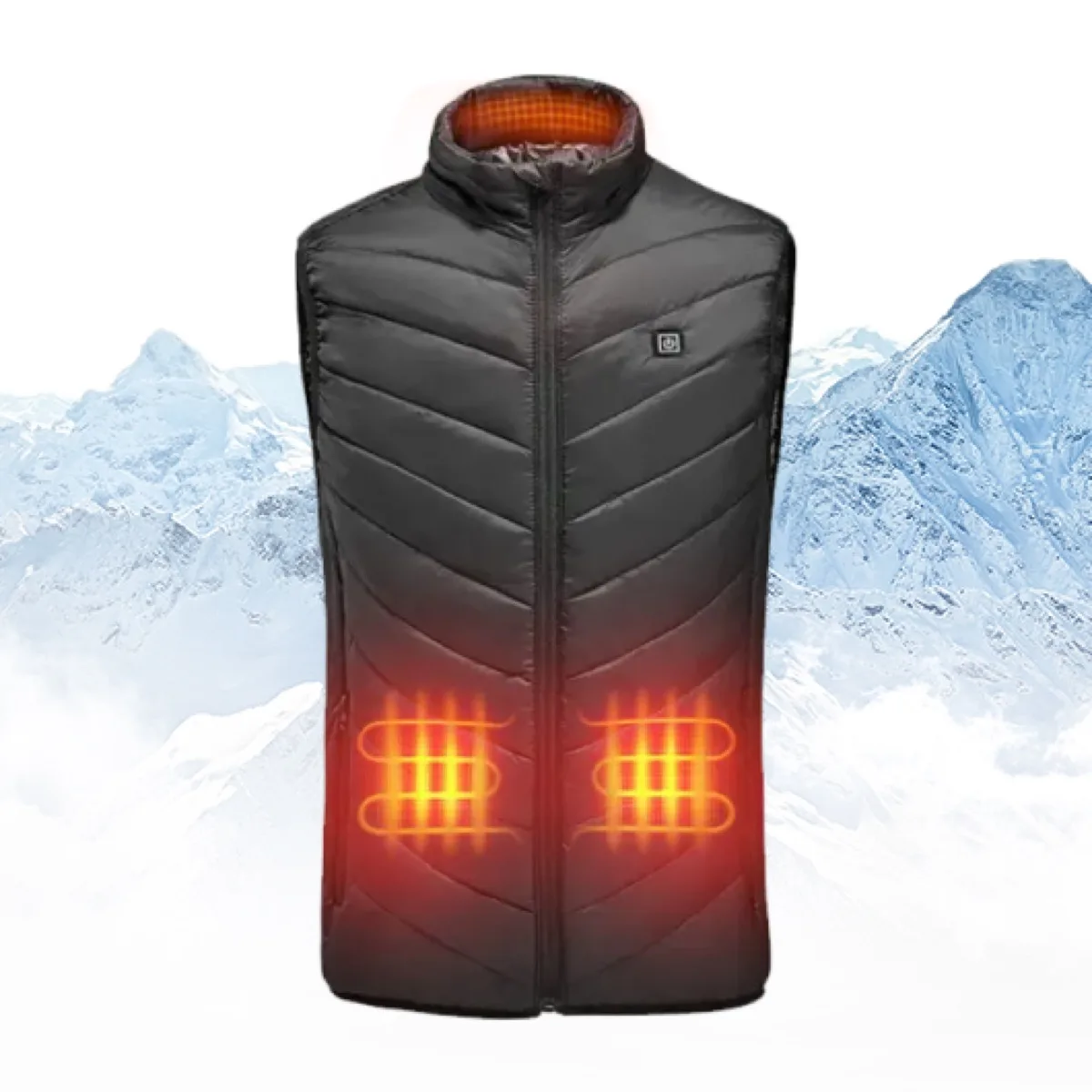
Price: ~$60 (promo) | Battery: Not included | Zones: 5 | Battery Life: ~7.5 hours on low
The HeatArmor delivers five heating zones at a price that undercuts most of the competition. The 3-second heat-up claim is legit (I measured 2.8 seconds), and the five-zone coverage across the chest, back, and neck provides solid core warmth.
The catch: the battery isn’t included. You need a separate 10,000mAh USB power bank, which adds $25-35 to the real cost. Once you factor that in, the price advantage over mid-range options narrows. Battery life on high is also shorter than advertised at about 3.2 hours.
The build quality is decent for the price. The water-resistant shell handles light precipitation, the machine-washable feature works as advertised, and the vest is lightweight enough for all-day layering. Sizing runs small, so order up.
Why it wins: Five heating zones at a budget price, genuine fast heat-up, and machine-washable convenience.
Who should skip it: Anyone who needs all-day battery without carrying a spare, or who wants the battery included in the box.
3. Venture Heat ProMax - Best for Battery Efficiency
Price: ~$140 | Battery: Included | Zones: 5 | Battery Life: ~11 hours on low
The Venture Heat ProMax impressed me with its battery efficiency. Eleven hours on low is real, and even on medium I got about 6 hours. That’s the best battery-to-weight ratio I tested.
Five heating zones warm up quickly and cover the core evenly. The vest has a clean, understated design that works as both an outer layer and a layering piece. The fit is true to size, unlike some competitors that run small.
The included battery doesn’t double as a phone charger, which is a minor miss. But the raw runtime efficiency means you’re less likely to need that feature anyway. If you’re outdoors all day and can’t swap batteries, this is the vest that gets you through.
Why it wins: Eleven hours on low, the longest runtime I measured, with five-zone heating that covers the core evenly.
Who should skip it: If you want a heated collar or phone charging, the Ororo covers those features.
4. Venustas Classic Heated Vest - Best for Extended Battery Life
Price: ~$130 | Battery: Included | Zones: Large coverage | Battery Life: ~16 hours on low
The Venustas Classic is the endurance champion. Sixteen hours on low is the longest runtime I measured, and even on medium I got 8+ hours. If you work outdoors in cold conditions and can’t recharge during the day, this is the vest.
The heating zones are larger than most competitors, covering more surface area across the chest and back. The vest is also available in the widest size range I found, from S to 5XL for men’s styles. That makes it the best option for people who struggle to find heated vests in their size.
The trade-off is weight. At about 1.6 pounds with the battery, it’s heavier than the Ororo or Venture Heat. The extra weight comes from the larger heating elements and bigger battery. It’s not uncomfortable, but you’ll notice it compared to lighter options.
Why it wins: Unmatched battery life and the widest size range in the category.
Who should skip it: If weight matters or you want a slim fit, the Ororo or Venture Heat are lighter.
5. Savior Heat Heated Vest - Best Value with Included Battery
Price: ~$100 | Battery: Included | Zones: Dual controls (front + back) | Battery Life: ~10 hours on low
The Savior Heat is the best value proposition when you want the battery included without paying premium prices. At around $100, it undercuts the Ororo and Venture Heat while still delivering a complete package.
Dual controls let you set different temperatures for the front and back zones, which is a feature usually reserved for more expensive vests. The battery is smaller and lighter than some competitors, which means slightly shorter runtime on high but a more comfortable carry.
Build quality is solid but not premium, and the outer material isn’t as refined as the Ororo’s nylon. The vest runs small, so order up. For the price, the dual-zone control and included battery make it a strong pick.
Why it wins: Dual-zone controls at a mid-range price, with the battery included.
Who should skip it: If build quality and heated collar matter most, the Ororo justifies the higher price.
Heated Vest Comparison Table
| Vest | Price | Battery | Zones | Battery Life (low) | Heated Collar | Machine Wash | Sizes |
|---|---|---|---|---|---|---|---|
| Ororo Lightweight | ~$160 | Included | 4 | ~10hr | Yes | Yes | XS-XXL |
| HeatArmor | ~$60 | Not included | 5 | ~7.5hr | No | Yes | S-XXXL |
| Venture Heat ProMax | ~$140 | Included | 5 | ~11hr | Yes | Yes | S-XXL |
| Venustas Classic | ~$130 | Included | Large zones | ~16hr | No | Yes | S-5XL |
| Savior Heat | ~$100 | Included | Dual controls | ~10hr | No | Yes | S-XXL |
What I Looked For When Testing
Every heated vest gets tested the same way in my winter rotation:
Heating speed. How fast do you feel warmth after pressing the button? Anything under 5 seconds is competitive. Under 3 seconds is excellent.
Battery life on each setting. I time runtime on low, medium, and high using a stopwatch and a standard 10,000mAh battery (or the included one if provided). The advertised number is almost always the low-setting maximum in mild cold. I test in actual winter conditions.
Heating zone coverage. A thermal camera shows exactly where heat distributes across the vest. Even coverage across the core is the goal. Cold spots between zones mean the vest isn’t doing its job.
Comfort and fit. Does the vest run true to size? Can you layer it? Does the battery pocket shift around? Does the weight feel balanced or front-heavy?
Build quality. How does the stitching hold up after daily wear? Does the outer material pill or scratch? Are the zippers solid? Does it survive machine washing?
Weather resistance. How does the shell handle rain, snow, and wind? A heated vest that soaks through defeats its own purpose.
How to Pick the Right Heated Vest for You
The best heated vest depends on your specific needs. Here’s the fast decision:
Daily commuting with moderate cold? Ororo Lightweight. The heated collar and included battery make it the easiest choice.
Budget-first, occasional use? HeatArmor’s five-zone vest at a budget price. You’ll need your own battery, but the heating performance is solid.
All-day outdoor work? Venture Heat ProMax or Venustas Classic, depending on whether you prioritize efficiency or raw runtime.
Extended sizes needed? Venustas goes up to 5XL. HeatArmor offers extended sizing up to XXXL.
Want the most features for the money? Savior Heat. Dual-zone controls and included battery at a mid-range price.
For a deeper dive into what specs actually matter, check my complete guide to choosing a heated vest. And if you’re specifically weighing the HeatArmor, the full HeatArmor review covers three weeks of hands-on testing. When summer flips the problem around, my best portable neck fans roundup covers the cooling side of wearable tech.
Common Questions & Answers
Q: What is the best heated vest in 2026?
The Ororo Lightweight Heated Vest is the best overall pick for most people. It includes the battery, has a heated collar, delivers solid battery life, and holds up to daily wear. For budget buyers, the HeatArmor offers five heating zones at a lower price (though the battery is sold separately). For all-day outdoor work, the Venture Heat ProMax delivers the longest runtime.
Q: How much do heated vests cost?
Budget heated vests like HeatArmor run $50-70 on sale. Mid-range options like Ororo and Savior Heat cost $100-150. Premium vests from Venture Heat and Venustas run $150-200. Battery costs add $25-40 if not included. The best value depends on how often you'll use it.
Q: Do heated vests really work?
Yes. Modern heated vests with carbon fiber heating elements provide noticeable, adjustable warmth across the core. The 3-second heat-up claim from most brands is accurate. Performance depends on heating zone coverage, battery quality, and ambient temperature. They work best as a layering piece under a jacket in cold weather.
Q: How long does a heated vest battery last?
Real-world battery life varies by heat setting. High delivers 3-4 hours, medium 5-7 hours, and low 8-10 hours. Cold weather reduces capacity by 15-25%. Advertised maximums (usually 8-10 hours) are based on low settings in mild conditions. Carry a spare battery if you need all-day warmth.
Q: What size heated vest should I order?
Order one size up from your normal. Heated vests run slightly snug due to the heating elements and are designed for layering. Check each brand's specific size chart. Venustas offers the widest range (up to 5XL), while most other brands top out at XXL or XXXL.
Q: Are heated vests machine washable?
Yes, after removing the battery. Zip up all zippers, wash on a normal cycle, and air dry. Avoid bleach and fabric softeners. The heating elements and wiring are sealed and water-resistant, but always remove the power bank first.
Q: What is the best heated vest for hunting?
For hunting, prioritize quiet outer material (no nylon swish), deep pockets for gear, and extended battery life since you sit still for hours. The Venustas Classic with 16-hour battery life and quiet fabric is the best hunting pick. The Ororo Lightweight also works well with its heated collar for tree stand hunts.
Q: What is the best heated vest for women?
The Ororo Lightweight is available in women's sizing with a more tailored fit. The Venustas Classic also offers women's styles in a wide size range. For women who want a slim fit under work clothing, the Savior Heat with dual-zone control is a good mid-range option.
Q: Can I wear a heated vest under a jacket?
Yes, heated vests are designed as layering pieces. Wear a base layer (thermal shirt or fleece) under the vest, and a jacket or coat over it. The vest heats your core, and the outer layer traps the warmth. This layering system is more effective than a heated jacket alone.
Q: Are heated vests safe?
Yes, modern heated vests with carbon fiber heating elements are safe. They auto-shutoff after 30-60 minutes to prevent overheating, have overcurrent protection, and use low-voltage batteries (7.4V typical). The heating elements are sealed and waterproof. Remove the battery before washing.
More Wearable Tech Articles

Related Product Reviews

Wearable tech reviewer and fitness technology analyst. Tests smartwatches, fitness trackers, and audio gear daily. Background in sports science helps evaluate health features with expertise.