
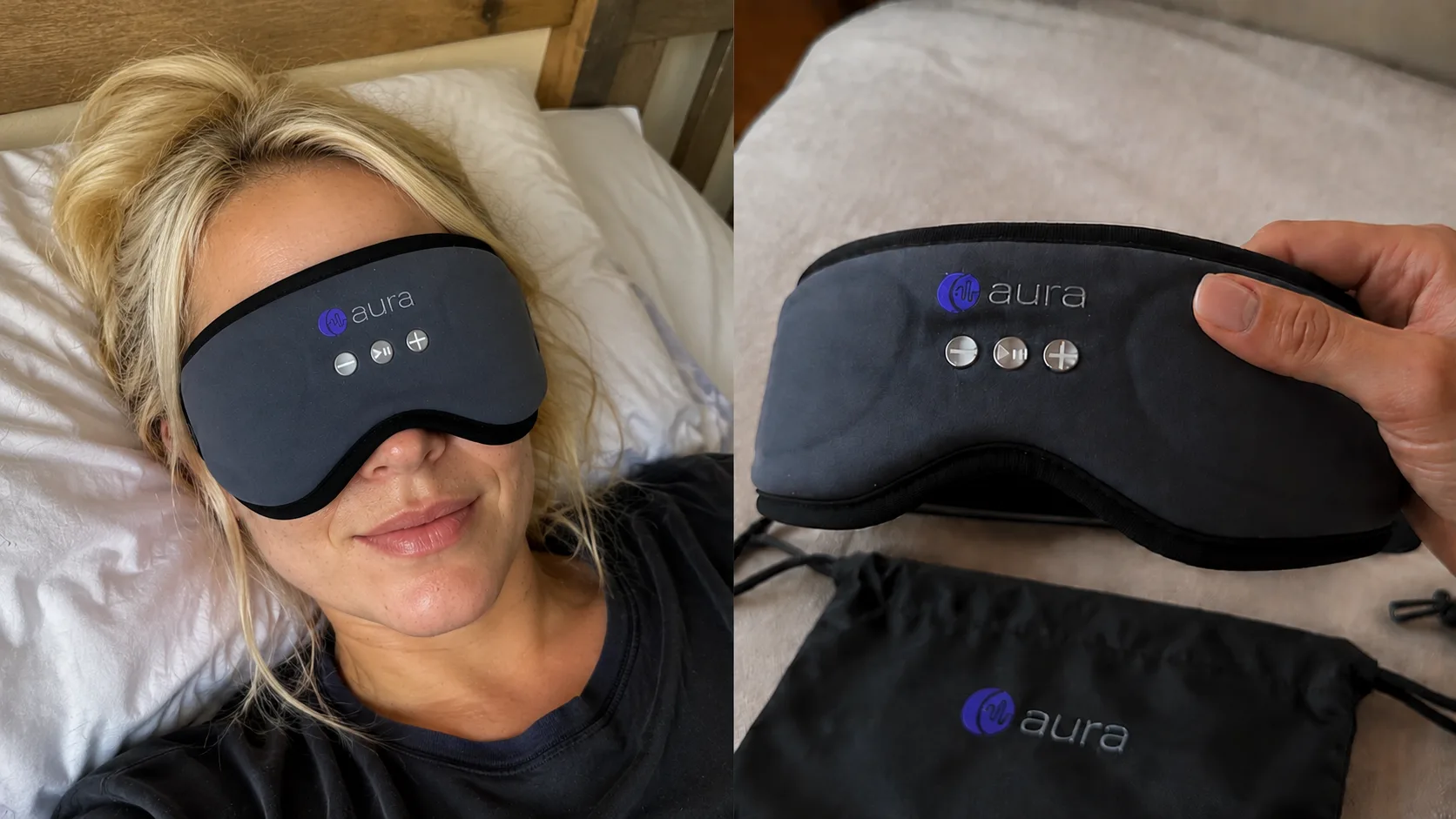
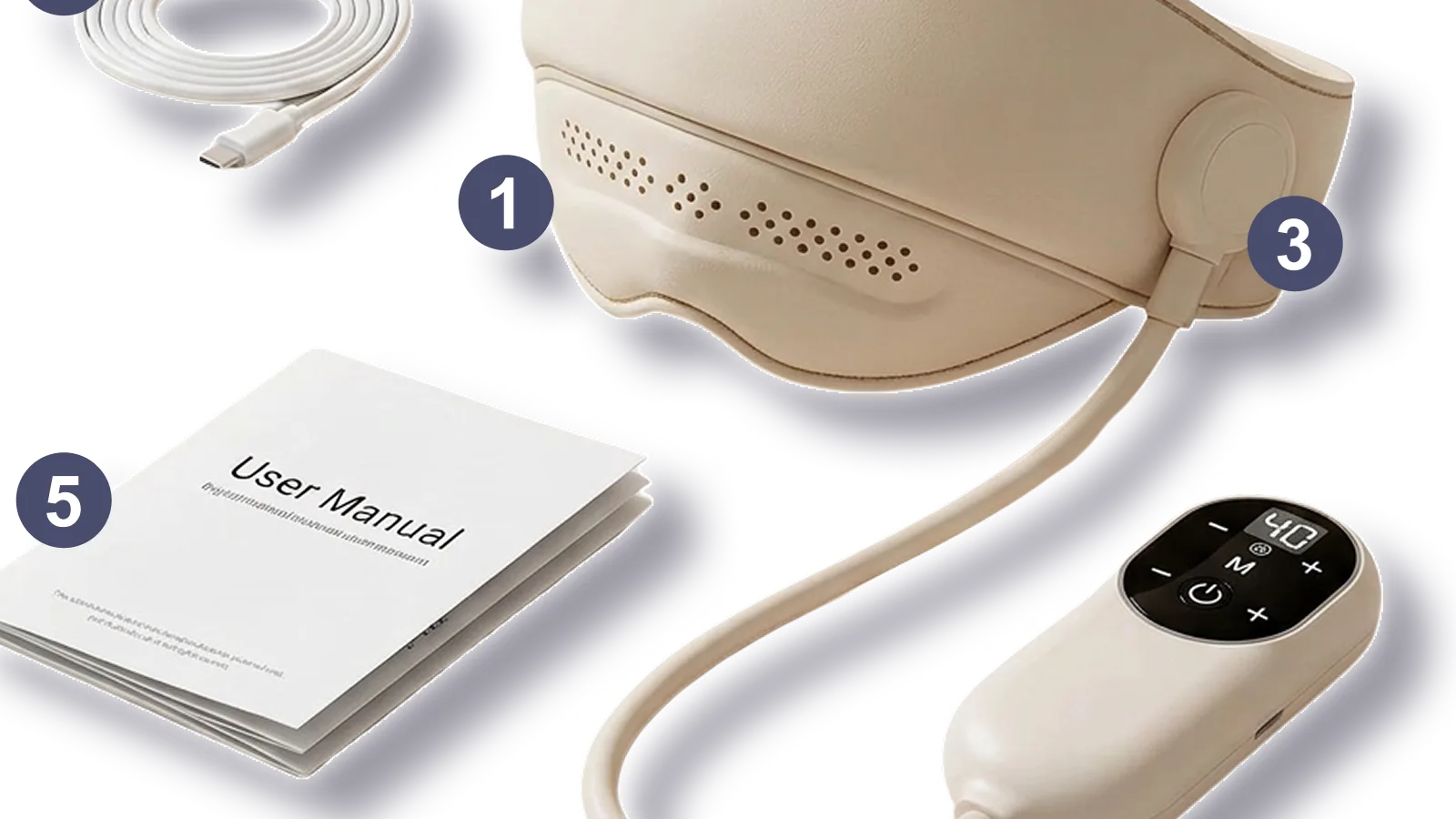
These two are close cousins solving the same problem with opposite philosophies, which is exactly why the choice between them trips people up. The Sleep Ease Calming Mask is a weighted, heated mask with a subtle massage that you sleep in, built around warmth and pressure. The AURA sleep mask is a Bluetooth audio mask with ultra-thin flat speakers, built around sound. Both give you blackout darkness, and both are meant for side sleepers. I have slept 21 nights in the Sleep Ease and three full weeks in the AURA, so this comes from two real logs rather than a spec comparison.
The whole decision comes down to one honest question: when you cannot sleep, what do you reach for? If the answer is a podcast, rain sounds, or drowning out a partner’s snoring, that is the AURA. If the answer is warmth, a heavy blanket, and stillness, that is the Sleep Ease. Get that one thing clear and the rest of this comparison is just confirmation.
TL;DR: Sleep Ease vs AURA at a Glance
| Sleep Ease Calming Mask | AURA Sleep Mask | |
|---|---|---|
| Core mechanism | Heat, gentle massage, weighted pressure | Private Bluetooth audio through flat speakers |
| Blackout | 100%, total darkness in my lit-room test | 3D contour, brand claims 100% |
| Weight | Heavier, heated electronics in fabric | About 24 grams, ultralight |
| Audio | Built-in audio, secondary feature | Flat speakers, the main event, 10-hr battery |
| Heat + massage + weight | Yes, all three | None |
| Washing | Wipe clean, electronics stay in | Remove electronics, wash fabric |
| Guarantee | 30 nights | 90 nights plus 1-year warranty |
| My score | 7.2 / 10 | 7.8 / 10 |
| Best for | Racing thoughts, tense muscles, cold rooms | Sleepers who need sound, snoring masking |
Fall asleep to sound, buy AURA. Fall asleep to warmth and weighted pressure, buy Sleep Ease.

Why These Two Keep Getting Compared
Same category, opposite levers. Both masks seal darkness around your eyes so melatonin can do its job, which the Sleep Foundation explains is the biological reason light leaking into your room works against you all night. Where they part ways is what fills the darkness. AURA fills it with sound. Sleep Ease fills it with warmth, weight, and a soft pulse.
That difference is not cosmetic. It changes the whole nightly routine, which mask you actually keep reaching for, and how long each one lasts on a charge. So rather than declare a single winner, I am going to walk you through where each one genuinely wins, because for most people this is a clear either-or rather than a better-and-worse.
Common Questions & Answers
Q: Is Sleep Ease or AURA better for side sleepers?
Both handle side sleeping, but for different reasons. AURA uses ultra-thin flat Bluetooth speakers that sit flush inside the padding, so nothing presses into your ear or temple when you roll onto your side, and it weighs only about 24 grams. The Sleep Ease mask is slim for an electronic mask and held its seal for me after a week of strap tuning, but it is heavier and adds heat and weight. If audio is your priority, AURA is the more purpose-built side-sleeper mask.
Q: Do Sleep Ease and AURA both block 100 percent of light?
Both aim for total blackout and both get close. AURA uses 3D contoured cups with a nose seal and the brand claims 100 percent blackout, though no independent lab has verified it. The Sleep Ease mask produced total, startling darkness in my own lit-room test with no nose-bridge leak, and it held for 21 nights. In practice both are strong blackout masks, and neither is the weak, leaky flat-mask experience.
Q: Does the AURA mask have heat or massage like Sleep Ease?
No. AURA is a blackout-plus-audio mask. Its whole job is total darkness and private Bluetooth sound through flat speakers, with no heat, no massage, and no weighted pressure. The Sleep Ease mask adds gentle heat, a subtle vibration massage, and weighted pressure on top of blackout. That is the single biggest difference between them, and it decides the purchase.
Q: Which is better if I fall asleep to podcasts or white noise?
AURA, and it is not close. Its flat Bluetooth 5.4 speakers are built specifically for falling asleep to sound, stay stable all night, and include a 1-hour or 2-hour auto-shutoff so an episode does not wake you at 2 a.m. The Sleep Ease has a built-in audio system, but the heat, pressure, and blackout carry it, and audio is a secondary extra. If sound is the mechanism that puts you under, buy AURA.
Q: Which is better for racing thoughts at bedtime?
Sleep Ease. Gentle heat, weighted pressure, and a subtle vibration pulse give a racing mind something physical to settle on, which is what shortened my wind-down from about 45 minutes to around 25 minutes over 21 nights. AURA does nothing for a busy brain beyond darkness and optional sound, so if your problem is a mind that speeds up in the dark, the warmth and pressure are the whole point.
Q: Can I wash the AURA and Sleep Ease masks?
AURA is the easier one to keep clean. Pop out the electronics module, hand-wash the fabric, dry it fully, then slide the module back in. The Sleep Ease mask cannot have its electronics removed, so you wipe it with a damp cloth and air dry it, never submerging it. Over months of nightly wear against your face, AURA's removable-module design is the more hygienic setup.
Q: Which has the better guarantee and warranty?
AURA, clearly. It carries a 90-day money-back guarantee plus a 1-year warranty, which is a real, public, transparent return policy. The Sleep Ease mask offers a 30-night guarantee with no independent review presence I could find on Amazon or Trustpilot. If a long, low-risk trial matters to you, AURA removes far more of the risk.
Q: Why is AURA better reviewed than Sleep Ease?
AURA scores higher in my own testing, 7.8 out of 10 against 7.2 for Sleep Ease, mostly because of trust and transparency. AURA has a 90-day guarantee, a 1-year warranty, and washable removable electronics, and it solves its two jobs well. Sleep Ease earns a strong score on blackout and sleep-onset results, but its rotating promo pricing and complete lack of independent reviews drag its trust mark down.
Q: Can I use Sleep Ease and AURA together?
Not really, since both are all-night blackout masks doing the same core job. Pick by the mechanism that actually puts you under. If you fall asleep to sound, AURA. If you fall asleep to warmth and weighted pressure, Sleep Ease. Owning both makes sense only if your needs genuinely split, for instance AURA on nights you want a podcast and Sleep Ease on nights your muscles are tense.
Q: Which should I buy if I can only choose one?
Ask what you reach for when you cannot sleep. If it is a podcast, rain sounds, or a partner's snoring you want to mask, buy AURA, because its flat speakers and 90-day trial make it the safer, better-guaranteed pick. If it is warmth, weight, and total stillness that quiet your racing mind, buy Sleep Ease. Match the mask to your mechanism, because the wrong one will sit in a drawer.
More Wellness Gadgets Articles
Related Product Reviews

Health tech researcher and wellness gadget reviewer. PhD in Biomedical Engineering. Tests sleep trackers, massage devices, and health monitors with clinical precision. Believes in data-driven wellness.