
In This Article
- What to Expect From Drug-Free Sleep Methods
- 1. Get Out of Bed After 20 Minutes
- 2. Breathe at Six Breaths a Minute
- 3. Play a Cognitive Shuffle
- 4. Warm Up, Then Cool Down
- 5. Make the Room Dark and Weight Your Eyes Down
- 6. Relax Your Body Top to Bottom
- 7. Get Morning Light and Cut Caffeine Early
- 8. Park Your To-Do List Before Evening
- 9. Try to Stay Awake Instead
- Who These Methods Are For
- What to Skip
- Troubleshooting
- The Verdict
- Frequently Asked Questions
If you have lain in bed watching the clock get later and later, you know the loop: the more you try to sleep, the more awake you feel. Reaching for melatonin is the reflex, but melatonin is a circadian signal, not a sedative. It helps if your internal clock is shifted, like jet lag or a late schedule, and it does very little for the ordinary “my mind will not switch off” insomnia that keeps most people awake. For that, the drug-free methods below do more, and they are the first-line recommendation of sleep medicine for a reason.
Everything here is grounded in cognitive behavioral therapy for insomnia (CBT-I), which is more effective than sleeping pills for chronic insomnia and has no next-day fog. You do not need an app or a prescription. You need a handful of techniques that lower your arousal, plus the discipline to stop treating sleep like a task you can force.
The methods are ordered roughly by how fast they tend to work and how broadly they help. Start with the first three tonight; they are the ones that address the racing mind directly.
What to Expect From Drug-Free Sleep Methods
| Method | Type | How Fast It Works | Effort | Best For |
|---|---|---|---|---|
| Get up after 20 minutes | Behavioral | A few nights | Low | Anyone who lies awake frustrated |
| Paced breathing (6/min) | Physiological | Minutes | Low | A stressed, racing body and mind |
| Cognitive shuffle | Mental | Minutes | Medium | Rumination and a busy brain |
| Warm then cool | Environmental | Same night | Low | People who run hot or cold |
| Blackout + weighted mask | Environmental | Same night | Low | Light leak and physical restlessness |
| Progressive muscle relaxation | Physical | Minutes to weeks | Medium | Tension held in the body |
| Morning light + caffeine timing | Circadian | Days to weeks | Low | A shifted or unstable body clock |
| Park the to-do list | Cognitive | Days | Medium | Worry that shows up at bedtime |
| Paradoxical intention | Mental | Minutes | Medium | Performance anxiety about sleep |
One honest note: a single technique will not fix chronic insomnia on its own. These work as a stack, and they work best when you are consistent for a couple of weeks rather than cherry-picking on a bad night. If sleeplessness goes on for more than a few weeks and is wrecking your days, that is the trigger to talk to a doctor rather than self-treating.
1. Get Out of Bed After 20 Minutes
This is the single most evidence-backed move in all of insomnia treatment, and it is the one people resist most. If you have been awake and frustrated for roughly 20 minutes, get out of bed. Go to another room, lie on the couch in dim light, and only return when you feel genuinely sleepy.
The point is not the couch. It is conditioning. When you lie in bed awake and anxious night after night, your brain learns that bed is the place you lie awake and anxious. Stimulus control breaks that association and rebuilds bed as a cue for sleep. It feels counterproductive the first few nights, and then it starts working.
2. Breathe at Six Breaths a Minute
Slow breathing with a longer exhale than inhale is the fastest lever you have on your own nervous system. Try inhaling for four seconds and exhaling for six, and keep it up for a few minutes. Around six breaths a minute sits near your physiological resonance frequency, where heart-rate variability peaks and vagal tone rises, which tells your body it is safe to power down.
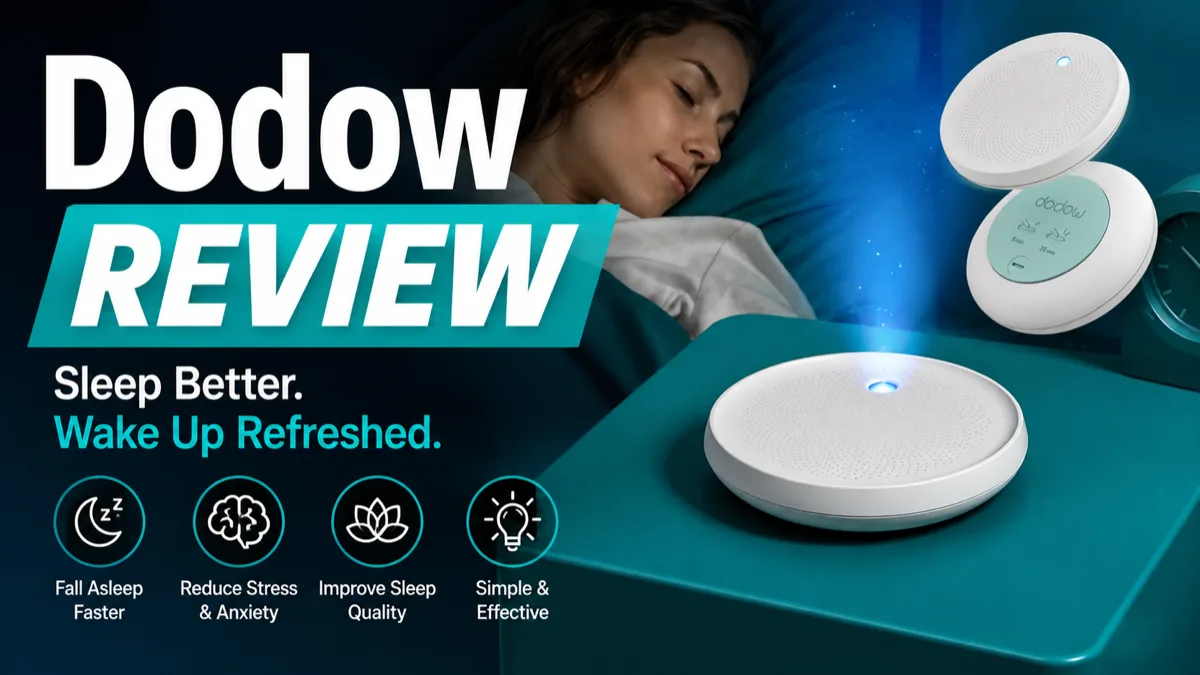
This is the same principle behind the breathing-light devices like Dodow, and you do not need the device to get the benefit. The 4-7-8 pattern works too. If counting frustrates you, just make each exhale a little longer than each inhale and let it slow down on its own.
3. Play a Cognitive Shuffle
When your problem is a loop of replaying conversations and tomorrow’s to-do list, pure relaxation often fails because you cannot relax your way out of a thought spiral. The cognitive shuffle gives your brain a different job. Picture a random, unrelated object, hold it for a second or two, then move to the next: a canoe, a giraffe, a stapler, a cloud.
The deliberately boring, disorganized imagery mimics the fragmented quality of real sleep onset and leaves no room for the rumination that keeps you wired. It sounds too silly to work, and it is one of the better-studied mental techniques for quieting a busy mind at bedtime.
4. Warm Up, Then Cool Down
Falling asleep depends on a drop in your core body temperature, so the goal is to trigger that drop on purpose. A warm shower or bath 60 to 90 minutes before bed does this: it brings blood to your skin, and the rapid cooling afterward reads as a sleepiness signal. Then keep the bedroom cool, around 60 to 67 degrees Fahrenheit, because a hot room blocks the exact drop your body is trying to make.
This is one of the simplest environmental fixes, and combined with a dark room it solves a surprising amount of “I cannot get comfortable” sleeplessness that people mistake for a racing mind.
5. Make the Room Dark and Weight Your Eyes Down
Light is the primary signal your circadian clock runs on, and even dim light at night suppresses the melatonin your body makes on its own. Black out the room completely, cover the LEDs, and consider a sleep mask so nothing can leak in.
A blackout mask solves the light problem, and a gently weighted or heated mask adds the second half. Steady, gentle pressure across the brow works like a weighted blanket for your face, calming the physical restlessness that a racing mind rides on. That combination of true blackout plus gentle weight is why a mask like the Sleep Ease Calming Mask is the tool I reach for most nights, and over three weeks it cut my average time lying awake from about 45 minutes to 25. My Best Sleep Masks 2026 roundup ranks the top options.
6. Relax Your Body Top to Bottom
Run a slow body scan and tense then release each muscle group from your forehead down to your toes. Progressive muscle relaxation is well studied for insomnia, and it works because your body and mind cannot be physically tense and mentally calm at the same time. For people whose stress lives in their shoulders and jaw, this gives the mind somewhere to go that is not the inbox.
Do it lying down, take it slowly, and do not rush the release. Most people fall asleep somewhere around their calves, which is the point.
7. Get Morning Light and Cut Caffeine Early
Two circadian habits that quietly decide how easily you fall asleep that night. First, get bright daylight in your eyes within an hour of waking; morning light anchors your body clock and makes you naturally sleepy about 14 to 16 hours later. Second, stop caffeine 8 to 10 hours before bed. Its half-life is roughly five to six hours, so an afternoon coffee still has a meaningful fraction in your system at midnight, and it specifically trims your deep sleep even if you fall asleep without trouble.
Neither feels like a bedtime technique, and both are load-bearing. If you only change one habit this week, make it the caffeine cutoff.
8. Park Your To-Do List Before Evening
Worry has a schedule, and it is 2am. The fix is to give it an earlier slot. Write down what is on your mind, plus tomorrow’s tasks, around 7pm rather than at bedtime. When people assign themselves a brief, earlier worry period, they report fewer intrusive thoughts at lights-out, because the brain no longer needs to rehearse the list it is afraid it will forget.
Keep the notebook by the bed only as a dump for fresh thoughts, not as a place to problem-solve. Offload the thought, do not solve it, and go back to your breathing.
9. Try to Stay Awake Instead
The paradoxical move: lie in the dark with your eyes open and simply try to stay awake, or keep the light on and read something dull. Trying to sleep creates performance pressure, and that pressure is itself one of the biggest drivers of insomnia. Remove the goal and the anxiety that came with it often goes too.
It is genuinely one of the strangest pieces of sleep advice, and it works because it breaks the effort-and-failure cycle. Many people are asleep within minutes once the pressure to perform is off the table.
Who These Methods Are For
These techniques are for ordinary, situational insomnia: the racing mind, the stress week, the schedule that drifted, the 2am worry. They are also the right starting point for chronic insomnia, because CBT-I is the recommended first-line treatment before any pill. If your sleeplessness comes with loud snoring or gasping, restless legs, or a persistent inability to sleep despite good habits, that is a different problem and a doctor’s conversation.
What to Skip
Skip the idea that you can force sleep. Effort backfires. Skip stacking supplements on top of each other, since melatonin plus valerian plus CBD is a way to feel groggy without fixing the arousal underneath. And skip lying in bed for hours hoping it will come; that is the one behavior most likely to make insomnia worse over time.
Troubleshooting
If you are doing the first three methods and still lying awake, you are probably working too hard at them. The breath work should be almost boring, the cognitive shuffle deliberately dull, and getting up should feel like you are giving up on sleep rather than optimizing it. If two weeks of consistent effort changes nothing, that is a good sign to see a doctor rather than a reason to keep troubleshooting alone.
The Verdict
You do not need melatonin to fall asleep faster, and for a racing mind you will get more out of these drug-free methods than out of a pill. Start tonight with the three that act fastest: get up after 20 minutes, breathe at six breaths a minute, and play a cognitive shuffle. Back them with a dark, cool room and gentle pressure across your eyes, and give the whole stack a couple of weeks before you judge it.
Used consistently, this is the same set of techniques sleep clinics build CBT-I programs around, and it is the most durable fix there is.
Frequently Asked Questions
Why can I not fall asleep without taking something?
Usually because your arousal is too high, not because you are short on a chemical. A racing mind, a warm room, light leakage, or an afternoon coffee can all keep your body in a light, alert state that no sedative-free routine can instantly override, and melatonin does not sedate at all. Lowering that arousal with breathing, darkness, and gentle pressure is what actually works.
How long should I lie in bed before getting up?
About 20 minutes. If you are awake and frustrated, get up and do something dull in dim light until you feel sleepy, then return. This is stimulus control, and it is more effective long term than lying there building the association between your bed and lying awake.
Does melatonin even work for falling asleep?
It works for a shifted body clock, like jet lag or a late schedule, because melatonin is a timing signal rather than a sleeping pill. For ordinary stress-related insomnia it does very little to how fast you fall asleep, which is why the behavioral methods here tend to help more.
Is breathing really enough to fall asleep?
For a lot of people, yes, if the breathing is slow and the exhale is longer than the inhale. Around six breaths a minute raises vagal tone and drops your heart rate, which shifts your body toward rest. It is the fastest drug-free lever available, and it is the mechanism behind devices like Dodow.
Will a sleep mask actually help me fall asleep?
If light is waking or stimulating you, yes, and it is one of the cheapest fixes going. A blackout mask blocks the light that suppresses your own melatonin production, and a gently weighted mask adds steady pressure that calms physical restlessness. That combination is why the Sleep Ease is the tool I use most nights.
How much does caffeine really affect my sleep?
More than most people expect. Caffeine has a half-life of roughly five to six hours, so a 3pm coffee is still partly active at 9pm, and it specifically reduces deep sleep even when you fall asleep without trouble. Stopping 8 to 10 hours before bed is a reasonable cutoff for most people.
Should I exercise to fall asleep faster?
Regular exercise improves sleep quality and helps you fall asleep faster, but timing matters. Vigorous exercise too close to bedtime can be stimulating for some people, so most people do best finishing intense workouts a few hours before bed while keeping lighter movement anytime.
When should I see a doctor about not sleeping?
If sleeplessness lasts more than a few weeks, happens most nights, and is affecting your days, see a doctor. Also get evaluated if you snore loudly, gasp, or feel unrested no matter how long you sleep, since those can point to sleep apnea or another condition these methods will not fix.
More Wellness Gadgets Guides

Related Product Reviews


Health tech researcher and wellness gadget reviewer. PhD in Biomedical Engineering. Tests sleep trackers, massage devices, and health monitors with clinical precision. Believes in data-driven wellness.