
In This Article
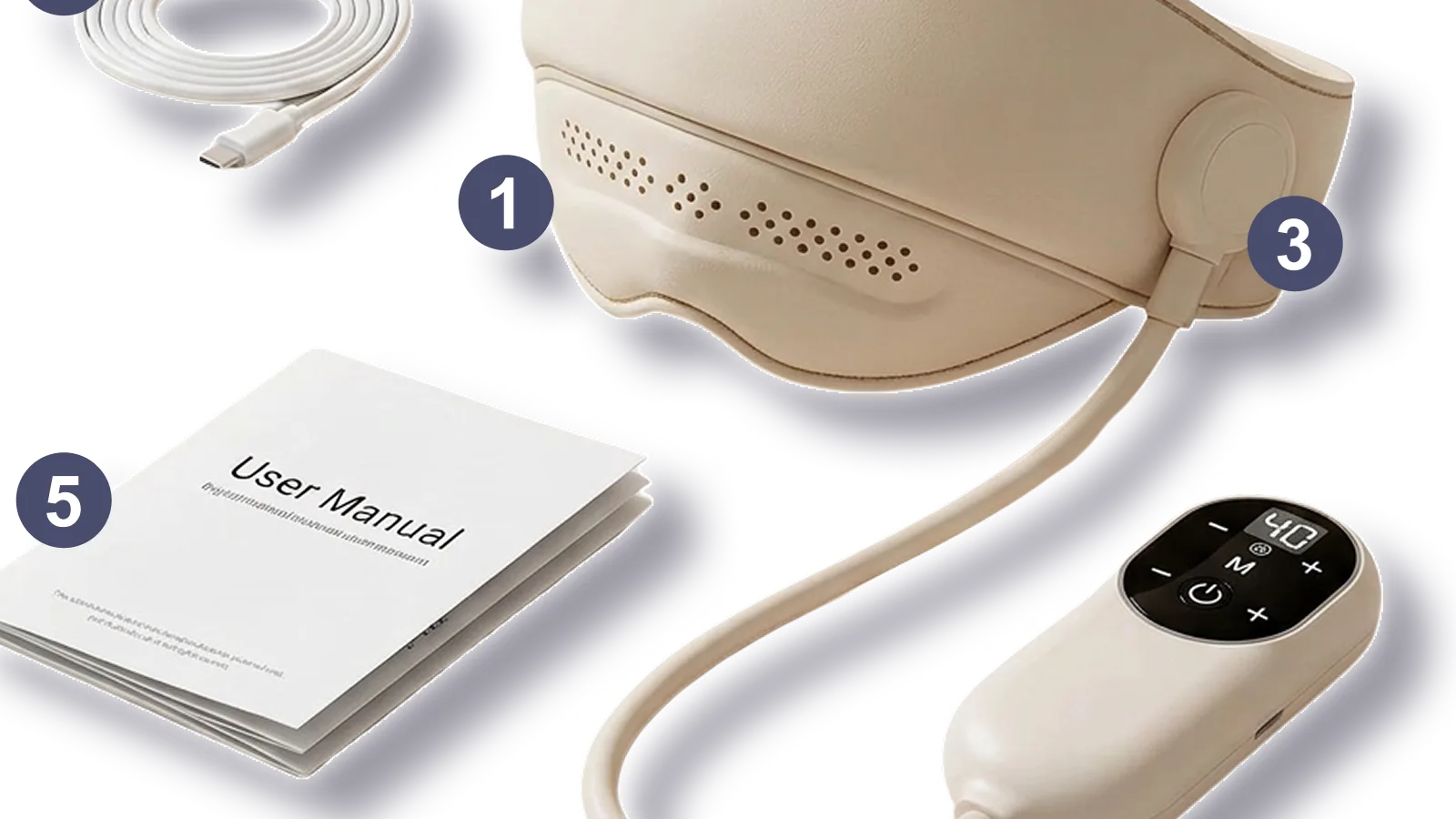
These two keep landing in the same searches, and the first thing to understand is that they are barely the same kind of product. The RENPHO Eyeris 1 is a massage device. It runs a fixed 15-minute session of air compression, vibration, and heat, then shuts off, and you take it off before you sleep. The Sleep Ease Calming Mask is an all-night blackout mask with gentler heat and a subtle vibration pulse that you keep on from the moment you lie down until morning.
So the real question is not which one is better. It is which job you are hiring for. If you want a proper massage to melt screen-born eye strain and head tension, RENPHO does that job harder. If you want something that stays on your face in the dark and helps you actually cross from awake to asleep, only one of these is still on when the lights go out. I have slept 21 nights in the Sleep Ease and put real time on the Eyeris, so this comes from using both rather than reading spec sheets.
TL;DR: Sleep Ease vs RENPHO Eyeris at a Glance
| Sleep Ease Calming Mask | RENPHO Eyeris 1 | |
|---|---|---|
| What it is | All-night blackout sleep mask | 15-minute massage device you remove |
| Do you sleep in it? | Yes, all night | No, session ends and it comes off |
| Massage type | Gentle vibration pulse | Air compression plus vibration |
| Heat | Gentle, warm-towel level | Two levels, roughly 104 to 113 F |
| Blackout | 100 percent, no nose leak | None, open goggle design |
| Weighted pressure | Yes | No, uses air compression instead |
| Audio | Built-in audio system | Bluetooth music |
| Battery | Recharge every 3 to 4 nights | Many sessions per charge |
| Trust signals | No independent reviews yet | 4.3 stars, thousands of ratings, FSA/HSA |
| Best for | Falling and staying asleep | Eye strain and tension relief |
If you want a strong massage and then normal sleep, buy RENPHO. If you want a mask you actually sleep in with blackout and a gentle wind-down, buy Sleep Ease.

The Core Difference: A Session Versus a Night
The RENPHO Eyeris is built around a ritual. You sit or lie back, put on the goggle-style massager, and let it run a 15-minute cycle of compression and heat. It targets acupoints around the eyes, easing the strain that eight hours of screens leaves behind. When the cycle ends, an auto-shutoff powers it down and you take it off. It is excellent at that. It does nothing after that, because it is not still on your face when you are trying to fall asleep.
The Sleep Ease mask starts where the RENPHO session ends. You strap it on, the gentle heat builds over a couple of minutes, a soft vibration pulses, and the weighted pressure settles across your forehead and cheekbones. Total darkness seals around your eyes with no nose-bridge leak. You leave it on all night. In my testing, that wind-down routine cut my lights-out to sleep time from about 45 minutes in week 1 to around 25 minutes by week 3, and my 3 a.m. wake-ups dropped from 3 a night to about 1. Those numbers are in the full Sleep Ease review if you want the night-by-night log.
The distinction matters because falling asleep is a transition, not a switch. A massage that ends after 15 minutes relaxes you, but the hard part, the lying-in-the-dark part where your brain picks up speed, happens after the device is already off.
Common Questions & Answers
Q: Is the RENPHO eye massager the same thing as a sleep mask?
No. The RENPHO Eyeris 1 is a massage device you wear for a 15-minute session and then take off. It uses air compression, vibration, and heat to relieve eye strain and head tension, and it shuts off automatically after the session. It does not block light and you do not sleep in it. The Sleep Ease Calming Mask is an all-night blackout mask with gentler heat and vibration that you actually keep on while you fall asleep and stay asleep.
Q: Can you sleep while wearing the RENPHO Eyeris?
It is not designed for that. The Eyeris runs a fixed 15-minute session with air compression that pumps against your eyes and then powers down. It is bulky, has no blackout seal, and the compression would be uncomfortable to lie on against a pillow. You use it before bed to relax, then remove it and sleep normally. Only the Sleep Ease mask is meant to stay on all night.
Q: Which gives a stronger massage, Sleep Ease or RENPHO?
RENPHO by a wide margin. The Eyeris 1 combines air compression with vibration to give a genuine Shiatsu-style pressure massage around the eyes and temples. The Sleep Ease massage is a deliberately gentle vibration pulse, tuned to be subtle enough to fall asleep in. If you want an intense massage to melt eye strain, RENPHO wins. If you want a whisper-quiet pulse that helps you drift off, Sleep Ease wins.
Q: Does the RENPHO eye massager block light for sleeping?
No. The Eyeris is an open goggle-style massager with no light-blocking seal. Once your 15-minute session ends and you take it off, you are back to whatever light is in your room. The Sleep Ease mask is a true blackout mask that blocks 100 percent of light with contoured cups and no nose-bridge leak, so the darkness continues all night.
Q: Which is better for racing thoughts and falling asleep faster?
Sleep Ease, because it stays on while you fall asleep. Its gentle heat, weighted pressure, and subtle vibration occupy your attention through the wind-down window, which is where a racing mind loses the night. RENPHO relaxes you during a session, but once it shuts off and comes off, nothing is helping you cross from awake to asleep in bed.
Q: Is RENPHO a more trustworthy brand than Sleep Ease?
Yes, on the strength of public track record. RENPHO sells the Eyeris 1 through Amazon, Best Buy, and its own site with thousands of ratings around 4.3 stars, and it is FSA and HSA eligible with a standard return window. Sleep Ease ships from a US warehouse with a 30-day guarantee, but I found no independent reviews on Amazon or Trustpilot. RENPHO is the safer transparent purchase.
Q: Can either device help with dry eyes or eye strain from screens?
RENPHO is the better tool for that specific job. Its heat, set between roughly 104 and 113 degrees Fahrenheit, plus compression, is aimed squarely at eye strain, puffiness, and dry-eye comfort. Sleep Ease is built for sleep, not screen recovery. If your main problem is tired screen eyes rather than a racing mind at bedtime, the Eyeris is the more targeted buy.
Q: Do both need charging, and how does battery life compare?
Both are rechargeable over USB. The Sleep Ease mask, with heat running most nights, needed a recharge roughly every 3 to 4 nights, taking about an hour. The RENPHO Eyeris charges and then delivers many 15-minute sessions per charge, since each session is short. Neither needs charging if you run Sleep Ease in blackout-only mode, and RENPHO is tethered to its own session cycle.
Q: Can I use RENPHO and Sleep Ease together?
Yes, and this pairing actually makes sense. Use the RENPHO Eyeris for a 15-minute massage to clear screen strain and loosen your head, take it off, then put on the Sleep Ease mask with gentle heat to carry you into sleep with total darkness. One handles the massage, the other handles the blackout and the overnight wind-down. They solve different halves of the same evening.
Q: Which is better for travel?
The Sleep Ease mask. It packs flat, weighs little, and doubles as a blackout tool in a hotel room with useless curtains or on a daytime flight. The RENPHO Eyeris is bulkier and is really a stationary bedtime ritual. Frequent travelers who want one sleep accessory to pack should choose the Sleep Ease.
More Wellness Gadgets Articles
Related Product Reviews

Health tech researcher and wellness gadget reviewer. PhD in Biomedical Engineering. Tests sleep trackers, massage devices, and health monitors with clinical precision. Believes in data-driven wellness.