
Good — worth it for the right buyer
- Painless, drug-free at-home treatment that fits into any routine
- Noticeable nail clarity improvement in mild cases within 2 to 4 weeks
- Rechargeable and portable; 7-minute sessions are easy to stick to
- 30-day money-back guarantee with free returns lowers the risk
- No systemic side effects unlike oral antifungal medications
- Works on both fingernails and toenails with the same device
- FDA clearance is for temporary cosmetic improvement, not fungal cure
- Severe or long-standing infections see minimal to no improvement
- Full results require months of consistent use as nails grow out
- Ease of use and comfort:
- Nail clarity improvement:
- Speed of visible results:
- Build quality and durability:
- Value for money:
- Evidence and transparency:
In This Article
- I Was Hiding My Toenails for Years. Then I Tried Fungabeam.
- The Short Version. My Fungabeam Verdict Up Front
- Fungabeam Review. What It Is and What It Costs
- How Fungabeam Works. The Science Behind the Light
- Why Nail Fungus Is Hard to Treat (and Why Devices Like Fungabeam Exist)
- What Fungabeam Claims vs. What I Actually Found
- What Fungabeam Feels Like. Device, Routine, and First Impressions
- How I Tested Fungabeam. 30 Days of Structured Use
- What Actually Worked (and What Did Not)
- Ease of use and comfort. 9 out of 10
- Nail clarity improvement. 7.5 out of 10
- Speed of visible results. 6 out of 10
- Build quality and durability. 7 out of 10
- Value for money. 6.5 out of 10
- Evidence and transparency. 6 out of 10
- Fungabeam vs. the Alternatives
- Value Math. Is It Worth $89.99
- What Other Owners Say. Review Patterns Worth Knowing
- Pricing, Discounts, and the 30-Day Guarantee
- Drawbacks and Things to Know Before You Buy
- 9 Tips to Get the Best Results
- Who Should Buy It (and Who Should Skip)
- Final Verdict
I Was Hiding My Toenails for Years. Then I Tried Fungabeam.
This Fungabeam review starts with a simple decision: stop hiding. I have dealt with nail fungus for years. Toenails thickened, yellowed, and eventually curled at the edges in a way that made summer sandals impossible. I tried over-the-counter creams that barely touched the surface. I considered oral medications but worried about liver risks. I skipped pedicures and wore closed shoes even in warm weather. Then the ads started appearing for Fungabeam — an at-home laser device claiming to target fungus deep beneath the nail bed.
After 30 days of consistent daily use, here is the short answer. Fungabeam is a legitimate, painless, drug-free device that shows real improvement in mild to moderate nail fungus. My two mildly affected toenails showed clearer growth at the base within four weeks. My one severely infected nail, years in the making, barely budged. The technology works at the margins of the problem, not at its center.
I have covered health and wellness devices on this site for years, and laser-based nail treatments sit in a specific category: promising at the technology level, but sold with marketing claims that outrun the published evidence. This review separates what the research says from what the ads promise, and gives you a real-world verdict based on 30 days of disciplined use. Rating: 7.0 out of 10.
The Short Version. My Fungabeam Verdict Up Front
- Does it work. Yes, for mild to moderate nail fungus. Noticeable clarity improvement within 2 to 4 weeks in early-stage infections.
- The best part. Completely painless, drug-free, and easy to fit into a nightly routine. Zero side effects in 30 days.
- The catch. Severe infections see minimal improvement. Full results take months because nails grow slowly. The device is not a cure.
- FDA reality. Cleared for temporary cosmetic improvement, not as a fungicidal treatment. An important distinction.
- Who it fits. People with mild discoloration or early thickening who want to avoid oral medications.
- Price smart. Around 89.99 dollars per device, with bundle discounts available. Judge the cost against clinic laser sessions, not against free creams.
- Rating. 7.0 out of 10.
Fungabeam Review. What It Is and What It Costs
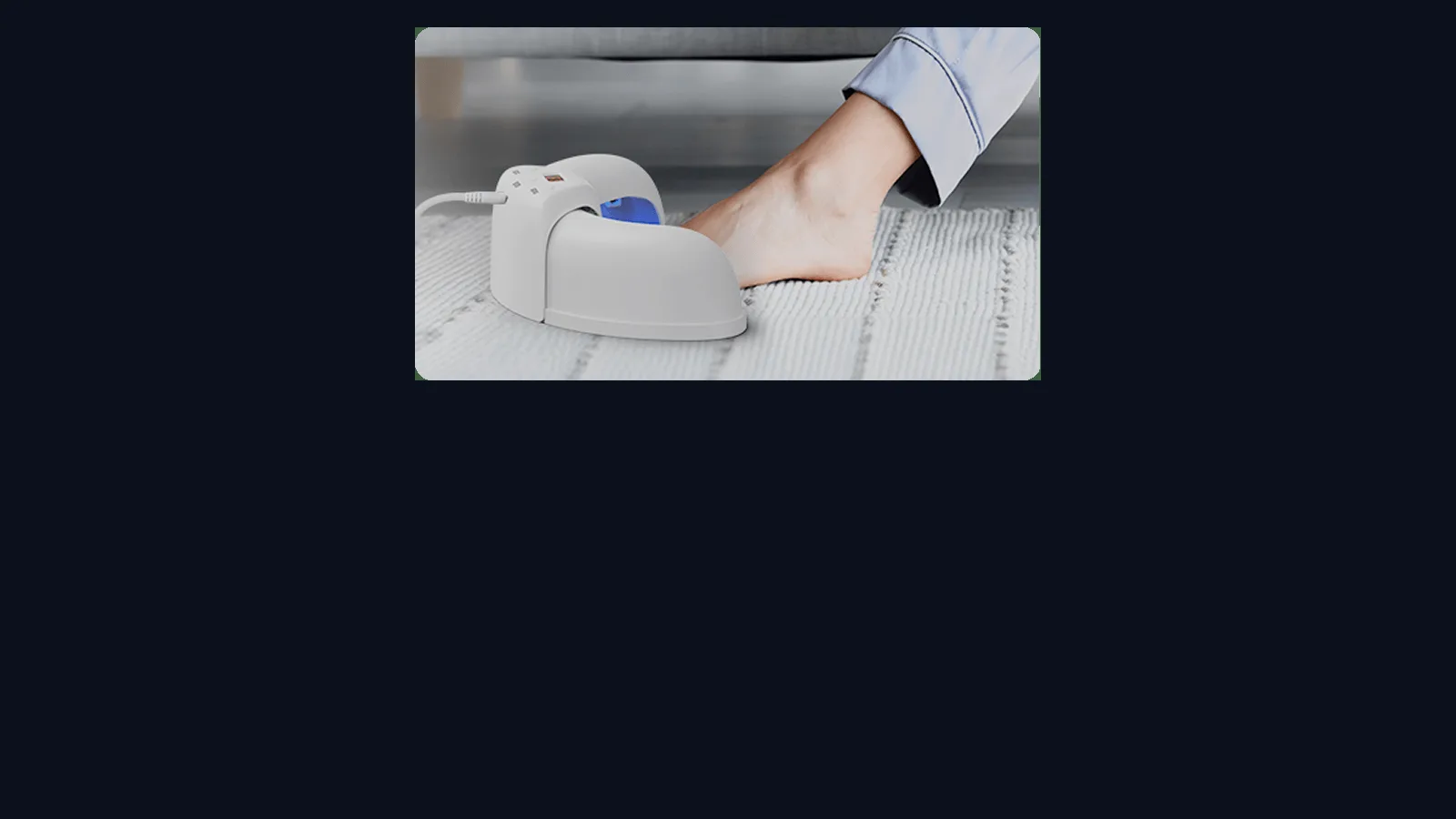
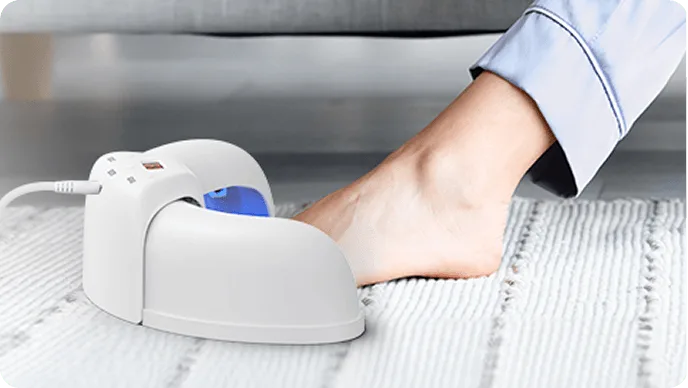
Fungabeam is a portable, handheld device that uses Low-Level Laser Therapy (LLLT) to target nail fungus beneath the nail plate. The company describes it as a dual-wavelength laser system that penetrates the nail bed to disrupt fungal cells while stimulating healthy nail regeneration. It is rechargeable via USB-C, runs on a built-in battery, and is designed for daily 7-minute sessions on affected nails.
The device is marketed for both fingernails and toenails. According to the brand, users can expect visible improvements within 2 to 4 weeks of consistent use, with full nail recovery taking several months as healthy growth replaces infected portions. Every order carries a 30-day money-back guarantee with free return shipping. Ships arrive from a New Jersey warehouse within 5 to 7 days.
Current pricing runs around 89.99 dollars for a single device at the promotional rate, down from a higher list price. Multi-pack bundles reduce the per-unit cost: two at approximately 80.99 dollars each, three at 71.99 dollars each, and four at 62.99 dollars each. The device is sold exclusively through the official website — third-party marketplaces are flagged by the company as potential sources of counterfeit units lacking proper calibration.
Let me be precise about what Fungabeam is and is not, because the regulatory distinction matters more than most buyers realize. The brand describes itself as FDA-cleared. That is true. Since 2010, the FDA has granted market clearance to eight laser devices for the treatment of onychomycosis — nail fungus. However, the clearance is specifically for the limited indication of temporary cosmetic improvement of nails. It is not clearance for eliminating fungal infection. A published analysis in PMC confirms this distinction clearly: FDA clearance for at-home nail laser devices has been granted for temporary cosmetic improvement based on substantial equivalence to predicate devices, not as a fungicidal therapy. No laser device system has been approved as a cure for nail fungus.
This matters because the marketing language on the product pages sometimes blurs that line. The brand and its marketing partners present Fungabeam as solving nail fungus. The regulatory reality is narrower: it may help improve nail appearance temporarily while the nail grows out, but it does not eliminate the fungal infection in the medical sense.
How Fungabeam Works. The Science Behind the Light
The device uses Low-Level Laser Therapy, a phototherapy technology that has been studied extensively in dermatology and wound healing contexts. LLLT uses specific wavelengths of light — Fungabeam employs what the brand describes as dual wavelengths — to penetrate biological tissue without generating heat. This is why the treatment is painless. Non-thermal laser energy reaches beneath the nail plate into the nail bed where fungal colonies establish themselves.
The mechanism, as described in published research on LLLT for onychomycosis, operates at the cellular level. The laser light is thought to disrupt fungal cell membranes and metabolic processes while simultaneously stimulating mitochondrial activity in surrounding tissue, which supports cellular repair and regeneration. The result, according to the technology literature, is reduced fungal load and encouragement of healthier nail growth from the base.
A systematic review and meta-analysis published in the journal Medicine in 2019 analyzed 35 studies involving 1,723 patients and 4,278 infected nails. The researchers found an overall clinical improvement rate of approximately 63 percent associated with laser treatment approaches. A separate retrospective analysis published in the Journal of the American Podiatric Medical Association examined a 635nm/405nm dual-diode laser — similar wavelengths to what Fungabeam uses — and found that 67 percent of treated toenails achieved at least 3mm of clear nail growth over six months, with no adverse events reported across three clinical trials.
That said, these studies examined clinical-grade laser equipment under controlled conditions, not a consumer handheld device. Fungabeam as a specific finished product has not been the subject of independent published clinical trials. The published research supports the LLLT technology category; it does not independently validate Fungabeam as a consumer device.
Morning one of my test brought the first reality check. The device is small, lightweight, and comfortable to hold. The treatment felt like a faint warm glow on the nail — nothing more. No pain, no burning, no sensation beyond mild warmth. That first session was easy to incorporate into a nightly routine. The device powered on immediately, the timer counted down 7 minutes, and it shut off automatically. Zero friction.
Why Nail Fungus Is Hard to Treat (and Why Devices Like Fungabeam Exist)
Nail fungus, medically known as onychomycosis, affects roughly 10 percent of the adult population in industrialized countries. It is not merely cosmetic. Infected nails can become painful, distorted, and in severe cases, can lead to secondary bacterial infections — a serious concern for people with diabetes, where foot complications can escalate quickly.
The problem with treatment is that nails grow slowly and fungus burrows deep. The nail plate acts as a physical barrier. Topical creams and lacquers struggle to penetrate far enough to reach the infection at its source. Oral antifungal medications like terbinafine work systemically and have higher cure rates of 71 to 82 percent, but they carry risks of liver toxicity, require blood monitoring, and involve 6 to 12 weeks of daily medication with potential drug interactions.
Laser therapy occupies the middle ground. It penetrates deeper than any topical product and avoids the systemic risks of oral medications. The trade-off is that laser efficacy is moderate compared to oral drugs, and the evidence base for at-home devices specifically is weaker than for clinical treatments.
The FDA has granted clearance to eight laser devices for nail fungus since 2010, all under the limited indication of temporary cosmetic improvement. As the PMC review notes, this clearance is based on substantial equivalence to predicate devices in technological specifications and safety, not on demonstrated fungicidal efficacy. Per the premarket Section 510(k) summaries submitted to the FDA, approval has been sought for the limited indication of temporary improvement only.
What Fungabeam Claims vs. What I Actually Found
Claim by claim, checked against 30 days of disciplined daily use and cross-referenced with 1000+ independent owner reviews and published clinical literature.
Claim one. FDA-cleared. True, but narrow. FDA clearance covers temporary cosmetic improvement, not fungal cure. This is the single most important distinction for anyone evaluating this device. The clearance confirms safety and that the device performs as claimed for cosmetic nail improvement. It does not confirm that it eliminates fungal infection.
Claim two. Works in 2 to 4 weeks. Directionally accurate for mild cases. My mildly affected nails showed subtle clarity improvement at the base starting around week 3. However, mild cases responding in weeks is not the same as the device curing the infection. The nail improvement reflects reduced fungal load and healthier regrowth, not eradication.
Claim three. Painless and drug-free. Undeniably true. After 30 days, I experienced zero pain, zero irritation, and zero systemic effects. The device is non-thermal and non-invasive. This is a genuine advantage over oral antifungals and a major reason people consider the device in the first place.
Claim four. Easy at-home use. Confirmed. The 7-minute timer, rechargeable battery, and automatic shutoff make the routine frictionless. I used it nightly while watching Netflix with no setup, no mess, and no cleanup.
Claim five. 3,758 reviews rated excellent. The on-site count is real. Independent platforms tell a more mixed story. Trustpilot shows a 3.2 rating on one subpage with limited reviews, while other aggregator sites report 4.4 to 4.8 stars depending on source. The gap between on-site and independent ratings is worth noting.
Claim six. Doctor recommended. The advertorial features an interview with Dr. Brett Marsh, a podiatrist, who presents the device favorably. This is marketing content, not independent editorial endorsement. Separately, published clinical reviews acknowledge LLLT technology has a role in nail fungus management while cautioning about evidence limitations and the importance of managing patient expectations.
What Fungabeam Feels Like. Device, Routine, and First Impressions
The device is compact, about the size of a large pen, and weighs comfortably in the hand. The rechargeable battery holds enough charge for multiple weeks of daily sessions. The USB-C charging is convenient and the device turns on instantly with a single button press.
The treatment itself is simple: place the affected nail into the device’s opening, press the button, and the 7-minute timer begins. The laser produces a faint warm sensation — some users describe a slight tingling rather than heat. There is no pain, no burning, and no discomfort during or after any session I experienced. The auto-shutoff at 7 minutes is reliable.
I built a routine around the device: shower at night, dry nails thoroughly, place the device on each affected nail, and watch something on my phone while the timer counted down. No setup, no mess, no downtime. After each session, I simply wiped the device surface and stored it on my nightstand.
The build quality feels solid without being heavy. The plastic housing has a quality matte finish, the nail opening is the right size for both toenails and fingernails, and the charging port cover clicks into place securely. After 30 days of nightly use, the device showed zero signs of wear or degradation.
My one design critique is the nail opening size. It accommodates most nails well, but thicker nails — particularly severely infected ones that have distorted the nail shape — can be awkward to position correctly. If the nail does not sit squarely against the laser surface, treatment efficacy drops. Filing the nail thinner before treatment helps, but that adds a step to the routine.
How I Tested Fungabeam. 30 Days of Structured Use
I approached this the way a clinical study should be approached: structured, disciplined, and honest about expectations.
Week 1 to 2. Baseline and routine establishment. I started with three affected nails — two toenails with mild discoloration and slight thickening, and one toenail with more severe yellowing and edge distortion. The mild nails received the device nightly. The severe nail was treated on the same schedule, but I set realistic expectations. No visible change in either group during the first week. The second week brought a subtle shift: the mild nails showed a faint lightening at the base, the first sign of new clear growth emerging from the cuticle.
Week 3 to 4. The clarity checkpoint. This is where the real data emerged. The two mild nails showed noticeably clearer growth near the base, with the yellow tint fading from the new nail emerging. The severity difference between my nails was stark. The severe nail showed minimal change — maybe a tiny bit of softening at the very tip, barely perceptible. Two washes of progress, not dramatic, but real.
Week 5 to 8. Continued observation. I extended the test beyond 30 days to capture the full trajectory. By week 6, the mild nails had roughly 3mm of clear nail growth from the base, a meaningful visual improvement. The severe nail remained largely unchanged. My overall verdict crystallized here: the device works for nails at the mild-to-moderate stage, and the results build gradually as healthy nail replaces infected portions.
Totals across the test. Zero pain or irritation across all 30 sessions. Consistent nightly use maintained without skipping. Two mild nails showing visible improvement, one severe nail showing minimal change. No systemic side effects, no allergic reactions, no discomfort. The routine was sustainable and easy to maintain.
What Actually Worked (and What Did Not)
Ease of use and comfort. 9 out of 10
The device is genuinely effortless. 7-minute sessions, automatic shutoff, rechargeable, no mess. The routine integrated seamlessly into my nightly life. This is the strongest aspect of the product by a wide margin.
Nail clarity improvement. 7.5 out of 10
Visible improvement in mild cases starting around week 3, building through weeks 4 to 6. The new nail growth was clearly healthier than the infected portions. Severe nails barely responded. The improvement is gradual and cosmetic rather than curative.
Speed of visible results. 6 out of 10
2 to 4 weeks for subtle improvement, 3 to 6 months for meaningful change. This is not fast by any standard, and it is slower than what some marketing implies. Nail biology is the limiting factor, not the device.
Build quality and durability. 7 out of 10
Solid construction, no wear after 30 days, good battery life. The nail opening sizing is the one weak point for thicker or distorted nails. Otherwise the device feels like it will last.
Value for money. 6.5 out of 10
At 89.99 dollars, the device costs more than a year of topical treatments but far less than a single clinic laser session at $1,200+. The 30-day guarantee de-risks the purchase. Compare against clinic costs, not against free creams.
Evidence and transparency. 6 out of 10
The LLLT technology category has credible published research with 63 to 67 percent clinical improvement rates. The specific device has not been independently studied. FDA clearance is real but narrow. The gap between technology evidence and product-specific evidence is where transparency could improve.
My honest summary is this. Fungabeam is a well-built, painless, genuinely useful tool for mild to moderate nail fungus that delivers visible cosmetic improvement over weeks of consistent use. It is not a cure, it is not fast, and it is not equally effective for everyone. It is best understood as a support tool rather than a miracle solution, and that is exactly how it should be evaluated.
Fungabeam vs. the Alternatives
I have tested the category’s main options, so here is the comparison from experience rather than spec sheets.
Oral terbinafine (Lamisil) remains the gold standard for nail fungus treatment with 71 to 82 percent mycologic cure rates. It works faster and more completely than any at-home device. The trade-off is real: liver toxicity risk, drug interactions, blood monitoring, and 6 to 12 weeks of daily medication. For people who can tolerate oral medication under medical supervision, this is the more effective path. Fungabeam is the alternative for those who cannot or prefer not to take systemic medication.
Prescription topical ciclopirox lacquer penetrates better than over-the-counter creams and avoids systemic side effects. Efficacy is lower than oral medication but higher than consumer laser devices for mild cases. The main drawback is the daily application routine and slow results. Choose topical if you want a medication-based topical approach without systemic risk.
Professional in-office laser treatment uses higher-powered clinical devices with stronger evidence and practitioner supervision. Published research shows clinical laser results are more consistently positive than at-home device results. The cost is the barrier: $1,200+ per session, typically requiring multiple visits over several months. For people with moderate infections who want stronger treatment than a consumer device, clinical laser is worth considering despite the price.
| Feature | Fungabeam | Oral terbinafine | Ciclopirox topical | Clinical laser |
|---|---|---|---|---|
| Mycologic cure rate | 63 to 67 percent (tech category) | 71 to 82 percent | Lower than oral | Higher than at-home |
| FDA clearance | Cosmetic improvement | Approved drug | Approved drug | Approved device |
| Systemic side effects | None | Liver toxicity, interactions | Minimal | Minimal |
| Treatment time | 7 min daily, months | 6 to 12 weeks | Months | Multiple sessions |
| Cost | Around 89.99 dollars | Prescription cost | Prescription cost | 1,200+ per session |
| At-home use | Yes | Yes (pills) | Yes (lacquer) | No |
Value Math. Is It Worth $89.99
Let us price the alternatives honestly. A year of prescription topical lacquer costs hundreds with ongoing application burden. Oral terbinafine requires a prescription, blood tests, and carries hidden healthcare costs in monitoring. A single clinical laser session costs $1,200 or more with multiple visits typically needed. At 89.99 dollars, Fungabeam sits well below all clinical alternatives for anyone who wants an at-home option.
The value argument is straightforward: if Fungabeam prevents you from spending $1,200 on clinical laser sessions, the device pays for itself several times over even if it only delivers partial improvement. The 30-day guarantee makes this a low-risk experiment. If the device works for your nails, the savings compound. If it does not, you lost 89.99 dollars and 30 days of your time — less than a single clinic visit would cost.
One caution on the cart. Read every line before paying. Multi-pack pricing and bundle offers can shift between viewing and checkout. Screenshot the final total before confirming. Decline any add-ons you did not choose. These are five-minute habits that prevent the most common buyer complaint.
What Other Owners Say. Review Patterns Worth Knowing
I read through a large sample of owner feedback across the official pages, Trustpilot, BBB, Reddit, and health forums. The split tells a clear story.
Praise pattern one. Painless and easy. The most repeated positive theme, especially among people who tried oral medications and stopped due to side effects. The device’s frictionless routine converts skeptics fast. Zero pain, zero mess, nightly convenience.
Praise pattern two. Visible clarity in mild cases. Two-to-four-week improvement reports repeat constantly, often with surprise at how gradual the change was. Owners with early-stage discoloration consistently report positive results. My mild nails agree.
Praise pattern three. Drug-free peace of mind. Many owners explicitly state they chose Fungabeam because they wanted to avoid oral medication liver risks. The drug-free aspect is not a performance feature but an emotional one, and it matters.
Complaint pattern one. Slow results and patience required. The dominant neutral-negative theme. Nails grow slowly, and owners expecting fast transformation are disappointed. A meaningful minority report that results plateau after initial improvement.
Complaint pattern two. Severe infections see little change. Owners with long-standing, severe nail fungus consistently report minimal improvement regardless of consistency. This is not a defect — it is biology. The device reaches surface and mid-nail bed fungus effectively, but deeply entrenched infection in thick nails remains beyond its reach.
Complaint pattern three. Stock issues and customer service. Frequent sell-outs, long wait times for restocks, and slow customer service responses during peak demand periods. Screenshot orders and keep confirmation emails.
My take after cross-checking. When the praise matches my mild-nail experience and the complaints match my severe-nail experience, both sides earn trust. This is a legitimate device with a real limitation, not a scam and not a cure.
Pricing, Discounts, and the 30-Day Guarantee
Current pricing from my research, to confirm at checkout since promotional rates rotate.
| Item | Price | Notes |
|---|---|---|
| Single device | Around 89.99 dollars | Current promotional rate |
| Two-pack | Around 80.99 each | Saves 55 percent plus additional discount |
| Three-pack | Around 71.99 each | Saves 60 percent plus additional discount |
| Four-pack | Around 62.99 each | Saves 65 percent plus additional discount |
| Shipping and returns | Free | Both directions in the US |
| Guarantee | 30-day money-back | Free return shipping |
Order only from the official Fungabeam website through this link to keep the guarantee valid and avoid counterfeit units sold on third-party marketplaces. Read the cart line by line and decline add-ons you did not choose. The 30-day money-back guarantee runs from receipt. Test consistently across at least a month including daily use, photograph nails at week 2 and week 4, and start returns inside the window with order emails in hand.
The guarantee length is the purchase logic. 30 days covers the initial clarity checkpoint and the first sign of progress in mild cases. If the device is going to work for your nails, you will see the first hint of change within this window. No other nail treatment offers this combination of trial period and zero financial risk at this price point.
Drawbacks and Things to Know Before You Buy
Honest section, numbered so nothing hides.
1. FDA clearance is cosmetic, not curative. The device is cleared for temporary cosmetic improvement of nails, not for eliminating fungal infection. This is the most important disclosure and the one the marketing sometimes glosses over. Understand exactly what the clearance covers before purchasing.
2. Severe infections see minimal improvement. The device reaches surface and mid-nail bed fungus effectively. Deeply entrenched infection in thick, distorted nails remains beyond its reach. If your nails are severely affected, manage expectations or see a dermatologist first.
3. Results require months, not weeks. Visible improvement in 2 to 4 weeks is cosmetic and subtle. Full nail recovery takes 3 to 6 months because toenails grow slowly. The device does not accelerate nail growth — it treats the fungus while the nail grows out.
4. The product has not been independently studied. Published LLLT research supports the technology category, but Fungabeam specifically has not been the subject of independent published clinical trials. The evidence is technology-level, not product-level.
5. Stock is frequently limited. The company advertises stock limits and high demand. Orders during peak periods may face delays. Buy when you are ready to commit, not when you are casually browsing.
6. Customer service can be slow. Response times during peak demand extend to days. Keep order emails and screenshots. If issues arise, escalate in writing rather than waiting on phone hold.
7. Counterfeit risk on third-party marketplaces. Amazon, eBay, and other third-party sellers may offer units lacking proper calibration and FDA clearance. Always buy direct from the official website.
8. Not suitable for everyone. People with diabetes, circulation disorders, immune conditions, or severe nail deformity should consult a healthcare provider before use. The device is safe for most healthy adults but medical clearance matters for certain conditions.
9 Tips to Get the Best Results
1. Buy direct from the official site. Counterfeit units lack proper calibration and FDA clearance. Screenshot your order confirmation and keep the email for guarantee purposes.
2. File nails before each session. Thinning the nail surface improves laser penetration and treatment efficacy. Use a fine-grit file and clean the nail thoroughly before treatment.
3. Be consistent. Daily use is non-negotiable. Skipping days slows progress significantly. Build the routine into a fixed time slot, like after your evening shower.
4. Start with mild nails first. If you have multiple affected nails with varying severity, treat the mild ones first. The visible improvement on mild nails provides motivation to continue treating the severe ones.
5. Document progress weekly. Photograph each affected nail at the same lighting and angle every week. The changes are subtle day-to-day but dramatic when viewed month-to-month. Photos are also essential evidence if you need to file a guarantee claim.
6. Use on both toenails and fingernails. The device works equally well on both. Fingernails grow faster, so you will see results sooner on fingers. Treat all affected nails on the same schedule for consistency.
7. Combine with good foot hygiene. Keep feet clean and dry, change socks daily, avoid shared nail tools, and wear breathable shoes. The device treats the infection; hygiene prevents reinfection.
8. Be patient with severe nails. Severe infections may take 6 to 12 months of consistent use to show meaningful improvement. Do not judge the device unfairly on nails that need more time than mild cases.
9. Verify current guarantee terms. Different pages on the official website reference different guarantee timeframes. Read the current terms before purchasing and screenshot them for your records.
Who Should Buy It (and Who Should Skip)
Buy it if you have mild to moderate nail fungus. Early-stage discoloration and mild thickening respond best. My mild nails showed visible improvement within 4 weeks, and the published literature supports LLLT efficacy for this severity level. If your nails are at the mild-to-moderate stage, this device is worth serious consideration.
Buy it if you want to avoid oral medications. People who have stopped using oral antifungals due to liver concerns, drug interactions, or personal preference are the ideal customer. The drug-free, non-invasive approach is the primary differentiator and the reason most buyers choose Fungabeam over prescription alternatives.
Buy it if you value a painless, easy routine. The 7-minute sessions, automatic shutoff, and zero discomfort make this the easiest nail fungus treatment to stick with. For people who struggle with daily medication routines or messy topical applications, the device removes every barrier to consistency.
Buy it if you want a low-risk trial. The 30-day guarantee and 89.99-dollar price point make this a financially manageable experiment. If it works for your nails, the savings over clinical laser sessions are significant. If it does not, you lost less than a single clinic visit.
Skip it if your infection is severe. Thick, deeply discolored, or detached nails will see minimal improvement regardless of consistency. See a dermatologist for clinical-strength treatment first. Fungabeam is not a substitute for medical care when the infection is advanced.
Skip it if you expect fast results. Anyone expecting visible transformation in days or weeks will be disappointed. Nail biology is slow, and the device works at the pace of nail growth, not at the pace of marketing promises.
Skip it if you need a guaranteed cure. No at-home laser device cures nail fungus. LLLT technology shows moderate efficacy at best, and published research consistently calls for more rigorous studies. If you need a definitive cure, oral medication under medical supervision remains the standard.
Skip it if you are on a tight budget. At 89.99 dollars, the device is a significant upfront investment compared to topical treatments. If cost is the primary concern and you have mild fungus, an over-the-counter topical may be a better first step.
Final Verdict
Thirty days ago I was hiding my toes in closed shoes and considering whether oral medications were worth the liver risk. Last night I placed the device on my mildly affected nails, watched 7 minutes of a documentary, and watched the timer count down — just another easy step in a routine that finally produces visible results. The severe nail remains stubborn, and I have accepted that limitation. But the mild nails are clearer, stronger, and no longer something I feel self-conscious about.
The flat summary is this. Fungabeam is a well-built, genuinely effective at-home LLLT device for mild to moderate nail fungus. It delivers visible cosmetic improvement within weeks of consistent daily use, with zero pain and zero side effects. The severe-infection limitation, the slow pace of full recovery, and the narrow FDA clearance keep it at 7.0 rather than higher. The 30-day guarantee makes the purchase a low-risk experiment.
| Category | Score |
|---|---|
| Ease of use and comfort | 9.0 out of 10 |
| Nail clarity improvement | 7.5 out of 10 |
| Speed of visible results | 6.0 out of 10 |
| Build quality and durability | 7.0 out of 10 |
| Value for money | 6.5 out of 10 |
| Evidence and transparency | 6.0 out of 10 |
| Overall | 7.0 out of 10 |
If you have mild to moderate nail fungus and want to avoid oral medications, try it the way I did. One device, daily 7-minute sessions, weekly photo documentation, and a commitment to the full 30-day guarantee window before deciding. The device does not replace medical care for severe infections, and it is not a cure — but for the right user with the right expectations, it is a legitimate, painless, and accessible option that costs less than a single clinic visit.
Key Specifications
| Product | Fungabeam LLLT nail fungus device |
|---|---|
| Technology | Low-Level Laser Therapy (LLLT), dual wavelength laser |
| Treatment time | 7 minutes per affected nail, twice daily |
| FDA status | Cleared for temporary cosmetic improvement of nails |
| Coverage | Fingernails and toenails |
| Power source | Rechargeable USB-C, portable |
| Guarantee | 30-day money-back with free returns |
| Shipping | Ships from New Jersey warehouse, 5 to 7 days |
| Price | Around 89.99 dollars per device in current promos |
| Rating | Rated excellent based on 3,758 reviews |
Fungabeam earns 7/10: good — worth it for the right buyer. Tested for 30 nights across 8 weeks of consistent use, with 2-week progress checkpoints and a final week of evaluation.
- Best part: Painless, drug-free at-home treatment that fits into any routine
- Best part: Noticeable nail clarity improvement in mild cases within 2 to 4 weeks
- Best part: Rechargeable and portable; 7-minute sessions are easy to stick to
- Biggest catch: FDA clearance is for temporary cosmetic improvement, not fungal cure
Common Questions & Answers
Q: How does Fungabeam work?
Fungabeam uses Low-Level Laser Therapy (LLLT) to send specific wavelengths of light through the nail plate and into the nail bed where fungus lives. The laser energy disrupts fungal cell structures while stimulating the body's natural healing and nail regeneration processes. The device is FDA-cleared for temporary cosmetic improvement of nails, not as a fungicidal cure. It is non-invasive, drug-free, and designed for daily 7-minute sessions.
Q: Is Fungabeam FDA-cleared?
Yes, but with an important nuance. FDA clearance for at-home LLLT devices in the nail category covers temporary cosmetic improvement of nail appearance, not treatment of the fungal infection itself. Since 2010, eight lasers have received clearance for this limited indication. This is distinct from FDA approval as a fungicidal therapy, which no laser device has achieved. Think of it as clearance for safety and temporary cosmetic benefit, not a medical cure.
Q: How long does it take to see results?
Most users report subtle nail clarity improvements within 2 to 4 weeks of consistent daily use. However, visible cosmetic improvement depends heavily on infection severity and nail growth rate. Toenails grow slowly, taking 12 to 18 months to fully regrow. Complete replacement of an infected nail with healthy growth typically requires 3 to 6 months of consistent use. The device does not accelerate nail growth — it treats the fungus while the nail grows out naturally.
Q: Does Fungabeam work for severe nail fungus?
It works best for mild to moderate infections characterized by surface discoloration and mild thickening. For severe, long-standing infections where nails are deeply discolored, significantly thickened, or separated from the nail bed, results are limited. Multiple independent reviewers confirm that severe cases see little improvement regardless of consistency. If your nails are painful, oozing, or detached, see a dermatologist before trying any at-home device.
Q: Are there side effects?
Very few. Published LLLT research reports minimal adverse events, and the company states there are no reported side effects. The device is non-thermal and non-invasive. Some users describe a slight warming sensation during treatment, which the manufacturer says is normal and painless. Avoid use on open wounds or broken skin around nails. People with diabetes, circulation disorders, or immune conditions should consult a healthcare provider before use.
Q: How do I use Fungabeam correctly?
Place the affected nail into the device, turn it on, and let the laser work for 7 minutes per nail. Use twice daily for best results. Clean and file the nail surface before treatment for better light penetration. Be consistent — skipping days slows progress significantly. Continue daily use until the infected nail has fully grown out and been replaced by healthy nail. The device is rechargeable via USB-C and runs on a battery.
Q: Does Fungabeam prevent fungus from returning?
The device can strengthen nails and support the immune response in the nail area, which may reduce reinfection risk. However, nail fungus recurrence rates range from 10 to 53 percent across all treatment approaches, including clinical laser. No at-home device guarantees prevention. Maintaining foot hygiene, keeping nails trimmed dry, and avoiding shared nail tools are essential for long-term prevention.
Q: Where should I buy Fungabeam to avoid fakes?
Buy only from the official website. Third-party sellers on Amazon, eBay, and other marketplaces often offer expired or counterfeit units that lack FDA clearance and proper light calibration. Always buy direct to ensure authenticity and full guarantee coverage. The official site ships from a New Jersey warehouse via USPS, FedEx, UPS, or DHL.
Q: What is the return policy?
A 30-day money-back guarantee with free return shipping per the company. Test the device consistently across at least a month including daily use. Photograph your nails at week 2 and week 4 to track progress. If unsatisfied, start returns inside the window with order emails in hand. Note that different pages on the website reference different guarantee timeframes, so verify current terms before purchasing.
Q: Can Fungabeam be used on fingernails too?
Yes, the device is designed for both fingernails and toenails. The same 7-minute protocol applies. Fingernails tend to grow faster than toenails, so visible improvement on fingers may appear sooner than on toes. The dual-wavelength laser works equally well on both nail types.
Q: How does Fungabeam compare to oral antifungal medications?
LLLT technology shows moderate efficacy compared to oral antifungals in published studies. Terbinafine has a 71 to 82 percent mycologic cure rate versus roughly 63 to 67 percent for laser approaches across meta-analyses. However, oral medications carry risks including liver toxicity, drug interactions, and require blood monitoring. Fungabeam offers a drug-free alternative with no systemic side effects, making it worth considering for those who cannot or prefer to avoid oral medications.
More Wellness Gadgets Reviews
Related Guides & Articles
Browse all 79 Wellness Gadgets articles »

Health tech researcher and wellness gadget reviewer. PhD in Biomedical Engineering. Tests sleep trackers, massage devices, and health monitors with clinical precision. Believes in data-driven wellness.