Are Self-Moving Dog Balls Safe? A Practical Safety Checklist
Are self-moving dog balls safe? A practical checklist covering size, small parts, batteries, chewing, noise and when to retire the toy.
In This Article
A ball that jumps, glows and plays music sounds like harmless fun. And for many dogs it is. But it is also an electronic toy with small parts, and a dog’s mouth is not gentle. So it is fair to ask: are self-moving dog balls safe?
The answer is that they can be safe for the right dog with the right supervision, and a poor choice for others. This guide gives you a practical checklist. It is general guidance drawn from veterinary and animal welfare sources such as the AVMA’s page on safe toys and pet behavior, not a substitute for your vet’s advice about your own dog.
Where the Risks Come From
There are four main risks with any battery-powered ball.
- Choking. A ball that is too small, or small parts that come off.
- Batteries. A swallowed battery is a medical emergency.
- Breakage. A cracked shell exposes sharp edges and internal parts.
- Stress. Sudden noise and motion can frighten some dogs.
Owner reviews of similar jumping balls describe the first and third risks in practice. The small rubber nubs come off too easily in some cases, and some owners flag them as a possible choking hazard, and strong chewers can break a ball in minutes. That does not mean every ball fails. It does tell you what to check.
Step 1: Check the Size Against Your Dog
The ball should be too large to fit far into your dog’s mouth or throat. Some brands publish their size. Cheerble, for example, lists its balls at about 3 inches (77 to 80 mm). Others, including PetsBoro, do not publish a diameter on the pages we read. If a listing does not give a size, ask support before you buy, especially for a small dog.
Step 2: Inspect Nubs, Seams and the Shell
Before each session, press the nubs, run a finger along the seam and check for cracks. A ball that opens for battery changes has a seam a determined chewer can work at. A sealed rechargeable design avoids a battery door, though it is not chew-proof.

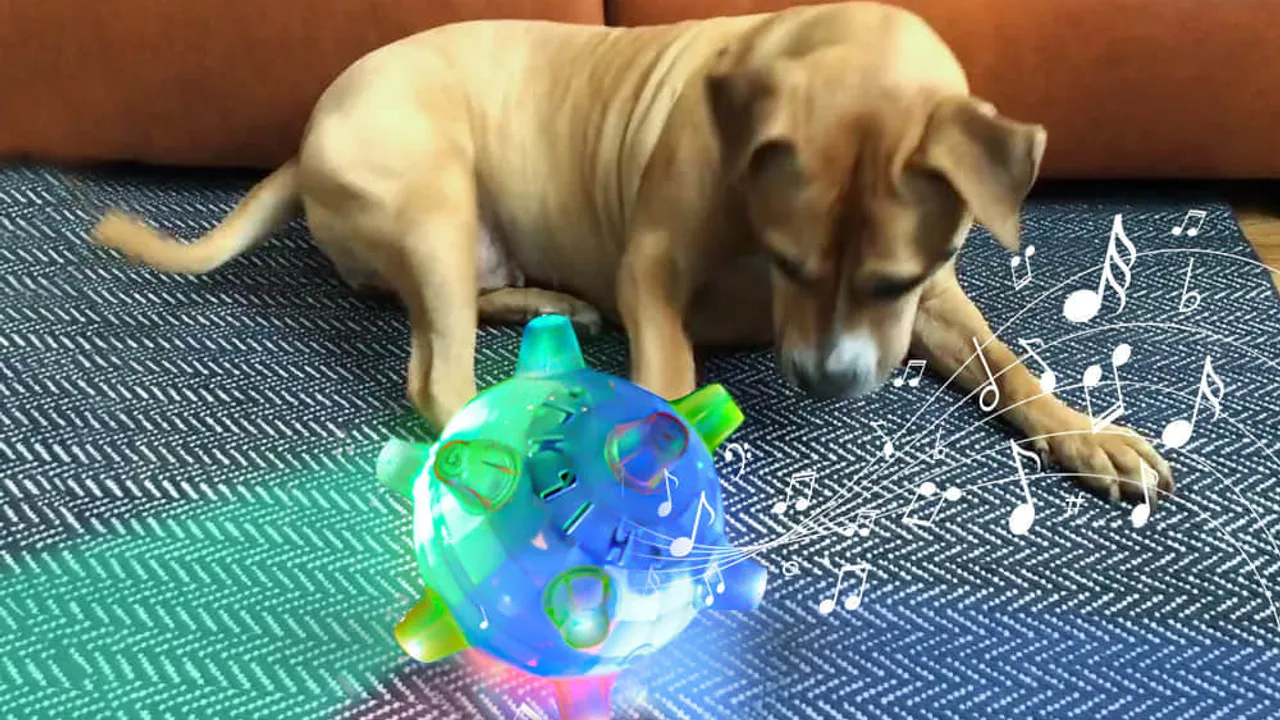
The photo above shows the LED effect these balls use. That light show comes from a small circuit inside the shell, which is why a cracked ball should be thrown out rather than taped up.
Step 3: Keep the Batteries Sealed
Never let your dog reach an open battery compartment, and never leave spare batteries lying around. If a dog swallows a battery or a piece of a ball, contact your vet or an emergency clinic straight away. In the US, the ASPCA Animal Poison Control Center runs a hotline and may charge a consultation fee. Keep the packaging so you can tell the vet exactly what was swallowed.
If the ball takes AA cells, switch to rechargeable ones for the running cost, but keep the same rule about a closed compartment.
Step 4: Introduce It Slowly
Put the ball on the floor switched off and let your dog sniff it. Then switch it on at a distance and watch. Signs of stress include backing away, trembling, tail tucked or hiding. If you see them, stop and put the ball away. Some dogs never take to a moving, noisy toy, and that is fine.
Step 5: Supervise Every Session
Stay in the room. Keep sessions to ten or fifteen minutes so the ball stays exciting and your dog does not become overwrought. Some balls, like the Cheerble Wicked Ball, enforce a 10 minute play and 30 minute rest cycle. Others, like PetsBoro, are described as turning off when the dog stops chasing, with no timing given.
Put the ball away afterwards. A toy that is always out becomes boring, and a toy left with a bored dog becomes a chew toy.
Step 6: Know When to Retire It
Bin the ball at the first sign of:
- A crack in the shell
- A loose or missing nub
- A battery door that no longer closes securely
- Your dog chewing and tearing at it instead of chasing it
Do not tape a damaged ball back together.
Who Should Skip a Self-Moving Ball
- Heavy chewers and shredders. A strong bite can break the shell and free small parts.
- Puppies in the teething phase. The ASPCA says teething usually resolves by about six months, and puppies chew constantly until then.
- Toy breeds if the ball’s size is unpublished or too small.
- Nervous or noise-sensitive dogs.
- Any dog you cannot supervise.
If your dog chews when bored, a toy alone is rarely the answer. Our guide on how to stop a dog chewing from boredom covers exercise, puzzles and rotation, following the ASPCA’s advice.
What About PetsBoro?
The PetsBoro pet ball is described by the brand as PP plastic, non-toxic and BPA-free, with a saliva-resistant finish. That is a reasonable start, and the same points apply as to any electronic ball. The pages we read do not publish a size, battery type or weight, so check the ball yourself when it arrives and use the 30 day guarantee if it does not suit your dog. We cover the details in our PetsBoro pet ball review.
If you are comparing options, our roundup of the best self-moving dog balls puts four side by side.
Frequently Asked Questions
Are self-moving dog balls safe for dogs?
Can a dog choke on a jumping ball?
What if my dog swallows a battery or part of the ball?
Are the materials in PetsBoro safe?
Is it safe to leave a self-moving ball with my dog while I am out?
Can the noise and lights upset my dog?
How do I know when to throw the ball away?
Are self-moving balls safe for puppies?
More Pet Tech Guides

Related Product Reviews

Riley Morgan
Pet gear researcher and dog-owner advocate. Digs into owner reviews, materials, and battery specs to tell you which interactive toys and pet gadgets are worth buying and which are just packaging.
Affiliate disclosure:This article contains affiliate links. If you buy through them, GearPuff may earn a commission at no extra cost to you. It keeps our testing independent and our reviews free.