How to Keep a Dog Entertained While You Work From Home
How to keep a dog entertained while you work: a simple daily routine of exercise, puzzles, rotation and short play breaks that stops boredom.
In This Article
Working from home with a dog sounds ideal until the third video call of the day, when your dog drops a squeaky toy in your lap and stares. A bored dog is not being naughty. It is telling you it needs something to do.
The good news is that a few small habits go a long way. This guide gives you a simple daily routine that combines exercise, rest, food puzzles and short play breaks. We are a research site, so the advice here draws on animal welfare guidance such as the ASPCA, not on a claim that we have trained your dog for you.
Step 1: Exercise Before You Start
The single most useful thing you can do is give your dog a walk or a game before you sit down. Exercise is the first suggestion animal welfare groups give for boredom behaviors. The ASPCA’s advice on chewing lists more daily walks and playtime as a first response.
A tired dog is far more likely to nap. Match the activity to your dog’s age and health. A young terrier may need a fast fetch session, while an older dog may be happy with a slow sniff walk. Ask your vet if you are unsure what suits your dog.
Step 2: Set Up a Settle Spot
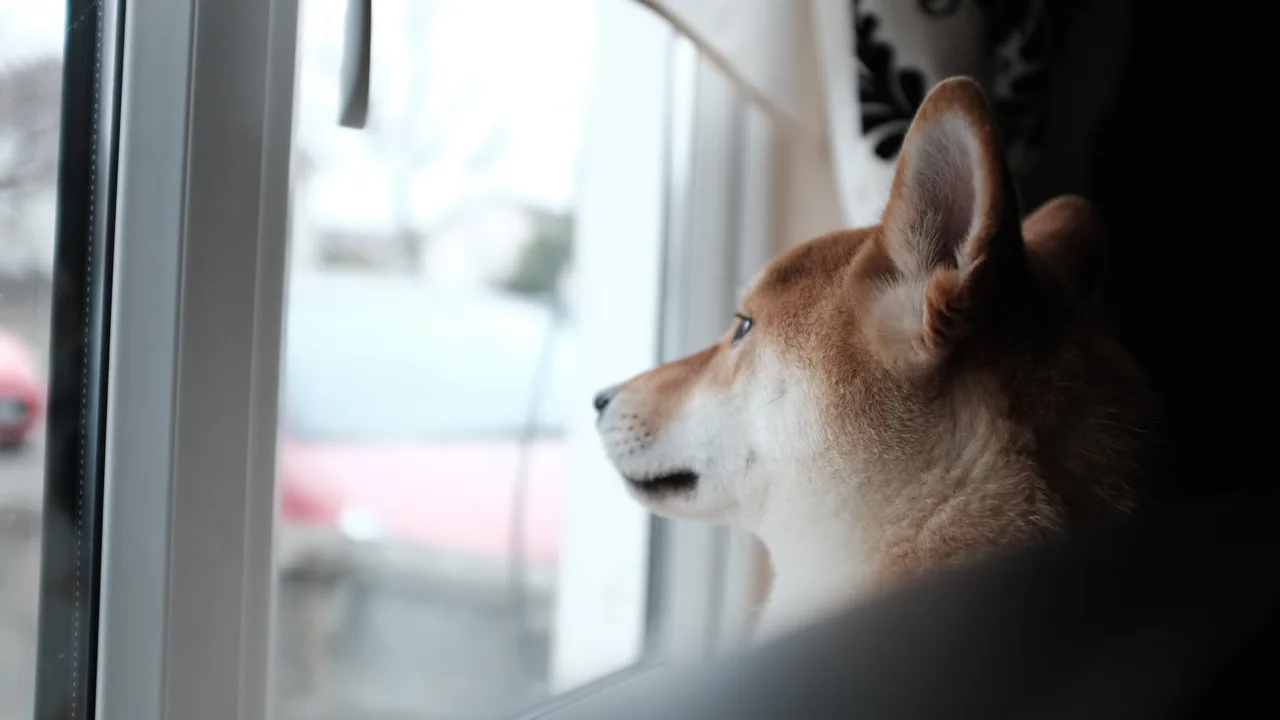
Choose a comfortable spot near your workspace with a bed or blanket, and reward your dog for lying there. Being in the same room as you is often enough to help a dog relax. If there is a window, a view of the street gives the dog something to watch.
Dogs learn where to settle when it pays off. Drop a small treat on the bed when your dog lies down there calmly, and do it often at first. Over a few weeks the spot becomes the default.
Step 3: Use Food Puzzles and Stuffed Chews
Food turns time into occupied time. A puzzle feeder, a lick mat or a stuffed chew makes your dog work for its meal, and the ASPCA lists food puzzle toys as a way to give dogs something to do. Use part of your dog’s normal ration so you are not adding calories.
Start easy so your dog does not give up. Freeze a stuffed chew for a longer challenge. Save the best puzzle for the moment you need to focus, such as the start of a call.
Step 4: Rotate Toys Instead of Buying More
A pile of toys on the floor becomes background noise. Instead, keep three or four out and store the rest, then swap every few days. The ASPCA suggests providing varied, rotated chew toys, and rotation makes old toys feel new.
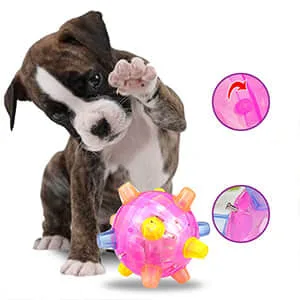
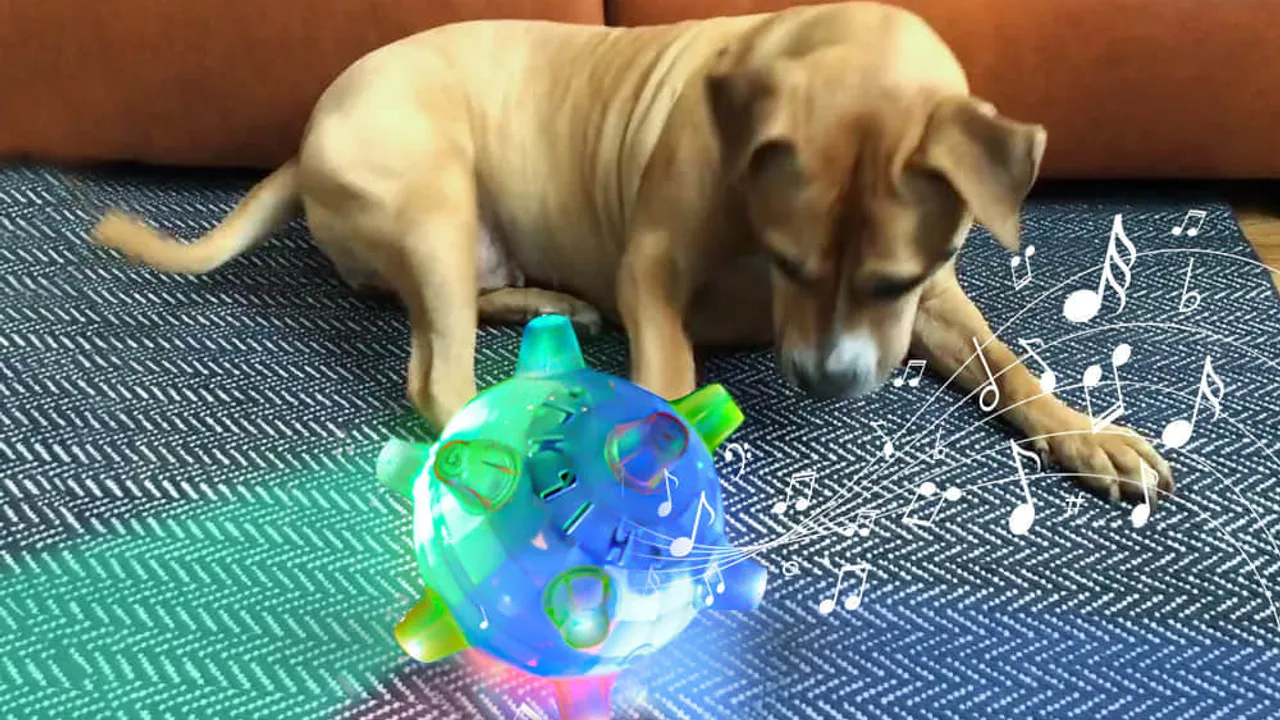
Mix types: a chew, a puzzle, a tug and something that moves. Self-moving balls are the “something that moves” option, and they suit toy-driven dogs. If you are curious, our roundup of the best self-moving dog balls compares four, and our PetsBoro pet ball review covers one in detail.
Step 5: Schedule Short Play Breaks
Every hour or two, take five to ten minutes to play. Toss a ball, practice a trick or let your dog chase an interactive toy while you watch. These breaks give your dog something to look forward to, and they give you a natural pause from the screen.
If you use a self-moving ball, keep it to short supervised sessions in the room with you. Electronic toys have small parts and are not for unsupervised use. Our guide on whether self-moving dog balls are safe has a checklist.
Step 6: Watch for Signs It Is More Than Boredom
Sometimes the problem is not boredom. The ASPCA notes that dogs who chew from separation anxiety usually only chew when left alone, and its guidance on separation anxiety describes signs such as distress when a guardian leaves. If your dog panics, damages doors or howls when you go out of sight, talk to your vet or a qualified behaviorist.
If the main issue is chewing, our guide on how to stop a dog chewing from boredom goes deeper.
A Sample Workday Routine
| Time | Activity |
|---|---|
| Before work | Walk or fetch, then a drink of water |
| Start of work | Dog settles on bed with a stuffed chew or food puzzle |
| Mid-morning | Five minute play or training break |
| Lunch | Second walk or a sniff session |
| Afternoon | Rotate in a different toy, another short break |
| End of day | Longer play or walk |
What Not to Do
- Do not punish boredom behavior after the fact. The ASPCA warns that dogs cannot connect a delayed consequence to an earlier act.
- Do not rely on one toy. Variety works better than a single gadget.
- Do not leave electronic toys unsupervised. Small parts and batteries need watching.
- Do not skip exercise. Toys top up a day, they do not replace one.
Frequently Asked Questions
How do I keep my dog busy while I work from home?
How much exercise does a dog need before I start work?
Are interactive toys good for bored dogs?
Can I leave a self-moving ball with my dog while I work?
How often should I rotate my dog's toys?
What if my dog barks or whines during my calls?
How do I know if it is boredom or separation anxiety?
More Pet Tech Guides
Related Product Reviews

Riley Morgan
Pet gear researcher and dog-owner advocate. Digs into owner reviews, materials, and battery specs to tell you which interactive toys and pet gadgets are worth buying and which are just packaging.
Affiliate disclosure:This article contains affiliate links. If you buy through them, GearPuff may earn a commission at no extra cost to you. It keeps our testing independent and our reviews free.