
How to Wash a Pillow (Every Fill, Step by Step)
How to wash a pillow the right way. Machine and hand washing for memory foam, down, and down-alternative, with drying times and how often to wash.
In This Article
- What You Need
- The Two Rules That Prevent 90% of Pillow Damage
- Step 1: Check the Care Tag
- Step 2: Washing Memory Foam (Spot Clean Only)
- Step 3: Machine Washing Down and Down-Alternative
- Step 4: Drying (The Step Everyone Gets Wrong)
- Step 5: Between-Wash Maintenance
- How Often to Wash and Replace
- Troubleshooting
- Getting Stains Out of a Pillow
- The Pillow Protector Habit
- How to Know a Pillow Is Beyond Saving
- The Wash Routine, in One Paragraph
Pillows are the filthiest thing in most bedrooms, and we wash them the least. A pillowcase catches some of it, but sweat, skin oil, dead skin cells, and dust mites work their way into the fill. After a year, up to a third of a pillow’s weight can be something other than pillow.
The health angle is the one that gets people to act. You put your face on this surface for eight hours a night, which means whatever lives in the pillow is inches from your nose, mouth, and skin. Dust mites and their droppings are a leading trigger for allergy symptoms and asthma flares, and a pillow that has never been washed is a settled home for both. This matters even more if you have allergies, asthma, or acne, where the nightly face contact with a dirty surface directly shows up in your skin and your breathing.
The good news: cleaning is simple once you know your fill. The bad news: the wrong method destroys the pillow. Memory foam and down have opposite care requirements, and mixing them up is how expensive pillows die in a single wash. This guide covers every fill, step by step, with the exact temperatures, cycles, and drying times that keep each fill clean and intact.
What You Need
- Mild liquid detergent (no bleach, no fabric softener)
- Tennis balls or wool dryer balls
- A washer and dryer, or a sink and towels for hand washing
- Patience for drying, which takes longer than washing
Why not bleach and fabric softener? Bleach breaks down the proteins in down and can yellow it, and it is too harsh for foam. Fabric softener coats the fill clusters and feathers with a waxy layer, which smothers their loft and makes the pillow clump. Both shorten pillow life with every wash. A mild liquid detergent is all a pillow needs, and a dedicated down wash for feather pillows does the job even better.
The Two Rules That Prevent 90% of Pillow Damage
Before the steps, memorize these two rules, because they cover the overwhelming majority of washing mistakes:
Rule 1: Never machine wash memory foam. Water destroys it. This is the single most expensive mistake in pillow care, and it is the reason foam pillows die after one wash cycle.
Rule 2: Never stop drying early. A damp pillow is a mildew pillow. Down especially traps moisture in its clusters and needs far longer than you expect to dry completely. Every other wash mistake is recoverable; a pillow that stays damp is not.
Keep those two rules in mind and the detailed steps below become much easier to follow.
Step 1: Check the Care Tag
Every pillow has a care tag, and it tells you the single most important fact: whether the pillow is machine washable. Memory foam is not. Down and most down-alternatives are. Spend thirty seconds reading before you do anything else.
The care tag also tells you the water temperature limit. Most machine-washable pillows tolerate warm water, but the tag is the authority. When the tag is missing or illegible, treat the pillow as spot-clean-only, because guessing wrong on a foam pillow is a $100 mistake.
Step 2: Washing Memory Foam (Spot Clean Only)
Memory foam is never machine washed. The material is open-cell viscoelastic foam, and submerging it in water makes it absorb moisture, break down, and lose its shape. A memory foam pillow in a washing machine is a ruined memory foam pillow.
How to clean it:
- Fill a bowl with cool water and add a few drops of mild detergent.
- Dip a clean cloth in the solution and wring it out well.
- Dab the stains gently. Do not scrub; scrubbing breaks down the foam surface.
- Rinse by dabbing with a cloth dipped in plain cool water.
- Air dry fully, 24-48 hours. Never put memory foam in the dryer.
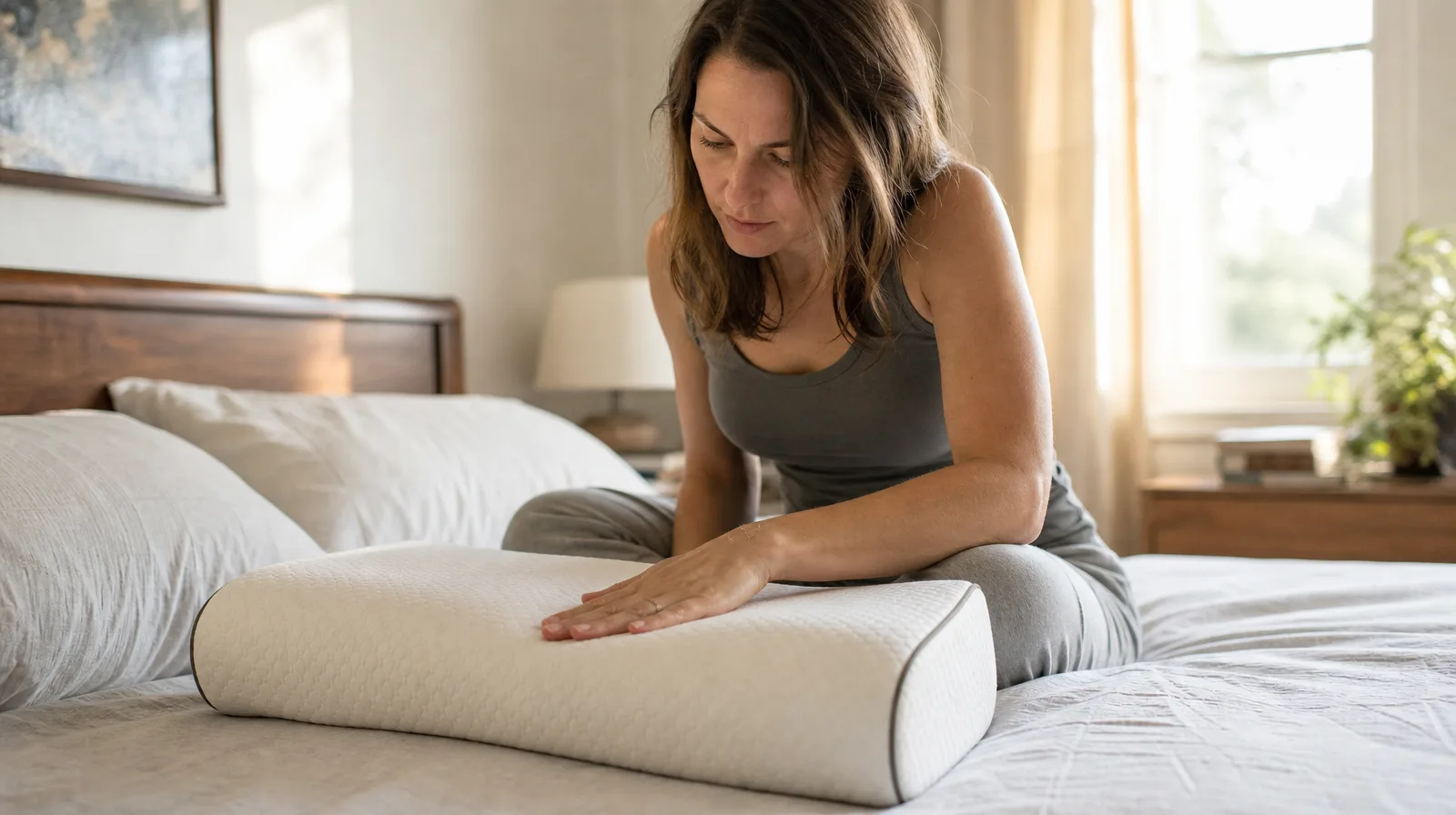
Memory foam pillows like the Sleepgram 3-in-1 and the Derila have removable, machine-washable covers. Wash the cover in the machine and spot clean the foam core. That protects the foam and keeps the pillow fresh.
Step 3: Machine Washing Down and Down-Alternative
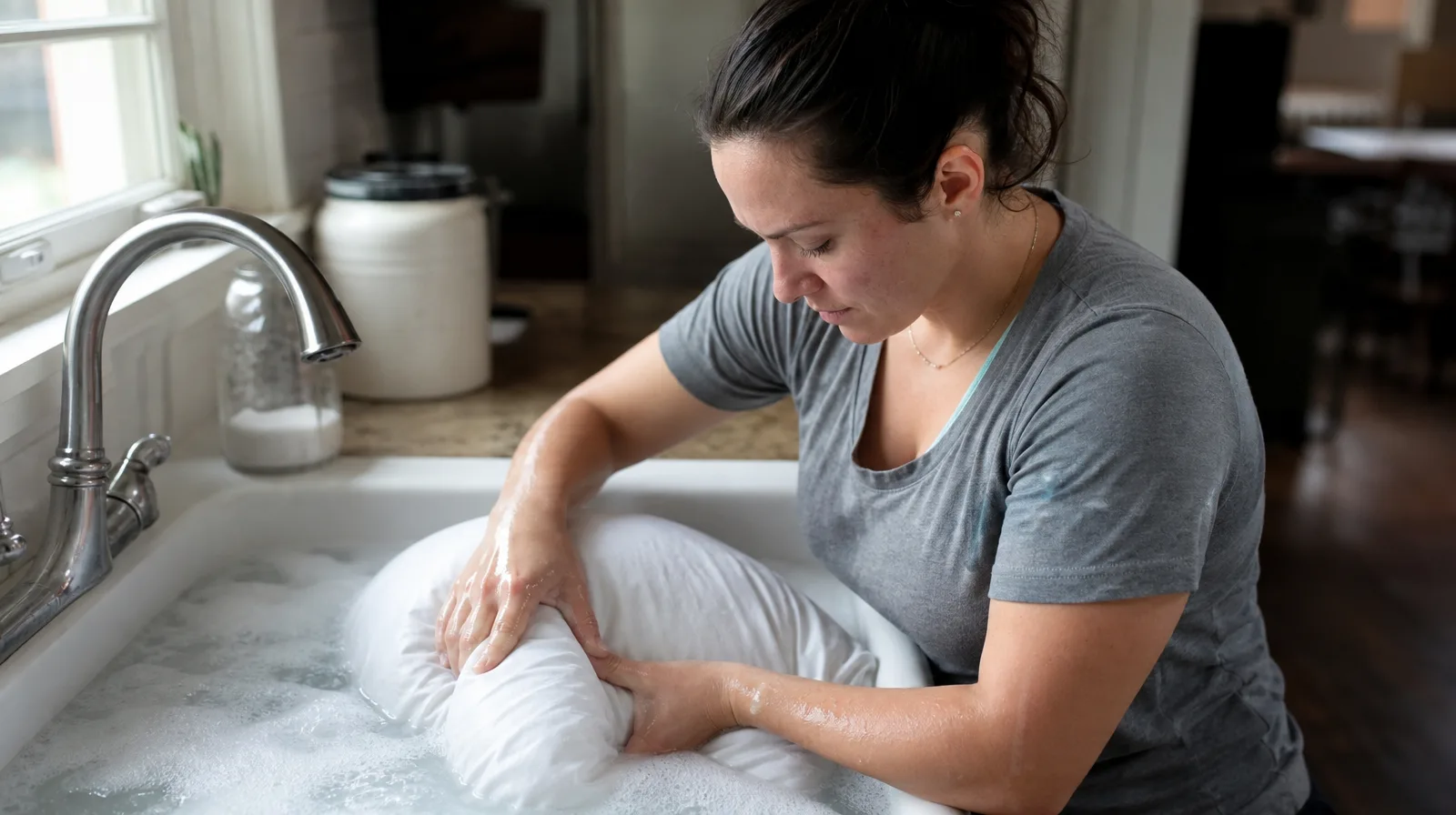
Down and down-alternative pillows are machine washable, and they get genuinely clean. The FluffCo down-alternative is designed for this, and the wash routine is the same for both fills.
The machine method:
- Strip off the pillow protector and wash it separately.
- Wash two pillows at once. A balanced load keeps the machine from vibrating and stops the pillows from twisting into clumps.
- Use warm water, the gentle or delicate cycle, and a small amount of mild detergent. Skip bleach and fabric softener; softener coats the fill and kills loft.
- For down, use a dedicated down wash if you have it. It is formulated to remove oils without stripping the feathers.
Step 4: Drying (The Step Everyone Gets Wrong)
Drying takes longer than washing, and doing it wrong is how pillows come out lumpy or mildewy.
For down and down-alternative:
- Dry on low heat. High heat damages the fill.
- Add two or three clean tennis balls or wool dryer balls. They bounce around and break up the clumps so the fill dries fluffy instead of lumpy.
- Check every 30 minutes. A down pillow can take 2-3 cycles and 1-2 hours because the clusters trap moisture.
- Squeeze the pillow. If it feels cool or damp anywhere, run another cycle. Damp fill is how mildew starts.
The squeeze test is the one most people skip, and it is the one that matters. A pillow can look dry on the outside and still hold moisture in its core, which is where mildew takes hold. Squeeze the center of the pillow firmly. If it feels cool, or if you can smell dampness at all, it is not dry. Run the cycle again. An extra 30 minutes of drying beats a ruined pillow.
For memory foam:
Air dry only. Set the spot-cleaned pillow in a warm, ventilated room for 24-48 hours. You can use the dryer’s air fluff setting with no heat if you want to hurry it, but never heat, which destroys foam.
For the same reason, never place a memory foam pillow in direct hot sunlight for long stretches. A little sun is fine for odor, but prolonged heat softens the foam cells. Dry it in the shade or by a window, and give it the full 24-48 hours before putting a cover back on, because trapped moisture under a cover is how foam starts to smell.
Step 5: Between-Wash Maintenance
Washing every 3-6 months is the baseline, but the pillow needs weekly attention to stay fresh:
- Air it out. Set the pillow by an open window or in the sun for an hour each week. Moisture is the enemy; sunlight kills dust mites.
- Fluff it. Run the pillow through the dryer on air fluff (no heat) for 10 minutes to restore loft.
- Use a pillow protector. A zippered protector catches sweat and oil before they reach the fill. Wash the protector monthly, the case weekly.
If you only keep one habit, make it the air-out. A weekly hour of ventilation does more for a pillow’s smell and lifespan than anything except the actual wash, because most pillow odor is trapped moisture, not dirt. Ten minutes of that hour each week is all the fluffing a down pillow needs to hold its loft between washes.
How Often to Wash and Replace
The timeline people actually need:
| Item | Washing frequency |
|---|---|
| Pillowcase | Every 1-2 weeks |
| Pillow protector | Monthly |
| Pillow (all fills) | Every 3-6 months |
| Pillow replacement | 1-2 years |
Replace a pillow when it stops bouncing back, when clumps do not redistribute with fluffing, or when stains and odor do not lift after a wash. A pillow that no longer holds its shape also stops supporting your neck, which is when it starts causing stiffness. Our best pillow for side sleepers roundup covers what to buy when the replacement time comes.
If the care instructions and this routine feel like more maintenance than you want, that is a real decision, not a shortcut: some pillows are built to be tossed in the machine and others require a lifetime of spot cleaning. Choosing the former is a legitimate way to solve the problem permanently.
Troubleshooting
My down pillow smells after washing. It is not dry. Run it through the dryer again with dryer balls on low heat until completely dry. Residual moisture causes the odor.
My pillow came out lumpy. Redry with fresh dryer balls, or fluff by hand between cycles. Persistent lumps after proper drying mean the fill has broken down, and it is time to replace.
My memory foam pillow smells new. New foam has a chemical smell for the first few days. Air it out for 24 hours before the first night, and it fades. If the smell lingers beyond a week, the foam quality is suspect.
I washed my memory foam pillow by mistake. Stop, squeeze out as much water as you can without twisting, and air dry flat for 48-72 hours. The foam may have permanently lost some structure, but the pillow may still be usable.
Yellow stains on a white pillow. Those are oxidized sweat and oil. For machine-washable pillows, a warm wash with a little oxygen bleach lifts most of it. For foam, the stain is usually permanent; the fix is prevention with a pillow protector.
My pillowcase comes out wrinkled. Silk cases should dry flat and cool; high heat or the dryer’s tumble damages the fibers. Our silk washing guide covers the full do’s and don’ts for the delicate cases.
Getting Stains Out of a Pillow
Stains on a pillow are almost always sweat, drool, oil, or the occasional coffee accident, and they need different treatment from regular washing.
Sweat and drool stains. These are protein stains and come out with the regular wash for machine-washable pillows. A pre-soak in cool water with a little detergent for 30 minutes handles the stubborn ones. Hot water sets protein stains, so start cool.
Oil and skin product stains. These need a grease-cutting detergent. A drop of dish soap rubbed into the spot before the wash helps. Do not use hot water, which bakes oil into the fill.
Blood and organic stains. Cool water and a cold wash only. Heat sets them permanently.
Memory foam stains. Since the foam cannot be washed, treat stains with a dab of mild detergent and a damp cloth, then blot dry. A protector is the real answer: it catches the stains before they reach the foam, which is why every foam pillow owner should use one.
The Pillow Protector Habit
If you do nothing else from this guide, buy a zippered pillow protector. It is a thin waterproof-ish shell that goes between the pillow and the pillowcase, and it changes the math of pillow hygiene completely.
The protector catches the sweat, oil, skin cells, and mites that would otherwise sink into the fill. You wash the protector monthly and the pillowcase weekly, and the pillow itself only needs a wash every 3-6 months or not at all, because nothing reaches it. A $15 protector extends a $100 pillow’s life by years and cuts its wash count to near zero.
Memory foam pillows should always have one, because the foam can never be machine washed. Down and down-alternative benefit just as much: the protector stops the oils that make down clump and the stains that ruin white pillows.
How to Know a Pillow Is Beyond Saving
Some pillows cannot be washed back to health, and the replacement line is worth knowing:
- The pillow does not bounce back when you press it, even after a wash.
- Clumps do not redistribute no matter how you fluff or dry.
- Stains and odor persist after a proper wash.
- You have had it more than 2 years alone, or 1 year shared.
A pillow that fails any of those has lost its support, which means it has stopped doing its one job. Continuing to sleep on it transfers the problem from the pillow to your neck. The side sleeper pillow roundup on this site is the place to start when the replacement decision comes, and it will tell you what to measure before you buy again.
The Wash Routine, in One Paragraph
Washing a pillow is a five-minute job that most people skip because they fear ruining it. The rules are short: memory foam is spot-clean only, down and down-alternative machine wash with gentle settings, dry low with dryer balls, and never rush the drying. Follow those, wash every 3-6 months, and your pillow will stay clean and supportive for its full life. The alternatives are years of sleeping on a sweat-soaked, mite-hosting lump.
The one investment worth making is a pillow protector, because it turns this whole routine from a twice-a-year chore into a monthly one. Protect the fill, wash the cover, and your pillow stays fresher between washes than most people’s do right after one. A pillow that is protected, aired weekly, and washed on schedule is a pillow you will not have to replace for its full intended life, which is the whole point of washing in the first place.
For cleaning the silk side of the bed, our silk pillowcase washing guide covers the delicate-care version of the same job. And for the general pillowcase routine, the silk cleaning guide on this site walks through the frequency and temperature rules that keep cases fresh without wearing them out. Between the two, you have every surface of the bed covered, from the foam core to the case your face touches.
Frequently Asked Questions
Can you wash a pillow in the washing machine?
How often should I wash a pillow?
Can you put a memory foam pillow in the dryer?
Why do I need dryer balls for down pillows?
How long does it take to dry a pillow?
What detergent should I use on pillows?
Can I wash pillows with sheets?
Do I need to wash a new pillow before using it?
What does a dirty pillow look like?
Can I wash a pillow too much?
More Wellness Gadgets Guides


Related Product Reviews

Dr. Sarah Kim
Health tech researcher and wellness gadget reviewer. PhD in Biomedical Engineering. Tests sleep trackers, massage devices, and health monitors with clinical precision. Believes in data-driven wellness.
Affiliate disclosure:This article contains affiliate links. If you buy through them, GearPuff may earn a commission at no extra cost to you. It keeps our testing independent and our reviews free.