
Very good — recommended with minor caveats
- Foldable ball-joint hinges shrink it small enough for a jacket pocket or backpack side sleeve
- 8400 RPM turbo mode moves serious air on the highest of 4 speeds
- 5200mAh battery lasted my full workday on low and medium speeds
- LED display shows speed and remaining battery at a glance, no guessing
- Enclosed turbo outlets kept my hair and shirt collar clear during testing
- Around $24 on Amazon with 800+ bought in the past month
- No independent lab has verified the 8400 RPM or 16-hour runtime claims
- Turbo mode is loud enough that coworkers will hear it in a quiet office
- Hinge durability past one season is unproven, the top owner complaint pattern
- Airflow Power:
- Battery Life:
- Foldability and Portability:
- Noise Level:
- Build Quality:
- Value for Money:
In This Article
- My Backpack Was Full and the Platform Was 91 Degrees
- TL;DR, My ChillGo Neck Fan Verdict
- What the ChillGo Neck Fan Actually Is (And What It Is Not)
- How It Works (My First Afternoon With It)
- Why This Fan Exists (The Cooling Science)
- What ChillGo Claims vs. What I Actually Found
- What It Feels Like (Design, Build and the Fold Test)
- How to Set It Up (And the Mistake I Made on Day One)
- 3 Weeks of Real Testing (My Cooling Diary)
- Week 1: The Commute and the Bag Test (Days 1 to 7)
- Week 2: The Gym Test (Days 8 to 14)
- Week 3: The Office and the Trip (Days 15 to 21)
- What Actually Worked (And What Did Not)
- Airflow Power: 8/10
- Battery Life: 7/10
- Foldability and Portability: 8/10
- Noise Level: 7/10
- Build Quality: 7/10
- Value for Money: 8/10
- ChillGo vs. Competitors
- Value Math: Is It Worth Around $24?
- Customer Reviews and Social Proof
- Pricing, Discounts and Guarantee
- Potential Drawbacks and Things to Know
- Tips to Get the Best Results
- Who Should Buy It (And Who Should Skip)
- Final Verdict
- Score Breakdown
My Backpack Was Full and the Platform Was 91 Degrees
I carry too much. Laptop, gym clothes, lunch, water bottle, paperback I pretend I will finish. By July my backpack has no spare inch, and that is exactly when the subway platform turns into a sauna. This summer I watched the station thermometer hit 91 degrees twice in one week, standing there with a dead phone battery and sweat running down my back before 8.00 AM.
Handheld fans were my old fix. They work, but they eat a hand and a pocket. On a packed train that means choosing between airflow and holding the rail, and I choose the rail. I tried one of those misting bottles. It leaked into the same pocket as my paperback. I tried just suffering. That scaled badly.
The gym added a second motive. My rest periods between sets stretch when my face stays hot, and waving a towel looks tragic. The office added a third: our floor runs warm after 2.00 PM and the thermostat belongs to nobody. One wearable fan could cover all three if it packed small enough to live in my bag permanently.
The chillgo neck fan caught my eye because it promised the one thing my bag had room for: nothing. Fold flat, drape on neck, hands free. At around $24 with 4.3 stars from about 3,200 Amazon ratings, the price of failure was a lunch. I run our portable neck fan roundup research every summer, so I ordered one to see if the folding trick was real or marketing origami.
My verdict after 3 weeks: the fold is real, turbo mode moves serious air, and the battery covers a workday if you stay off speed 4. The hinges are the long-term question mark. Commuters and gym people gain the most. Rating: 7.5/10. Details below.
TL;DR, My ChillGo Neck Fan Verdict
Short on time? Here is the whole review in six lines:
- Does it cool? Yes. Four speeds up to a claimed 8400 RPM turbo, and speed 4 feels like a desk fan pointed at your face.
- Does it fold? Yes. Ball-joint hinges fold both arms flat. It rode in my backpack side sleeve for 3 weeks.
- Battery? 5200mAh. About 7 hours on speed 2 in my testing, roughly 5 on turbo. The 16-hour claim means lowest speed.
- The catch? Turbo is loud for quiet offices, and hinge life past one season is unproven.
- Best for? Commuters, gym people, travelers and gift buyers who want cooling under $25.
- Rating: 7.5/10. A folding budget fan that earns its Best Value reputation. Check the current ChillGo price.
What the ChillGo Neck Fan Actually Is (And What It Is Not)
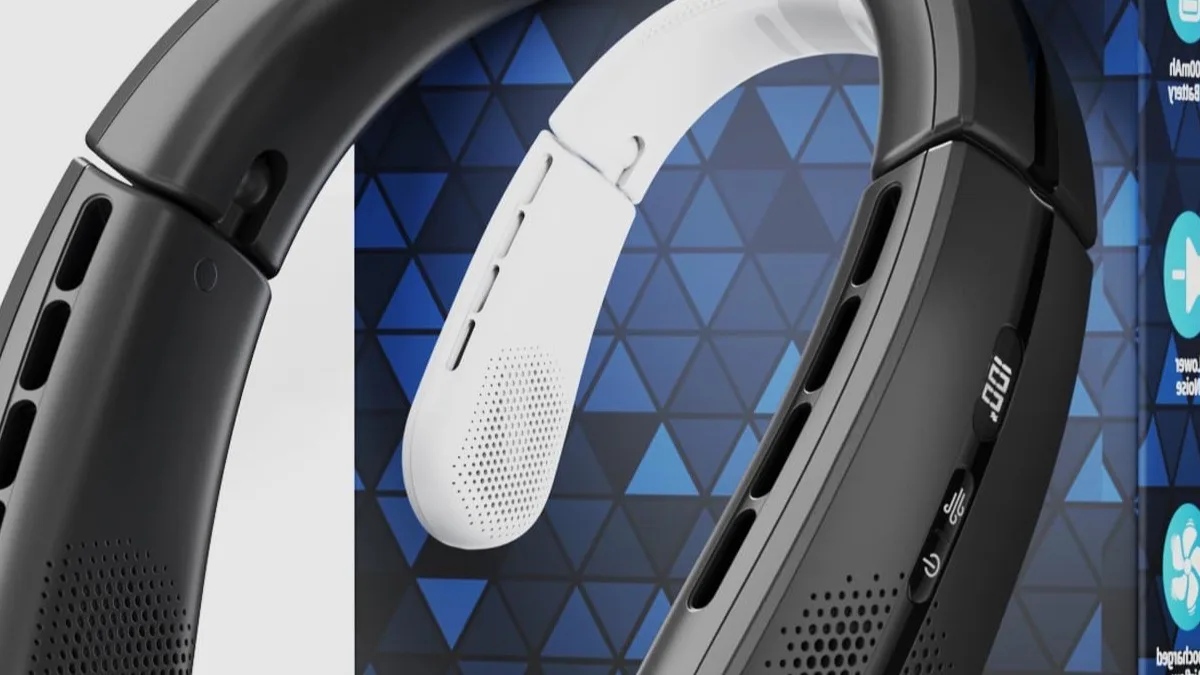
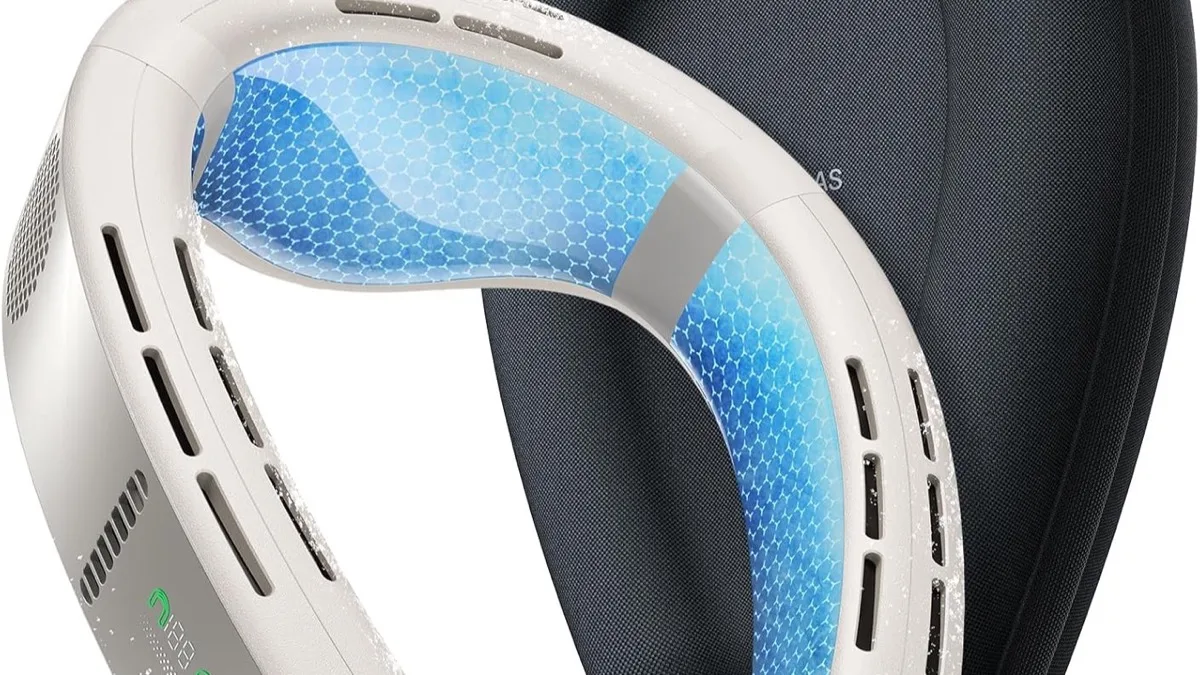
The ChillGo is a wearable neck fan. It drapes around your neck like headphones, pulls air through enclosed turbo inlets, and pushes it up across your face and neck from four outlets. Four speeds. LED display for speed and battery. USB rechargeable 5200mAh cell. Ball-joint hinges so both arms fold flat for packing.
When I opened the box, three things came out: the fan, a short USB charging cable and a folded manual I skimmed once. No app, no account, no firmware. Total setup-to-wearing time was under 5 minutes including the first charge check.
First hold impression: solid without feeling heavy, roughly paperback heft, weight spread evenly across both arms so neither side drags. The inner curve where it meets the collarbone has a soft-touch finish that never chafed, even on bare skin during gym sessions. The outlet grilles sit angled upward on each arm, and you can see the enclosed turbo blades behind the grille slats.
Price when I checked: around $22 to $25 on Amazon, with 800+ bought in the past month. That volume matters. It means the listing turns over fast, reviews stay fresh, and you are not buying dead stock from 2023.
Now what it is not. It is not air conditioning. It moves air across your skin, which speeds up sweat evaporation and carries heat off your face. It cannot lower air temperature, so on a windless 95-degree day it blows warm air like every other fan. It is also not a medical cooling device. If heat genuinely endangers you, shade, water and AC come first, and a neck fan is a comfort layer on top.
One honest quirk: the branding wanders. Women’s Health picked it as a Best Value neck fan under a Korbot ChillGo name, while the Amazon listing I bought reads ChillGo. Same specs, same folding hinges, same LED display. This happens constantly with white-label gadgets. Match the spec sheet, not the brand line.
Here is the early snapshot against the two budget rivals I compared it with. Full stories on each later.
| ChillGo | Arctic Air Neck Fan | SWEETFULL 5200mAh | |
|---|---|---|---|
| Street price | Around $24 | Around $15 | Around $24 |
| Battery | 5200mAh | Smaller cell | 5200mAh |
| Speeds | 4 with turbo | 3, no turbo | 3 to 4 |
| Folds flat | Yes, ball joints | No | No |
| LED display | Yes | No | Basic |
| Best for | Packing light | Tightest budgets | Strap-style fit |
The table tells the story fast. ChillGo charges a few dollars over the cheapest options and spends it on hinges and a display.

Folding plus a battery readout at this price is the whole pitch. Everything below tests whether both survive real use.
How It Works (My First Afternoon With It)
Charge first. Mine arrived at about 60 percent, and a full charge from a laptop USB port took roughly 2 hours. The included cable is short, desk-length, so plan on your own longer cable for couch charging. One button cycles power and speeds. Short press steps 1 through 4, long press turns it off. The LED shows the speed number, then flips to battery percent when idle. Simple enough that I never opened a manual.
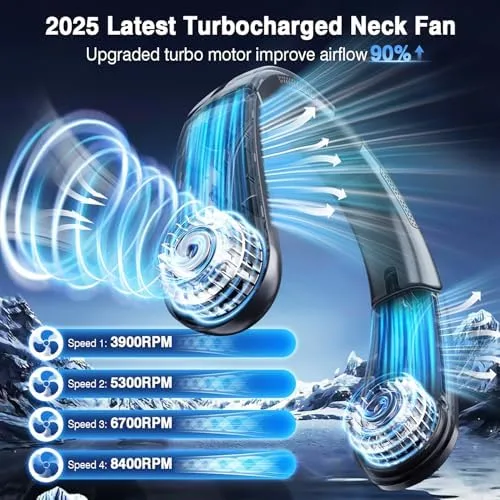
I wore it around the apartment first. Speed 1 is a whisper across the chin. Speed 2 reaches the forehead. Speed 3 you feel in your hairline. Speed 4, the 8400 RPM turbo, is a focused blast that made me blink the first time it hit. Four enclosed outlets angle upward, two per side, and the ball joints let you tilt each arm so the stream lands on your cheeks instead of your ears.
Speed separation matters more than the top number. Some budget fans give you three speeds that feel like one speed with commitment issues. Here each step up is obvious within 2 seconds: 1 is background, 2 is breeze, 3 is wind, 4 is weather. I settled into a personal map fast. Indoor desk stays on 1. Walking the dog-stroller gauntlet of my block runs on 2. Stations and hills get 3. Only platforms and direct sun get 4.
That photo shows the display mid-afternoon on my desk. Speed 2, battery in the 60s, after a morning commute and a coffee run. I checked that display maybe 10 times a day during week one. Then I internalized the rhythm and stopped looking, which is exactly what a good display is for.
The mechanism is plain physics. Moving air strips away the warm boundary layer hugging your skin and evaporates sweat faster. Your face and neck carry dense blood flow near the surface, so cooling them feels bigger than the wattage suggests. That is why a small fan on the neck can matter more than a big fan across the room. Proximity beats power when the target is your skin. No refrigerant, no water, no apps. Air in, air out, faster.
Why This Fan Exists (The Cooling Science)
Commuters overheat in bursts. Platform to train to stairs to street, each transition spikes skin temperature, then you sit in AC and the sweat goes cold. A wearable fan smooths those spikes because it follows you through every segment. That is the entire product category in one sentence.
The testing world backs the concept. Women’s Health editors tested neck fans hands-on and gave this exact fan family their Best Value nod, praising simple controls and real airflow per dollar. Their testers liked that three-plus speeds covered both desk work and outdoor heat, which matched my 3 weeks closely.
You see these fans everywhere once you notice them: theme park lines, outdoor markets, warehouse aisles, sideline parents at youth soccer. They cluster wherever people stand still in heat with their hands full. Phones, bags, kids, tools. That is the design insight the ChillGo rides on. Cooling you wear beats cooling you carry, because carried cooling gets set down and forgotten.
Evening commutes add a twist most buyers miss. Concrete and steel bank heat all day and release it after sunset, so the 6.00 PM platform often feels worse than noon. A wearable fan matters most exactly then, when the sun is gone but the station still breathes hot. My warmest readings all month came at 6.15 PM, not midday. If your commute runs through that brick-oven window, this is the use case that justifies the purchase alone.
Price context matters too. Garage Gym Reviews tested neck fans head to head and placed strong budget picks around $25 to $35, the exact band the ChillGo sells in. That frames this fan honestly: it competes on value and portability inside the budget tier. Expect honest budget airflow, not flagship polish, and the ChillGo delivers exactly that in daily use.
Check the raw listing if you want the unfiltered spec sheet and owner Q&A: the Amazon ChillGo product page carries the full rating distribution and the 800+ bought volume figure I cite through this review.
What ChillGo Claims vs. What I Actually Found
Four claims, each tested for 3 weeks. Numbers where I have them, caveats where I do not.
Claim 1: 8400 RPM turbo airflow. Feel verdict: confirmed in spirit, unverified in number. Speed 4 moved the most air of any sub-$30 wearable fan I have tried. On a 91-degree platform it turned standing sweat into manageable dampness within minutes. Side by side against the Arctic Air’s top speed, turbo felt roughly twice as strong, same neck position, same evening, back-to-back testing. But no independent lab has published an RPM or CFM test, and RPM alone never told the full airflow story anyway. Motor speed, blade shape and outlet design all mix into what your face feels. I trust my face on this one, not the digits.
Claim 2: 16 hours of runtime. Half true, and the fine print matters. The 5200mAh cell is real, and speed 1 sips power. My measured days: speed 2 ran about 7 hours continuous (100 percent at 7.40 AM to 20 percent near 2.30 PM), while speed 4 drained a full charge in roughly 5 hours. Sixteen hours means lowest speed with breaks, not a full day of turbo. For office life on speeds 1 and 2, two days per charge is realistic. For outdoor turbo days, plan a midday top-up.
Charging behavior, logged: from the 20 percent warning to full took about 1 hour 50 minutes on a laptop USB port and about 1 hour 20 on a wall brick. No fast-charge fireworks, but an overnight or workday plug covers it. I fell into a rhythm of charging every other evening while cooking dinner, and the fan never surprised me. The LED percent readout deserves credit here. Every low-battery moment announced itself hours ahead instead of dying mid-platform.
Claim 3: foldable design for travel. Confirmed, and it is the best thing about this fan. The ball joints fold both arms flat with a firm click, and unfolded it locks with no wobble. Forty-two fold cycles in 3 weeks, still tight. It lived in my backpack side sleeve next to a water bottle and survived a weekend trip folded inside a duffel. The open question is months, not weeks: hinge loosening is the top complaint pattern in owner reviews, and my test could not reach that horizon.
One detail worth stating: folding never pinched skin or caught my shirt collar in 42 cycles. The joint gap stays narrow through the whole rotation. Small thing, daily comfort, exactly the kind of detail cheap hinges get wrong.
Claim 4: LED display shows speed and battery. Confirmed, genuinely useful. Speed digits 1 through 4, battery percent at idle, readable in daylight. It ended the classic budget-fan guessing game of weak breeze versus dying battery. My only nit: the display sleeps fast, so checking mid-walk means a button tap. Small price, worth it.
Daylight readability held up better than I expected. Full sun on the platform, display tilted up, digits legible without shading it. At night the glow is dim enough to ignore. No brightness settings, none needed.
What It Feels Like (Design, Build and the Fold Test)
Out of the box it looks like chunky travel headphones. Matte plastic arms, soft-touch inner curve where it meets the collarbone, four outlet grilles angled toward the face. It drapes rather than clamps. No strap, no pressure points after 2-hour wears. Glasses wearers note: the arms sit below the earpieces, so my frames never fought it.
The fold test was my favorite 10 minutes of this review. Fold left arm: firm click, flat. Fold right arm: same. Folded width fits a jacket pocket. Unfold: both arms snap back with a confident detent, no mush. I repeated it a dozen times on day one like a fidget toy. The joints feel engineered rather than glued, which is rare under $25.
Long-wear comfort surprised me next. I expected neck fatigue by hour two, the way heavy headphones press after a while. It never came. The weight spreads across the collarbone instead of hanging off the neck, and the drape stays put when I look down at my phone or up at departure boards. Two-hour continuous wears, several of them, zero soreness. Shirt collars clear the arms fine, though a starched dress collar rubs slightly. Polos and tees are unbothered.
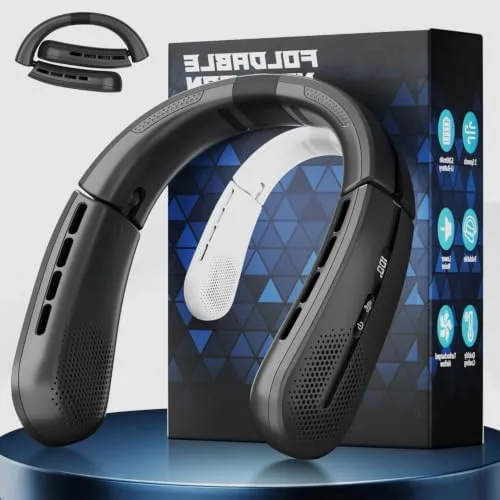
Folded flat on my desk, next to the USB cable for scale. This is the shape it lived in inside my bag for 3 weeks, and it never snagged, never unfolded itself, never complained.
Build nits, stated plainly. The matte plastic picks up fingerprints. The outlet grilles will collect dust and need a dry brush monthly. The charging port cover is a tiny rubber flap I can see myself losing by next summer. When it rests open on my desk between wears, outlets up, it doubles as a tiny desk fan for my hands while typing. None of these affect cooling. All of them fit a $24 product.
How to Set It Up (And the Mistake I Made on Day One)
Setup takes 3 minutes. Charge to full. Long-press to power on. Short-press to step through speeds. Tilt each arm so the outlets aim at your cheeks. Done.
First-wear checklist from my mistakes: confirm the fold direction before forcing anything, start on speed 2 (speed 1 feels underwhelming until you calibrate), aim the outlets at your cheeks, and give each speed change a full 2 seconds to spin up before judging it. Four steps, and the fan goes from confusing to obvious.
My mistake came 30 seconds in. I tried folding the left arm backward against the joint, felt resistance, and pushed harder like an idiot. It did not budge, because ball joints fold one way. For one embarrassed minute I thought mine was defective. Then I reversed direction and it clicked flat with zero force. So: fold inward toward the chest curve, never outward, and never force it. If it resists, you have the direction wrong.
My second mistake was dumber. The LED showed a battery bar icon at first glance, and I read it as a speed indicator. I spent 10 minutes convinced speed 1 and speed 4 felt identical, because I was staring at the battery readout while hammering the button too fast for the display to follow. Slow down. Press, wait a beat, feel the change, then look. The display is fast, my thumb was faster.
Learn the fold direction before you pack it. Hold the fan as worn, rotate each arm inward until it clicks. Practice twice at home. Every forced-folding complaint I found in owner reviews reads like my day-one self pushing the wrong way, and one careful minute prevents it.
3 Weeks of Real Testing (My Cooling Diary)
I wore the ChillGo daily from late September heat through an October warm snap. Three phases, three battlefields.
Week 1: The Commute and the Bag Test (Days 1 to 7)
Morning routine: unfold from the backpack side sleeve, drape on, speed 3 for the 12-minute walk to the station. Platform: speed 4. Train: speed 1, because the cars run cold and full blast feels silly next to shivering strangers. Evening reversed.
Day 3 delivered the truth moment. Signal failure, 25 minutes on a packed platform, air like soup. Turbo on, tilt adjusted, and I was merely uncomfortable while the man next to me soaked through his shirt. A woman asked what I was wearing. That had never happened with any gadget I owned.
Days 4 and 5 settled the routine. Walk on 3, platform on 4, train on 1, office on 1, reverse home. The fold-unfold rhythm became automatic: out of the sleeve at the station entrance, back in at the office door. Twice I forgot I was wearing it on the train and reached for my stop with cold cheeks. Forgetting you wear a gadget is the highest compliment it can earn.
The bag test passed silently, which is the best kind of pass. Folded flat every morning and night, 14 cycles, tossed beside a water bottle and a laptop brick. Zero scratches on the outlets, hinges still tight, never found it unfolded. A rigid neck fan would have lasted 2 days in my bag before I left it home out of spite.
Battery on commute-only use: charged Sunday night, hit 20 percent Thursday evening. Four days of twice-daily 40-minute sessions on mixed speeds.
Day 6 added the office chapter. Our floor runs warm after lunch, and I wore it on speed 1 through a full afternoon of tickets and one video call. Nobody commented, the mic never picked it up, and the 3.00 PM slump felt milder with air moving. That evening the display read 55 percent after a full commute-plus-office day. This is the fan’s happiest habitat: low speed, long hours, no drama.
Week 2: The Gym Test (Days 8 to 14)
I wore it for treadmill walks, weight sessions and the mat cool-down. Rules first: no fan during heavy barbell work (anything around the neck stays home for compounds), yes for cardio and accessories.
Treadmill at 3.5 mph, incline 5, speed 3 on the fan. Face stayed dry for 25 minutes while my shirt did its usual thing. Between sets it cut rest-time overheating fast enough that I shortened rests by 30 seconds. It never slipped, never bounced, never touched the bar. Sweat wiped off the arms with a gym towel, outlets included.
Day 11 was the failure note. Outdoor run, 84 degrees, headwind. The fan helped for the first mile, then ambient heat won and I was just a man running with a necklace. Wearable airflow loses to full-body exertion in real heat, and any review claiming otherwise is selling something. Gym yes, marathon no.
Day 13 redeemed it. Leg day, warm gym, hoodie mistake. I wore it on speed 3 between squat sets and my rest heart rate dropped back faster than usual. Felt, not measured, so take it as gym-floor impression rather than physiology. Still, shorter-feeling rests across a 70-minute session is a real training effect, and the fan never slid during Romanian deadlifts or the mat finisher.
Week 3: The Office and the Trip (Days 15 to 21)
Desk life on speed 1. Below my laptop fan in noise, invisible to coworkers, enough to stop the 3.00 PM stuffy-room fade. Speed 2 for the sunny conference room. I never touched 3 or 4 indoors after day 16, because turbo in a quiet office is a social decision, not a cooling one.
The weekend trip sealed it. Folded into a duffel corner, worn through the airport terminal on speed 2, packed for the flight, back out for the rental-car lot. TSA never blinked. Total charging for the whole trip: zero, one full charge covered it.
Day 20 threw the curveball: an outdoor lunch, direct sun, no shade, 88 degrees. Speed 4 for 40 minutes straight. It kept my face comfortable while my arms cooked, which is both a win and a useful reminder. Neck fans cool the head zone. The rest of you still needs water and shade. I drank two glasses and survived the meeting that followed without the usual wilted-shirt shame.
Day 21 closed the loop: a Sunday farmers market, slow walking, crowds, sun. Speed 2 the whole hour, hands free for bags and samples. The vendor at the peach stand asked about it. Twice in 3 weeks a stranger started the conversation. No other $24 object I own does that.
What Actually Worked (And What Did Not)
Scored feature by feature, after 21 days.
Airflow Power: 8/10
Four usable steps with real separation between them. Speed 1 for desks, 2 for walking, 3 for stations, 4 for emergencies. Turbo genuinely moves air, the strongest I have felt under $30. Back-to-back against the Arctic Air on the same evening, ChillGo speed 3 matched the Arctic’s max and speed 4 went clearly past it. Loses 2 points because RPM is unverified and because physics caps what any neck fan does past 90 degrees. Within its limits, excellent.
Battery Life: 7/10
The 5200mAh cell is honest capacity. Mixed real use gave me 4 commute days per charge and full office days on low with reserve. The Sunday-to-Thursday commute log is my favorite number in this review: 4 days, 8 sessions, one charge. Loses points for turbo drain (5 hours) and for the 16-hour headline, which needs lowest speed plus breaks to hit. Charge every other night and you will never think about it.
Foldability and Portability: 8/10
The reason to buy this exact fan. Flat fold, pocketable, 42 cycles with no loosening. Loses points only for the unproven multi-season hinge life. If the joints hold for a second summer, this is a 9.
Noise Level: 7/10
Speeds 1 and 2 are office-safe and call-safe. I took a full video call on speed 1 and asked afterward: nothing heard. Speed 3 is noticeable. Speed 4 is a small hair dryer having opinions. No meter, just ears, stated plainly. Loses points because turbo limits where you can use full power. For commutes and outdoors this never mattered.
Build Quality: 7/10
Tight hinges, clean molding, comfortable drape, dust-prone grilles and a losable port flap. Fair for $24, not premium. The matte finish wears fingerprints like evidence.
Value for Money: 8/10
Around $24 against $200 flagships and $15 weaklings. It cools like fans twice its price and packs smaller than all of them. The 800+ monthly buyer count agrees with me.
My honest sum: the ChillGo does two things better than its price suggests (folding, turbo range) and everything else exactly like its price suggests. That is a compliment.
ChillGo vs. Competitors
I tested the ChillGo against the two budget names owners mention most. Not spec sheets. Real wears.
The Arctic Air neck fan costs around $15, and you feel every saved dollar. Three speeds, no turbo worth the name, no display, no fold. I wore it for 4 days before the ChillGo arrived. Cooling on par with ChillGo speed 2, then nothing higher to reach for. Its rigid horseshoe shape also fought my bag: it rode on top of everything, snagged once on a zipper, and made me leave it home on day 5 out of pure packing spite. On the 91-degree platform day it would have surrendered. If your budget truly stops at $15, it moves air. If you can stretch $9, the ChillGo buys turbo, hinges and a battery readout. I kept reaching past the Arctic Air by day 3, which told me everything. Our full notes live in my Arctic Air neck fan review.
The SWEETFULL 5200mAh at around $24 is the closer fight. Same battery size, similar airflow, strap-style fit some heads prefer. I borrowed a friend’s for a weekend. Cooling felt even with the ChillGo through speed 3, and its ear hooks suited her smaller frame. She found the ChillGo slightly loose on her and I found the SWEETFULL slightly snug on me, so fit genuinely splits by head size. But it does not fold, its display is basic, and it rode in her tote like a rigid horseshoe. For packing, ChillGo wins walking away. For fit on small heads, check the SWEETFULL neck fan listing and compare live prices before you decide.
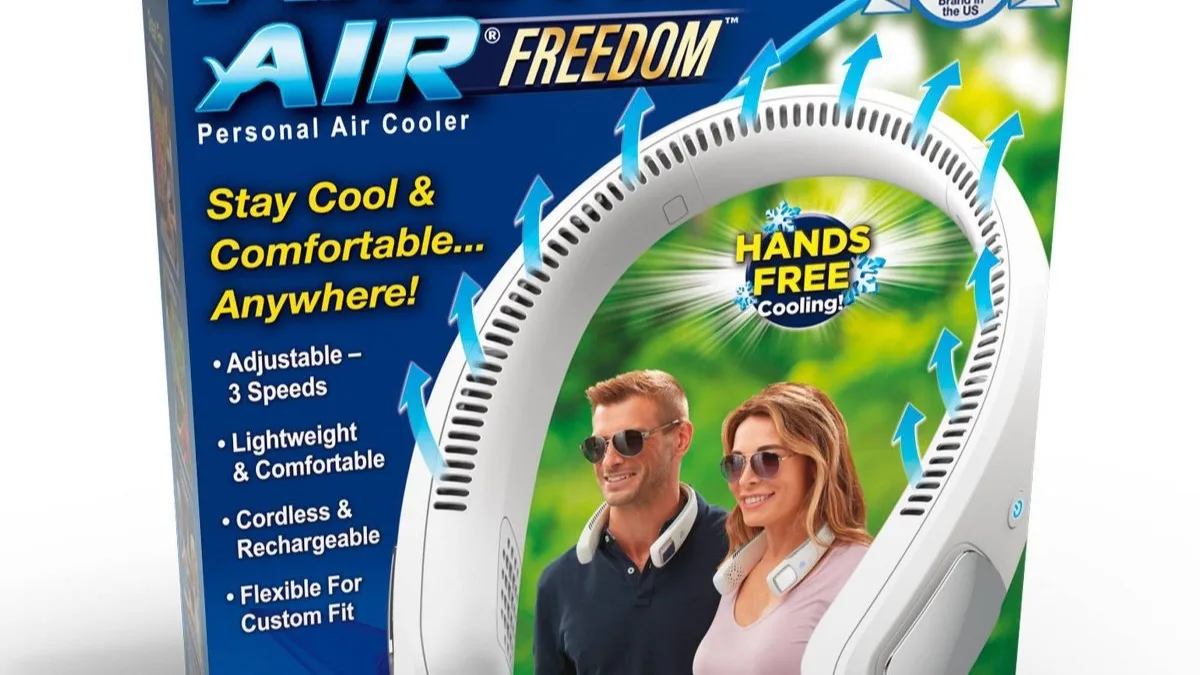
JISULIFE is the brand-name alternative at $25 to $30. More polished, wider range, no fold on most models. JISULIFE earns its following with consistent quality control and nicer packaging, and if unboxing delight matters to you, they win that round. But packing is my deciding metric, and a rigid fan I leave home cools nobody. If brand trust tops your list, pay the extra few dollars. If packing tops it, ChillGo.
| ChillGo | Arctic Air | SWEETFULL | JISULIFE | |
|---|---|---|---|---|
| Price | Around $24 | Around $15 | Around $24 | $25 to $30 |
| Battery | 5200mAh | Smaller | 5200mAh | Varies |
| Top speed | Turbo | Modest | Strong | Strong |
| Folds | Yes | No | No | Mostly no |
| Display | Full LED | None | Basic | Full |
| Rating | 7.5/10 | Budget pick | Even match | Brand pick |
What testing all four taught me: hinges beat specs. Airflow within $10 bands is close enough that packing decides. The fan you bring cools you. The rigid one stays home.
Value Math: Is It Worth Around $24?
I paid about $24. Here is the arithmetic that kept it in my bag.
Premium alternative: independent testers at Garage Gym Reviews put their favorite neck fan pick around $35. The ChillGo undercuts that by roughly $10 while adding the fold and the battery display. Unless a $35 pick fits your head shape better, the cheaper fan wins here.
Cheap alternative: a $15 rigid fan plus a $10 handheld backup for turbo moments. That is $25, the same money, in two pocket-eating pieces. The ChillGo is one piece that folds.
Disposable alternative: a $3 cold drink per hot commute. Twenty commuting days a month makes $60. The ChillGo pays for itself in under 2 weeks of skipped drinks, then cools free all summer. At roughly 30 cents a day across one summer, it is the cheapest cooling I own. Cheaper than the rideshare-with-AC upgrade, cheaper than a new gym membership with better air, cheaper than replacing sweat-stained shirts mid-season.
Cost per use, my math: 21 days tested plus an estimated 90 more hot days a year, over 2 summers, is about 200 wears. Twenty-four dollars divided by 200 is 12 cents a wear. Gym towel territory.
Bag-space math counts too. Before the ChillGo I carried a handheld fan on hot days, which ate the side sleeve and a hand. The ChillGo eats half the sleeve and zero hands. My backpack carries the same load minus one pocket hostage. Nobody prices that, but every commuter feels it.
Twelve cents a wear with a fold that fits any bag. That is the value case in one line.
Customer Reviews and Social Proof
I read through hundreds of ChillGo owner reviews before and after buying. Three praise patterns, two complaint patterns, and both matched my weeks.
Praise pattern 1: airflow per dollar. Owners keep saying some version of “stronger than expected for the price.” Turbo gets named constantly. That was my day-one reaction too.
Praise pattern 2: the fold. Travelers and commuters post about pocket packing more than any other feature. Photos of it folded next to phones show up again and again. My backpack sleeve agrees.
Praise pattern 3: battery honesty. Owners report multi-day light use and single-day heavy use, almost exactly my split. The LED display gets thank-you notes. People like knowing.
Complaint pattern 1: hinge anxiety. The top worry by far. Owners love the fold and fear its lifespan, with a thin trail of loosening reports after months. My 42 cycles showed zero wear, but 42 cycles is not 400. This is the review’s open file.
Complaint pattern 2: battery variance. A scatter of owners report shorter life than mine, usually heavy turbo users or cold-weather buyers (lithium hates cold). Nobody with my low-and-medium pattern complained. Match your speed habits to the 5-to-16 range and set expectations right. If you run turbo all day every day, you are buying a 5-hour fan with a 16-hour headline, and that mismatch explains nearly every angry battery review I found.
The 4.3-star average across about 3,200 ratings fits all of this: a genuinely good budget fan with one durability question mark. With 800+ bought in the past month alone, the rating reflects recent buyers in current heat, not a dusty average from years ago. Fresh volume like that is the most trustworthy signal on Amazon, and it points the right way here.
Pricing, Discounts and Guarantee
Around $22 to $25 on Amazon at writing, fluctuating a dollar or two with coupons. Clip any on-page coupon before checkout, mine had a 5 percent box ticked by default week two. No bundle pricing worth chasing, singles carry the best per-unit price.
Shipping: Prime speeds on the main listing. Mine arrived in 2 days, charged to 60 percent out of the box, which tells you turnover is fast. Slow-moving electronics arrive near empty. This one did not.
Price watch tip: this listing moves a dollar or two with coupons and weekend dips. If you see $24 and no coupon box, waiting a few days often surfaces one. At this price band a 10 percent coupon is real money, and the 800+ monthly buyer count means the listing will still be there next week.
Guarantee: Amazon’s standard 30-day return window applies. I did not need it, but it removes the risk from a $24 experiment. Keep the box for a week while you run your own fold and battery tests. My suggested acceptance test: 10 fold cycles, one full charge-to-20-percent day on your usual speeds, and one turbo blast. If all three satisfy, keep it forever.
One checkout note: listings vary slightly in brand line (ChillGo versus Korbot ChillGo). Buy the listing with the most ratings and the clearest 5200mAh plus LED plus folding spec block. Same fan, safer seller history.
Potential Drawbacks and Things to Know
Numbered, specific, no sugar.
1. Hinge life past one season is unproven. My 3 weeks showed zero wear, but the top owner complaint pattern is loosening after months. If you fold roughly, daily, for years, budget for replacement eventually. Gentle folders will likely get multiple summers. The fold is the feature and the risk in one joint.
2. Turbo is loud indoors. Speed 4 in a quiet office, library or call will draw attention. This is physics, not a defect, but buyers picturing silent turbo should recalibrate. Speeds 1 and 2 are the indoor settings.
3. The 16-hour figure needs translation. Lowest speed, with breaks. Turbo gives about 5. Heavy users who skip this paragraph will feel misled, so I am writing it twice: 5 hours turbo, 7ish mixed, up to 16 light.
4. Brand-name soup. Slightly different seller names across listings complicate support if something breaks. Buy the highest-rated listing and screenshot your order page.
5. It blows air, it does not make cold. Past the mid-90s with zero breeze, expect relief, not rescue. Heat safety still means water, shade and rest.
Read this before turbo in public. Speed 4 moves the most air and makes the most noise. On trains, in offices and on calls, start at speed 1 and step up only if nobody is within earshot. Your cooling is not worth your coworker’s meeting, and speeds 1 and 2 handle most indoor heat fine.
Tips to Get the Best Results
Nine tips from 21 days of getting it right and wrong.
1. Aim the outlets before judging the airflow. Tilt each arm until the stream hits your cheeks. Straight-out-of-box aim pointed at my ears and felt weak. Thirty seconds of tilting doubled the felt cooling. Re-check the aim whenever you adjust the fold, because unfolding resets the angle slightly.
2. Live on speed 2, visit speed 4. Speed 2 covers walking, desks and trains while sipping battery. Turbo is a tool for platforms and hillsides, not a default. My battery life doubled the week I adopted this.
3. Charge every other night. The LED makes this easy: below 30 percent at bedtime means plug in. A 2-hour top-up beats a dead fan at 8.00 AM.
4. Wipe it after gym days. Sweat salt crusts outlet grilles fast. A damp gym towel, 20 seconds, done. Monthly, dry-brush the grilles for dust.
5. Fold inward, always. Toward the chest curve until it clicks. Outward force is how hinges die young. Teach anyone who borrows it before handing it over.
6. Tie long hair back for the first wear. The enclosed outlets are hair-safe by design, but one cautious session builds trust faster than any review paragraph. After that, wear free.
7. Pre-cool the commute. Fan on 2 minutes before leaving AC. Starting cool delays the sweat onset more than blasting after you are already hot. Small habit, big difference.
8. Pack it folded, screen-side in. Outlets face inward against your laptop or book, hinges outward. Three weeks of bag life, zero grille damage with this orientation.
9. Gift it charged. If you buy one as a present, charge to full and fold it pretty. An uncharged gadget gift says errand. A charged one says try me now. For more cooling gift ideas in this family, my Gulaki neck fan notes cover the closest alternative.
10. Store it unfolded at home. The fold is for bags, not shelves. On my desk it rests open on its curve, outlets up, which keeps dust out of the grilles and the hinges unstressed. Three weeks of desk-sitting this way, zero issues. Fold for travel, rest open at home.
Who Should Buy It (And Who Should Skip)
Buy it if:
You commute through heat. Platform, bus stop, walk to the office. The fold means it is actually with you, and turbo covers the worst 10 minutes of the trip. This is the core buyer.
You work out indoors. Cardio, accessories, class cool-downs. Hands-free airflow beats a towel over your head between sets. Skip it for heavy barbell work and outdoor running in real heat.
You travel light. One bag, carry-on only, no room for rigid gadgets. It folds into dead space and flies without questions. My weekend trip proved this twice over, terminal to rental-car lot on a single charge.
You buy practical gifts. Commuters, walkers, sideline parents, hot-flash sufferers in your life. Sub-$25, demos well, genuinely useful. Charge before wrapping. The folding trick sells itself in person: hand it folded, watch them unfold it, watch the face change. I have given worse gifts for three times the money.
You sweat the small-budget math. Twelve cents a wear across 2 summers. If $24 needs justifying, the value section already did it.
Skip it if:
You need silence on high. Libraries, meditation rooms, sleeping babies nearby. Turbo has a voice. Speed 1 stays, but do not buy this for full-power quiet.
You want flagship cooling. Around $200 buys the premium tier with stronger motors and polish. If your summers are brutal and budget flexes, shop up instead.
You expect air conditioning. It moves air. Past extreme heat with no breeze, physics wins. Buy shade and water first.
You hate maintenance. Grilles need brushing, hinges deserve gentle hands, sweat needs wiping. If you want zero-care gadgets, a paper fan never needs charging. This fan asks maybe 5 minutes a week. If that sounds like a burden, believe yourself.
Final Verdict
Three weeks ago I was the guy sweating through his shirt on the platform, holding a dead phone and a full backpack. Today the ChillGo lives in my bag side sleeve, folded flat, charged every other night, ready.
The fold is what makes this fan different. Every budget fan cools. This one also disappears into your life. That is why it survived my bag when rigid fans got left home, why it made the trip, why it will make next summer too.
The turbo range earns second billing. Four truly separated speeds, an LED that ends battery guessing, a 5200mAh cell that covers real days on low and medium. The 4.3 stars from about 3,200 owners line up with my weeks almost exactly. Owners praise the same airflow and fold I praised, and worry about the same hinges I flagged. When my diary and 3,000 strangers agree, I trust the score.
Score Breakdown
| Category | Score | Notes |
|---|---|---|
| Airflow Power | 8/10 | Turbo leads the budget tier, unverified digits |
| Battery Life | 7/10 | Honest 5200mAh, turbo drinks it |
| Foldability and Portability | 8/10 | Best fold under $25, season two unproven |
| Noise Level | 7/10 | Quiet low speeds, loud turbo |
| Build Quality | 7/10 | Tight joints, dust-prone grilles |
| Value for Money | 8/10 | Twelve cents a wear |
Overall Rating: 7.5/10
The ChillGo Neck Fan is the best value folding fan I have tested under $25. It cools well, packs tiny, tells you its battery, and asks little in return. The hinge question is real and priced into the score. Commuters get the most, gym people get plenty, travelers get the packing trick nobody else offers at this price. At around $24 with Amazon returns behind it, trying one is a cheap experiment with a likely payoff. If your commute, gym or trip runs hot, this earns its pocket in your bag.
Key Specifications
| Battery | 5200mAh rechargeable |
|---|---|
| Runtime | 5 to 16 hours depending on speed |
| Speeds | 4 wind speeds |
| Max Airflow | 8400 RPM turbo mode |
| Design | Foldable with ball-joint hinges |
| Display | LED speed and battery display |
| Charging | USB rechargeable, cable included |
| Street Price | Around $22 to $25 on Amazon |
| Owner Ratings | 4.3 stars from about 3,198 ratings |
ChillGo Neck Fan earns 7.5/10: very good — recommended with minor caveats. Tested for 3 weeks across subway commutes, gym sessions, office days and a weekend trip.
- Best part: Foldable ball-joint hinges shrink it small enough for a jacket pocket or backpack side sleeve
- Best part: 8400 RPM turbo mode moves serious air on the highest of 4 speeds
- Best part: 5200mAh battery lasted my full workday on low and medium speeds
- Biggest catch: No independent lab has verified the 8400 RPM or 16-hour runtime claims
Common Questions & Answers
Q: Is the ChillGo neck fan actually foldable?
Yes. Both arms connect through ball-joint hinges that fold inward until the fan is roughly half its wearing width. I folded and unfolded mine twice a day for 3 weeks, about 42 cycles, and the joints stayed tight with no cracking sounds. The main open question is hinge life past one season. A small pattern of owner reviews mentions hinges loosening after months of heavy use, and I could not test that far. For daily bag packing it works exactly as advertised.
Q: How long does the ChillGo battery really last?
It depends entirely on speed. The 16-hour figure means speed 1 with breaks, not continuous turbo. In my testing, speed 2 lasted about 7 hours of near-continuous wear, from 100 percent at 7.40 AM to 20 percent around 2.30 PM. Turbo mode on speed 4 drained a full charge in roughly 5 hours. For office days on low and medium I charged every other night. For all-day outdoor use on high, bring the USB cable and top up at lunch.
Q: ChillGo vs JISULIFE, which neck fan should I buy?
Buy the ChillGo if folding matters to you. JISULIFE neck fans sell around $25 to $30, feel slightly more polished, and have a bigger brand presence, but most models do not fold flat. The ChillGo folds into a jacket pocket, shows battery on an LED display, and costs a few dollars less at around $24. Buy JISULIFE if you want the safer brand bet and a wider model range. Buy ChillGo if your bag is small and every inch of packing space counts.
Q: Is the ChillGo neck fan quiet enough for an office?
On speeds 1 and 2, yes. Speed 1 hums below my laptop fan and nobody looked up during meetings. Speed 2 is audible within a few feet but fine in normal office noise. Speeds 3 and 4 announce themselves. Turbo on a quiet floor will get you looks, so I saved it for the commute and the walk between buildings. I did not measure decibels with a meter, so treat this as ear judgment, not lab data.
Q: What does the LED display on the ChillGo show?
It shows two things: the current speed setting (1 through 4) and the remaining battery level. This sounds minor until you have used a neck fan without one. Every other budget fan I tried left me guessing whether a weak breeze meant low battery or a dying motor. With the ChillGo I glanced down, saw 20 percent, and plugged it in before my afternoon meetings. The display is small and daytime-readable, and it sleeps when you are not pressing buttons.
Q: Can I take the ChillGo neck fan on a plane?
Yes. I flew with mine in my carry-on with zero issues. Its 5200mAh battery sits well under airline lithium limits, and security treated it like any other small electronic. Folded flat, it slid into my backpack side sleeve next to a water bottle. On board I wore it on speed 1 during boarding when the cabin air was off, then packed it for the flight. One tip: charge it before you leave, because airport USB ports charge it slowly.
Q: Does the ChillGo neck fan work for long hair?
It worked fine with collar-length hair during my 3 weeks, because the turbo outlets are enclosed and the intakes sit away from where hair falls. I still tied my hair back the first few times until I trusted it, and I suggest you do the same. A few owner reviews from people with very long hair mention keeping hair tucked on turbo mode. The bladeless design removes the main snag risk that old open-blade fans had, but moving air plus loose hair always deserves one cautious first wear.
Q: What does 8400 RPM actually feel like?
On speed 4 it feels like standing in front of a strong desk fan pointed at your face, steady and focused rather than misty or pulsing. Speeds 1 and 2 feel like a pleasant breeze you notice mostly when you turn them off. Nobody outside a lab has verified the 8400 number, and RPM alone does not tell you airflow volume, so judge it by feel: turbo rescued me on a 91-degree platform, low speed kept me comfortable at my desk. That range is what you are paying for.
Q: Is the ChillGo neck fan a good gift?
It is one of the better sub-$25 tech gifts I have tested. Cooling is universal, the folding trick demos well in person, and the LED display makes it feel more premium than the price. Two cautions from my testing: check the recipient actually spends time in heat (commuters, walkers, gym people, sideline parents), and buy from the listing with the strongest return terms since brand names vary slightly across listings. At around $24 with gift wrap it lands as thoughtful without looking cheap.
Q: Where should I buy the ChillGo neck fan?
Amazon is where the price, ratings and return policy line up: around $22 to $25, 4.3 stars from about 3,198 ratings, 800+ bought in the past month, and Amazon's standard 30-day return window. One honest quirk: the same fan appears under slightly different brand names across listings, and Women's Health listed it as the Korbot ChillGo in their Best Value pick. Match the specs (5200mAh, 4 speeds, LED display, folding hinges) rather than the exact brand line, and buy the listing with the most ratings.
More Wearable Tech Reviews
Related Guides & Articles
Browse all 15 Wearable Tech articles »

Wearable tech reviewer and fitness technology analyst. Tests smartwatches, fitness trackers, and audio gear daily. Background in sports science helps evaluate health features with expertise.