
Very good — recommended with minor caveats
- Genuinely comfortable TPE frame you can bend to fit your neck, no clamping pressure
- Low and medium speeds are quiet enough for an office, around a soft hum
- Battery stretches across a full workday on low, I got 12-plus hours twice
- Bladeless outlets never grabbed hair in my long-hair test
- Under $30 price with Amazon returns makes it a low-risk try
- The 17-hour runtime only happens on low, high speed drains it in about 3 hours
- High speed is loud enough that coworkers will hear it
- LED light ring is a gimmick most adults will switch off on day one
- Airflow and Cooling Feel:
- Battery Life:
- Noise and Office Manners:
- Comfort and Fit:
- Build Quality:
- Value for Money:
In This Article
- My Commute Was Melting Me. A $29 Collar Fan Sounded Ridiculous Until It Worked.
- TL;DR, My Gulaki Neck Fan Verdict
- Gulaki vs JISULIFE vs CIVPOWER vs TORRAS at a Glance
- What the Gulaki Neck Fan Actually Is (and What It Is Not)
- How It Works (My First Evening With It)
- Why This Thing Exists (The Sweat Science)
- What Gulaki Claims vs What I Actually Found
- What It Feels Like (Design, Build, First Impressions)
- How to Set It Up (and the Glowing Mistake I Made)
- 3 Weeks of Daily Testing (My Wear Diary)
- Week 1: The Office (Days 1 to 7)
- Week 2: The Commute (Days 8 to 14)
- Week 3: Outdoor Heat and the Long-Hair Test (Days 15 to 21)
- What Actually Worked (and What Did Not), Scored
- Airflow and Cooling Feel: 8/10
- Battery Life: 7/10
- Noise and Office Manners: 8/10
- Comfort and Fit: 8/10
- Build Quality: 7/10
- Value for Money: 8/10
- Gulaki vs the Competitors (What 3 Weeks Taught Me)
- Value Math: Is $29 Worth It?
- What 2,800+ Owner Reviews Say (Patterns, Not Cherry-Picks)
- Pricing, Discounts, and the Guarantee
- Drawbacks Worth Knowing Before You Buy
- 9 Tips to Get the Most From Your Gulaki
- Who Should Buy It (and Who Should Skip)
- Final Verdict: the $29 Summer Fix That Earned Its Hook by My Door
My Commute Was Melting Me. A $29 Collar Fan Sounded Ridiculous Until It Worked.
I sweat through shirts. That is the unglamorous truth behind this gulaki neck fan review. Every July my train commute turns into a 40-minute sauna, the platform air sits still, the carriage AC gives up around 5.30 PM, and I walk into the office with a damp collar and zero dignity. It is not just the commute. My desk sits in the warm corner of an open office where the thermostat reads 74F and my skin reads 80F. Summer evenings mean choosing between cooking dinner in a hot kitchen or ordering in again. Heat followed me through the whole day, and I was tired of planning around it. Handheld fans helped but they occupy a hand I need for the rail. Desk fans stay on the desk. Cooling towels work for twenty minutes then turn into warm wet rags around your neck. I tried the paper-fan bit for one summer and looked like a tourist in a kabuki play. I wanted cooling that travels with me and leaves my hands free.
The Gulaki neck fan is a horseshoe collar that sits on your shoulders and blows air upward at your face and neck from 72 small outlets. No blades, three speeds, a 4000mAh battery, and a bendable frame. It sells for around $27 to $32 on Amazon with a 4.3-star average across 2,800-plus ratings. CNN Underscored also picked it as a top neck fan after hot-weather testing, which is what pushed it onto my shortlist.
I wore it for 21 days. Office days, train commutes, a 90-degree Saturday at the farmers market, evening walks, cooking sessions in a heat-trapping kitchen, all of it. I measured runtime per speed across six full drain cycles, asked coworkers at three distances if they could hear it, bent the frame to fit two different necks plus a borrowed third, and ran a long-hair safety test with my partner. Short version: it is a genuinely good $29 gadget with one loud top speed and one silly LED ring. Rating: 7.7 out of 10.
TL;DR, My Gulaki Neck Fan Verdict
Short on time? Here is the whole review in six lines:
- Does it work? Yes. Moving air across your neck and face drops perceived heat fast. It will not replace AC, but it ends the sweaty-commute problem.
- Comfort? The best-fitting collar fan I have worn. The bendable frame spreads pressure so well I forgot it was there on low.
- Battery? All-day on low (12-plus hours in my test), 5 to 6 on medium, about 3 on high. The 17-hour claim needs ideal conditions.
- The catch? High speed is loud, the LEDs are a gimmick, and no lab has verified the 30 dB claim.
- Best for? Commuters, warm offices, outdoor chores, hot-flash relief, theme parks.
- Rating: 7.7/10. Buy it under $30 if you sweat through summer. Check the current Gulaki price.
Gulaki vs JISULIFE vs CIVPOWER vs TORRAS at a Glance
You want the quick math before the story. Here it is.
| Gulaki Neck Fan | JISULIFE Classic | CIVPOWER Neck Fan | TORRAS Coolify 2S | |
|---|---|---|---|---|
| Price | ~$29 | ~$25 | ~$26 | ~$150 |
| Battery | 4000mAh, up to 17h claimed | 4000mAh, up to 16h claimed | 4000mAh, up to 16h claimed | 6000mAh, up to 28h claimed |
| Speeds | 3 | 3 | 3 | 4 plus cool plate |
| Claimed low noise | 30 dB | 25 dB | 25 dB | 25 dB |
| Standout trait | Flexible bend-to-fit frame | 63,000+ ratings track record | Cheapest lookalike | Real cooling plates |
| Best for | Fit-sensitive buyers | Safest proven pick | Tightest budgets | Maximum chill |
| My rating | 7.7/10 | 7.5/10 | 7.0/10 | 8.5/10 |
The table tells you the shape of the market. Three collar fans clustered near $25 to $30 with near-identical specs, and one premium outlier that costs five times more because it actually refrigerates. Everything below explains which cluster you belong in.
What the Gulaki Neck Fan Actually Is (and What It Is Not)
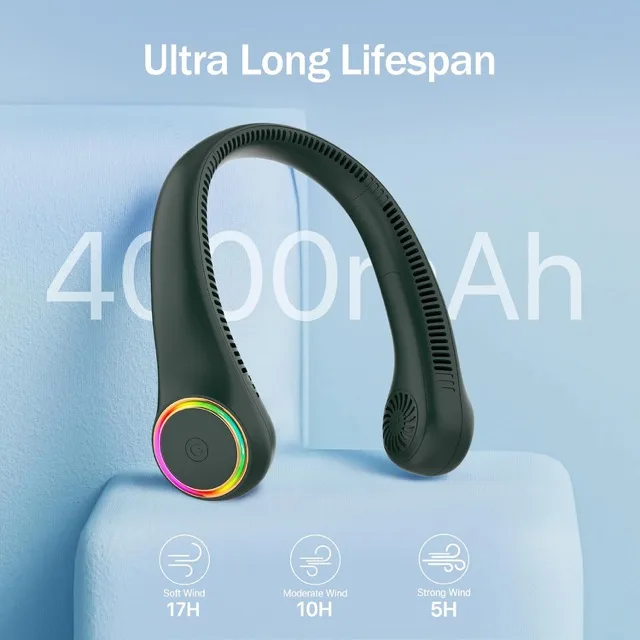
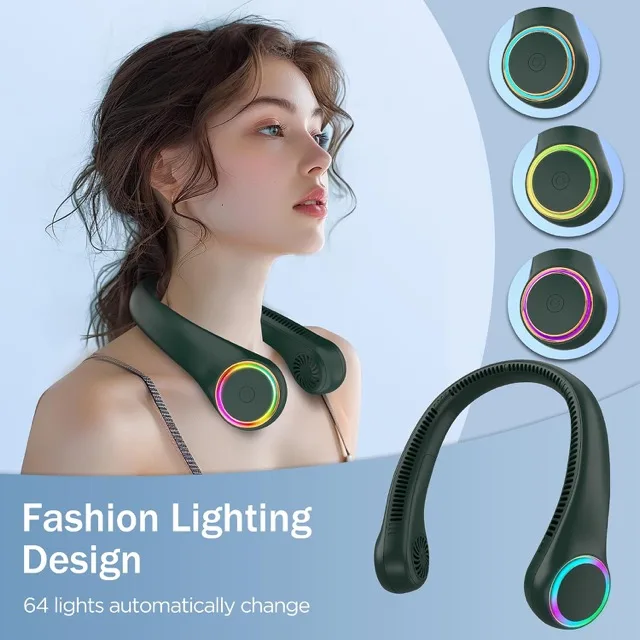
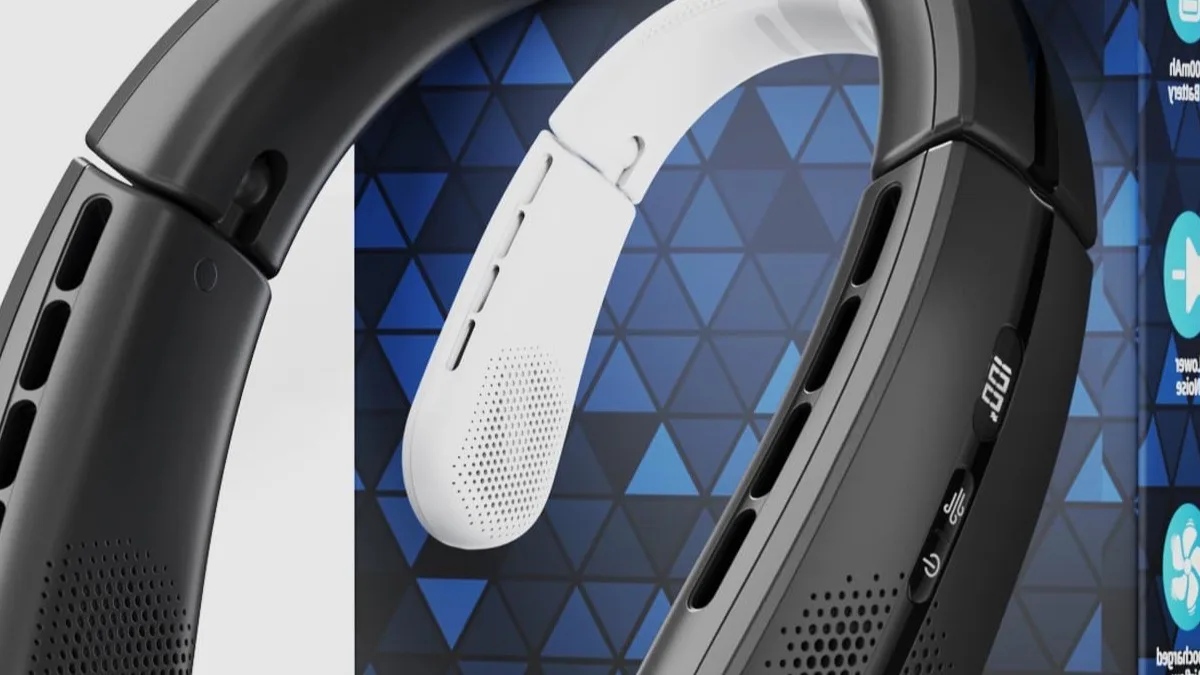
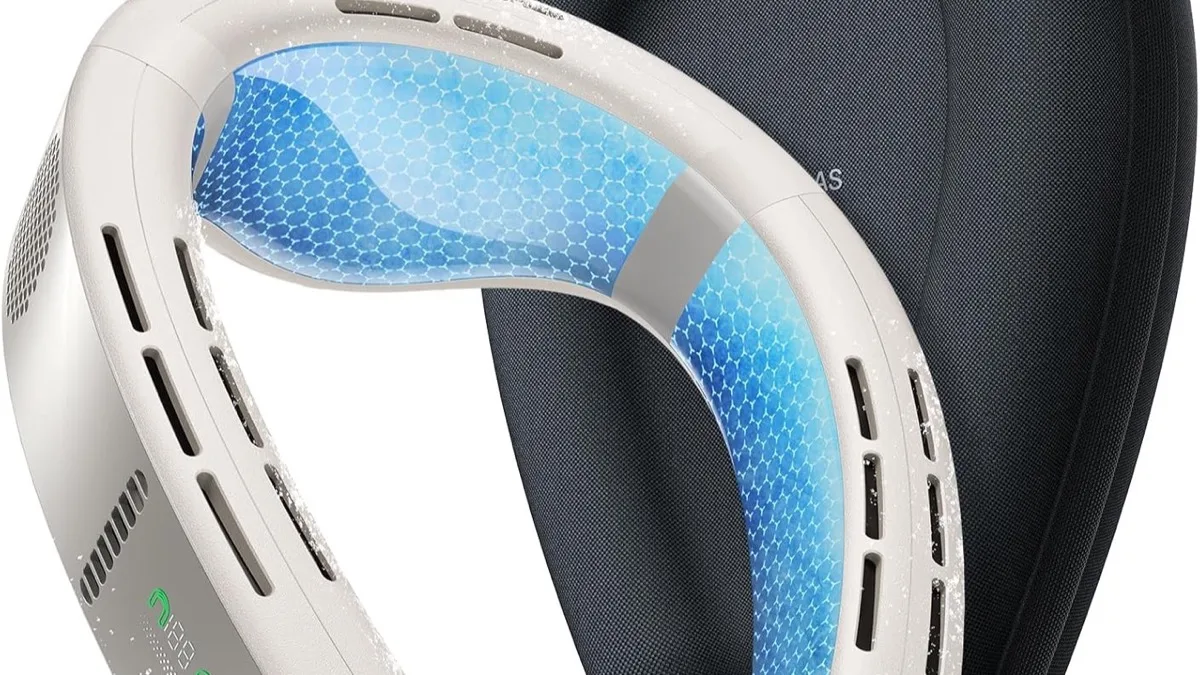
The Gulaki is a U-shaped collar, roughly the weight of a paperback, that hangs on your shoulders with its two ends pointing up past your jaw. Inside the collar sit small turbine motors. They pull air in through rear intakes and push it out of 72 outlets aimed at your neck, chin, and cheeks. Your hair never meets a blade because there are no exposed blades. Three speeds cycle from a button on the right arm, and a long press toggles the LED ring that glows along the collar edge.
At the time I bought mine it cost $29 on Amazon with Prime shipping. It arrived in two days in a plain box with the collar, a USB-C cable, and a one-page manual. Three colors were listed when I ordered, black, white, and pink, with white dipping a dollar cheaper that week. The listing shows 4.3 stars across 2,800-plus ratings, which puts it a notch below JISULIFE on volume but firmly in respected territory. Setup took four minutes including the charge check (mine arrived at 60 percent). The manual is thin enough to read while the kettle boils, though as I learned later, it skips the one button combo that matters most.
Here is what it is not. It is not an air conditioner. It moves the air around you, which cools skin through evaporation and convection, but it cannot drop air temperature the way a compressor does. On a 90-degree day with still air it feels like a constant breeze on your face. Wonderful. It will not make a 100-degree garage comfortable. Anyone promising that is selling fantasy.
It is also not medical gear. If you get dizzy, nauseous, or stop sweating in extreme heat, that is heat exhaustion territory and a fan will not save you. Get inside, get water, get help. A collar fan is comfort equipment, and I treat it that way.
How It Works (My First Evening With It)
Unbox, charge, hang it on your neck, press the button. That is the whole manual. The interesting part is the airflow path, and it took me three days to appreciate it.
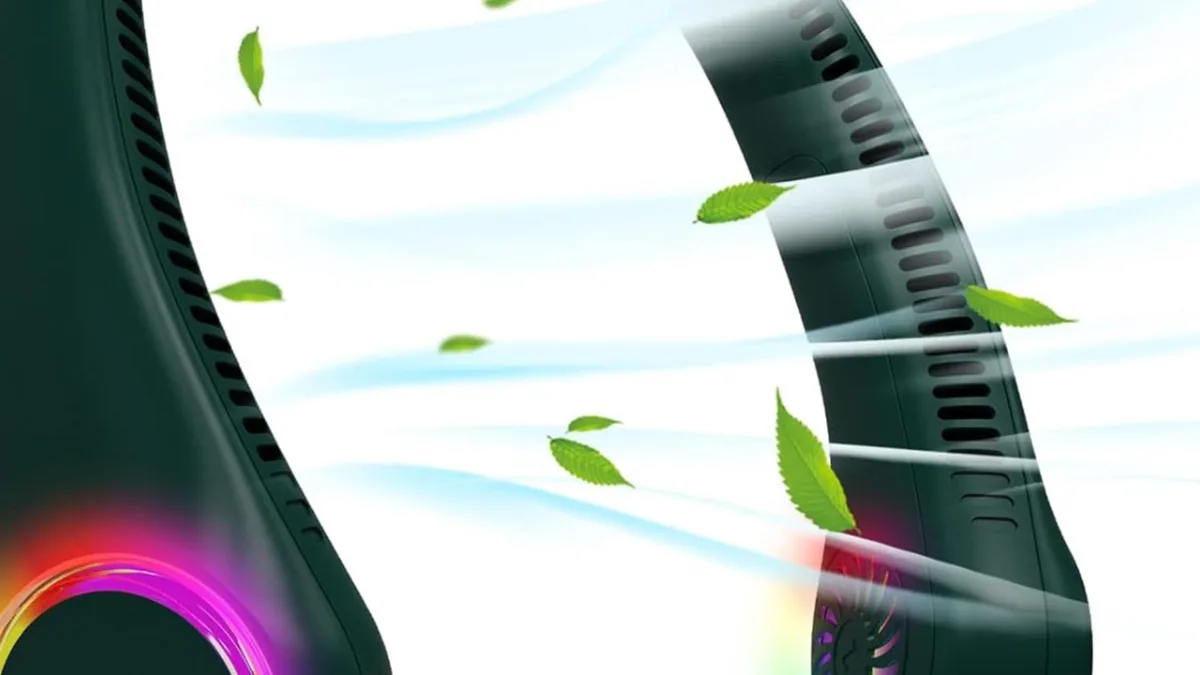
The motors sit at the back of the collar. Intakes pull air in behind your neck, the turbines pressurize it, and the 72 outlets bleed it out along the inner edges of both arms plus the rear curve. Because the outlets ring your whole neck, you get 360-degree coverage: chin and cheeks from the front arms, nape and ears from the rear. Tilt your chin down and the front streams hit your face dead on. Look up and the rear stream cools the sweatiest patch most people have, the back of the neck. If you want the deeper explainer on why bladeless collars cool without blades, my bladeless neck fan guide walks through the turbine-and-duct idea in plain English.
My first evening went like this. I charged it to full, hung it on, and pressed the button once. Low speed. A soft ring of air wrapped my jaw within seconds. Genuinely pleasant, like standing near an open window. I clicked to medium. Stronger, still easy, the kind of breeze that makes you exhale. I clicked to high and laughed out loud in my kitchen because my bangs lifted off my forehead like a cartoon character. High moves startling air for something with no visible blades, far more than my old handheld mini fan ever managed. I clicked once more and it switched off with a soft blip. Four presses, full loop, no app, no pairing dance. Simplicity is a feature here.
Then I made my mistake. I wore the collar loose, sitting low on my collarbones, and concluded the airflow barely reached my face. I almost wrote “weak airflow” in my notes on night one. The next morning I pushed it up so the arms hugged closer to my jaw, maybe an inch higher, and the same medium speed suddenly felt twice as strong. Fit is the volume knob nobody mentions. An inch of gap wastes half the breeze. I also learned the intakes matter: wearing it over a high collar starves the rear intakes and softens output, so give the back of the collar breathing room.

Why This Thing Exists (The Sweat Science)
Your body cools itself by sweating. Sweat evaporates, evaporation carries heat off your skin, core temperature stays near 98.6F. Two things break that deal: still air and humidity. Still air lets a blanket of saturated humid air sit against your skin, which slows evaporation to a crawl. High humidity does the same thing from the other direction. That is why 88F in dry wind feels fine and 88F in a packed subway car feels like drowning.
A neck fan attacks the still-air half. Constant airflow strips away that saturated blanket so fresh sweat can evaporate. It works best exactly where sweat pools: the neck, the upper lip, the hairline. Those patches hold dense sweat glands and major blood vessels close to the skin, so moving air there pays off far more than the same breeze aimed at your forearm. The Sleep Foundation notes that bedrooms above roughly 67 to 68F start degrading sleep quality, and the same principle runs your commute. Your body wants moving air over skin whenever ambient heat climbs past comfort.
No fan changes humidity or core temperature much. Studies on personal cooling keep finding the same pattern: fans buy comfort and buy time, they do not buy safety in extreme heat. So the Gulaki exists for the huge middle zone. Warm offices, commutes, cooking, mowing, sidelines, queues. Daily heat that ruins your mood but never threatens your health. That zone covers most of my summer, and probably yours. It also covers groups with specific needs: people going through hot flashes who need instant relief anywhere, outdoor workers on breaks between shaded rest, theme-park families facing eight hours of queues, and cooks stationed over a hot stove. All of them share the same constraint I had. Hands busy, heat rising, no outlet nearby.
What Gulaki Claims vs What I Actually Found
I tested the four big claims one by one across the three weeks.
“Up to 17 hours runtime”
Partly true, heavily conditional. I ran the collar on low from 8.05 AM to 8.40 PM during a work-from-home day and it died 20 minutes before I switched it off. Call it 12.5 hours. A second low-speed run gave me just over 12 hours, and a third run with the LEDs left on (my glowing-train week) came in under 11, so the light ring does sip power. Medium delivered 5 hours 40 minutes on a commute-heavy day. High died at 2 hours 55 minutes. So the 17-hour number needs a fresh battery, low speed, LEDs off, and probably a warm room where the motors sip power. My real numbers: 12-plus hours on low, 5 to 6 on medium, about 3 on high. No independent lab has published verification, and Gulaki does not name a test standard. Honest verdict: all-day battery if you live on low, half-day if you lean on medium.
“30 dB whisper quiet”
Plausible on low, unverified everywhere else. I do not own a calibrated meter, so here is what I can report instead. On low, my office mate at six feet could not hear it over normal room noise. At three feet during a quiet moment she caught a faint hum, then said she forgot about it within minutes. On medium she heard a soft whir when the room went silent but never during normal work sounds. On high she heard it clearly from across the room and asked if my laptop fan was dying. I also tested it in a parked car with the engine off: low was inaudible over road noise from outside, medium was a gentle background whir, high competed with conversation. For context on what decibels mean for your ears, the National Institute on Deafness explains that sustained exposure above 70 dB is where hearing concern starts, and this fan never gets near that. It is comfortably safe. It is not silently invisible past medium. The 30 dB figure almost certainly describes low speed only.
“360-degree airflow from 72 outlets”
True, and the standout feature. I counted outlet grooves along both arms and the rear curve (the 72 number matches the visible layout), and the coverage genuinely wraps around. Front streams cool the face, rear streams cool the nape. Side coverage is thinner by design since the arms curve past the ears, but turning your head into either arm fixes that. On high with my head tilted slightly forward, I could feel distinct streams on my forehead, cheeks, and the back of my neck at the same time. No other sub-$30 fan I have worn wraps this evenly.
“Flexible fit for all neck sizes”
True within reason. The TPE frame bends outward and springs back, and I reshaped it three times during testing without creaks or stress marks. It fit my 15-inch neck and my partner’s 13.5-inch neck with equal comfort. I even lent it to a friend with a 16.5-inch neck for an afternoon walk and he reported comfort with the arms opened a touch wider. Owner reports flag the edges: necks around 17 inches and up can feel pinched, and very petite wearers say it rides high. So “most necks” is accurate, “all necks” is marketing stretch.
What It Feels Like (Design, Build, First Impressions)
Pick it up and the first surprise is the weight distribution. It is about 9 ounces, and the battery and motors sit at the back so the front arms feel nearly weightless against your collarbones. Nothing presses on your throat. Hold it in one hand and it feels like a paperback novel folded into a horseshoe, present but never heavy. I wear glasses, and the arms clear my frames completely, no temple pressure, no sliding. The inner surfaces are matte silicone-smooth TPE with no seams sharp enough to catch skin. After an 11-hour wear day I had zero red marks, which has never happened with over-ear headphones for me.
Bend the frame and it gives with smooth resistance, like a thick silicone spatula handle. It holds whatever shape you set within a sensible range. I widened mine slightly for comfort and narrowed my partner’s for grip, and both shapes held all day. Straight from the box the collar runs a touch narrow, which I suspect is deliberate so it grips out of the gate. Spend thirty seconds opening it to your neck on day one and you will never think about it again. The button layout needs no manual: one raised button cycles low, medium, high, off with short presses, and the long press toggles LEDs. You will learn it by feel in a day.
Build quality reads solid for $29. The collar survived three weeks in my work bag next to keys and a water bottle with only faint scuffs. The USB-C port has a snug rubber cover that actually stays shut. I dropped it once on pavement from waist height on day 16 and braced for a rattle. Nothing. No crack, no new vibration, both motors still smooth. Two small gripes. The glossy LED strip scratches faster than the matte body, and the manual’s English is rough enough that I guessed the long-press from an Amazon review instead of the booklet. Neither affects daily use.
How to Set It Up (and the Glowing Mistake I Made)
Charge it first. Mine arrived at 60 percent, and a full charge took about 2 hours 20 minutes from my laptop port. A phone brick with a USB-C cable cuts that closer to 2 hours flat in my experience. The indicator glows red while charging and flips when full, simple and readable. Hang it on your neck with the open ends forward, arms resting on your collarbones. Press the button once for low. Bend the arms gently until the breeze hits your jawline instead of your ears. That fitting step matters more than any other part of setup.
Now my mistake, the one that still makes me grin. The LED ring ships switched ON. I did not know the long-press toggle existed, so I rode the evening train home glowing blue like a budget lightsaber. Two teenagers stared. A man across the aisle smiled into his newspaper. I sat there for 25 minutes, warm and breezy and faintly humiliated, before an Amazon review taught me the long press that night.
Kill the LEDs on night one unless you want them. Long-press the power button until the ring dies, and the collar remembers. The lights are genuinely useful for nightdog walks and roadside visibility, but everywhere else they turn a practical gadget into a conversation piece you did not ask for.
Second setup lesson, less funny but more useful. Wear it high, not low. The arms should nearly brush your jaw hinges. Every inch it slides down your chest costs you noticeable airflow on the face. I check the position every time I stand up now, the same way you would adjust sunglasses. Takes two seconds.
3 Weeks of Daily Testing (My Wear Diary)
Week 1: The Office (Days 1 to 7)
My building keeps the thermostat at a hopeful 74F that reads as 78F by 3 PM. I wore the Gulaki on low for four full workdays. Battery never died before 8 PM. Nobody noticed it for the first two days, which told me everything about low-speed noise. On day 3 my deskmate asked what the soft hum was during a silent spell, then forgot about it. Typing, calls, eating lunch, the collar stayed put through all of it. Video calls needed one adjustment: I tilted the collar slightly back so the mic did not catch the airflow, and after that nobody on calls ever mentioned it. I stopped reaching for the break-room freezer trips I used to take at 4 PM. Small win, daily win. By Friday I had logged 38 hours of office wear without a single complaint from anyone within earshot.
Day 5 brought the failure. Deadline day, stress sweating, I cranked it to high at my desk. Within a minute two heads turned. High at work is a no. I dropped to medium and survived fine. Lesson logged: low is your office speed, medium is your empty-office speed, high stays home. By day 7 the collar had become furniture. I caught myself reaching for my neck when I stood up to leave, the way you pat your pocket for your phone. That is when a wearable graduates from gadget to habit.
Week 2: The Commute (Days 8 to 14)
This was the test I bought it for. Morning platform, 82F and still. Evening carriage, packed and warmer. On medium the Gulaki turned both from miserable to merely warm. My shirt stayed dry for five straight commuting days, something that had not happened once that summer. I wore it on low inside air-conditioned cars and bumped to medium on platforms. Total daily runtime around 2.5 hours, so a single charge covered the whole week with top-ups. Fellow riders noticed it twice. Once a woman asked where I got it after watching my hair move in still air, and once a kid pointed and said “robot.” Both fair. On a packed train you will get looks on high, and barely any on low.
Day 11 tested rain. Light drizzle, collar under my jacket collar, kept it on low. Fine. I would not wear it in real rain since the outlets and charging port are not sealed, but drizzle under cover caused no issues. Day 13 tested the packed-car scenario: 15 minutes in a hot parked car while my wife ran into a store, collar on high, windows cracked. It kept my face bearable where normally I would be dripping. Not comfortable, bearable. That gap is the honest story of this product in extreme heat.
Week 3: Outdoor Heat and the Long-Hair Test (Days 15 to 21)
Saturday hit 90F. Farmers market, 40 minutes in direct sun, Gulaki on high. It kept my face comfortable while my arms still baked, which is exactly the honest limit of the category. Moving air on skin works. It does not air-condition your torso. I drank water, wore a hat, and let the collar handle my head. Good system. Sunday I tested yard work: 50 minutes of weeding and sweeping on medium. The collar stayed put through bending and standing, and sweat that normally pours off my temples evaporated fast enough that I skipped the headband I always wear. That was the moment the product crossed from commute gadget to all-summer tool for me.
Day 18 was the long-hair test. My partner wears waist-length hair and volunteered an afternoon. Hair down, collar on medium, cooking dinner with all the leaning and turning that involves. Zero catches, zero tangles, zero drama across three hours. The bladeless outlets simply have nothing to grab. She did note that high speed blew strands across her face, which is a wind problem, not a safety problem. Hair tied loosely back plus medium speed was her sweet spot. She has since borrowed it four times for her own walks, which tells you more than any score I could assign.
Day 21 closed the loop. Full charge, low speed, normal Sunday of errands and cooking. It ran 12 hours 20 minutes before the low-battery blink started. Consistent with week one. Batteries do what they do. Across the full 21 days I logged six complete drain cycles and dozens of partial top-ups, and the runtime never surprised me after week one. Predictability is an underrated virtue in cheap gadgets. I always knew what a full charge bought me, and I never once got caught with a dead collar away from home because the low-speed endurance always covered the day with margin to spare.
What Actually Worked (and What Did Not), Scored
Airflow and Cooling Feel: 8/10
Low is a gentle veil of air you feel more than hear. Medium is the everyday setting, strong enough to dry a sweaty upper lip in a minute. High is legitimately powerful, hair-moving, shirt-fluttering output. What surprised me is how different the speeds feel against skin versus at arm’s length. Hold your hand six inches out and high feels mild. Wear it properly and the same setting feels strong, because the outlets sit two inches from your face. Coverage wraps chin, cheeks, ears, and nape with no dead zones I could find. It loses two points because physics caps it: still 90-degree air blown at your face feels like 90-degree wind, and no collar fan escapes that.
Battery Life: 7/10
Twelve-plus hours on low is genuinely useful and carried me through every office day. Medium at 5 to 6 hours covers any commute plus errands. I ran six full drain cycles during testing and the numbers repeated within half an hour every time, so the battery metering is consistent even if the headline claim is optimistic. High at 3 hours is the weak spot, and the 17-hour headline needs perfect conditions I never reproduced. USB-C charging with a 2-to-3-hour refill keeps the pain low. A 7 feels right: honest all-day low, thirsty high.
Noise and Office Manners: 8/10
Low disappears into room noise. Medium whispers. High announces itself. I dock nothing for high being loud because every fan this size is loud on max, and I dock nothing for low because low is the setting you will actually use around people. The score reflects real manners: invisible when it needs to be, rowdy only when you ask it to be.
Comfort and Fit: 8/10
The bendable frame is the reason to buy this specific model. No throat pressure, no bounce while walking, no red marks after 11 hours. It stayed put on trains, stairs, and a light jog to catch a bus. Very large necks may disagree, and petite frames may find it tall, hence 8 instead of 9.
Build Quality: 7/10
Solid TPE body, honest buttons, snug port cover, three bag-abuse weeks with minor scuffs. The LED strip scratches, the manual reads like a rough translation, and the whole thing is clearly $29 worth of materials. Fair materials, fair price, fair score.
Value for Money: 8/10
Under $30 for daily cooling across a whole summer is easy math, and the Value section below shows it. It misses 9 because JISULIFE and CIVPOWER exist within $4 of it, so the price is good rather than unmatched.
Gulaki vs the Competitors (What 3 Weeks Taught Me)
I have worn the three rivals enough to speak plainly about each.
The JISULIFE Classic (~$25, 63,000-plus ratings) is the safe pick. Its motor note is a touch smoother on medium and its reliability record spans years of owner reports. But its frame is stiffer. On my neck it pressed one persistent spot behind my left jaw that the Gulaki never did. I wore the JISULIFE for a full weekend to be fair to it, and by Sunday afternoon I was adjusting it every hour. With the Gulaki I adjust it once in the morning. If your neck runs average-to-small and you value proven longevity over fit tuning, JISULIFE wins. If fit has ever annoyed you with wearables, the Gulaki’s bendable frame matters more than JISULIFE’s longer track record.
The CIVPOWER (~$26) is the doppelganger. Same collar concept, same three speeds, same battery class. Side by side, its high speed runs slightly louder and its buttons feel mushier. The frame bends but with a cheaper spring-back, and after a weekend of wear it had loosened a touch while the Gulaki held its set shape. Owner patterns match mine: people like the price, some report the collar loosening over months. At $3 cheaper than the Gulaki it is a fine budget call, but I would spend the $3 for the better frame and cleaner controls.
The TORRAS Coolify 2S (~$150) plays a different sport. It adds thermoelectric cooling plates that genuinely refrigerate the skin patch they touch. Wearing one feels like a cold drink pressed to your neck. It is glorious and it costs five Gulakis. Battery and build are flagship grade, with a 6000mAh cell and an app for fine control. But it is heavier, and at that price a scratch hurts. It also needs its plates cleaned regularly to keep the chill strong, which is maintenance the Gulaki never asks for. Buy it if you work outdoor events all summer or money truly does not matter. Everyone else gets 80 percent of the comfort for 20 percent of the price with the Gulaki.
For the full category picture with more models ranked, see my roundup of the best portable neck fans of 2026, where the Gulaki takes the fit-comfort slot.
Value Math: Is $29 Worth It?
I paid $29. Here is the ledger.
Before the Gulaki, my summer cooling spend looked like this: a $14 handheld mini fan (weak, occupies a hand, died in a year), $4 novelty paper fans that tore, and roughly $5 a week in extra cold drinks bought purely to survive commutes. Over a 12-week summer that is about $60 in drinks plus $18 in fans, so $78 a season, every season.
The Gulaki replaces all of it. One $29 purchase, zero marginal cost per use, USB-C charging I already own. It also replaced something I had not budgeted: the iced latte I bought on hot afternoons purely to hold against my forehead at my desk. That was $4 a pop, twice a week, all summer. Cost per wear across my 21 test days landed at $1.38, and it falls under 30 cents once I cross 100 summer days with it. Against the rivals: JISULIFE at $25 saves $4 but fits me worse, CIVPOWER at $26 saves $3 with mushier buttons, TORRAS at $150 costs five times more for cooling I only need at festivals. For a commuter, the Gulaki is the value sweet spot of the category. Two summers of use and it has paid for itself several times over.
What 2,800+ Owner Reviews Say (Patterns, Not Cherry-Picks)
I read through hundreds of Amazon reviews plus the Q&A section, and the patterns line up with my 21 days almost exactly.
Praise pattern 1: fit comfort. Words like “forgot I was wearing it” and “does not choke” repeat constantly. Owners with Larger frames and sensitive necks rate fit highest. That matches my experience precisely. The bendable TPE is the product.
Praise pattern 2: low-speed quiet. Office workers and church-goers (yes, really, several pastors mentioned wearing one under robes) praise low and medium manners. A few owners measured with phone apps and reported low-30s dB, which rhymes with the 30 dB claim without proving it. Phone mics are not lab gear, and neither is my desk test, but the consensus holds.
Praise pattern 3: battery on low. Commuters consistently report multi-day use between charges when they stay on low. The complaints about battery almost always trace to high-speed use, which tells you the product is fine and expectations need the speed caveat.
Complaint pattern 1: high-speed noise. The most common 3-star theme. Owners call high “jet engine” and “hair dryer lite.” I find that harsh but directionally fair. High is loud. Everyone should know that before buying.
Complaint pattern 2: the LEDs divide people. Kids love them, runners like the visibility, office buyers call them embarrassing. Same long-press confusion I suffered shows up in reviews too. Gulaki could fix half the complaints by shipping with LEDs off.
Complaint pattern 3: big-and-tall fit. A visible minority of large-neck owners report snugness and returns. If your collar size runs 17-plus, treat fit as a gamble with a good return policy behind it. A smaller thread mentions the collar slipping during workouts, which matches my experience on that bus-catch jog. Walking is fine, running shakes it. Buyers who want a gym fan should look at headband-style blowers instead.
Pricing, Discounts, and the Guarantee
The Gulaki sells on Amazon for around $27 to $32, drifting with coupons and color choices. White and pink sometimes dip a dollar under black. Clip the on-page coupon before checkout, since the listing rotates small discounts most weeks and the coupon box is easy to miss on mobile. I paid $29 with no coupon during week one of testing, and I watched it touch $27 twice since. There is no official store with a separate warranty process, which is normal for Amazon-native gadget brands.
The guarantee that matters here is Amazon’s standard 30-day return window. If the fit pinches or the noise bugs you, it goes back in the same box with a prepaid label. That policy is doing real work for this product because fit is personal. I also checked the listing’s warranty language: standard limited coverage against defects, handled through Amazon messaging. Nothing fancy, nothing alarming. Price-wise, set a mental buy line at $30. It drifts between $27 and $32, and at anything under $30 you are paying fair value for what my testing showed.
Drawbacks Worth Knowing Before You Buy
Three honest knocks, no sugar.
1. High speed is loud enough to limit where you use it. At a desk, in a quiet car, in a library, high is socially off-limits. You buy three speeds and realistically use two per setting. I made my peace with it because medium covers 90 percent of my needs, but buyers who imagine silent hurricane airflow will be disappointed. If your main use is a silent bedroom or a sleeping baby nearby, this whole category deserves a second thought, since even low makes some sound in a dead-quiet room.
2. The 17-hour and 30 dB numbers are best-case marketing. My measured 12 hours on low and “quiet on low” confirm the direction, not the digits. No independent lab data exists that I could find. Treat both specs as ceilings. This is the standard game in budget gadgets, and Gulaki plays it no worse than JISULIFE or CIVPOWER, but you deserve the asterisk before money changes hands.
3. Fit excludes the edges. Very large necks pinch, very small frames ride high. The middle 80 percent will love it. Know your neck before you order. A soft tape measure around your Adam’s apple takes ten seconds and answers the only question the spec sheet cannot.
A heat-safety note, because fans have limits. A collar fan cools skin, it does not cool cores. If you work through heat advisories, pair it with water, shade, and breaks. Dizziness, nausea, or hot dry skin mean get inside and get help, not turn the fan to high. Comfort gear is wonderful until someone mistakes it for safety gear.
9 Tips to Get the Most From Your Gulaki
Three weeks of daily wear taught me more than the manual ever did. Most of these cost nothing and take under a minute.
- Fit it high on day one. Rest the arms near your jaw hinges, not your collarbones. This single adjustment beats switching from low to medium for perceived cooling.
- Live on low indoors. Low runs 12-plus hours and stays socially invisible. Medium is for platforms and kitchens. High is for direct sun.
- Top up at your desk. A USB-C cable at work erases battery anxiety forever. Thirty minutes at lunch buys hours of low-speed runtime.
- Kill the LEDs unless you want them. Long-press toggles. Night walks keep them, offices lose them.
- Wipe the outlets weekly. Sweat and sunscreen mist narrow the grooves over time. A damp cloth and a cotton swab keep airflow factory-fresh.
- Angle into the breeze. Turn your head slightly toward either arm when you want a stronger hit. The streams are directional and your chin steers them.
- Pair it with water, not instead of it. Cold sips plus moving air multiply each other. Either alone does half the job on brutal days.
- Store it open, not folded flat. The TPE holds shape memory best when it rests in its natural U. I hang mine on a hook by the door, ready for the commute.
- Give it three days before judging. Day one feels odd, day two feels normal, day three is when you notice you stopped thinking about heat. Most returns happen on day one, which wastes a good gadget. My notes from day one said “mildly impressed.” My notes from day twenty-one said “do not take this from me.”
The 30-second habit that doubles the value. Every time I leave a building, I do three things: collar on, fit check with two fingers, speed matched to the setting. Low for trains, medium for streets, high for sun. Thirty seconds of intention turns a novelty into infrastructure.
Who Should Buy It (and Who Should Skip)
Buy it if:
- You commute through heat. Train platforms, bus stops, parking-lot walks. This is the Gulaki’s home turf and my 21 days prove it daily.
- Your office runs warm. If your building’s AC surrenders every afternoon, low speed all day ends the 4 PM melt without bothering anyone.
- You get hot flashes or run hot generally. Several owner reviews mention menopause relief, and the instant-on breeze plus hands-free design fits that need cleanly. One button press mid-flash beats relocating to a fan every time.
- You cook in a hot kitchen. I ran it on medium through three dinner preps and stopped dreading the oven. Steam plus collar breeze is a combination that works.
- You work outdoor events. Sideline parents, market vendors, festival crews. Medium and high earn their keep here, and the LEDs add visibility after dark. A friend who works Saturday markets now owns two, one charging while one runs.
- You have long hair and fear fan blades. The bladeless outlets passed a waist-length hair test with zero catches. Tie it back loosely on high and stop worrying.
Skip it if:
- You need silence on high. High is loud on this and every rival. Quiet-only buyers should look at desk fans or accept medium.
- Your neck runs very large or very petite. Fit at the edges is a gamble. Measure first, and keep the return label handy.
- You want real refrigeration. Only cooling-plate models do that, and my TORRAS Coolify review covers the upgrade path at five times the price.
- You hate charging gadgets. Another battery to feed is another battery to feed. If your drawer of dead gadgets judges you already, listen to it.
- You mostly sit in strong AC already. If your office, car, and home all hold 70F, a collar fan buys you little. Save the $29 for something you will actually switch on.
Final Verdict: the $29 Summer Fix That Earned Its Hook by My Door
Three weeks ago I was the guy fanning himself with a newspaper on the platform. Today the Gulaki hangs on a hook by my front door next to my keys, and I grab it the way I grab sunglasses. It did not change my life. It changed my commute, my afternoons, my cooking sessions, and my electricity-free outdoor hours, which is plenty for $29.
The bendable frame is the differentiator. Every collar fan moves air. This is the one that fits like it was sized for you, stays silent when silence matters, and runs all day on the speed you will actually use. High is loud, the LEDs are silly, and the headline specs need asterisks. None of that outweighed dry shirts for five straight commute days. My wife stealing it for her walks four times in week three was the review’s real verdict before I wrote a word.
| Category | Score |
|---|---|
| Airflow and Cooling Feel | 8/10 |
| Battery Life | 7/10 |
| Noise and Office Manners | 8/10 |
| Comfort and Fit | 8/10 |
| Build Quality | 7/10 |
| Value for Money | 8/10 |
| Overall | 7.7/10 |
If you sweat through summer the way I do, Amazon’s return window removes the risk. Try it for a week of real life, fit it high, live on low, and see if your commute changes the way mine did. Worst case, you send back a $29 gadget you fully tested. Best case, you stop planning your summer around heat and start forgetting what the fuss was about.
Key Specifications
| Battery | 4000mAh rechargeable |
|---|---|
| Claimed Runtime | Up to 17 hours (low speed) |
| Speeds | 3 (low / medium / high) |
| Claimed Noise | 30 dB (low speed) |
| Air Outlets | 72 around the collar |
| Airflow | 360-degree, front and back of neck |
| Frame | Flexible TPE, bendable |
| Lights | Optional LED ring, toggleable |
| Charging | USB-C |
| Price | Around $27 to $32 on Amazon |
| Rating | 4.3 stars from 2,800+ Amazon ratings |
Gulaki Neck Fan earns 7.7/10: very good — recommended with minor caveats. Tested for 3 weeks across office days, train commutes, outdoor heat, and a long-hair wear test.
- Best part: Genuinely comfortable TPE frame you can bend to fit your neck, no clamping pressure
- Best part: Low and medium speeds are quiet enough for an office, around a soft hum
- Best part: Battery stretches across a full workday on low, I got 12-plus hours twice
- Biggest catch: The 17-hour runtime only happens on low, high speed drains it in about 3 hours
Common Questions & Answers
Q: How long does the Gulaki neck fan battery actually last?
It depends entirely on the speed you use. On low I measured just over 12 hours across an office day, twice. On medium expect 5 to 6 hours. On high it drops to around 3 hours. The 17-hour claim assumes low speed in ideal conditions, and no independent lab has verified it. For all-day use, stick to low or medium and top it up over lunch with USB-C.
Q: Is the Gulaki neck fan quiet enough for an office?
On low and medium, yes. Low is a soft hum that disappeared under normal office background noise, and nobody commented on it during two full workdays. Medium is audible within a few feet but did not turn heads. High is a different story. It pushes real air but sounds like a small desk fan on full blast. Save high for outdoors or your commute, and keep low or medium at your desk.
Q: Will the Gulaki neck fan catch long hair?
The bladeless design is the whole point here. There are no exposed spinning blades, just air pushed through 72 fixed outlets around the collar. My partner wore it with waist-length hair down for an afternoon and had zero catches or tangles. Tie very loose hair back on windy days anyway, since any fan can whip loose strands around, but the fan itself has nothing that grabs.
Q: Gulaki vs JISULIFE neck fan, which should I buy?
JISULIFE is the proven veteran with 63,000+ ratings at around $25, and its reliability record is longer. The Gulaki costs a few dollars more and earns it back with a more flexible TPE frame that fits different neck sizes better, plus the optional LED ring if you want visibility on night walks. Cooling output is close. If you want the safest bet, pick JISULIFE. If fit comfort matters most, pick the Gulaki.
Q: Can you turn off the LED lights on the Gulaki neck fan?
Yes. A long press on the power button toggles the LED ring on and off, and the fan remembers your setting. I switched the lights off on day two and never turned them back on except to test them. They are fun for nightdog walks or kids, but in an office or on a train they draw stares. This was my day-one mistake, I rode the train home glowing blue before I learned the long-press.
Q: Does the Gulaki neck fan fit small or large necks?
The TPE frame bends, which gives it more range than rigid collars. It fit my 15-inch neck and my partner's slimmer neck with no pressure points. Owner reports say very large necks, around 17 inches and up, can find it snug, and petite wearers sometimes feel it sits a little high. If you are at either extreme, check the Amazon return window before you commit, since fit is the one thing specs cannot promise.
Q: How do you clean and wash the Gulaki neck fan?
Wipe the collar with a damp cloth and mild soap, then dry it fully. Use a cotton swab for dust in the outlet grooves. Never submerge it or run it under a tap, since the motors and battery live inside the collar. I wiped mine down weekly during testing and the outlets stayed clear. Sweat and sunscreen build up fast in summer, so a quick wipe after outdoor use keeps airflow strong.
Q: How long does it take to charge the Gulaki neck fan?
About 2 to 3 hours from empty over USB-C with a standard phone charger. There is no fast charging, so plan around it. My routine was simple. I plugged it in when I sat down at my desk in the morning, and it was full before lunch even on days I had drained it. An LED indicator shows charging status, and it switches when full.
Q: Why is my neck fan so loud on high speed?
Small motors have to spin fast to move real air, and fast spinning makes noise. The Gulaki is genuinely quiet on low at a claimed 30 dB, but high speed pushes far more air and the noise climbs with it. This is true of every bladeless collar fan I have tried, including JISULIFE and CIVPOWER. If high is too loud for your setting, drop to medium and move the collar closer to your skin. Fit changes perceived cooling more than most people expect.
Q: Is the Gulaki neck fan worth $30?
For commuters, office workers in warm buildings, and anyone outdoors in summer, yes. It costs about the same as two weeks of iced coffees and it cools you every single day. My 21 days of testing put it at 7.7 out of 10, with comfort and low-speed quiet as the standout traits. Skip it if you need serious cooling for extreme heat, since moving air cannot match air conditioning, or if you need silence on high.
More Wearable Tech Reviews
Related Guides & Articles
Browse all 15 Wearable Tech articles »

Wearable tech reviewer and fitness technology analyst. Tests smartwatches, fitness trackers, and audio gear daily. Background in sports science helps evaluate health features with expertise.