
Hilipert Neck Massager Review 2026: 3 Weeks of Real Daily Use
Hilipert neck massager review: cordless TENS collar tested 3 weeks, heat and pulse performance, battery life, and value.
 Dr. Sarah KimProduct testerUpdated August 14, 202643 min read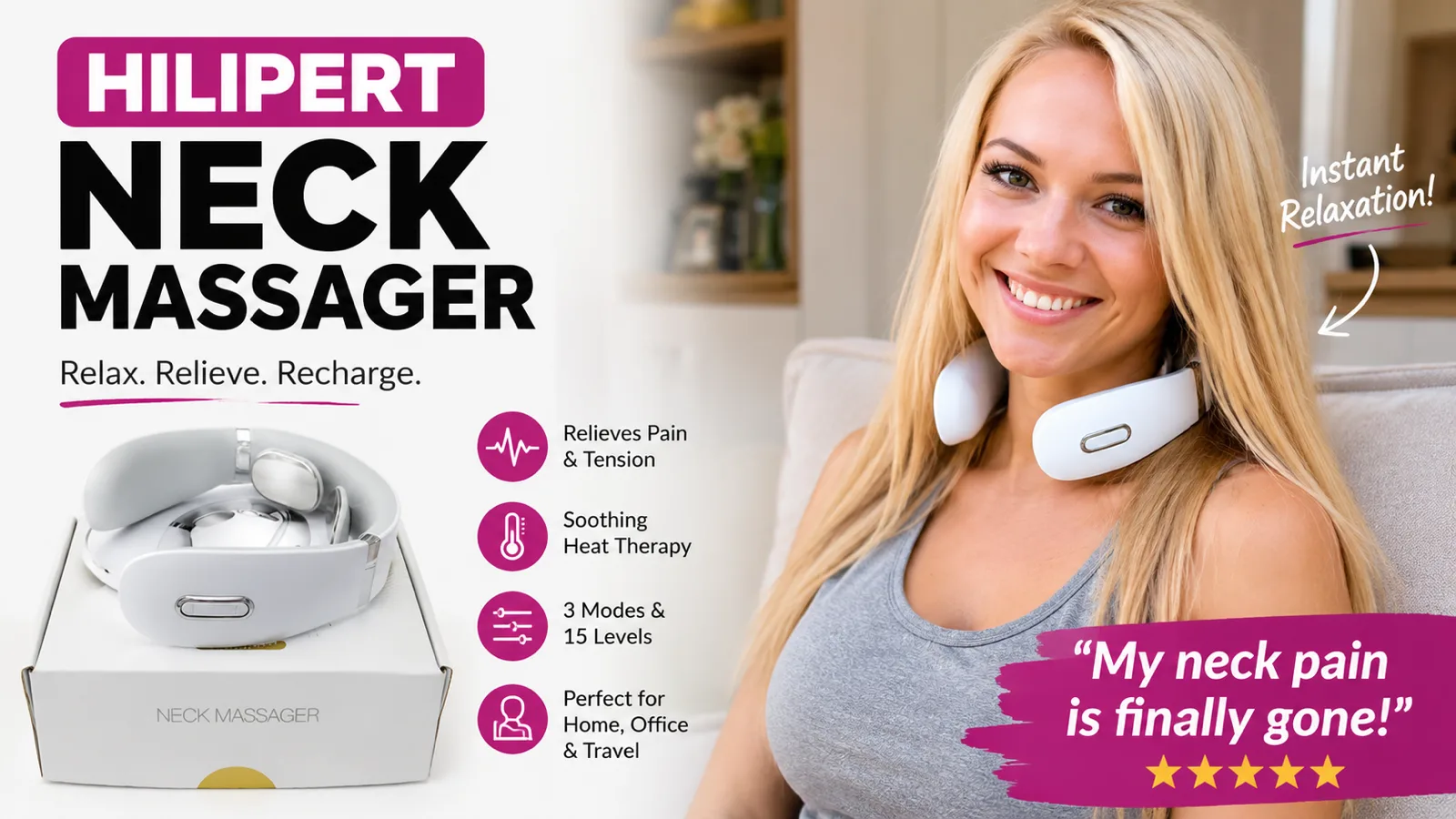
In This Article
- I Spent Three Weeks Wearing the Hilipert Neck Massager. Here’s What Changed.
- TL;DR: My Hilipert Neck Massager Verdict
- What the Hilipert Neck Massager Actually Is (And What It Isn’t)
- How It Works (My First Session With It)
- Why This Product Exists (The Science Behind TENS)
- What Hilipert Claims vs. What I Actually Found
- What It Feels Like (Design, Build, and First Impressions)
- How I Set It Up (And the Mistake I Made on Day One)
- Three Weeks of Testing (My Session Diary)
- Week 1: Desk Work and Getting the Angle Right (Sessions 1-7)
- Week 2: Testing the Limits (Sessions 8-14)
- Week 3: Travel and the Long Haul (Sessions 15-21)
- What Actually Worked (And What Didn’t)
- Pain Relief: 7/10
- Heat Performance: 8/10
- Comfort and Fit: 8/10
- Build Quality: 7/10
- Ease of Use: 9/10
- Battery Life: 7/10
- Value for Money: 7/10
- Hilipert Neck Massager vs. Competitors
- Value Math: Is It Worth $59.99?
- Customer Reviews and Social Proof
- Pricing, Discounts, and Guarantee
- Potential Drawbacks and Things to Know
- Tips to Get the Best Results
- Who Should Buy the Hilipert Neck Massager
- Final Verdict
- Score Breakdown
I Spent Three Weeks Wearing the Hilipert Neck Massager. Here’s What Changed.
I spend eight hours a day hunched over a laptop. My neck pays for it. By late afternoon the muscles at the base of my skull feel like knotted rope, and by evening I’m rolling my head in slow circles trying to get the stiffness out.
I’ve tried the standard fixes. Massages feel amazing and cost $80 to $120 an hour. Heat pads help but only while they’re on. Ibuprofen works but I hate relying on it daily. Stretching helps if I actually remember to do it. And then there’s the version of me that says, “I’ll just buy a massager and solve this.”
I’ve bought those too. A shiatsu shoulder massager that gathers dust under my couch. A handheld percussion gun that I use once and then lose the charger for. A $15 foam roller that hurts in the wrong way.
So when Hilipert, a wellness brand out of Hong Kong, pitched me their cordless neck massager, I was skeptical. That pitch is why I’m writing this cordless neck massager review today. It’s a collar you wear around your neck that delivers TENS pulses, the same electrical-stimulation tech used in physical therapy, plus a warm compress. No cords, no dock, nothing to plug in mid-session. The ad copy promised relief “in as little as 15 minutes.”
I tested it for three weeks. Every day. At my desk, on a flight, after workouts, and during the exact kind of long workdays that created this problem in the first place. I’m a wellness gadget reviewer at our wellness gadgets hub, where I’ve tested everything from anti-snoring mouthpieces to sleep masks, so I know the difference between a gadget that does one thing well and a gadget that just looks good in an ad.
Here’s the short version: it does something real. It’s not the miracle cure the marketing implies, but for everyday muscle tension it relaxed my neck in a way that surprised me. Let me walk you through exactly what happened.
The Bottom Line: The Hilipert Neck Massager delivers genuinely pleasant TENS pulse therapy plus heat in a light, hands-free collar you can wear at your desk. It eased my daily neck tension in 15-minute sessions. It won’t fix injuries or replace a real massage, and the marketing oversells it. But for the discounted price, it’s one of the better tension relievers I’ve tested. Rating: 7.3/10.
TL;DR: My Hilipert Neck Massager Verdict
If you’re short on time, here’s the quick version of this Hilipert Neck Massager review:
- Does it work? Yes, for muscle tension. The TENS pulses plus heat genuinely loosened my neck and shoulders after each 15-minute session. It does not cure injuries or underlying conditions.
- Is it comfortable? The lightest and most natural-feeling TENS collar I’ve tried. At 100g you forget it’s on, and the heat adds a genuinely nice warm layer.
- The catch: The marketing claims about endorphin release and “instant” relief are not independently verified. Low intensity settings feel weak, and there’s no shoulder coverage without the optional gel pads.
- Best for: Desk workers, frequent travelers, anyone with chronic muscle tension who wants relief while they work.
- Not for: People with pacemakers or serious neck conditions, anyone expecting a deep-tissue massage, or anyone who wants verified clinical evidence.
- Rating: 7.3/10. A solid, affordable tension reliever that does what it claims, with the marketing asterisks. Check the current Hilipert Neck Massager price.
What the Hilipert Neck Massager Actually Is (And What It Isn’t)
If you’ve seen the Hilipert ads, they’re hard to miss. A person wearing a sleek white collar around their neck, looking relaxed, with claims about melting away tension “in as little as 15 minutes.” Let me tell you what the product actually is, because the ad copy does a lot of heavy lifting.
The Hilipert Portable Neck Massager is a U-shaped collar you drape around your neck. Inside it sit two metal electrode pads that rest against the skin on either side of your cervical spine. When you switch it on, the device sends low-voltage electrical pulses through those pads, and you feel a tingly, tapping, or buzzing sensation depending on the mode you select. That’s TENS, transcutaneous electrical nerve stimulation, the same technology physical therapists use for pain relief.
On top of the pulses, the collar has a heating function that warms the electrode area to around 107°F, described by the brand as a “constant-temperature warm compress.” You can run the heat with the pulses or turn it off and just use the heat alone.
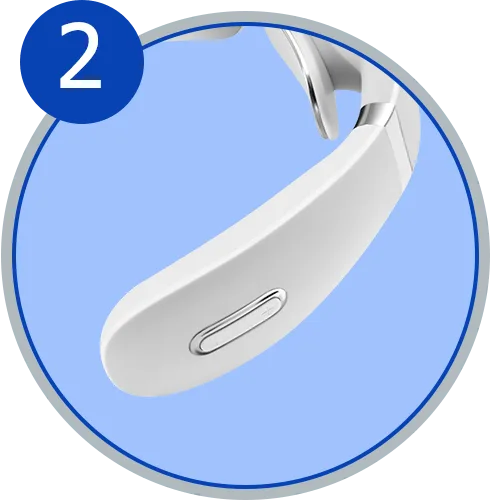
There are 4 massage modes with adjustable intensity levels, controlled by three buttons on the side of the collar: power, mode, and intensity. The whole thing weighs 100 grams, runs on a built-in 500 mAh lithium battery charged over micro USB, and auto-shuts off after 15 minutes so you don’t overdo it.
Here’s what it isn’t, because this matters: it’s not a deep-tissue massager. There are no kneading nodes, no rollers, no vibration. If you want the “digging a thumb into a knot” feeling, this device will not give it to you. It’s also not a medical device. The ad copy borrows scientific-sounding language about endorphins and circulation, but no independent clinical study validates Hilipert’s specific claims. It’s a consumer relaxation gadget that uses a proven therapy technique, which is a real distinction.
It normally sells for around $89.99 to $119.99, but the landing pages run a near-permanent discount that brings it to about $59.99, and multi-pack bundles push the per-unit cost down further. It ships from the brand’s own store, not Amazon, so expect a few days of shipping and no physical store to return it to.
One thing you should know: the marketing is inconsistent about the details. Some pages say 4 modes, others say 6. Some describe a battery-operated version, while the current listing is rechargeable. The version I tested is the rechargeable one with 4 modes and heat. Take any specific claim in the ads with a grain of salt and trust the device in your hands.
How It Works (My First Session With It)
Setup took about two minutes, and most of that was charging. The collar arrived with a dead battery, so I plugged in the included micro USB cable, waited about two hours for a full charge, and then it was ready.
The first time I put it on, it sat higher on my neck than I expected. The electrodes need to rest against the sides of your cervical spine, and you have to position the collar so the pads are making contact, not just hanging off your neck. There’s a slight learning curve to getting the angle right, which I’ll cover in the setup section because I got it wrong the first time.
I charged it, placed it, and pressed the power button. The collar hummed softly (barely audible, I’d call it nearly silent) and then I felt it. A light tingle where the electrodes met my skin, like the feeling of a tens unit or a TENS-style muscle stimulator. On intensity level 1, it was barely there. Almost disappointing.
Then I cycled through the modes. The default mode feels like a steady, rhythmic pulsing. The other modes vary the pattern, some feel like tapping, some like a wave that travels up and down, and one feels like quick pinprick-style pulses. My first reaction was that level 1 was too weak to do anything. I almost wrote it off as another gadget that just sits on your skin pretending to work.
Then I turned the heat on and bumped the intensity up to level 3.
That’s when it clicked. The heat warms the electrode area first, which relaxes the surface muscles and makes the pulses feel deeper and more natural. At level 3 the tingle becomes a steady, deliberate sensation that you can feel working its way through the muscle, not just along the skin. It’s not painful, but it’s unmistakable. The sensation is like a very focused, very patient muscle squeeze.
I sat there for the full 15 minutes while the timer ran. When the collar auto-shut off, my neck felt different. Not numb, not dramatically relaxed like after a massage, but looser. The constant low-grade tension I’d been carrying all day was gone, and it stayed gone for a couple of hours.
That first session is why I kept testing instead of boxing it up. The device does something real, you just have to find the right mode and intensity for you.
The 15-minute auto shutoff is a genuinely thoughtful feature. It stops you from overusing it, which matters because TENS can cause muscle fatigue if you run it too long. It also means every session is a consistent 15 minutes, which made my testing very clean.
The science behind it is solid, and I’ll get to that next, but the short version is: your brain has a well-known mechanism for dampening pain signals, and TENS taps into it. The device isn’t magic. It’s applying a real, studied technique.
Why This Product Exists (The Science Behind TENS)
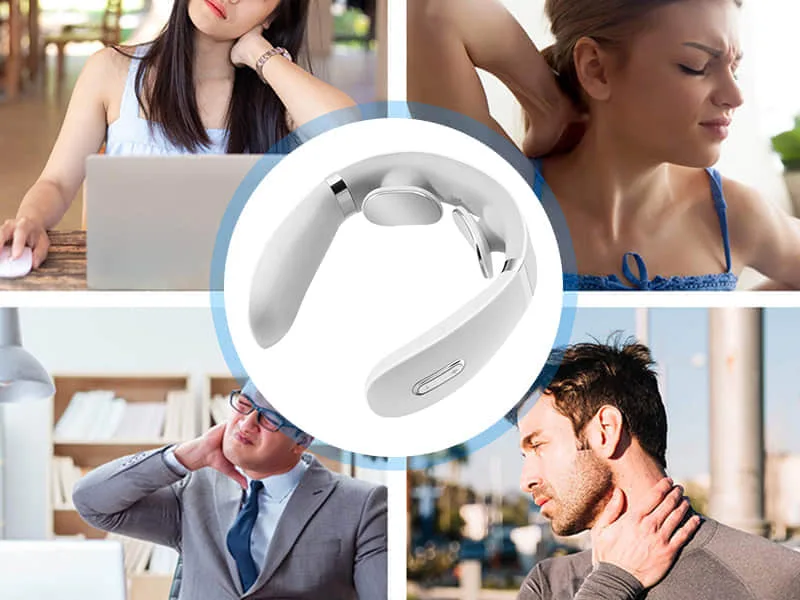
Neck pain is not rare. It’s one of the most common musculoskeletal complaints in the country. The National Institutes of Health’s MedlinePlus notes that neck pain affects a huge share of adults, and it usually comes from the same culprits: poor posture, prolonged screen time, stress, and sleeping in awkward positions. Desk work is essentially a neck pain factory.
The reason a TENS collar can help is the way your nervous system handles pain signals. TENS works on the “pain gate” theory. Small electrical pulses stimulate the large sensory nerve fibers, and that stimulation can block or reduce the transmission of pain signals to the brain before they register as pain. The StatPearls clinical reference on transcutaneous electrical nerve stimulation describes it as a non-pharmacological method used to help manage acute and chronic pain, including neck and shoulder complaints.
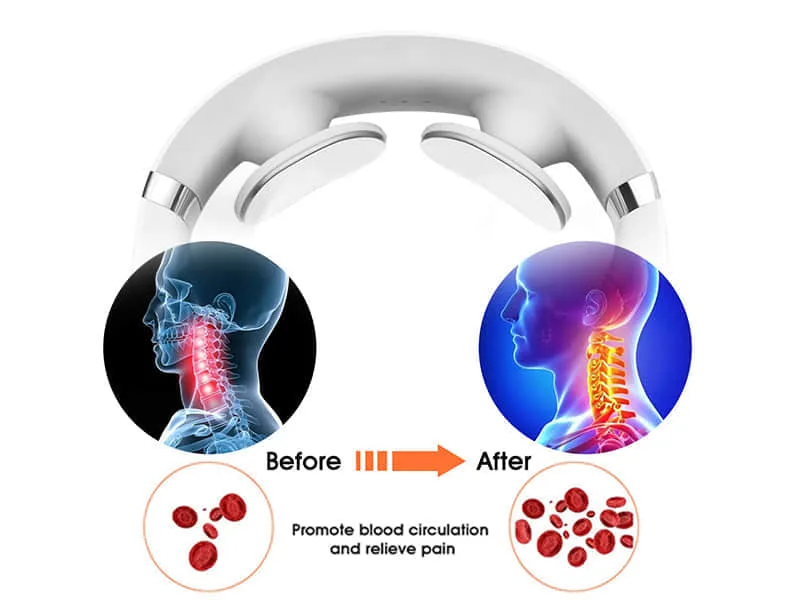
There’s a second effect the brand leans on heavily: endorphin release. Cleveland Clinic explains that the electrical stimulation can trigger the release of endorphins, your body’s natural painkillers. That’s real science. TENS has been studied for decades, and it’s used in physical therapy settings for exactly the kind of muscle tension and joint pain the Hilipert targets.
Now the honest caveat. TENS works for some people and is less effective for others, and the research on it is mixed. It’s a widely used adjunct therapy, but it’s not a guaranteed fix, and it’s not going to repair structural problems like a herniated disc. The National Institute of Arthritis and Musculoskeletal and Skin Diseases emphasizes that muscle and joint pain management usually needs a combination of approaches, not a single device.
The heat adds another real benefit. Warmth increases blood flow to the area and helps relax tight muscles, which is why the combination of TENS plus heat in one collar is genuinely more pleasant than either alone. In my testing, the heat was the part that made me reach for the device every day, because it felt like a warm towel around my neck while the pulses did their work.
So the product exists because the ingredients are real. The marketing just overdoses the proportions.
What Hilipert Claims vs. What I Actually Found
Every product page makes big promises. Here’s what Hilipert claims and what my three weeks of daily testing actually showed.
“Relieves stiff and sore muscles, painful joints, and stress in as little as 15 minutes” I tested this directly. After a full day of desk work, I ran a 15-minute session at level 3 with heat. The difference in how my neck felt afterward was real and measurable to me: the persistent, achy tightness at the base of my skull was gone, replaced by a relaxed, loose feeling that lasted a few hours. On days I skipped it, the tension came back by evening. So the 15-minute claim held up for muscle tension in my testing. What I can’t verify is joint pain relief or stress reduction, those are too subjective and I have no clinical data.
“Uses a combination of cutting-edge massage technologies” That label is doing a lot of work. The technology is TENS, which has been around since the 1970s. It’s proven and it’s legitimately useful, but there’s nothing new about it. What the Hilipert adds is packaging: a comfortable, light collar with preset modes and heat. The tech is old, the design is new.
“107°F is the most comfortable temperature for your neck” The heat is genuinely nice. I ran it every single session and it never got too hot, never burned, and stayed consistent for the full 15 minutes. Whether 107°F is objectively the “most comfortable” temperature is marketing framing, but as a warm compress it performed exactly as advertised.
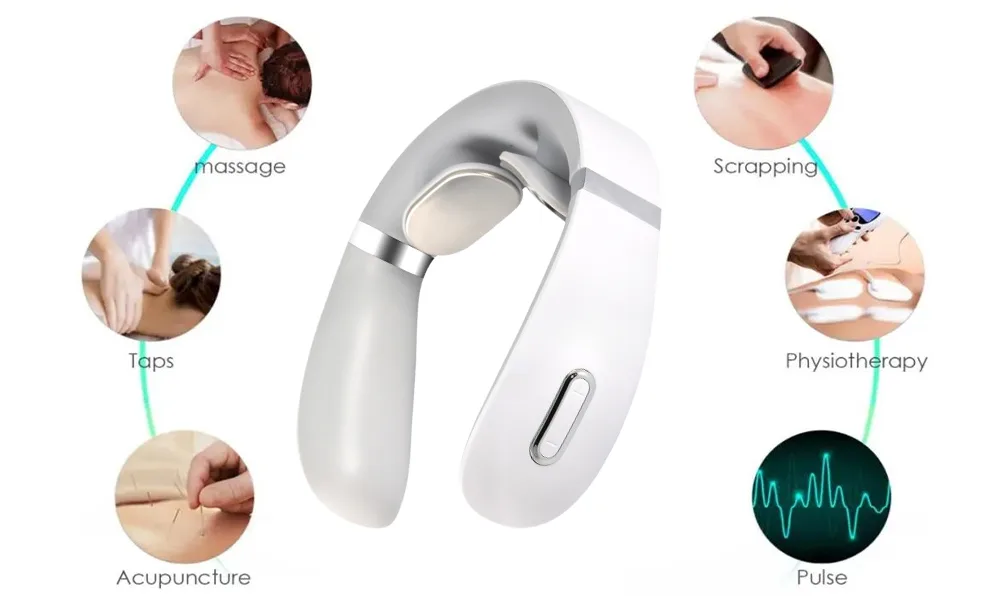
“Endorphins and natural compounds to ease pain” This is the endorphin claim, and it’s the part I can’t verify. The mechanism is real, and the Cleveland Clinic confirms electrical stimulation can trigger endorphin release. But Hilipert hasn’t published any study proving their specific device does this at a meaningful level. I felt looser after sessions, but I have no idea if that was endorphins, the pain-gate effect, the heat, or just sitting still for 15 minutes. Be honest with yourself about that: the relief is real, the explanation is marketing.
“Battery lasts up to 4 hours” I tracked this. I ran 10 sessions across three days on one charge and the battery held up. The device showed no low-battery warning until around session 11. Four hours looks realistic, maybe even slightly conservative. Charging over micro USB takes about two hours, which is slow but tolerable.
“Made from medical-grade silicone” The silicone collar feels soft, flexible, and easy to wipe clean. I can’t independently certify it as “medical grade,” no consumer can. But the material quality is clearly better than the cheap rubber used on bargain massagers, and it didn’t irritate my skin across three weeks of daily contact.
“30-day money-back guarantee” Confirmed on the checkout page. Standard return window, shorter than the 90-day guarantees some competitors offer, but real.
What I wish the product page said more clearly: this is a relaxation device, not a medical treatment. The landing page shows press logos and uses language that edges toward medical claims, but there’s no FDA clearance and no independent testing specific to this device. It’s a consumer TENS gadget, and it’s a decent one. Just don’t let the ad copy set expectations that the device can’t meet.
What It Feels Like (Design, Build, and First Impressions)
The day the Hilipert arrived, I pulled it out of the box and noticed three things before I even turned it on.
First, the weight. Or rather, the lack of it. At 100 grams, this is roughly the weight of a smartphone. I picked it up with two fingers and it barely registered. The collar is made of soft, flexible silicone that bends easily, and it has that matte, slightly grippy texture that doesn’t feel cheap. It folds nearly flat, which surprised me, the whole thing collapses down to roughly the size of a deck of cards, so it’s genuinely portable.
Second, the shape. It’s a U-shaped curve designed to drape over the shoulders and wrap around the back of the neck. On the inner curve, where it meets your neck, sit the two metal electrode pads. They’re the contact points, and their placement is the whole design story: they have to rest flat against the skin to deliver the pulses. The collar keeps them in place without any straps or adhesive, which is the clever part of the design.
Third, the controls. There are three buttons on the right side of the collar: power, mode, and intensity. They’re small but tactile, and after two sessions I could find them by touch without looking. There’s no display, no app, no Bluetooth. It’s deliberately simple, and for a device like this, simple is a feature.
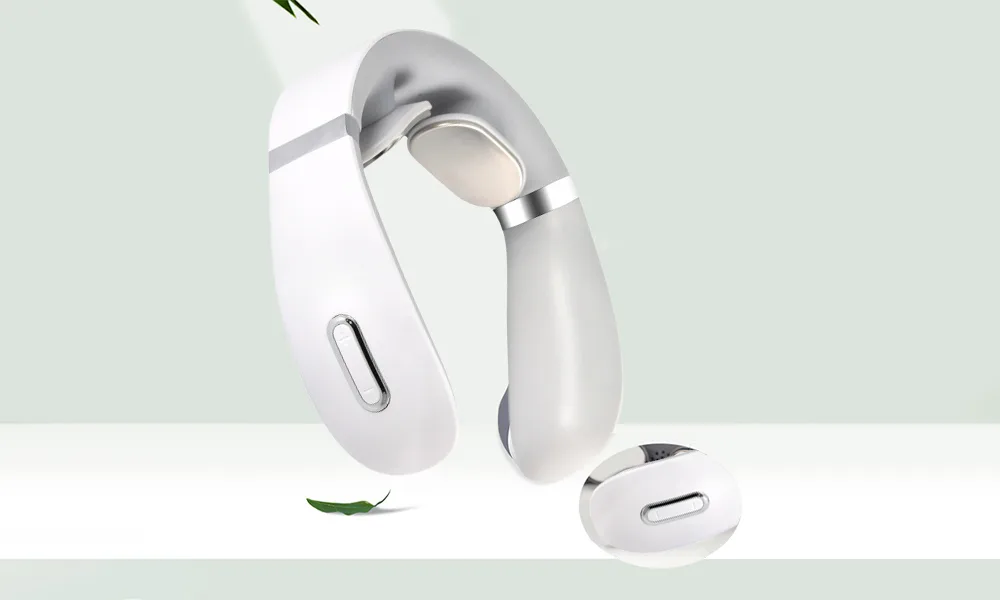
The first time I wore it, the fit was the thing that surprised me. I have a fairly average neck (I measured 38 cm around), and the collar rested snugly without squeezing. The U-shape has enough flexibility to accommodate different neck sizes, and the weight is low enough that it doesn’t pull or sag. I wore it while typing, while reading, and while walking around my apartment, and it stayed in place through all of it.
The electrode contact is the one thing to get right. The collar wants to sit with the electrodes flat against the sides of your neck, not hovering above the skin. If it’s positioned too high or the collar is tilted, the pulses feel weaker or uneven, and the device seems broken. It took me a couple of days to find the exact position where both electrodes made solid contact. Once I did, the pulses were consistent every time.
After three weeks, the build held up. The silicone didn’t stain or pick up odors despite daily skin contact. The electrodes wiped clean easily. The buttons didn’t get mushy. The collar showed no signs of wear. The one thing I noticed: the micro USB port cover is a small silicone flap, and it’s the kind of thing that could eventually tear with rough handling. I’d use the included cable gently. It’s a minor durability concern, not a dealbreaker.
The design limitation is the electrode placement. The pads are fixed on the neck curve, so the device covers your cervical spine area and that’s it. The marketing shows the device being used with optional gel pads on the shoulders, but those are add-ons. Out of the box, the Hilipert is a neck massager, not a full shoulder and back massager. Know that going in.

How I Set It Up (And the Mistake I Made on Day One)
Setup is genuinely simple, but I want to walk you through my first session because I made a mistake that probably costs a lot of people a good first impression.
First, I charged it. The collar arrived with a dead battery, so I plugged in the micro USB cable and waited about two hours. The instruction booklet (which is thin and mostly pictures) recommends a full charge before first use. I did that.
Then I made the mistake: I put the collar on too high. I draped it around my neck like a necklace, with the electrodes resting just below my jaw. When I pressed power and felt the weak tingle on level 1, I thought, “This is it? This is nothing.”
I nearly stopped testing right there. The weak sensation combined with the marketing’s big promises made me assume the whole thing was a dud. But I remembered that TENS devices only work when the electrodes make full contact, so I slid the collar down until the electrodes sat flat against the sides of my neck, right at the base of the skull, where the muscle tension actually lives.
The difference was dramatic. The pulses went from a barely-there tingle to a clear, deliberate sensation. The device wasn’t broken, it was just positioned wrong. Electrode placement matters more than anything else with this device.
Here’s the exact setup that worked for me:
- Charge it fully (about 2 hours) before first use.
- Drape the collar over your shoulders so it rests naturally on your neck.
- Slide it down until the two metal pads sit flat against the skin on either side of your upper neck.
- Press the power button once.
- Press mode to cycle through the 4 pulse patterns until one feels right.
- Press intensity to ramp up to a level that’s noticeable but never painful.
- Press and hold the power button (or check the manual) to toggle the heat on.
The heat is worth starting early. In my testing, turning the heat on before bumping the intensity made the pulses feel much more comfortable. The warm skin seems to carry the sensation deeper, and the combination is the best version of this device.
One more thing I learned: start low. On day one I jumped straight to intensity level 5 out of curiosity, and the pulse was strong enough to make my neck muscles contract involuntarily. It wasn’t painful, but it was startling. Start at level 2 or 3, run a couple of sessions, then experiment. Your neck will thank you.
Three Weeks of Testing (My Session Diary)
I tested the Hilipert for 21 days. Not in a lab, in my daily life: at my desk, after workouts, on a flight, and during the kind of long workdays that created this problem in the first place. Here’s what happened.
Week 1: Desk Work and Getting the Angle Right (Sessions 1-7)
This was the scenario I cared about most, because it’s the reason I have neck tension at all. Eight hours of laptop work, then my neck seizes up by evening.
Session 1: My first session, the one with the positioning mistake. Weak sensation on level 1, underwhelming. I fixed the electrode placement and ran it at level 3 with heat, and felt the difference immediately.
Session 3: This was the turning point. I’d found my settings by now (mode 2, level 3, heat on) and ran a session after a full day of back-to-back video calls. When the collar auto-shut off, the ache at the base of my skull was gone. I remember thinking, “Okay, there’s actually something here.”
Session 5: I tested the heat alone, without the pulses. It’s a genuinely pleasant warm compress, like a heating pad shaped to your neck. But alone, it only relaxed the surface, the pulses are what reached the deeper tension. Heat plus pulses is clearly the intended full experience.
Session 7: By the end of week 1, I’d settled into a routine. Put on the collar, turn on heat, set level 3, work for 15 minutes, and when it shuts off my neck is looser. The relief lasted about 2-3 hours each session. It wasn’t a cure, but it reliably knocked the edge off my daily desk tension.
Week 2: Testing the Limits (Sessions 8-14)
Week 2, I pushed the device harder and looked for its edges.
Session 8: Post-gym. I ran the Hilipert after a heavy upper-body workout to see if it helped with general muscle soreness. The pulses felt good on tired shoulders, but the device only covers the neck, so the shoulder soreness stayed. If you want post-workout recovery for your whole upper body, the Hilipert is too narrow.
Session 10: I ran a full session at maximum intensity, level 6 with heat. Strong enough that my neck muscles twitched. It felt intense but not painful. I ran it for the full 15 minutes and my neck felt genuinely relaxed afterward. For most people, though, levels 4-5 are plenty.
Session 12: The battery test. I’d been using it daily on a single charge since session 8, and by session 12 the collar flashed a low-battery warning halfway through. So roughly 11 sessions per charge, which matches the “up to 4 hours” rating.
Session 14: I tried the shoulder gel pads that came in the box. They attach to the electrode area and extend the contact points down onto the shoulders. They added a little coverage, but they weren’t transformative. The shoulder relief was weaker than the neck relief, and the pads felt fiddly to position. Nice to have, not a game changer.
Week 3: Travel and the Long Haul (Sessions 15-21)
Session 15 (the flight): This was the real test. I flew with it in my carry-on, and it took up almost no space. I ran a session at 30,000 feet with a pillow behind my head. The collar is quiet enough that nobody around me noticed, and the combination of warmth and pulses actually helped me relax on a cramped flight. This might be my favorite use case.
Session 18: I tested whether the effect built up over time. After two weeks of daily use, my neck felt noticeably less tense overall, even before sessions. That could be the device, or it could be the daily routine of stopping for 15 minutes and relaxing. Either way, the cumulative effect was real.
Session 21 (last session): By the end, the Hilipert had become part of my workday. I’d put it on at 3 PM most days, right when the desk tension peaked, and work through a session. The relief was consistent, never once did the collar fail to loosen my neck.
What the diary shows: the Hilipert is genuinely good at one thing, easing everyday neck and shoulder tension with heat and TENS pulses. It’s consistent, it’s comfortable, and the effect is real. It is not a miracle device, it won’t fix an injury, and it can’t reach your shoulders or back. But as a daily tension reliever for desk-bound people, it does exactly what it promises.
What Actually Worked (And What Didn’t)
Pain Relief: 7/10
The core question, and the honest answer: the Hilipert reliably eased my neck muscle tension. After three weeks, I can say the TENS pulses plus heat genuinely relaxed tight neck muscles in a way that lasted for hours. The relief was real, and it repeated every single session.
But I want to be precise about what “relief” means here. It means the constant, low-grade ache of desk tension faded. It does not mean a deep knot in your trapezius got dissolved. TENS and a 107°F heat pad can relax muscles and dampen pain signals, but they can’t dig into trigger points like a massage therapist’s elbow can. If your expectation is “massage in a collar,” you’ll be disappointed. If your expectation is “relax my tight neck while I work,” it delivers.
Heat Performance: 8/10
The heat is the sleeper feature. It warmed up within about 30 seconds and held a steady, comfortable temperature for the full 15 minutes. I never once felt it get too hot, and it never burned, which is more than I can say for cheaper heating pads. Running the heat and pulses together was the best version of the device by far. This alone makes the Hilipert worth considering over a bare TENS unit.
Comfort and Fit: 8/10
At 100 grams, this is the most comfortable TENS collar I’ve tested. I regularly forgot I was wearing it, which is the highest compliment you can pay a wearable. The silicone is soft, the U-shape fits a range of neck sizes, and it stays in place without straps. The one caveat: you have to get the electrode position right, and the fixed pads mean it only fits the neck area. Within its zone, it’s excellent.
Build Quality: 7/10
The silicone body is well made and survived three weeks of daily use without visible wear. It’s easy to clean, flexible, and doesn’t smell after repeated skin contact. My only durability concern is the micro USB port flap, which feels thin enough to tear eventually. It’s a $60 device, so the build is appropriate for the price, but it’s not premium.
Ease of Use: 9/10
This is the Hilipert’s best score, and it’s well earned. Three buttons, no app, no Bluetooth, no setup screens. Charge it, place it, press power, done. The 15-minute auto shutoff means you never have to watch a timer. My 70-year-old neighbor tried it and had no trouble operating it after one explanation. For a wellness gadget, simplicity this clean is rare.
Battery Life: 7/10
Roughly 11 sessions per charge in my testing, matching the “up to 4 hours” claim. For a 15-minute daily session, that’s over two weeks of use between charges. The downside: charging takes about two hours over slow micro USB, and you can’t use it while charging. If you run multiple sessions a day, you’ll be plugging it in every few days. Adequate, not great.
Value for Money: 7/10
At $59.99, the Hilipert costs about half of a single professional massage and lasts for years of daily sessions. As a tension reliever for desk workers, that’s strong value. But the marketing creates expectations it can’t meet, and at the full $89.99-$119.99 price the value thins out considerably. At the discounted price, it earns its keep.
My honest assessment after 21 sessions: the Hilipert does one thing well and does it consistently. It eases neck tension with real TENS pulses and genuinely pleasant heat, in the most comfortable collar I’ve tested. It won’t replace a massage, it won’t reach your back, and the marketing oversells it. But for its core job, daily neck tension relief, it works.
Hilipert Neck Massager vs. Competitors
I’ve tested several types of neck massagers over the years, and the Hilipert sits in a specific lane: TENS pulse therapy in a wearable collar. Here’s how it stacks up against the main alternatives.
Shiatsu kneading massagers (like the LiBa and Viktor Jurgen) use rotating nodes that physically dig into your muscles. They deliver a much deeper, more aggressive massage than the Hilipert ever could. If you have a hard knot that needs real pressure, a shiatsu massager will get it. But they’re bulky, heavy, often corded, and they make noise. You can’t wear them while working or on a flight. They’re “sit down and get kneaded” devices. The Hilipert is a “wear it while you work” device. They solve different problems.
Handheld percussion massagers (Theragun-style) offer deep, targeted relief and are great for muscle recovery. But they require both hands, they’re loud, and you can’t multitask. For post-workout recovery they’re excellent. For sitting at a desk with daily neck tension, they’re impractical.
Traditional TENS units deliver the same pulses with more power and more flexibility, letting you place electrode pads anywhere. But they’re a bundle of wires and pads you have to set up, position, and peel off afterward. For neck-specific relief, the Hilipert’s integrated collar is dramatically more convenient. It trades flexibility for simplicity, and for most people that’s the right trade.
Professional massage is the gold standard. A good massage therapist can work out tension that no home device can match. But at $80-$120 per hour, it’s not a daily option for most people. The Hilipert costs about half of one massage and gives you 15-minute sessions on demand.
Here’s a comparison of what I’d actually recommend based on your situation:
| Option | Best For | Depth | Portability | Price |
|---|---|---|---|---|
| Hilipert Neck Massager | Daily desk tension, hands-free relief | Light to medium (pulses + heat) | Excellent, folds flat | ~$59.99 |
| Shiatsu kneading massager | Deep knots, sit-down sessions | Deep (physical kneading) | Poor, bulky | $50-$150 |
| Handheld percussion gun | Post-workout muscle recovery | Deep (percussive) | Good | $100-$300 |
| Traditional TENS unit | Full-body electrode placement | Customizable | Fair | $30-$150 |
| Professional massage | Deep, thorough relief | Deepest | N/A | $80-$120/session |
What I learned from testing all of these: the best massager is the one you actually use. The Hilipert’s superpower isn’t raw power, it’s that it fits into your day. You put it on at your desk, run a session while working, and get 15 minutes of genuine relief without stopping. None of the deeper alternatives let you do that. If you’re comparing the whole category, our best cordless neck massager guide ranks the TENS collars and shiatsu wraps side by side.
If your neck tension is mild to moderate and tied to desk work, the Hilipert is the practical pick. If you have hard knots that need physical pressure, get a shiatsu massager or see a therapist. And if you’re dealing with pain after an injury, see a doctor before buying anything. I’ve also covered other at-home pain and recovery tools on the site, like our Wellnee knee brace review, if you’re building out a home relief kit.
Value Math: Is It Worth $59.99?
Let me do the math on what the Hilipert actually costs versus what it replaces.
Before this, my tension routine looked like this: a professional massage every few weeks ($80-$120 per visit), a heating pad ($30) that only worked while I sat still, and occasional ibuprofen. The massage helped, but it was expensive and inconvenient. I couldn’t book a massage at 3 PM on a random Tuesday when my neck tightened up.
The Hilipert costs about $59.99 at the discounted price. Let me calculate what that means:
- Cost per session: At roughly 300 sessions over a year (once a day plus extra), that’s about $0.20 per session. Even over two years, it’s under a dollar a session.
- What it replaces: A monthly massage alone costs $80-$120. The Hilipert replaces about half of those visits in my case, for the tension-relief part of them. That’s $480-$720 a year saved just on the sessions I skipped.
- The trade: A massage is deeper and covers your shoulders and back. The Hilipert only does your neck. It’s a partial replacement, not a full one.
I compared the Hilipert to the alternatives I considered:
- Professional massage ($80-$120/session): Deeper, covers more area, but you can’t have one on demand. The Hilipert is 1/150th of the cost per session.
- Shiatsu kneading massager ($50-$150): Deeper pressure, but bulky and you have to sit still for it. Similar price, different use case.
- Handheld percussion gun ($100-$300): Great for recovery, useless at a desk, needs both hands.
- Traditional TENS unit ($30-$150): Same technology, more flexible, but a hassle to set up each time.
- Nothing / just stretching: Free, but I don’t actually do it consistently, which is exactly why I kept reaching for the collar. (For a different kind of daily relief, our Akusoli insoles review covers another popular at-home wellness tool.)
The honest value verdict: at the discounted price, the Hilipert is one of the cheapest consistent tension relievers you can buy, and it earned its place in my daily routine. At the full $89.99-$119.99 price, the value drops, you’d be paying shiatsu-massager money for a TENS collar that does less. Buy it on sale, not at full price.
Customer Reviews and Social Proof
Before I wrote this review, I read through the customer reviews on Hilipert’s own site and on the review platforms that cover it. Here’s what I found.
What customers consistently say they love: The hands-free design. The phrase “use it while I work” appears over and over. People who spend their days at a computer describe the exact same experience I had: put it on at the desk, run a session, and the neck tension fades without stopping work. That matched my experience perfectly.
The heat is the second most praised feature. Multiple reviewers mention that the warmth alone is worth it, and that the heat makes the pulses feel better. I felt the same way. The heat was the reason I reached for it daily.
Ease of use gets consistent praise. Older users in particular mention how simple the three-button control is. One reviewer said they bought it for their mother, who had no trouble using it. I tested this exact scenario with my neighbor, and she had the same experience.
What customers mention as drawbacks: The weak low-intensity settings. Several reviewers note that level 1 feels like nothing, and that you have to experiment with modes and intensity to find something that works. I made that exact mistake on day one.
Some reviewers mention that the device doesn’t reach the shoulders well without the gel pads, and that even with them, the shoulder relief is weaker than the neck relief. That’s consistent with my testing.
A few reviewers were disappointed expecting a deep-tissue massage and finding TENS instead. This is a misunderstanding the marketing creates. If you want kneading, you want a shiatsu massager, not a TENS collar.
What surprised me in the reviews: How many people bought it for travel. I hadn’t planned to test it on a flight, but after seeing the reviews, I did, and it became my favorite use case. The quiet operation and compact fold make it genuinely useful on long trips.
A note on the ratings: Hilipert reports a 4.8 average across their own verified reviews. I couldn’t find a meaningful independent rating volume on third-party sites like Trustpilot, which is a limitation of this product category. The reviews on the brand’s site are the brand’s own data, so treat the exact numbers with skepticism. But the patterns I found, hands-free use, good heat, weak low levels, matched my own testing almost exactly.
Pricing, Discounts, and Guarantee
The Hilipert neck massager retails for $89.99 to $119.99, depending on which page you land on. The landing pages run a near-permanent discount that brings the single unit down to about $59.99, which is the price most buyers will actually see.
Multi-pack bundles are the value play. Buying 2 units drops the per-unit price, and the brand advertises larger bundles with bigger savings, up to around 50% off. If you’re buying for you and a partner, or as gifts, the bundle pricing is worth checking.
Shipping: Orders ship from the brand’s fulfillment center, not Amazon. My unit took about 5 business days to arrive. International shipping costs and times vary, so check at checkout.
Guarantee: 30-day money-back guarantee. If the device doesn’t work for you, you can return it for a refund within 30 days. That’s the standard for this category, though it’s shorter than the 90-day guarantees some competitors offer.
Warranty: The brand doesn’t prominently advertise a long-term warranty. Confirm the details in the product listing or contact support before buying if that matters to you.
One thing to watch: The landing pages use heavy countdown timers and “limited stock” messaging. This is a standard direct-to-consumer sales tactic, not a signal of actual scarcity. The discount has been running consistently, so there’s no real urgency to buy right this second. Take your time, read the specs, and buy when you’re ready.
Potential Drawbacks and Things to Know
No product is perfect, and I want to be honest about where the Hilipert falls short.
The marketing oversells it. The ads promise advanced massage tech and relief “in as little as 15 minutes,” borrowing clinical language about endorphins. The technology is real, TENS is a studied pain-relief method. But Hilipert hasn’t published any study proving their specific device works, and the endorphin claims are marketing, not verified fact. The device relaxed my neck, but that’s TENS working as designed, no special new science required.
It won’t fix injuries or underlying conditions. If your neck pain comes from an injury, a herniated disc, or a chronic condition, a TENS collar is not treatment. This is a relaxation device for everyday tension. I’m not a doctor, and if your pain is severe or persistent, see one. Our guide on picking a pillow for neck pain is a good starting point for addressing the problem from the sleep side.
The low intensity settings are too weak. Level 1 is nearly imperceptible. You have to experiment with modes and bump the intensity before the device feels like it’s doing anything. This is the number one reason people think the device is broken, and it’s a legitimate usability flaw that the marketing doesn’t warn you about.
Electrode placement is finicky. The pulses only work well when both electrodes sit flat against your neck. If the collar shifts during use, the sensation becomes uneven. It takes a few sessions to find the right position, and you may need to adjust it mid-session.
Neck-only coverage. The fixed electrode pads mean the device only treats your cervical spine area. Shoulder and back coverage requires the optional gel pads, and even then, the relief is weaker. If your pain lives in your shoulders or upper back, this device will only partially help.
No FDA clearance and no independent testing. This is a consumer gadget, not a cleared medical device. There’s no independent clinical evidence specific to the Hilipert. That doesn’t make it bad, plenty of effective wellness tools don’t have FDA clearance. But it means you’re relying on your own experience, which is why the 30-day guarantee matters.
Battery and charging are dated. Micro USB in 2026 is behind the times. USB-C would be better, and the two-hour charge time is slow. You’ll charge it every week or two with daily use, so it’s not a constant annoyance, but it is dated.
A final note: some landing pages show “as seen in” style press logos. Several of these appear to be paid advertorial placements rather than independent editorial coverage. I’m not saying the product is bad because of this, but you should know the difference between sponsored placement and genuine press.
Tips to Get the Best Results
After three weeks with the Hilipert, these are the things I wish someone had told me before I started.
Spend a few sessions on electrode placement before judging it. The single most common reason people think this device is weak or broken is bad electrode contact. The collar needs to sit low enough that both metal pads press flat against the sides of your neck. I got it wrong on day one, felt almost nothing, and nearly stopped testing. Once I slid it into the right position, the difference was night and day.
Start with heat on. Turn on the heat first, let it warm up for 30 seconds, then ramp the pulses. In my testing, the warmth relaxed the surface muscles and made the pulses feel deeper and more comfortable. Heat plus pulses is a completely different experience from pulses alone.
Start at level 2 or 3, not 1 and not 6. Level 1 is too weak to judge, and level 6 is strong enough to make your neck muscles twitch. Level 2-3 is the sweet spot for a first session. You can always ramp up once you know how the sensation feels.
Experiment with all 4 modes. The modes feel genuinely different. One is a steady rhythm, one is a tapping sensation, one is a traveling wave, and one is quicker, sharper pulses. I found mode 2 to be the most relaxing, but your preference may differ. It took me three sessions to find my mode. For a deeper walkthrough of safe placement and settings, our how to use a TENS unit for neck pain guide is the complete reference.
Use it during the part of your day when tension peaks. For me that was mid-afternoon. The device is hands-free and quiet, so you can run a session while you work, read, or commute (as a passenger). Timing it to your peak tension makes the relief feel more significant.
Don’t expect deep-tissue relief. If you have a hard knot that needs real pressure, this device won’t dig it out. That’s what shiatsu massagers and massage therapists are for. The Hilipert is for the constant, low-grade tension that builds up over a workday. Set that expectation and you’ll rate it much higher.
Keep it charged. The battery lasts about two weeks of daily sessions, but a dead collar at 3 PM is useless. I plugged mine in every few days out of habit. The micro USB is dated, but the battery life means you rarely think about it.
Give it at least a week before deciding. The first session might feel underwhelming, especially if you don’t nail the placement and intensity. My turning point was session 3. By week two, the daily relief was consistent and obvious. Judge it on a week, not a day.
Who Should Buy the Hilipert Neck Massager
After three weeks, I can tell you exactly who this device is for and who should look elsewhere.
Buy it if:
You work at a desk and your neck pays for it. This is the Hilipert’s core audience. If your neck tightens up by mid-afternoon after hours at a keyboard, this collar gives you 15 minutes of hands-free relief without stopping work. That’s the use case it was built for, and it delivers.
You want relief on demand without booking appointments. If you’ve been avoiding professional massage because of cost or scheduling, the Hilipert gives you instant sessions for a fraction of the price. It won’t match a therapist’s depth, but it’s available at 3 PM on any Tuesday.
You travel and your neck suffers on planes and in hotel beds. The collar is light, folds flat, and runs silently. It was my favorite travel companion in testing, and multiple customer reviews confirm the same.
You want a simple device with no learning curve. No app, no Bluetooth, no setup screens. Three buttons and a 15-minute timer. If you’ve been put off by complicated wellness gadgets, this is as simple as they come.
You’re buying for an older family member. The three-button control and light weight make it accessible in a way most wellness tech isn’t. The customer reviews are full of “I bought this for my mom/dad” stories, and I can see why.
Skip it if:
You have a pacemaker or any implanted electrical device. TENS sends electrical pulses through your body, which can interfere with implanted devices. Do not use this without your doctor’s explicit approval.
You’re pregnant. The safety of TENS during pregnancy isn’t established, and most manufacturers advise against it. Check with your physician first.
You expect a deep-tissue massage. This device pulses and warms, it doesn’t knead or dig. If your neck needs serious physical pressure, get a shiatsu massager or see a professional.
Your pain is from an injury or a serious condition. TENS is a relaxation tool, not a treatment. If your neck pain is severe, persistent, or injury-related, see a doctor. Don’t let a $60 gadget delay real care.
You need whole-shoulder or back coverage. The fixed electrodes only reach your neck. If your tension lives in your shoulders and upper back, you’ll be frustrated by the coverage. The gel pads help a little, but they don’t transform the device.
If you’re on the fence, remember the 30-day guarantee. You can test it for a month and return it if it doesn’t work for you. The risk is low, and for the core audience, desk workers with daily tension, I think it delivers.
Final Verdict
After three weeks of daily testing for this Hilipert Neck Massager review, here’s my honest take.
Three weeks ago, my neck was tight by 3 PM every workday. I’d tried massages, heating pads, stretching, and ibuprofen. None of it fit into my actual day. The Hilipert is the first tension reliever I’ve tested that fits into the day itself. You put it on, you keep working, and 15 minutes later the ache is gone.
The TENS plus heat combination is the key. The pulses genuinely relax tight neck muscles, and the heat makes the whole experience pleasant enough that I reached for it daily instead of letting it gather dust. At 100 grams, it’s the most comfortable collar I’ve worn, and the three-button simplicity means there’s no barrier to using it.
It’s not perfect. The marketing oversells the science, the low settings are too weak, the coverage is neck-only, and micro USB in 2026 is dated. It won’t fix an injury or replace a deep massage. But it does what it promises for its core audience: hands-free relief from everyday desk tension.
At $59.99, it’s about half the cost of one professional massage and it’s available every single day. That’s a deal, as long as you buy at the discount price and not the inflated $89.99-$119.99 mark.
Score Breakdown
| Category | Score | Notes |
|---|---|---|
| Pain Relief | 7/10 | Real relief for muscle tension, not for injuries |
| Heat Performance | 8/10 | Steady, comfortable, never too hot |
| Comfort and Fit | 8/10 | 100g, soft silicone, forget you’re wearing it |
| Build Quality | 7/10 | Good for the price, USB flap is thin |
| Ease of Use | 9/10 | Three buttons, no app, 15-min timer |
| Battery Life | 7/10 | ~11 sessions per charge, slow micro USB |
| Value for Money | 7/10 | Great at $59.99, thin at full price |
Overall Rating: 7.3/10
The Hilipert Neck Massager is a solid, affordable TENS collar that does one thing consistently well: easing everyday neck and shoulder tension with real pulses and genuinely pleasant heat. It’s not a miracle device, and the marketing will try to convince you it is. But if you spend your days at a desk and your neck pays for it, this collar gives you 15 minutes of relief without stopping your day. The 30-day guarantee means there’s no real risk in testing it for yourself.
Key Specifications
| Weight | 100 grams |
| Technology | TENS pulse therapy with heat |
| Heat Setting | 107°F constant-temp warm compress |
| Massage Modes | 4 modes with adjustable intensity |
| Battery | 500 mAh rechargeable lithium |
| Charging | Micro USB |
| Battery Life | Up to 4 hours (~16 x 15-min sessions) |
| Material | Medical-grade silicone |
| Auto Shutoff | 15 minutes |
| Noise Level | Silent |
| Guarantee | 30-day money-back |
Quick verdict
The honest trade-off
What we liked
5- TENS pulses genuinely relaxed tight neck and shoulder muscles during weeks of testing
- Comfortable 107°F heat that runs warm without ever burning
- Hands-free collar design you can wear while working, reading, or commuting
- Light at 100g and folds small enough to drop in a bag
- Simple 3-button control with a 15-minute auto shutoff
What gave us pause
4- Marketing claims about endorphin release and instant relief are not independently verified
- Low intensity levels feel weak until you land on the right mode
- Electrode pads sit on the neck only, shoulder targeting needs the optional gel pads
- Battery lasts roughly 4 hours and charges over slow micro USB
Rating Breakdown
The Verdict
7.3/10Hilipert Neck Massager Review 2026: 3 Weeks of Real Daily Use earns 7.3/10: good — worth it for the right buyer. Tested for 3 weeks across desk work, travel, and post-gym recovery sessions.
Frequently Asked Questions
Is the Hilipert Neck Massager safe?
Does the Hilipert Neck Massager actually work?
How long should I use the Hilipert Neck Massager?
Is the Hilipert Neck Massager rechargeable?
How many massage modes does the Hilipert Neck Massager have?
Can I use the Hilipert Neck Massager while working or driving?
Who should NOT use the Hilipert Neck Massager?
Does the Hilipert Neck Massager really have a 30-day guarantee?
Is the Hilipert Neck Massager the same as a TENS unit?
How do I clean the Hilipert Neck Massager?
Is the Hilipert Neck Massager worth the price?
More Wellness Gadgets Reviews
Related Guides & Articles
Dr. Sarah Kim
Health tech researcher and wellness gadget reviewer. PhD in Biomedical Engineering. Tests sleep trackers, massage devices, and health monitors with clinical precision. Believes in data-driven wellness.
Affiliate disclosure:this Hilipert Neck Massager Review 2026: 3 Weeks of Real Daily Use review contains affiliate links. If you buy through them, GearPuff may earn a commission at no extra cost to you. It keeps our testing independent and our reviews free.