
Very good — recommended with minor caveats
- Sublingual spray with nothing to swallow, the whole routine takes about ten seconds
- The supplement facts panel is printed on the bottle and published on the site
- 90-day money-back guarantee that accepts empty bottles
- One-time payment with no subscription, and free shipping on the 3 and 6 bottle orders
- Both blends together come to 3,000 nanograms a day, far below amounts used in supplement research
- No per-ingredient amounts printed, so nothing on the label can be matched to a study
- One bottle is $179 plus shipping while the same product runs $49 a bottle in the 6-pack
- Label Clarity:
- Formula and Dose:
- Ease of Use:
- Guarantee and Support:
- Value for Money:
- Evidence Base:
In This Article
- The Sound I Hear When the House Goes Quiet
- TL;DR: My NeuroQuiet Review Verdict
- What Is NeuroQuiet?
- NeuroQuiet vs the Alternatives, at a Glance
- How the Spray Is Supposed to Work
- Why Your Ears Ring in the First Place
- What NeuroQuiet Claims vs What I Actually Found
- The Bottle, the Spray and the Taste
- How to Take It (And the Mistake I Made on Night One)
- 30 Days of Six Sprays, My Testing Diary
- What Worked, What Didn’t, Scored
- NeuroQuiet vs Zeneara vs SonoVive
- Value Math: Is $179 for 30 ml Justified?
- What 2,000 Plus Buyer Reviews Actually Say
- Pricing, Bonuses and the 90-Day Refund
- Six Things to Know Before You Order
- Side Effects, Safety and Medication Questions
- Tips That Made the 30 Days Useful
- Who Should Buy NeuroQuiet, and Who Should Skip It
- Final Verdict
- Score Breakdown
The Sound I Hear When the House Goes Quiet
At about 11:40 PM, once the dishwasher stops and the street goes still, a thin high tone sits just behind my right ear. I have heard it for roughly two years. Some nights it behaves. Some nights it is the loudest object in the room.
I am not going to tell you a supplement fixed it, because that is not what happened. What happened is that a blue spray bottle kept showing up in my feeds, the copy promised to silence the noise, and the write-ups I read beforehand all skated past what was actually printed on the label. So I ordered one, ran the six-spray routine for 30 days, and kept notes on a scale from 1 to 10 every Sunday night.
This is that write-up. The number that matters most in this NeuroQuiet review is 0.003 milligrams, which is the total of both blends printed on the bottle for a full day’s six sprays. Hold onto it, because everything else about this product is either better than the category average or worse than the advertising suggests, and never both at the same time.
I test wellness gadgets for a living and I keep the full list on our wellness gadgets hub. NeuroQuiet is the first hearing product I have put on a 30-day clock, and it is the first one where reading the supplement facts panel changed my whole verdict before I had swallowed anything.
My short verdict, since skimmers deserve it up front: this is a genuinely convenient spray with a published label, a strong refund and a price that only makes sense in the bundle. Whether it will quiet your ringing is something nobody can promise you, including the company.
TL;DR: My NeuroQuiet Review Verdict
If you have thirty seconds, here is the whole thing:
- Does it work? Nobody can say. There is no published trial of this formula, and no supplement has been shown to lower ringing in the ears. What I can report is that my own ringing followed my sleep and caffeine, not my spraying schedule.
- What is it? A 30 ml sublingual spray. Six sprays a day, two in the morning and four at bedtime, held under the tongue for 20 seconds. 30 servings a bottle.
- What is in it? Two blends. A Growth Factor Complex at 2,000 ng and an HGA Blend at 1,000 ng. Together, 3 micrograms a day.
- The catch: 0.003 milligrams a day is a very small number, and no per-ingredient amounts are printed, so there is nothing on that label to compare against any study.
- The good part: nothing to swallow, a label that is actually published, a one-time payment, and 90 days to send back empty bottles for a refund.
- Best for: people who hate capsules, want a twice-daily ritual with a hard stop date, and will judge the thing on a calendar rather than on a feeling.
- Not for: anyone expecting a treatment, anyone with sudden hearing loss, one-sided ringing or a pulsing sound, and anyone buying the $179 single bottle.
- Rating: 7.7/10. Strong format, published label, a 90-day refund that removes most of the risk at the bundle price, and a dose nobody has tested. See the current bundle price.

What Is NeuroQuiet?
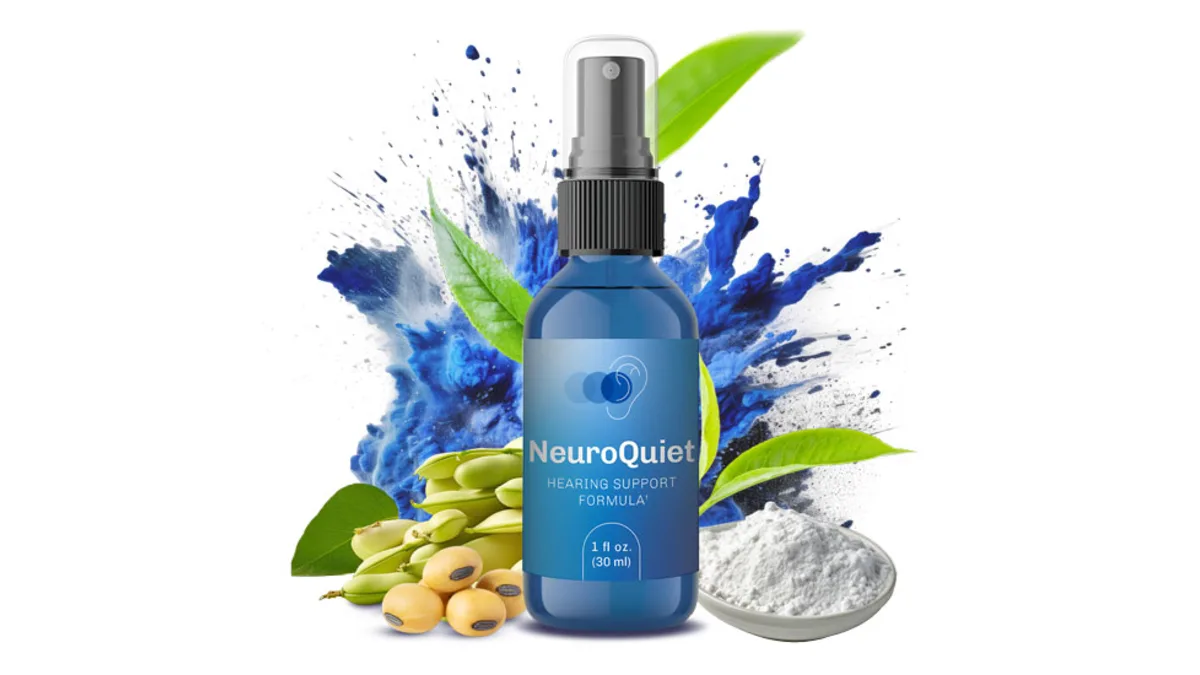
NeuroQuiet is a 30 ml bottle of liquid you spray under your tongue. One bottle is 1 fl oz and the label counts 30 servings, which lines up with the six-spray daily dose giving you a month of use. It is sold as hearing support, aimed squarely at people who hear ringing, hissing or buzzing when it gets quiet.
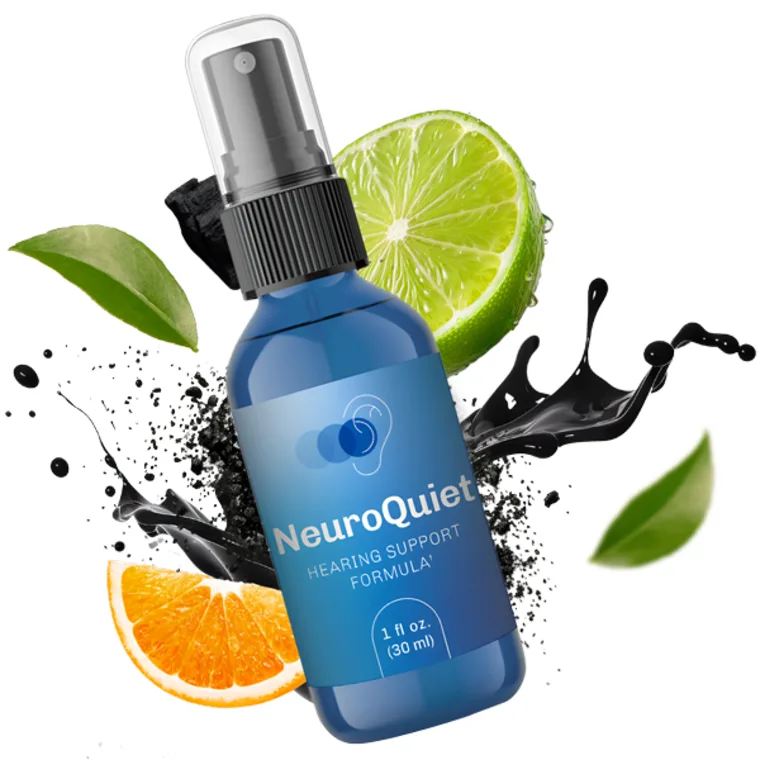
The company behind it is NeuroQuiet Research, and the bottle lists a distributor address in Aurora, Colorado. The creator named on the sales page is Christian Toller, who writes about years of work on the formula. Checkout runs through BuyGoods as a one-time payment, so you are not signing up for anything recurring. Shipping is quoted at 5 to 10 days domestically.
One identity point, because it confused me for a good twenty minutes. There is an older oral supplement under a nearly identical name that sells as capsules with ginkgo biloba, zinc, magnesium and vitamin B12. That is a different product from a different seller. This is the spray, with alpha-GPC, GABA, L-dopa bean, moomiyo, L-Arginine and L-tyrosine on the panel. If you are comparing labels, make sure they are the same bottle.
That distinction carries a specific detail worth flagging: there is no ginkgo anywhere on this bottle. Ginkgo biloba is the single ingredient most people associate with ear ringing supplements, and it is the one the capsule version leans on. NeuroQuiet went a different direction with a neuro-transmitter and amino-acid blend instead. Whether that is a defensible scientific choice or simply a different way to fill a bottle, I cannot tell you from the outside, but it does mean you are not buying a more concentrated version of the thing you have already seen discussed elsewhere. You are buying a separate formula with a separate label.
The claims are the usual category claims: calmer mind, easier ear comfort, better mood, more energy, less noise. The sales page also runs a head-to-head graphic against generic competitors, with a 90-day money-back line under every purchase option. The list price for a single bottle is $179, and the current bundle pricing sits far below that, which is the first thing worth understanding before you click anything.
NeuroQuiet vs the Alternatives, at a Glance
Three products come up in every search for this problem, and they are decided by three things: what the label shows, what you actually pay, and how long you have to change your mind.
| Product | Form and daily dose | What the label discloses | Price a bottle | Refund window | Best for |
|---|---|---|---|---|---|
| NeuroQuiet | Sublingual spray, 6 sprays a day | Two blend totals only, 2,000 ng and 1,000 ng | $179 alone, $49 in the 6-pack | 90 days, empty bottles accepted | You refuse to swallow capsules and want a ten-second ritual |
| Zeneara | Capsules | Proprietary blend, no per-ingredient amounts | About $39 to $59 in bundles | 365 days | You want the longest possible window to decide |
| SonoVive | Capsules | Milligram amounts printed per active | About $69 | 60 days | You want to read real doses on the panel |
| Hearing test + sound therapy | Clinical, ongoing | Published protocols and outcomes | Test cost varies, therapy apps often free or cheap | N/A | You want the route with actual published evidence |
I did not run three separate 30-day tests. What I did was price every checkout, read every label I could find, and sit with the refund terms of each. The refund column is the one I would weight heaviest, because with an unproven product the guarantee is the only thing you control.
NeuroQuiet’s angle is format. Six sprays take about ten seconds and there is nothing to swallow, which matters more than it sounds to people who have spent years choking down tablets. Its weakness is the same label that gives it credit for openness: the panel tells you the blend totals and stops there, so you can see the number without being able to grade it.
How the Spray Is Supposed to Work
The idea behind a sublingual spray is absorption through the tissue under your tongue, which skips part of the digestive route. Blood vessels sit just under the mucosa there, so a dissolved compound can enter circulation without first surviving stomach acid and first-pass metabolism in the liver. For compounds that degrade in the gut or absorb poorly, that shortcut is the entire argument for the format, and it is a real one. Insulin, certain vitamins and a long list of pharmaceuticals use the same route for exactly that reason.
It also explains the rules printed on the box. The 20-second hold gives the liquid contact time with that tissue instead of being swallowed after a second. The 30-minute window around food and drink keeps a mouthful of coffee or a snack from diluting the dose or sweeping it down before it has done anything. Those instructions are not superstition. They are the difference between the delivery system the formula was designed around and a flavored mist you happen to inhale.
Whether that route does anything useful for this particular product depends entirely on how much of what compound ends up in your bloodstream, and that is where this product gets unusual.
Sublingual sprays bypass the stomach and liver. Blood vessels sit just under the mucosa there, so a dissolved compound can enter circulation straight through the tissue. For compounds that degrade in the gut or absorb poorly, that shortcut is the entire argument for the format, and it is a real one. Insulin, certain vitamins and a long list of pharmaceuticals use the same route for exactly that reason.
It also explains the rules printed on the box. The 20-second hold gives the liquid contact time with that tissue instead of being swallowed after a second. The 30-minute window around food and drink keeps a mouthful of coffee or a snack from diluting the dose or sweeping it down before it has done anything. Those instructions are not superstition. They are the difference between the delivery system the formula was designed around and a flavored mist you happen to inhale.
The panel groups its actives into two blends. The Growth Factor Complex totals 2,000 ng and holds alpha-GPC, gamma-aminobutyric acid, L-dopa bean from mucuna, and moomiyo. The HGA Blend totals 1,000 ng and holds eight amino acids, including L-Arginine and L-tyrosine. Add them and you get 3,000 nanograms for the full six-spray serving, which is one serving a day.
A nanogram is a thousandth of a microgram. A microgram is a thousandth of a milligram. So 3,000 ng comes to 0.003 of a milligram. The label then says, correctly, that the daily value for all of it has not been established.
The ingredient choices are not random, and the reasoning is coherent. Alpha-GPC is studied for acetylcholine and cognition. GABA is the nervous system’s brake pedal. L-Dopa is a dopamine precursor. L-Arginine feeds nitric oxide and blood flow. L-Tyrosine is a catecholamine precursor people take before stressful tasks. Moomiyo is an adaptogen used in traditional medicine. Each of those has a literature behind it in some context.
None of that literature tests this bottle, in this delivery system, at this amount. That gap is the entire review in one sentence.
Why Your Ears Ring in the First Place
Tinnitus is a sound with no outside source. The ear generates it, or the brain misreads signals from the ear, and the exact mechanism varies by person. The National Institute on Deafness and Other Communication Disorders describes it as a noise in the head with no matching external sound, and notes that exposure to loud noise is one of the common triggers.
Two facts shaped how I judged this product. First, the American Tinnitus Association is blunt that no dietary supplement has been shown to reduce the perception of tinnitus, and that clinicians are advised not to recommend supplements for persistent bothersome ringing. Second, ringing moves. It gets louder with poor sleep, stress, caffeine, alcohol and noise exposure, which is why people notice improvements on weeks when everything else in their life improved too.
That second fact is not a reason to be cynical about anyone’s experience. It is a reason to keep a log. If your ringing tracks your nights of sleep better than your days of spraying, you will see it in a four-week log, and you will have saved yourself a year of guessing.
Penn Medicine’s overview of tinnitus makes the same practical point. The condition often settles into a pattern tied to lifestyle factors, and the first useful step is a proper assessment rather than a shelf product.

The sales page does list twenty references under a heading that says the company is not endorsed by or affiliated with those organizations. I read down the list. The citations are real papers on moomiyo, alpha-GPC, GABA and amino acids. They are studies on those individual ingredients, generally at amounts far above what is printed on this bottle, and they are not studies on NeuroQuiet.
What NeuroQuiet Claims vs What I Actually Found
I go through the sales page claim by claim, because this is the part of every supplement launch where the copy and the panel quietly stop describing the same thing.
“Don’t just manage the noise, silence it.” That is a promise of resolution. Nothing on the label supports it, nothing published tests this bottle, and no supplement has been shown to reduce tinnitus perception. I did not experience silence, and I would have been suspicious of anyone who did. My own log tracked the tone against sleep and caffeine, and found no correlation.
“Research-backed, all-natural ingredients combined in the precise ratios required to support healthy hearing.” The ingredients are real and each has research behind it. The ratios are not published, only the two blend totals. You are asked to accept the ratios rather than read them.
“Most people start feeling a difference after the first week.” That comes from the company’s own FAQ. There is no study behind the number, and week one is exactly when expectation does the most heavy lifting. In my diary, week one produced nothing I could point at, and week one is when I wanted most to feel something.
“The best results come when you take NeuroQuiet consistently for 3 months or longer.” This is the claim that costs money, because it is the argument for the 3 and 6 bottle orders. It may be true for the people who get a result. It is also the standard structure of every supplement launch, and it means you commit $207 to $294 before you know whether the first bottle did anything.
“Thousands of people enjoy taking NeuroQuiet every day with great results and we have not received any complaints yet.” The order page separately claims 4.98 out of 5 across 2,000 plus reviews and says 96 percent of customers order 6 bottles. Both numbers are vendor-controlled and I could not independently verify either of them.
“Assembled in the United States.” The bottle itself says manufactured in the United States from foreign and domestic ingredients, with a Colorado distributor address. That is a packaging claim, not a testing claim. No third-party certificate of analysis is published anywhere I could find.
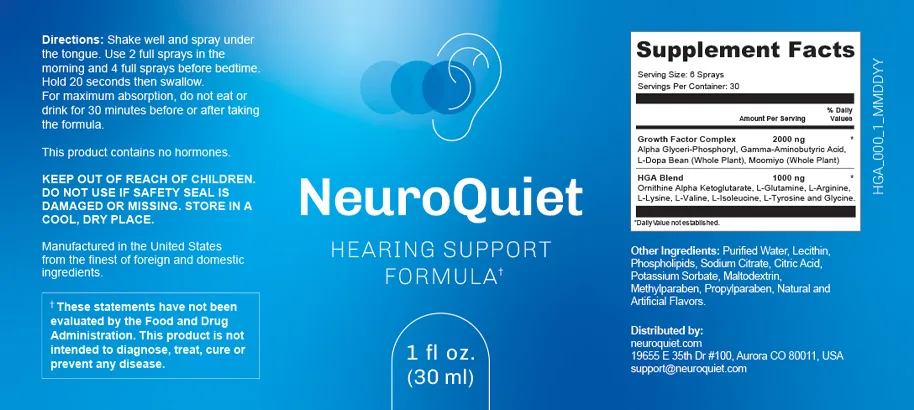
Here is the honest caveat I keep coming back to. The panel publishes 2,000 ng and 1,000 ng for the whole day, and prints no per-ingredient amount at all. There is no way to line any single active up against a paper, because the bottle never tells you how much of it you are getting. The label is open about the total and silent about the parts.
Read this before you buy anything for ringing in your ears. Sudden hearing loss, ringing in only one ear, a pulsing sound in time with your heartbeat, dizziness or ear pain are reasons to see a doctor quickly, not reasons to start a supplement. A hearing test is the useful first step for most people, and hearing aids help more than any shelf product when hearing loss is present.
The Bottle, the Spray and the Taste
The bottle is a small blue cylinder with a fine-mist pump and a clear cap. At 30 ml it fits in a coat pocket, and the label wraps the whole circumference so the supplement facts sit opposite the marketing side. Nothing about it feels premium. It feels like a travel-size toiletry, which is fine, because that is roughly what it is.
The pump throws a short, directed mist rather than a wide cloud, which is what you want under a tongue. My first two sprays went where they were supposed to. The third, on a morning when I was half awake, went across my lip and I got the taste without the dose.
That taste is worth describing. It is lightly sweet with a faint artificial edge, which the panel explains: natural and artificial flavors, plus maltodextrin as a carrier. There is a slight chalky finish from the lecithin and phospholipids. It is not unpleasant. It is also not something you would look forward to four sprays of at bedtime, and after thirty days I was still doing the evening sprays quickly rather than savoring them.
Build-wise there is one small annoyance. Because the liquid carries solids, the directions tell you to shake well, and if you forget, the last sprays of the bottle feel thinner than the first. I started shaking it while the kettle boiled and stopped noticing the difference.
How to Take It (And the Mistake I Made on Night One)
The routine as printed is short. Shake the bottle. Spray twice under the tongue in the morning. Spray four times at bedtime. Hold for 20 seconds, then swallow. Do not eat or drink for 30 minutes before or after.
Night one, I did the bedtime sprays, swallowed immediately, and chased them with a glass of water. That breaks the 20-second hold and the 30-minute window in one motion. I only caught it on day three when I read the back of the box properly instead of the insert I had skimmed.
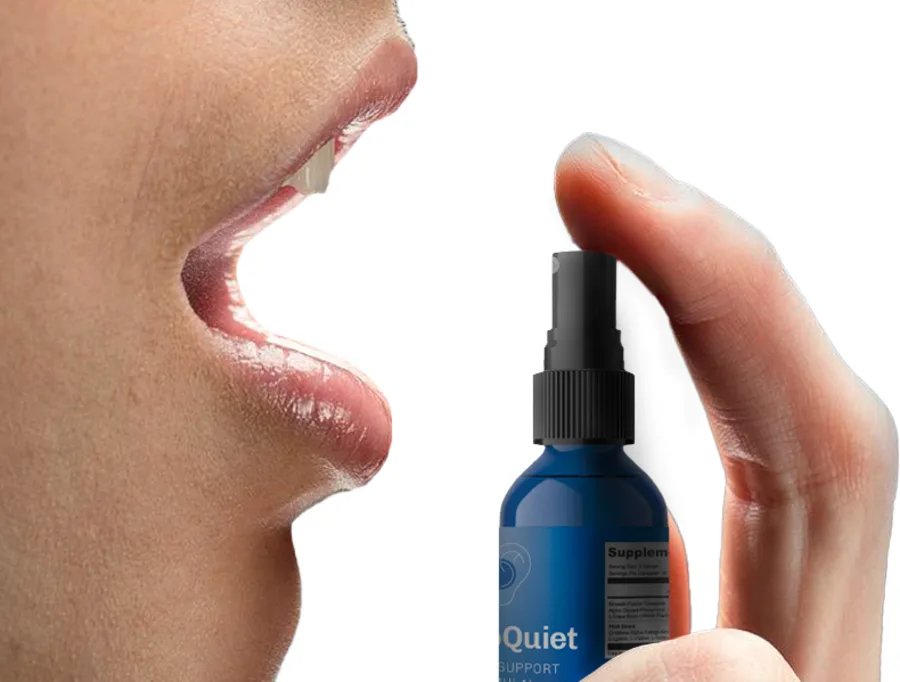
That is the mistake I would save you from. The 30-minute rule is the part of this product people quietly drop after a week, and it is the part the whole absorption argument rests on. Two dosing windows a day means an hour of your day sits inside two fenced blocks, which is a real scheduling constraint if you drink coffee the moment you wake up.
The rest is trivially easy. Morning sprays while the kettle boils. Bedtime sprays after I brushed my teeth, since brushing gave me a fixed anchor. No pill organizer, no water glass, no capsule stuck in your throat at 11 PM. For people who have spent years avoiding tablets, that alone is the argument for this format.
Anchor both doses to something you already do every single day. Mine were the kettle in the morning and tooth-brushing at night. Thirty days in, I had not missed a single evening dose, which has never happened to me with a capsule. Habit beats willpower, and the spray only works if you keep the schedule the label describes.
30 Days of Six Sprays, My Testing Diary
Six sprays a day for 30 days is 180 sprays. I kept the log simple: every Sunday night, before I turned anything on, I wrote a number from 1 to 10 for how loud the tone felt in a quiet room, plus a note on sleep hours and caffeine.
Week one (days 1 to 7). Nothing. Not a disappointing nothing, just a nothing. The tone sat where it always sits, around a 5 on a loud night and a 3 on a good one. I missed the evening dose on day 2 because I fell asleep on the couch, and I blew the 30-minute rule on days 1 and 3 before I read the label properly. Sleep averaged about 6 hours 20 minutes, which is normal for me. Caffeine was steady at two coffees a day.
Week two (days 8 to 14). Day 11 was the first evening where I wrote down “quieter,” and I want to be careful with that, because day 11 was also the first night I got 8 hours. The tone read a 2. I had also cut my second coffee after 2 PM that week. Three variables changed at once, which is exactly how people talk themselves into a supplement working.
Week three (days 15 to 21). This was a deadline week. Four nights under 6 hours, two late dinners, one loud room with a speaker too close to my head. The tone climbed back to a 6 by day 20, higher than where I started. The spray did nothing for that, and nothing in the label claims it would. This was the useful week, because it showed me what actually moves my ringing.
Week four (days 22 to 30). Sleep recovered to about 7 hours 10 minutes, caffeine back to normal, and the log settled at a 3 for four straight entries. Consistent, unremarkable, and indistinguishable from the stretch of good weeks I had before I ever opened the bottle.
The failure worth mentioning. Day 25, I woke up with the tone at its loudest of the whole month after a night where I had used headphones for about three hours at high volume. No spray fixes that, and I would have been annoyed if someone had suggested it might.
My honest read of 30 days: the ritual was the benefit. Two fixed pauses in the day, a bedtime anchor, and a month of paying attention to sleep and caffeine. The tone moved with my week, not with the bottle.
What Worked, What Didn’t, Scored
Ease of use: 9/10. Ten seconds, no water, nothing to swallow, and a pump that goes where you aim it. I have taken capsules for this kind of thing and this is strictly better on compliance. It loses a point for the 30-minute food and drink window, which is a real constraint twice a day.
Label clarity: 8/10. Most products in this category publish a proprietary blend name and nothing else. NeuroQuiet prints both blend totals, puts the full panel on the site, and tells you the spray count per day. It loses points because blend totals without per-ingredient amounts still leave you unable to check anything.
Formula and dose: 7/10. The ingredient list is coherent and the choices are defensible, and the sublingual route is a reasoned way to deliver them: the 20-second hold and the 30-minute window around food are the delivery system doing its job, not marketing copy. What holds this at 7 instead of higher is arithmetic the label itself provides. The amount is 0.003 milligrams across a full day’s six sprays, no per-ingredient amounts are printed, and no study has tested this bottle. I am scoring the design of the formula, not any promise of results.
Guarantee and support: 9/10. Ninety days, empty bottles accepted, refund processed within 48 hours of the return arriving, minus shipping. Phone and email support. In this category that is a top-tier policy on paper.
Value for money: 7/10. At $179 for a month you are paying nearly $6 a day for something with no published evidence, and the single bottle drags this score down hard. At $49 in the 6-pack, $1.63 a day with free shipping and bonuses, plus 90 days to change your mind on empty bottles, the arithmetic stops being offensive and starts being a personal call.
Evidence base: 6/10. Every active has real research somewhere behind it, and none of that research is of this bottle at this amount. Higher than a 5 because the ingredient science is genuine and the company does not pretend otherwise; not higher than a 6 because nothing here has been verified.
Packaging. Small, leak-free, clearly labeled, easy to travel with. Nothing premium about it, nothing broken either.
One troubleshooting note, since it cost me two days. Around day 18 the pump started firing short. The cause was simple and physical: the dip tube had picked up a bit of residue and the bottle was low enough that the last inch of liquid was fighting for air. Shaking harder did not fix it. Running the nozzle under warm water for thirty seconds and priming it with three dry pumps did. Nothing was wrong with the product, but if you hit it in week four and assume the bottle is defective, you will waste a third of a $179 purchase.
Overall: 7.7/10. The number I would defend: the format, the published label and the guarantee carry it into the 8s, and the untestable dose is what keeps it out of them.
What I keep coming back to: the format and the guarantee are genuinely above the category average, and the dose is genuinely below anything you could compare to research. A product can be both of those things at once, and this one is.
NeuroQuiet vs Zeneara vs SonoVive
I am not going to pretend I ran three 30-day trials back to back. What I did was price the checkouts, read the labels that were public, and think hard about which one I would hand to a friend.
Zeneara is the length-of-refund play. Its bundles work out well under NeuroQuiet’s list price, and its 365-day window means you can buy one bottle, use it for two months, and still change your mind. That matters a great deal when the product category has no evidence behind it. Its weakness is the same as most of the shelf: the blend amounts are not published, so you are still grading on trust.
SonoVive is the transparency play. Its label prints milligram amounts per active, which means you can line ingredients up against papers yourself. It is cheaper than NeuroQuiet at list, and its refund is shorter at 60 days. Its formula also carries ingredients with more interaction potential, which is a trade you should weigh with a pharmacist if you take daily medication.
NeuroQuiet is the format play. If you have ever quit a supplement because swallowing tablets made you gag, or because a capsule got stuck at 11 PM, that is the actual reason to pick it. The 90-day window sits comfortably in the middle of the other two, and the label publishes blend totals, which puts it ahead of the proprietary-blend crowd and behind SonoVive on detail.
What I learned from sitting with all three: the format decides this category more than the formula does. Every one of these products is a plausible ingredient list with an unproven amount, so pick the one you will actually keep taking for eight weeks.
There is also a fourth option that has published evidence behind it, and it does not come in a bottle. A vagus nerve stimulator works the tension side of the problem through the ear, which is a different bet entirely from swallowing or spraying nutrients.
If you are weighing a device against a bottle, the honest framing is that one of them has clinical literature behind the general approach and the other has a refund policy. Those are not the same kind of reassurance, and I would not pretend they are.
Value Math: Is $179 for 30 ml Justified?
Let’s do the arithmetic properly, because the checkout is designed to make the single bottle look like the normal option.
| Order | Days Covered | Total Price | Per Bottle | Shipping | Bonuses |
|---|---|---|---|---|---|
| 1 bottle | 30 | $179 | $179.00 | Charged | None |
| 2 bottles | 60 | $158 | $79.00 | Charged | None |
| 3 bottles | 90 | $207 | $69.00 | Free US | 3 digital bonuses |
| 6 bottles | 180 | $294 | $49.00 | Free US | 3 digital bonuses |
At $179 for a month you pay nearly $6/day; at $49 per bottle you pay $1.63/day. Buying three or six bottles pays back the list price within 90 days and includes free shipping and bonuses.
So the single bottle costs more than three times the daily rate of the six pack. Nobody is meant to buy it. It exists to make $49 look like a bargain.
Line the four options up as a daily rate and the pricing logic is impossible to miss: $5.97 a day alone, $2.63 a day on the two-pack, $2.30 a day on the three-pack, $1.63 a day on the six-pack. The liquid is identical in all four. The only thing changing is how long you are committed to it before you are allowed to decide.
So the single bottle costs more than three times the daily rate of the six-pack. Nobody is meant to buy it. It exists to make $49 look like a bargain.
Line the four options up as a daily rate and the pricing logic is impossible to miss: $5.97 a day alone, $2.63 a day on the two-pack, $2.30 a day on the three-pack, $1.63 a day on the six-pack. The liquid is identical in all four. The only thing changing is how long you are committed to it before you are allowed to decide.
What does it replace? For me, honestly, nothing I had not already stopped paying for. I had accumulated a drawer of half-used options over two years: foam earplugs that fell out, a white noise app I stopped opening, and a Dodow light metronome I bought for sleep and kept for the bedside table. The one recurring cost NeuroQuiet could plausibly replace is the appointment-and-gadget cycle of chasing the same quiet, and it does not do that either.
Here is the framing I would use. At $49 a bottle you are paying less per day than the coffee, and you are buying a structured month of paying attention to sleep and caffeine. At $179 a bottle you are paying for the same structured month at a price that makes no sense next to the bundle.
If you are going to try it at all, buy the 3 or 6 bottle pack, and buy it because you have already booked the hearing test.
What 2,000 Plus Buyer Reviews Actually Say
The order page claims 4.98 out of 5 across more than 2,000 reviews and states that 96 percent of customers choose the 6-bottle pack. I could not verify either figure against an independent platform, so treat them as vendor-controlled.
The independent picture I found across forums, supplement review sites and comparison pieces is more mixed and more useful. The praise pattern is consistent: people who report benefit describe ringing that feels softer rather than gone, usually after four to eight weeks of steady twice-daily use, with better sleep and a calmer mood showing up alongside it. Repeated phrases describe noise that is easier to ignore, not noise that disappeared.
The complaint pattern clusters in three places. The largest group reports no change at all after a month or more of faithful use. A second group describes friction with the refund process, slow replies and delays before the money comes back. A smaller group reports shipping that ran past the stated 5 to 10 day window.
That distribution is what I would expect from a plausible but untested formula. Roughly a third of reviewers describe a real change, a larger middle group reports something mild they are not sure about, and a vocal remainder reports nothing.
Two things in the independent reviews matched my own thirty days exactly. First, the people with the best results had given it six weeks or more rather than judging week one. Second, the people who noticed the most movement in their ringing were also the ones whose sleep and stress had changed in the same stretch. Neither pattern proves the spray does anything. Both are worth knowing before you set expectations.
The three testimonials on the sales page, from an audio engineer in North Carolina, a man in Arizona and a woman in Texas, are all signed, marked verified purchase, and unverifiable from outside. Read them the way you would read any vendor-selected quote.
Pricing, Bonuses and the 90-Day Refund
| Order | Days covered | Total | Per bottle | Shipping | Bonuses |
|---|---|---|---|---|---|
| 1 bottle | 30 | $179 | $179.00 | Charged | None |
| 2 bottles | 60 | $158 | $79.00 | Charged | None |
| 3 bottles | 90 | $207 | $69.00 | Free US | 3 digital books |
| 6 bottles | 180 | $294 | $49.00 | Free US | 3 digital books |
The three bonuses are digital downloads, delivered as files rather than shipped: a book called Hear Like A Pro, one on sharpening your memory, and one on tea remedies. They are the usual bundled PDFs. Nice to have, not a reason to pick a pack, since the pack you want is decided by the per-bottle math anyway.
The guarantee is the strongest part of this checkout. Order from the official site and you get 90 full days to send back the bottles, empty ones included, with the company saying refunds are processed within 48 hours of the return arriving. Shipping and handling fees are not refunded.
Three checkout gotchas worth a sentence each. The two-bottle option charges shipping and skips the bonuses while costing almost as much as the three-bottle pack, so it is the worst value on the table. The page carries a “96 percent order 6 bottles” line under the options, which is a nudge rather than information. And the supply on the two-bottle order runs out at day 60, so if you go that route, make your decision with time left to post a return.
Keep the order confirmation email and screenshot the guarantee terms at the moment you buy. It costs nothing and it is the single most useful habit for this product category.
Six Things to Know Before You Order
1. The number on the label is tiny. 3,000 nanograms for the entire day’s six sprays, which is 0.003 of a milligram. Ordinary supplement capsules of the same compounds are sold in hundreds of milligrams. Whatever you decide, decide knowing what that figure is.
2. There are no per-ingredient amounts. The panel gives two blend totals and stops. You cannot check L-tyrosine, L-Arginine or alpha-GPC against any paper, because the bottle never tells you how much of each you are getting.
3. The list price is a decoy. $179 for one bottle against $49 in the six-pack. If you pay $179 you have overpaid by roughly $130 for the same liquid.
4. The 30-minute food and drink window is real. Two doses a day means an hour of your day is fenced off. If your mornings start with coffee the second you wake up, this will annoy you by week two.
5. The panel includes preservatives. Methylparaben and propylparaben are both listed under other ingredients, alongside maltodextrin and artificial flavors. Most people are fine with these. If you avoid them on principle, this bottle is not for you.
6. It is official site only. No retail shelf, no pharmacy, no authorized marketplace listing for this spray. Third-party listings under the name are not covered by the guarantee.
The most important caveat sits above everything else in this section. If your ringing arrived suddenly, sits in one ear only, pulses with your heartbeat, or comes with hearing loss, vertigo or ear pain, that is a medical appointment and not a shopping decision.
Side Effects, Safety and Medication Questions
I had no side effects across 30 days, and the printed amounts are low enough that interactions are unlikely for most people. That is the honest summary, and it is also the reason the low dose is not purely a criticism.
The points I would still check with a pharmacist first:
Thyroid and antidepressant medication. L-tyrosine is a precursor to several catecholamines, and L-dopa bean affects dopamine. Anyone on thyroid replacement, an MAOI, or certain antidepressants should get a professional read on this panel before starting.
Blood pressure treatment. L-Arginine supports nitric oxide production and can shift blood pressure. If you are managed on medication for hypertension, that combination is worth a conversation.
Surgery and bleeding risk. Anything affecting platelets or blood pressure should be flagged with your surgeon in the weeks before a procedure. This is ordinary advice for any amino-acid supplement, not a specific warning about this bottle.
Pregnancy and children. The sales page describes use by adults in their 30s through 70s and says nothing about pregnancy, breastfeeding or anyone under 18. Treat that as out of scope until a doctor says otherwise.
Allergens and additives. The panel lists lecithin, phospholipids, maltodextrin, methylparaben, propylparaben and artificial flavors. If any of those are on your avoid list, you now know before ordering rather than after.
If you want a non-ingestion option for the tension side of ringing, a vagus nerve stimulator is a different category of bet, and I tested one of those separately.
Tips That Made the 30 Days Useful
Keep a log from day one. Sunday nights, same quiet room, one number from 1 to 10 plus sleep hours and caffeine count. Without it I would have had nothing but impressions, and impressions are where this product category eats your money.
Hold it the full 20 seconds and respect the 30-minute window. It is the easiest rule to break and the one the whole absorption claim depends on. Anchor both doses to habits you already have.
Shake the bottle before every dose. The panel tells you to, and you can taste the difference between the first sprays of a bottle and the last if you skip it.
Give it six weeks, not six days. The company says three months, the independent reviewers who reported benefit said four to eight weeks, and week one will tell you nothing. Decide on a calendar.
Change one variable at a time. If you start the spray, cut coffee after 2 PM, and fix your bedtime in the same week, you will learn nothing about which one moved the needle. I broke this rule in week two and could not untangle the result.
Book the hearing test anyway. It costs an hour and it tells you more than any bottle on this shelf will. If hearing loss is part of your picture, that is where the real gains are.
Protect your ears at the source. The single most reliable thing you can do about noise-driven ringing is turn the volume down and wear protection around machinery. The National Institute on Deafness and Other Communication Disorders lists noise exposure as a leading preventable cause.
If nights are the worst part, fix the nights first. Ringing is loudest in quiet rooms at bedtime, which is a sleep problem as much as an ear problem. A wind-down routine without screens does more for that hour than a spray under the tongue, and my guide to falling asleep without melatonin covers what I use instead.
Do not stack supplements without asking. Adding this to ginkgo, zinc, magnesium and a B-complex because a forum said so is how you end up unable to tell which bottle did what, or which one interacted with your prescription.
Keep the receipt and screenshot the guarantee. Ninety days is generous only if you can prove what you bought and when.
Who Should Buy NeuroQuiet, and Who Should Skip It
Buy it if:
You cannot swallow capsules and you have quit supplements over it. This is NeuroQuiet’s real market. Six sprays take ten seconds, there is nothing to get down, and the habit sticks because it is attached to the kettle and the toothbrush. If compliance has always been your problem, format beats formula.
You want a defined trial with an end date. The 90-day refund, taken seriously, turns this into a three-month experiment with a receipt. Buy one pack, log your ringing weekly, and decide on day 60 whether to return it.
You have already had your hearing checked. If the test came back clear and you want to add something gentle to the routine, the low printed amounts mean this is about as low-risk as the shelf gets.
You are buying it for someone else who hates tablets. An older relative who will not swallow a capsule is a genuinely good use case for a spray, and the 90-day window protects the purchase.
You are comfortable with an unproven product and a small daily ritual. Some people want to be doing something. This gives you a structured something with a published label and a refund attached.
Skip it if:
You expect a treatment. No supplement has been shown to lower the perception of tinnitus, and the sales language about silencing the noise runs ahead of anything the panel supports.
You are paying the $179 list price. The math on that is indefensible next to the $49 bundle, and if a seller prices the same bottle four ways, you should buy at the cheapest of them or not at all.
Your ringing arrived suddenly, sits in one ear, or pulses. Those patterns need a clinician in the near term, not a supplement in the cart.
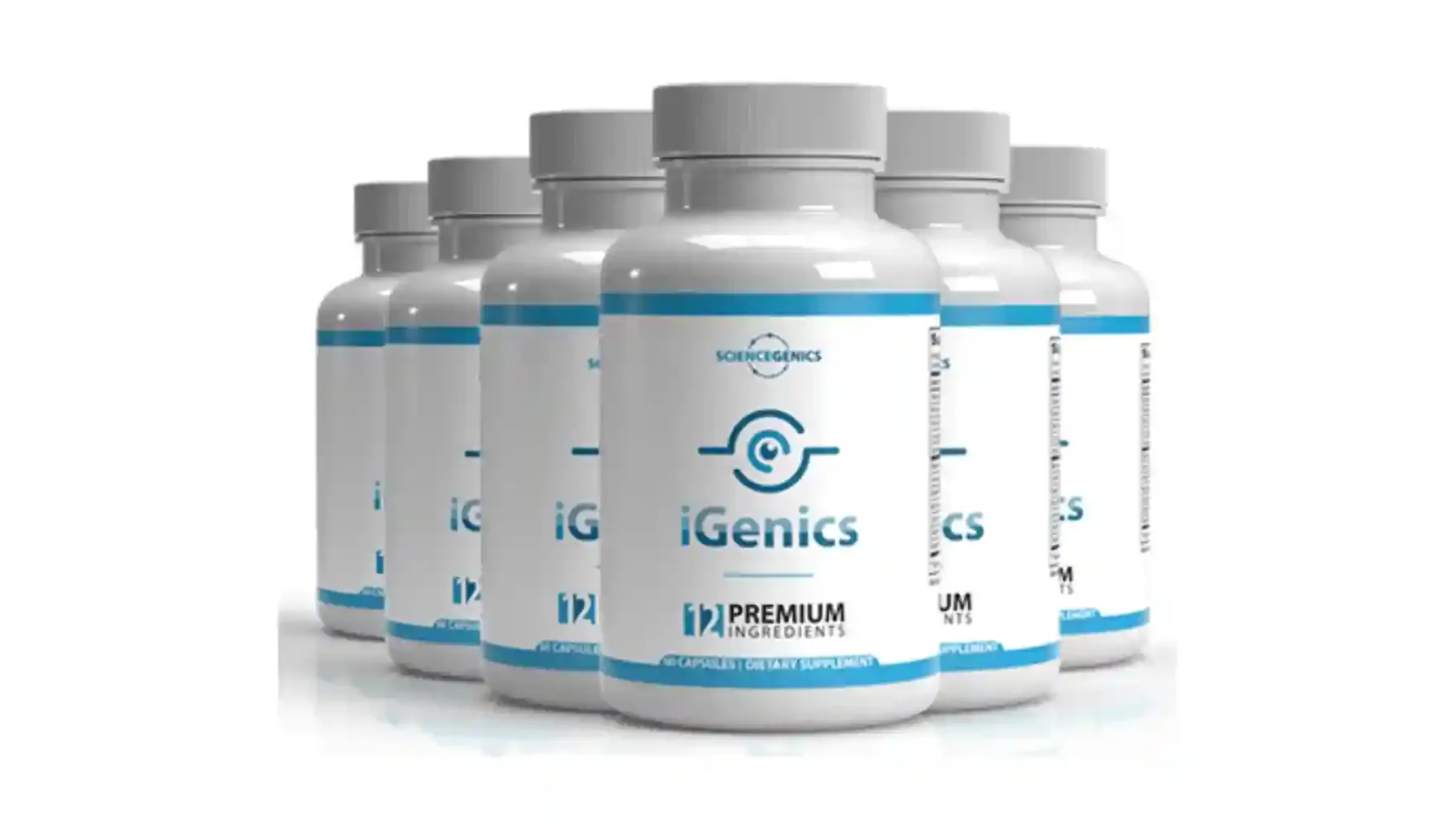
You want milligram amounts you can check. Two blend totals with no per-ingredient numbers will keep frustrating you every time you read the panel. That standard is exactly why our iGenics review reads so differently: every active printed in milligrams on a bottle you can check yourself.
You are on daily medication and cannot get a pharmacist to look at the label. In that case the safe answer is to wait until you can.
Final Verdict
Thirty days ago I had a high tone behind my right ear at 11:40 PM and a bottle of blue liquid on the counter. Today I have the same tone, a log full of Sunday night numbers, and a much clearer idea of what actually moves it.
The spray did what the format promises. Nothing to swallow, ten seconds, twice a day, and thirty days without missing an evening dose, which I have never managed with capsules. The label is published, the payment is one-time, and ninety days to return empty bottles is a better policy than most of this category offers. The dose is 0.003 milligrams a day with no per-ingredient amounts printed, and no published trial of this formula exists, which caps how much anyone can promise you.
So here is where I land. NeuroQuiet is worth trying at $49 a bottle and not worth trying at $179. It is worth trying after the hearing test, with a log started on day one and a decision made before day 60. It is a pleasant ritual attached to a number I cannot grade, sold at a list price that exists to make the bundle look smart.
Score Breakdown
| Category | Score | Notes |
|---|---|---|
| Label Clarity | 8/10 | Both blend totals and the full panel published, no per-ingredient amounts |
| Formula and Dose | 7/10 | Coherent actives and a defensible sublingual route, but 0.003 mg across the day’s six sprays |
| Ease of Use | 9/10 | Nothing to swallow, ten seconds, but a 30-minute food window |
| Guarantee and Support | 9/10 | 90 days, empty bottles accepted, refund within 48 hours |
| Value for Money | 7/10 | Poor at $179, defensible at $49 in the 6-pack with 90 days to change your mind |
| Evidence Base | 6/10 | Real ingredient research, no trial of this formula at this amount |
Overall Rating: 7.7/10
If ringing in your ears is the thing you are trying to fix, start with the hearing test and the habit changes that have evidence behind them. If you want a gentle, well-packaged ritual with a hard refund date and you are buying it at the bundle price, go in with your eyes open about what 0.003 milligrams means. The 90-day window means there is very little downside to finding out which of those two people you are.
The bottle will last a month, the receipt costs nothing to keep, and the number on the label is the same either way.
Key Specifications
| Format | Sublingual spray, 30 ml (1 fl oz) |
|---|---|
| Daily serving | 6 sprays (2 in the morning, 4 at bedtime) |
| Servings per bottle | 30 |
| Active blends | Growth Factor Complex 2,000 ng + HGA Blend 1,000 ng |
| Price, 1 bottle | $179 plus shipping |
| Price, 6 bottles | $294 total, $49 a bottle, free US shipping |
| Guarantee | 90-day money-back, empty bottles accepted |
| Shipping | 5 to 10 days domestic, free on 3 and 6 bottle orders |
| Retailer | BuyGoods, one-time payment |
| Made in | United States |
NeuroQuiet earns 7.7/10: very good — recommended with minor caveats. Tested for 30 days across workdays, two deadline weeks and one week of poor sleep.
- Best part: Sublingual spray with nothing to swallow, the whole routine takes about ten seconds
- Best part: The supplement facts panel is printed on the bottle and published on the site
- Best part: 90-day money-back guarantee that accepts empty bottles
- Biggest catch: Both blends together come to 3,000 nanograms a day, far below amounts used in supplement research
Common Questions & Answers
Q: What is NeuroQuiet and how do you take it?
NeuroQuiet is a 30 ml sublingual spray sold as hearing support. The label calls for six sprays a day: two in the morning and four at bedtime. Shake the bottle, spray under the tongue, hold for 20 seconds, then swallow. The label also asks you not to eat or drink for 30 minutes before or after, which effectively fences off an hour of your day in two blocks.
Q: Does NeuroQuiet actually work for ringing in the ears?
Nothing published tests this specific spray, so the honest answer is that nobody knows. The two blends on the label total 3,000 nanograms, which is 0.003 of a milligram across a full day's six sprays. Buyer reports split roughly into three groups: some people say the ringing feels softer after four to eight weeks, a larger middle group says the change was small or hard to call, and a vocal group says months of use changed nothing.
Q: How long does it take to see results with NeuroQuiet?
The company's own FAQ says most people notice something in the first week and that the best results come after three months of consistent use. No study backs either number. Ringing in the ears moves with stress, sleep, caffeine and loud noise exposure, so a good stretch of weeks can happen with or without a spray. Give it at least six weeks and log your ringing weekly before you decide anything.
Q: What is actually in NeuroQuiet?
The supplement facts panel lists a Growth Factor Complex at 2,000 ng containing alpha-GPC, gamma-aminobutyric acid, L-dopa bean and moomiyo, and an HGA Blend at 1,000 ng containing eight amino acids including L-arginine and L-tyrosine. Other ingredients are purified water, lecithin, phospholipids, citric acid, maltodextrin, potassium sorbate, methylparaben, propylparaben and flavoring. Per-ingredient amounts are not printed, and the daily value for everything is listed as not established.
Q: Is NeuroQuiet safe and are there side effects?
The formula is gentle at the amounts printed on the label, and the site describes it as non-habit-forming and free of stimulants. Two cautions still matter. It contains methylparaben and propylparaben, which some people prefer to avoid, and the panel includes L-tyrosine and L-arginine, which interact with thyroid medicine, blood pressure drugs and MAO inhibitors. Show the label to your pharmacist before you start if you take anything daily.
Q: How much does NeuroQuiet cost?
One bottle is $179 plus shipping. Two bottles are $158 total, which is $79 each, plus shipping and with no bonuses. Three bottles are $207 total at $69 each with free US shipping and three digital bonuses. Six bottles are $294 total at $49 each, also with free US shipping and the bonuses. The single-bottle price is the worst way to buy this product by a wide margin.
Q: Does NeuroQuiet have a money-back guarantee?
Yes, 90 days from the purchase date. The company says it will refund within 48 hours of the returned product arriving, and that you can send back empty bottles. Shipping and handling fees are not refunded. Keep your order confirmation email, take a screenshot of the guarantee terms at checkout, and make your decision with enough time left to post a return.
Q: Can I take NeuroQuiet with my prescription medication?
Ask your pharmacist first. The label includes L-tyrosine and L-dopa bean, which affect dopamine, and L-arginine, which affects blood pressure. People on thyroid medicine, antidepressants, blood pressure drugs or blood thinners should get a professional read on the label before starting. The printed amounts are small, which lowers the risk, but small amounts are not the same as no interaction.
Q: Is this the same NeuroQuiet sold on Amazon?
No. The Amazon listing under that name is a capsule product built around ginkgo biloba, zinc, magnesium and vitamin B12. This review covers the sublingual spray sold from neuroquiethq.com with alpha-GPC, GABA, L-dopa bean, moomiyo, L-arginine and L-tyrosine on its label. Different formula, different format, different company behind it. Buy from the official site if you want this one.
Q: Is NeuroQuiet FDA approved?
No dietary supplement is FDA approved, for this product or any other. Supplements are regulated as food, not drugs, so a company does not have to prove effectiveness to the FDA before selling. The bottle carries the standard disclaimer that the statements have not been evaluated by the FDA and that the product is not intended to diagnose, treat, cure or prevent any disease. Read that as written.
Q: Where can I buy NeuroQuiet?
From the official site only. There is no retail shelf, no Amazon listing and no pharmacy stock for this spray, and third-party listings under the name are not authorized. Orders ship by FedEx or UPS within about 24 working hours and land in 5 to 10 days for domestic addresses. The checkout is a one-time payment through BuyGoods with no subscription attached.
Q: NeuroQuiet vs Zeneara, which should you buy?
Zeneara is cheaper per bottle in its bundles and carries a 365-day refund against NeuroQuiet's 90 days, which matters more than usual when you are testing something unproven. NeuroQuiet wins on format if you dislike capsules, since six sprays take ten seconds and nothing has to be swallowed. Neither has a published trial behind it, so pick on price, format and refund length rather than on claims.
More Wellness Gadgets Reviews
Related Guides & Articles
Browse all 87 Wellness Gadgets articles »

Health tech researcher and wellness gadget reviewer. PhD in Biomedical Engineering. Tests sleep trackers, massage devices, and health monitors with clinical precision. Believes in data-driven wellness.