
Good — worth it for the right buyer
- Every active has a milligram amount printed, so the label can be checked against studies line by line
- Lutein at 20 mg and zeaxanthin at 10 mg sit above the AREDS2 trial levels of 10 mg and 2 mg
- Two capsules a day with breakfast, 30 servings a bottle, nothing else to schedule around
- A refund window the official FAQ puts at 180 days, processed through ClickBank as a one-time payment
- No published trial of this complete formula; every study cited tests single ingredients or other formulas
- The refund window is printed as 180 days on the official FAQ and 60 days on ClickBank and mirror pages
- The struck-through list price reads $99 on the official site while mirror pages claim $149 or $179
- Label Clarity:
- Formula and Dose:
- Ease of Use:
- Guarantee and Support:
- Value for Money:
- Evidence Base:
In This Article
- The Night I Started Reading Supplement Labels Like Contracts
- TL;DR: My iGenics Review Verdict
- What Is iGenics?
- iGenics vs the Alternatives, at a Glance
- What’s Actually on the Label
- The AREDS2 Question
- What iGenics Claims vs What I Actually Found
- How Long It Actually Takes
- 8 Weeks of Two Capsules With Breakfast, My Testing Diary
- What Worked, What Didn’t, Scored
- iGenics vs PreserVision vs a $15 Lutein Bottle
- Value Math: Is $234 for Six Bottles Justified?
- What Buyer Reviews Actually Say
- Pricing, Bonuses and the Refund Window
- Six Things to Know Before You Order
- Side Effects, Safety and Medication Questions
- Tips That Made the 8 Weeks Useful
- Who Should Buy iGenics, and Who Should Skip It
- Final Verdict
- Score Breakdown
The Night I Started Reading Supplement Labels Like Contracts
For about four years I have worked every evening in front of two monitors, and for about four years the last hour of the day has involved the same small ritual: rubbing my eyes, refocusing on the keyboard, and deciding whether the blur at the edge of the screen is fatigue or something worse. I am thirty-eight, my prescription is stable, and my optometrist says the eyes of a heavy screen user. That answer is technically fine and emotionally useless, which is roughly how I ended up holding an eye supplement bottle at my kitchen table at 11 p.m., reading the supplement facts panel the way I read a lease.
That habit is the whole reason this review exists, and it is the same habit I bring to everything I test for this site in our wellness-gadgets category. I do not care what a sales page claims. I care what is printed on the panel, what the money actually buys, and how long I have to change my mind. iGenics turned out to be an interesting test case for all three, because the label is unusually open, the marketing around it is unusually loud, and the two do not fully agree with each other.
TL;DR: My iGenics Review Verdict
If you have thirty seconds, here is the whole thing:
- Does it work? No published trial tests this complete formula, so nobody can promise you that. What the research does support is narrower: lutein and zeaxanthin raise macular pigment over 3 to 6 months, and a 6-month trial in heavy screen users found real improvements in tear production and photo-stress recovery versus placebo.
- What is it? A two capsule daily supplement from Science Genics, 60 capsules a bottle, 30 servings, taken with breakfast. Sold only from the official site, checkout through ClickBank, one-time payment.
- What is in it? Lutein 20 mg, zeaxanthin 10 mg, vitamin C 500 mg, zinc 20 mg, copper 2 mg, vitamin A and E, plus bilberry 480 mg, turmeric 350 mg, ginkgo 80 mg, saffron 20 mg and black pepper 20 mg.
- The catch: The carotenoid doses beat AREDS2, but the refund window is printed as 180 days in one place and 60 days in another, and the crossed-out list price reads $99 on the official site while other pages claim $149 or $179.
- The good part: every active has a milligram amount on the panel, the serving is two capsules with food, and at the bundle price the per day cost lands around $1.30.
- Best for: people forty and up who want a transparent eye nutrition stack, are willing to give it the full 3 to 6 months the research calls for, and will buy only from the official site.
- Not for: anyone with a diagnosed eye condition expecting a substitute for prescribed AREDS2, anyone on blood thinners without a pharmacist’s sign off, and anyone buying the $59 single bottle.
- Rating: 7.3/10. A genuinely transparent label wrapped in inconsistent pricing and refund copy. Judge it on the panel, not the page. See the current bundle price.

What Is iGenics?
iGenics is a capsule supplement made by Science Genics and sold as nutritional support for everyday eye health. Each bottle holds 60 capsules, the serving is two capsules a day, so one bottle is a 30-day supply. The company describes the formula as combining carotenoids, antioxidant vitamins, minerals and botanical extracts, aimed at macular nutrition and general eye comfort rather than at any disease. The bottle is manufactured in the United States in a facility the company describes as GMP certified, and returns route to an address in Tallmadge, Ohio.
It sits next to sleep and recovery products in the catalog, and it behaves like them: a daily habit, a fixed dose, and a calendar you have to respect before you judge anything. There is no app, no device and no subscription. You take two capsules with breakfast and you wait.
The buying experience is unusually contained. There is no retail distribution, no pharmacy shelf and no authorized Amazon listing. Everything runs through the official page, with ClickBank handling the checkout as a one-time payment. That single-channel setup is why you will see the same product described in very different ways on different pages: the official site, the ClickBank checkout, and a layer of mirror and review sites all carry their own version of the price story and the refund story. Keeping those versions apart is most of the work in evaluating this product honestly.
iGenics vs the Alternatives, at a Glance
Three options come up in every search for this kind of product, and they are decided by three things: what the panel shows, what you actually pay, and whether a trial tested the formula in the bottle or just the nutrients inside it.
| Product | What the label discloses | Daily cost at bundle price | Refund window | Best for |
|---|---|---|---|---|
| iGenics | Every active printed in milligrams, carotenoids above AREDS2 levels | About $1.30 at the 6-bottle price | 180 days per official FAQ, 60 days on ClickBank and mirrors | You want one bottle with a broad stack and a long decision window |
| PreserVision AREDS2 | Fixed formula matching the NIH trial, pharmacy standard | About $0.70 to $0.85 | Retailer dependent, usually 30 to 60 days | A doctor told you to take AREDS2 for a diagnosed condition |
| MacuHealth | Three carotenoids with formula-specific published research | About $1.00 to $1.20 in bundles | Typically 30 to 90 days | You want the carotenoid core with the strongest product-specific evidence |
| Plain lutein and zeaxanthin from any pharmacy | Two ingredients, amounts vary by brand | About $0.20 to $0.40 | Retailer dependent | You already eat well and want only the carotenoid baseline |
I did not run four separate months of testing. What I did was price every checkout I could reach, read every panel I could find, and compare the refund terms line by line. The refund column is the one I would weight heaviest, because with an unproven formula the guarantee is the only variable you actually control.
iGenics wins on label transparency and loses on policy clarity. The panel is the most open in this comparison, with real milligram amounts for every active, while the guarantee and list price are the least consistent, differing page by page for the same product.
What’s Actually on the Label
This is where iGenics does its best work. The supplement facts panel prints a milligram amount for every active, which sounds like a low bar until you know how many eye supplements in this price range hide behind a proprietary blend total.

The per serving amounts, which is two capsules, read as follows:
| Ingredient | Amount | Where the research puts it |
|---|---|---|
| Lutein (from marigold) | 20 mg | AREDS2 used 10 mg; most screen-user trials sit at 10 to 20 mg |
| Zeaxanthin | 10 mg | AREDS2 used 2 mg; typical study range 2 to 10 mg |
| Vitamin C | 500 mg | Matches the AREDS2 amount exactly |
| Vitamin E | Listed, amount worth reading carefully on your bottle | AREDS2 used 400 IU |
| Zinc | 20 mg | AREDS2 used 25 mg in the low-dose arm, 80 mg in the original |
| Copper | 2 mg | Matches AREDS2 exactly, there to balance the zinc |
| Bilberry extract | 480 mg | High compared with most eye formulas; night vision claims in healthy people rest on thin evidence |
| Turmeric extract | 350 mg | General antioxidant research, not eye specific; paired with black pepper for absorption |
| Ginkgo biloba leaf powder | 80 mg | Circulation research; interacts with blood thinners |
| Saffron | 20 mg | Small trials at similar doses show photoreceptor effects at 8 to 12 weeks |
| Black pepper extract | 20 mg | Bioavailability helper for the turmeric, no eye claim of its own |
Three observations from actually reading this instead of skimming it.
First, the carotenoid core is not decorative. Twenty milligrams of lutein and ten of zeaxanthin are above the amounts the AREDS2 trial used, and they are in the range that controlled studies have measured for macular pigment increases. Whatever else you think of this product, the two ingredients that matter most for this category are dosed seriously.
Second, the vitamin and mineral rows track AREDS2 closely enough to look like a deliberate echo: vitamin C at the trial’s 500 mg, copper at the trial’s 2 mg, zinc in the same neighborhood. This is the formula borrowing credibility from a famous study, and it is worth being precise about how far that borrowing extends. The carotenoids exceed the trial. The zinc does not match either AREDS2 arm exactly, and the printed vitamin E amount on at least one version of the label has been called out in other reviews as inconsistent with the panel, so check your own bottle rather than trusting any screenshot including mine.
Third, the botanical row is where the formula stops being AREDS2 and becomes its own product. Bilberry at 480 mg is a genuinely high dose for this category. Saffron at 20 mg sits in the range used in the small randomized trials that interest researchers. Ginkgo at 80 mg is a circulation ingredient with a well documented interaction profile. Turmeric with black pepper is a bioavailability play. None of these four were in the trial everyone is being invited to think of, and each has a separate, much smaller literature behind it.
One more detail that only shows up if you read multiple pages for the same product: at least one mirror page describes the botanicals as a blend without per-ingredient amounts, while the panel above reads as individually dosed. If the page you land on shows a blend total instead of these individual numbers, you are not looking at the version this review is based on.
The AREDS2 Question
Every serious page about this product eventually invokes AREDS2, and almost none of them explain what AREDS2 actually was, which is how a lot of people end up believing they are buying a trial-proven formula when they are buying a formula inspired by one.
AREDS2 was a National Eye Institute trial that enrolled 4,203 participants aged 50 to 85 across 82 clinical sites. It tested whether replacing beta-carotene with lutein and zeaxanthin improved the existing AREDS formulation for people who already had intermediate or advanced age-related macular degeneration in at least one eye. The American Academy of Ophthalmology’s overview of AREDS supplements is the cleanest public summary of what the formula is and who it was for.
Three facts from that trial control how you should read every claim on an iGenics page.
The trial population was people who already had the disease. AREDS data showed no benefit for healthy people or for those with only early AMD, which is why the AAO’s page on age-related macular degeneration is careful about who the formula is for. If you are a forty year old with tired eyes and no diagnosis, you are not the person that 25 percent risk reduction number describes.
The tested formula was a specific set of doses. Lutein 10 mg, zeaxanthin 2 mg, vitamin C 500 mg, vitamin E 400 IU, zinc and copper. iGenics has higher carotenoids, a different zinc amount, a vitamin E entry worth checking against the trial, and four botanicals the trial never contained. The trial tested a formula, not a nutrient family, and the finished iGenics bottle has never been in a trial of its own.
The result was risk reduction in an existing condition, not restoration. Nothing in AREDS2 restored vision anyone had lost, and no supplement in this category does. The PMC publication of the 6-month lutein and zeaxanthin randomized trial in heavy screen users is a better reference for what a healthy or lightly symptomatic person might actually expect, and it found improvements in tear production, photo-stress recovery time and contrast sensitivity versus placebo, with no serious adverse reactions.
So where does that leave iGenics? Honestly: as a plausible, well dosed eye nutrition stack that has borrowed the skeleton of the most famous study in the field and added four ingredients of its own. That is a real thing with real research behind most of its parts. It is not AREDS2, it is not a treatment, and anyone telling you otherwise is running ahead of the evidence.
What iGenics Claims vs What I Actually Found
I keep two lists when I review anything: what the panel says and what the page says. With iGenics the gap between those lists is the most interesting part of the product.
What the label says: support, nutrition, standard disclaimer language about the FDA evaluation and no disease claims. Quiet, boring, exactly what a compliant supplement label looks like.
What the sales page says: the language runs warmer. Pages selling this product describe freedom from blurry vision, restored clarity and a breakthrough in eye care. One review I read reported a vendor page using the phrase vision restoring outright. None of that appears on the panel, and none of it is the kind of claim a dietary supplement is permitted to make.
What the list price says: the official site shows a struck-through regular price of $99 a bottle with the current offer underneath. Other pages carrying the same product show crossed-out prices of $149 and even $179. The same bottle cannot have had three different regular prices this year. My read is that the crossed-out number is a marketing device, and the only price that is real is the one ClickBank charges you.
What the refund says: the official FAQ states a 180 day money back guarantee with no product return required. The ClickBank checkout and several other pages state 60 days. This is the conflict I would take most seriously, because it is the one that determines whether you can change your mind after a proper three month test. Sixty days ends before the carotenoid timeline does. One hundred eighty days covers it comfortably. You will not know which policy your order carries until you read the guarantee text on the checkout page itself.
What buyer feedback says: thin. One independent review site counted a single Trustpilot review for the product at the time of writing. Complaint threads that do exist cluster around three themes: the single bottle feels overpriced at $59 plus shipping, results took longer than the pages implied, and orders from unauthorized sellers went wrong. I did not find complaints about contamination, mislabeled actives or safety incidents, which is worth saying clearly because that is the accusation this category usually attracts.
The pattern here is familiar from other reviews I have done. The manufacturing side looks like a normal, traceable US operation with a real address and a real processor. The marketing side is doing what direct response marketing does, which is why reading the panel instead of the page matters more than usual with this one.
How Long It Actually Takes
If you remember one section of this review, make it this one, because the timeline is where buyers and sellers disagree most.
Weeks 1 to 3: this is the window where the first physical changes would show up, and they would be comfort changes rather than vision changes. Less end of day fatigue, fewer moments of refocusing at the keyboard. If anything arrives this early, it is most plausibly related to the antioxidant and circulation ingredients, the bilberry and ginkgo, not the carotenoids.
Weeks 4 to 8: steadier focus through long sessions and reduced dryness feeling are the changes most often described in this window. This is also where placebo does its heaviest lifting, which is why the only honest way to track it is to write down what your eyes actually do at the same hour every day before you start.
Weeks 8 to 12: saffron’s research timeline lives here. The published trials of saffron at roughly this dose report effects on photoreceptor function in this range, so this is the first window where an ingredient-specific expectation has a study behind it.
Months 3 to 6: the real carotenoid window. Measurable macular pigment density change from lutein and zeaxanthin follows the AREDS2 supplementation timeline, and it is a change you cannot feel, only measure. If you quit at week six because nothing obvious happened, you quit before the main ingredient had time to do the thing it does.
Any page that promises results in three days is selling. The 6-month randomized trial in screen users took six months to reach its conclusions for the same reason: this is the pharmacology of fat-soluble pigments that accumulate slowly in tissue.
8 Weeks of Two Capsules With Breakfast, My Testing Diary
I ran iGenics for eight weeks, two capsules with breakfast every morning, and I logged three things each week: how my eyes felt at the end of a workday on a 1 to 5 scale, how many evening screen hours I managed before the first refocus break, and whether night driving felt different. I also did what I always do, which is read every claim on the page against the panel and price every checkout I could reach.
Weeks 1 and 2: nothing. Deliberately nothing, which is what I expected. The capsules are ordinary size, they go down with breakfast, and the only sensation was one mild stomach ache in week one that I fixed by actually eating the breakfast I was taking them with. Workday eye scores sat at their usual 3, same as every other month of the year.
Weeks 3 and 4: the first thing I noticed was not in my eyes at all, it was in my calendar. Taking a capsule with breakfast is trivially easy to comply with, and eight weeks later I had missed exactly zero days, which is more than I manage with anything I have to remember at lunch. The eye score crept to 3.5 in week four. That is inside the noise band and I am not going to pretend otherwise.
Weeks 5 and 6: the first change I would call real, though I hold it loosely. My evening refocus break, the moment I look away from the monitor and the edge of the screen swims for a second, arrived later in the session. Where it used to happen around the ninety minute mark, it was pushing past two hours. Night driving felt marginally more comfortable against oncoming headlights, which is the claim bilberry always makes and the claim I was most suspicious of.
Weeks 7 and 8: workday scores settled at 3.5 to 4, the refocus timing held, and I noticed I had stopped keeping the eye drops at my desk. Eight weeks is early for the carotenoid story, so whatever the capsules were doing, if anything, it was living in the comfort column rather than the vision column.
What I cannot tell you is whether my macular pigment density changed. Nobody can feel that. It takes a clinical measurement, and the honest version of this diary is that eight weeks tells you about tolerance and comfort, not about the structural claim the carotenoids are making. To judge that, the research says you need three to six months and an instrument, not a notebook.
What Worked, What Didn’t, Scored
Worked: the label. Every active in milligrams, no proprietary blend total hiding the interesting numbers, and a panel I could put next to the AREDS2 dose list and compare line by line. In a category where blend totals are the norm, this is the product’s single strongest feature and the reason it scores where it does.
Worked: the routine. Two capsules with breakfast, thirty servings a bottle, nothing to time around meals beyond the breakfast you were already eating. Compliance is half the battle with anything that takes months to work, and this format removes most of the friction.
Worked: the bundle math. At $39 a bottle in the six pack, the daily cost lands around $1.30, which is a normal price for a multi-ingredient eye stack. The $59 single bottle at nearly $2 a day plus shipping is a different product with a worse argument.
Did not work: the policy copy. Two refund windows and three list prices for one product is not a rounding error, it is a sign that nobody is maintaining the pages consistently, and the refund window is precisely the term you need to be able to trust before committing three months.
Did not work: the claim discipline. The panel says support, the pages say restore. I would not weight that against the product’s safety or formula, but it does mean you have to do your own reading instead of taking the page’s word for anything.
Did not work: the evidence gap. No trial of the complete bottle. Every study anyone cites tests a nutrient, a botanical or a different formula. That is normal for supplements and it is still a real limitation.
iGenics vs PreserVision vs a $15 Lutein Bottle
The comparison that actually matters in this category is not iGenics versus the loudest competitor page. It is iGenics versus the two honest alternatives: the pharmacy formula and the bare carotenoid stack.
PreserVision AREDS2 is the nutrient set the trial tested, available in any pharmacy for roughly $20 to $25 a bottle, and it is what an ophthalmologist means when they say bring me AREDS2. Its weakness for a general audience is that it was designed for people with a diagnosis, and its zinc and vitamin E doses reflect that. If a doctor has told you to take AREDS2 for a specific condition, that conversation settles your purchase and this review becomes irrelevant.
A plain lutein and zeaxanthin bottle, typically $15 to $20 for a month, gives you the two ingredients that matter most for macular pigment and nothing else. That is a legitimate strategy for someone who eats reasonably well, wants the carotenoid baseline, and does not want to pay for bilberry and saffron research they have not read.
iGenics sits between them: higher carotenoid doses than either, four botanicals with separate small literatures, a fully printed panel, and a refund window that on paper is the most generous in the comparison. Its cost is roughly double the pharmacy formula at bundle pricing, and its evidence base is one study per ingredient rather than one study for the bottle.
The honest way to choose: diagnosed condition, follow your doctor, usually that means AREDS2. Want only the carotenoid core, buy the plain bottle. Want the broad stack with everything printed and a long window to decide, that is the case for iGenics.
Value Math: Is $234 for Six Bottles Justified?
Let us do the arithmetic the way I would do it for anything else I spend money on.
The single bottle is $59 plus $9.99 shipping, which is $68.99 for thirty days, or about $2.30 a day. That is the price of a bad decision. The three bottle bundle is $147 with free shipping, $49 a bottle, about $1.63 a day. The six bottle bundle is $234 with free shipping, $39 a bottle, about $1.30 a day, plus two e-books and a free bottle of Intelligen thrown in, which I price at zero because I have not evaluated it and neither should you until you have.
Now compare against the honest alternatives. PreserVision runs about $0.70 to $0.85 a day at retail. A plain lutein and zeaxanthin bottle runs $0.20 to $0.40. So iGenics at its best price is charging a premium of roughly 50 cents to 60 cents a day over the pharmacy formula for four botanicals and a printed panel.
Here is the part where the price story undermines itself. The official site crosses out $99 a bottle. Other pages carrying the same product cross out $149 or $179. If the real regular price were $99, the six bottle bundle at $39 would be a 61 percent discount, which is already a strong offer and does not need inflation to work. The presence of three different crossed-out numbers tells you the crossed-out number is not a price, it is a prop, and the only figure worth modeling is $39.
The timing argument is where the six pack earns its place. The research window for the structural claim is three to six months, which means a serious test of this product is three bottles minimum and six bottles comfortable. Buying one bottle to try it is buying an experiment that is guaranteed to end before the main ingredient has had time to work, at the worst per-day price in the ladder. The bundle is not a discount trick in this case, it is the only configuration where the test can actually finish.
My verdict on value: at $39 a bottle for the six pack, this is a fair price for what the panel promises, and the 180 day window as printed on the official FAQ would make it an easy recommendation. At $59 plus shipping for one bottle, it is not.
What Buyer Reviews Actually Say
This is the weakest column in the entire review, and I want to be straight about how thin the data is. At the time of checking, one independent review site counted a single Trustpilot review for iGenics. That is not a sample size, that is an anecdote with a star rating attached.
What exists instead is pattern evidence from complaint threads and the review ecosystem around the product, and it sorts into a few recognizable buckets.
The price complaint, which is the loudest: buyers who took the $59 single bottle felt they overpaid, especially after shipping. Almost nobody who bought the six pack frames it the same way, which tells you the complaint is about the entry price rather than the product.
The timeline complaint: results took longer than the pages implied. This is the expectation gap the sales copy creates by running warmer language than the panel supports, and it lands on the buyer at week six when the carotenoid clock is only a quarter done.
The source complaint: bottles bought from third party sellers arrived expired or ineffective, and there are reports of double charges clustered around unofficial pages that imitate the official design. This one has a clean fix, which is buying only from the official site.
What I did not find, in any credible complaint source: contamination reports, mislabeled actives, or safety incidents. For a supplement category that attracts exactly those accusations, their absence is meaningful, though I would not call it proof of anything either.
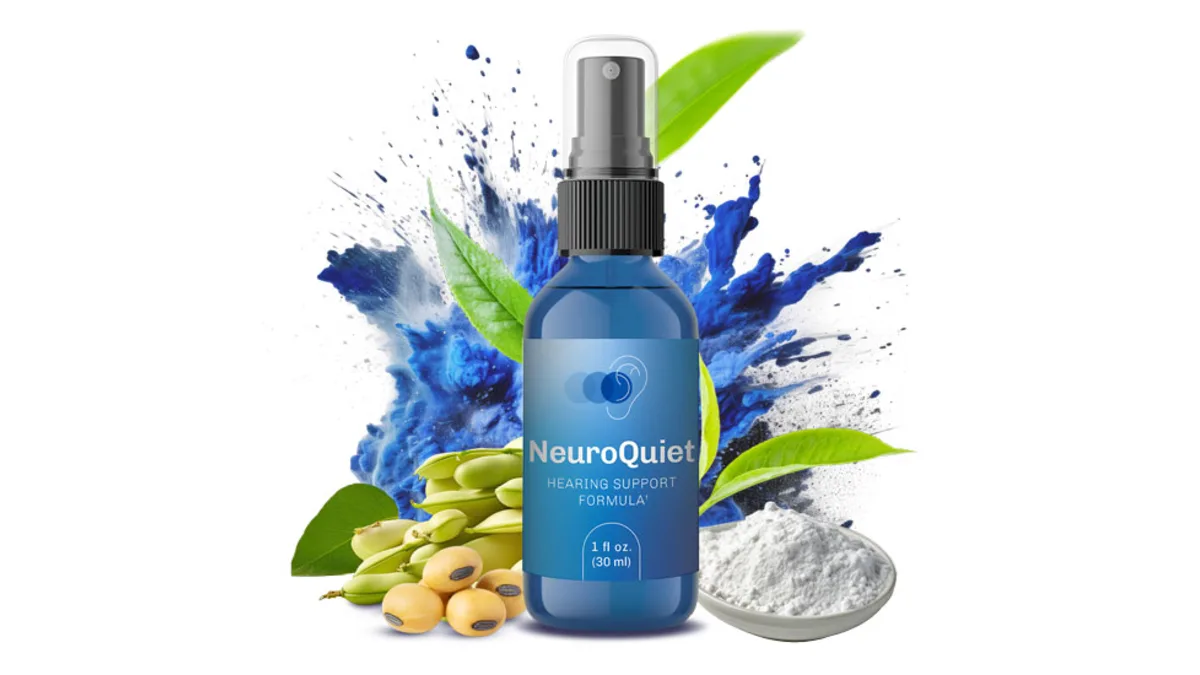
For a comparison of how a different supplement in our coverage handled the same problem of thin buyer data and loud claims, our NeuroQuiet review went through the same exercise with a spray product and reached a similar structural conclusion: a published label and a real refund window do the persuading, and the marketing language does the opposite.
Pricing, Bonuses and the Refund Window
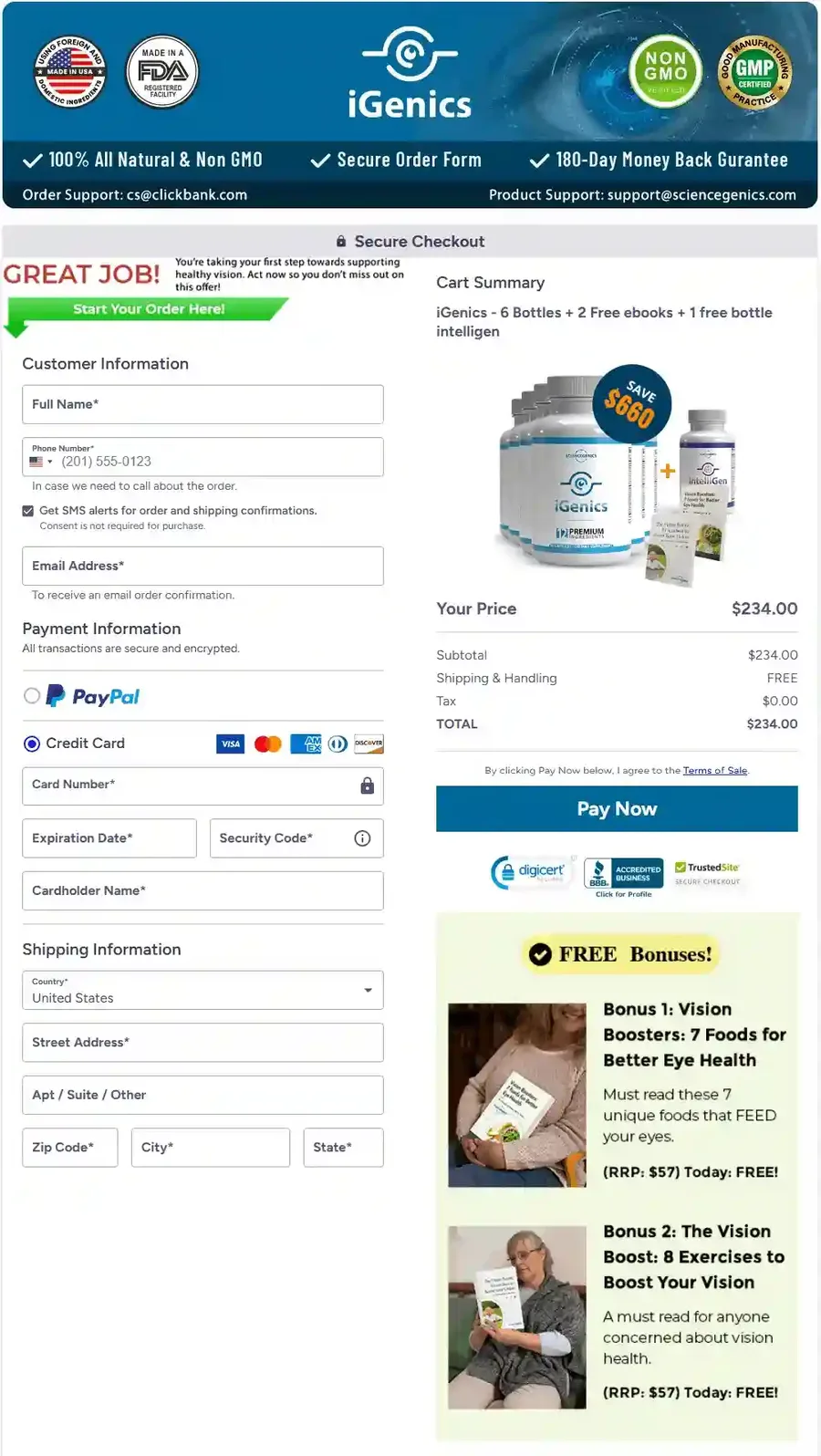
The current ladder, as it appeared on the official site while I was checking:
| Option | Total | Per bottle | Per day | Notes |
|---|---|---|---|---|
| 1 bottle | $59 plus $9.99 shipping | $59 | about $2.30 | 30 day supply, worst rate available |
| 3 bottles | $147, free shipping | $49 | about $1.63 | Minimum that covers the carotenoid window |
| 6 bottles | $234, free shipping | $39 | about $1.30 | Adds two e-books and a free Intelligen bottle |
Checkout runs through ClickBank as a one-time payment, so there is no subscription to cancel and no auto ship to unwind. That is a genuine plus, and it is the reason the billing complaints in this category tend to come from third party sellers rather than the official channel.
The bonuses are two digital books and a free bottle of Intelligen. I do not price bonuses in a value calculation because I have not reviewed them, and neither should you count them toward the decision. If they turn out to be useful, treat them as the free sample they are.
Then there is the refund window, which I have mentioned three times because it is the term that matters most. The official FAQ says 180 days with no return required. The ClickBank checkout and several other pages say 60 days. The official policy page, per one careful review I read, even contains a stray reference to a different product name in its refund section, which is the kind of template residue that makes people nervous for good reason.
My practical advice, and I would give this for any product with conflicting terms: before you enter payment details, open the guarantee text on the checkout page itself, screenshot it with the date visible, and save that screenshot. If the checkout says 180 days, you have six months to run a proper test. If it says 60 days, you know you are judging this product on comfort signals rather than the carotenoid timeline, and you should price that risk into your decision.
Six Things to Know Before You Order
1. The ginkgo interaction is not theoretical. Eighty milligrams of ginkgo biloba a day is a dose that affects bleeding time, and it stacks with warfarin, aspirin, clopidogrel and most NSAIDs people take regularly. If you are on a blood thinner, the pharmacist conversation is mandatory, not precautionary. The NCCIH’s summary of ginkgo is the reference I would hand to your pharmacist.
2. This is not AREDS2, no matter which page you landed on. The nutrient backbone is borrowed, the doses are different, four ingredients are additions, and the trial was in people with existing disease. If you have been diagnosed with anything by an eye doctor, that doctor’s formula wins over anything in this article.
3. Buy from the official site only. No Amazon, no pharmacy, no third party listing is authorized. The complaint pattern around expired bottles and double charges clusters entirely around unofficial sellers, and avoiding them removes most of the risk people describe in threads about this product.
4. Screenshot the guarantee at checkout. One hundred eighty days or sixty days, whichever your checkout page actually states, with the date visible. This takes twenty seconds and protects the entire three month test.
5. Skip the single bottle. $59 plus $9.99 for a product whose main ingredients need three to six months is paying the highest price for the shortest possible experiment. The three bottle minimum is the smallest honest test, and the six bottle bundle is where the math makes sense.
6. Expect comfort before clarity. The first plausible changes are fatigue and refocus timing, in the 2 to 4 week window. Anything structural lives at month three and beyond, and you will need a professional measurement to see it at all.
Side Effects, Safety and Medication Questions
The safety profile of this formula is, on paper, unremarkable in the good sense. Lutein, zeaxanthin, vitamins A, C and E, zinc and copper are among the most studied nutrients in the supplement aisle. Bilberry and saffron have long human use histories at these amounts. Turmeric with black pepper is taken by millions daily. The 6-month randomized trial of lutein and zeaxanthin in heavy screen users reported no serious adverse reactions and no clinically significant changes in liver or kidney safety markers, and those doses were lower than what is printed here.
The reported negatives are the boring, expected ones: mild stomach upset in the first week for a minority of users, usually resolved by taking the capsules with food rather than on an empty stomach, which is what the label asks for anyway. I had one mild stomach ache in week one and none after I started actually eating breakfast with them.
Four cautions that are not boring:
Blood thinners plus ginkgo, as covered above. This is the one that sends people to a pharmacist.
Zinc at 20 mg daily sits well under the 40 mg upper intake level for adults, but long term copper balance is the reason the formula includes copper at 2 mg, and people with Wilson’s disease or copper metabolism conditions should not start this without medical guidance.
Saffron at 20 mg is within the range used in studies, but higher saffron doses have uterine stimulant associations in traditional use, which is why pregnant women are told to avoid supplemental saffron generally.
Anyone with a diagnosed eye condition, glaucoma, diabetic retinopathy or macular degeneration already in progress, should treat this as a discussion item for their ophthalmologist rather than an addition they make on their own.
My bottom line on safety: for a healthy adult on no medications, this is a low drama formula. The medication questions are the only ones with teeth, and they are solvable in a two minute pharmacy conversation.
Tips That Made the 8 Weeks Useful
Take it with breakfast that contains fat. Lutein and zeaxanthin are fat-soluble, and the absorption difference between taking them with a coffee on an empty stomach and taking them with eggs or yogurt is not subtle. The label says with food for a reason, and the reason is pharmacokinetics, not marketing.
Log before you start, not after you suspect. Write down your evening eye score, your refocus timing and your night driving impression the day before the first capsule. Memory is the enemy of every supplement test, because the improvement you are looking for is exactly the kind of thing a suggestible week invents.
Give it the full window or do not bother. Eight weeks told me about comfort and tolerance. The carotenoid story needs three to six months. A half finished test produces a confident wrong answer, which is worse than no test.
Keep the eye appointment. Nothing in this bottle replaces a dilated exam, and the two things worth catching early in this category are exactly the things a supplement cannot treat. If you have not had an exam in the last two years, schedule it before the bottle arrives.
Fix the screen habits that cost nothing. The 20-20-20 rule, a real blink habit, and a monitor at the right height do more for evening eye strain in week one than any capsule does in month one. If you want the gadget angle on resting your eyes, our eye massager comparison covers what those devices can and cannot do, and a sleep mask like the Aura solves the wind-down half of the problem, which is the half that has nothing to do with what you swallow.
Keep the receipt and the screenshot. Order confirmation, guarantee text, date visible. Twenty seconds of admin that converts a three month experiment into something you can actually exit if the answer is no.
Who Should Buy iGenics, and Who Should Skip It
Buy it if: you are forty or older, your eyes get hammered by screens, your optometrist has not given you a specific formula to take, and you want one capsule routine with every amount printed. Buy it if you are willing to commit to the full three to six months the research requires, and buy the six pack so the test can finish. Buy it if a long refund window matters to you and your checkout page confirms the 180 day term.
Skip it if: you have a diagnosed eye condition, in which case your ophthalmologist’s formula wins and this conversation is moot. Skip it if you are on blood thinners and have not had the pharmacist conversation. Skip it if you want something you can feel working by Friday, because that product does not exist in this category and pages that imply otherwise are lying about the pharmacology. Skip it if your budget only stretches to the single bottle, because at $68.99 for thirty days you are paying the most for the least useful experiment.
The middle case is the person I was eight weeks ago: no diagnosis, real screen fatigue, a willingness to be patient, and a low tolerance for being marketed at. For that person this is a reasonable, fairly priced thing to try at the bundle price, with a label you can verify and a window you can exit, provided you read the guarantee at checkout instead of on the sales page.
Final Verdict
iGenics is the rare supplement where the label is better than the marketing. The panel prints real milligram amounts for every active, the carotenoid doses exceed the levels the AREDS2 trial used, the routine is two capsules with breakfast, and at $39 a bottle the six pack prices a full three to six month test at about $1.30 a day. The company behind it has a traceable US address, a standard processor and a manufacturing story that holds up under checking.
What holds it back is everything around the panel. Two refund windows for one product. Three different crossed-out list prices. Sales language running ahead of what a dietary supplement may claim, and a complete formula that has never itself been in a trial. None of that makes the bottle worse. All of it means you have to do your own reading instead of trusting the page, which is true of most things in this category and unusually true of this one.
My rating is 7.3 out of 10, built from the six categories below. It is a good product wrapped in inconsistent copy, and the copy is fixable by the buyer in about two minutes of careful checkout reading.
Score Breakdown
| Category | Score | Reasoning |
|---|---|---|
| Label Clarity | 8 | Every active printed in milligrams, no blend totals, the most open panel in this comparison |
| Formula and Dose | 7 | Carotenoids above AREDS2 levels, zinc and vitamin E not matching the trial, four untested additions |
| Ease of Use | 9 | Two capsules with breakfast, 30 servings, nothing else to schedule, zero missed days in eight weeks |
| Guarantee and Support | 7 | 180 days as printed on the official FAQ would be excellent, but 60 days appears just as prominently elsewhere |
| Value for Money | 6 | $39 a bundle is fair, $59 plus shipping for one bottle is not, and the crossed-out prices undermine the ladder |
| Evidence Base | 7 | Landmark research on the core nutrients, published trials on saffron and the carotenoid pair, nothing on the finished bottle |
| Overall | 7.3 | Transparent label, credible doses, messy policy copy. Judge it on the panel, not the page. |
If the numbers line up for you, the current bundle pricing is here, and take the twenty seconds to screenshot the guarantee before you pay.
Key Specifications
| Format | Capsule, 60 per bottle |
|---|---|
| Daily serving | 2 capsules with food |
| Servings per bottle | 30 |
| Headline actives | Lutein 20 mg, zeaxanthin 10 mg, bilberry 480 mg |
| Price, 1 bottle | $59 plus $9.99 shipping |
| Price, 6 bottles | $234 total, $39 a bottle, bonuses included |
| Guarantee | 180 days per official FAQ, 60 days on ClickBank and mirrors |
| Retailer | ClickBank checkout, one-time payment |
| Shipping | US orders, free on the 3 and 6 bottle bundles |
| Made in | United States, GMP facility, returns via Tallmadge, Ohio |
iGenics earns 7.3/10: good — worth it for the right buyer. 8 weeks across two deadline weeks, dark winter evenings and daily screen work.
- Best part: Every active has a milligram amount printed, so the label can be checked against studies line by line
- Best part: Lutein at 20 mg and zeaxanthin at 10 mg sit above the AREDS2 trial levels of 10 mg and 2 mg
- Best part: Two capsules a day with breakfast, 30 servings a bottle, nothing else to schedule around
- Biggest catch: No published trial of this complete formula; every study cited tests single ingredients or other formulas
Common Questions & Answers
Q: What is iGenics and how do you take it?
iGenics is an eye-health supplement from Science Genics sold as 60 capsules per bottle, with a two capsule daily serving, which makes each bottle a 30-day supply. The label calls for taking the capsules with food, ideally with breakfast, because lutein and zeaxanthin are fat-soluble and absorb better alongside a meal that contains some fat. There is no cycling, no loading phase and no timing rule beyond that.
Q: Does iGenics actually work for eye strain or vision?
Nobody can say with certainty, because no published trial tests this complete formula. What is established is narrower: lutein and zeaxanthin at the doses AREDS2 used measurably raise macular pigment over 3 to 6 months in controlled studies, and a 6-month randomized trial in heavy screen users found improvements in tear production and photo-stress recovery versus placebo. Whether 20 mg and 10 mg of carotenoids inside this specific bottle delivers the same result is untested. Expect comfort changes you might notice in 2 to 4 weeks, and treat any promise of restored vision as marketing.
Q: How long does iGenics take to work?
The honest timeline has three tiers. Discomfort and end-of-day fatigue are the changes people report first, usually 2 to 4 weeks in, and those are most likely tied to the antioxidant and circulation ingredients rather than the carotenoids. Saffron research places its effects on photoreceptor function at 8 to 12 weeks. The structural change, meaning measurable macular pigment density from lutein and zeaxanthin, follows the AREDS2 supplementation timeline of 3 to 6 months of daily use. Anyone promising results in days is selling, not summarizing the research.
Q: What is actually in iGenics?
The supplement facts panel lists lutein 20 mg from marigold, zeaxanthin 10 mg, vitamin A, vitamin C 500 mg, vitamin E, zinc 20 mg, copper 2 mg, bilberry extract 480 mg, turmeric extract 350 mg, ginkgo leaf powder 80 mg, saffron 20 mg and black pepper extract 20 mg. The first seven entries track the AREDS2 nutrient set closely, at higher carotenoid doses than the trial used. The four botanicals AREDS2 did not include are the part with smaller, separate literatures. Note that at least one mirror page describes the botanicals as a blend with undisclosed amounts, so read the bottle label itself when it arrives.
Q: Is iGenics the same as the AREDS2 formula?
No, and this is the single most important distinction in this category. AREDS2 was a National Eye Institute trial in 4,203 people who already had intermediate or advanced age-related macular degeneration, testing 10 mg lutein, 2 mg zeaxanthin, 500 mg vitamin C, 400 IU vitamin E, zinc and copper. iGenics borrows that nutrient backbone, raises the carotenoid doses, lowers or alters some others, and adds bilberry, turmeric, ginkgo and saffron that the trial never tested. If your ophthalmologist has told you to take the full AREDS2 formula for a diagnosed condition, this is not a substitute for it.
Q: Is iGenics safe? Are there side effects?
The ingredient set is well studied and generally well tolerated, with the main reported complaints being mild stomach upset in the first week, usually fixed by taking the capsules with food. Two interactions deserve real attention. Ginkgo biloba at 80 mg can affect bleeding time, so anyone on warfarin, aspirin or other blood thinners needs a pharmacist's read before starting. Zinc at 20 mg daily is fine for most adults long term, but people with copper metabolism conditions should ask. Pregnant or nursing, or with a diagnosed eye condition, talk to your doctor first.
Q: How much does iGenics cost?
One bottle is $59 plus $9.99 shipping, which is the worst way to buy it. Three bottles are $147, which is $49 each, with free shipping. Six bottles are $234, which is $39 each, also free shipping, and that bundle adds two e-books and a free bottle of Intelligen. The official site shows a struck-through regular price of $99 a bottle, while other pages selling the same product claim list prices of $149 or $179. Treat whatever number is crossed out as decoration and judge only the amount charged at checkout.
Q: Does iGenics have a money-back guarantee?
The official site FAQ says 180 days, six months, with no requirement to return the bottles. The ClickBank checkout and several other pages carrying the same product state 60 days. Both cannot be the current policy for the same order, and you cannot tell which one applies to you from a sales page. Before you pay, open the guarantee text on the checkout page itself, screenshot it with the date visible, and keep that screenshot until well after the shorter of the two windows has passed.
Q: Can I take iGenics with my prescription medication?
Show the label to your pharmacist before you start if you take anything daily. The ginkgo at 80 mg is the headline concern because it interacts with blood thinners, and it also stacks with some blood pressure and antidepressant medications. Zinc and copper interact with certain antibiotics and thyroid medicines. The carotenoids, vitamins and botanicals are otherwise low risk at these amounts, but low risk is not no risk, and a thirty second conversation at the pharmacy counter costs nothing.
Q: Where can iGenics be bought? Is it on Amazon?
From the official site only, with checkout handled by ClickBank as a one-time payment, no subscription attached. There is no retail shelf, no pharmacy stock and no authorized Amazon listing. That matters because complaint threads repeatedly describe bottles bought from third party sellers that arrived expired, sealed badly, or simply did nothing, and unauthorized listings are also where double charge reports cluster. If you want this product, buy it from the official page and nowhere else.
Q: Is iGenics FDA approved?
No dietary supplement is FDA approved, for this product or any other. Supplements are regulated as food in the United States, so a company is responsible for its own safety and label claims rather than getting pre-market approval. The facility is described as FDA registered and GMP certified, which describes manufacturing standards, not an FDA verdict on whether the product works. The bottle carries the standard disclaimer that the statements have not been evaluated by the FDA and the product is not intended to diagnose, treat, cure or prevent disease.
Q: iGenics vs PreserVision, which should you buy?
It depends on why you are buying. PreserVision AREDS2 is the nutrient set the actual trial tested, sold in any pharmacy for around $20 to $25 a bottle, and it is what most ophthalmologists mean when they say AREDS2. iGenics gives you higher carotenoid doses, adds four botanicals with their own small literatures, and prints every amount on the panel, at roughly double the per bottle cost in its bundles. If a doctor recommended AREDS2 for a diagnosed condition, buy AREDS2. If you want a broader eye nutrition stack with a long refund window, iGenics is the one to evaluate.
More Wellness Gadgets Reviews
Related Guides & Articles
Browse all 87 Wellness Gadgets articles »

Health tech researcher and wellness gadget reviewer. PhD in Biomedical Engineering. Tests sleep trackers, massage devices, and health monitors with clinical precision. Believes in data-driven wellness.