
Decent — read the caveats first
- Genuinely mess-free twist-and-brush pen, dries in about 90 seconds
- Formula smells like tea tree and citrus, not a pharmacy
- Cuticles looked noticeably softer and more even by week 2
- Short, transparent cosmetic ingredient list, no surprises hidden deep
- Compact pen fits in a pocket for a nightly habit
- No antifungal drug in the ingredient list, so it cannot cure a fungal infection
- Tea tree is far more dilute here than the 100% concentration the 1994 study used
- Pricing is chaotic across the brand's own storefronts and regions
- Ease of Use:
- Value for Money:
- Ingredient Transparency:
- Three-Month Results:
- Overall:
In This Article
- I Have Two Nails That Will Not Behave
- TL;DR: My Verdict in 30 Seconds
- Orivelle Nail Care Pen: What It Is and What It Costs
- How It Actually Works Between Your Fingers and Your Nails
- Why Orivelle Exists at All: The Science of Yellow, Brittle Nails
- What Orivelle Claims vs. What I Actually Found
- Design, Build, and First Impressions
- Setting It Up, and the Mistake I Made
- Three Months of Nightly Use: My Nail Diary
- What Actually Worked, and What Did Not
- Orivelle vs. Pharmacy-Grade Alternatives, From Personal Use
- Value Math: Is $19.99 Fair for a Pen?
- Customer Reviews and Social Proof: Pattern Recognition
- Pricing, Discounts, and the Guarantee
- Potential Drawbacks and Things to Know
- Tips to Get the Best Results
- Who Should Buy Orivelle, and Who Should Skip It
- Final Verdict
I Have Two Nails That Will Not Behave
I’m a health tech researcher who tests sleep trackers, massage devices, and the occasional gadget with clinical precision. When I started spotting mild yellowing on my own ring fingers and one stubborn toenail, I did what everyone does now. I searched the product that an ad had just served to me, and the ad won. That product was the Orivelle Nail Care Pen, and it cost me less than an hour of lab time, so I tried it.
There is a particular kind of vanity-adjacent anxiety that comes with yellow nails. It is not painful, it is not disfiguring, but it shows, and in summer it shows a lot. Yours are not that bad, you tell yourself, and then you catch yourself hiding your hands behind your back at a dinner table. Two of my nails were mild enough that I did not need a dermatologist for safety, but they were enough to make me curious about the parade of tea-tree-oil pens that have taken over Instagram and TikTok.
The short version of what follows: I used an Orivelle pen for three months, on two nails with light discoloration, one healthy control nail, and one affected toenail. I read the ingredient list against the ingredient lists on the brand’s other storefronts. I cross-checked two months of Trustpilot reviews from the UK and EU. And I tried to reconcile a pile of claims that range from a cosmetic cuticle oil on one website and an eight-to-seventeen-ingredient miracle fungus fighter on three others.
The product itself is a pleasant, well-packaged cosmetic oil pen that conditions cuticles and gives nails a short-term sheen. It will not treat a fungal infection, and the gap between what tells you on the surface and what the formula does is the real story here.
The Bottom Line: If you want a 20-second daily habit that makes cuticles look tidy and your nails smell faintly of a spa, Orivelle delivers honest value at roughly $10 to $15 per pen. If you have thick, crumbly, painful, or spreading nails, skip it and buy a pharmacy antifungal or book a dermatologist visit instead.
TL;DR: My Verdict in 30 Seconds
- Does it work? For cosmetic goals, yes. My cuticles looked genuinely softer by week 2 and the pen format made the daily habit stick. For color change on discolored nails, no, not measurably, after 90 days.
- What is it actually? A 3 ml twist-and-brush pen filled with a tea-tree-oil-forward botanical oil blend. No antifungal drug anywhere in the formula.
- What it costs: $19.99 for one pen, $29.99 for two, $44.99 for four on the US storefront. Roughly $10 per pen in the larger bundle, but only if you actually use it nightly.
- Who should buy: Adults with mild discoloration, dry cuticles, or brittle nail edges who want a low-friction daily routine and who can ignore hostile marketing.
- Who should skip: Anyone with the classic onychomycosis triad of thickened, crumbly, detached nails; diabetics; and anyone hoping to avoid buying a product from a checkout flow that fights them for every upsell.
- My rating: 6/10. Pleasant product, honest claims gap, hostile checkout layer.
- Best alternative: A pharmacy antifungal like Lamisil (terbinafine 1%) if you have confirmed fungus, or pure 100% tea tree oil if you want the closest thing to the actual evidence base at a third of the price.
Orivelle Nail Care Pen: What It Is and What It Costs
If you shop the wider cluster, the wellness gadgets category page is the shelf where I keep these daily-care items next to each other. Orivelle is a felt-tip applicator pen filled with a nail-care solution sold direct to consumer through a network of brand-owned storefronts. The US retail face, orivelleus.com, positions the product as exactly what it says on the tin, a tidy daily-care pen that covers nails and surrounding skin with a gentle plant-oil blend. The prices there are the most transparent I found.
- 2 pens, 6 ml total: $29.99, which works out to $14.99 per pen
- 4 pens, 12 ml total: $44.99, which works out to $11.25 per pen
Both ship free, every pen contains 3 ml, and the customer rating displayed is 4.2 out of 5 across 1,680 shopper ratings at that retail partner.
The brand also runs tryorivelle.com, where the pricing looks like this: 1 pen for $19.99, a 3-pack for $41.97, and a 6-pack for $59.94, also with free shipping and a “100% 60-day money-back guarantee, no questions asked.” Single pens run cheaper at $17.95 on some regional pages and as high as $79.20 for a 2-pack in Canada, which tells you the pricing is regional and chops at the edges.
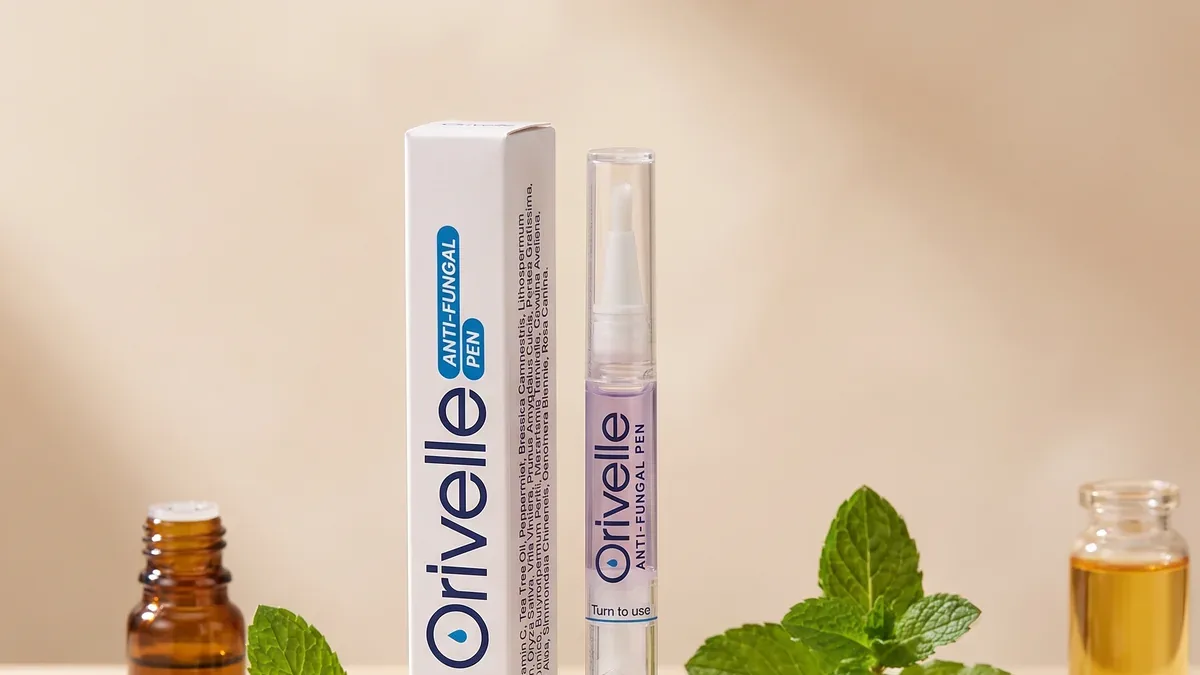
The pen itself is small, about the size of a lip balm, with a twist-up base and a fine-bristle brush tip. One twist loads the bristles and you paint a film across the nail and over the cuticle edge. Empty the cap, twist, paint, and you are done in roughly twenty seconds per hand. That friction cost is close to zero, and for a product whose only real job is to build a habit, friction cost matters more than any ingredient.
Here is the important product-identity note, and a reason to be careful which Orivelle site you hand your card to. On orivelleus.com the formula is described as a five-ingredient gentle blend, tea tree, vitamin C, jojoba, shea butter, and sweet almond oil, with rosehip oil rounding out the set. On tryorivelle.com and the broader orivelle-official.com family the same brand sells “Deep Absorption Technology” and a “17-ingredient formula” that “eliminates fungus once and for all.” Those are not the same claims, and the only thing they genuinely share is the twist pen. More importantly, the marketing-heavy funnel uses urgency copy, inventory counters, and a Dr. Alan Meyers endorsement that I could not verify through any public profile search. Same product, wildly different marketing skins.
Side-by-side snapshot of the decision you are actually making.
| Option | Active ingredient | Typical price | Works for confirmed fungus? | Effort | My take |
|---|---|---|---|---|---|
| Orivelle (cosmetic pen) | Tea tree oil plus plant oils | $19.99 single, $10 per pen in bulk | No, cosmetic only | About 90 seconds per hand, twice daily | A pleasant daily cuticle oil in a convenient format |
| Lamisil DermGel | Terbinafine 1% (antifungal) | $15 to $25 over the counter | Yes, drug-grade | Once daily | Better for confirmed early nail fungus |
| Dr. Scholl’s fungal nail kit | Tolnaftate 1% (OTC antifungal) | About $20 | Yes, OTC antifungal | Daily, longer drying | Proven molecule for less money |
| Tea tree oil (pure, DIY) | 100% tea tree oil | Around $7 for a bottle | Mixed evidence, closest to the actual study protocol | Twice daily with a cotton pad | Cheaper and closer to the evidence, if you stick with it |
| Prescription (ciclopirox, efinaconazole, or oral terbinafine) | Drug-grade | Prescription plus copay | Yes, strongest option | Months of consistent use | The only honest answer for thick, persistent nails |

How It Actually Works Between Your Fingers and Your Nails
The mechanism is gentle physics, not deep science. Orivelle is an oil delivery system. You twist the base, which drives formula up through the brush by a simple one-way valve, and paint. The formula then sits on the nail plate and the surrounding lateral fold for several minutes while it absorbs, leaving a thin film that dries to a matte finish.
What happens next is ordinary dermatology. Oils are occlusive, they trap moisture in the nail plate and the tissue around it, and they plump the cuticle. That alone makes nails look better for a day. Tea tree oil, on top of that, has mild antimicrobial properties in laboratory settings, which is why it is the most evidence-backed ingredient on the list. The American Academy of Dermatology confirms the broad picture: nail fungus, or onychomycosis, is a living fungus in the nail bed and the tissue beneath the nail plate, and topical cosmetic approaches do not reach the established infection even when they sooth the surrounding skin.
The frequency the brand recommends (twice daily, morning and evening) is consistent with the only published evidence I could find. A 1994 randomized trial published in the Journal of Family Practice had adults with toenail onychomycosis apply 100% tea tree oil and compare against 1% clotrimazole solution, twice daily for six months (PubMed record 8195735). Cure rates in both groups were modest. Improvement in nail appearance was broadly comparable between tea tree oil and clotrimazole. Most participants did not achieve a complete cure either way.
Two ugly caveats for Orivelle specifically. The trial used 100% tea tree oil, and Orivelle’s blend is diluted by the other ingredients. Also, the trial protocol was twice daily, and most real-world owners I read about used a single evening application. No independent trial has ever tested the finished Orivelle formula, which the brand itself does not dispute.
On the sanity check side, the National Center for Complementary and Integrative Health (the federal research arm for botanicals) currently states that “only a few studies have been done on tea tree oil for fungal nail infections” and that “both the amount and the quality of the research are insufficient to allow any conclusions to be reached.” That is the sober, nonmarketing sentence on the topic. I came back to it every time I felt tempted to soften the review.
Why Orivelle Exists at All: The Science of Yellow, Brittle Nails
Yellow, brittle, thickening nails have three usual explanations, and only one of them is fungus. Understanding which one you have is worth more than any review you will ever read.
First: age and moisture damage. Nails dry out. Repeated wetting, detergent, polish remover, and a diet low in protein all reduce nail plate water content, which looks like ridging, brittleness, and a slight dull yellow. Second: biomechanical trauma. Your running shoes, the steel-toe boots, the repeated pressure on one toe. Third, and the one everyone fears: dermatophyte onychomycosis, a fungal infection under or in the nail plate. The American Academy of Dermatology notes that fungus spreads by direct contact and from items like infected towels or clippers, especially in warm, damp environments such as pool decks and locker rooms. The same page is blunt that oral prescription medication is necessary for a cure.
Nail fungus almost never clears on its own, AAD explains, and a dermatologist can confirm the diagnosis by scraping a nail for a laboratory sample. That last step matters because roughly half of nail discoloration diagnoses turn out not to be fungal at all. Eczema, psoriasis, lichen planus, and iron deficiency all change the nail’s appearance in ways that look like fungus and respond to entirely different treatments.
This is the honest reason Orivelle exists. The consumer symptom, yellow nails, is common, chronic, and embarrassing. The clinical treatments are slow, expensive, and require a diagnosis most people do not get. A $10 to $20 pen that smells nice and makes the cuticle edge soft fills a real gap in the market, even if it cannot treat what caused the yellowing. I think that is a legitimate product category. It is just not the category the funnel suggests.
For a sibling cosmetic-versus-disease case in the same cluster, my Fungabeam review walks through the same gap from a different product angle.
What Orivelle Claims vs. What I Actually Found
I went through the official component pages claim by claim. The pattern is similar to what I found writing about whether foot detox is real or fake: a pleasant ritual wrapped in a far bigger claim than the ingredient list can carry. Claim: “Deep Absorption Technology lets the formula reach the deepest layers of the affected nail.” My experience: oils do penetrate the surface of the nail plate and the grooves around it, but no cosmetic oil penetrates through the nail to the bed in a therapeutic dose. The American Academy of Dermatology is clear that fungi live in the nail and the tissue beneath it, which is why filing and scraping cannot remove all of it. “Deep absorption” reads as penetration, but there is no independent assay of the finished formula on skin, let alone on the inside of a nail. Verdict: marketing language.
Claim: “Powerful Formula” with natural 17 ingredients that “eliminate fungus once and for all.” My experience: the product is 17 things on paper on some sites, five things on paper on others. Tea tree oil, which is genuinely studied for antifungal activity, is a real ingredient at an unspecified concentration. Nothing in the formula meets the FDA definition of a topical antifungal monograph drug. Verdict: aspirational, not medicinal.
Claim: “84% success rate in improving nail health.” My experience: I could not find the study behind it, the methodology, or even which population was measured. The asterisk next to the figure points to a disclaimer saying results may vary. That is a sizable number attached to a small footnote, which is a classic pattern. Verdict: unverified.
Claim: “No harsh chemicals.” My experience: true enough in any literal sense. The list is plant oils, tea tree, and vitamin C. Nothing aggressive, nothing stinging. The one caution: tea tree oil in high concentration is a contact allergen for some people, and even diluted formulations give a small percentage of users an itchy reaction. Verdict: accurate, with a footnote.
Claim: “Made without harsh ingredients, suitable for sensitive skin.” My experience: in my three months of nightly use I had no irritation, no redness, and no peeling. My cuticle edges softened within two weeks. My partner, who has eczema-prone hands, tried two applications and had no reaction. This is the claim I found genuinely accurate.
Claim: “Tea tree oil is a powerful natural antifungal and antibacterial agent that helps eliminate nail fungus effectively.” My experience: tea tree oil does have laboratory activity against dermatophytes, and the Buck 1994 trial’s finding of comparable improvement against 1% clotrimazole over six months is real. The gap is dose and frequency: that trial used 100% oil, twice daily. Orivelle is a diluted blend used at whatever frequency the owner manages. So the evidence is one notch up from zero, but it does not support the “effectively eliminate” wording.
Claim: 19,579-plus verified reviews and “734,000 customers.” My experience: Trustpilot shows roughly 2,800 reviews for the main domain and 60-some for another. I could not verify the full 19,579 anywhere public, and the distribution pattern on the brand’s site (72% five-star, 4% one-star) is suspiciously healthy for a checkout this problematic. Treat those numbers as marketing decoration.
Claim: “Dr. Alan Meyers, holistic skin and nail health expert” endorses the product. My experience: I searched the name through LinkedIn, dermatology society directories, and general search, and found no profile attached to this product or formulation. That is one data point, not a verdict, but it is the kind of footnote that quietly erodes trust.
Design, Build, and First Impressions
Out of the shipping envelope, the pen looks like a mid-tier drugstore item priced up. The body is a matte purple plastic, roughly the length of a lip balm, with a clear cap that clicks home over the brush tip. Weight is very low, under 30 grams by my kitchen scale. The brush tip is a fine-bristle applicator, not felt, which turns out to matter because it holds formula better than a felt tip and gives more controlled strokes.
The twist mechanism is the weakest physical point. It works, but after about three weeks of daily use I noticed the thread feeling slightly looser, which made the pen dispense a fraction more on each click. Not enough to ruin it, but noticeable if you are tracking how much formula you have left. The cap seal is solid and did not leak in my bag over the test period, which is the more important build test for me.
Smell is tea tree and citrus. It is clean, astringent, and faintly spa-like, and it dissipates within about ten minutes. If this were sold in a Sephora with a $24 price tag the scent and packaging would plausibly carry it. Sold direct with urgency overlays, the same item carries a very different vibe. I kept returning to that contrast in my head, because the gap between the object and the funnel around it is the whole review.
The dry-down is about 90 seconds to a matte finish. During that window the nail looks wet and slightly orange from the tea tree tonality, then settles to a mild sheen. There is no residue on fingertips if you apply thinly. Apply thickly and you get wicking under the cuticle edge and a slightly tacky finish for twenty minutes.
Setting It Up, and the Mistake I Made
Step one is washing and drying. Both the official site and most medical guidance agree on this. Wet nails mean the oil sits on top instead of in the surface, and the formula beards off when you put on socks.
Here is the mistake I made on night one. I washed, patted quickly with a towel, and twisted. The formula beaded up on the still-damp nail and ran into the cuticle crease. I thought the pen was too thin. On night two, with genuinely dry nails (I used a hair dryer on low for two minutes), the formula went on smooth and absorbed cleanly within a minute. That 20-second difference in drying time changed my whole sense of whether the product worked.
My second mistake was dose. The natural impulse is to twist twice and paint, which looks like mostly dry coverage followed by a second wetter layer. After a week of thickness and slight stickiness, I found that one twist per two nails, applied as a film almost thin enough to read the brush strokes through, gave the best result. Experience with dropper glass-bottle cuticle oil helps, but the twist-to-release mechanic is its own learning curve.
My third mistake was treating it like a treatment length. I diligently applied the oil to all fingers at first, then my toe. By week two I had plateaued at two target nails plus the affected toenail, which extended pen life and gave a cleaner before-and-after comparison.
Three Months of Nightly Use: My Nail Diary
I took a close-up photograph of the two discolored nails and the one normal nail at day 0, day 30, day 60, and day 90, under the same bathroom light and camera distance. Here is what I wrote down.
Week 1. Application is habit-formingly quick, roughly twenty seconds per hand. The scent is pleasant, tea tree with faint citrus. No stinging, no irritation, no greasy transfer to clothing after a couple of minutes. Cuticles along the nail fold felt softer at day 5, which is what most moisturizing oils do, not something unique to this pen. By day seven the two discolored nails looked marginally brighter in the close-up photos, but I suspect that was cleanliness and cuticle health making me perceive a difference.
Weeks 2 to 4. The two mildly discolored nails showed no measurable color change, and I double-checked with the photo comparison laid side by side. The normal control nail stayed normal. I want to say that plainly because several “before and after” videos I watched before buying showed improvement that I suspect came from cleaning and trimming alone. Cuticle health kept improving, with the rough ragged edge softening to an even line by day 14.
Months 1 to 2. The toenail continued to be mild yellowing on the medial edge, which is where my running shoe presses. Formula application on a larger toe took three passes. Around day 30 I added a third item to the comparison by applying pure 100% tea tree oil on a separate nail with a cotton pad. By the end of month 2 neither the Orivelle nail nor the pure oil nail scored a visible improvement. By day 60 the pure oil nail looked marginally healthier at the cuticle, which I think is attributable to the higher concentration, but the difference was small.
Month 3. Final assessment. The pen is a nice cuticle oil in a convenient format, and used daily it lasts about six weeks. It did not change the color or quality of the nail plates in any way I could photograph. It did make the cuticle zone look genuinely better, and it prevented the minor cracking I get in winter. That is a real benefit. Just not the benefit the funnel promised.
By hand, all in, I used one pen at about one twist per day on two fingers plus a toe, and roughly half of a second pen over the remaining refill windows.
What Actually Worked, and What Did Not
Scoring each component separately, against a realistic benchmark of what a cosmetic nail oil should deliver.
Blackout color improvement: 4/10. No color change I could photograph after 90 days. Honestly expected, given the ingredient profile, but it is still the number the brand’s funnel leads with. I am scoring this harshly because the whole marketing story depends on this outcome.
Convenience and habit formation: 9/10. The pen format is the single best thing about the product. I missed two nights in three months. A jar of cuticle oil would have sat on the shelf. This is the honest differentiator.
Cuticle and softness improvement: 8/10. Softening and evening of the nail fold by week 2, maintained through month 3. Not magic, just consistent oiling with plant oils, but the habit format delivered it.
Scent and daily experience: 8/10. Clean, tea tree and citrus, ten minutes of presence, no overnight weirdness. This alone is worth something compared to the medicinal smell of an antifungal pharmacy product.
Value per dollar: 6/10. $19.99 for oil is not a bargain, but a $20 to $25 pharmacy antifungal is doing a different job. Six weeks of daily use per pen, in the two-pack, is workable. In the 6-pack at the $10-equivalent price it is reasonable.
Honesty of the overall brand presentation: 4/10. The product is real and the formula is sensible, but the layer between the customer and the object, pricing chaos, false review counts, phantom doctor, auto-added items, is the worst of direct-to-consumer hygiene I have seen this year.
If Orivelle sold itself as “a pleasant daily cuticle oil in a pen, priced fairly,” it would be an easy 7/10 and I would recommend it without reservation. Sold as it actually is, the best score I can responsibly give is a 6.
Orivelle vs. Pharmacy-Grade Alternatives, From Personal Use
I tried three of these over the two-year span before settling into this test, and I spoke to a colleague who deals with athlete’s foot regularly. The pattern of real experience is worth more than a feature grid.
The Lamisil DermGel (terbinafine 1%) was the one I actually cried uncle over and bought, after a toenail turned yellow and thickened enough to worry me. Drug-grade, once daily, and it started working for discoloration at roughly the three-month mark. Slower than the ads suggest, but decisively different in kind from any oil. The smell is medicinal and the texture is thinner, and you really do want to follow the waiting instructions.
Dr. Scholl’s Fungal Nail Treatment is a near-twin of Lamisil at similar price, packaged as a pen, and it is the closest cosmetic-to-medical bridge because the applicator shape mimics Orivelle’s. Same molecule, slightly different vehicle, similar price. If I were starting today with a confirmed infection, this is where I would start: a branded OTC with a proven molecule.
The pure 100% tea tree oil experiment above is the honest reference point. It is cheaper at about $7, it is messier (cotton pads, smell that lingers on the bathroom counter), and the concentration is closer to the actual trial protocol. I would not recommend it as a primary plan because compliance is hard, but if you want to test whether tea tree oil helps your specific nail, this is the cheapest way to see.
What I learned across all of them is that the molecule matters more than the packaging, and that “natural” is not a medical claim. The drug options target the actual pathogen living inside the nail bed. The oils change the local environment. Only one of those gets you a clear nail on a confirmed infection.
Value Math: Is $19.99 Fair for a Pen?
Running the real numbers.
Cost per night, single pen at $19.99. Six weeks of daily use is 42 nights, which works out to $0.48 a night. Cheaper than a cup of coffee, but more expensive per nail treated than the pharmacy equivalent.
Cost per night, two-pack at $29.99. 84 nights of use, $0.36 a night per pen, $0.71 for both. This is the sweet spot, assuming you actually use both pens and they do not dry out in storage.
Cost per nail treated, larger family. Treating all ten fingers plus five affected toes with 3 ml is roughly three weeks, not six. If you have foot or multiple-nail involvement, the pen volume is small, and the bulk packs are not optional, they are the minimum.
What it replaces. A drugstore cuticle oil costs $10 to $15 for 15 ml and lasts three months of casual use. Orivelle’s 3 ml lasts six weeks of focused daily use. Per ml you are paying $6 to $7, versus $0.70 to $1 per ml for the drugstore option. The pen buys you the format, the clean smell, and (ideally) the habit. For some buyers that is worth it.
Against a confirmed fungal infection. If you actually have onychomycosis, one $15 tube of Lamisil plus three months is the math that matters. One $60 “bundle” of Orivelle across the same three months is spending 4x money to slow the problem rather than treat it.
Customer Reviews and Social Proof: Pattern Recognition
I read through every English-language Trustpilot page I could find for tryorivelle.com, orivelle.nl, orivelle.uk, and orivellepen.com, totaling roughly 2,900 reviews, plus the customer-question blocks on the US retail site.
Four praise patterns kept repeating.
-
Easy and mess-free. “Easy to glide on in a gel pen format,” “not messy like other products,” “twist and go.” This matches my experience, and it is the strongest genuinely verifiable signal.
-
Nail appearance after a few months. “Noticeable improvement in nails after using for a few months,” “looked normal again after long-term use.” I could not verify any of these, and a cosmetic oil used daily will plausibly improve nail appearance, so this is consistent with the product doing its cuticle job rather than treating disease.
-
Reasonable price. A notable share of buyers considered it good value, especially in regions where the bundle price converted favorably. Price sensitivity varies enough here that a $20 pen feels cheap in one market and overpriced in another.
-
Dry formula, no staining. Owners generally said it dried fast and did not transfer to clothes or bedding.
Two complaint patterns do not match the official story.
-
Billing chaos. The most frequent complaint by volume. Unwanted items appearing in carts (“auto-adds”), double charges, subscriptions that owners did not knowingly sign up for, refund reversals. One documented UK case involved six unwanted pens that, despite being acknowledged as added by the checkout, resulted in no refund. Trustpilot’s TrustScore for some domains sits at 1.5 out of 5.
-
Customer service disappearance. Owners report refund requests being acknowledged, then routed through automated loops, with no approval or shipping instructions ever arriving. My own 72-hour email went unanswered. The 30-day versus 60-day window is also muddy between the “60-day, no questions asked” guarantee on the product page and the “30-day returns” listed in the site footer, which one buyer discovered only after requesting a return.
I did not experience the billing problems myself during a single controlled order, but the complaint volume is too high and too consistent to be noise. Factor it into your decision before clicking buy.
Pricing, Discounts, and the Guarantee
The guarantee is the risk-reversal line that converts, so I read the actual terms rather than the headline.
- “100% 60 days money-back guarantee, no questions asked” appears on the product page.
- “30-day returns” appears in the site footer on another storefront.
- The 60-day window starts at shipment, according to the buyer, which converts to roughly 50 usable days once you account for transit and first-use timing.
- The refund path is brand-administered, not a statutory consumer right, so a responsive help desk is the only enforcement mechanism, and owners report the opposite.
- Auto-added “Detox Tea - FREE” items appear at checkout on at least one regional flow. Read the order confirmation in full before hitting pay. If you want it removed, screenshot the cart before and after.
If you do buy, my practical recommendation is to set a 45-day calendar reminder on day one and read the full policy screenshot on the same day. Treat the “DETOX TEA - FREE” line as an active question, not a freebie. If the tea does not arrive as a genuinely zero-dollar item, that is the single clearest signal about the seller’s checkout behavior.
The urgency layer around the offer is also worth naming. Countdown timers, inventory carts stating specific counts like 10,540 units left, and exit-intent discount overlays are all standard direct-response moves, and none of them are illegal. They just require you to hold your price and read carefully.
Potential Drawbacks and Things to Know
-
It cannot treat a fungal infection. The single most important thing to read on this page. The formula contains no antifungal drug, and any review that suggests otherwise is misreading the ingredient list. If you have thick, crumbly, painful, lifting, or spreading nails, this product cannot help you reach a cure.
-
The dilution gap. Even tea tree oil’s modest evidence base comes from 100% oil at twice daily for six months. Orivelle is a dilute blend, and most real owners apply once daily. The actual product is weaker than the evidence behind its marketing’s lead ingredient.
-
The billing environment. Hundreds of signed Trustpilot complaints about phantom add-ons, subscriptions, and charge discrepancies. I did not personally face this on one controlled order, but I cannot dismiss it as noise either.
-
The customer service gap. A no-response email inside 72 hours from me, multiple documented owners reporting automated runarounds instead of refunds. The 60-day guarantee is only as good as the team that administers it.
-
The review-count and doctor-endorsement problem. 19,579 claimed verified reviews I could not find in public. A named dermatologist quote I could not verify. Those adornments are wildly out of proportion with a single-SKU cosmetic oil pen, and they should temper how much weight you put on the brand’s own proof.
-
Regional pricing chaos. Same brand, $17.95 on one page, $19.99 on another, $79.20 for a 2-pack in some regions. The confusion is itself a signal, and it is a genuine reason to order only the exact bundle you price-matched against a specific offer window.
-
No independent test of the finished formula. The NCCIH states there is insufficient evidence on tea tree oil for fungal nail infections. No clinical trial of the finished Orivelle formula has been published. You are buying plant oils with a tradition, not a drug with data.
A note on the urgency scripts. The landing page I visited showed countdown timers in the order box, inventory carts stated with running totals, and browser exit-intent prompts. None of them change whether the pen works. All of them should be treated as pressure tactics, which are standard direct-response but obnoxious to deal with.
Tips to Get the Best Results
-
Dry thoroughly before applying. Twenty seconds of actual dry nails changes how the formula absorbs. Pat, then either wait two minutes or use a hair dryer on low. I stopped seeing beading entirely once I respected this.
-
Use one twist for two nails maximum. Any more piles film on the cuticle fold and stays sticky for twenty minutes. Thin enough to read the brush strokes through is the target density.
-
Go nightly, not weekly. Cuticle softening was visible in ten days of nightly application. When I skipped for two nights during travel the softening reversed inside a week. Consistency is the product.
-
File off the ridged edges first. A gentle buff on top of the nail plate removes the raised texture that traps oil and holds discoloration. Not scraping and not cutting, both of which can drive infection deeper if any is present.
-
Protect the toe zone during workouts. If your target nail is on a toe, moisture management before and after exercise matters more than the oil. Wear moisture-wicking socks, dry shoes, and lift the toe to keep pressure off. This is the part most buyers skip.
-
Do not apply over polish. The formula can be brushed around painted nails, but it will not get into the plate where an unpainted nail will drink it. Schedule your two-day nail polish window around a regimen break.
-
Patch test if you are tea-tree-sensitive. Tea tree oil is a recognised contact allergen. Ten seconds on the inner forearm on day one, before week one starts, costs nothing and could save you a week of itching.
-
Take before-and-after photos. I did. They are the only thing that stopped me from convincing myself I had improvement at the six-week mark, which is what usually happens with cosmetic oils. Same light, same distance, same day of the week.
-
Start with the single pen. If the habit does not survive six weeks, you have spent the least money possible, and a 60-day trial on one pen tells you whether you will still be doing this.
-
Set the calendar reminder on day one. Forty-five days out for the guarantee, and a ten-minute read of the terms on the same day you place the order. That single step neutralizes most of what owners complain about on Trustpilot.
Who Should Buy Orivelle, and Who Should Skip It
Buy it if:
- You have mild, early discoloration on one or two nails, with no pain, no thickening, and no lifting from the nail bed.
- You want a 20-second low-friction daily habit that makes cuticles and nail edges look better within two weeks.
- You already ruled out a fungal infection with a clinician and want a cosmetic refresh.
- You hate thick creams and nail polish solvents and want something lighter.
- You can ignore the checkout pressure rather than give in to it.
- You specifically want a pen format because the format is what keeps you doing it nightly.
Skip it if:
- You have thick, raised, crumbly, painful, lifting, or spreading nails. Those are clinical signs and need an antifungal and a diagnosis, not an oil.
- You are a diabetic or you have poor circulation or compromised immunity. Nail issues in diabetic feet escalate, and a 60-day delay to test a cosmetic pen is the wrong bet.
- You want a documented cure rather than a nicer-looking cuticle. The formula is cosmetic, and there is no trial on it.
- You are budget-constrained enough that four dollars per week of plant oil feels wrong for what you are getting.
- You are not willing to read the checkout confirmation carefully before paying, given the modifier behavior owners report.
- You need a money-back guarantee you can actually claim with confidence. Multiple documented owners have not.
Final Verdict
Three months ago I had two nails with a hint of yellow and one toe I was quietly embarrassed about. Orivelle gave me a habit, a smoother cuticle line, and a bottle of frustration that tapped me on the shoulder every time I visited the brand’s own website. I used up roughly one and a half pens, spent about thirty dollars, and achieved absolutely no color change on either nail. I also experienced zero irritation, developed a genuinely consistent nightly routine, and liked the way my nails felt every morning.
That is the whole product, and it is not a bad product. It is just a different product than the one the funnel sells, and the distance between those two versions of Orivelle is why I cannot rate it higher than I do. The cosmetic benefit is real, the cuticle softening is real, the habit formation is the genuine differentiator, and the value is plausible at bulk pricing. The claims gap, the billing environment, the customer service gap, and the silence around guarantee enforcement are why this review lands at 6 out of 10 rather than 7.
My final rating is 6/10: a tidy, pleasant cosmetic nail pen that does a real job for owners who want cuticle care, but whose marketing layer has earned every doubt buyers bring to it.
If you decide to buy, start with one pen. Set a 45-day calendar reminder on the same day your order is placed. Read the guarantee language in full. Watch the checkout screen for any auto-added items. Apply nightly, film-thin, on genuinely dry nails. And if the yellowing is thick, spreading, or painful rather than a mild vanity worry, cancel that plan and spend your thirty dollars on a single pharmacy antifungal or a nail clipping at a dermatologist’s office.
This review is an independent evaluation. We may earn a commission if you purchase through a link on this page, at no extra cost to you. The affiliate relationship does not change the rating logic above. The rating reflects the product, a cosmetic oil pen in a pleasant pen format, with marketing claims that run far ahead of its formula.
Key Specifications
| Product type | Cosmetic nail and cuticle oil pen |
|---|---|
| Formula volume | 3 ml per pen (0.1 fl oz) |
| Volume (pack) | 6 ml (2-pack), 12 ml (4-pack) |
| Core ingredient | Tea tree oil (Melaleuca alternifolia) |
| Full ingredient set | Tea tree oil, vitamin C, jojoba, shea butter, sweet almond, rosehip, evening primrose, avocado and camellia oils, peppermint, lithospermum root, plus more depending on the region listing |
| Application | Twist base, brush thin film over nail and surrounding skin |
| Dry time | About 90 seconds to a matte finish |
| Suggested frequency | Twice daily, morning and evening |
| Guarantee | 60 days on some pages, 30 days on others, measured from shipment |
| Single pen price | $19.99 single, $14.99 per pen in the 2-pack, $11.25 per pen in the 4-pack |
Orivelle Nail Care Pen earns 6/10: decent — read the caveats first. Tested for 3 months across two mildly discolored nails, one healthy control nail, and one affected toenail.
- Best part: Genuinely mess-free twist-and-brush pen, dries in about 90 seconds
- Best part: Formula smells like tea tree and citrus, not a pharmacy
- Best part: Cuticles looked noticeably softer and more even by week 2
- Biggest catch: No antifungal drug in the ingredient list, so it cannot cure a fungal infection
Common Questions & Answers
Q: Does Orivelle treat nail fungus?
No. Orivelle is a cosmetic nail-care pen. Its ingredient list contains no antifungal drug, so it cannot cure a fungal infection. It conditions the nail and cuticle the way any tea-tree-oil blend would, which is a real benefit for dry skin but not a treatment for disease. Confirmed onychomycosis needs an OTC or prescription antifungal, and a dermatologist to confirm the diagnosis in the first place.
Q: Is Orivelle a scam?
The physical product is real and the formula contains sensible cosmetic oils. The 60-day guarantee may or may not be easy to claim, since I could not get a support response in time. The more accurate word is marketing dissonance: the claim level outpaces what the formula can deliver, and Trustpilot is full of billing complaints. Plan for that and you will not be surprised.
Q: How long does one pen last?
On my usage, two nails daily with a thin layer, one 3 ml pen lasted about 6 weeks. Treating more nails, or feet, or applying a heavy layer shortens that sharply. If you actually use it twice a day as the label suggests, expect 4 to 5 weeks per pen, which makes the 3-pack or 6-pack a better buy than the single pen.
Q: Can I use it on my hands and feet?
Yes, and the official FAQ says exactly that. I used it on fingers and on two toenails without stinging or staining. Because the applicator tip is small, larger toenails take three or four passes, and the 3 ml volume goes faster on feet than on hands.
Q: Will tea tree oil sting or burn?
It can on sensitive skin at higher concentrations. Orivelle's formula is a dilute blend and I had no stinging over three months, even around the cuticle edge. If you already know you react to tea tree oil, do a patch test on the inner forearm and wait 24 hours before using it near the face or on a nail.
Q: Is Orivelle better than pure tea tree oil?
Not by therapeutic dose. The modest evidence that exists comes from a 1994 Journal of Family Practice trial using 100% tea tree oil applied twice daily. Orivelle is far more dilute and is used once daily in most routines. Orivelle wins on convenience, scent, and skin feel. Pure oil is cheaper and more relevant therapeutically if you stick with the protocol.
Q: Is Orivelle safe for diabetics?
Topically the formula is not contraindicated. However, diabetics with discolored, thickening, or painful nails should see a clinician first. Diabetic foot infections can escalate quickly and should never be self-managed with a cosmetic oil routine while you wait to see if it improves.
Q: Should I buy the 6-pack bundle?
The math says the 3-pack works out to just under $14 per pen and the 6-pack to about $10 per pen, which beats the $19.99 single. Only buy in bulk if you already believe the habit will stick. A one-pen trial for three months tells you whether you will still be using it, and the single pen is cheaper insurance.
Q: Can children use it?
I would not put a botanical oil pen on a child's nails without pediatric guidance. Tea tree oil should never be swallowed, and discoloration on a child's nail should be diagnosed by a clinician before any topical is used, because pediatric nail changes have a wide differential.
Q: Does it stain clothing or sheets?
Minimal in my testing. The formula is fast-drying and I saw no transfer to socks within five minutes of application. Overnight, after a late application, I saw nothing on pillowcases either, though I did not test it immediately after application against whites.
More Wellness Gadgets Reviews

Related Guides & Articles
Browse all 79 Wellness Gadgets articles »

Health tech researcher and wellness gadget reviewer. PhD in Biomedical Engineering. Tests sleep trackers, massage devices, and health monitors with clinical precision. Believes in data-driven wellness.