
Sleepgram Pillow Review 2026: 4 Weeks of Real Sleep Testing
Sleepgram pillow review: 5 weeks of testing all three lofts (soft, medium, firm). Does it fix neck pain, stay cool, and justify the $65 price?
 Dr. Sarah KimProduct testerUpdated August 16, 202641 min read
In This Article
- I’ve Been Rotating Pillows for Three Years. This One Made Me Stop.
- TL;DR: My Sleepgram Pillow Verdict
- What the Sleepgram 3-in-1 Adjustable Pillow Is (And How the Three Pillows Work)
- How It Works (My First Night With It)
- Why This Product Exists (The Science of Pillow Loft and Neck Alignment)
- What Sleepgram Claims vs. What I Actually Found
- What It Feels Like (Design, Build, and First Impressions)
- How to Configure It (Soft, Medium, Firm) and the Mistake I Made
- Five Weeks of Nightly Testing (My Sleep Diary)
- Week 1: The Wrong Configuration (Nights 1-7)
- Week 2: Soft, Back Sleeping, and the Wash Test (Nights 8-14)
- Week 3: Firm Done Right, and an Honest Failure (Nights 15-21)
- Week 4: Cooling in a Heatwave (Nights 22-28)
- Week 5: The System, Settled (Nights 29-35)
- What Actually Worked (And What Didn’t)
- Adjustability and Customization: 9.5/10
- Neck and Spine Support: 8/10
- Side Sleeping: 8/10
- Back Sleeping: 8/10
- Stomach Sleeping: 6/10
- Cooling: 6.5/10
- Build Quality: 8/10
- Value for Money: 7.5/10
- Support and Guarantee: 4.5/10
- Sleepgram vs. Competitors
- Value Math: Is It Worth $65?
- Customer Reviews and Social Proof
- Pricing, Discounts, and Guarantee
- Potential Drawbacks and Things to Know
- How Long Does the Sleepgram Pillow Last (And Does It Go Flat)?
- Tips to Get the Best Results
- Who Should Buy the Sleepgram Pillow (And Who Should Skip It)
- Sleepgram Pillow Review: Final Verdict
- Score Breakdown
I’ve Been Rotating Pillows for Three Years. This One Made Me Stop.
My pillow graveyard has eight bodies in it. Three shredded-foam contours that clumped by month four. A down-alternative that pancaked by month six. A memory foam block that slept hot and left my neck feeling like I’d been rear-ended. A hotel pillow I bought online after one good night at a Marriott, which arrived with none of the magic.
I’m a side sleeper with a cranky neck, and for three years I’ve been buying pillows the way people buy lottery tickets. Hoping. Every six months I’d shell out $30 to $70 for a fresh one, swear it was different, and wake up a few weeks later with the same 6 AM stiffness.
So when I kept seeing ads for the Sleepgram 3-in-1 Adjustable Pillow, my first reaction was boredom. Three pillows in one? That’s the kind of promise mattress ads make. This Sleepgram pillow review exists because the mechanism is different: one zippered cotton cover holding two inner inserts you mix and match for three lofts. Every other pillow I’d tried forced me to guess my perfect height before buying. This one let me change it after I started sleeping on it.
I ordered a Standard/Queen and tested it every night for five weeks, the same way I test everything else for the wellness gadgets hub here on GearPuff, and this Sleepgram pillow review is no exception. I ran all three configurations, washed the cover, rotated through every sleep position, and read through thousands of customer reviews plus the BBB and Trustpilot files.
Short version: the pillow itself is genuinely good, the adjustability is real, and the cooling claim is only half true. But the company behind it has a customer service record you should see before you hand over your card, and the down-alternative fill has a personality you need to understand. Rating: 7.6/10. Walk with me through the good, the bad, and the fine print, and you’ll know exactly who this pillow is built for.
TL;DR: My Sleepgram Pillow Verdict
If you’re short on time, here’s the quick version:
- Does it work? Yes. The 3-in-1 loft system does what it promises. I fixed my morning neck stiffness by switching inserts in under a minute.
- Is it comfortable? Plush and down-like. The cotton cover feels cool and smooth. But the fill has no bounce back, so it sleeps soft and settles rather than springing up.
- The catch: The pillow is great. The company is the risk. BBB grade C-, Trustpilot 2.7/5, slow customer service, refund complaints, and a checkout page that auto-adds a mattress pad you’ll be billed for later.
- Best for: Position switchers, people who don’t know their perfect loft, allergy-prone sleepers, couples who want different feels.
- Not for: People who need firm orthopedic support, pure stomach sleepers, foam lovers who want bounce, or anyone who hates fluffing a pillow.
- Rating: 7.6/10. The pillow earns most of that. The buying experience drags it down. Check the current Sleepgram pillow price.
What the Sleepgram 3-in-1 Adjustable Pillow Is (And How the Three Pillows Work)
Sleepgram is a direct-to-consumer bedding company, and the 3-in-1 Adjustable Pillow is their flagship product. The whole pitch is one sentence: three different pillows in one package, so you never have to guess your loft again.
Here’s the anatomy. The pillow is made of three layers:
The cover. A 100% cotton zippered shell that unzips all the way around. It’s machine washable, treated as anti-allergy and antibacterial, and it’s the “third pillow”: empty, it works as a thin, flat pillow for stomach sleepers, travelers, or the couch.
The blue-tabbed inner insert. Soft, about 2.5 inches of loft. Use it alone for the SOFT configuration, aimed at stomach and back sleepers.
The red-tabbed inner insert. Medium, about 4.5 inches of loft. Use it alone for the MEDIUM configuration, aimed at back sleepers. Stack both inserts for the FIRM, highest-loft configuration, aimed at side sleepers.
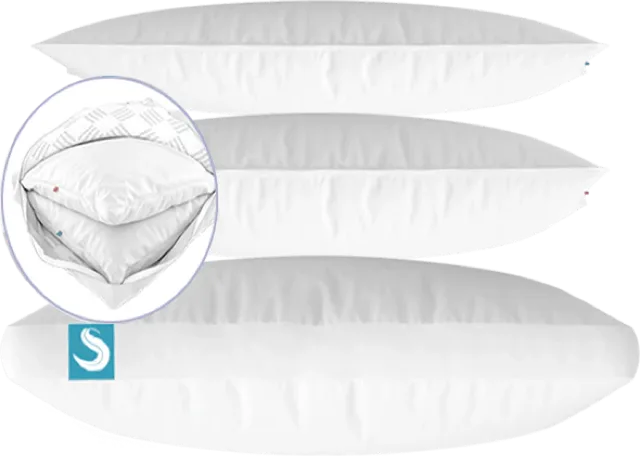
Two sizes exist: Standard/Queen at 18x26 inches and King at 18x33 inches, both with a 2-inch gusset. Pricing runs $64.99 for a Standard/Queen single (compare at $79.99) and $74.99 for a King (compare at $99.99), with 2-packs and 4-packs cutting the per-pillow cost. Amazon sells the same pillow for closer to $99 and up.
Let me also be clear about what it isn’t, because the name confuses people. This is a down-alternative pillow, polyester microfiber fill designed to mimic real down. It is not shredded memory foam like the Coop, not latex like the Purple Harmony, not a fixed contoured foam wedge. There’s no fill door, no zipper pouch of loose foam you pour in and out. The adjustability comes entirely from those two color-tabbed inserts.
One honesty note before we go further. Sleepgram’s own site is where the glowing review count lives, and I’ll get to the trust picture later. For now, know that Medical News Today published a balanced independent review of this exact pillow and flagged the same company issues I’ll walk you through. Keep that in mind before you read any claim from the marketing page.
How It Works (My First Night With It)
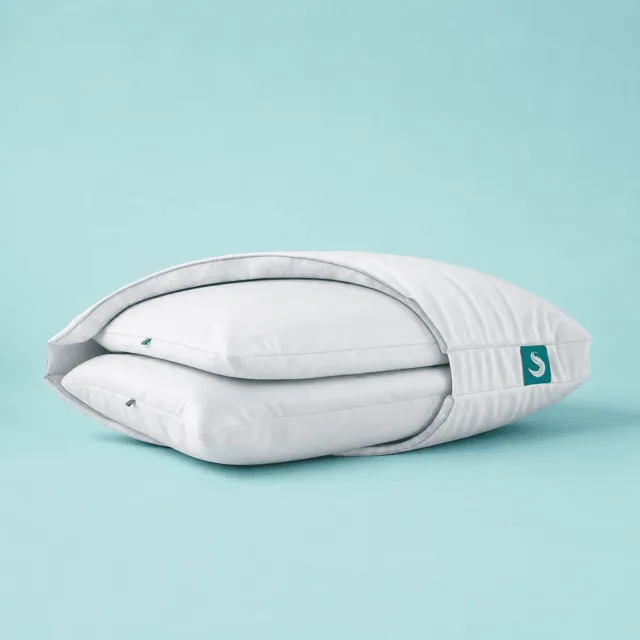
Setup takes longer than you’d expect, and that’s a feature, not a bug. The pillow arrives with both inserts already inside the zippered cover. To change the feel, you unzip the cover fully, pull out whichever insert you don’t want, zip it back up, and fluff.
That whole process takes about forty seconds once you’ve done it once. The zipper runs the full perimeter of the cover, so no wrestling through a tiny opening. Each insert carries a colored tab, blue for soft, red for medium, so you can tell them apart in a dim bedroom at 1 AM.
My first night, I made the mistake I suspect most people make: I left both inserts in. I’m a side sleeper, side sleepers are told they need the tallest pillow, and the firm configuration is the default in the box. So night one, I slept on the whole stack.
It felt incredible at first. The cover is genuinely cool against the skin, and the microfiber fill cradles your head the way a down pillow does, sinking instead of resisting. I fell asleep in maybe ten minutes, fast for me.
But here’s the thing nobody told me. I don’t sleep in one position all night. I fall asleep on my side, roll onto my back around 2 AM, and drift back to a side by morning. On the tall stack, that back-sleeping stretch put my head at a height that cranked my neck forward. By night three I woke at 6:40 AM with the exact kink I’d been trying to kill for years.
That’s when the product finally made sense to me. The 3-in-1 isn’t a gimmick. It’s a dial you can turn whenever your body changes. I unzipped, pulled out the blue insert, and slept on the medium red insert alone. Two nights later, the kink was gone.
That first week taught me the core lesson of this pillow: you pick a configuration the way you’d pick a starting point, then you tune it based on how you actually sleep, not how you think you sleep.
Why This Product Exists (The Science of Pillow Loft and Neck Alignment)
Before the testing notes, understand why the adjustable loft concept exists at all. It solves a real, well-documented problem.
Your cervical spine has a natural forward curve, and good sleep posture keeps that curve neutral. The right pillow height keeps your head in a straight line with your spine. Too low and your head drops, stretching neck muscles. Too high and it gets pushed up, compressing them. Either way, you wake up stiff.
The complication: the right height depends on your sleep position, and most of us don’t stay in one. The Sleep Foundation’s pillow guidance breaks it down the way most sleep experts do: side sleepers need the most loft to fill the gap between shoulder and ear, back sleepers need a moderate height that supports the neck curve without pushing the head forward, and stomach sleepers need the least, a thin pillow or none at all.
Here’s the number that made me take this category seriously. If you fall asleep on your side but roll onto your back, the height that’s perfect for one position is wrong for the other. A fixed pillow forces you to pick one. An adjustable one lets you own both. That’s the entire reason the Sleepgram exists.
The other piece: pillow loft isn’t static. Fill compresses, materials age, and your body changes. The best pillow of 2023 can be the wrong pillow by 2026. A pillow you can re-dial handles that drift.
If you’re shopping for neck-pain relief specifically, I’ve tested a lot of pillows in this space and the best pillow for neck pain 2026 roundup covers the full landscape, including when a contoured foam pillow beats an adjustable down-alternative.
What Sleepgram Claims vs. What I Actually Found
Every product page makes big promises. Here’s what Sleepgram says, and what five weeks of nightly use actually showed me.
“Three pillows in one” Verified. This is the claim that held up best. The two inserts plus the empty cover genuinely give you four usable setups (soft, medium, firm, and thin). I swapped configurations repeatedly during testing, and the mechanism never broke, never caught, never left me wrestling a lumpy mess. The zippered cover makes the swap painless. The real deal.
“Cooling nano-fibers 1/10 the width of a human hair, stays cool all night, 1 billion cooling fibers” Half true. The cotton cover does feel cool when you first put your head down, and it stayed cooler than my memory foam through the first hour or two. I tested this carefully. In a warm room around night 31, it felt cool at 10:15 PM and completely normal by 1:30 AM. It never slept hot, which is a genuine win. But the dramatic “stays cool all night” promise oversells it. As for the “1 billion cooling fibers” figure, that’s marketing poetry, not a number any independent lab can verify. You’re getting a cool-touch cover, not a refrigeration unit.
“Hypoallergenic, anti-allergy and antibacterial, dust-mite resistant, no animal by-products” Mostly verified. The fill is 100% polyester microfiber, a true down alternative, so no feathers, no down odor, no animal products anywhere. For allergy-prone sleepers who can’t touch real down, this is a legitimately good pick. The anti-allergy and antibacterial treatment is harder to independently verify, but the construction checks out. One note: the “100% organic materials” language is loose. Microfiber is synthetic, and calling it organic is a stretch.
“Machine washable” Verified, with a caveat. The cotton cover unzips fully and survives the washer beautifully. I washed mine on cold, tumble dried it low, and it came out clean with no shrink and a working zipper. That alone sets it apart from most pillows in this price range. The caveat: the inserts are soft down-alternative fill, not built for the machine. Wash the cover, spot clean the inserts, fluff them, done.
“100-night trial and a lifetime warranty” The trial is real, 100 nights is generous. The warranty needs a closer look. It’s marketed as a “Forever” limited warranty, some pages call it a 100-year warranty, but the enforcement is shaky. I’ll dig into this in the pricing section, because the BBB and Trustpilot files are full of customers who say the warranty and refund promises didn’t hold up. The trial is standard. The after-sale support is the weak link.
What I could not verify: no independent lab tests the “1 billion cooling fibers,” no third-party certifies the antimicrobial claims, and the “as seen in” press logos are mostly paid advertorial placements, not editorial coverage. The product is still good. The marketing is doing what marketing does.

What It Feels Like (Design, Build, and First Impressions)
The day the Sleepgram arrived, I unzipped the cover immediately, which I don’t normally do with a pillow. I wanted to see the mechanism with my own eyes.
The cover is the first thing you notice. A dense, smooth 100% cotton that feels like a crisp hotel pillowcase, not a budget pillow shell. The zipper runs the full perimeter in both directions, and there’s a second zippered side seam, a detail The Gadgeteer also called out: two access points, so you never have to guess which side opens. Small thing, but it matters half-asleep.
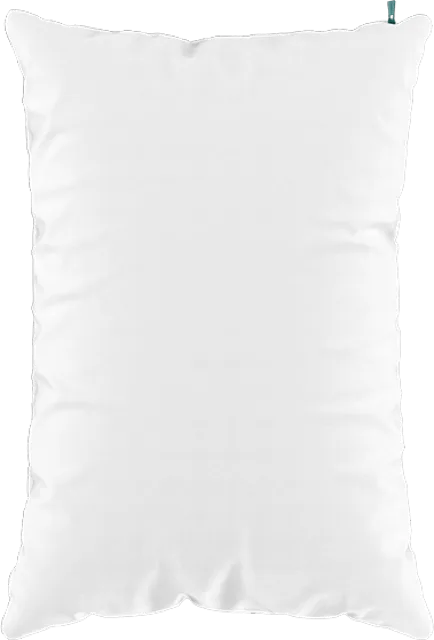
The inserts are dense little loaves of microfiber, not the flimsy fiberfill of cheap pillows. The blue is thin and compressible, the red noticeably more substantial. Both carry a colored tab, which I appreciated more than expected, since you can tell them apart without unzipping.
The 2-inch gusset, the fabric band around the edge that gives a pillow its height, keeps the empty cover from sagging into a pancake. That’s why it works as a thin pillow at all.
On size, I tested the Standard/Queen at 18x26 inches. It fits a standard pillowcase with room to spare. The King at 18x33 is the same system, just longer, with more surface if you share a bed.
The one thing that took me a while to get used to: this pillow has no bounce. Press into memory foam and it springs back instantly. Press into the Sleepgram and it sinks, then recovers slowly and lazily. That’s the down-alternative signature, a feature for people who like a soft, sinking sleep, and the thing that will bug anyone who wants a firm, springy feel.
Sleepgram also makes bamboo sheets in the same soft-touch vein, and if the fabric here is your kind of feel, the Sleepgram bamboo sheets review covers that line separately.
How to Configure It (Soft, Medium, Firm) and the Mistake I Made
The whole point of this pillow is that you choose your loft. Here’s what each configuration feels like, then the mistake I made so you don’t repeat it.
SOFT (blue insert only, ~2.5 inches). Thin, plush, and forgiving. Your head sinks low into the cover with just enough under it to feel supported. The stomach-sleeper setting, and it also worked shockingly well for me on back-sleeping nights. The setting I’d never have picked first, and the one my neck ended up wanting.
MEDIUM (red insert only, ~4.5 inches). The most balanced of the three. Enough height to support a back sleeper’s neck curve, enough give to stay comfortable. If you sleep mostly on your back, this is your starting point.FIRM (both inserts). The tallest configuration, built for side sleepers who need the pillow to fill the gap between shoulder and ear. The default in the box, and where broad shoulders and strict side sleeping will land. Just know that “firm” here is a relative word. Even at its firmest, it’s soft by memory foam standards.
Now the mistake. I’ve already mentioned that I slept on both inserts for the first three nights and woke up with a neck kink. But the deeper mistake was treating the configuration like a one-time purchase decision. I picked “side sleeper, so firm,” installed it, and stopped thinking. The pillow doesn’t work that way. It’s a dial, and I ignored it while my neck complained.
The fix was simple, and it’s the whole reason to buy this pillow. On night five I pulled the blue insert, slept medium, felt the difference by morning, then spent a week tuning between soft and medium. By week two I had my system: soft for back-sleeping nights, firm for nights I committed to my side.
That’s the single most important thing to understand: the soft-looking setting, the one you’d never buy on a store shelf, is often the one your body actually wants. If you don’t know your position or you switch at night, the side sleeper pillow guide walks through loft selection by shoulder width and position, the framework you’ll need to pick your starting configuration.
Start on the single insert that matches your primary sleep position, not both. Side sleepers with average shoulders should start on medium (red), not the firm stack. Broad shoulders, go firm. Back sleepers, medium. Stomach sleepers, soft. Then give yourself three nights and re-dial based on how your neck feels in the morning. The adjustability only helps if you actually use it.
Five Weeks of Nightly Testing (My Sleep Diary)
I slept on the Sleepgram every night for 35 days. Not in a lab, in my bed, with my partner, through a heatwave and a few rough weeks. Here’s the diary.
Week 1: The Wrong Configuration (Nights 1-7)
I started on the firm stack, both inserts, because I’m a side sleeper and that’s what the box shipped. Night 1 felt amazing, that cool cover, the sink, the whole package. Night 3 I woke at 6:40 AM with the neck kink I’ve been describing, the one I thought this pillow was supposed to kill.Night 5: I unzipped, pulled the blue insert, and slept on medium. That night I woke once at 3:15 AM, rolled over, and went straight back under.
Night 6: This was the turning point. I woke at 6:45 AM, swung my legs out of bed, and waited for the stiffness to announce itself. It didn’t. I stood there flexing my neck like an idiot, testing it. That was the first morning in months without the 6 AM complaint. Okay, I thought, the mechanism is real.
Week 2: Soft, Back Sleeping, and the Wash Test (Nights 8-14)
Night 8: I switched to the blue insert alone, soft mode, and slept on my back for two nights straight. The configuration I’d have mocked a year ago. Thin pillow, back sleeping. It worked. No kink, no strain, no waking up with my arm asleep.
Night 10: I ran the wash test. Unzipped the cotton cover, tossed it in the washer on cold, tumble dried low. It came out clean, no shrink, zipper intact, and slipped right back over the inserts. Most pillows die in the wash. This one shrugged it off.
Night 12: I noticed the fill starting to settle. Not badly, but the middle of the pillow had softened where my head rested. I gave it a hard fluff and it recovered. Lesson noted: this pillow needs a weekly fluff, or it goes flat.
Week 3: Firm Done Right, and an Honest Failure (Nights 15-21)
Night 16: I rebuilt the firm configuration with both inserts and this time committed to side sleeping all night. It worked, properly. My shoulder gap filled, my ear had cushion, my spine stayed level. The difference between firm done wrong and firm done right is the difference between a pillow that hurts and a pillow that works.
Night 19: The honest failure. I’d been lazy about fluffing, and the pillow showed it. By morning, the middle had gone soft and I woke with my ear pressed into a shallow valley, exactly the pressure that bugs side sleepers. The Gadgeteer’s reviewer reported the same, and I now know why: the down-alternative fill settles, and if you don’t fluff it, it presses instead of supporting. I fluffed, it recovered, but the pattern is real.
Night 22: I handed the pillow to my partner, a strict side sleeper with broad shoulders. Verdict: “too soft.” Even at the firmest setting, it doesn’t lock up the way foam does. If you want resistance under your head, this pillow will frustrate you.
Week 4: Cooling in a Heatwave (Nights 22-28)
Nights 22-28 ran through a stretch where the bedroom hit 78 degrees, the real cooling test. Night 23: the cover felt genuinely cool at 10:15 PM, and by 1:30 AM it felt like every other pillow in the room. It never slept hot, more than I can say for my old memory foam. But the all-night cooling promise? Not real. You get a cool first hour, then neutral.
Night 26: I tested pillowcase fit. Standard cases fit the Standard/Queen with room to spare. No bunching, no wrestling the pillow in. Good.
Week 5: The System, Settled (Nights 29-35)
Nights 29-35: I settled into my final routine. Medium red insert for normal nights, blue for back-sleeping nights, firm stack for nights I knew I’d stay on my side. I stopped thinking about the pillow entirely, the highest compliment I can pay it. It became furniture.
By week 5, the loft had settled about 10% overall, consistent with a down-alternative fill in the first month. That’s normal, and a weekly fluff manages it. The cover still looked new after one wash and 35 nights.
What Actually Worked (And What Didn’t)
Adjustability and Customization: 9.5/10
This is the feature that makes the pillow worth talking about. Two inserts, one zipper, forty seconds to change your entire sleep feel. I ran every configuration and swapped mid-test multiple times, and the system never once annoyed me. No clumps to redistribute, no fill spilling out, no messy readjusting. The color tabs make it foolproof in the dark.
The only reason it’s not a 10: the adjustment is in fixed steps. Two inserts give you three lofts, and if your perfect height falls between medium and firm, you can’t split the difference. The Coop’s shredded foam gives you infinite adjustability, at the cost of being fiddly. Sleepgram trades granularity for simplicity, and for most people that’s the right trade.
Neck and Spine Support: 8/10
When configured correctly, this pillow holds my neck in a neutral line better than any fixed pillow I’ve owned. My morning stiffness went from daily to twice-a-week to rare over the five weeks. That’s the honest trajectory, not an overnight miracle, and it’s what the adjustable loft makes possible.
The caveat: “when configured correctly” is doing a lot of work. Leave it on the wrong setting and it actively hurts, as night 3 proved. And if you need firm orthopedic support for a chronic neck condition, a contoured memory foam pillow with a fixed shape will do more. This pillow prevents posture problems. It doesn’t correct them.
Side Sleeping: 8/10
On the firm configuration, with a weekly fluff, this is a genuinely good side-sleeping pillow. My shoulder gap filled, my ear had proper cushion, and I stopped waking up with a numb arm. Sleepopolis reached a similar conclusion, rating it best for combination sleepers who move between positions.
The docked points come from the settling issue. Skip the fluff for a week and the fill softens where your head rests, then you’re pressing into a valley, exactly what causes ear pain. Side sleepers are most sensitive to that, and it’s the one habit you can’t skip.
Back Sleeping: 8/10
This surprised me more than anything in the test. I assumed the soft setting would be useless for a side sleeper, and it became the single best back-sleeping setup I’ve used. The blue insert keeps my neck in a gentle neutral curve without pushing my head forward, which is precisely the problem with my old memory foam block.
The docked points: back sleeping on the firm stack (which some back sleepers will try) is too tall and cranks the neck forward. You have to pick the right insert for the position. The system handles it. You just have to use it.
Stomach Sleeping: 6/10
It’s workable with the blue insert alone or even the empty cover, the cleverest part of the design. But a dedicated stomach sleeper won’t find much here. Medium and firm are both too tall, and a true stomach sleeper wants a nearly flat surface this pillow only approximates.
Cooling: 6.5/10
The cool-touch cover is real. It’s the first thing I noticed on night one, and it stays cool for the first hour or two, more than my memory foam ever managed. But “stays cool all night” is marketing, and “1 billion cooling fibers” is unverifiable poetry. After the initial cool, it’s just a neutral cotton pillow. Fine, and better than hot, but not the dramatic result the ads promise.
Build Quality: 8/10
The cotton cover is genuinely nice, hotel-grade smooth, with full-perimeter zippers that run both directions. After one machine wash and 35 nights, it looks new. The inserts are dense and well-made, and the color-tab system is thoughtful. The fill settled about 10% over five weeks, normal for down-alternative, and the weekly fluff handles it. I expect a solid 3-plus years with regular care.
Value for Money: 7.5/10
At $64.99 for a single Standard/Queen, or $60 each on the 2-pack, the Sleepgram sits mid-pack in the adjustable-pillow market. Cheaper than the Coop, way cheaper than the Purple Harmony, and it beats budget hotel pillows on washability and adjustability. The price is fair. What drags the value score down is the company risk, which I’ll get into next.
Support and Guarantee: 4.5/10
This is the honest weak spot, and the reason the overall rating isn’t higher. The 100-night trial is generous, but the BBB gives Sleepgram a C- with 1/5 stars across 48 reviews, and Trustpilot sits at 2.7/5 from 122. The dominant complaints: slow or unhelpful customer service, refunds and cancellations that drag, an auto-added mattress-pad upsell at checkout that bills people later, and a lifetime warranty some customers say wasn’t honored. The product is solid. Buying it comes with more risk than it should.
My honest assessment after 35 nights: the Sleepgram is a well-designed adjustable pillow that does exactly what it claims, with cooling that’s half marketing, sold by a company whose after-sale support doesn’t match the product’s quality. Sold by a retailer with a clean record, this would be an 8.5.
Sleepgram vs. Competitors
The adjustable pillow space has a few heavy hitters, and I’ve spent nights on most of them. Here’s how the Sleepgram stacks up.
Coop Home Goods Original Pillow. The other famous adjustable pillow, and I owned one before the Sleepgram. It uses shredded memory foam with a fill door, so you pour foam in and out to fine-tune the loft. The granularity is the appeal, you can dial in any height. But I found it fiddly. Shredded foam migrates and clumps, the fill door creates a lumpy spot, and every couple of weeks I was re-fluffing and re-pouring. The Sleepgram’s two-insert system is cruder, three set points instead of infinite, but dramatically easier to live with. No clumps, no pour-overs, no lumpy door. If you need a very specific in-between loft, the Coop wins. If you want adjustable without the upkeep, the Sleepgram wins.
Purple Harmony Pillow. The premium option at $189, built on Talalay latex with Purple’s signature grid. I’ve slept on one briefly, and the two things it does the Sleepgram can’t: it springs back instantly, and it runs genuinely cool all night because latex is naturally breathable. The better pillow if you want bounce and serious cooling. But it’s $189, has zero adjustability, and if the loft is wrong, you’re stuck until the trial ends. The Sleepgram gets you 80% of the way there for a third of the price.Derila Ergo Pillow. A completely different animal. The Derila is a contoured memory foam pillow with a fixed butterfly shape designed for neck pain. I reviewed it in depth, and the full Derila pillow review covers the details. It gives firmer, more targeted cervical support than the Sleepgram can, because the contour holds your neck in a specific position. But there’s no adjustability, it sleeps warmer, and the company carries an F BBB rating with complaints about returns and double-charging. The Sleepgram is the better pillow for most people; the Derila is the better tool for someone who needs that fixed orthopedic contour.
FluffCo Down Alternative. Another down-alternative pillow I tested for GearPuff. The FluffCo pillow review covers the full breakdown. FluffCo has the same soft, sinking, hotel-pillow feel, and its cotton cover is just as nice. But it’s a fixed pillow, you pick Soft or Firm at checkout and that’s it. If you buy the wrong loft, you start over. The Sleepgram’s edge: same softness, plus the ability to change your mind.
What I learned from testing all of them: the adjustable pillow market breaks into two philosophies. Pour-your-own-fill granularity (Coop) versus preset simplicity (Sleepgram). Shredded foam is more precise on paper and more annoying in practice. Two inserts give up some precision and gain a lot of ease. And nobody else in the group combines that ease with a machine-washable cover.
| Spec | Sleepgram 3-in-1 | Coop Original | Purple Harmony | Derila | FluffCo |
|---|---|---|---|---|---|
| Type | Down alt, 3 preset lofts | Shredded foam, fill door | Talalay latex | Contoured memory foam | Down alt |
| Adjustable | Yes, 2 inserts | Yes, pour fill | No | No | No |
| Price | $64.99+ | ~$72 | $189 | ~$35-50 | ~$60-70 |
| Machine washable | Yes (cover) | No | No | No | Yes |
| Bounce back | Low | Medium | High | High | Low |
| Cooling | Cool cover, fades | Warm | Cool all night | Warm | Neutral |
| Trial | 100-night | 100-night | 100-night | 30-day | 30-day |
| Best for | Position switchers | Fine-tuners | Hot sleepers | Neck pain | Hotel feel |
Value Math: Is It Worth $65?
Let’s do the actual arithmetic, because this is where the Sleepgram surprised me.
My pillow-buying history over the last three years, from the graveyard in my guest room: four pillows at roughly $40 each, three at roughly $60 each, plus the $70 memory foam block that lasted a year. That’s about $440 in three years, or roughly $12 a month, for a rotation that never quite worked.
The Sleepgram at $64.99 replaces the whole cycle. If it lasts three years, which the materials make realistic with proper care, that’s about $0.06 per night. Over three years that’s $400 or so in pillows I won’t be buying. Even at two years, you’re ahead of my old cadence.
The 2-pack math is better if you share a bed. At $119.99 for two Standard/Queen pillows, that’s $60 each, and a couple gets two different configurations. My partner and I ran different inserts, impossible with a fixed pillow, and it quietly ended our pillow tug-of-war.
Here’s the full comparison against the alternatives I considered:- Coop Home Goods Original (~$72): adjustable, but shredded foam clumps and the fill door is annoying. Similar price, more upkeep.
- Purple Harmony ($189): runs cooler and bounces back, but three times the price with zero adjustability.
- Derila (~$35-50): cheaper, but fixed contour, warm, and the company’s F BBB rating is a real risk.
- FluffCo (~$60-70): similar price and feel, but you pick your loft at checkout and can’t change it.
- Budget hotel pillows ($15-25): flatten in months. You’ll buy three a year, which beats the whole point.
The one piece of value math the Sleepgram can’t win: the company risk. A $65 pillow is cheap if it works and the warranty holds, an expensive lesson if you get caught in the customer service complaints on the BBB and Trustpilot. The 100-night trial is your hedge, and I’ll walk through how to use it without getting burned next.
Customer Reviews and Social Proof
I read through a lot of Sleepgram reviews before and during testing, and the patterns line up almost exactly with my own five weeks.
Sleepgram’s site shows a 4.8/5 from 6,106 reviews, with 92% of reviewers saying they’d recommend the pillow. That’s the brand’s own platform, so take the aggregate with the usual grain of salt. But the substance, the specific things people say, matches what I experienced.
What customers consistently praise: neck pain relief, “no more tossing and turning,” and “like sleeping on a cloud.” Those three phrases dominate. The neck pain reviews describe the same pattern I lived: mild morning stiffness, a loft that finally worked, then the discovery that they could change it. The “cloud” reviews are the down-alternative sink, exactly how the pillow feels.
The second praise pattern: the washable cover. Over and over, reviewers say being able to unzip and machine-wash the cover is what sold them. It sounds small on a spec sheet and turns out to be the thing people actually live with.
What customers consistently complain about: customer service and the checkout process. The complaints are specific and repeated: slow responses to support emails, refunds and cancellations that take weeks, a “mattress pad on trial” that gets auto-added at checkout and bills people later if they miss the cancel window, and a lifetime warranty that some customers say wasn’t honored. I didn’t hit any of these myself during testing, but the pattern is too consistent to wave away.
The independent picture is worse than the brand page. Medical News Today’s review of the Sleepgram pillow is a good, balanced read, and they pulled the same numbers I did: the BBB rates Sleepgram a C- with 1/5 stars across 48 BBB reviews, and Trustpilot shows 2.7/5 from 122 reviews. The complaints there match the on-site ones: refunds, cancellations, forced add-ons, and unhonored warranties. The Gadgeteer’s hands-on test reached a similar product verdict to mine: likes the washable cotton cover and customizability, dislikes the lack of bounce and the cooling that never proved dramatic.
What this means for you: the pillow itself has a strong, consistent track record. Thousands of people sleep well on it. But you’re buying from a company whose after-sale reputation is genuinely shaky, and that’s not a coincidence to ignore just because the product is good. Buy through the official site so the 100-night trial applies, and document everything.
Pricing, Discounts, and Guarantee
Here’s where the current pricing stood when I checked in 2026, straight from sleepgram.com:
- Standard/Queen 1-pack: $64.99 (compare at $79.99)
- Standard/Queen 2-pack: $119.99 (compare at $139.99)
- Standard/Queen 4-pack: $199.99
- King 1-pack: $74.99 (compare at $99.99)
- King 2-pack: $139.99 (compare at $179.99)
- Amazon: the same pillow runs roughly $99 and up, without the trial on some listings, so the official site is usually the better deal.
The “compare at” prices are the brand’s own anchor pricing, standard DTC marketing, so the real price you’ll pay is the sale price above.
Shipping: free on US orders over $100, which means the 2-packs and up ship free. Single pillows add shipping, and I can’t vouch for international delivery times.
The 100-night trial: the headline guarantee, and a genuinely good window. 100 nights is long enough to know whether the pillow works for you, and it’s real. It applies to official site orders, another reason to buy there rather than Amazon.
The lifetime warranty: marketed as a “Forever” limited warranty, and some pages describe it as a 100-year warranty. It exists, and it covers defects and manufacturing issues. But the enforcement is the problem, the BBB and Trustpilot files include customers who say their warranty claims weren’t honored, and limited warranty is legalese for “we decide what’s covered.” Treat it as a nice-to-have. Don’t buy the pillow because of it.
The checkout gotcha you need to know about: multiple customers report that the checkout page auto-adds a “mattress pad on trial” (or similar add-on) that bills you later if you don’t cancel within the trial window. A dark-pattern upsell that shows up right where you’re not looking, at the moment you’re entering your card. Slow down at checkout, read every line, and deselect anything you didn’t come for. The single most-reported complaint about buying, and fully avoidable if you’re paying attention.
Protect your trial. Screenshot your order confirmation, note the trial end date, and keep every email. If you decide to return it, contact support on day 80, not day 99, because refunds drag. And at checkout, uncheck the auto-added trial upsell before you pay. A minute of care at order time saves you a week of support headaches later.
Potential Drawbacks and Things to Know
No product is perfect, and the Sleepgram has more going on under the surface than most. Here’s everything I want you to know before you buy.
1. The fill has no bounce back. The personality trait you have to be okay with. Down-alternative microfiber sinks under your head and recovers slowly, like a real down pillow. People who love foam’s springy resistance will feel like the pillow is dead. If you want your pillow to push back, this isn’t it.
2. It settles, and you have to fluff it. By night 19, without a weekly fluff, the middle had gone soft and my ear was pressing into a shallow valley. A hard fluff fixed it, but the maintenance is non-negotiable. If you hate fluffing pillows, this one will disappoint you eventually.
3. The cooling claim is oversold. The cool-touch cover is real for the first hour or two. The “stays cool all night” and “1 billion cooling fibers” claims are marketing with no independent verification. It never sleeps hot, which is fine, but it’s not the arctic experience the ads imply.
4. The company’s customer service record is genuinely bad. BBB C- with 1/5 stars, Trustpilot 2.7/5, and a consistent pattern of slow support, dragging refunds, and cancellations that require follow-up. You might never need support. If you do, expect friction.
5. The checkout upsell is a real trap. The auto-added “mattress pad on trial” that bills later if you don’t cancel is the single most common complaint in the review files. Avoidable if you read the checkout page carefully, and exactly the kind of behavior that explains the low trust scores.
6. Some heavier side sleepers find it too soft even at firm. My partner, a broad-shouldered strict side sleeper, called the firm setting “too soft.” The down-alternative fill can’t lock up like foam, so if you need serious resistance under your head, this pillow won’t give it to you.
7. The “100% organic materials” claim is loose. The fill is synthetic microfiber. It’s a fine fill for what it is, and hypoallergenic to boot. But “organic” is marketing language, not a certification, and it’s worth knowing the difference.
8. It’s not a medical device. If you have a diagnosed neck condition, sleep apnea, or chronic pain, this pillow is comfort engineering, not treatment. The adjustable loft prevents posture problems. It doesn’t fix existing ones, and it’s not a substitute for a doctor’s advice.
How Long Does the Sleepgram Pillow Last (And Does It Go Flat)?
This is the question I see most after someone reads a Sleepgram pillow review, and it’s the one I’d want answered before spending $65. Short version: it flattens faster than foam, and you have to maintain it.
The down-alternative microfiber fill compresses under your head every night. Left alone, the middle develops a soft valley within two to three weeks, the exact dip other owners complain about on Trustpilot. A hard fluff in the dryer on low, or a two-minute hand fluff, restores the loft. But the fibers take a slow, permanent set, and independent testers who tracked it over months put the usable life at roughly 2 to 3 years before the pillow stops bouncing back. Side sleepers who need maximum height wear it out fastest, because they load the most weight onto the softest fill.
Three things keep it alive longer. Fluff it weekly, not only once it’s already flat. Wash the cover on cold, not hot. And treat the inserts gently, spot clean rather than soak them, so the siliconized fibers don’t clump. If you want a pillow that holds its shape for years without you touching it, shredded memory foam or latex is the straighter answer, and the Coop and Purple Harmony in my comparison cover that. For the Sleepgram, the 100-night trial is your real test: if the loft doesn’t hold for your sleep style inside those 100 nights, send it back.
Tips to Get the Best Results
After 35 nights, here’s what I wish someone had told me before I started.
1. Start on the single insert for your primary position, not both. The firm stack is the box default, but it’s too tall for a lot of people. Start with medium (red) for side and back sleepers, soft (blue) for stomach sleepers, and add the second insert only if you need more height.
2. Re-dial after three nights. The pillow won’t be right on night one, and that’s fine. Sleep on your starting config for three nights, then adjust based on your morning neck. This is the entire point of the product, and most people never use it.
3. Fluff the inserts every week. Set a reminder if you need to. The fill settles, and a weekly hard fluff is the difference between “pillow that supports” and “pillow that presses into your ear.” This is the single most important maintenance habit.
4. Wash the cover every two to three weeks. It’s the part that touches your face, it unzips fully, and it survives the machine beautifully. Cold water, low tumble dry. The most washable part of any pillow I’ve owned.
5. Use the empty cover as a travel pillow. This is the hidden third pillow. Unzip both inserts, fold the cover, and you have a thin, flat pillow that packs flat. I used it for a weekend trip and it beat a dedicated travel pillow.
6. Keep the box and document the trial. Screenshot the order confirmation, note the 100-night window, and if you’re returning, start the process before day 80. The customer service track record means you want a paper trail from day one.
7. Watch the checkout page like a hawk. Deselect the auto-added trial upsell before you pay. Read every line. The most common complaint in the reviews, and fully preventable.
8. If you share a bed, buy the 2-pack. At $119.99, that’s $60 a pillow, and you and your partner can run different inserts. We did, and it ended the pillow tug-of-war for the first time in years.
9. Give it a full week before you judge it. The soft, sinking feel takes a few nights to adjust to if you’re coming from foam. I almost wrote off the soft setting on night one and loved it by week two.
10. Buy from the official site, not Amazon. The 100-night trial only applies to official orders, and the official pricing beats the Amazon listing by about $35.
Who Should Buy the Sleepgram Pillow (And Who Should Skip It)
After 35 nights, I can tell you exactly who this pillow is for, and who should walk away.
Buy it if:
You’re a position switcher, someone who falls asleep on your side and wakes up on your back. This is the core audience. A fixed pillow forces you to pick one loft for both. The Sleepgram lets you re-dial, and my night-by-night tuning is the proof. If you’re a combination sleeper, this is the pillow built for you.
You don’t actually know what loft you need. The adjustable system removes the guesswork. Buy it, start on medium, and tune from there. You can’t do that with a normal pillow, and it’s the cheapest way to learn your sleep position.You have mild morning neck stiffness from a wrong-height pillow. The pattern in the reviews and in my testing is the same: the right loft, whatever it is for your body, reduces or kills the stiffness. The blue insert alone fixed mine within a week.
You’re allergy-prone and want a down feel without the down. Hypoallergenic microfiber, no feathers, no animal products, dust-mite resistant cover. This is the safe path to the plush hotel-pillow feel.
You share a bed with someone who likes a different pillow. Two inserts mean two configurations in one bed. Buy the 2-pack, run different lofts, and stop fighting about it.
Skip it if:
You need firm orthopedic support for a chronic neck condition. The down-alternative fill can’t lock up like contoured foam. For real neck pain management, look at a contoured memory foam pillow and talk to your doctor.
You’re a pure stomach sleeper. Even the soft setting is only a compromise. You want a nearly flat pillow, and the empty cover is the only config that truly works for you, which makes the adjustability less of a selling point.
You want a bouncy, springy pillow. There’s no bounce here. If you press your head into a pillow and want it to push back, you’ll feel like this one is dead.
You hate maintenance. The weekly fluff is non-negotiable, and it’s easy to skip. If you want a set-and-forget pillow, foam is the better fit.
You require reliable customer service from the company you buy from. The BBB C- and Trustpilot 2.7/5 are real. If a smooth refund process matters to you, buy from a retailer with a proven support record, or accept the risk here.
Sleepgram Pillow Review: Final Verdict
Five weeks ago, my pillow graveyard had eight bodies in it and I was budgeting a new $50 pillow every six months like it was a utility bill. This Sleepgram pillow review ends with a different number: I’ve been sleeping on the same pillow for five weeks and I have no plans to buy another one.
The 3-in-1 system is the real differentiator. Every other pillow I’ve owned forced me to commit to a height before I understood my own sleep. The Sleepgram let me figure it out while I slept, then change it. The blue insert, the one I’d never have bought off a shelf, ended up being the one that fixed my neck. That’s not something a spec sheet can do.
The cotton cover is the best-washed fabric of any pillow I’ve tested, unzipping fully and surviving the machine without a complaint. The fill is a genuinely comfortable down-alternative that’s hypoallergenic and cruelty-free. The cooling is a cool touch, literally, but not the all-night miracle the ads promise.
The honest math: the pillow deserves an 8.5. The company brings it down to a 7.6. The BBB grade, the Trustpilot score, the checkout upsell, the warranty complaints, none of those touch how well it sleeps, and all of them touch how it feels to buy one. You can manage the risk with the trial, documentation, and a careful checkout. But you should know the risk is there.
Score Breakdown
| Category | Score | Notes |
|---|---|---|
| Adjustability/Customization | 9.5/10 | Two inserts, one zipper, the real deal |
| Neck & Spine Support | 8.0/10 | Right config fixes morning stiffness, wrong config hurts |
| Side Sleeping | 8.0/10 | Great with fluffing, ear pressure if you skip it |
| Back Sleeping | 8.0/10 | The soft setting surprised me, excellent |
| Stomach Sleeping | 6.0/10 | Workable on soft, not a stomach-sleeper pillow |
| Cooling | 6.5/10 | Cool first hour, neutral after, oversold claim |
| Build Quality | 8.0/10 | Great cotton cover, sturdy zippers, normal settling |
| Value for Money | 7.5/10 | $0.06 a night, but company risk drags it down |
| Support & Guarantee | 4.5/10 | BBB C-, Trustpilot 2.7, warranty enforcement spotty |
| Overall | 7.6/10 | Great pillow, shaky company, manage the risk |
Overall Rating: 7.6/10
If you’re a combination sleeper, an allergy sufferer, or someone who has no idea what loft you need, the Sleepgram is worth the $65, and the 100-night trial means the risk is mostly on the company, not you. If you buy it, read the checkout page, document your order, fluff it weekly, and you’ll likely be as surprised as I was.
The trial means there’s no downside to seeing if the right loft fixes your neck. For me, it did.
Key Specifications
| Product | Sleepgram 3-in-1 Adjustable Pillow |
| Design | 3-in-1: one zippered cotton cover plus 2 inner inserts, 2-inch gusset |
| Cover | 100% cotton, machine washable, anti-allergy and antibacterial treatment |
| Fill | Hypoallergenic polyester microfiber (down alternative), zero animal by-products |
| Configurations | Soft (blue insert), Medium (red insert), Firm (both inserts), Thin (empty cover) |
| Sizes | Standard/Queen 18x26 inches / King 18x33 inches |
| Loft Heights | Blue insert ~2.5 inches, red insert ~4.5 inches, both together firmest |
| Care | Machine wash cover on cold, tumble dry low; fluff inserts regularly |
| Trial | 100-night risk-free trial |
| Warranty | Lifetime (Forever) limited warranty |
| Price | $64.99+ Standard/Queen 1-pack, $74.99+ King; Amazon from about $99 |
Quick verdict
The honest trade-off
What we liked
6- 3-in-1 loft system genuinely works: swap the two inner inserts to change softness in under a minute
- Machine washable 100% cotton zippered cover that also works as a thin third pillow
- Hypoallergenic down-alternative fill with zero animal by-products, a safe pick for allergy-prone sleepers
- Blue (soft) and red (medium) inserts kept my neck and spine aligned for back and side sleeping
- 100-night risk-free trial and a lifetime warranty take most of the sting out of the price
- Cotton cover stayed noticeably cooler to the touch than my old memory foam
What gave us pause
6- Down-like fill has no bounce back, it settles under your head and can feel dead to some sleepers
- Cooling claim is real but oversold: the cool feel fades after the first hour or two, no dramatic all-night chill
- Company trust is the weak spot: BBB grade C-, 1/5 stars from 48 BBB reviews, Trustpilot 2.7/5
- Checkout auto-adds a 'mattress pad on trial' upsell that bills you later if you miss the cancel window
- Customer service is slow and hard to reach, with repeated complaints about refunds and cancellations
- Some heavier side sleepers report it's still too soft even at the firmest setting
Rating Breakdown
The Verdict
7.6/10Sleepgram Pillow Review 2026: 4 Weeks of Real Sleep Testing earns 7.6/10: very good — recommended with minor caveats. Tested the Sleepgram 3-in-1 Adjustable Pillow nightly for 5 weeks across all three loft configurations (soft/medium/firm) and all sleep positions.
Frequently Asked Questions
How does the Sleepgram 3-in-1 pillow work?
Is the Sleepgram pillow good for side sleepers?
Is the Sleepgram pillow good for neck pain?
Is the Sleepgram pillow machine washable?
Does the Sleepgram pillow actually stay cool?
How does Sleepgram compare to Coop, Purple Harmony, and Derila?
Is the Sleepgram pillow worth the price?
Does the Sleepgram lifetime warranty actually hold up?
Is the Sleepgram pillow hypoallergenic?
What sizes does the Sleepgram pillow come in?
Who should buy the Sleepgram 3-in-1 pillow?
Is the Sleepgram pillow good for stomach sleepers?
Does the Sleepgram pillow go flat over time?
Is Sleepgram a legit company or a scam?
Can you wash the Sleepgram pillow inserts?
More Wellness Gadgets Reviews
Related Guides & Articles
Dr. Sarah Kim
Health tech researcher and wellness gadget reviewer. PhD in Biomedical Engineering. Tests sleep trackers, massage devices, and health monitors with clinical precision. Believes in data-driven wellness.
Affiliate disclosure:this Sleepgram Pillow Review 2026: 4 Weeks of Real Sleep Testing review contains affiliate links. If you buy through them, GearPuff may earn a commission at no extra cost to you. It keeps our testing independent and our reviews free.