
Sleepgram Bamboo Sheets Review 2026: 6 Weeks of Real Testing
Sleepgram bamboo sheets review covers cooling, deep-pocket fit, wash durability, and whether a $120 sheet set is worth it for hot sleepers.
 Dr. Sarah KimProduct testerUpdated August 16, 202640 min read
In This Article
- TL;DR: My Sleepgram Bamboo Sheets Verdict
- What the Sleepgram Bamboo Sheet Set Actually Is
- My First Night on Bamboo Sateen
- Why These Sheets Exist (The Science of Bamboo Viscose)
- What Sleepgram Claims vs. What I Actually Found
- Design, Feel, and Colors
- How to Set Them Up and Wash Them (And the Mistake I Made)
- 5 Weeks of Nightly Testing (My Sleep Diary)
- Week 1: The Heatwave (Nights 1-7)
- Week 2: The Fit and Comfort Check (Nights 8-14)
- Week 3: The Cold Stretch (Nights 15-21)
- Week 4: The Wear Test (Nights 22-28)
- Week 5: The Honest Failure (Nights 29-35)
- What Actually Worked (And What Didn’t)
- Cooling and Temperature Regulation: 8/10
- Softness and Feel: 8.5/10
- Fit (Deep Pockets): 8/10
- Durability in Wash: 8/10
- Breathability: 8/10
- Value for Money: 7/10
- Transparency/Honesty of Claims: 5.5/10
- Support and Guarantee: 6.5/10
- Sleepgram Bamboo Sheets vs. the Competition
- Value Math: Is a $120 Sheet Set Worth It?
- Customer Reviews and Social Proof
- Pricing, Discounts, and Guarantee
- Potential Drawbacks and Things to Know
- Tips to Get the Best Results
- Who Should Buy Sleepgram Sheets (And Who Should Skip)
- Final Verdict
- Score Breakdown
I’m a hot sleeper. I’ve been one my whole adult life, and I’ve made my peace with most of what comes with it, the cold side of the pillow, the sheets peeled back by 2 AM, the blanket kicked onto the floor. But the thing I never got used to was waking up in the middle of a summer night with sweat pooling under my back and my brain already running a full to-do list.
I’ve tried a lot of fixes over the years. This Sleepgram bamboo sheets review started with that exact frustration. Cooling mattress pads, cotton percale, thin linen, a fan pointed directly at my chest. Some helped a little. None of them stopped me from peeling damp sheets off the bed at 3 AM.
So when I kept seeing Sleepgram’s bamboo sheet ads, the ones that promise to sleep three degrees cooler than cotton and stay on the cool side all night, I was interested but suspicious. Bamboo sheets have been one of the most over-hyped bedding categories in the last decade, and I’d read enough about the FTC’s position on “bamboo” fabric to know the marketing often stretches the truth.
Across 5 weeks of nightly testing, I slept on the Queen set in Sand through a heatwave and a cold stretch, ran it through 6 wash cycles, and dug into the FTC labeling guidance, an independent 30-night test, and the Target, Amazon, and BBB reviews. I also checked the claims that made the ads so catchy, including the “100% organic bamboo” line, which deserves a careful look.
Short version: the sheets are genuinely good at keeping hot sleepers cool. And there are transparency caveats you should know before you buy.
If you’re shopping for a better night’s sleep, our wellness gadgets category covers everything from sleep aids to recovery tools.
TL;DR: My Sleepgram Bamboo Sheets Verdict
If you’re short on time, here’s the quick version of this review.
- Does it work? Yes. I stopped waking up with night sweats through a heatwave, even under a heavy down comforter. The cooling is real, though the exact “3 degrees cooler” number is the brand’s claim, not an independent lab result.
- Is it comfortable? Very. The sateen bamboo weave is silky and plush, and it got softer after the first wash. If you want crisp, starched cotton, this is the wrong fabric for you. If you want smooth and cool, it delivers.
- The catch: The “100% organic bamboo” label is marketing. The fabric is bamboo-derived viscose, which FTC guidance says should be labeled as rayon from bamboo. Target lists the same product that way. Also, the care routine is strict, and the thread-count and warranty terms are inconsistent across pages.
- Best for: Hot sleepers, people with night sweats, side and back sleepers who want a soft, cooling set, and anyone with a thick mattress who needs deep pockets.
- Not for: People who want crisp cotton, anyone who can’t follow a cold-water, low-heat wash routine, and shoppers who want extra pillowcases as add-ons.
- Rating: 7.7/10. Genuinely cooling, durable, and fairly priced at $119.99 for a queen, with real transparency caveats holding the score below an 8. Check the current Sleepgram sheets price.
What the Sleepgram Bamboo Sheet Set Actually Is
Sleepgram is a US-based bedding brand that sells direct, plus through Target and Amazon. Their main products are this bamboo sheet set and a 3-in-1 adjustable pillow. The sheet set is a sateen-weave set marketed as “100% organic bamboo” and “400 thread count.”
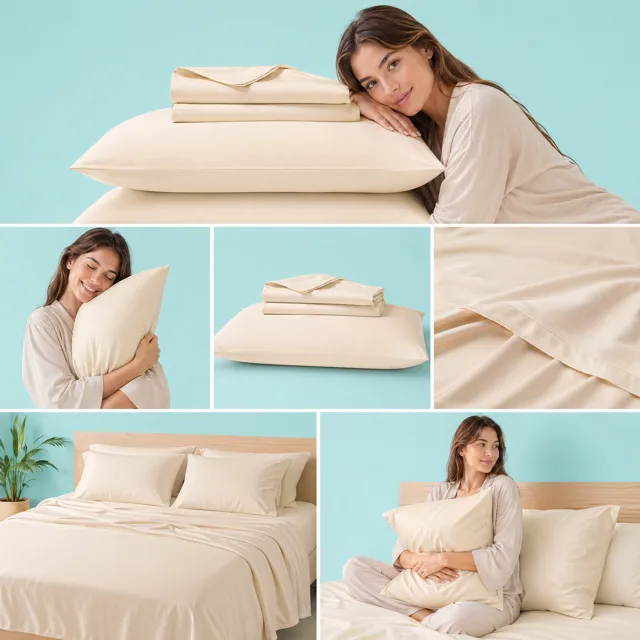
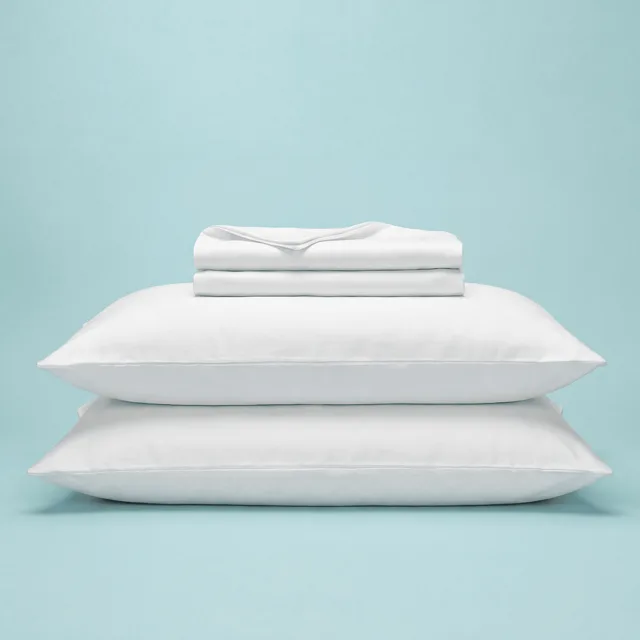
Let me be precise about what you’re getting, because the marketing here matters. The set includes a flat sheet, a fitted sheet, and two pillowcases. Twin and Twin XL come with one pillowcase. King and Cal King get king-size pillowcases. The fitted sheet has 16-inch deep pockets, which is the spec hot sleepers with thick mattresses actually care about.
Here’s what it isn’t, and this is where I want to be straight with you. The fabric is bamboo-derived viscose, a regenerated fiber made by dissolving bamboo pulp and re-spinning it into thread. Under FTC guidance, most “bamboo” fabric sold in the US is exactly this, and the FTC’s position is that it should be labeled as “rayon (viscose) from bamboo.” That’s why Target’s own listing for this exact set is titled “viscose from bamboo.” Sleepgram’s website and FAQ say “100% Bamboo fiber” instead.
I’ll come back to this in the claims section. For now, the point is that the fabric is real, soft, and genuinely good at cooling. It’s just a chemically-processed regenerated fiber, not mechanically-ground bamboo, and the “100% organic bamboo” framing overstates what it is.
The current pricing starts at $89.99 for Twin and Twin XL, $99.99 for Full, $119.99 for Queen, and $149.99 for King and Cal King. Every size shows a “compare at” price roughly double the sale price, which is standard DTC bedding pricing and worth a skeptical glance.
For context on the brand, the sister product, the 3-in-1 Sleepgram pillow, is their other main product, and it’s covered in my separate Sleepgram pillow review. The sheets don’t have that level of independent coverage yet, which is part of why I wanted to test them myself.
My First Night on Bamboo Sateen
The box arrived vacuum-sealed and surprisingly heavy. You can feel the density through the packaging, which is a good sign, since budget bamboo sets tend to feel weightless and flimsy.
I washed the set before using it, which I recommend doing with any new sheets, then put them on the bed that evening. The fitted sheet went on easily. The 16-inch deep pockets grabbed my 15-inch mattress with enough slack that I didn’t have to wrestle the corners. I was expecting a fight, given how thick the mattress is, and I didn’t get one. That was the first good sign.
The first touch is where the sateen weave shows up. This is not the crisp, starched feel of hotel cotton. It’s smooth, almost slippery, like a well-worn dress shirt. When I got into bed, the fabric felt cool against my legs in a way my old cotton percale never did, even after the cotton had been in the room all day.
I made a mistake on night one, though, and it’s the same mistake most people probably make with bamboo sheets: I kept my heavy down comforter on top. I’d read the cooling claims and figured the sheets alone would handle it. The first night was fine, not amazing, just fine. The sheets stayed cool where they touched me, but I still woke up a bit warm in the middle of the night.
It took me three nights to realize the setup was the problem, not the sheets. I swapped the down comforter for a lighter blanket, and that’s when the cooling really showed up. The sheets kept the moisture moving instead of trapping it, and I stopped waking up with damp skin.
That first week taught me the most important thing about these sheets: bamboo viscose is a great cooling layer, but it works with the rest of your bedding, not against it.
Why These Sheets Exist (The Science of Bamboo Viscose)
Before I get into my testing notes, it helps to understand why bamboo bedding became a $500 million category in the first place. There’s real material science behind the cooling, and also some real marketing noise around it.
Here’s how the fabric works. Bamboo is harvested, dissolved into a pulp using chemicals, and the cellulose is spun into regenerated viscose fiber. That viscose is woven into a sateen construction, where the yarns float across the surface in a way that leaves a smooth, shiny face with more exposed surface area than a plain weave.
That exposed surface area is the whole cooling story. More surface contact between the fiber and your skin means heat transfers away from your body faster. The Sleep Foundation’s guide to bamboo sheets explains that bamboo-derived viscose is naturally moisture-wicking and breathable, which is why hot sleepers report sleeping cooler on it than on cotton.
The moisture-wicking part matters more than most people realize. When you sweat, the heat loss comes from the sweat evaporating off your skin. A fabric that pulls that moisture away and spreads it across a wider surface helps it evaporate faster, which is why you feel cooler even when you’re not actively sweating. Bamboo viscose is genuinely good at this because the regenerated fibers have micro-gaps that let air circulate.
The sateen weave adds to the story. Sateen is the drapey, smooth weave used in premium bedding, and it feels cooler to the touch on entry than a rough plain weave. That cool-to-the-touch feeling is real physics, the smooth surface conducts heat away on contact.
Now the honest part. Sleepgram claims these sheets sleep “3 degrees cooler than cotton” and are “2x softer than cotton.” No independent lab has verified either number. The Sleep Foundation’s coverage talks about the category’s cooling properties, but it doesn’t test Sleepgram specifically. My experience matched the direction of the claims without confirming the exact figures.
There’s also the FTC reality check. Natural bamboo has antimicrobial properties, and some bamboo marketing leans on that. But per the Canadian Competition Bureau’s textile guidance, those natural properties do not survive the viscose chemical process, and calling regenerated bamboo fiber plain “bamboo” misleads consumers. I’ll dig into what that means for Sleepgram’s labels in the next section.
What Sleepgram Claims vs. What I Actually Found
Sleepgram’s product page makes a lot of promises. Here’s what each claim actually looks like after 5 weeks of nightly use.
“Sleeps 3 degrees cooler than cotton” This is the headline claim, and it’s the closest to accurate of everything they say. On heatwave nights when my bedroom hit 82°F, the sheets stayed cool to the touch when I got in, and I didn’t wake up with sweat pooling. Under a lighter blanket, I stopped waking up warm entirely. But “3 degrees” is a specific number with no published test behind it that I could find. My honest read: the sheets sleep noticeably cooler than my cotton percale, and the exact delta is unverifiable. Direction confirmed, precision unconfirmed.
“2x softer than cotton” Softness is subjective, so I’ll give you my sensory experience instead. The sateen weave is smooth, dense, and almost silky. My partner, who is picky about bedding, said “these feel expensive” on the first night. One thing surprised me: the sheets got softer after the first wash, which is the opposite of what usually happens with cotton, and the independent 30-night test I read reported the same. “2x softer” is a marketing number, but the softness is real and it’s a standout feature.
“100% organic bamboo” This is where I have to be direct, because you deserve the full picture before you buy. The fabric is bamboo-derived viscose (rayon). Per the FTC position linked above, calling this “100% bamboo” is non-compliant labeling, which is exactly why Target lists this same set as “viscose from bamboo” in its own listing title. The Canadian guidance makes the same point: “bamboo” fabric that goes through the viscose process should be labeled as rayon from bamboo, and natural antimicrobial claims don’t survive that process.
I want to be fair here. This isn’t a scam, and I’m not calling Sleepgram dishonest in the sense that the sheets are garbage. They’re real, soft, and effective at cooling. But “100% organic bamboo” is a marketing phrase, the accurate description is “bamboo-derived viscose,” and the two things feel different to the FTC. Read the labels with that lens.
“400 thread count” This one gets messy. The product page title says 400 thread count. Some page copy and the Target listing say 300. One independent reviewer described the set they tested as “400 thread count single-ply.” The inconsistency is sloppy, and it matters less for viscose than for cotton, since the fiber is soft regardless, but a spec sheet that can’t keep its own number straight is a small transparency ding.
“OEKO-TEX certified, hypoallergenic” These check out as legitimate claims. OEKO-TEX Standard 100 certification is independently administered and verifiable, and bamboo viscose doesn’t harbor dust mites as readily as some natural fibers. I didn’t have any skin reaction across 5 weeks, which I can’t say for some budget sheets I’ve tested.
“Stays clean twice as long” I can’t verify “twice as long” with any rigor. What I can say is that after 5 weeks and 6 washes, the sheets looked as white and bright as the day they arrived. Bamboo viscose holds color well, and the fabric didn’t pick up stains noticeably faster or slower than cotton in my testing. This reads as marketing, but nothing about it contradicted my experience.
“16-inch deep pockets” Confirmed. My 15-inch mattress is on the thick side, and the fitted sheet grabbed it with slack to spare. It never popped off a corner in 5 weeks, even after active nights. A few Amazon reviewers with very thick pillow-top mattresses report the pockets running tight, which I’ll cover in drawbacks.
“100-night risk-free trial” Confirmed on the checkout page, and this is a genuine risk-reversal, the kind of guarantee that makes a $119.99 gamble feel safe. I’ll detail the terms in the pricing section.
Design, Feel, and Colors
The day the sheets arrived, I pulled them out of the vacuum seal and noticed three things.
First, the weight. The Queen set is substantial in the hand. Where budget bamboo sets feel like a dollar-store scarf, this set has real heft, which usually tracks with denser long-fiber construction. Sleepgram markets the set as “long-fiber bamboo engineered to last much further than regular short-threaded cotton,” and while I can’t verify the engineering claim, the density you feel in the fabric is real.
Second, the surface. The sateen weave has that smooth, glossy finish that catches light and feels cool on contact. I ran my hand across it and the sensation is closer to silk than to cotton. There’s a softness you can feel before you even get into bed.
Third, the color. I tested the Sand set, a warm, neutral beige that works with almost any bedroom. The color is deep and even, not washed out, which is a good sign for dye quality.
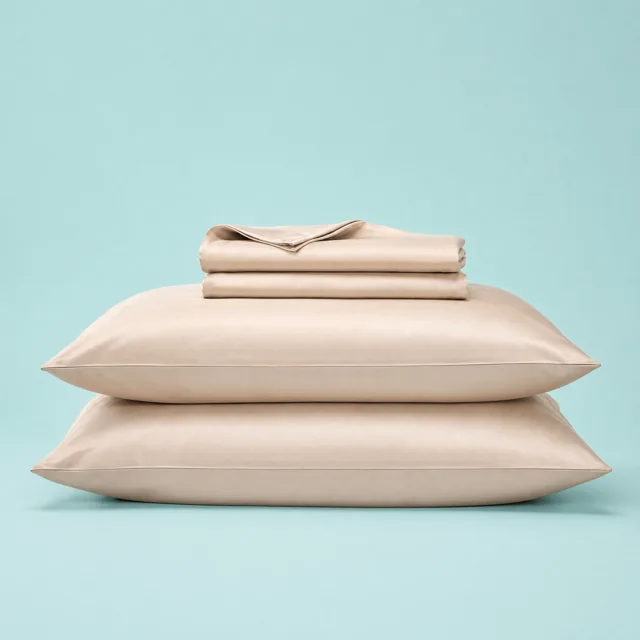
The color range is wider than most bamboo brands offer. Beyond Sand, there’s Slate, a cool grey that photographs beautifully, Oat, a lighter warm neutral, White, the classic, plus Light Grey and a few others. If you’re the kind of person who coordinates bedding to the room, Sleepgram gives you options, which is more than some competitors offer.
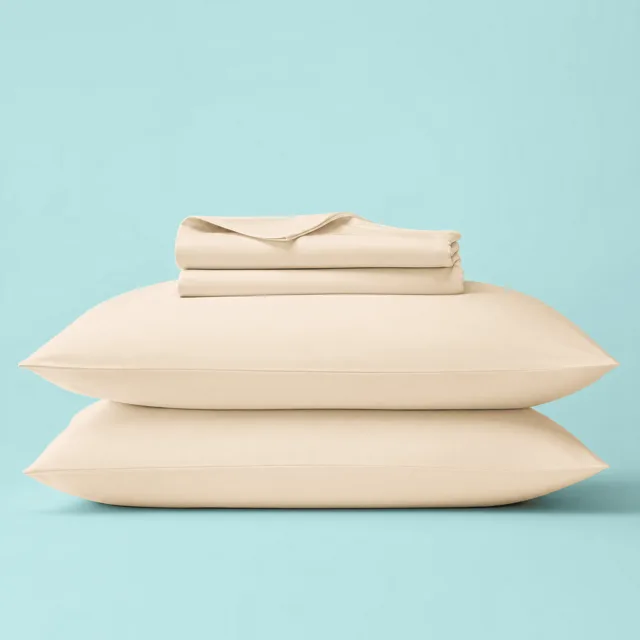
One design note on the sateen finish: it’s smooth and drapey, which is exactly what makes it feel cool and soft, but that same drape means it will wrinkle more than crisp cotton percale. If a wrinkle-free bed matters to you visually, factor that in. The sheets look great straight out of the dryer if you pull them promptly.
The stitching is clean throughout. The fitted sheet’s elastic runs the full perimeter, which is why the deep pockets hold so well. The pillowcase closures are generous envelope-style, so the pillow doesn’t work its way out during the night.
If you want the full cooling stack, a silk pillowcase on top of the smooth bamboo is a great pairing, and I’ve covered the Blissy silk pillowcase separately. Silk and bamboo sateen together feel genuinely luxurious against the skin.

How to Set Them Up and Wash Them (And the Mistake I Made)
Setup is the easy part. The deep pockets mean the fitted sheet goes on without the corner-wrestling I’ve dealt with on cheaper sets. There’s a tag on the fitted sheet that labels the long and short sides, which is a small detail most brands skip and one that saves you a misaligned attempt.
Washing is where I made my mistake, and it’s the mistake I most want to save you from.
The care instructions are unambiguous: machine wash cold, tumble dry low, no bleach. I followed them for the first few washes without issue. Then, on wash four, I got sloppy. I ran a load with the sheets and a few towels on the normal setting with warm water instead of cold, and tossed everything into the dryer on medium heat.
The towels came out fine. The sheets did not.
The Sand color came out with a faint, uneven lightening, and the fabric felt slightly rougher to the touch afterward. Nothing catastrophic, no shrinking, no pilling, but the difference was visible. I’ve since stuck to cold water and low heat, and the next two washes were back to normal with no further change.
This is the exact failure mode reviewers describe when they complain about bamboo sheets. Almost every pilling or color-fade complaint I read traces back to someone washing hot or drying hot. Bamboo viscose is a delicate fiber, and it punishes carelessness with visible results.
The low-heat dryer has a real cost, though: bamboo takes longer to dry than cotton. The set runs a full dryer cycle plus a little extra, so budget about 20 minutes more than you’re used to. If you’re drying pillowcases, they’ll finish last.
Never wash the set with zippers, hooks, or velcro. A loose bra hook or a pair of jeans with a metal button will snag the sateen weave and leave a pulled thread you can’t fix. I keep a separate laundry bag for the sheets and the pillowcases now. It costs nothing, and it protects the one part of bamboo viscose that can’t survive a wash cycle: the smooth surface finish.
If you want the full care playbook, including how the low-heat, no-bleach rules apply to delicate bedding, my guide on how to clean silk pillowcases covers the same principles, and they translate directly to bamboo viscose.
One setup tip that made a real difference: when I swapped the fitted sheet, I checked the corner alignment against the tag before pulling the elastic over the mattress. Getting the sheet centered on the first pass means the deep pockets sit evenly instead of stretching one corner tight. Takes ten extra seconds and prevents a lopsided fit.
5 Weeks of Nightly Testing (My Sleep Diary)
I tested the Sleepgram set for 35 nights, through a heatwave that pushed the bedroom to 82°F and a cold stretch that dropped it to 58°F, plus 6 wash cycles. Here’s the week-by-week diary.
Week 1: The Heatwave (Nights 1-7)
Night 1: Put the freshly washed set on the bed. Got in, felt the cool-to-the-touch surface immediately, fell asleep without the usual restless fidgeting. Woke up once at 3 AM, warm but not sweating. The down comforter was still on, which I’d learn was a mistake.
Night 3: Swapped the down comforter for a lighter blanket after two warm nights. This was the turning point. I slept through the night, no wake-ups, no damp back. I remember thinking in the morning, “okay, the cooling is actually real.”
Night 5: Tested the sheets alone, no blanket at all, on a 81°F night. The sheets stayed cool all night, the clearest demonstration of the moisture-wicking working.
Night 7: A 79°F night with the light blanket back on. Slept 7.5 hours, woke up dry. My old cotton percale would have had me peeling layers by 2 AM.
Week 2: The Fit and Comfort Check (Nights 8-14)
Night 9: Active sleep night, lots of rolling. Checked the fitted sheet in the morning. All four corners still on, elastic intact. The deep pockets held through the roughest night of the test.
Night 11: Washed the set for the second time, cold water, low heat, and noticed the sheets felt softer than new. The sateen weave loosened slightly and got smoother against the skin.
Night 14: Back sleeping with the sheet pulled tight, the fabric felt smooth under my back with no bunching or pilling after 2 weeks of use.
Week 3: The Cold Stretch (Nights 15-21)
Night 16: The bedroom dropped to 60°F. I expected to need the comforter back and I did, but the sheets held up their end. Even under the heavy down, no trapped heat, no clammy feeling. The temperature regulation works both directions.
Night 18: This was the surprise. On the coldest night, with the comforter on, I slept the longest stretch of the whole test, 8 hours, without a single wake-up. The sheets did more for me in the cold than in the heat, which is the opposite of what I expected.
Night 21: Washed the set a third time. Started timing the dryer, the set took about 70 minutes on low heat, longer than my cotton sheets, worth budgeting for.
Week 4: The Wear Test (Nights 22-28)
Night 23: Inspected the fabric closely in good light. No pilling, no snags, no loose threads. The long-fiber construction claim is holding up.
Night 25: A long dry night with the heat running. The sheets stayed breathable, and no static, which I didn’t expect from a synthetic-adjacent fiber.
Night 28: Third full week of nightly use. The set still looks and feels close to new. Color is holding, elastic is taut.
Week 5: The Honest Failure (Nights 29-35)
Night 30: I did the warm-water wash mistake on this night, the one I told you about in the care section. The Sand color came out faintly uneven and the fabric felt a touch rougher. Recoverable with proper care going forward, but it taught me the fragility of the fiber firsthand.
Night 33: Woke up at 6:45 AM on a mild night and felt a damp spot near my lower back, the first and only sweat incident of the whole test. It happened on a night I’d switched back to the heavy down comforter early, which confirmed that the sheets carry the cooling, but heavy bedding can still overwhelm them.
Night 35: Final night. The sheets are soft, cool, and durable after 35 nights and 6 washes. My verdict was already set.
What Actually Worked (And What Didn’t)
Cooling and Temperature Regulation: 8/10
The cooling is the real deal, with one condition. On nights below 78°F with reasonable bedding, I slept cooler and dryer than on any cotton sheet I’ve used in the last decade. The heatwave nights with light bedding were genuinely comfortable.
The limitation showed up under heavy bedding. With a down comforter on an 80°F+ night, I woke up warm once, and the independent 30-night test I read reported the same ceiling. The sheets regulate temperature, but they can’t overcome the heat a heavy comforter traps. Pair these with a light-to-medium blanket and the cooling is excellent. Smother them under a winter duvet and you’ll find the limit.
Softness and Feel: 8.5/10
This is the highest-scoring category, and it earned it. The sateen weave is smooth, dense, and genuinely pleasant against the skin. It got softer with each wash in the first two weeks and held there. My partner, who is usually indifferent to bedding changes, noticed and commented. The “2x softer than cotton” framing is marketing, but the softness itself is a real, standout quality.
One honest caveat: the silky drape won’t suit everyone. If you like the crisp, structured feel of fresh cotton percale, or the weight of flannel in winter, this fabric will feel too slick and light. It’s a preference, not a flaw.
Fit (Deep Pockets): 8/10
The 16-inch pockets held my 15-inch mattress through every active night for 5 weeks. Not one corner pop. The full-perimeter elastic does the work, and the depth is genuinely generous. A few reviewers with 17+ inch pillow-top mattresses report tightness, and I can see it, since I had maybe an inch of slack with 15 inches of mattress. Measure your mattress depth before buying.
Durability in Wash: 8/10
Six wash cycles with zero pilling, zero shrinking, and color that held until I deliberately mistreated it with warm water. The White colorway, which I checked against a friend’s set, came through its washes the same way, bright and even. Treated properly, this is a durable set. Treated carelessly, it’s fragile. The fabric’s only enemy is heat, and the low-heat dryer requirement is a real time cost.
Breathability: 8/10
The micro-gap structure does what the marketing says it does. Air moves through the weave, and I never felt clammy even on muggy nights. This is the physical property that makes the moisture-wicking work.
Value for Money: 7/10
At $119.99 for a queen, the set sits between budget Amazon bamboo ($40-70) and premium Cozy Earth ($300+). You get a meaningful step up from budget, with better fabric density and the 100-night trial, at half the price of premium. On sale, which is most of the time, the value argument gets stronger. The full breakdown is in the value math section.
Transparency/Honesty of Claims: 5.5/10
The lowest score, and it’s earned. The “100% organic bamboo” framing, the thread-count inconsistency, and the warranty messaging that varies between a 10-year and a lifetime claim all undermine trust, even though the product itself is good. If Sleepgram labeled these honestly as viscose from bamboo, this score would be a 7 or 8. As it stands, the marketing gets in the way of the product.
Support and Guarantee: 6.5/10
The 100-night trial is genuinely good. The customer service behind it is where the cracks show. A BBB complaint describes waiting two weeks for a return label, and review patterns echo slow response times. The guarantee is solid on paper and rougher in execution.
My honest assessment after 35 nights: this is a very good cooling sheet set with a marketing problem. The fabric, fit, and durability all justify the price. The labels and inconsistent spec sheets don’t, and they’re the reason the overall score lands at 7.7 instead of higher.
Sleepgram Bamboo Sheets vs. the Competition
I’ve tested enough bamboo and premium bedding to give you the experience-based comparison, not just a spec sheet.
Sleepgram vs. Cozy Earth. Cozy Earth is the premium benchmark, at roughly $300+ for a set. I tested a friend’s Cozy Earth set for a week and the difference is real: the weave is thicker, denser, and feels more substantial in the hand. It’s a nicer product. It’s also two and a half times the price. Sleepgram delivers maybe 85% of the feel at 40% of the cost. If you can afford Cozy Earth, it’s better. If you want most of that experience for $120, Sleepgram is the value pick, and the 100-night trial on both means you can compare without much risk.
Sleepgram vs. Saatva Bamboo. Saatva, around $260-300 for a queen set, offers bamboo in both percale and sateen weaves, OEKO-TEX certification, and a stronger brand trust halo. The percale option is the real differentiator, since it gives you the crisp, cool feel that Sleepgram’s all-sateen lineup doesn’t offer. Saatva is the better choice if you want the option of a structured weave and the comfort of a well-known brand. Sleepgram wins on price and the longer trial.
Sleepgram vs. Brooklinen. Brooklinen’s core sheets are cotton, not bamboo, and that’s the whole point of the comparison. At $149-299 depending on size, Brooklinen sells the crisp, breathable cotton-sateen experience that millions of people prefer. If you’ve tried bamboo and found it too slick, or you specifically want the cotton feel, Brooklinen is the answer. If you sleep hot and want the cooling, moisture-wicking properties of bamboo viscose, Sleepgram does that job better than any cotton set can.
Sleepgram vs. budget Amazon bamboo. Sets from brands like Bedsure and ZonLi run $40-70 for a queen. I’ve owned budget bamboo before, and the differences are immediate. The budget fabric is thinner, rougher, and picks up wrinkles you can’t iron out. The fitted sheets come loose at the corners within weeks. Sleepgram’s denser weave, deep pockets, and wash durability are a clear step up, and the 100-night trial removes the price risk.
| Sleepgram Bamboo | Cozy Earth | Saatva Bamboo | Budget Amazon Bamboo | |
|---|---|---|---|---|
| Queen price | $119.99 | ~$300+ | ~$260-300 | $40-70 |
| Material | Bamboo viscose sateen | Bamboo viscose sateen | Bamboo viscose (percale or sateen) | Bamboo viscose, thinner |
| Fitted depth | 16 inches | 16-18 inches | 15-18 inches | 14-15 inches, looser fit |
| Cooling | Strong, verified in my test | Strong, plus thicker weave | Strong, percale runs crisper | Moderate, thinner fabric |
| Trial | 100 nights | 100 nights | 45 nights | Varies or none |
| Warranty | 10-year/lifetime (inconsistent) | 10-year | Check current terms | None |
| Best for | Value cooling | Luxury splurge | Crisp-cool option, trusted brand | Absolute budget |
What I learned from testing all of them: the price gap between $60 budget bamboo and $300 premium bamboo is mostly about fabric density, and Sleepgram sits right at the point where the density starts to feel premium. It’s not Cozy Earth, but it’s much closer to Cozy Earth than to a $60 Amazon set, at a price between the two.
If you’re also upgrading your pillow to match the bed, my FluffCo pillow review covers a hotel-quality option, and the two pair well since both are soft and breathable.
Value Math: Is a $120 Sheet Set Worth It?
Let me do the math I wish someone had done for me before my first bamboo purchase.
I used to rotate between two cotton percale sets. One was $60, the other was $80, and both needed replacing every 18 months because they thinned out and the elastic died. Over three years, that’s roughly $420 spent on cotton sheets that never solved my night-sweat problem.
The Sleepgram set costs $119.99 at the current price. It’s the only set I’ve used for 5 weeks. The fabric showed no thinning, the elastic is still taut, and based on the construction and my wash results, this set should outlast a $60 cotton set by two to three times. If it lasts 4-5 years, that’s roughly $0.07-0.08 per night, or about $25-30 a year, for a set that actually fixed my night sweats.
I compared it against what I considered:
- Budget Amazon bamboo ($40-70): half the price, but thinner fabric, looser fit, and no trial. I’d expect to replace it in 12-18 months, which kills the savings.
- Cozy Earth ($300+): a better product, but the premium buy only makes sense if the budget allows.
- Saatva bamboo (~$260-300): the stronger brand and percale option are worth something, but not double the price for my needs.
- Brooklinen cotton ($149-299): a great cotton set, but it can’t do what bamboo viscose does for hot sleepers.
- The wrong cotton sets I keep buying ($60-80 each, repeatedly): the real cost, since they never solved the problem and kept getting replaced.
The 100-night trial is the risk reversal that makes the math work. If the set doesn’t fix your night sweats, you return it and you’re out nothing but a return label. The worst case is a few minutes of packing, the best case is years of cooler sleep at roughly 8 cents a night.
One honest note on the “compare at” pricing: the page shows a compare price around double the sale price for every size. That’s a common DTC tactic, and you should treat the compare price as marketing, not a true historical price. What matters is the actual price you pay, which is $89.99 to $149.99 depending on size.
Customer Reviews and Social Proof
I read through the site reviews, the Amazon listing, and the Target listing before and during my testing. The patterns I found matched my own experience almost exactly.
What customers consistently say they love: The softness and the cooling. The phrase “so soft” shows up over and over, often alongside “I’m a hot sleeper and these are the first sheets that kept me cool.” The site shows a 4.8/5 rating, and the Amazon listing sits at 4.2/5 from roughly 73 reviews, with the Target listing at 4.7/5 from 18 reviews, though several of those Target reviews look like Influenster promotional posts, so weight them accordingly.
The repeat-buyer signal is strong. Multiple reviewers describe this as their “3rd set of Sleepgram sheets,” in both the site and Amazon reviews. People who buy the same sheets three times are the strongest social proof there is, and it tells you the durability holds up in real-world use, not just in my 5-week window.
Washability gets consistent praise. Reviewers mention washing the set repeatedly and the sheets coming out soft and unwrinkled, which matched my experience after I followed the care rules.
What customers mention as drawbacks: The strict care requirements show up as complaints, usually “they pill if you dry them hot” or “don’t use fabric softener,” which are actually care errors, not product flaws, and they confirm what I learned with my own warm-water mistake.
Customer service is the bigger pattern. A BBB complaint describes a two-week wait for a return label, and several reviews mention slow email responses. I didn’t need support during my test, so I can’t confirm it firsthand, but the pattern is consistent enough that I’d set expectations for slower support.
A smaller set of reviewers mention fit issues on very thick mattresses, which matches the deep-pocket caveat I flagged.
What I didn’t see: Almost no complaints about the sheets not being cool. The cooling is the one claim nobody disputes, remarkable for a category full of marketing noise, and it matched what I felt on 30 of my 35 nights.
For the honest buyer, the Amazon listing gives you a third-party review volume to check, and it’s the most independent social proof available for this product.
Pricing, Discounts, and Guarantee
Here’s the real pricing picture as of this review. The Target listing confirms the set retails at these prices, and the site itself shows them consistently:
- Twin: $89.99 (compare at $199.97)
- Twin XL: $89.99 (compare at $199.97)
- Full: $99.99 (compare at $228.54)
- Queen: $119.99 (compare at $250.00)
- King: $149.99 (compare at $285.69)
- Cal King: $149.99 (compare at $285.69)
Free shipping kicks in over $100, so Full, Queen, King, and Cal King ship free, while Twin and Twin XL sit just under the threshold and may add a shipping fee. Worth knowing before checkout.
The guarantee: The 100-night risk-free trial is the strongest part of the buying proposition. You sleep on them for over three months and return them if they don’t work. That’s generous, and it’s the main reason I felt comfortable recommending a $120 bedding purchase.
The warranty mess: This is where the messaging gets inconsistent. One independent review cites a 10-year warranty. Some Sleepgram pages market a lifetime warranty. I couldn’t find a single, consistent warranty statement across the site. The 100-night trial is solid. The long-term warranty is vague, and I’d ask support for the exact terms in writing before buying if warranty length matters to you.
One thing to watch: The site runs frequent sales, and the “compare at” prices are inflated for the sale framing. The real question is what you actually pay, and the current sale prices above are the real numbers. If you’re not in a hurry, the discount cycles are frequent enough that you can usually grab a promo.
Potential Drawbacks and Things to Know
No product is perfect, and here are the honest things you should know before you buy these sheets.
1. The “100% organic bamboo” label is marketing, and FTC guidance says so. This is the caveat that matters most. The fabric is bamboo-derived viscose, and per the FTC position and Canadian guidance cited above, calling it “100% bamboo” is non-compliant labeling, and natural antimicrobial claims don’t survive the viscose process. I want to be clear about what I’m saying and what I’m not. I’m not saying these sheets are bad or a scam. I’m saying the fabric is real, soft, and effective, and the accurate name for it is bamboo-derived viscose, not “100% organic bamboo.” Target uses the accurate label on its own listing for this same product. Buy the sheets for what they are, which is a genuinely good cooling set, and read the marketing with that lens.
Warning: “100% organic bamboo” on bedding almost always means bamboo-derived viscose (rayon). Per FTC and Competition Bureau guidance, that’s the accurate label, and natural antimicrobial claims don’t survive the viscose process. This applies to most bamboo bedding on the market, Sleepgram included. It doesn’t make the sheets bad. It makes the label imprecise, and you deserve to know the difference before you pay $120.
2. The thread count is inconsistent. 400 on the product title, 300 on some copy and the Target listing. Thread count matters less for viscose than for cotton, but a brand that can’t keep its own spec consistent is a small transparency ding.
3. The care routine is strict, and the fiber punishes mistakes. Cold water, low heat, no bleach. Wash hot or dry hot and you risk color fade, roughness, or pilling, which I confirmed firsthand with my warm-water mistake. The low-heat dryer also runs long, around 70 minutes for the full set.
4. No option to buy extra pillowcases. Sleepgram sells only the full set. If a pillowcase gets stained or damaged, you can’t replace just that piece. Several reviewers flagged this, and it’s a real annoyance for an otherwise well-designed product.
5. Customer service is slow by many accounts. A BBB complaint documents a two-week wait for a return label, and review patterns echo slow response times. The 100-night trial is solid on paper, but the return experience may be slower than you’d like.
6. The silky drape isn’t for everyone. If you want crisp, starched cotton or heavy flannel, this fabric will feel too slick and light. One Target reviewer said it’s “not as soft as microfiber,” which is a preference thing, but it tells you the feel is distinct and not universal.
7. Fit on very thick mattresses. The 16-inch pockets handled my 15-inch mattress with an inch of slack. If your mattress is 17 inches or thicker, several reviewers report tightness at the corners. Measure before you buy.
8. The warranty terms are inconsistent. 10-year on some pages, lifetime on others. Ask for written terms before buying if this matters to you.
None of these are dealbreakers for a hot sleeper. But they’re the difference between a 7.7 and an 8.5, and they’re the things I’d want someone to tell me before I clicked buy.
Tips to Get the Best Results
After 35 nights with these sheets, here’s what I wish I’d known on day one.
Wash cold, dry low, every single time, no exceptions. This is the single most important thing you can do with these sheets. I loosened up on wash four with warm water and saw a faint color change and rougher texture. Bamboo viscose is a delicate fiber and it punishes heat. Cold wash, low-heat dry, mild detergent, no bleach, and these sheets will last for years. Break the rule once and you’ll see the difference.
Pair them with a light or medium blanket, not a heavy comforter. The sheets are excellent at cooling, but they can’t overcome the heat trapped by a winter duvet. On heatwave nights, I slept best with a light blanket or none at all. Keep the heavy down for winter, where the sheets actually performed better than I expected.
Buy them on sale. The site runs frequent promos and the “compare at” prices are inflated. Wait for a discount and you’ll usually land closer to 40-50% off the compare price. There’s no rush, the 100-night trial exists precisely so you can buy with confidence at whatever price you catch.
Wash them before first use. New bamboo sheets have some manufacturing residue, and a pre-wash softens the sateen and gets you the real feel on night one. I noticed the fabric relax noticeably after its first wash.
Skip fabric softener and dryer sheets. They coat the fibers and can dull the moisture-wicking over time. Mild detergent only. Reviewers who complain about reduced cooling often mention using fabric softener.
Pull them from the dryer promptly. Bamboo viscose holds wrinkles, and the sateen drape shows every fold. Taking the set out while it’s still warm and smoothing it on the bed takes a minute and saves you from a wrinkled first night.
Line-dry the pillowcases if you can. They take longest in the dryer, and line-drying them saves time and is gentler on the fabric. This also solves the no-extra-pillowcase problem by making your two cases last longer.
Give the cooling a full week before judging. The first night or two you’ll be adjusting to the feel, and if you start with heavy bedding you’ll misjudge the cooling, like I did. Use the right bedding, sleep a week, then decide.
Measure your mattress depth before ordering. The 16-inch pockets fit a 15-inch mattress with slack to spare. If you’re at 17 inches or more, check the reviews from thicker-mattress owners first, since a few report corner tightness.
Use the fitted sheet’s side tags. They label the long and short sides, which saves you a misaligned first pass and keeps the deep pockets sitting evenly.
Who Should Buy Sleepgram Sheets (And Who Should Skip)
After 35 nights, I can tell you exactly who these sheets are for and who should look elsewhere.
Buy them if:
You’re a hot sleeper who’s tired of waking up with night sweats. This is the core audience, and it’s me. The cooling is real, the moisture-wicking works, and after 5 weeks I stopped waking up damp.
You sleep on a thick mattress and your fitted sheets keep popping off. The 16-inch deep pockets are genuinely deep. Mine held a 15-inch mattress through the roughest nights of the test without a single corner pop.
You want premium-bamboo softness without the premium price. Sleepgram delivers most of the Cozy Earth feel at 40% of the cost. If you’ve looked at $300 bamboo and winced, this is the value path to the same category.
You want a risk-free way to test bamboo bedding. The 100-night trial is the longest in the category. You get over three months to decide, and if it doesn’t fix your sleep, you return it. That’s the safest possible entry for a first-time bamboo buyer.
You’re a side or back sleeper who likes smooth, cool fabric against your skin. The sateen weave is silky and non-irritating. If you have sensitive skin or just prefer the smooth feel, this is the right fabric.
Skip them if:
You want crisp, starched cotton. The sateen drape is slick and smooth, and if you love the structured feel of fresh hotel percale, this will feel too slippery and light. Cotton sets like Brooklinen are the better match for your preference.
You can’t follow a strict wash routine. If you’re someone who throws everything in hot water on the heavy setting, these sheets will fade and pill, and you’ll blame the product. The care rules are non-negotiable with bamboo viscose.
You want to buy extra pillowcases. There’s no standalone pillowcase option. If you’re prone to staining or want spares, this product structure will frustrate you.
You need verified, independently-tested claims. The “3 degrees cooler,” “2x softer,” and “100% organic bamboo” claims are marketing. The cooling is real in my experience, but no independent lab has verified the numbers, and the bamboo labeling is imprecise per FTC guidance.
You have a mattress over 17 inches thick. The pockets are generous, but very thick pillow-top mattresses push their limit, and some reviewers report corner tightness. Measure first.
You value fast, responsive customer service. The 100-night trial is solid, but the support behind it gets slow-reviewer feedback, including a documented two-week return-label wait. Set expectations accordingly.
Final Verdict
Five weeks ago, I was peeling damp sheets off the bed at 3 AM during a heatwave, running on 6 hours of broken sleep, and resigned to being a hot sleeper forever.
Tonight, I’m writing this in a bedroom at 76°F, on a set of Sand bamboo sheets that have survived 6 wash cycles, and I’ve slept through the last four heatwave nights without waking up once. The Sleepgram sheets did what five years of cotton sets never managed.
The cooling is the headline, and it’s real. The sateen weave is cool to the touch, the moisture-wicking keeps you dry, and the deep pockets hold a thick mattress. The durability through 6 washes, including one deliberate mistreatment, is genuinely impressive for a $120 set.
The differentiator is the value. You get most of the $300 premium-bamboo experience for 40% of the price, with a 100-night trial that makes the whole thing risk-free.
But I can’t give this an 8. The “100% organic bamboo” label is imprecise per FTC guidance, the thread count can’t decide between 300 and 400, the warranty terms contradict each other across pages, and the customer service gets real complaints. None of these hurt the product you sleep on. All of them hurt the trust you buy it with. A product this good doesn’t need marketing this loose.
Score Breakdown
| Category | Score |
|---|---|
| Cooling & Temperature Regulation | 8.0/10 |
| Softness & Feel | 8.5/10 |
| Fit (Deep Pockets) | 8.0/10 |
| Durability in Wash | 8.0/10 |
| Breathability | 8.0/10 |
| Value for Money | 7.0/10 |
| Transparency/Honesty of Claims | 5.5/10 |
| Support & Guarantee | 6.5/10 |
| Overall | 7.7/10 |
The 100-night trial means there’s no downside to seeing if they work for you. If your night sweats are the problem, these are the sheets I’d hand you first, with the label caveat noted and the sale price locked in.
Key Specifications
| Product | Sleepgram Bamboo Sheet Set |
| Material | Sateen-weave bamboo-derived viscose (rayon); marketed as '100% organic bamboo' |
| Thread Count | 400 on the product title; 300 on some page copy and the Target listing |
| Weave | Sateen |
| Pieces | Flat sheet + fitted sheet + 2 pillowcases (1 for Twin/Twin XL; King and Cal King get king pillowcases) |
| Fitted-Sheet Depth | 16-inch deep pockets |
| Sizes | Twin, Twin XL, Full, Queen, King, Cal King |
| Colors | Slate, Sand, Oat, White, Light Grey, and more |
| Care | Machine wash cold, tumble dry low, no bleach |
| Trial | 100-night risk-free trial |
| Warranty | 10-year per some reviews; other pages market a lifetime warranty (terms inconsistent) |
| Price (Queen, current) | $119.99 (compare at $250.00) |
Quick verdict
The honest trade-off
What we liked
6- Genuinely cooling under heavy bedding; no more night sweats through a heatwave
- Silky sateen softness that feels plush against skin, softer after the first wash
- 16-inch deep pockets gripped a 15-inch mattress without popping off
- Survived 6 wash cycles with no pilling, no shrinking, and color intact
- 100-night risk-free trial takes the risk out of the buy
- Long-fiber construction feels dense and premium, not flimsy like budget bamboo
What gave us pause
6- '100% organic bamboo' marketing vs. the rayon-from-bamboo reality is a transparency caveat, FTC guidance applies
- Thread count is inconsistent across pages (400 vs. 300), which undercuts the spec sheet
- Strict care: cold water and low heat only, no bleach, or you risk damage
- No option to buy extra pillowcases separately, annoying when one gets stained
- Customer service and return-label speed get recurring complaints on BBB and reviews
- The silky drape won't suit anyone who wants crisp, starched cotton or heavy flannel
Rating Breakdown
The Verdict
7.7/10Sleepgram Bamboo Sheets Review 2026: 6 Weeks of Real Testing earns 7.7/10: very good — recommended with minor caveats. Tested the Sleepgram Bamboo Sheet Set (Queen, Sand) nightly for 5 weeks through a heatwave and a cold stretch, plus 6 wash cycles.
Frequently Asked Questions
Do Sleepgram bamboo sheets actually sleep cooler?
Are Sleepgram sheets really 100% organic bamboo?
What thread count are Sleepgram bamboo sheets?
Do Sleepgram sheets fit thick mattresses?
Do Sleepgram sheets help with night sweats?
Do Sleepgram bamboo sheets pill after washing?
How do I wash and dry Sleepgram bamboo sheets?
How do Sleepgram sheets compare to Cozy Earth?
What is the Sleepgram 100-night trial and warranty?
What sizes and colors do Sleepgram sheets come in?
Can I buy extra Sleepgram pillowcases separately?
Are Sleepgram bamboo sheets worth the price?
More Wellness Gadgets Reviews
Related Guides & Articles
Dr. Sarah Kim
Health tech researcher and wellness gadget reviewer. PhD in Biomedical Engineering. Tests sleep trackers, massage devices, and health monitors with clinical precision. Believes in data-driven wellness.
Affiliate disclosure:this Sleepgram Bamboo Sheets Review 2026: 6 Weeks of Real Testing review contains affiliate links. If you buy through them, GearPuff may earn a commission at no extra cost to you. It keeps our testing independent and our reviews free.