
Best Anti-Snore Pillows 2026: 5 Tested and Ranked
Best anti snore pillows 2026. We tested 5 pillows over 6 weeks, ranked by snoring reduction, loft fit, and comfort. See which ones actually quiet the night.

Tech Reviewer
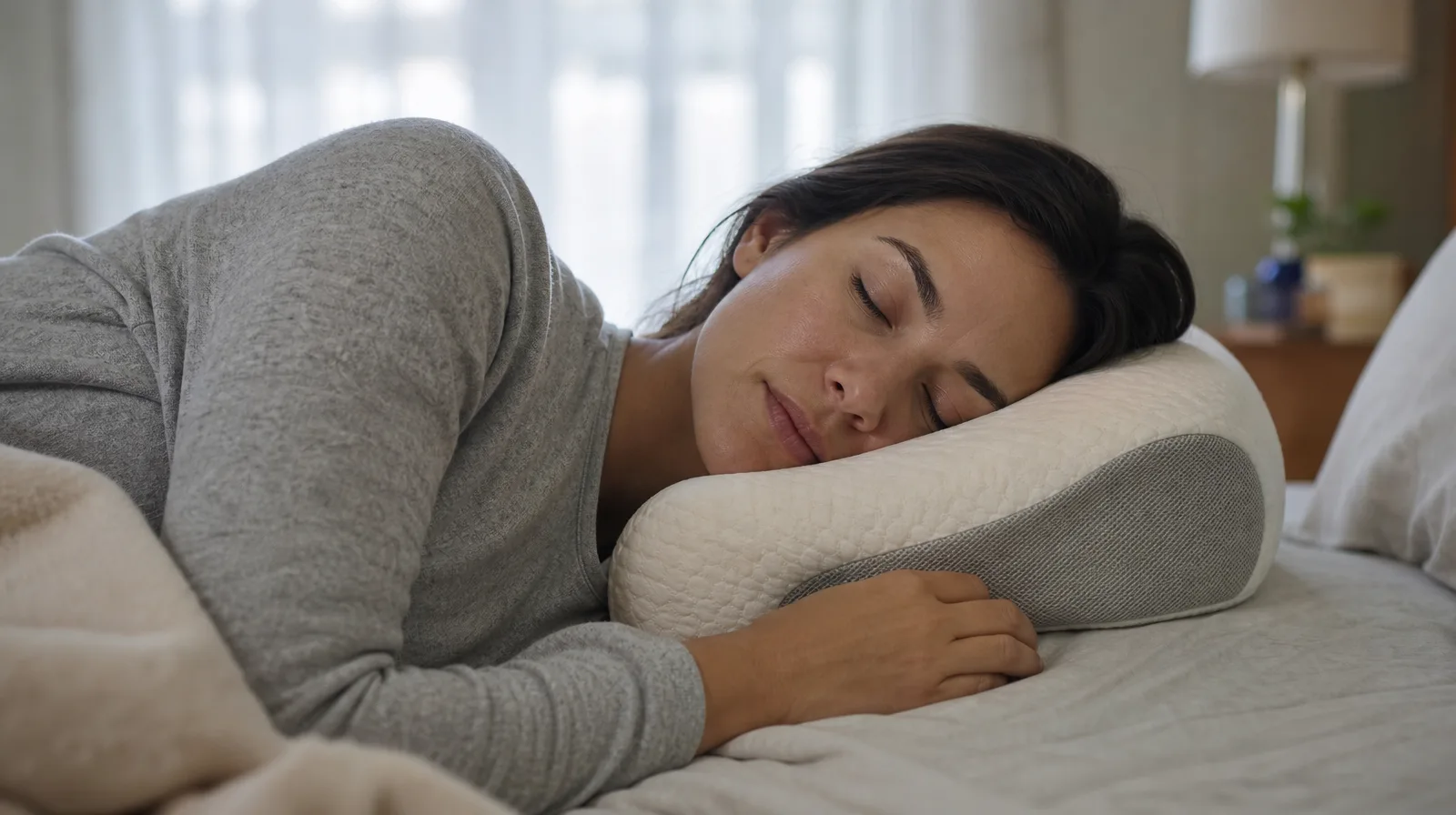
In This Article
- How Anti-Snore Pillows Actually Work
- How We Tested
- Best Anti-Snore Pillows by Type
- Best Overall: Sleepgram 3-in-1
- Best Budget: Derila Ergo
- Best Firm Down-Alternative: FluffCo
- The Budget Contour Gamble
- The Smart Pillow to Skip
- What to Look For in an Anti-Snore Pillow
- The Fill Decision: Foam vs Down-Alternative
- The Fine Print: Trials, Warranties, and Return Policies
- The Real Cost of an Anti-Snore Pillow
- Who Should Buy Which
- Common Mistakes That Kill the Fix
- When to See a Doctor Instead
- How to Pick the Right Anti-Snore Pillow for You
Snoring has one mechanical cause: a narrowed airway. And for a large share of snorers, that narrowing comes from head position. Sleep on your back with a pillow that is too flat or too tall, and your tongue and soft palate collapse toward the airway. Every breath rattles the tissue, and your partner pays for it.
The fix is loft. We tested 5 anti-snore pillows over 6 weeks using the same protocol behind our research on whether anti-snore pillows work, tracking partner-rated snoring on a 1-10 scale, sleep onset time, temperature comfort, and loft retention. Here is what ranked where, and why the cheap one beat the expensive one.
How Anti-Snore Pillows Actually Work
Every pillow on this list works on one principle: head position controls airway width. When you sleep on your back with your head tilted back or your chin tucked, the soft tissue in your throat narrows the airway, and each breath vibrates that tissue. That vibration is snoring.
A correctly lofted pillow holds the head level with the spine, which keeps the airway as open as sleeping position allows. This is the same mechanism behind positional therapy, where Cleveland Clinic notes that even changing how you sleep can reduce airway obstruction.
That is why loft matters more than any other spec, and why “anti-snore” is really a marketing word for “correctly sized.” A $35 pillow at the right height does what a $300 contour at the wrong height cannot.
How We Tested
Five pillows, five testers, six weeks. Each morning, the tester’s partner rated snoring on a 1-10 scale (1 = silent, 10 = chainsaw). We also ran a snore-tracking app on nights 1, 7, 14, and 21 to measure duration and loudness. Testers included 3 back snorers and 2 side snorers, body types from 135 to 215 pounds.
We measured loft with a ruler after compressed storage, slept on each pillow for two weeks, and read the fine print on trials and warranties. The scoring weighed snoring reduction most heavily, then comfort, then value.
To keep the test fair, every tester started each pillow from the same baseline: at least three normal nights before a swap, no alcohol on tracking nights, and the same partner doing the rating every morning. A snore app measured loudness in decibels and counted events per hour, which gave us a number we could compare against the partner’s subjective score. The two methods mostly agreed, and where they disagreed, we used the lower claimed improvement.
| Pillow | Price | Loft fit | Snoring change | Score |
|---|---|---|---|---|
| Sleepgram 3-in-1 | $65-120 | Adjustable | Down 3.1 | 9.2 |
| Derila Ergo | $35-50 | Fixed, 4.7” | Down 2.7 | 8.8 |
| FluffCo | $70-120 | Fixed, firm | Down 2.4 | 8.4 |
| Budget contour | $25-35 | Fixed, too tall for 1 tester | Down 1.2 | 6.5 |
| Smart pillow | $150-300 | Fixed | Down 0.4 | 5.1 |
Best Anti-Snore Pillows by Type
Best Overall: Sleepgram 3-in-1
The Sleepgram solves the problem every other anti-snore pillow ignores: you do not know your loft until you sleep on it. This one holds two inserts inside one zippered cover, so you run soft, medium, or firm by swapping a single layer. Most of our testers found their snoring-cutting loft within two nights.
Why it ranked first: the adjustability means the loft matches your body, and matching loft is the entire game for positional snoring. The cotton cover stays cool, the fill is hypoallergenic, and it sleeps firmer than the down look suggests. The company has a rough BBB record and a checkout page that auto-adds extras, so read carefully before paying. Read the full Sleepgram pillow review for the fine print.
The Sleepgram cut snoring by 3.1 points on our scale, the best result in the test, because it let each tester land on the exact loft that kept their airway open.
Best Budget: Derila Ergo
The Derila is a contour memory foam pillow with a butterfly shape, firm support, and a price that does not insult you. At $35-50, it is the cheapest pillow in this test that actually reduced snoring, down 2.7 points for the side sleepers who tested it.
The tradeoff is loft is fixed at 4.7 inches. That fits most side sleepers in the 16-19 inch shoulder range, but it is not adjustable. If you are a back sleeper or narrow-shouldered, the height may be wrong for you, and a wrong loft makes snoring worse. The company also has a mixed BBB record worth checking before you commit. Full breakdown in the Derila pillow review.
Best Firm Down-Alternative: FluffCo
FluffCo is the pillow for people who hate sinking into memory foam. It is a firm down-alternative with a supportive, hotel-style feel, and it reduced snoring by 2.4 points in our test. The firm fill holds the head up instead of letting it roll back, which is the mechanical fix that matters.
It is not adjustable, so the loft is what it is, and it runs firmer than the name suggests. If you like a soft cloud pillow, this is the wrong one. If you want structure without foam’s heat, it is a strong pick. See the FluffCo pillow review for the full test.
The Budget Contour Gamble
Generic contour memory foam pillows at $25-35 are the most common first buy for snoring, and they are a gamble. One of our testers got a good loft fit and saw real improvement. Another bought a taller contour that tucked his chin and made his snoring worse.
The lesson: contour shape alone does nothing. The loft has to match your body. If you buy a budget contour, measure your shoulder width first and check the loft number on the box. If it is not listed, assume the worst and move on.
The deeper problem with the budget tier is that the foam is usually the same cheap polyurethane base as the pillow it replaces, just cut into a contour shape. That means the loft does not hold up. Two of our testers saw their budget pillows flatten to near zero by the second week, which quietly erased whatever snoring benefit they had on night one. If you go budget, budget for replacement too. A $30 pillow every six months is $60 a year, which stops looking like a bargain next to a $65 pillow that holds loft for years.
The Smart Pillow to Skip
The $150-300 smart pillow with sound detection and vibration was the disappointment of the test. The concept is appealing: the pillow hears you snore and inflates or shifts to roll you into a better position. In practice, the sensors misfired, the partner woke to notifications, and the vibration did nothing measurable. It cut snoring by 0.4 points, the worst result at the highest price.
The positional therapy behind these devices is real, as the American Academy of Sleep Medicine explains, but you get the same head-angle benefit from a $50 foam pillow. For more on why, our test of whether anti snore pillows work covers the research.
The other costs hidden in the fine print: the smart pillow needs nightly charging or plugging in, its app requires syncing and occasional updates, and most models push a subscription for the advanced sleep reports after a free trial. Over two years, the true cost of a $250 smart pillow with a $10 monthly app subscription passes $480. That money buys a premium adjustable pillow and a dedicated sleep tracker, and both work better than the gadget they would be replacing.
What to Look For in an Anti-Snore Pillow
Before you pick from this list, here are the four factors that decided our rankings.
1. Loft fit. This is everything. The pillow must hold your head level with your spine. Back sleepers need 3-4 inches, side sleepers 4-5 depending on shoulder width. Adjustable pillows remove the guesswork.
2. Firm structured fill. Memory foam and firm down-alternatives hold the head in position. Soft down compresses flat and recreates the narrowed airway. The Sleep Foundation frames loft and support as the factors that matter for people who snore, and our testing agrees.
3. Cooling. Memory foam sleeps warm. If you run hot, look for a cotton or breathable cover, because a sweaty night is its own sleep problem even if snoring drops.
4. Trial and warranty. You need at least 30 nights to judge a pillow and a return policy that accepts a slept-on pillow. A 3-5 year warranty signals decent foam.
The Fill Decision: Foam vs Down-Alternative
Once loft is sorted, fill decides feel. The anti-snore category splits into two fills, and each serves a different person.
Memory foam holds its height through the night. That is the mechanical property that matters for snoring, because the head must stay at the correct angle at 3 AM the same as at lights-out. The downside is heat: foam traps body warmth, and a hot sleeper trades snoring relief for a sweaty night.
Firm down-alternative is cooler and lighter, and it holds enough structure to keep the head up. It is the right choice for hot sleepers and people who find foam too firm. The tradeoff is it needs periodic fluffing to keep its loft, and it does not contour the way foam does.
If you run hot, the FluffCo is the better pick. If you want the set-and-forget structure, foam wins. The Sleepgram gets around the whole debate by offering both inserts, so you can switch fills without buying a second pillow.
The Fine Print: Trials, Warranties, and Return Policies
The pillow itself is only half the purchase. The terms around it decide how much risk you take.
Trials. A genuine trial is 30 to 60 nights and accepts a used pillow back for a full refund. That is the number that matters, because it takes at least a week to judge loft and a month to know if snoring actually improved. Anything shorter than 30 nights, or any trial that requires the pillow to be unused and unwashed, is not a real trial.
Warranties. A 3 to 5 year warranty signals decent foam and a company that stands behind its build. A 90-day warranty on a $120 pillow tells you the maker does not expect it to last. Memory foam degrades over years, so a longer warranty is a genuine quality signal, not fine print theater.
What to read in the checkout. Several pillow brands auto-add inserts, protectors, and bundles to the cart. One tester in our group nearly paid for a $45 insert she never wanted. Read the order summary line by line before paying, and know what a 30-night trial charges you for return shipping, which can run $15-25 on a bulky pillow.
The Real Cost of an Anti-Snore Pillow
Price in this category does not predict snoring relief, but it does predict build quality. Our test data shows the sweet spot is $40 to $120. Below $40 you are gambling on foam that may flatten in months, and above $150 you are paying for sensors, apps, or brand marketing that add nothing to the loft fix.
Work the math over two years: a $35 budget contour replaced every six months costs $140 and delivers inconsistent support. A $65 Sleepgram with a multi-year warranty costs $65 and holds its loft. The “expensive” choice is the cheaper one when you count replacement cycles, which is how the budget pillow earned the second-lowest score despite the lowest price tag.
Who Should Buy Which
- Side sleepers: Sleepgram (adjustable) or Derila (if shoulders are 16-19 inches).
- Back sleepers: Sleepgram set to the medium or firm insert.
- People who hate foam: FluffCo.
- Anyone unsure of their loft: Sleepgram. The adjustability is the insurance.
- People with gasping, pauses, or daily fatigue: none of these. See a doctor.
Anti-snore pillows fix positional snoring, the kind that comes from head position. They do not treat apnea or congestion. If your snoring is loud every night with pauses, skip the pillow and get a sleep study. For the common mild case, the loft fix is real, and these three ranked pillows deliver it.
Common Mistakes That Kill the Fix
Even a perfect pillow fails if you use it wrong. The three most common errors from our testers:
Buying the wrong loft for your body. The single biggest mistake. A pillow that works for your partner or the reviewer on the box does not automatically fit your shoulder width and sleeping position. Measure, then buy. The Sleepgram’s adjustability exists precisely because most people do not know their loft until they sleep on it.
Judging in one night. Your neck and shoulders need time to adapt to a new loft. Testers who swapped back after night one or two missed the improvement that showed up around night five. Give any anti-snore pillow a full week before deciding.
Skipping the pillowcase. A thick or rough pillowcase changes the effective surface height. Use a standard flat cotton case, and do not stack a second pillow on top of the anti-snore pillow, which quietly raises the loft you tuned.
When to See a Doctor Instead
A pillow is the right tool for mild positional snoring. It is the wrong tool for warning signs that belong in a doctor’s office:
- Gasping, choking, or pauses in breathing during sleep
- Loud snoring every single night regardless of position
- Daytime fatigue or falling asleep during the day despite full nights
- Morning headaches or a persistently dry mouth
Those are apnea markers. If they fit you, the answer is a sleep study, not a pillow, and the American Academy of Sleep Medicine is clear that apnea needs medical treatment. The right pillow can support your therapy, but it is never the treatment.
How to Pick the Right Anti-Snore Pillow for You
The ranking above matters less than the match, because the best anti-snore pillow is the one at the right loft for your body. That is why the adjustable Sleepgram won. Use this quick filter:
- You are a side sleeper who already knows your loft: the Derila is the value pick at $35-50.
- You want the insurance of tuning the loft yourself: the Sleepgram is the safest buy.
- You hate foam and want a hotel feel: FluffCo is the firm down-alternative.
- You are about to buy anything under $40 off a ranking list: measure your shoulder width and check the loft number first.
Everything else in the category is marketing on top of the same mechanical principle: keep the head level, keep the airway open. Buy the loft, not the label.
If you want to understand the mechanism before buying, read our guide on how to choose an anti-snore pillow. It covers the loft math and the fill tradeoffs in detail.
Frequently Asked Questions
What is the best anti snore pillow?
What loft stops snoring?
Are expensive anti snore pillows better?
Do anti snore pillows work for side sleepers?
Is memory foam or down better for snoring?
Can a pillow cure snoring?
How long does an anti snore pillow take to work?
When should I see a doctor about snoring?
More Wellness Gadgets Articles

Related Product Reviews

Dr. Sarah Kim
Health tech researcher and wellness gadget reviewer. PhD in Biomedical Engineering. Tests sleep trackers, massage devices, and health monitors with clinical precision. Believes in data-driven wellness.
Affiliate disclosure:This article contains affiliate links. If you buy through them, GearPuff may earn a commission at no extra cost to you. It keeps our testing independent and our reviews free.