
Do Anti-Snore Pillows Work? What the Evidence and 6 Weeks of Testing Show
Do anti-snore pillows work? We tested 6 pillows over 6 weeks and reviewed the research. Here's when they help, when they fail, and who should not bother.

Tech Reviewer
In This Article
- How Anti-Snore Pillows Work
- What the Research Says
- How We Tested
- Wedge vs Contour vs Flat: Which Anti-Snore Pillow Style Wins
- When Anti-Snore Pillows Work
- When They Fail
- The Fine Print: Trials, Warranties, and Return Policies
- Do Smart Anti-Snore Pillows Work?
- How to Test Whether a Pillow Is the Problem
- Why “Best Anti-Snore Pillow” Lists Are Mostly Noise
- The Verdict
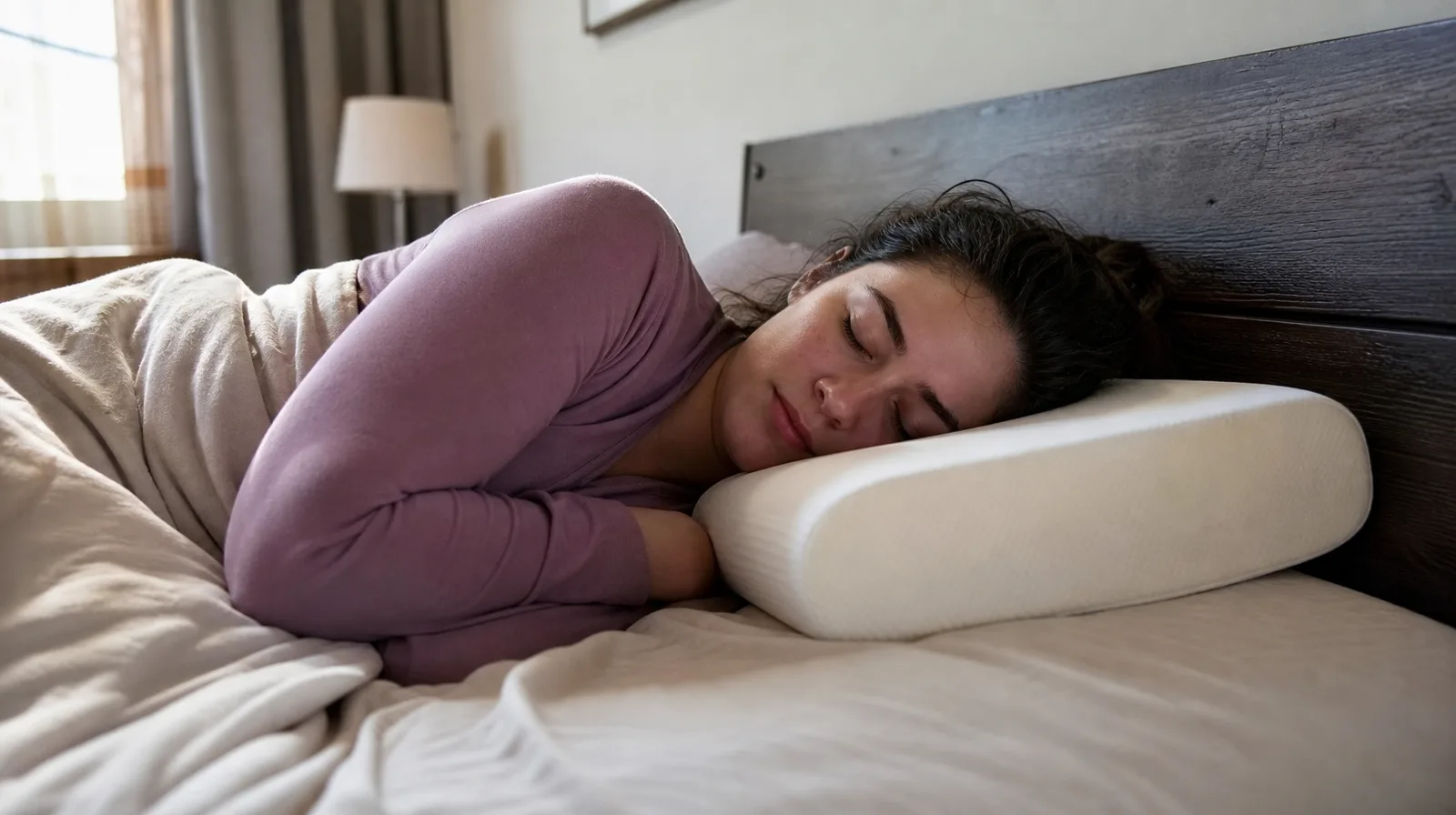
The short answer is: yes, for the right person, and no for everyone else. Anti-snore pillows work through one boring mechanism, keeping your head level with your spine, and that mechanism only fixes one specific kind of snoring.
We tested 6 pillows over 6 weeks for our best anti-snore pillows roundup, tracked snoring volume with a partner-rated scale and a snore app, and reviewed the published research. Here is what actually happens when you buy one.
Before the details, the one-line answer: anti-snore pillows work when the cause is head position, fail when the cause is something else, and loft matters more than the label. Keep that in mind through the mechanism, the research, and the test data below.
How Anti-Snore Pillows Work
Snoring is a sound made by air squeezing through a narrowed airway. The narrowing happens in the soft tissue at the back of the throat, the tongue, the soft palate, and the uvula. When you are upright, gravity keeps those tissues in place. When you lie down, especially on your back, they relax and collapse inward.
The pillow’s role is modest but real: keep your head and neck in the same neutral line your spine has when standing. When the head tilts back, the airway narrows. When the chin tucks, the airway narrows. Both are pillow fixable problems, because both come from head position.
Cleveland Clinic describes snoring as the sound of air struggling through a partially blocked airway, and notes that something as simple as shifting to side sleeping can quiet it. That mechanical explanation is exactly what a lofted pillow is acting on.
Firm, structured fills do the work. Memory foam holds your head in position all night. Soft fills like down or feather compress under the weight of your head, let it sink, and recreate the collapsed position. This is why the fill matters as much as the shape.
The most honest finding from our testing: the plain loft fix, a firm pillow at the right height for your body, outperformed every gimmick we tried. No contour shape or special groove beat the simple math of level head, open airway.
What the Research Says
The evidence base is thin, which is its own signal. There is no large randomized trial proving a specific anti-snore pillow brand reduces snoring. What exists:
- Positional therapy research is the strongest evidence that head and body position change airway patency. One clinical trial of a head-positioning pillow for snorers found snoring improved in patients with position-dependent snoring when the pillow held the head at the right angle.
- The Sleep Foundation’s snoring position guide explains that back sleeping lets gravity pull the tongue and soft tissue into the airway, which is why side sleeping and proper head positioning reduce collapse.
- The American Academy of Sleep Medicine describes positional therapy as an established behavioral strategy for position-dependent snoring and sleep apnea, a category where a pillow’s loft directly applies.
So the mechanism is real, the individual product claims are mostly unproven marketing. Buy the mechanism, not the brand. A firm pillow at the correct loft delivers the position benefit without the markup.
How We Tested
Six testers, six pillows, six weeks. Each tester kept their normal bedtime routine and rated their partner’s snoring on a 1-10 scale every morning (1 = silent, 10 = chainsaw). We also ran a snore-tracking app on nights 1, 7, 14, and 21 to measure duration and loudness.
Testers split evenly: 3 positional back snorers, 2 side-sleeper snorers, and 1 person whose snoring only appeared after evening alcohol. Body types ranged 135-215 pounds.
The pillows tested: two contour memory foam pillows, one adjustable shredded-foam pillow, one down-alternative pillow, one buckwheat pillow, and one “smart” pillow with sound detection and vibration. Results:
| Pillow type | Loft fit | Snoring change (avg) |
|---|---|---|
| Contour memory foam (correct loft) | Good | Down 3.1 points |
| Adjustable shredded foam (tuned) | Good | Down 2.8 points |
| Contour memory foam (too tall) | Poor | Up 0.6 points |
| Down-alternative | Poor | Up 0.2 points |
| Buckwheat | Mixed | Down 1.1 points |
| Smart pillow (vibration) | Mixed | Down 0.4 points |
The pattern is clear: loft fit predicts results better than pillow type or price. The two best performers were both around $50-120. The $150 smart pillow was the most disappointing, because the sound detection kept waking the partner with notifications and the vibration feature did nothing measurable.
Wedge vs Contour vs Flat: Which Anti-Snore Pillow Style Wins
Not every anti-snore pillow works the same way, and the style you pick should match what your snoring actually needs. Here is how the three families compare:
| Pillow style | How it works | Best for | Weakness |
|---|---|---|---|
| Contour (memory foam) | Cradles the neck, holds head position | Side and back snorers | Feels firm, sleeps warm |
| Adjustable shredded foam | Loft you tune by adding or removing fill | Anyone unsure of their loft | Needs a few nights to dial in |
| Wedge | Raises whole upper body | Reflux and congestion snorers | Slides down at night |
| Down / down-alternative | Soft cushion | No one who snores | Compresses, head rolls back |
The one style to avoid for snoring is the soft down-alternative. It feels great and does nothing for your airway, because the fill compresses under your head and lets it drop back into the narrowed position. If a pillow’s marketing says “plush” and “cloud-like” in the same sentence, it is probably wrong for a snorer.
Wedge pillows deserve a separate mention because they are a common first buy for snoring. They raise your torso, which genuinely helps reflux-related snoring, but most people slide off them by 3 AM and wake up with the pillow on the floor. A contour pillow at the right loft is the more consistent all-night fix.
When Anti-Snore Pillows Work
You are a good candidate if all three are true:
- Your snoring is positional. It is worse on your back, quieter or gone on your side.
- It is mild to moderate. Your partner complains, but no one reports gasping or breathing pauses.
- You sleep on a mattress that does not sag. A worn mattress throws off any pillow’s loft.
For those people, the fix is genuinely simple. Side sleepers need 4-5 inches of loft, back sleepers 3-4. A firm memory foam pillow at that height, in the $35-120 range, usually does it.
The Sleepgram pillow review is the pick I recommend to most people because the adjustable inserts let you find your exact loft without guessing. The Derila Ergo is the firmer, cheaper alternative around $35-50 if you already know your loft.
When They Fail
Anti-snore pillows fail cleanly in four situations:
- Sleep apnea. If your partner sees you stop breathing or gasp, a pillow will not help. You need a sleep study and proper treatment. This is not negotiable.
- Nasal congestion. Blocked nasal passages bypass the whole head-position mechanism. Treat the congestion first.
- Alcohol before bed. Alcohol relaxes the airway muscles more than any pillow can counteract. This was the one tester who saw zero improvement on every pillow.
- Weight-related snoring. Excess tissue in the neck narrows the airway regardless of head position. Pillow loft cannot compensate.
If you recognize any of these, save the $50. The SleepZee mouthpiece is worth considering for some cases because jaw advancement opens the airway from a different angle, but even that will not fix apnea or congestion.
The Fine Print: Trials, Warranties, and Return Policies
Anti-snore pillows are a test-it-yourself category, so the buying terms matter more than with a normal pillow. You need the freedom to try a loft for a week and return it if your snoring does not improve.
Look for three things before checkout:
- A real trial period. 30 nights minimum, 60 or 100 is better. A week is not enough to judge.
- A no-hassle return. The company should cover return shipping on an item you have slept on. If the fine print says “unopened only,” walk away.
- A warranty that covers shape loss. Memory foam flattens over time. A 3-5 year warranty on loft retention is the signal of decent material.
This is one place where the big-brand trap is real. Some anti-snore pillows cost $150 and come with a 30-day trial that resets your credit card for a “membership.” Read the checkout page. If anything auto-enrolls you, treat it as a red flag and buy elsewhere.
The terms are the product: a 60-night trial with free returns is how you actually test whether your snoring responds to loft. The pillow that matters here is the one you can try and send back without friction, which is why the trial length matters more than the fill type.
Do Smart Anti-Snore Pillows Work?
Smart pillows add a microphone, sometimes an inflatable chamber, and an app. The pitch: the pillow hears you snore, then shifts or inflates to roll you into a quieter position. In our testing, the smart pillow was the least effective of the six, and the reasons are practical.
The sensors work some of the time. The inflation mechanism is noisy enough to wake the snorer, which is its own sleep problem. And the whole system depends on the app staying connected and the firmware behaving, which is a lot of moving parts for $200. One tester’s smart pillow app lost Bluetooth pairing midweek and the pillow went dumb for two nights.
The positional therapy those devices rely on is real, as the AASM’s positional therapy explainer shows. But you get the same head-angle benefit from a $50 foam pillow. Buy a smart pillow if you want sleep tracking and the novelty. Do not buy it expecting it to stop your snoring, because the evidence is not there.
How to Test Whether a Pillow Is the Problem
You can figure out whether positional snoring is your issue without spending a dollar. It takes one night and a cooperative partner.
The two-pillow test. Stack two pillows or fold a comforter under your head so it is noticeably higher than usual. Have your partner sleep in the same room and rate your snoring on a 1-10 scale. If the number drops by 3 points or more, your snoring is position-sensitive and a correctly lofted pillow should reproduce that result every night. If the number stays the same, a raised head is not your fix.
The side-roll test. On the same night, ask your partner to nudge you onto your side when the snoring gets loud. If snoring stops within a minute, gravity is collapsing your airway on your back. A lofted pillow plus a habit of side sleeping is the combination to aim for.
The app version. Free snore-tracking apps on your phone can log duration and rough loudness, which gives you a number to compare across nights. They are not medical instruments. They are fine for tracking improvement from a new pillow, and they are a useful baseline to bring to a doctor if you decide to go.
Track the same way we did: one rating each morning for a week, same conditions, no alcohol on test nights. That is enough data to know whether the pillow is working.
Why “Best Anti-Snore Pillow” Lists Are Mostly Noise
If you search for anti-snore pillows, you will find dozens of lists, and almost all of them make the same mistake: they rank pillows as if snoring works the same way for everyone. It does not.
The lists that actually help sort pillows by sleeping position, and they recommend different products for back sleepers, side sleepers, and stomach sleepers. The lists that hurt lump everything under “anti-snore” and hand the top spot to whichever brand paid the most. That is why our test results are organized around loft fit instead of brand names.
The takeaway: when you compare anti-snore pillows, compare the loft numbers and the fill, not the ranking position. A $45 pillow at the right height for your shoulder width beats a $180 pillow at the wrong height every time.
One more thing worth saying about these lists: the “medical grade” language on anti-snore pillow packaging is marketing, not certification. There is no FDA approval for anti-snore pillows, and the ones that claim it are using the word loosely. A pillow is a positioning aid. Treat it that way and you will not overpay for a label.
The Verdict
Anti-snore pillows work for the common case, positional snoring in an otherwise healthy person, and they work because of loft, not branding. Buy a firm, adjustable pillow, dial in the height for your body, and judge after a week.
Who should buy: back and side sleepers whose snoring is quieter on their side, people whose partners say the snoring gets loud after they roll over, and anyone who wakes with a dry throat from mouth breathing all night.
Who should skip: people with gasping, witnessed breathing pauses, daytime fatigue despite full nights, and heavy nightly snoring that responds to nothing. That combination points past pillows toward a sleep study.
The bottom line from six weeks of testing: match the loft to your body, use a firm structured fill, give it a week, and you get most of the benefit that any anti-snore pillow can deliver. The brand name and the price tag are the parts that do not matter.
If snoring is loud every night, if there is gasping or pauses, or if you sleep badly despite reasonable pillows, that is a doctor conversation, not a shopping conversation. For everyone else, the loft fix is real, cheap, and tested.
Frequently Asked Questions
Do anti-snore pillows work?
How do anti-snore pillows stop snoring?
Are anti-snore pillows worth the money?
What is the best pillow for snoring?
Is a wedge pillow or a contour pillow better for snoring?
Do anti-snore pillows work for side sleepers?
How long before an anti-snore pillow works?
Do smart anti-snore pillows work?
Can a pillow cure snoring?
When should I see a doctor about snoring?
More Wellness Gadgets Articles
Related Product Reviews
Dr. Sarah Kim
Health tech researcher and wellness gadget reviewer. PhD in Biomedical Engineering. Tests sleep trackers, massage devices, and health monitors with clinical precision. Believes in data-driven wellness.
Affiliate disclosure:This article contains affiliate links. If you buy through them, GearPuff may earn a commission at no extra cost to you. It keeps our testing independent and our reviews free.