
In This Article
- How This Comparison Was Built
- Quick Verdict
- Head-to-Head Table
- Stimulation Compared: Neck Trunk vs Ear Branch
- Sessions Compared: 4 Minutes vs an Hour
- Evidence Compared: One Study vs a Program
- Price Compared: $269 Plus Gel vs $750
- What Nurosym Owners Say After 60 Days
- Safety: Same Rules, Different Intensity
- Who Should Buy Which
- Final Verdict
I tested Pulsetto for 21 days and evaluated Nurosym against its certification, research program and a mountain of user reports. Same question throughout: if you can only buy one vagus nerve device, which one deserves the money?
Short version: Pulsetto for daily habit and price, Nurosym for clinical credibility. Most people should buy Pulsetto. A specific minority should pay triple for Nurosym. This post maps exactly who belongs in each camp.
I write about stress and sleep tech at our wellness gadgets hub. Brand-owned comparison pages exist on both sides (each company grades its own homework), so consider this the independent version neither brand would publish.
How This Comparison Was Built
Pulsetto got the full treatment: 21 days of logged sessions across stress, sleep and burnout modes, sleep tracking nightly, HRV watched as a lagging indicator. Nurosym got a different but fair protocol: certification documents read end to end, the published research program reviewed study by study, and hundreds of owner reports across Reddit, Trustpilot and VNS forums pattern-matched against my Pulsetto diary.
Why asymmetric methods? Buying both devices for months would be ideal and costs over $1,000 before gel. The honest alternative is deep personal data on one plus documented evidence synthesis on the other, with every inference labeled. Where I state a Nurosym number from users rather than my own trial, the sentence says so. No borrowed authority masquerades as first-hand testing here.
Quick Verdict
Pulsetto wins for most people. Four-minute hands-free neck sessions at ~$224 to $269 on sale, 5 free app programs, and compliance-friendly design. My sleep onset fell from 35 minutes to under 20 across 3 weeks.
Nurosym wins for credibility-first buyers. CE medical device certification, randomized placebo-controlled research, and auricular precision. Sessions demand 30 to 60 minutes at ~$750.
The deciding factor is not technology. It is whether you will still run sessions in month 3.
Head-to-Head Table
| Feature | Pulsetto FIT | Nurosym |
|---|---|---|
| Stimulation type | Electrical, neck bilateral (cervical) | Electrical, ear branch (auricular taVNS) |
| Session length | 4 minutes | 30 to 60 minutes |
| Hands-free | Yes | No, ear clip worn throughout |
| Programs | 5 free + Premium extras | Research-backed protocols, app tracking |
| Certification | FCC + CE electronics (wellness) | CE medical device |
| Evidence | 1 small company study (n=40) | Multiple studies incl. randomized placebo-controlled |
| Battery | 10-12 days, USB-C | Rechargeable (shorter per-session drain) |
| Consumables | $45 gel monthly | Minimal |
| Sale price | ~$224 to $269 | ~$750 |
| Guarantee | 30-day money-back, 2-year warranty | 30-day returns, 2-year warranty |
| Best for | Daily stress + sleep habit | Clinical credibility seekers |
Stimulation Compared: Neck Trunk vs Ear Branch
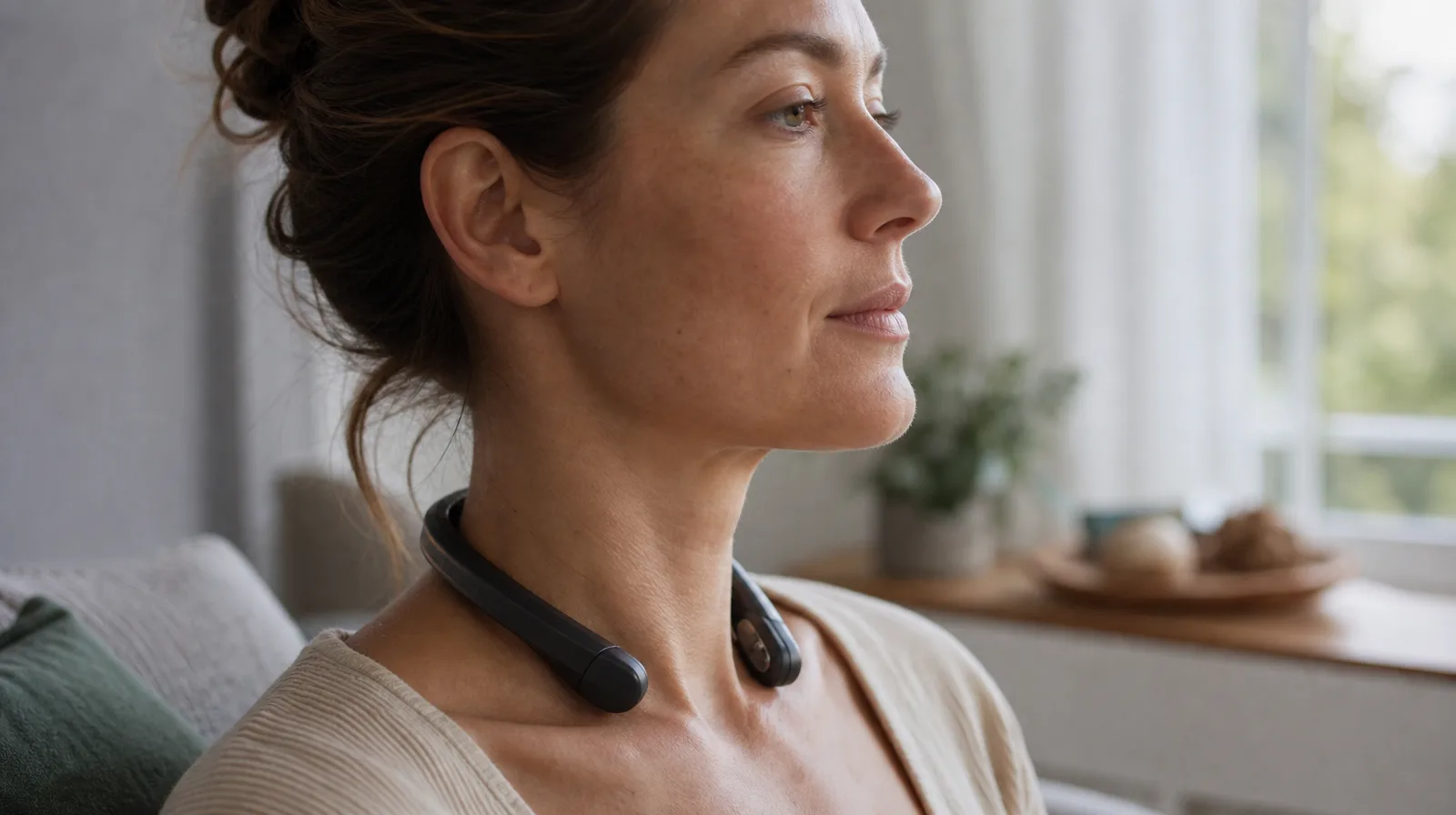
Pulsetto fires through the front of the neck where the vagus runs thick beside the carotid sheath. Thick trunk means forgiving placement. My first sessions were sloppy and still worked once gel and intensity were right. Intensity 5-plus is where the nerve joins in.
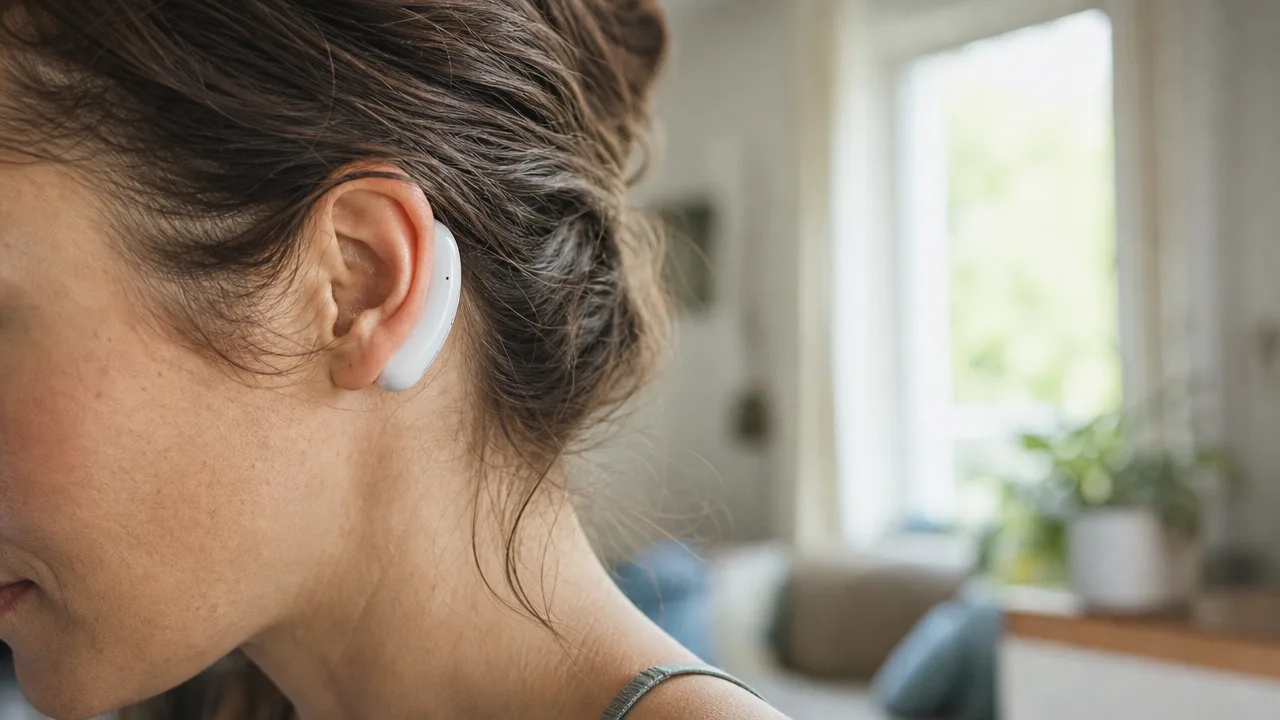
Nurosym clips near the ear to reach the auricular branch, a thin twig of the same nerve. Exact placement matters more, currents run lower, and the sensation stays subtle. Precision engineering, fussier setup.
Neither placement has beaten the other in a head-to-head wellness trial. Treat this as ergonomics, not efficacy ranking. Neck suits people who want to sit back and feel something definite. Ear suits minimalists who prefer subtlety and credentials.
Placement fiddling differs in kind. Pulsetto beginners waste their first sessions on dry pads and jawline placement (I did), then lock a reliable setup within a week. Nurosym beginners fiddle with clip fit and ear anatomy longer, with tragus shape and glasses arms as recurring annoyances in owner threads. Both learning curves end; Nurosym’s runs roughly twice as long before sessions feel automatic.
Sessions Compared: 4 Minutes vs an Hour
This is the whole comparison in one number. Pulsetto asks 4 minutes, 2 to 3 times daily. Total daily cost: 12 minutes. Nurosym asks 30 to 60 minutes in far fewer sittings.
Behavioral research and my own diary agree: short daily rituals survive, long ones decay. My Pulsetto compliance hit 20 of 21 days. Reddit’s long-term Nurosym users skew dedicated-biohacker, people who already meditate for an hour. Know which person you are before spending $750.
The compliance math deserves cold numbers. Twenty-one days of Pulsetto at 12 minutes daily totals about 4 hours of lifetime effort. Twenty-one days of Nurosym at 45 minutes totals nearly 16 hours. Same calendar, 4 times the ask. Anyone with kids, on-call shifts or a commute should stare at that ratio before choosing on specifications.
Travel separates them further. Pulsetto packs as a neckband plus a gel tube, runs offline-hostile (app needs internet and location), and survives hotel rooms fine on Wi-Fi. Nurosym travels as a small clip kit with fewer consumables and simpler session demands once placed. Frequent flyers who live in airplane mode should weight this: neither device works well at 35,000 feet without connectivity planning.
Evidence Compared: One Study vs a Program
Credit where due: Nurosym laps Pulsetto here. CE medical certification means a notified body reviewed safety and performance claims. Published work includes randomized placebo-controlled studies, and the manufacturer cites 61 percent vagus-activity lifts plus Long COVID, mood and inflammation data.
Pulsetto counters with a 40-person company-funded study (22 percent mood lift, 28 percent stress drop, 18 percent sleep gain per company figures) and 1.5 million logged sessions with no serious adverse events. Directionally encouraging, scientifically thin. My diary rhymed with the company’s sleep numbers, which counts as one anecdote, not replication.
Neither device is FDA-cleared for stress or sleep. Anyone telling you otherwise is selling something.
Read the fine print both brands print. Pulsetto’s percentages (22 percent mood, 28 percent stress, 18 percent sleep) come from company surveys and the 40-person study, with no independent replication published. Nurosym’s headline figures (61 percent vagus-activity lift, fatigue and mood improvements) come from manufacturer-cited studies of varying size and design. Real programs beat single studies, but manufacturer-cited still means the refiner grades their own sugar. Independent replication is the missing friend both brands should invite.
Price Compared: $269 Plus Gel vs $750
Pulsetto FIT at ~$269 plus $45 monthly gel totals roughly $809 in year one of daily use. Nurosym at ~$750 with minimal consumables totals roughly $750 to $800. Funny math: year-one costs converge. The difference is session economics. Pulsetto costs about $2.20 per session daily. Nurosym costs more per session but each session is 10 times longer.
Bundles favor Pulsetto for households (extra pads, swappable sizes). Nurosym favors solo dedicated users. Both carry 30-day returns and 2-year warranties, though Pulsetto’s window counts from order date, so screenshot timestamps against shipping delays.
Watch the upsell paths because they differ in sneakiness. Pulsetto pushes app Premium trials at checkout and in-app, and Reddit holds multiple surprise-charge stories with slow support replies. Nurosym’s upsell surface is smaller (accessories, extended content), with complaints clustering instead around delivery waits for a device shipping from Europe. Different companies, different failure modes: audit Pulsetto’s billing, audit Nurosym’s logistics.
What Nurosym Owners Say After 60 Days
Three patterns repeat across long-term owner reports. First, the believers describe cumulative change: lower baseline tension around week 6, better recovery scores on their wearables, patience framed as part of the protocol. These are the meditators and the quantified-self crowd, people who already trust slow processes.
Second, the impatient report nothing by week 3 and sell the device. Same hardware, opposite verdict, with session compliance as the visible divider. Owners who admit skipping days cluster in the disappointed group. Owners with streaks cluster in the convinced group. That correlation should surprise nobody and inform everybody.
Third, almost nobody mentions customer-service drama. Nurosym support threads read boring in the best way: delivery questions answered, returns processed, clips replaced. Against Pulsetto’s BBB file, boring support is a genuine feature worth pricing into the $750 for buyers who have been burned before.
Safety: Same Rules, Different Intensity
Both devices share the standard tVNS exclusion list: pacemakers and implanted electronics, pregnancy, epilepsy, heart rhythm conditions, all require a doctor’s sign-off first. Pulsetto publishes a full contraindications page worth 5 minutes before purchase.
Intensity risk tilts slightly toward Pulsetto for one reason: 9 user-controlled levels up to a genuinely strong tingle invite overdoing it (my intensity-9 jaw twitch at day 6 taught that lesson in 20 minutes). Nurosym’s lower currents and longer sessions produce fewer acute-overdose stories but more skin-contact complaints over hour-long wears. Neither profile alarms; both reward starting low and climbing slowly.
Who Should Buy Which
Buy Pulsetto if you want stress relief and sleep support inside a schedule that has no spare hour. Stressed professionals, wired parents, routine-driven biohackers. The 30-day guarantee caps the experiment.
Buy Nurosym if certification is non-negotiable, you trust auricular precision, and hour-long sessions sound like self-care rather than homework. Researchers, skeptics of wellness marketing, therapy-adjacent users with clinician guidance.
Buy neither if you have a pacemaker, are pregnant, or manage epilepsy or heart rhythm conditions without a doctor’s sign-off. Both pages list contraindications worth reading first.
For the wider field beyond these two, the best vagus nerve stimulators of 2026 ranks all 6 devices I evaluated with one winner per use case. For the vibration-based alternative that skips electricity entirely, the Pulsetto vs Apollo Neuro comparison settles the stimulation-versus-soothing question.
Final Verdict
Nurosym is the better credentialed device. Pulsetto is the better purchased device, for most people, most days. Credentials do not calm anyone from inside a drawer. Four minutes you actually complete beats 60 minutes you skip, and $269 with a guarantee beats $750 on principle for an uncertain outcome.
Pay triple only when the certificate itself is the product you are buying. Everyone else: run the cheap experiment first.
Common Questions & Answers
Q: Which is better, Pulsetto or Nurosym?
Pulsetto wins for daily habit value: 4-minute hands-free neck sessions at around $224 to $269 on sale. Nurosym wins for clinical credibility with CE medical certification and a real research program. Most buyers do better with Pulsetto because they actually sustain the sessions.
Q: Why is Nurosym so much more expensive than Pulsetto?
Nurosym's ~$750 price reflects CE medical device certification, a clinical research program and longer-session hardware. Pulsetto sells as a wellness device without medical certification, which keeps costs near $224 to $269 but leaves the evidence thinner.
Q: What is the difference between neck and ear vagus nerve stimulation?
Pulsetto targets the thicker vagus trunk through the neck (cervical), which forgives imprecise placement. Nurosym targets a small branch near the ear (auricular), which needs exact clip placement but uses lower currents. No head-to-head trial proves one placement superior for wellness outcomes.
Q: How long are Pulsetto vs Nurosym sessions?
Pulsetto sessions run 4 minutes, with 2 to 3 sessions a day suggested. Nurosym sessions run 30 to 60 minutes. Session length is the biggest practical difference: the best device is the one you sustain for weeks.
Q: Which has better evidence, Pulsetto or Nurosym?
Nurosym, clearly. It holds CE medical device certification and cites randomized placebo-controlled studies. Pulsetto's evidence is one 40-person company-funded study plus user surveys. Neither is FDA-cleared for stress or sleep.
Q: Can you share one device between family members?
Pulsetto's FIT pads swap for different neck sizes in seconds, so sharing is realistic. Nurosym's ear clip fits most ears but 30 to 60 minute sessions make sharing a scheduling exercise.
Q: Which is better for sleep, Pulsetto or Nurosym?
Pulsetto's 4-minute Fall Asleep program fits bedtime routines better, and my 21-day test cut sleep onset from 35 minutes to under 20. Nurosym users report sleep gains too, but hour-long evening sessions suit fewer schedules.
Q: Do Pulsetto or Nurosym need a prescription?
Neither needs a prescription. Nurosym's CE mark certifies it as a medical device in Europe, but it still sells direct to consumers. Only gammaCore among VNS devices requires a prescription.
More Wellness Gadgets Articles
Related Product Reviews

Health tech researcher and wellness gadget reviewer. PhD in Biomedical Engineering. Tests sleep trackers, massage devices, and health monitors with clinical precision. Believes in data-driven wellness.