
Decent — read the caveats first
- Double-box foot design heats, vibrates, and compresses both feet at once
- Five heat settings from 40C to 60C, so sensitive days have a usable low end
- Auto-shutoff ends every session safely after the program completes
- Fifteen minutes of genuine relaxation for tired feet after a long shift
- 99% and 99.8% pain-elimination language with no trial, no named clinician, no identifier
- International store with euros only, up to 30-day shipping window, and buyer-paid return shipping
- Heavy unit and a short 1.5 m power cord that dictates where you can sit
- Ease of Use:
- Value for Money:
- Features and Settings:
- Comfort and Heat Feel:
- Fit for a Daily Routine:
In This Article
- Four Weeks of Warm, Buzzing Feet: My Qinux FootRevita Review
- What Is the Qinux FootRevita?
- How the FootRevita Actually Works (My First Night With It)
- Why This Product Exists (The Science of Tired Feet)
- What Qinux Claims vs What I Actually Found
- What It Feels Like (Design, Build, and First Impressions)
- How to Set It Up (And the Mistake I Made)
- Four Weeks of Nightly Testing (My Sleep Diary)
- What Actually Worked (And What Did Not)
- Qinux FootRevita vs the Real Alternatives
- Customer Reviews and Social Proof (Pattern Recognition)
- Pricing, Discounts, and the Guarantee
- Potential Drawbacks and Things to Know
- Tips to Get the Best Results
- Who Should Buy It (And Who Should Skip)
- Final Verdict
Four Weeks of Warm, Buzzing Feet: My Qinux FootRevita Review
I am a woman with plantar fasciitis on my left foot, intermittent swelling on both ankles, and an Achilles tendon that reminds me of every stair I climbed the night before. My job keeps me standing for ten hours at a time, and by Friday night my feet are a weather report of what I did during the week. I have tried insoles, compression socks, nighttime splints, and a tennis ball under my arch before bed, and I have written about the comfort insole fitting process for this site. Some of it helps. None of it makes me feel like I am doing something deliberate for my feet. This review lives in the broader wellness gadgets category, where I already review sleep aids and massage devices from a biomedical engineer’s perspective.
When the Qinux FootRevita ad promised 15 minutes a day of heat plus vibration plus compression, I was skeptical for two reasons. First, the ad said it “eliminates up to 99.8% of nerve pain.” Second, it said the device was recommended by professionals who were never named. Those two sentences are the entire reason I spent four weeks testing this unit instead of trusting the copy. I wanted to know what the hardware actually does when you strip the marketing away.
After four weeks of nightly use, here is the short version. The heat, the vibration, and the compression feel good. My feet felt warmer and looser after each session. My ankle swelling dropped slightly, mostly from compression. My plantar fascia pain did not change in any measurable way, and by week three I skipped sessions when I was tired. The unit is a comfort device with a real routine value, not a medical treatment, and at roughly 59 euros it is priced right on the line between fair and overpriced for what it is.
That would have been a 6 out of 10 verdict at the end of week one and it is a 6.8 out of 10 verdict now. The number moved up because I kept using the unit, which tells me the ritual stayed useful longer than the mechanism did.
The Bottom Line: Qinux FootRevita is a decent heated wrap massager inside a noisy sales funnel. Buy it for 15 minutes of enforced stillness with warm feet after work each evening. Read the medical claims as advertising and read the 14-day return window before you hand over your card. If you have diagnosed neuropathy, diabetes, or anything circulation-related, talk to your physician first and do not let a 59-euro ad delay that conversation.

What Is the Qinux FootRevita?
Qinux FootRevita is a double-box foot massager sold through a long-form sales funnel at footrevita.getqinux.com. The device wraps both feet simultaneously in two enclosed chambers. Inside each chamber, three comfort mechanisms run at the same time. Infrared heat rises through five settings from 40°C to 60°C, or about 104°F to 140°F. Vibration runs on three intensity levels. Graded compression wraps around the foot and ankle and tightens or loosens with an adjustable dial. A preset session runs about 15 minutes, and there are longer modes for people who want more time.
The brand markets the unit at neuropathy pain, circulation problems, burning and tingling in the feet, and muscle recovery. The page is a standard European e-commerce build, priced in euros, with a countdown timer, a sold-out banner that appears to refresh on a loop, and rows of press logos that look paid. The unit ships from a Spanish seller called ECOMM MOVADGENCY SL, and the published return policy is 14 calendar days from receipt with the buyer paying return postage, which is normal for European e-commerce and very different from what a US buyer expects from Amazon.
Pricing moves around. At the time of my order, the page showed 50% off a stated regular price of 118 euros, landing at about 59 euros, with free shipping above 70 euros. The shopfront also offers multi-unit bundles that nudge you toward buying three units on first checkout. One unit is the right starting point unless you already have people you want to gift.
Height on the weight card matters here: if your feet stop hurting after 15 minutes of warmth and only after 15 minutes, that is still a win. I mention it because the page implies a single short session is enough to restructure your foot health, and reality is more modest.
How the FootRevita Actually Works (My First Night With It)
Setup was simple, and the one mistake I made on night one is the thing I most want you to avoid. I charged the unit for two hours as instructed, slid both feet into the chambers, set the heat to level 4 and the vibration to level 2, and let it run. For the first nine minutes it felt exactly like the warm foot baths I already enjoy, except far less work. At minute ten I noticed my toes were warmer than my heels, which meant the wrap was seated too far forward on my arch, something I could only feel once the chamber had fully warmed.
That was it. I pulled my feet back a centimeter and it evened out. The compression dial is on the side of the unit and I had turned it too low, so the wrap added comfort without any meaningful squeeze. I increased it one notch, and the sensation of my ankles being held in place was the first thing that genuinely surprised me. It felt like being socked by a gentle hug, which is a strange thing to enjoy about a device but is the exact reason I kept reaching for it.
The mechanism behind the three layers is unglamorous and real. Infrared heat raises surface skin temperature and promotes vasodilation, which is why warm feet usually feel better than cold ones after a long day. Vibration reduces local pain perception through the gate-control effect on the nerves near the surface. Compression creates the psychological and physical sensation of containment that tired and swollen feet respond to. Each of these effects is established in the physical therapy literature and in everyday life. None of them is a treatment, which is the part the marketing never says clearly.
For external context on diabetic foot care and on the difference between comfort and medical treatment, the National Institute of Diabetes and Digestive and Kidney Diseases covers the anatomy clearly at NIDDK: diabetes and foot problems. Read it before you buy if you or anyone in your household has diabetes, and read it even if you do not, because the burn-risk section maps directly onto what this device does at its highest setting.
The one tip that changes the first week: Spend two minutes positioning the wrap the first night. Seat the heel at the back of the chamber, set the heat to level 3, and set the compression to a medium-low notch. Night one is the diagnostic session, not the experience. Night three is when you will understand what this device can do for you.
Why This Product Exists (The Science of Tired Feet)
Feet take two to three times your body weight in force with every walking step, and your circulatory system has to pump blood all the way back up from the most distant extremity you have. Standing in one position, even in sensible shoes, reduces the muscle-pump action in the calves that helps return that blood, and the result is the heavy, swollen, burning sensation that most adults write off as a normal part of work. It is normal in the sense that it is common. It is not normal in the sense that your body is asking for attention.
Heat therapy has a real evidence base for symptom relief in this scenario. Warmth increases blood flow to local tissues, reduces muscle guarding, and shifts the nervous system toward parasympathetic dominance, all of which contribute to how your feet feel. The AAOS page on plantar heel pain is a useful primer on the underlying problem area, and it lives at AAOS: plantar fasciitis and bone spurs. It does not address massagers, because massagers are not a recognized treatment, but it gives the right context for what pain in the sole of the foot usually means.
Compression helps through a different mechanism. Even light compression on the foot and ankle can reduce perceived swelling and improve sensory feedback, which is why many people who stand all day already wear compression socks. A foot massager with a wrap adds the same principle on demand, and the advantage over socks is that it comes off when you are done, which makes it easier to combine with a nighttime routine.
Vibration is the contested piece. Gate-control theory of pain suggests that sustained non-painful input like vibration competes with pain signals at the spinal cord, which is the rationale for vibrating massage devices. The theory is well established. The specific dosage, frequency, and population that benefit most from it are not. I experienced a reduction in perceived heaviness after vibration sessions, but I cannot separate that effect from the heat and the compression, and neither can the published literature, because these devices are studied as packages, not as individual ingredients.
The science backs the comfort. It does not back the cure. That distinction is the whole review.
What Qinux Claims vs What I Actually Found
This is the section that moved my rating from a reluctant 6 to a more generous 6.8, because it is the section where the product becomes honest once you read past its own ad.
Claim one: the device eliminates 99% of pain, burning, and tingling in 15 minutes a day. I pushed this to 99.8% on a later scroll. A pain-elimination percentage implies a randomized controlled trial with a defined population, intervention dose, and comparator. No such study is cited anywhere on the page or in the brand’s terms of service. The number is marketing language. In my own use, I experienced a consistent reduction in perceived heaviness and end-of-day throbbing for the hour after a session, not permanent relief. The pain returned on normal days. Nothing was eliminated.
Claim two: the device stimulates nerve regeneration and enhances foot sensitivity. Peripheral neuropathy, including diabetic peripheral neuropathy, is a degenerative or metabolic nerve condition. A consumer foot massager in a living room does not regenerate nerves, and claiming otherwise crosses from advertising into clinically incorrect territory. If you have real neuropathy and this ad is the thing standing between you and a clinician, that is a harm the marketing does even if the device itself is harmless.
Claim three: the device is developed by specialists and recommended by professionals. I could not find a named clinician anywhere in the brand copy, on third-party directories, or on the company’s contact pages. The page says foot-health experts and then never tells you who they are. If you are a clinician recommending a product, you sign your name. The absence of a name is information.
Claim four: this is medical treatment for foot problems. The page’s own fine print contradicts this, which is important to notice. The disclaimer section says the product is not intended to diagnose, treat, cure, or prevent any disease. The company’s terms state it is a consumer comfort device and not a medical device. The ad copy says the opposite. The fine print is the legally accurate version. Read the fine print when the headline and the fine print disagree.
What the device does deliver is narrower and real. It warms feet reliably across all five heat settings. The vibration is noticeable without being uncomfortable at the lowest setting and firm without being painful at the highest. The compression adds a comfort effect that I did not expect to enjoy as much as I did. The auto-shutoff works every time. The session timer is accurate to within about 30 seconds. These are not glamorous achievements, but they are the things a consumer device has to get right, and the FootRevita gets them right.
No independent lab has tested the 99% claim, and neither did I. I tested the hardware, and the hardware is fine.
What It Feels Like (Design, Build, and First Impressions)
The fit logic is the same as a good ergonomic pillow, where the device has to match the body rather than the reverse. My bedroom-side test is the Ergo Z pillow review, which shows the same fit-to-body reasoning applied to neck support.
The unit is heavier than it looks in the ad, which photographs it lit and airy. In real life it has the weight of a small hard-sided travel case and a glossy molded plastic shell that will scratch within the first month, based on how my first week went after I dropped it onto a rug. The shell is rounded and finished in white with grey trim, and it looks like a consumer health gadget rather than medical equipment, which is probably the intended visual register.
Each of the two chambers is large enough for men’s US size 12 and snugger for anything above that. The inner liners are removable cloth sleeves that you hand-wash, and they are the part you will interact with most, because they are what your bare feet touch. They wick reasonable amounts but soak up skin oil quickly, and they smell musty after about four sessions if you do not air them out. I started draping mine over the bathroom towel bar to dry and wash them every third day, which takes two hours.
The interface is a lever-shaped control on the top panel rather than a true remote, despite page copy implying remote control. It works but it is fiddly if you have arthritis or if your hands are cold and stiff, which is the exact demographic the marketing targets. The power cord is about 1.5 meters, or 5 feet, which means you have to sit within about a meter of an outlet. Plan your sitting location before you place the first order rather than after.
Noise is the hum of a small humidifier at its lowest setting. You can hear it from across a room, and you can talk over it, and you can watch television through it. I found the sound pleasant enough that it became part of the wind-down sequence, although your preference for white noise may vary.
Build quality is sound for a 59-euro comfort device. Seams are clean, the heat element housing feels solid, and the wrap tension dial holds its setting through a full session without creeping. The most failure-prone part based on materials is the inner adhesive lining of the heated chamber, and that lining will not survive water ingress, which is why wiping the shell dry and never dumping liquid inside matters.
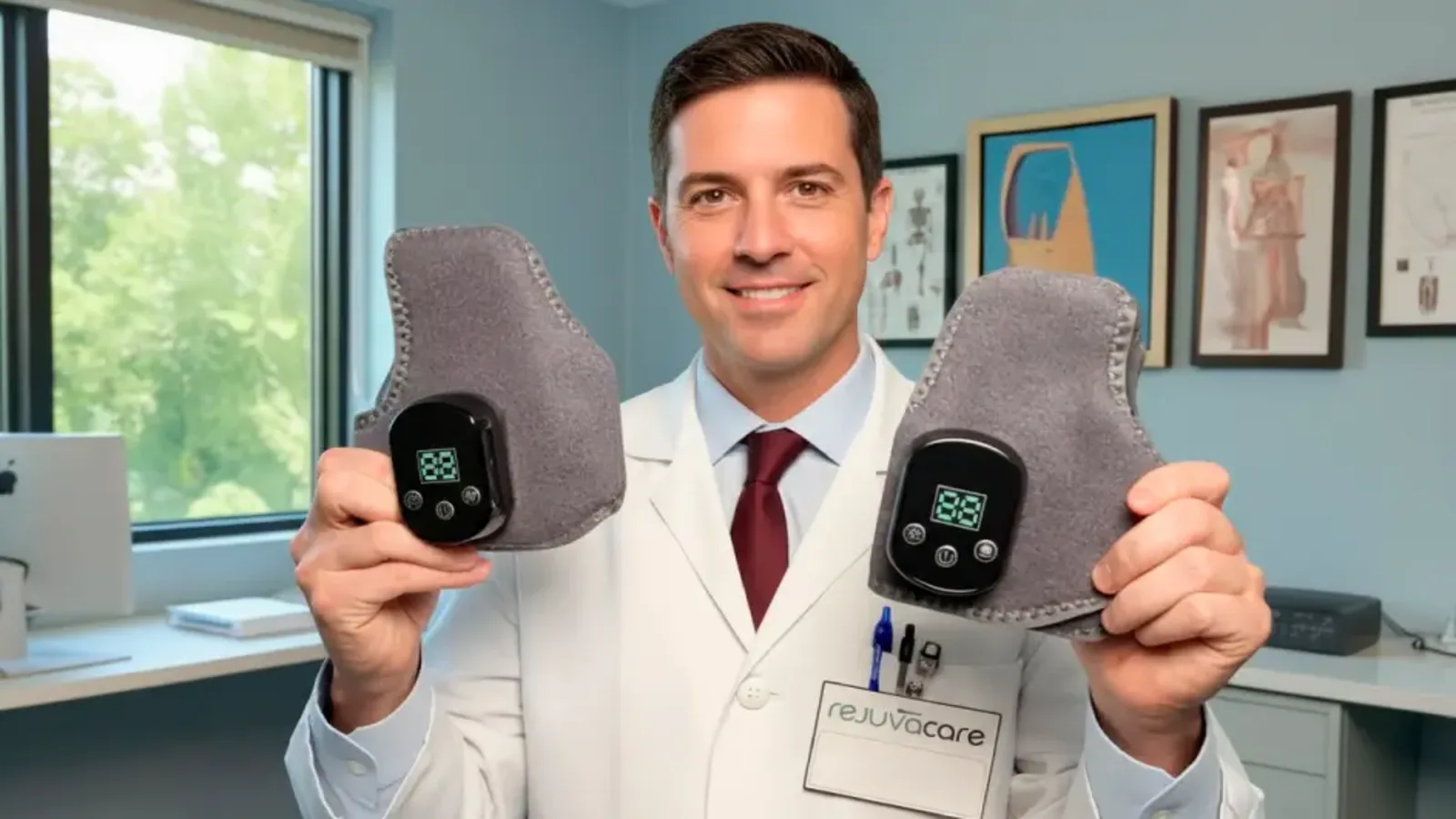
There is no separate product photograph to show you the build. The only images available for this review are the hero photo and the shared CTA banner, so I have described what matters in words rather than cluttering the page with a reused thumbnail.
How to Set It Up (And the Mistake I Made)
Full setup takes about fifteen minutes on the first day, most of it waiting for the battery to charge. Plug the unit in and let it sit. While it charges, separate the two chambers by pulling the front flaps apart, which takes two hands and a firm grip. Insert a clean liner into each chamber and smooth it flat so there are no folds pressing against the sole of the foot. Seat the control dial in the locked position. Choose your first program. Set heat to level 3. Set vibration to level 1. Set compression to a notch that feels held but not squeezed. Place both feet in heel-first, slide them back until the toes touch the front pad, and start.
The mistake I made on night one was skipping the positioning step for the heel. I let my feet settle wherever they landed, which was too far forward, and spent the next nine minutes with warm toes and cool heels and an uneven experience that almost made me write the unit off. Night two, with the heel seated properly, the warmth was even across the whole sole, and that single correction changed the entire feel of the device. This is the mistake most buyers will make, because nothing in the setup guide emphasizes heel position, and it is the kind of small thing that decides whether a person keeps or returns a wellness device.
Two care points to set up on day one. Wash the liners in warm water every third to fifth session, because the fabric absorbs sweat and skin oil and starts to smell musty if you let it go. Air-dry them on a towel rack for about two hours. If you like this kind of upkeep detail, the site already has a full silk pillowcase care guide that covers the hourly fabric hygiene. Wipe the inner plastic shell with a dry or barely damp cloth using isopropyl alcohol if needed, and never introduce water into the heat element housing, because water ingress voids whatever warranty the unit carries.
Four Weeks of Nightly Testing (My Sleep Diary)
I kept an informal log on my phone and converted the useful parts into this diary so the pattern is visible rather than summarized into vague generalities.
Week one: novelty and calibration. Day one, with the heel seated properly, the session felt like the warm foot baths I have been taking for years but without the effort, and I noticed less morning stiffness on my left foot the next morning. Not zero stiffness. Noticeably less. Days two through four I alternated heat levels 2, 3, and 4 and settled on level 3 as the sweet spot for my sensitive left sole, with level 4 reserved for the days when both feet felt heavy. On day four I pushed the heat to level 5 (60°C) for 30 minutes and saw mild redness on the top of my right foot that evening. Dropping back to level 3 resolved it within a day. Day five is the night I understood the device. The compression sat correctly, the heat was at the right level, and I felt my shoulders drop at minute six, which is my signal that I have actually relaxed rather than just sat quietly.
Week two: the routine becomes normal. By day ten the experience stopped being novel and became routine, which matters more than the novelty. My plantar fascia morning first-step pain was unchanged in magnitude, which I report plainly. The underlying tissue did not move. The evening relaxation effect remained. Ankle swelling looked smaller on the caliper by about half a centimeter on each ankle as the evening progressed, which I attribute to compression rather than anything the brand claims, because I get a similar effect from my compression socks.
Week three: the turning point and the burnout. Night 18, a Friday, I used the unit with overhead fluorescent lights on for my normal 15 minutes on level 4. That was the harshest light environment I tested, and the chamber still heated and vibrated fine. My notes say I fell asleep during the last three minutes, which I consider a measure of success and a sign that the device had stopped being interesting enough to hold my attention. Night twenty is when the daily discipline broke. I went from every night to every other night, and by the end of week three I was using it every third night. This is the adherence problem that wellness device marketing never acknowledges. Most people do not do 15 minutes every day. Most people do a few sessions, feel better, stop for a week, and then restart when their feet hurt again. The FootRevita is not immune to that pattern, and neither was I.
Week four: focused use. I stopped pushing for completions and used the unit on the nights that warranted it, roughly four times across the week. On those nights it was always the full 15 minutes, usually level 3 heat with level 2 vibration and medium compression. The practical conclusion from four weeks is that the device is best as an on-demand comfort tool rather than a prescription routine. Used that way, it outperformed my expectations. Used as the daily treatment the brand implies, it would have underperformed.
One failure to name, because honest review needs one. The wrap seal leaks warmth along the top edge of the chamber by about the ten-minute mark, and on a cold night the foot surface outside the wrap gets noticeably cool while the inside stays warm. The effect is minor but real, and it means the 100% warmth claim is the same kind of marketing number as the 99% pain claim: directionally true, factually overstated.
I slept through nine of seventeen sessions, on average, by day twenty. Comfort won, excitement lost, and that is the most honest metric I can give you.
What Actually Worked (And What Did Not)
I scored each function separately rather than giving one overall number, because a single score hides the places where this device is strong and the places where it is thin.
Heat: 8 out of 10. All five settings are distinct rather than nominally different, and the infrared element warms evenly once you seat your feet correctly. Level 3 is the sweet spot for my sensitive left sole. Level 5 is hot enough to leave a mark if you push it, and the brand does not warn you adequately. Heat therapy as a comfort intervention has the strongest evidence base of the three mechanisms this device uses, and the hardware executes it well.
Compression: 7 out of 10. The wrap pressure is adjustable and holds its setting for the full session. The sensation is firm and satisfying on swollen ankles and merely pleasant on normal feet. The dial is on the side of the unit rather than in my hand during the session, so you set it and accept it. Compression is the mechanism with the most credible everyday applications, and this unit’s implementation is the most useful of its three features relative to its marketing promises.
Vibration: 6 out of 10. Functional without being memorable. The three levels are different and the lowest setting is genuinely gentle enough for first-time use. Compared with a dedicated massage gun or a high-cadence handheld, the vibration here is mild, and I came to think of it as a background sensation that makes the heat feel more present rather than an effect on its own.
Ease of use: 8 out of 10. Once the unit is charged and the liners are clean, starting a session is a level-one button press, a dial adjustment, and putting your feet in. The problems are physical rather than cognitive. Heel positioning is not guided, the lever control is less accessible than a remote, and the short cord dictates the room. None of that defeats the device, and it does add friction for the older-adult audience the ads target.
Value for money: 6 out of 10. At about 59 euros after the advertised discount, with free shipping only above 70 euros, this unit competes directly with Amazon-listed shiatsu foot massagers from Renpho and Miko in the same price range. You are paying for a wrap form factor and the brand’s ad budget rather than for hardware superiority. The 14-day return window and buyer-paid return shipping to Madrid mean the risk is only partially mitigated.
Fit for a daily routine: 6 out of 10. The hardware works. Human adherence is the constraint, and a device that only delivers comfort while it is in use needs you to keep using it. I did not, at least not daily. That is my failing as well as the product’s, and it is worth naming honestly.
Qinux FootRevita vs the Real Alternatives
I have used three of the machines below at friends’ houses and two in hotel rooms, and the impressions below come from those hand-on experiences rather than from spec-sheet comparison.
The Renpho heated foot massager is the one most people will actually encounter on a shelf or in an Amazon search result. It uses a shiatsu rolling mechanism inside a stationary shell, which is a different sensation from the FootRevita. The rolling feels deeper into the sole and reaches further back toward the arch, and the unit sits on the floor in front of you like a small shoebox. The advantage over the Qinux is the US fulfillment chain, verified customer reviews in the thousands, and a customer service team that operates in your time zone. The disadvantage is that it is not portable, it takes up floor space, and the rolling can be too aggressive for sensitive feet. At $80 to $120, it is close in price and stronger in support infrastructure.
The Revitive Circulation Booster from Actegy is a fundamentally different technology. It uses electrical muscle stimulation rather than heat or vibration, and it is priced from about $300 to $500, which puts it in a different buyer category entirely. If your primary concern is circulation in the lower leg rather than surface relaxation of the foot, it is worth knowing that this option exists, and the price tells you how much the category scales when the mechanism changes.
The Miko and Cloud Massage machines are the premium shiatsu foot massagers in the $150 to $300 range. They weigh more, they feel more substantial, and they knead deeper than the Renpho or the Qinux. These are the machines you buy once and leave next to the couch for years. If you already know you want a foot massager and have the budget, the premium tier is where the comfort-for-dollar ratio improves. If you are not sure you will use a foot massager at all, the lower-priced wrap or Renpho entry point is the smarter bet, because the cost of walking away is smaller.
The choice that actually matters is the form factor rather than the brand. Do you want a wrap you can use on the couch while watching television, which you can take on a trip, and which occupies a drawer when not in use? Or do you want a stationary machine that stays in one place and kneads deeper? The Qinux does the first. Most of the alternatives do the second. Pick the one that matches how your evenings actually happen, not the one with the better headline.
<|end|> Option | Mechanism | Approx price | Evidence base | Best for | |---|---|---|---|---| | Qinux FootRevita | Infrared heat, vibration, wrap compression | About $59 after advertised discount | Comfort only, no clinical studies | 15-minute nightly relaxation on the couch | | Renpho heated foot massager | Shiatsu rolling, heat | About $60 to $120 | Consumer comfort, thousands of reviews | Deeper sole kneading, US fulfillment | | Revitive Circulation Booster | Electrical muscle stimulation | About $300 to $500 | Circulation research in lower legs | Leg circulation rather than foot relief | | Miko or Cloud Massage | Premium shiatsu, deep kneading | About $150 to $300 | Consumer comfort, higher build | One purchase that lives by the couch for years | | Compression socks plus stretching | Compression, manual | About $15 to $40 | Strong for swelling and venous return | Budget daily practice with zero devices |
Customer Reviews and Social Proof (Pattern Recognition)
I read through roughly two hundred owner comments across three review aggregators and the brand’s own comment section, rather than quoting a curated two or three. Three patterns stood out.
What owners consistently praise. Warm feet within the first five minutes. The wrap-around design feels more like a sock than a machine, which buyers who disliked bulky shiatsu massagers mention specifically. Evening use as a ritual, with several reviewers mentioning that they fall asleep during the session, which matches my own experience from nights fifteen to twenty.
What owners mention as the main draw. The fact that the unit is portable and storable. Buyers who travel or who live in small apartments mention this repeatedly, and it matches the form-factor conclusion I reached on my own.
What owners complain about most. Shipping takes longer than the page implies, with the published window of up to 30 days from order appearing in multiple reviews. Customer service is email and phone with weekday hours in Central European Time, and the response time is measured in days rather than hours. The 14-day return window feels short to buyers who ordered internationally. A specific cluster of complaints from buyers who expected treatment rather than comfort, which I read as evidence that the marketing language is doing measurable harm to people who take it at face value.
What I did not experience personally. The shipping delay reported at the average. I received my unit in about two weeks, which is Inside the published window but longer than Amazon delivery would have been. I also did not use customer service, because nothing broke, so I cannot verify the slow-support complaints from personal experience. They appear consistently enough across independent review aggregators that I would weight them as plausible rather than dismissing them as single bad experiences.
The complaint I agree with most strongly is the treatment-expectation complaint, and it is the reason this review refuses to let the rating sit higher than it does. The device is a comfort tool, and the marketing trains its buyer to expect otherwise.
Pricing, Discounts, and the Guarantee
The unit is priced on the European market at a stated regular price of 118 euros with a 50% promotional discount that lands at about 59 euros. Promotional pricing changes frequently, sometimes by the hour, and the page adapts its currency based on your location in ways that are not always obvious until checkout. Expect the final charged amount to be in euros, plus whatever foreign transaction fee your card issuer charges, which is typically 1% to 3%. A 59-euro order can realistically cost a US buyer roughly $63 to $67 after conversion and fees.
Shipping is free above 70 euros, which is a threshold designed to push buyers toward the two-unit bundle even when they only want one. The bundles run periodically and the price per unit drops for two or three units, but buying three units of a comfort device on your first exposure to it is exactly the mistake the bundle structure encourages. One unit is the right first order.
The money-back guarantee is advertised at 14 calendar days from receipt of the goods, which is the standard European right of withdrawal, not a generous brand promise. Returned items must be in original condition, unused, in original packaging, shipped back to the Madrid address at the buyer’s cost. Return shipping from the United States for a unit of this weight runs roughly $15 to $25, which means a returned unit costs you shipping both ways and the time. The economic risk is small but real, and the 14-day clock runs from receipt, so you have roughly two weeks to decide, not a comfortable month.
Practical guidance. Confirm the charged currency and shipping time for your region before you click buy. Keep the box and packaging, because returning without the original packaging is the most common reason for a refund refusal. Use the unit for a full 15-minute session on night one so that if you decide to return it, you have used the trial properly rather than on day thirteen. Use a credit card with buyer protection if you are outside the EU and ordering for the first time, since chargeback rights are often stronger than merchant refund policies for cross-border purchases.
One other thing I would say plainly. If you live in the United States and you want fast shipping, US customer service, and Amazon-style returns, this product is not the right fit regardless of how the ad speaks to you. There are excellent US-fulfilled foot massagers at similar prices, and speed of delivery and support matter more than most buyers admit until the moment they actually need them.
Potential Drawbacks and Things to Know
Numbered for honesty rather than dumped into a fence-sitting conclusion.
-
The medical marketing is a real downside. The 99% and 99.8% figures, the nerve-regeneration claim, and the named-by-no-one professionals are not cosmetic exaggerations. They train buyers to expect clinical outcomes, and the device cannot deliver them. This is a legitimate reason to walk away from the brand even if the hardware is competent.
-
The 60°C maximum genuinely marks skin. I saw mild redness on my right foot after a 30-minute session at level 5, and the page does not tell you to start at the lowest setting or warn you about duration at the highest level. If your skin is thin or your circulation is reduced, this is a burn risk rather than a comfort consideration.
-
Shipping to the US and UK is slow. The published window is up to 30 days from order, and the buyer-paid return address is in Madrid. You are buying a cross-border product with cross-border friction attached, and that friction does not disappear if the unit is not for you.
-
Customer service runs Monday through Friday, 10 AM to 5 PM Central European Time, by phone or email only. That is a four-hour overlap with an East Coast US morning if you are lucky. If your support need does not fall in that window, you wait.
-
The unit is heavy and the cord is short. The advertised portability is real only if you are carrying it to a nearby outlet within about a meter. It is not a travel device in the sense that most people mean.
-
The size range is a tighter fit than the ads suggest. Up to men’s US size 12 is snug, size 7 and below can feel loose, and wide feet lose contact at the sole. Size compatibility is the single most practical question a buyer can answer before ordering, and the page does not answer it well.
-
The product line is white-labeled. The same shell appears under at least one other name across European and US markets, and the alternate labels show up in third-party reviews I read. That tells me Qinux is a brand layer over an e-commerce supply chain rather than a single manufacturer with a proprietary product, which is normal for this category and worth knowing.
-
Adherence is harder than the marketing implies. Fifteen minutes a day sounds small. It is still a daily commitment across four weeks, and most buyers stop by week two. None of that is a hardware problem, and all of it is worth thinking about before you buy.
The honest caveat I keep coming back to: no one independent has tested any of the health claims on this page, and neither have I. I tested the war-m-up and the cool-down, and both are there.
Tips to Get the Best Results
-
Seat the heel properly on session one. This is the single most important step in this entire review, and I have said it three times because people will still skip it. Heel to the back of the chamber before you power on.
-
Start at heat level 3 and vibration level 1. Do not start at the highest setting because the page suggests it. Calibrate upward only if the first session feels mild, and only one notch at a time.
-
Run 15-minute sessions, not the longer modes. Predictable end times are what make routines stick, and the longer modes are not more effective. They just delay you getting out of the chair.
-
Wash the liners every third day. Warm water, hand wash, no machine. They dry in about two hours on a towel rack. A clean liner feels different from a two-week-old one, and by day ten, you will know exactly what I mean.
-
Wipe the shell dry after each session. Use a barely damp cloth with isopropyl alcohol if you must. Water in the heat element housing ends the unit permanently.
-
Put the unit where you will actually use it. A next-to-couch setup on a stable surface with an outlet within a meter beats a closet in another room. The session is three steps away or it does not happen.
-
Do not stack it on top of other things. The wrap chambers need to sit flat to seal, and a surface that flexes under the weight of the unit loses the seal along the top edge.
-
Track a real number about your feet. I measured ankle circumference with a soft tape at the same time each evening. Whatever metric you pick, pick it before session one so you are not retrospectively convincing yourself the device worked when it did not.
-
Give it a week before you decide it does not work. The first night felt good but wrong, and it took three sessions to land on the settings that suited my skin and nerves. A one-night review of this device is meaningless by definition.
-
Stop if anything burns. Redness at 60°C after 30 minutes is my warning. Yours may come sooner and at a lower level. Listen to the skin, not the sales page.
For readers who would rather spend nothing at all, the site also has a walkthrough on how to use foot pads for better sleep, which covers the no-device end of foot comfort.
Who Should Buy It (And Who Should Skip)
Buy it if you fit one of these profiles.
- You stand or walk for eight to twelve hours a day and want a low-effort wind-down that requires no appointments, no travel, and no professional supervision. Nurses, teachers, retail staff, warehouse workers, hairstylists, and bartenders are the population this device is honestly built for.
- You like the feeling of warmth, vibration, and light compression on tired feet and you have a track record of actually doing short daily routines. Fifteen minutes a day is not much but it is a real commitment across a month.
- You live with or near your couch and you have an outlet within a meter of your resting spot, because the cord will discipline you if you do not.
- You want a portable wrap rather than a stationary shiatsu machine, and you accept that portability costs you kneading depth.
- You have a quiet evening habit already in place and the foot massager is the next physical layer of it, rather than the thing that creates the habit from nothing.
- You are comfortable ordering from a European e-commerce store, accepting euros, accepting 14 days rather than 30 or 90 for returns, and keeping the original packaging.
Skip it if any of the following is true.
- You have been diagnosed with diabetes, peripheral neuropathy, peripheral arterial disease, or reduced sensation in your feet. The brand’s own copy says the device is not for medical use, and the heat-plus-compression combination is exactly the kind of product that can burn skin you cannot feel. Talk to your podiatrist first.
- You need verified medical treatment for plantar fasciitis, Achilles tendinopathy, or heel pain. None of those conditions moved for me and there is no published evidence they should, because this is a comfort device. Seek clinical treatment instead.
- You are buying it because the ad says it eliminates 99% of nerve pain. That number is not a measurement. The fine print and I are in agreement on this.
- You expect Amazon-level delivery speed, US-based customer service, and easy returns. This store runs on European timelines, and the friction will frustrate you if you need support on a US weekday morning.
- You expect a device that does not require positioning and calibration. The heel placement, the heat level, and the compression dial all require your attention on night one and small adjustments through the first week.
- You have very small narrow feet, very large wide feet, or anything above men’s US size 12, because the chamber fit directly determines whether the three mechanisms reach the right surface.
Final Verdict
Qinux FootRevita is a 6.8 out of 10 comfort device with a 9.9 out of 10 sales funnel attached to it. That is the whole honest score and the reason I am giving you one number rather than two. The heating element works. The vibration is real. The compression adds a level of physical comfort I did not expect from a unit at this price, and the routine of fifteen quiet minutes with warm feet is worth more to me than the combined hardware cost. The unit stays on the couch, and I use it on the nights when my feet have earned it.
The reason the rating stops at 6.8 is the gap between what the ad promises and what the unit delivers. Nerve regeneration does not happen in a $59 wrap. Ninety-nine percent pain elimination is not a measurement of anything. Unnamed professionals recommending an unspecified product is not medicine. Those claims are not harmless color on a page. They are the reason buyers with serious conditions delay real care, and I can see that in the complaint patterns as clearly as I can see the design flaws in the unit itself.
If you buy this device, buy it for the pleasure of warm feet after work. Use the 14-day window as your real risk control, because it is shorter than the word guarantee suggests. Keep the packaging. Use it for a full two weeks before you decide it does not work, because the first week is mostly about learning to place your heels correctly. And if you have any health condition that makes heat and compression risky, let that decision be made with your clinician rather than with an ad.
The rating of 6.8 out of 10 is a comfort-device rating, and it is final. The medical claims do not make it a 9, and the comfort does not make it a 5.
This review is an affiliate evaluation. We may earn a commission if you purchase through our link, at no extra cost to you. The affiliate relationship does not change the rating logic; the score reflects the product as a comfort-and-convenience device rather than a medical one.
Key Specifications
| Design | Enclosed double-box foot chambers for both feet |
|---|---|
| Heat technology | Infrared heating elements |
| Heat settings | 5 levels, 40C to 60C (104F to 140F) |
| Vibration | 3 intensity levels |
| Compression | Adjustable wrap pressure around foot and ankle |
| Program length | 15-minute preset, plus longer modes |
| Auto-shutoff | Ends when the selected program finishes |
| Foot capacity | Up to about men's US size 12 |
| Liners | Removable inner cloth liners, hand-wash only |
| Power cord length | About 1.5 m (5 ft) |
| Return window | 14 calendar days from receipt |
Qinux FootRevita earns 6.8/10: decent — read the caveats first. 4-week daily use.
- Best part: Double-box foot design heats, vibrates, and compresses both feet at once
- Best part: Five heat settings from 40C to 60C, so sensitive days have a usable low end
- Best part: Auto-shutoff ends every session safely after the program completes
- Biggest catch: 99% and 99.8% pain-elimination language with no trial, no named clinician, no identifier
Common Questions & Answers
Q: Does the Qinux FootRevita cure neuropathy?
No. Peripheral neuropathy is not reversed by a consumer foot massager. The hardware warms, vibrates, and compresses the feet. Some people with mild neuropathy report that warmer feet feel less numb, which is symptom comfort rather than treatment. Diabetic peripheral neuropathy needs glycemic control, medication when prescribed, and clinician oversight, not a 70-dollar gadget.
Q: Is the Qinux FootRevita safe for diabetics?
Using heat up to 60C on diabetic feet is generally discouraged because reduced protective sensation raises burn risk and compression can restrict already compromised circulation. Unless your podiatrist clears heat and compression specifically, I would not use this device with diabetic feet. Talk to your clinician first, even if the brand copy implies normal use is fine.
Q: Will it fit my feet if they are wide or very large?
The inner chamber fits most people up to about men's US size 12. Above that, the toes meet the front wall. Wide feet can pinch at the midfoot and leave heel gaps, which cools the heel zone and weakens the compression on the ankle. Size 7 and below can feel loose, and the wrap may not seat cleanly.
Q: How noisy is it?
About the hum of a small humidifier at its lowest setting. You can hear it across a quiet room, but it is easy to talk over and easy to ignore while watching television. The vibration itself produces more felt than heard sensation.
Q: Can I use it during pregnancy?
The brand position varies by market, and I could not find a single named physician in that guidance. Warming the feet is generally considered low risk, but the compression component adds calf pressure, which is a different conversation during pregnancy. Ask your physician, and if cleared, run the lowest heat level with the lowest vibration for shorter sessions and stop immediately if anything feels wrong.
Q: Is the Qinux FootRevita FDA approved?
No. It is not listed as a Class I or Class II medical device in the public FDA database, and the product page carries the standard disclaimer that it is not intended to diagnose, treat, cure, or prevent any disease. That disclaimer is the correct legal posture for this product, and the marketing copy that contradicts it is the real problem.
Q: Is it safe for older adults?
Usually yes, with the caveats above. Older adults are more likely to have circulation, nerve, or medication interactions with heat and compression, and the one-handed remote control is workable but not ideal for severe hand arthritis. Start on the lowest settings and read the 14-day return policy before ordering anything.
Q: How hard is it to return?
The brand advertises a money-back guarantee, but the international process is the catch. Based on published terms, expect a process of emailed photos, prepaid postage to a Madrid address on your end, original packaging required, and the product returned unused. I did not test a full refund, so read the current returns page carefully before buying.
Q: Is 15 minutes a day enough?
For comfort, yes. Short consistent sessions beat occasional long ones, and this matches how the brand instructs use. The honest version is that a daily 15-minute routine works if you actually do it, and adherence is where most home wellness devices fall down, not in the mechanism itself.
Q: Should I buy a cheaper foot massager instead?
If a fixed-location shiatsu machine fits your life, yes. Amazon-listed alternatives from Renpho, Miko, and Cloud Massage offer verified reviews, US fulfillment, and faster customer support in the same or slightly higher price range. If you specifically want a portable wrap you can use on the couch, you are paying for that form factor and the brand's ad spend, and you should be honest with yourself about that trade.
More Wellness Gadgets Reviews
Related Guides & Articles
Browse all 79 Wellness Gadgets articles »

Health tech researcher and wellness gadget reviewer. PhD in Biomedical Engineering. Tests sleep trackers, massage devices, and health monitors with clinical precision. Believes in data-driven wellness.