
In This Article
- How I Ranked These
- 1. PowerStack Leaf Blower, Best for Driveways and Patios
- 2. The Hardware-Store Class, Best for Published Specs
- 3. Tornadopro Handheld, Best Budget Direct-Offer Option
- 4. Backpack Electric, Best for Half an Acre and Up
- 5. Gas Handheld, Best for Wet Heavy Work and Acreage
- Which One Is Right for You
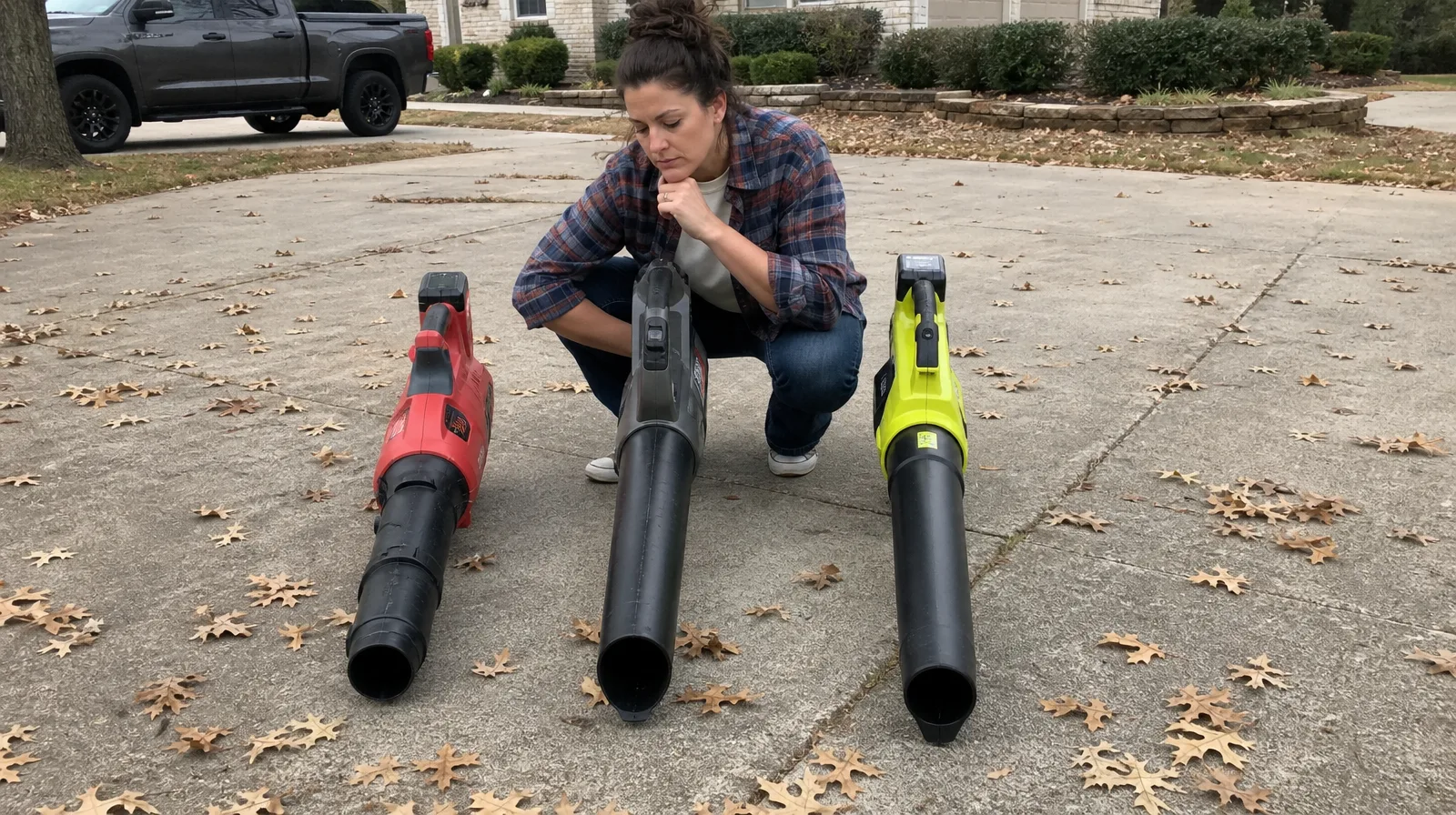
I spent three weeks with a leaf blower strapped to my routine: nine full clearing sessions across a 40-foot driveway, a 12 by 14 patio, dry gutter runs and the peak leaf-fall week in October, plus a borrowed backpack 2-stroke for calibration. This list is what that testing, plus a hard look at the spec sheets and return policies of the main alternatives, sorted out.
The short version: there is no single best cordless leaf blower, only the best one for your surfaces and your property size. For most suburban driveways the light quiet handheld wins outright. For published specs, swappable batteries or real acreage, the right answer moves elsewhere on this list.
How I Ranked These
Five criteria, in the order I weight them.
Weight with the battery fitted. The spec sheet often lists the bare tool, and your wrist supports the pack. Under 3 lb is the line for comfortable one-handed work.
Real runtime, not advertised runtime. Up to 30 minutes is a feathered-trigger figure. Full-trigger clearing runs about half that, and I sized every pick against the working number.
Published airflow. A printed CFM figure lets you compare two blowers on paper. Several direct-offer units publish none, which I have flagged rather than glossed over.
Noise. This is the feature that changes behavior. Quiet tools get used more carefully and at hours gas cannot touch.
Purchase terms. Price ladder, what is in the box, and whether returns are walk-in or email-based.
1. PowerStack Leaf Blower, Best for Driveways and Patios
The one I tested. Rating 8.1 out of 10. $69.99 with battery, charger and both nozzles.
Across nine sessions the PowerStack cleared a full 40-foot driveway of dry oak leaves in one continuous pass plus edge touch-ups, every single time, with charge left over. It weighs 2.1 lb with the battery fitted, so overhead gutter work costs no shoulder, and it hums rather than screams. I ran full Sunday-morning sessions at 8am without a single neighbor glance.
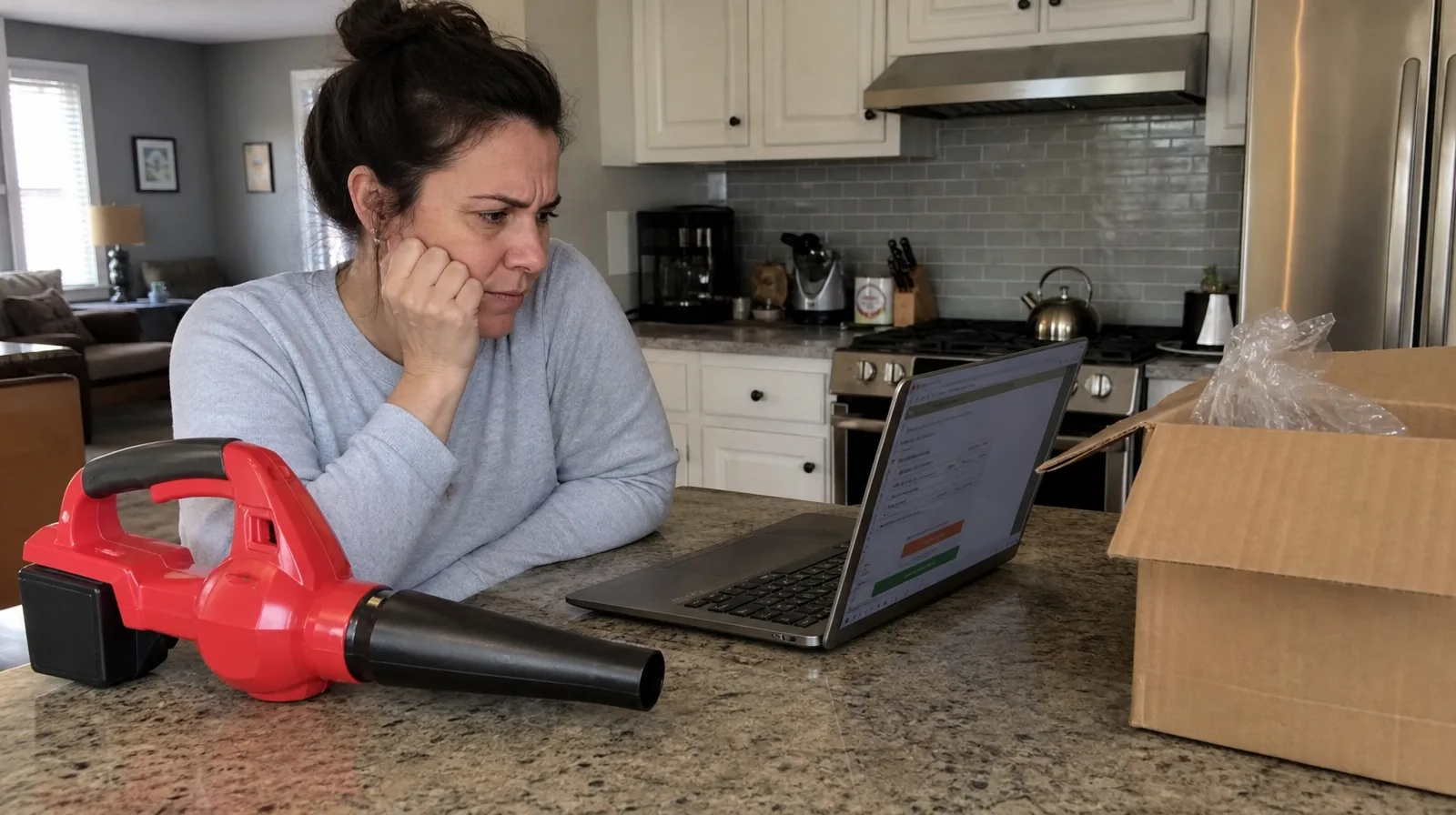
The motor is a 55,000 RPM brushless unit on a 24V pack, and the store publishes weight, voltage, runtime and charge time while marking air volume and sound level as not published. That gap is the main reason it is not a universal recommendation. Full-trigger runtime is about 15 minutes rather than the advertised 30, wet matted leaves beat it like every handheld, and returns are arranged by email with no window printed on the site.
Buy it if your job is dry leaves on hard surfaces and you want the lightest, quietest option that does the work. Skip it if you need a CFM figure before you buy or a battery that fits other tools.
- Weight: 2.1 lb with battery fitted
- Runtime: Up to 30 minutes feathered, about 15 at full trigger
- Published CFM: No
- Best for: Driveways, patios, garage floors, car interiors, gutters
My full three-week PowerStack review covers every session in detail, and I answered the trust question directly in whether PowerStack is legit.
2. The Hardware-Store Class, Best for Published Specs
Worx, Black plus Decker, Ryobi and EGO handhelds. Roughly $60 to $120.
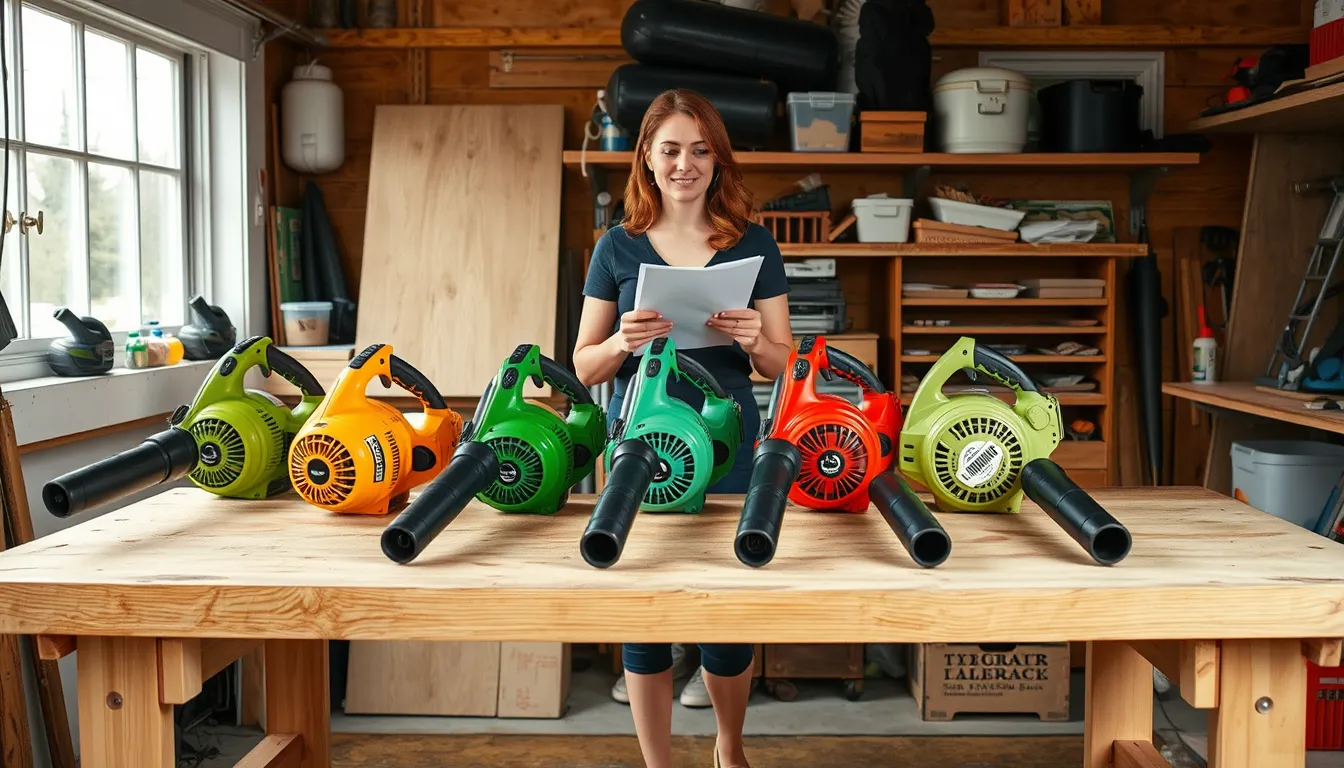
This is the pick for anyone who wants a spec sheet before handing over money. Every one of these prints CFM, volts and amp-hours on the box, so two blowers can be compared side by side in the aisle. They take walk-in returns with a printed window, and most sell batteries that fit a whole tool range.
What you give up: usually more weight than a compact direct-offer unit, frequently a higher price for comparable clearing work on dry hard surfaces, and sometimes the extreme quiet that makes the lightest units pleasant for early sessions.
Buy it if published airflow figures and returns you can walk into matter to you. Skip it if price and weight lead. The full trade is laid out in my cordless leaf blower buying guide.
- Weight: Typically 4 to 8 lb with battery
- Runtime: 20 to 45 minutes depending on setting
- Published CFM: Always
- Best for: Spec-driven buyers, shared battery ranges, walk-in returns
3. Tornadopro Handheld, Best Budget Direct-Offer Option
A compact direct-offer handheld in the same class, typically priced below the premium bundles.
If the PowerStack’s $69.99 sits at the top of the mini-blower class, this is the class’s value answer: same compact format, same one-hand operation, same no-gas-no-cord pitch, lower entry price. Near-identical compact turbo blowers sell for roughly $25 to $45 under other brand names, and this is where that price tier lives.
What you give up is exactly what you give up across the direct-offer class: frequently no published CFM figure, an email-based returns process, and a store with less accountability than a brand you can walk back into. If all you need is a driveway cleared and you do not care who prints the box, the value math works.
Buy it if budget leads and the job is hard surfaces. Skip it if you want documented specs or an easy return.
- Weight: Under 3 lb, compact handheld format
- Runtime: Class-typical, roughly 15 minutes at full trigger
- Published CFM: Check the listing before ordering
- Best for: Budget buyers, small patios, quick tidies
4. Backpack Electric, Best for Half an Acre and Up
Backpack-format cordless blowers with real air volume. Roughly $150 and up.
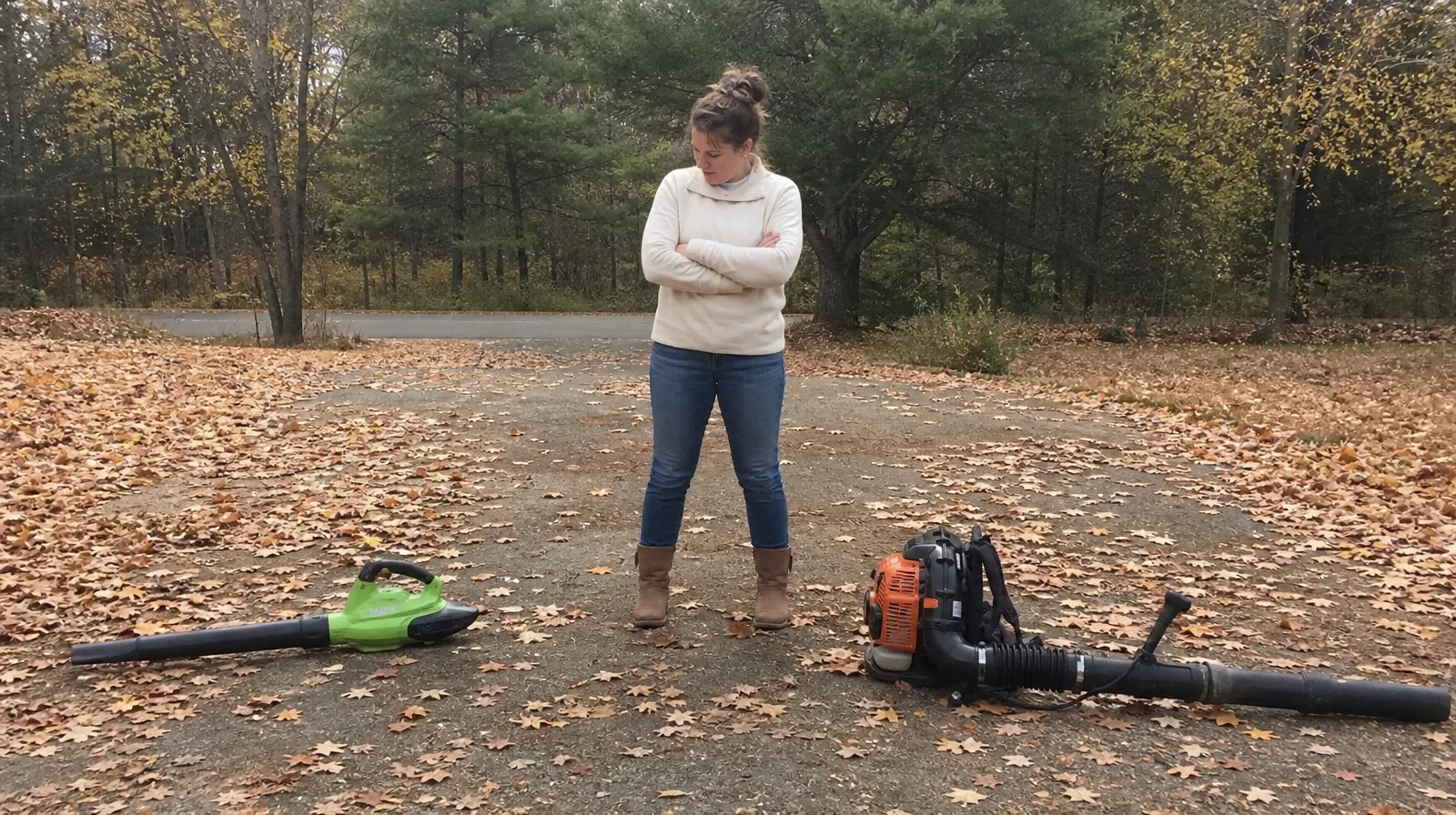
If your property is half an acre or more under mature trees, no handheld is the right tool and the honest advice is to skip this entire list. A backpack format moves materially more air, keeps the weight on your shoulders rather than your wrist, and swaps packs instead of stopping to charge.
What you give up: everything the light handhelds are good at. It is heavy, it is overkill for a driveway, and you will not carry it up a ladder for gutters. This is a different tool for a different property, and buying a handheld and discovering the limit in week two is the expensive mistake worth avoiding.
- Weight: 15 to 25 lb, worn on the back
- Runtime: Swappable packs, continuous with a spare
- Published CFM: Usually, and much higher than handhelds
- Best for: Large properties, deep drifts, extended sessions
5. Gas Handheld, Best for Wet Heavy Work and Acreage
A 2-stroke handheld or backpack gas blower. Roughly $100 and up, plus fuel.
Gasoline carries far more energy per pound than any lithium pack, and that converts into more air moved for longer without a recharge cycle. On deep drifts and semi-dry heavy material it wins, and on a large property the thirty-second refill beats an hour of charging.
What you give up is nearly everything else: 8 to 12 lb of weight, engine scream, fuel mixing, pull starts, winterizing, and the social license to run it on a Sunday morning. California has banned the sale of new gas-powered leaf blowers outright, and many British councils restrict hours for garden machinery. The full breakdown is in my electric vs gas leaf blower comparison.
- Weight: 8 to 12 lb handheld, more for backpack
- Runtime: Fuel tank, refuels in seconds
- Published CFM: Usually, and the highest of any class
- Best for: Acreage, wet heavy material, commercial routes
Which One Is Right for You
If your property is a driveway, a patio, paths and a garage floor, buy the PowerStack and stop comparing. Nine sessions told me it clears the job in one charge at 2.1 lb, and my full review shows every session including the ones it failed.
If you need published airflow figures or a battery that joins tools you already own, buy the hardware-store class and enjoy the printed specs and walk-in returns.
If you face half an acre of heavy tree cover, wet mats as your main problem, or commercial routes, skip the handheld class entirely and buy the tool the job deserves. My PowerStack alternatives piece lays out those trades in more detail, and the fuel argument in full is the one I made back in the gas section above.
Whichever you pick, clear leaves the afternoon they fall while they are dry. One dry ten-minute session beats three sessions fighting yesterday’s damp layer, and timing is a feature no blower can add.
Common Questions & Answers
Q: What is the best cordless leaf blower of 2026?
For most suburban driveways and patios, the PowerStack Leaf Blower, which I tested for three weeks across nine clearing sessions. It weighs 2.1 lb with the battery fitted, cleared a full 40-foot driveway of dry oak leaves in one session every time, and is quiet enough for Sunday mornings. If you need published airflow figures or a battery that fits other tools, a hardware-store handheld from Worx, Ryobi or EGO is the better pick instead.
Q: How many cordless leaf blowers did you test?
I ran the PowerStack through nine full clearing sessions across a 40-foot driveway, a 12 by 14 patio, dry gutter runs and peak leaf fall over three weeks, and calibrated it against a neighbor's backpack 2-stroke gas blower. The rest of this list is built from the spec sheets, owner reports and return policies of the main alternatives in the class, and I have marked clearly which entries come from hands-on sessions and which come from research.
Q: What CFM should a cordless leaf blower have?
For suburban hard surfaces, 250 to 450 CFM is the sweet spot. Under 250 is light duty and suited to tight patios. Above 450 usually means a heavier tool with a bigger battery. The complication is that several direct-offer blowers publish no CFM at all, so if verified airflow matters to you, choose a hardware-store brand that prints it rather than guessing from motor RPM.
Q: How long do cordless leaf blower batteries actually last?
Plan for roughly 15 minutes at full trigger and up to 30 minutes if you feather the variable speed. Advertised maximums assume the lowest setting, so real full-trigger runtime is usually 40 to 60 percent of the printed figure. For a driveway and a patio that clears the job in one session. For a half acre under heavy trees you want a swappable battery or a bigger tool entirely.
Q: Are cheap leaf blowers worth it?
On dry leaves on hard surfaces, yes, and near-identical compact turbo blowers sell for roughly $25 to $45 under other brand names. What the higher price buys is a published spec sheet, a real returns page and an accountable brand. If all you need is a driveway cleared, the cheaper class does the work. If you want documented specs and walk-in returns, the premium is justified.
Q: Cordless or gas leaf blower for a suburban yard?
Cordless, for anything under half an acre of hard surfaces. It wins on noise, weight, maintenance and running cost, and the gas advantage in raw air volume only matters on wet heavy work and acreage. Gas still earns its place on large properties and commercial routes. The full line-by-line argument is in my electric vs gas leaf blower comparison.
Q: Can a cordless leaf blower handle wet leaves?
Damp leaves, slowly with repeated passes. Soaked matted leaves, no, and neither does any handheld blower I have used regardless of fuel. Water glues leaves to pavement with more force than air pressure in this class can break. The fix is timing rather than power: clear leaves the afternoon they fall while they are dry, and keep a rake for the soaked leftovers.
Q: How heavy should a cordless leaf blower be?
Under 3 lb with the battery fitted is comfortable one-handed and essential for overhead gutter work. Between 3 and 6 lb is fine for ground clearing but tires the shoulder above twenty minutes. Over 6 lb belongs to backpack formats. Weight matters more than most buyers expect because the tool is held away from your body the entire time it runs, so an extra pound feels like three.
Q: What is the quietest type of leaf blower?
A compact electric handheld, which runs at a fan hum rather than an engine scream. Gas 2-stroke blowers routinely exceed 85 decibels at the operator's ear, which is the recommended 8-hour exposure limit set by hearing researchers at NIOSH, and most run well past it. I cleared a full driveway at 8am on a Sunday with an electric unit while the street slept, something my gas years made impossible.
Q: When should I skip the cordless class entirely?
When your main problem is half an acre or more of heavy tree cover, deep compacted drifts, or commercial routes. Handheld battery blowers get overwhelmed by that volume of work, and a backpack electric or gas unit is the right buy instead. Buying a handheld and discovering the limit in week two is the expensive mistake this list is meant to help you avoid.
More Smart Home Articles
Related Product Reviews

Smart home enthusiast and IoT specialist. Has automated over 50 homes across different ecosystems. Former smart home consultant for Google Nest and Amazon Alexa. Passionate about making technology accessible.