
In This Article
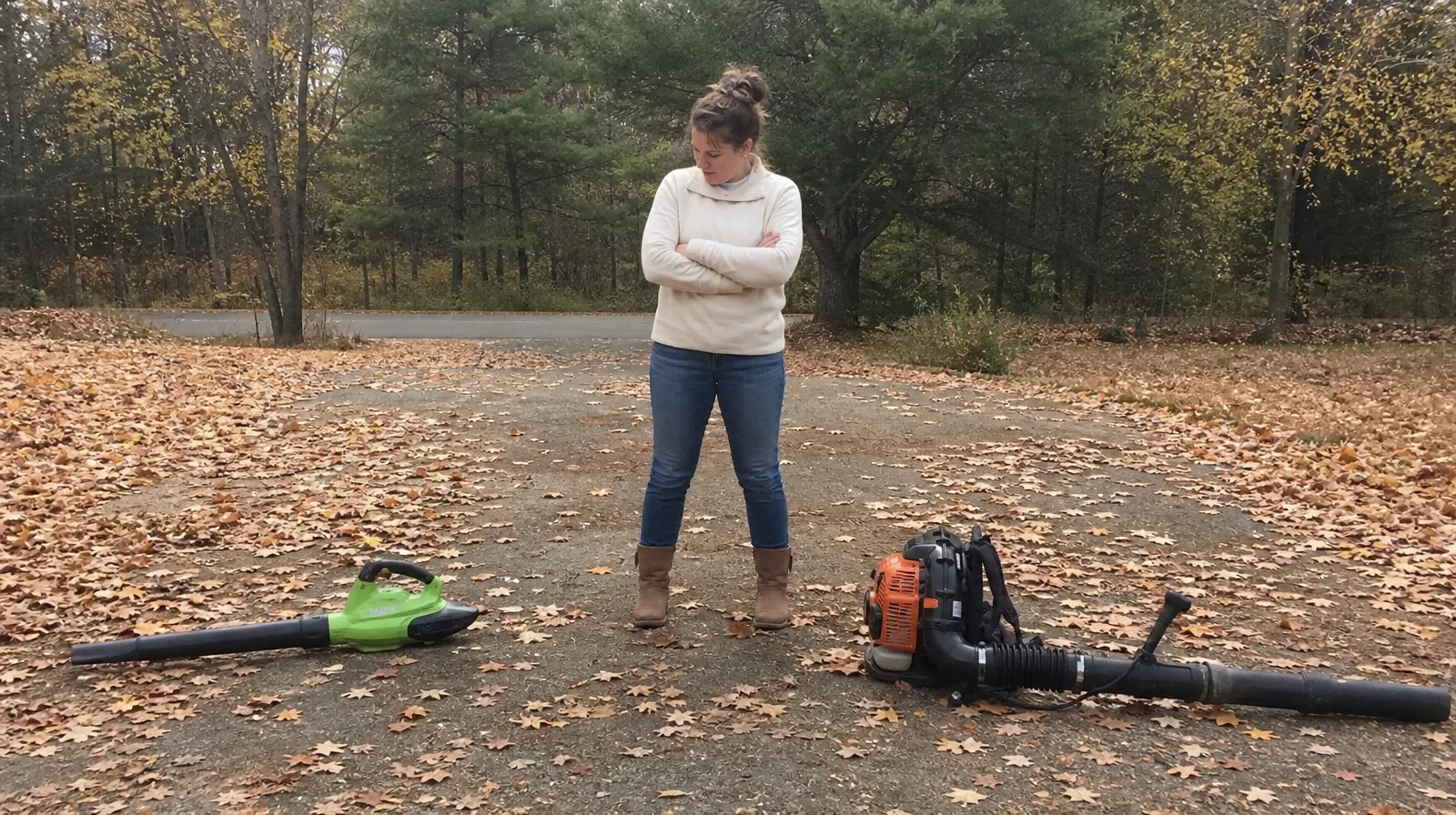
The electric vs gas leaf blower argument gets conducted in hardware store aisles by people repeating numbers they half remember. I ran both for three weeks across the same driveway, borrowed a neighbor’s backpack 2-stroke for calibration, and kept a diary. The result is a split that is cleaner than the marketing on either side admits, and it has almost nothing to do with which fuel is “better” in the abstract.
The short version: gas still wins on raw air volume and wins it decisively on wet, heavy work. Electric wins on everything that makes a suburban owner want to use the tool at all, which is why the switch has already happened in most neighborhoods and has not yet happened on half-acre oak lots.
Where Gas Genuinely Wins
Gasoline carries vastly more energy per pound than any lithium pack. That is physics, not marketing, and it converts into one real advantage: more air moved, for longer, without stopping.
In my side-by-side strip the backpack 2-stroke moved a damp test pile visibly faster than the electric handheld. On deep drifts that difference would widen. On soaked mats both struggle, but gas struggles with more force behind it, which sometimes breaks a mat the electric simply flutters. If your property is half an acre or more under mature trees, or you clear for hours at a stretch, that advantage is the whole decision.
There is a second gas win that owners of large properties care about: no recharge cycle. Gas refuels in thirty seconds and keeps going. A battery blower ends every session with a sit-and-charge, which is a non-issue for a fifteen-minute driveway job and a real friction on a whole-property Saturday.
Anyone telling you electric matches gas on heavy wet acreage is selling something. Anyone telling you gas is the right tool for a driveway and a patio is repeating a habit that stopped being correct about five years ago.
Where Electric Wins, and It Is Not Close
Electric wins on noise, and noise turns out to be the feature that changes behavior most.
A 2-stroke at full cry is one of the most annoying sounds in suburbia. Hearing researchers at NIOSH recommend keeping exposure under 85 decibels across an 8-hour day, and gas blowers routinely blast past that at the operator’s ear. Operators are supposed to wear protection. Most do not, and the consequences are well documented by the National Institute on Deafness and Other Communication Disorders, which notes that long exposure to loud noise can permanently damage the hair cells in the inner ear.
The everyday effect is simpler than that. Gas makes you rush. The scream pressures everyone, operator included, to finish fast and skip corners. An electric hums, and I found myself doing neater work, edging carefully along the foundation and teasing leaves out of the hedge line, because nothing was punishing me. I ran full Sunday-morning sessions without a single neighbor glance, something my gas years made impossible before 10am.
Electric wins on maintenance by a mile. A 2-stroke demands mixed fuel, a spark plug, an air filter and a winterizing ritual, and it punishes neglect by refusing to start in October. My electric routine across three weeks was wiping the intake and storing the battery indoors. That is not a comparison. It is a lifestyle change.
Electric wins on weight and one-hand use. A gas handheld runs 8 to 12 lb; a compact electric with battery fits in one hand at around 2 lb. That difference decides whether an older relative can clear the path at all, and whether overhead gutter work is possible.
Electric wins on running cost. Pennies of electricity versus premixed fuel, plugs, filters and the occasional $60 carburetor rescue. Over five seasons the electric wins by hundreds before anyone counts the value of quiet Sundays.
California banned the sale of new gas-powered leaf blowers and other small off-road engines, administered through the state’s air regulator’s Small Off-Road Engine program, and many British councils set quiet hours for garden machinery with Sunday rules in particular. Whatever you think of the policy, the direction is plain.
The Cost Math, Line by Line
Start with the purchase. A compact electric handheld with battery and charger runs from about $50 to $100 depending on the bundle. A comparable gas handheld starts around $100 and climbs from there, and you still own a fuel can, oil mix and a stabilizer bottle.
Then the season. Gas drinks premixed fuel at several dollars a quart, eats a spark plug and filter annually, and wants winterizing every autumn. Skip a year and a shop carburetor rescue runs $60 or more. My gas-owning years cost real money in small constant bites. Electric costs battery replacement every few years and nothing else.
Then the time, which nobody puts on the sticker. My gas routine added roughly ten minutes of prep and put-away to every session: fuel check, choke, pulls, warm-up, then the reverse at the end with fuel drained or stabilized. Fifteen sessions a season means two and a half hours spent serving the engine instead of clearing leaves. The cordless routine is battery in, trigger, battery out.
Finally the crew alternative. At $50 or more per suburban visit, six leaf-season visits cost $300 and up. Any working blower you buy instead pays for itself before the season ends, which is what makes this a choice between two blowers rather than a choice between a blower and nothing.
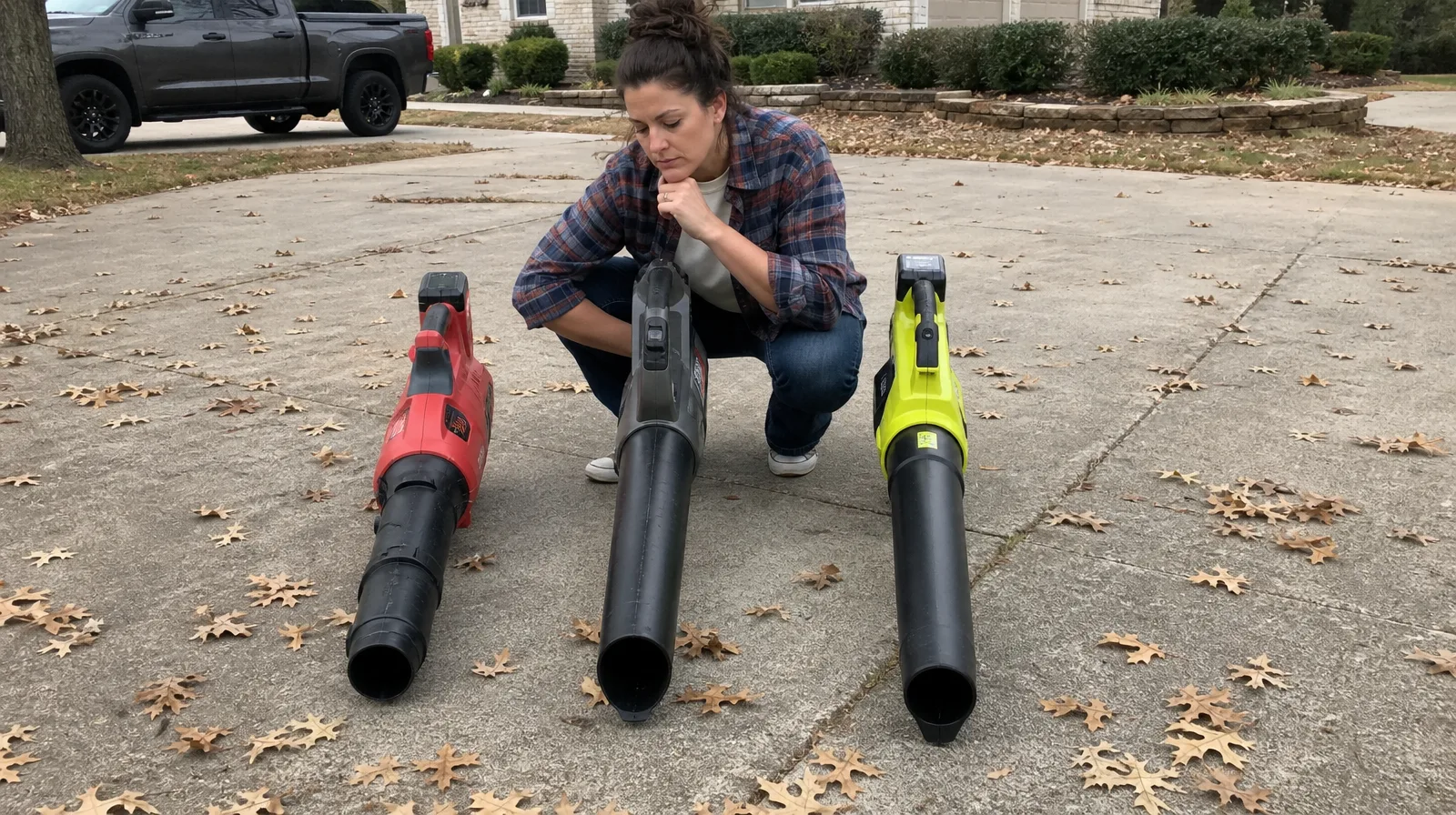
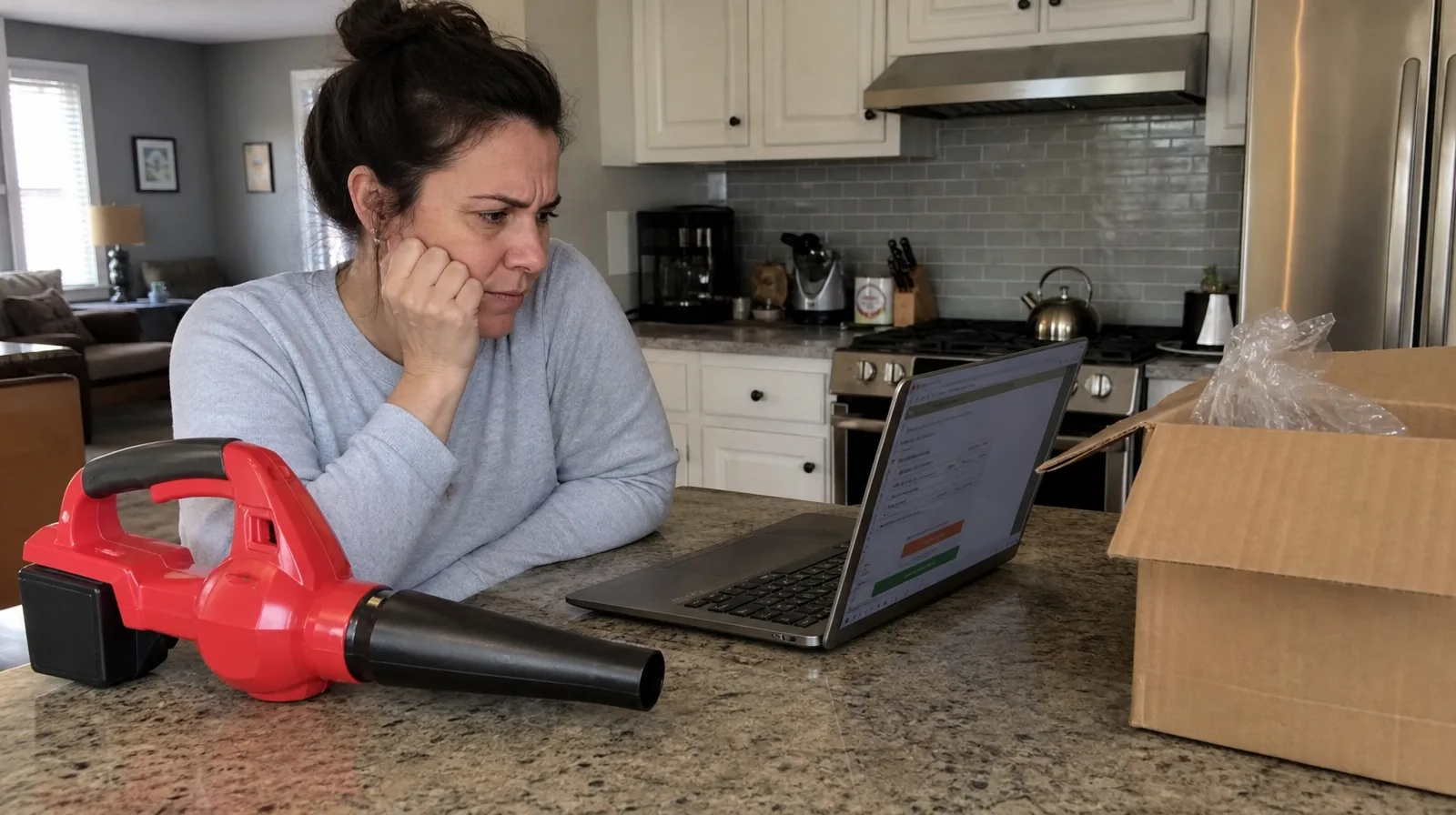
The honest wrinkle is that direct-offer electric blowers often publish no CFM figure, so you are trading verified specs for price and quiet. If a spec sheet before you buy is non-negotiable, the hardware-store class deserves the premium. I laid out that trade in my cordless leaf blower buying guide.
Which One You Should Actually Buy
Buy electric if your property is a driveway, a patio, paths and a garage floor. That is hard surfaces, dry leaves, short sessions, and every advantage gas offers goes unused while every advantage electric offers shows up weekly. At 2.1 lb with the battery fitted it is also the option you will hand to anyone who finds a heavy blower tiring in the first five minutes.
Buy electric if noise rules your schedule. Early mornings, napping kids, close neighbors, Sunday ordinances. Quiet clearing buys freedom that loud tools spend.
Buy gas if you face half an acre or more of heavy tree cover, or if you clear continuously for hours. The air volume advantage is real and the recharge cycle becomes genuine friction.
Keep a rake either way. Soaked mats, deep compacted drifts and gutter sludge resist handheld air pressure regardless of fuel, and timing beats power: clear leaves the afternoon they fall while they are dry.
If the answer is electric, my three-week PowerStack test covers one compact option in detail, my best cordless leaf blowers roundup ranks the field, I wrote out the specific swaps in my PowerStack alternatives piece for anyone who wants a different pick, and I checked whether the store itself holds up in is PowerStack legit.
Start with the fuel question, since everything else follows from it. If your property is suburban and your leaves are mostly dry, the answer has already stopped being close.
Common Questions & Answers
Q: Are electric leaf blowers as good as gas?
For suburban hard surfaces, yes. Dry leaves on driveways, patios and paths clear in the same time with a good electric handheld as with gas, and the electric wins on noise, fumes, weight and upkeep. Gas still moves more air, and that shows on soaked leaf mats, deep compacted drifts and properties over half an acre of heavy tree cover. The honest answer is that electric has won the category most homeowners actually belong to, while gas keeps the acreage and commercial work.
Q: Why do gas leaf blowers still exist if electric is quieter?
Energy density. Gasoline carries far more energy per pound than any lithium pack, so a gas engine moves a larger volume of air for longer without stopping to recharge. That advantage only matters when the job is big, wet or continuous. For a driveway, a patio and a garage floor, the advantage never gets a chance to show up, which is why the switch has already happened in most suburbs.
Q: How much quieter is an electric leaf blower than gas?
Substantially. A 2-stroke gas blower routinely exceeds 85 decibels at the operator's ear, which is the recommended 8-hour exposure limit set by hearing researchers at NIOSH, and most gas blowers run well past it. An electric handheld drops the sound to a fan hum. In my side-by-side testing I ran full Sunday morning sessions electrically without ear protection and without the ringing aftermath a gas session always left behind.
Q: Do electric leaf blowers have enough power for wet leaves?
No handheld electric moves soaked matted leaves, and neither does a handheld gas blower. Water glues leaves to pavement with more force than air pressure in this class can break. Where gas pulls ahead is damp and semi-dry material plus deep drifts, because higher air volume lifts more at once. For genuinely wet mats the answer is timing and a rake, regardless of which fuel you chose.
Q: What does a gas leaf blower cost to run per year?
More than people expect. Premixed fuel at several dollars a quart, a spark plug and air filter each season, and winterizing every autumn. Ignore the maintenance for a year and a shop visit for a carburetor rescue can run $60 or more. Electric running cost is the electricity for a handful of charges, which comes to pennies, plus a battery replacement every few years.
Q: Is a gas leaf blower banned anywhere?
California banned the sale of new gas-powered leaf blowers and other small off-road engines, a rule administered through the state's air regulator's Small Off-Road Engine program. Several other states and a growing list of local councils have followed with noise ordinances or phase-outs, and many British councils set quiet hours for garden machinery with Sunday-morning rules in particular. Check your local rules before buying, because the direction of travel is clearly toward electric.
Q: Can an electric leaf blower replace a backpack gas blower on a large property?
Not on half an acre or more of heavy tree cover. Backpack electrics close some of that gap and are the right middle step, but a handheld battery blower will be fighting deep drifts all afternoon. If your property is large and heavily wooded, either buy a backpack format or keep gas. Buying a handheld and discovering the limit in week two is the expensive mistake.
Q: Which is better for early morning or Sunday use?
Electric, and it is not close. Gas blowers are loud enough that running one early is antisocial in most neighborhoods, and some councils restrict the hours outright. I cleared a full driveway at 8am on a Sunday with an electric handheld while the street slept. That social permission is worth more to most suburban owners than the extra air volume gas provides.
Q: Do electric leaf blowers need much maintenance?
Almost none, which is the whole point. No fuel mixing, no spark plug, no air filter, no carburetor, no winterizing ritual. The routine is wiping the intake screen clear of dust, checking the tube for stuck twigs, and storing the battery indoors at room temperature. Do not store packs fully flat for months and do not leave them baking in a hot shed, and the battery will outlast the tool.
Q: How long do cordless leaf blower batteries last before replacement?
Several years of regular seasonal use for most owners, assuming the pack is not stored flat for months or left through freezing winters. Charge after sessions rather than leaving a pack depleted, keep it indoors, and avoid heat, which is the real enemy. If the runtime noticeably shortens after two or three seasons, a replacement pack usually restores it, and that single cost is the main long-term expense of going electric.
More Smart Home Articles
Related Product Reviews


Smart home enthusiast and IoT specialist. Has automated over 50 homes across different ecosystems. Former smart home consultant for Google Nest and Amazon Alexa. Passionate about making technology accessible.