
In This Article
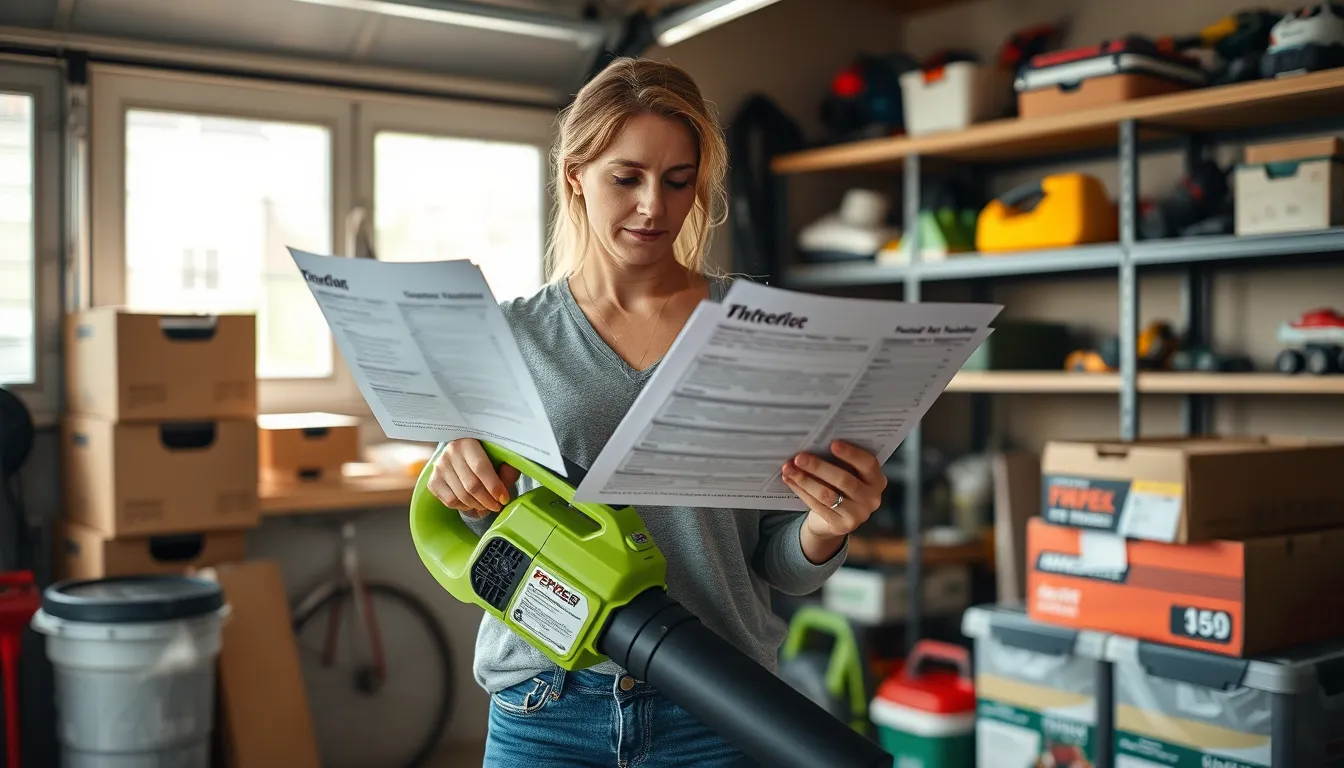
Every leaf blower on the shelf looks the same from six feet away: a motor, a tube, a trigger. The differences that decide whether you love or regret the purchase are all hidden in numbers that either are not printed or are printed in a way that does not mean what you think. I bought the PowerStack after reading a spec sheet I now consider misleading in one specific way, and I spent three weeks learning exactly which numbers matter. Whether the store behind it is worth your card number is a separate question, and I worked through the checkout, the seller record and the returns page in my is PowerStack legit piece. This guide is the checklist I wish I had written before I paid.
The short version: air volume beats motor speed, real runtime beats advertised runtime, and weight beats almost everything else once you are holding the tool away from your body. Everything below is the longer version, in the order I actually use it.
The Five Checks I Run Before Buying
Five questions settle the field. Answer them in order and you will narrow twenty models down to two without reading a single marketing paragraph.
One: what surfaces am I clearing? Driveways, patios, paths and garage floors are hard surfaces, and every handheld blower handles them. Lawns, gravel and deep leaf beds fight back, because air has to lift rather than push. If hard surfaces are your main job, a compact handheld is right. If you are clearing grass, you need real air volume and a wider tube.
Two: how much air does it actually move? Look for a published CFM figure. If there is none, that is information too, and not in your favour.
Three: how long does it run at full trigger, not on the lowest setting? Advertised runtime assumes you feather the trigger. Full-trigger runtime is usually half the printed number.
Four: how much does it weigh with the battery fitted? The printed weight is often the bare tool. Add the pack before you compare.
Five: does the battery fit anything else I own? A battery that joins an existing tool range is worth more than a marginal spec advantage.
CFM and MPH, the Two Numbers That Matter
Air volume is measured in cubic feet per minute, CFM. Air speed is measured in miles per hour, MPH. They do different jobs and buyers routinely pick the wrong one.
CFM moves piles. A high-volume stream pushes a wave of leaves ahead of it, which is what you want on a driveway covered in oak leaves. MPH peels. A fast, narrow stream lifts stuck or damp leaves off a hard surface and edges along walls. For general suburban clearing, CFM is the number that decides how long the job takes.
Here is the trap. Motor speed in RPM tells you how fast the fan spins, and nothing about how much air reaches the ground. Housing geometry, blade pitch and nozzle diameter all sit between the motor and the leaves. A 55,000 RPM motor with a poorly shaped tube can move less air than a slower motor with a good one. When a listing leads with RPM and never mentions CFM, it is substituting an impressive-sounding number for the one that would let you compare it to the model next to it.
Practical ranges for handheld cordless blowers: under 250 CFM is light duty and suited to tight patios. 250 to 450 CFM is the suburban sweet spot for driveways and paths. Above 450 CFM usually means a heavier tool with a bigger battery. MPH figures between 120 and 160 are typical, and above that you are mostly buying noise.
My rule is simple. If the CFM figure exists, use it to compare. If it does not exist, fall back on timed real-world reports from owners, and treat the omission as a reason to price a published-spec alternative alongside it.
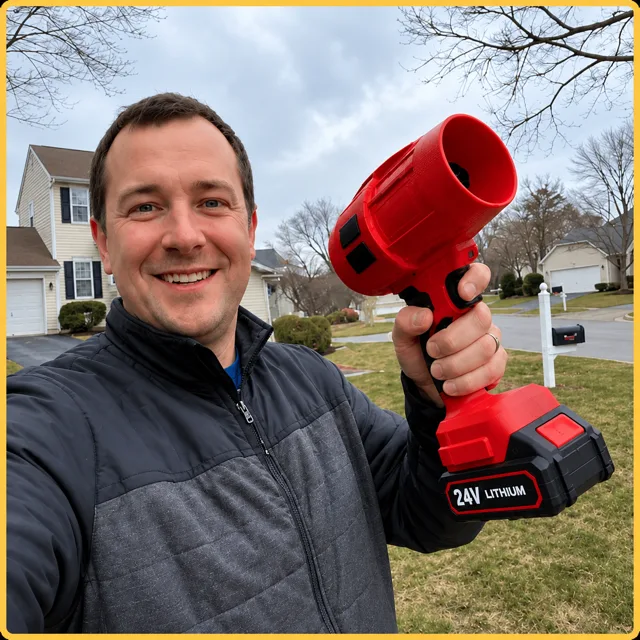
Weight decides whether the job feels like ten minutes or a chore, because the tool is held away from your body the whole time it runs.
Weight Is the Spec You Feel Every Minute
Spec sheets list weight in small print and shoppers ignore it. Then the blower arrives, and by the second session the shoulder has an opinion.
The number to compare is weight with the battery fitted, not the bare tool. A 1.1 lb body with a 1 lb pack is a 2.1 lb tool, and that is what your wrist supports. Under 3 lb is comfortable one-handed and essential if you will climb a ladder for gutters. Between 3 and 6 lb is fine for ground work and gets tiring above twenty minutes of continuous use. Above 6 lb you are into backpack territory.
Weight also interacts with the two things people buy these blowers for. Overhead gutter work is unforgiving: every extra pound doubles in feel when your arm is extended above your head. Early morning and Sunday sessions depend on the tool being quiet enough to use without guilt, and lighter tools in this class are generally the quieter ones, because a small efficient motor in a light housing is the whole design brief.
This is also where the honest trade-off sits. A bigger battery gives longer runtime and adds weight. A lighter tool is easier to hold and runs shorter. There is no configuration that wins both, so decide which one you would rather compromise on before you read another listing.
Battery Format, Runtime, and the Number That Matters
Runtime claims need translation before they mean anything.
The advertised figure is almost always maximum runtime on the lowest setting, with a feathered trigger, in mild conditions. Real full-trigger runtime is typically 40 to 60 percent of that. So a blower advertising up to 30 minutes is a 15 minute blower when you are actually clearing a leaf-covered driveway at full power, and a blower advertising 15 minutes is a 7 to 9 minute blower under the same conditions.
Neither number is an exaggeration. They measure different things. But you should size the purchase against the working figure, not the brochure figure.
The second battery question is format. Two systems exist. Dedicated packs, where the battery fits only that brand’s blower and its siblings, and cross-compatible ranges, where one pack runs a drill, a saw and a blower. If you already own a tool range, a blower that joins it is worth a spec compromise, because you skip buying a second battery and charger entirely.
Also check what is actually in the box. Some listings include battery and charger. Others list a lower headline price and sell the pack separately, which changes the real cost by thirty dollars or more. Compare the total for a working kit, not the price of the bare tool.
And check charge time. A blower that runs 15 minutes and takes an hour to recharge shapes your Saturday differently from one that runs 15 minutes and tops up in thirty. Neither is wrong, but the second one lets you work in a charge-and-clear rhythm instead of stopping mid-driveway.
What the Spec Sheet Leaves Out
Four fields are commonly missing from direct-offer listings, and each one costs you something different.
No CFM or MPH figure. You cannot compare it to a hardware store model on paper. You have to rely on owner reports of how long a driveway takes.
No decibel rating. You cannot verify the quiet claim. Quiet is the main reason many people switch from gas, so an unverified quiet claim is an unverified core feature.
No amp-hour figure for the battery. Without Ah you cannot judge whether the pack is small or large relative to its voltage, which is the honest way to estimate runtime before buying.
No fixed return window in days. Case-by-case returns by email work, but they put the burden on you to get the terms in writing before you post anything back.
None of these make a product bad. A datasheet that marks its own gaps honestly is more useful than one that invents numbers. But all four are reasons to read owner reports before you read the sales page, and reasons to screenshot the terms at checkout.
The Mistake That Costs the Most Money
The most expensive mistake is buying for the worst day of the year rather than the typical one.
People picture the worst leaf dump they have ever seen, then buy the biggest blower they can afford to handle that day. The tool then sits in the garage for eleven months doing the small jobs, and the shoulder complains about the weight every single time.
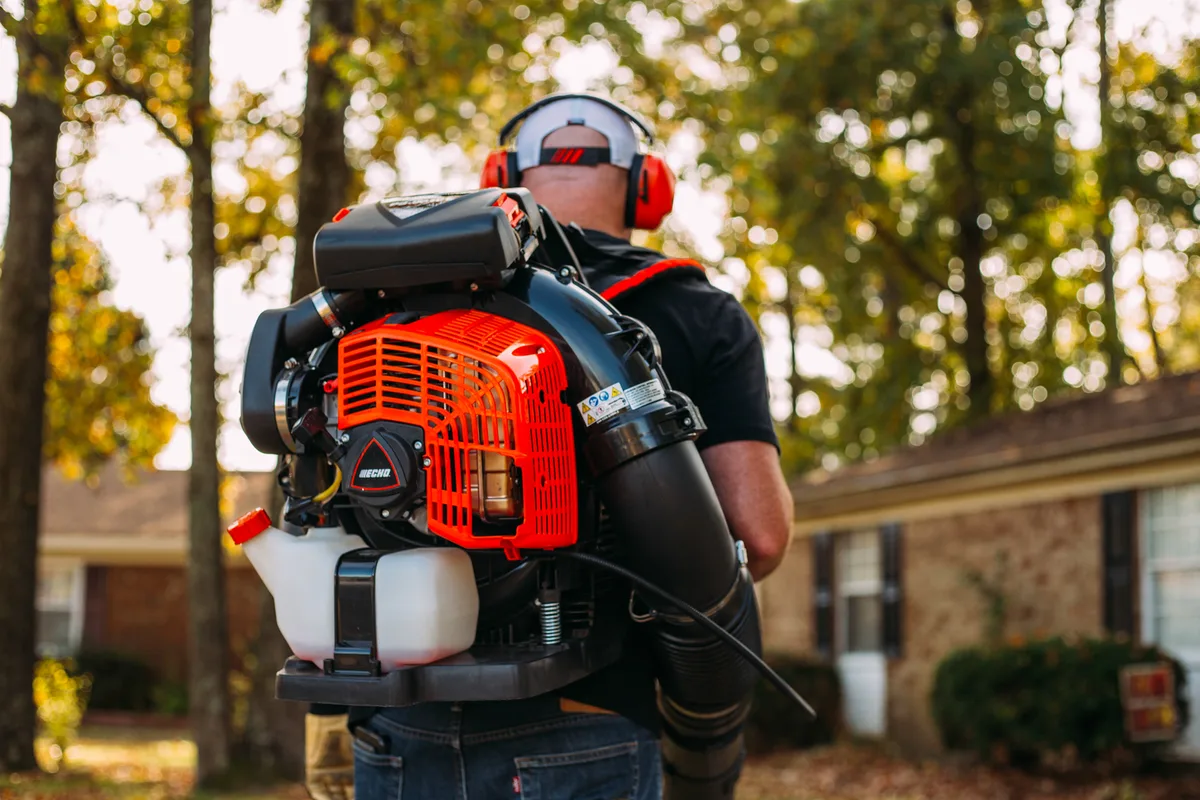
The better sizing question is how often the job happens and how big the typical session is. If you clear twice a week for ten minutes each time, a light handheld is the right tool and a heavy one is a tax you pay weekly. If you face half an acre of mature oaks twice a season, no handheld is right and you should be looking at backpack formats regardless of price.
For most suburban driveways and patios, the honest answer is that a light handheld clears the typical session in one charge, and the extreme day is better handled by timing than by horsepower. Clear leaves the afternoon they fall while they are dry, and one ten-minute session beats three sessions fighting a damp layer.
Where This Leaves You
Run the five checks in order: surfaces, air volume, real runtime, weight with battery, and battery format. Then confirm what is in the box and what the return window actually says.
If your answer is hard surfaces, a driveway, a patio and a garage floor, and you want something light enough for one hand and quiet enough for a Sunday morning, that is the compact handheld class, and the PowerStack I tested for three weeks sits in it at 2.1 lb with the battery fitted. My electric vs gas comparison covers the case where you are still deciding between fuels, and my best cordless leaf blowers roundup ranks the field if you want the shortlist instead of the checklist.
If your answer is wet mats, deep drifts or real acreage, skip this class entirely and buy the tool the job deserves. The right blower is the one that matches your typical session, not your worst one.
Common Questions & Answers
Q: What is the most important spec on a cordless leaf blower?
Air volume, measured in CFM, matters more than motor RPM or volts for clearing leaves. A blower that moves 400 CFM will clear a driveway faster than one running at higher speed but moving less air. The problem is that many direct-offer blowers do not publish a CFM figure at all, and a 55,000 RPM motor tells you fan speed rather than air volume. When a brand will not print CFM, weight the real-world clearing time from owner reports instead.
Q: Is more RPM better in a cordless leaf blower?
No, not on its own. RPM measures how fast the fan spins, not how much air comes out the nozzle. Housing shape, fan blade design and nozzle diameter all change the result. Two blowers at 55,000 RPM can move very different volumes of air. Treat RPM as a motor characteristic rather than a performance claim, and look for a published CFM figure or timed clearing results instead.
Q: How long should a cordless leaf blower battery last?
Plan for 15 minutes at full trigger and up to 30 minutes if you feather the variable speed. That gap is normal across the category and it is the difference between the advertised figure and the working figure. For a driveway and a patio, 15 real minutes clears the job in one session. For a half acre under heavy trees, you want either a swappable battery format or a bigger tool entirely.
Q: How many volts does a leaf blower need?
Between 18V and 40V covers most handheld cordless blowers, and voltage alone does not rank them. A 24V unit with an efficient brushless motor can outperform a heavier 40V unit in a compact format. Check whether the battery fits a tool range you already own, since cross-compatibility saves more money than any single spec difference between two blowers.
Q: How heavy is too heavy for a cordless leaf blower?
Under 3 lb with the battery fitted is comfortable for one-handed work and essential for overhead gutter runs. Between 3 and 6 lb is fine for ground clearing but tires the shoulder above 20 minutes. Over 6 lb belongs to backpack formats. Weight matters more than most buyers expect because the tool is held away from the body the whole time it runs, so a pound feels like three.
Q: Should I buy a cordless leaf blower with a vacuum mode?
Only if you will actually empty a collection bag, because vacuum mode on a handheld blower clogs fast and moves far less material than blowing. Blowing is three to four times faster for leaves on hard surfaces. Vacuum mode earns its keep on fine debris like sawdust or grass trimmings, not on a lawn covered in oak leaves.
Q: What nozzle should a cordless leaf blower come with?
Two is the right number: a wide nozzle for open driveways and paths, and a concentrator for gaps, corners and gutter runs. A single wide nozzle works but forces you to get closer to tight areas. Some kits add a shoulder strap and a tube brush, which are nice to have and not worth paying extra for on their own.
Q: When is a cordless leaf blower the wrong tool?
When your main problem is wet matted leaves, deep compacted drifts or more than half an acre of heavy tree cover. Water glues leaves to pavement harder than a handheld blower can break the bond, and no brand changes that. For soaked mats keep a rake. For acreage move to a backpack electric or a gas unit with real air volume.
Q: Is it worth paying more for a brand name leaf blower?
It depends on what you are buying with the money. Brand-name hardware store blowers cost more because they publish verified CFM, sell batteries that fit a whole tool range, and take returns in person. Direct-offer blowers win on price, weight and quiet. If published specs and swappable batteries matter to you, pay the premium. If the job is a driveway and a patio, the cheaper class does the same work.
Q: What should I check before ordering a leaf blower online?
Confirm the per-unit price for the bundle you picked, shipping cost, estimated delivery window, whether a battery and charger are included, and the return window in days with who pays return shipping. Screenshot all five before you confirm. Direct-offer pages rotate their terms with promotions, and the screenshot is your copy of the promise.
More Smart Home Guides

Related Product Reviews

Smart home enthusiast and IoT specialist. Has automated over 50 homes across different ecosystems. Former smart home consultant for Google Nest and Amazon Alexa. Passionate about making technology accessible.