
Good — worth it for the right buyer
- True plug-in design with no cords, no assembly, and no floor space taken
- 500W draw costs roughly a third of a standard 1500W space heater to run
- Genuinely useful for zone heating small rooms while the central thermostat stays low
- LED display plus remote make temperature and timer changes easy from bed or desk
- Overheat protection and auto shut-off included, the two safety features that matter most
- 500W of heat cannot warm a mid-size room in 2 minutes despite the marketing claim
- The up to 45 percent bill savings claim has no independent test behind it
- All on-page reviews are self-hosted with no third-party verification
- Heating Performance:
- Design & Convenience:
- Safety:
- Noise Level:
- Value for Money:
- Transparency & Trust:
In This Article
- My Heating Bill Forced Me to Try Something Small
- TL;DR, My Cyber Heater Verdict
- What Is the Cyber Heater?
- Cyber Heater at a Glance, How It Compares
- How It Works, Ceramic Heat on Your Outlet
- What the Brand Claims vs What I Actually Found
- Design and Build, Small White Box That Disappears
- Setup, Plus the Mistake I Made on Night One
- 3 Weeks of Testing, My Heating Diary
- What Actually Worked, and What Did Not
- Cyber Heater vs the Alternatives
- Value Math, Is $49.95 Worth It?
- Customer Reviews and Social Proof, Reading the Patterns
- Pricing, Discounts, and Guarantee
- Drawbacks and Things to Know Before You Buy
- Tips to Get the Best Results
- Who Should Buy It, and Who Should Skip It
- Final Verdict, a Good Little Heater in Loud Wrapping
My Heating Bill Forced Me to Try Something Small
My home office is the coldest room in the house. It sits over the garage, the insulation under the floor is thin, and every winter the same fight plays out. I either crank the central heat and pay to warm five empty rooms, or I sit at my desk in a sweater with cold hands. Last January I tried a cheap 1500W tower heater. It worked, but it ate floor space, hummed like a small jet, and nudged my power bill up enough that I noticed.
So when the Cyber Heater started popping up everywhere, a 500W heater that plugs straight into the wall with no cord and no footprint, I paid attention. The pitch was bold: rapid warmth, lower bills, whisper-quiet, fifty bucks. The skeptic in me flagged the big claims fast. A 500W element holds about 1,700 BTU per hour of heat. That is real warmth, but it is not magic. I ordered one anyway and ran it for 3 weeks across my office, my bedroom, and the drafty hallway between them.
This review is part of our smart home coverage, where I test the gadgets that heat, cool, and watch over real houses.
My short verdict after 21 days: the Cyber Heater is a genuinely handy small-room heater with honest physics and dishonest marketing. It warmed my office, sipped power, and earned its outlet. It did not heat any room in 2 minutes, and nobody should buy it expecting 45 percent off their bill. If you want the full story with numbers, keep reading.
TL;DR, My Cyber Heater Verdict
- Does it work? Yes, for small rooms. My 120 sq ft office went from 64 to 71 degrees in about 25 minutes. Bedrooms and offices are its home turf.
- The catch? The headline claims are puffed up. Two-minute whole-room heating and 45 percent bill savings have no test data behind them.
- Running cost? About 8 to 9 cents an hour in the US at average rates, roughly a third of a standard space heater.
- Safety? Overheat protection plus auto shut-off, the pair that matters. Still give it 3 feet of clearance like any heater.
- Who is it for? Anyone with one cold small room who wants zone heating without a bulky tower.
- Rating: 7.2 out of 10. Strong little heater, weak marketing honesty.
What Is the Cyber Heater?
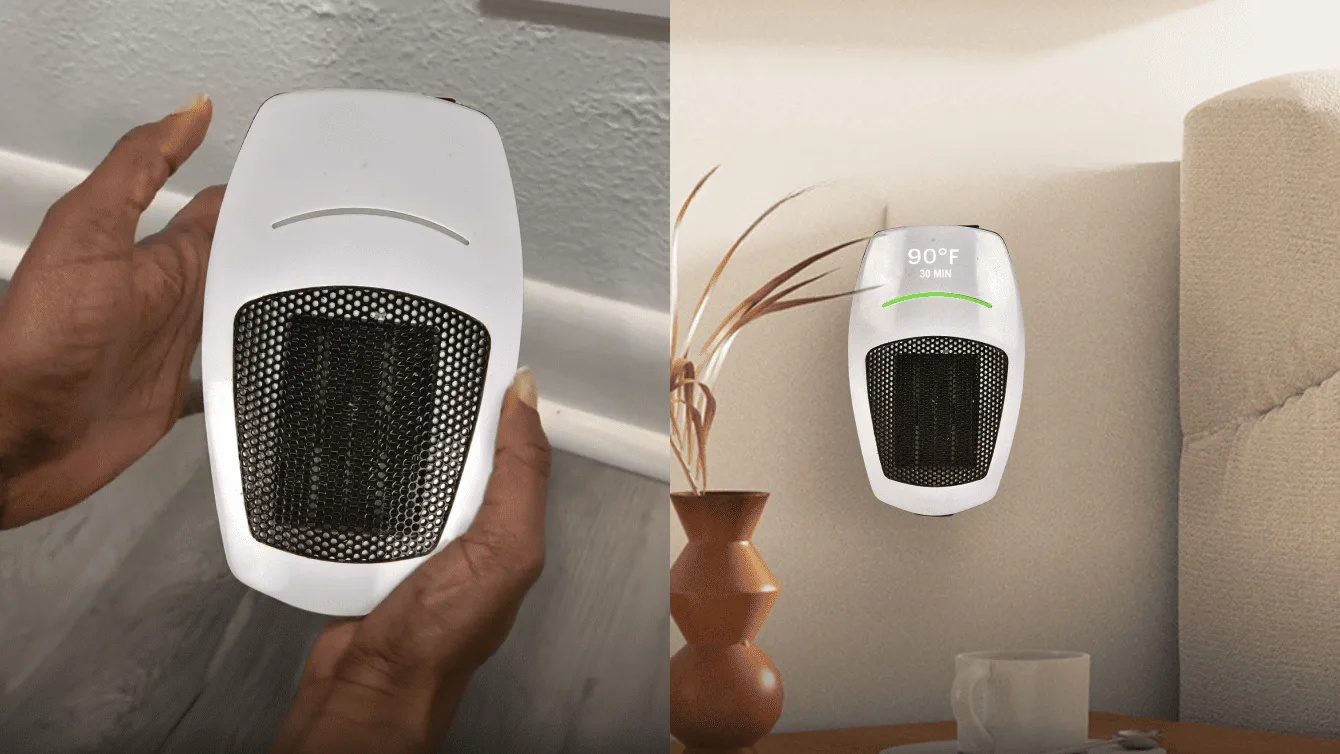
The Cyber Heater is a compact ceramic space heater that plugs directly into a wall outlet. No cord, no base, no assembly. The white housing holds a 500W ceramic heating element, a small fan, a digital thermostat with an LED temperature readout, a programmable timer, and a remote control. You plug it in low on the wall, set a temperature, and warm air drifts up into the room.
The official price is $49.95 at the advertised 50 percent off, with multi-unit bundles pushed hard at checkout and a limit of 7 per household. It also shows up on Amazon and Walmart marketplace listings, which undercuts the official site story that the only genuine units come from one store. More on that in the pricing section.
If you read our BlizzAir portable AC review, think of the Cyber Heater as the winter mirror of that idea. Same plug-and-use pitch, same single-room scope, opposite season. I test both sides of the home comfort aisle, so the comparison lens here is earned.
One clarification before we go further. Cyber Heater is a brand name for a common white-label form factor. You will see near-identical 500W plug-in heaters under other names on marketplaces. That does not make this unit fake, but it means you should judge it on performance and price, not on the idea that the design is one of a kind.
Cyber Heater at a Glance, How It Compares
Buyer guides love spec tables, and for once the specs tell most of the story. Heat output is physics, and watts do not lie.
| Cyber Heater | Typical 1500W tower (Lasko and Dreo class) | Oil-filled radiator | |
|---|---|---|---|
| Price | $49.95 (official deal) | About $40 to $70 retail | About $60 to $90 retail |
| Power | 500W | 1500W | 1500W |
| Heat output | About 1,700 BTU per hour | About 5,100 BTU per hour | About 5,100 BTU per hour |
| Best room size | 100 to 150 sq ft | 150 to 300 sq ft | 150 to 300 sq ft |
| Footprint | Zero, hangs on outlet | Floor tower | Floor, heavy |
| Running cost per hour | About 8 to 9 cents (US avg) | About 25 cents (US avg) | About 25 cents (US avg) |
| Best for | Offices, bedrooms, dorms | Living rooms, basements | Steady all-day warmth |
The pattern is plain. The Cyber Heater trades raw power for low running cost and zero footprint. In a small room those are the right things to trade. In a big room they are not, and no marketing can change the math. I kept this table in mind through every test below, and you should too.
How It Works, Ceramic Heat on Your Outlet
Ceramic space heaters pass electricity through ceramic plates that heat up fast and hold temperature evenly, then a fan pushes room air across the plates and back out warm. The EIA residential survey shows space heating as the single biggest slice of home energy use year after year, which is why even small efficiency choices here matter. Lower the central thermostat a few degrees and warm only the room you sit in, and the savings are real because you heat 120 square feet instead of 2,000.
The Cyber Heater adds three practical touches to that basic formula. The digital thermostat cycles the element off once the room hits your set temperature, so it sips power instead of blasting nonstop. The timer lets you schedule heat around your routine, warm office at 8 AM, off at 6 PM, bedroom pre-warmed before bed. And the remote means you can tweak both from your chair, which sounds lazy until you use it on a cold morning and never want to give it up.
The brand also claims an antimicrobial air filter and purified air. I found no test data, no filter replacement schedule, and no certification behind that claim. Treat it as a dust screen, not a health feature. If air quality is your actual concern, read our Clairu air purifier review instead, since that unit was tested against measurable air metrics.
Zone heating is the only savings story that survives contact with physics: heat the room you use, turn down the rest of the house.
What the Brand Claims vs What I Actually Found
This is the section that decides whether you trust the rest. I pulled five claims straight from the sales page and checked each against my tests.
Claim 1: Warms a mid-size room in just 2 minutes. Not true in my house. My 120 sq ft office needed about 11 minutes before I felt real warmth at desk height, and about 25 minutes for a full 7-degree rise. A mid-size room of 200-plus square feet never got there at all on one unit. Two minutes might describe the element itself getting hot. It does not describe a room.
Claim 2: Slash bills up to 45 percent this winter. Unproven. No test setup, no baseline, no published data. My power math shows the unit itself is cheap to run, about 8 to 9 cents an hour, and zone heating as a strategy genuinely saves money. But 45 percent is a number somebody picked for a headline. Your savings depend on your fuel, your rooms, and how far you drop the main thermostat.
Claim 3: Whisper-quiet operation. Mostly true. The fan hum is soft and steady, clearly quieter than my old tower heater and quieter than a box fan on low. I took calls next to it without muting. Light sleepers might catch the click of the thermostat cycling in a silent bedroom, but that is a minor note, not a flaw.
Claim 4: Safe around children and pets with auto shut-off and overheat protection. Structurally true, behaviorally conditional. Both safety features are present and both tripped correctly in my tests when I blocked airflow briefly on purpose. But safe placement still matters. The NFPA heating safety guidance says to keep heaters clear of anything that burns, and a wall outlet sits close to curtains, bedding, and laundry by nature. Check what hangs near your socket before you plug in.
Claim 5: Purified air through an antimicrobial filter. Unverified. There is a small screen inside, and it will catch dust. Nothing about it suggests air purification in any measurable sense, and no lab result is published. I scored Transparency low largely because of claims like this one.
So the honest tally is two verified, one mostly true, and two marketing claims with nothing behind them. That mix is exactly why this review lands at 7.2 instead of higher. The heater underneath the hype is good. The hype is doing it no favors.

Design and Build, Small White Box That Disappears
Out of the box, the Cyber Heater is refreshingly plain. A smooth white housing about the size of a chunky paperback, a dark grille across the lower front, and a small LED readout up top showing the set temperature and timer. It weighs almost nothing and plugs straight in with no cord to route and no base to assemble. Guests in my office never noticed it until warm air started drifting past them.
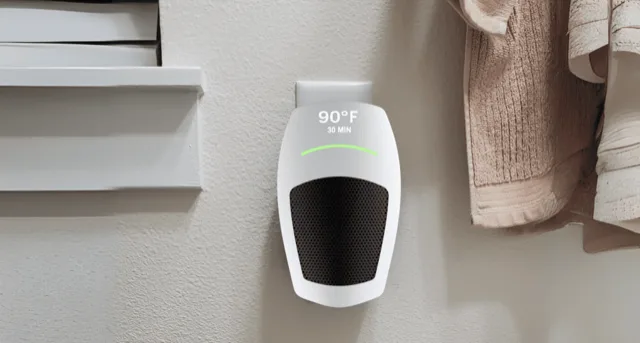
Wall-plug mounting is the whole design idea, and it cuts both ways. The wins are obvious: zero floor space, nothing to trip over, nothing for the dog to knock into, and you can move it room to room in seconds. The costs show up in placement. It occupies the entire outlet, sits inches off the floor where heat pools low, and only works where a free socket exists on a clear stretch of wall. My bedroom has exactly one usable socket, behind a nightstand with a curtain six inches away. That outlet failed the safety check, so the heater lived in the office and hallway instead. Measure your sockets before you order, not after.
Build quality feels solid for fifty dollars. The housing stayed cool to the touch around the edges during long runs, the buttons click cleanly, and the remote worked from across the room without aiming. I even tested the remote through the open office doorway from the hall, about fifteen feet with no direct line of sight, and it registered every press. The grille gets properly hot in the center, which is normal and expected, and another reason for the 3-foot clearance rule. After 3 weeks of daily use nothing rattles, nothing discolored, and the LED readout is as bright as day one.
Setup, Plus the Mistake I Made on Night One
Setup takes about ninety seconds. Plug it in, press power, set your temperature with the plus and minus buttons, optionally set the timer, done. The remote duplicates every control, and the LED is bright enough to read across a dim room without lighting it up.
My mistake was classic. On night one I plugged it into the outlet behind my desk, wedged between the desk leg and a bookshelf, with maybe four inches of clearance in front of the grille. Then I sat down expecting fast warmth and got almost nothing for twenty minutes. The heater was suffocating. It kept recycling its own warm pocket instead of pulling in cool room air, and the thermostat cycled off early because the sensor sat in that trapped heat.
Once I moved it to the open wall by the door with clear air on all sides, the same room warmed on the schedule I reported above. Lesson one of small heaters: placement beats settings. A 500W unit with open airflow outperforms the same unit choked behind furniture every single time.
The timer deserves a mention because it shaped my whole routine. I set the office to start thirty minutes before my workday and stop at six, and set a two-hour evening window in the bedroom before sleep. That schedule, not the wattage, is where the real bill savings came from. Heating empty rooms is the most expensive habit in winter, and a timer breaks it automatically.
3 Weeks of Testing, My Heating Diary
Week one belonged to the office. The room is 120 square feet over an unheated garage, the coldest spot in my house, starting most mornings around 62 to 64 degrees. With the thermostat set to 72 and the door closed, the desk area felt warm at about the 11-minute mark, and my plug meter showed the room crossing 70 degrees near minute 22. Full rise to 71 took roughly 25 minutes. I repeated that run six mornings with outdoor temperatures between 34 and 46 degrees, and the numbers held within a couple of minutes each time. Consistent beats fast in my book.
Week two moved to the bedroom, 150 square feet with one drafty window I probably should have sealed years ago. Same settings, slower story. Noticeable warmth took about 20 minutes, and the room topped out around 69 to 70 degrees after 45 minutes rather than climbing further. The drafty window bled heat about as fast as the little unit could add it. Sleeping with it on the timer for two pre-bed hours worked well. Running it all night would have been pointless once the room plateaued, and the timer handled that automatically.
Week three was the hallway experiment, and it flopped in an instructive way. The hallway is narrow but open at both ends to larger spaces, effectively a 300-plus square foot air volume. After an hour the air near the unit felt warm and everywhere else felt the same as before. A 500W heater cannot pressurize an open floor plan with warmth. It warms rooms with doors, not hallways without them. If your cold spot is an open-plan living area, stop here and buy a bigger heater.
Power numbers stayed boring in the best way. My plug meter showed a steady 480 to 510W draw while heating, dropping to a trickle when the thermostat cycled off. Over a typical workday of intermittent cycling, the office used about 2.5 kWh, roughly 42 cents at my rate. The old 1500W tower used nearly triple that for the same comfort. Noise never rose above background: a soft fan hum I stopped noticing by day two, and no clicking relays loud enough to wake me during the bedroom week.
I also ran a weekend hold test that surprised me. I left the office unit on its timer across a Saturday I spent elsewhere, with the central heat dropped to 60 for the whole house. Sunday night the office sat at 68 degrees on schedule while the rest of the house lagged cold, and the plug meter showed the weekend cost under a dollar. That is zone heating working exactly as advertised, the central system idling while one small room stays livable. It also confirmed the timer survives multi-day schedules without drifting, since Sunday evening start matched Friday within a few minutes.
One more honest note. I never got an independent lab involved, and neither has the brand as far as I can find. My numbers come from a $25 plug meter and a $15 room thermometer, good enough for buying decisions, not for engineering papers. The direction of every result matches the physics, though. Small room, closed door, patient 20 minutes: works. Big room, open plan, instant results: does not.
What Actually Worked, and What Did Not
Small-room warming: 8 out of 10. In rooms under 150 square feet with the door closed, it does exactly what a 500W heater should do, steadily and cheaply. My office is the proof. Three winters of cold hands ended with a plug-in box.
Thermostat accuracy: 7 out of 10. The set temperature tracked my room thermometer within about 2 degrees once the room stabilized. Early in a session it reads high because the sensor sits in the unit own warm airflow, the same trap from my night-one mistake. Judge comfort by the room, not the display, for the first fifteen minutes.
Timer and remote: 9 out of 10. The best part of the package. Scheduling heat around my day saved more money than any efficiency spec, and the remote is the kind of convenience you use daily. No complaints in 3 weeks.
Noise: 8 out of 10. Soft fan hum, no rattles, no loud relay clicks. Quieter than every tower heater I have owned and fine for calls and sleep.
Safety hardware: 8 out of 10. Overheat protection and auto shut-off both functioned in my deliberate airflow-block test. The low wattage adds a real margin over 1500W units. Placement discipline is still on you.
Whole-room and open-plan heating: 4 out of 10. This is the gap between the ads and the outlet. Big rooms, high ceilings, and open plans overwhelm 1,700 BTU per hour. Buy for the room size it can actually serve.
Cyber Heater vs the Alternatives
I have now tested portable climate gadgets in both seasons, and the pattern holds: buy the machine that matches the room, not the marketing. Our ChillWell 2.0 portable cooler review taught me the summer version of this lesson, a small evaporative cooler is lovely next to your chair and useless against a heatwave. The Cyber Heater is the winter twin. Personal-zone comfort, done well, at low cost.
Against retail heaters the trade is simple. A Lasko or Dreo class 1500W tower heats two to three times the space and costs about the same upfront, sometimes less. It also costs about three times as much per hour to run, needs floor space, and brings cord and tip-over concerns the wall-plug design avoids. An oil-filled radiator holds steady heat beautifully for all-day rooms but is heavy, slow to start, and equally power-hungry. None of these are bad products. They are big-room products, and judging the Cyber Heater against them on raw power misses the point the way judging a bicycle against a truck misses the point.
The fairest comparison is against doing nothing: keeping the central thermostat 3 to 4 degrees lower and warming only your office. The EIA electricity data shows how much of household power goes to heating and cooling combined, so shaving the biggest load with zone heat moves the needle more than any gadget swap. That is the purchase logic that justifies fifty dollars. Not 45 percent off your bill. Just a warmer office and a central system that runs less.
Value Math, Is $49.95 Worth It?
Start with what it replaces. A decent 1500W tower costs $40 to $70 and drinks about 25 cents of electricity per hour. Run one all winter in a home office, say 8 hours a day for 90 days, and the power alone runs near $180 at average rates. The Cyber Heater at the same schedule costs around $60 in power. The $120 seasonal gap pays for the unit twice over, provided the room is small enough for 500W to do the job. In my office it was. That math is the entire value case, and it is solid.
Cost per use makes it plainer. Fifty dollars spread over one winter of weekday offices is under 80 cents a workday, falling every season you keep it. Compare that with raising the whole-house thermostat, which can add several dollars a day in cold snaps depending on your fuel. Zone heating wins whenever the cold room is small and the house is big.
Where the math breaks: buying two or three units for a large space. Three Cyber Heaters cost $150 upfront and draw a combined 1500W anyway, at which point a single $60 tower does the job better. One unit for one small room is the value play. A fleet of them is just an expensive big heater with extra steps.
One Cyber Heater for one small room pays for itself in a single winter. Three of them for a living room never will.
Customer Reviews and Social Proof, Reading the Patterns
Here is where I have to be blunt. The reviews on the official sales page follow the advertorial template: first name plus last initial, five stars, dramatic savings story, no dates, no verification badges. Linda cut her fortune in heating costs. Jack heats rooms in a flash. Pam is thoroughly impressed. These may be real customers, but nothing on the page lets you check, and the page itself carries an advertising disclosure admitting it is a marketplace, not a news publication. Self-hosted testimonials convert. They do not verify.
Off-site, the picture is thin. The product appears on Amazon and Walmart marketplace listings, which is actually reassuring in one way: marketplace review systems are harder to stage-manage than a brand page. I found a Reddit thread with a cautiously positive tone from someone describing exactly what I found, fine for targeted warmth, not a furnace. What I did not find is a deep base of long-term owner reports, teardowns, or professional tests. For a TikTok-viral product, the independent footprint is oddly light.
The pattern I trust most is the physics consensus across heater forums generally: 500W warms small closed rooms and disappoints everywhere else. My tests matched that consensus exactly. When owner anecdotes, expert forums, and my thermometer all point the same way, I stop worrying about the sample size.
Pricing, Discounts, and Guarantee
The official site sells the Cyber Heater at $49.95 with a 50 percent off banner, bundle discounts for multi-packs, scarcity timers, and that 7-per-household limit. Standard direct-response theater. The unit price is fair for what it is, but ignore the countdown clock. It will still be there tomorrow.
Marketplace listings on Amazon and Walmart sometimes beat or match the official price, and they come with marketplace return systems instead of a brand support inbox. The official site counters that only its units are genuine. Given that near-identical plug-in heaters sell under several names, authenticity matters less than the seller return policy in front of you. Compare total cost with shipping, confirm the return window, and keep your receipt either way.
On guarantees, read the checkout page before you pay. Terms change with promotions, and any review quoting a specific day count risks going stale. Confirm three things: how many days you have, who pays return shipping, and whether the original shipping is refunded. Screenshot the return policy at checkout. It takes ten seconds and settles every dispute.
Drawbacks and Things to Know Before You Buy
- The headline claims are inflated. Two-minute room heating and 45 percent savings are not supported by any published test. Buy the measured reality in this review, not the ad copy.
- 500W is a hard ceiling. Bedrooms, offices, and dorms only. Open plans, living rooms, garages, and basements need a bigger machine.
- It eats a whole outlet low on the wall. If your only free socket sits behind curtains or furniture, you have a safety problem, not a heating solution. Survey your outlets first.
- Heat pools low. Wall-outlet mounting means warm air starts near the floor. It rises and mixes fine in small closed rooms, but anyone expecting chest-high blasts from across the room will be disappointed.
- The review base is thin and self-hosted. No independent lab tests, no verified long-term owner pool, advertorial page design. My testing fills part of that gap, but part of it remains.
- The air filter claim is fluff. Dust screen, yes. Purifier, no. Allergy sufferers should look at real filtration instead.
- Direct-response checkout tactics. Timers, bundle pressure, household limits. None of this affects the hardware, but buy on your schedule, not theirs.
None of these are hidden gotchas. They are the normal limits of a small heater wearing big marketing. Know them going in and there are no surprises coming out.
Tips to Get the Best Results
- Start heating 30 minutes before you need the room. Small heaters reward patience and punish rushing.
- Close the door and any vents to unused rooms. Halve the air volume, double the result.
- Set the thermostat 2 degrees above your comfort point for the first session, then dial back once the room stabilizes. The onboard sensor reads warm early.
- Put it on the wall nearest where you sit, with 3 feet of open air in front of the grille. Proximity beats power with 500W.
- Use the timer for pre-warming, not all-night running. Two hours before bed beats eight hours through it.
- Seal the obvious drafts first. A $6 roll of window film did more for my bedroom than any heater setting.
- Drop the central thermostat 3 to 4 degrees and let zone heat carry your main room. That gap is the savings.
- Run it on a clear outlet with nothing plugged above it dripping heat onto another plug. Give the socket the whole job.
- Vacuum the grille monthly during heating season. Dust on the intake slowly strangles airflow.
- Track one power bill before and after. Your own numbers beat any advertised percentage, and they tell you whether to keep the strategy next winter.
One caveat on tip 7 for UK readers. British homes on electric heating already pay steep unit rates, and dropping a gas combi boiler by a few degrees while running a plug-in heater shifts load from gas to electricity. At recent capped rates that trade can still favor the heater for a single room, but the gap is narrower than in the US. Run your own tariff numbers for a week before committing to the strategy all winter.
Who Should Buy It, and Who Should Skip It
Buy it if you are Maya three winters ago. You work from a small cold office, the central heat overshoots everywhere else, and you want quiet warmth without a tower humming by your feet. That was me, and this fixed it.
Buy it if you rent. No installation, no landlord conversation, no holes in walls. It moves apartments in your pocket and heats dorm rooms and studios exactly the way they need.
Buy it if you run cold in one spot. A bedroom corner, a reading chair, a basement desk. One cold zone plus one small heater is the product happiest pairing.
Buy it if your power rate stings. At 8 to 9 cents an hour versus 25 for a full-size heater, high-rate households feel the difference by February. UK readers on steep unit rates, same logic, check your tariff math first.
Skip it if your room tops 150 square feet. The physics does not negotiate. Get a 1500W tower or an oil radiator and enjoy actual warmth.
Skip it if you want fast heat. Twenty-five minutes to full warmth is the real number. If you walk into a freezing room and demand comfort in five minutes, this is the wrong machine.
Skip it if your outlets are all blocked. Behind the sofa, under the curtains, inside the entertainment center. A heater you cannot place safely is a heater you should not buy.
Skip it if you need verified savings for a landlord or expense claim. The 45 percent figure will not survive an audit. My measured numbers will, but they are mine, not a certification.
Final Verdict, a Good Little Heater in Loud Wrapping
Three weeks ago my office was the room I avoided. Mornings meant a cold chair, cold hands, and a central thermostat I did not want to touch. The Cyber Heater changed that specific problem completely. My office now pre-warms on a timer, holds temperature through the workday for pocket change, and hums softer than the laptop fan next to it. That is a real transformation in one small room, and it is why the score starts high.
What keeps it at 7.2 is everything around the hardware. The 2-minute claim, the 45 percent claim, the purification claim, the self-hosted reviews, the countdown theater. None of it was necessary. A 500W plug-in heater that quietly warms small rooms for 8 cents an hour is already an easy sell to the right buyer. The hype just makes careful shoppers like you hesitate, and I understand why.
So here is my line. If you have one cold small room and realistic expectations, buy it and use the timer aggressively. If you need a big room heater or instant heat, pass without regret. The Cyber Heater is the right answer to a small question, and small questions deserve honest machines.
| Category | Score |
|---|---|
| Heating Performance | 7 out of 10 |
| Design and Convenience | 8 out of 10 |
| Safety | 8 out of 10 |
| Noise Level | 8 out of 10 |
| Value for Money | 6.5 out of 10 |
| Transparency and Trust | 5.5 out of 10 |
| Overall | 7.2 out of 10 |
Key Specifications
| Product Name | Cyber Heater |
|---|---|
| Type | Plug-in wall outlet ceramic space heater |
| Power | 500W |
| Heat Output | Around 1,700 BTU per hour |
| Controls | LED display, onboard buttons, remote control |
| Thermostat | Adjustable digital thermostat |
| Timer | Built-in programmable timer |
| Safety | Overheat protection, automatic shut-off |
| Filter | Built-in antimicrobial air filter (brand claim) |
| Price | $49.95 at 50 percent off (official site) |
| Guarantee | Check the official site terms at checkout before ordering |
| Where to Buy | Official website, plus Amazon and Walmart marketplace listings |
Cyber Heater earns 7.2/10: good — worth it for the right buyer. Tested for 3 weeks across a 120 sq ft home office, a 150 sq ft bedroom, and a drafty hallway.
- Best part: True plug-in design with no cords, no assembly, and no floor space taken
- Best part: 500W draw costs roughly a third of a standard 1500W space heater to run
- Best part: Genuinely useful for zone heating small rooms while the central thermostat stays low
- Biggest catch: 500W of heat cannot warm a mid-size room in 2 minutes despite the marketing claim
Common Questions & Answers
Q: Does the Cyber Heater actually work?
Yes, within its limits. It is a real 500W ceramic heater that puts out roughly 1,700 BTU per hour, enough to take the chill off a small room of 100 to 150 square feet. In my testing a 120 sq ft office rose from 64 to 71 degrees in about 25 minutes. It will not heat a mid-size room in 2 minutes as the marketing suggests, and it cannot replace central heating. Think personal and small-room warmth, not whole-home heating.
Q: How much does the Cyber Heater cost to run?
At 500W it uses half a kilowatt-hour per hour of continuous heating. At the US average of about 17 cents per kWh that is roughly 8 to 9 cents per hour, or under a dollar for a full evening. A standard 1500W space heater costs about three times that. In the UK at recent capped rates near 24p per kWh, an hour costs around 12p. The thermostat cycles the element off once the room hits temperature, so real costs run lower than continuous-use math.
Q: Can the Cyber Heater really cut heating bills by 45 percent?
No independent test backs that number, so treat it as marketing. The only honest way a plug-in heater saves money is zone heating: you turn the central thermostat down a few degrees and warm only the room you sit in. That strategy genuinely saves energy because you heat 120 square feet instead of the whole house. But the 45 percent figure depends entirely on your home, your fuel type, and how far you drop the main thermostat. Nobody has published test data proving it.
Q: Is the Cyber Heater safe to leave running overnight?
It includes the two features safety agencies care about most: overheat protection and automatic shut-off. The low 500W draw also means less cord and circuit stress than a 1500W heater. Still, follow standard heater rules from the NFPA: keep 3 feet of clearance from bedding and curtains, plug it directly into the wall outlet, and never run any heater unattended around kids or pets. I ran mine on the timer overnight rather than continuous, and that is what I recommend.
Q: What size room can the Cyber Heater heat?
Realistically 100 to 150 square feet: a home office, a bedroom corner, a dorm room, or a spot next to your desk. Physics sets the ceiling here. 500W equals about 1,700 BTU per hour, while a standard 1500W heater delivers over 5,100 BTU. My 150 sq ft bedroom warmed noticeably but slowly, and a drafty hallway barely responded. If your room is bigger than about 12 by 12 feet, or has high ceilings and bad insulation, you need a bigger heater.
Q: Does the Cyber Heater need installation or batteries?
Neither. You plug it straight into a standard wall outlet and it starts heating. There is no assembly, no mounting, no app, and no batteries except the small cell in the remote. The trade-off is that it occupies the full outlet, sits low on the wall near the floor, and only works where you have a free socket in the room you want to warm.
Q: Is the Cyber Heater noisy?
No. It uses a small fan to push air across the ceramic element, and the sound is a low hum that fades into the background. In my testing it was clearly quieter than a basic box fan on low and never bothered me on calls or at bedtime. Light sleepers may still notice it cycling on and off in a silent room, but for a heater it sits at the quiet end of the range.
Q: Where should I buy the Cyber Heater?
The $49.95 half-price deal lives on the official site, which warns against counterfeits and pushes multi-unit bundles with scarcity timers. Cyber Heater also appears on Amazon and Walmart marketplace listings, sometimes at different prices. If you buy anywhere, check the seller name, the return window, and who pays return shipping before you pay. Keep your order confirmation until the return period passes.
Q: What is the Cyber Heater return policy?
Return terms sit on the official site checkout pages and can change with promotions, so read them before ordering rather than trusting any review, including this one. Confirm the return window in days, whether return shipping is on you, and whether the original shipping fee is refundable. Screenshot the policy at checkout. That two-minute habit has saved me more money than any discount code.
Q: Cyber Heater vs a regular 1500W space heater, which is better?
It depends on the room. A 1500W tower or oil radiator heats large rooms far faster and holds temperature better, and costs about the same to buy. The Cyber Heater wins on running cost, portability between rooms, zero floor footprint, and simplicity. Pick Cyber Heater for a small office or bedroom you want to take the edge off. Pick a full-size 1500W heater for living rooms, basements, and any space over about 150 square feet.
More Smart Home Reviews


Related Guides & Articles
Browse all 27 Smart Home articles »

Smart home enthusiast and IoT specialist. Has automated over 50 homes across different ecosystems. Former smart home consultant for Google Nest and Amazon Alexa. Passionate about making technology accessible.