

In This Article
- What the PowerStack Gets Right, and What It Does Not
- 1. The Hardware-Store Class, for Verified Specs
- 2. The Cheaper Direct-Offer Units, for the Same Job on a Budget
- 3. A Bigger Battery Format, for Longer Sessions
- 4. A Backpack Electric, for Half an Acre and Up
- 5. Gas, for Acreage and Wet Heavy Work
- And the Free Alternative
- Which One to Pick
The PowerStack cleared my driveway nine times in three weeks and I rated it 8.1 out of 10, so this is not a takedown. It is the piece I wish existed when I was deciding, because the honest answer to “should I buy this one” is frequently “it depends on which of its weaknesses would annoy you most.” Every alternative below fixes something specific about the PowerStack, and every one of them costs you something in return.
Read it as a trade-off list rather than a ranking. The right pick is the one whose compromises match your situation.
What the PowerStack Gets Right, and What It Does Not
Worth stating before the alternatives, so the comparisons land properly.
It gets right: 2.1 lb with the battery fitted, quiet enough for Sunday-morning sessions without a single neighbor glance, a real published price ladder, a spec sheet that marks its own gaps honestly, and a full driveway of dry oak leaves cleared in one session across all nine tests.
It does not get right: no published CFM, MPH or decibel figure, roughly 15 minutes at full trigger rather than the advertised 30, a price of $69.99 sitting at the top of the mini-blower class, a dedicated 24V pack that fits no other tool, and returns handled case by case by email with no window printed on the site.
Each alternative below attacks one of those weaknesses.
1. The Hardware-Store Class, for Verified Specs
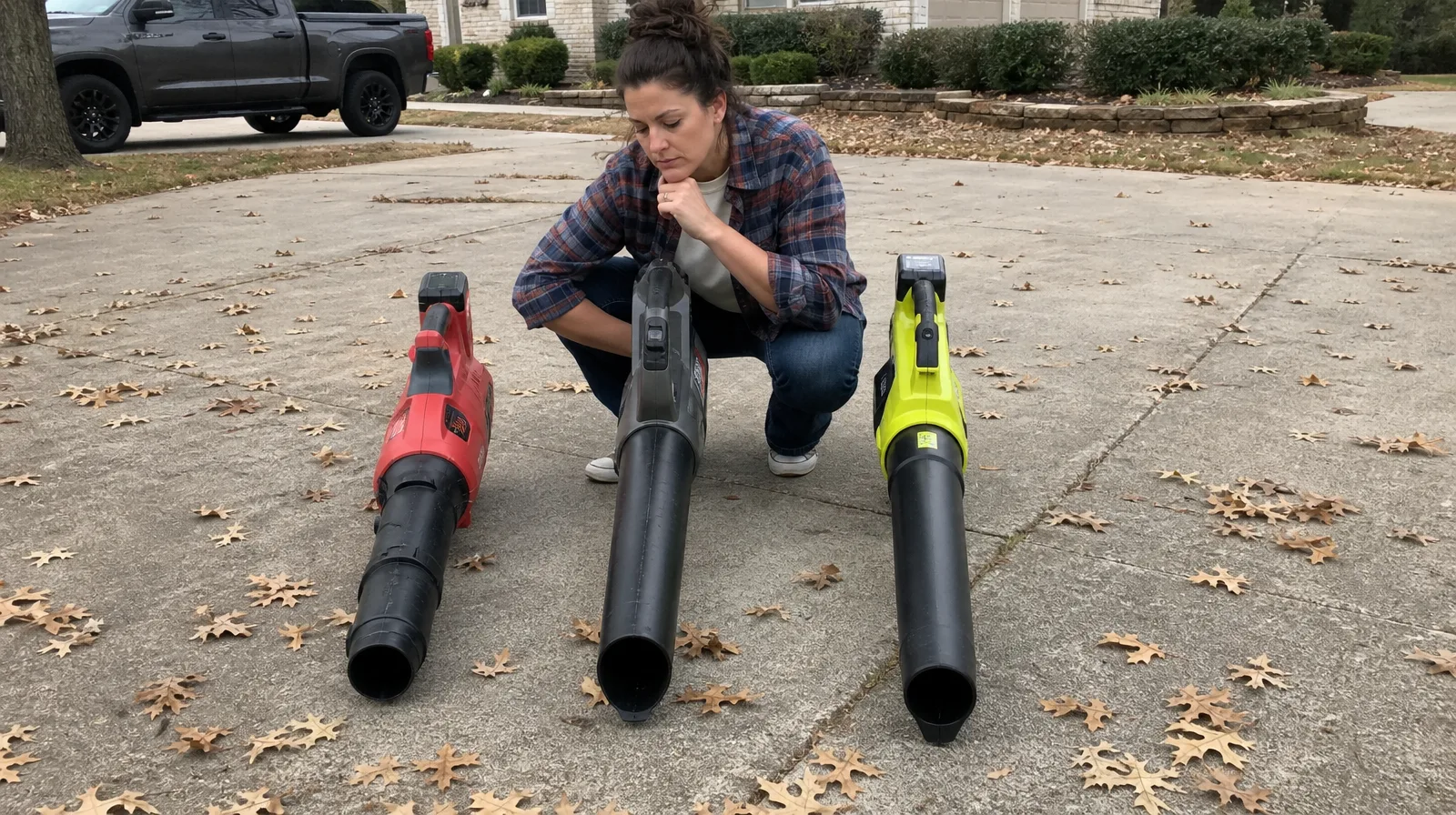
Worx, Black plus Decker, Ryobi and EGO handhelds. Roughly $60 to $120.
This is the alternative I recommend most often, and the reason is one field: CFM. Every one of these prints air volume, volts and amp-hours on the box, so you can compare two blowers side by side before money changes hands. They also take walk-in returns with a printed window, which removes the email-back-and-forth the PowerStack requires.
What you give up: usually more weight, frequently a higher price for the same clearing work, and the quiet simplicity of a direct-offer unit that does exactly one thing. If a spec sheet before you buy is non-negotiable, this class deserves your money. That trade is the whole subject of my cordless leaf blower buying guide.
Best for: anyone who wants published numbers and returns they can walk into.
2. The Cheaper Direct-Offer Units, for the Same Job on a Budget
Near-identical compact turbo blowers under other brand names. Roughly $25 to $45.
An independent review makes this point directly, noting that hardware very close to the PowerStack sells for $25 to $45 under other names. Same class, same 24V format, same compact tube, lower price. If the work is a driveway and a patio and you do not care who prints the box, this is the value answer.
What you give up: almost certainly no published spec sheet, a store with no returns page worth reading, and the accountability that comes with a brand you can complain to. You are trading the PowerStack’s documented purchase for a cheaper undocumented one. What that documented side actually covers, from the Stripe checkout to the returns page, I worked through line by line in is PowerStack legit.
Best for: buyers who are confident about the job and want the lowest entry price.
3. A Bigger Battery Format, for Longer Sessions
Any blower that shares a battery range you already own. Price varies by kit.
The PowerStack ships a dedicated 24V pack that fits nothing else, so every session ends with a sit-and-recharge cycle. A blower that joins your existing drill-and-saw battery range fixes two problems at once: you skip buying a second pack and charger, and a spare pack turns the recharge wait into a swap.
What you give up: possibly weight, possibly the extreme lightness that makes the PowerStack pleasant for overhead gutter work. Cross-compatible systems are rarely the lightest option in the class.
Best for: anyone who already owns cordless tools, and anyone who knows they want continuous runtime.
4. A Backpack Electric, for Half an Acre and Up
Backpack-format cordless blowers with real air volume. Roughly $150 and up.
If your property is half an acre or more under mature trees, no handheld is the right tool and the honest advice is to skip this class entirely. A backpack format moves materially more air, keeps the weight on your shoulders rather than your wrist, and refuels by swapping a pack instead of stopping.
What you give up: everything the PowerStack is good at. It is heavy, it is overkill for a driveway, and you will not carry it up a ladder for gutters. This is a different tool for a different property.
Best for: large properties, deep drifts, and anyone who found a handheld disappointing in week one.
5. Gas, for Acreage and Wet Heavy Work
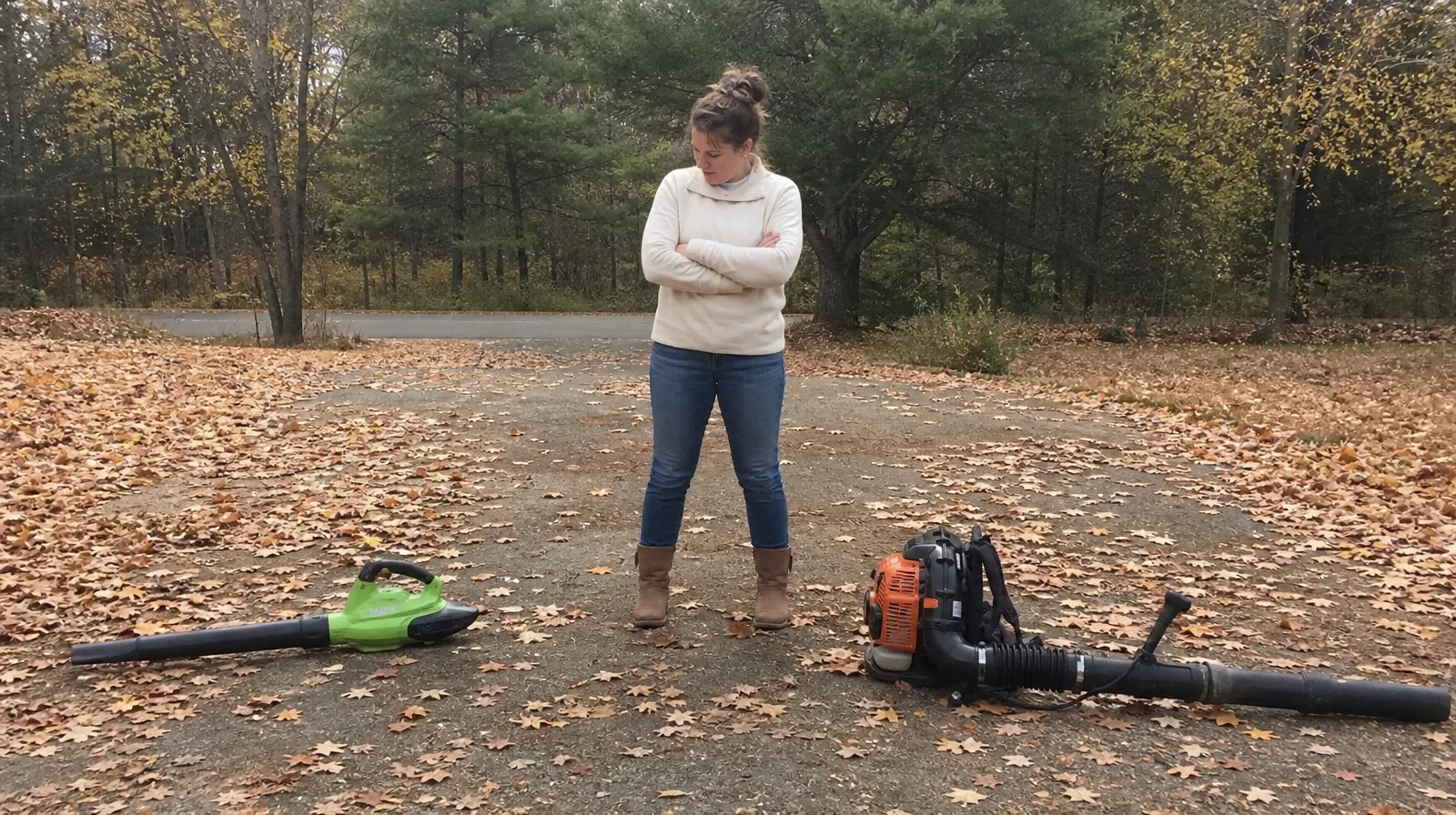
A 2-stroke handheld or backpack gas blower. Roughly $100 and up, plus fuel.
Gasoline carries far more energy per pound than any lithium pack, and that converts into more air moved for longer without a recharge cycle. On deep drifts and semi-dry heavy material it wins, and on a large property the thirty-second refill beats an hour of charging.
What you give up is nearly everything else: 8 to 12 lb of weight, engine scream, fuel mixing, pull starts, winterizing, and a social license to run it on a Sunday morning. California has banned the sale of new gas-powered leaf blowers outright, and the noise argument alone decides it in close neighborhoods. The full breakdown is in my electric vs gas leaf blower comparison.
Best for: half an acre or more of heavy tree cover, and commercial routes.
And the Free Alternative
A rake plus tarp, which is free, silent, excellent exercise, and genuinely the best tool for soaked mats, tight corners and garden beds where air scatters mulch. It also takes roughly three times as long on a driveway, which is what nine raked sessions taught me before I switched. Keep the rake for the wet leftovers either way; every blower class shares that limit.
Which One to Pick
If your answer is dry leaves on hard surfaces, a driveway, a patio and a garage floor, and you want something light enough for one hand and quiet enough for a Sunday morning, the PowerStack remains a sound pick and my three-week review shows exactly what it did.
If your answer is published specs, walk-in returns or a battery that fits other tools, pick the hardware-store class in number one and do not look back. If your answer is wet mats, deep drifts or real acreage, skip all of this and buy the tool the job deserves.
My best cordless leaf blowers roundup ranks the whole field in one place if you would rather see a shortlist than compare trades one at a time.
Whichever trade you take, the habit that matters most is the same one: clear leaves dry, the afternoon they fall, and keep the rake for the wet leftovers.
Common Questions & Answers
Q: What is the closest alternative to the PowerStack Leaf Blower?
For the same compact hard-surface job, a hardware-store handheld in the 250 to 450 CFM range is the closest match, and it fixes the PowerStack's biggest weakness by publishing a verified airflow figure. For a direct-offer equivalent at a lower price, near-identical compact turbo blowers sell for roughly $25 to $45 under other brand names. Choose the hardware-store option if you want published specs and walk-in returns, and the direct-offer class if price and quiet lead.
Q: Is there a cheaper alternative that works as well?
On dry leaves on hard surfaces, yes. An independent review notes that near-identical compact turbo blowers sell for roughly $25 to $45 under other names, and they move the same air for the same small jobs. What you give up is the published store, the returns page and the spec sheet that marks its own gaps. If all you need is a driveway cleared, the cheaper class does the work. If you want a documented purchase, the premium buys that.
Q: Which alternative publishes real CFM figures?
Every major hardware-store brand does. Worx, Black plus Decker, Ryobi and EGO all print CFM, volts and amp-hours on the box and on the product page, which lets you compare two blowers side by side before buying. That is the single biggest reason to choose them over direct-offer units, and it is the reason I recommend that class to anyone who wants a spec sheet before handing over money.
Q: Should I pick an alternative with a swappable battery?
If you already own cordless tools, yes, and it is worth a spec compromise. A blower that joins an existing battery range saves you buying a second pack and charger, and it turns the sit-and-recharge cycle into a swap if you buy a spare. The PowerStack uses a dedicated 24V pack that fits nothing else, which is fine if this is your only cordless tool and a real limitation if it is not.
Q: Is a gas leaf blower a sensible alternative?
Only for half an acre or more of heavy tree cover, wet heavy work, or commercial routes. Gas moves more air and refuels in seconds, and on deep drifts that advantage is real. For a driveway, a patio and a garage floor you would be buying weight, noise, fumes, fuel mixing and winterizing in exchange for power you never need. The full argument is in my electric vs gas leaf blower comparison.
Q: What about just using a rake?
For soaked mats and tight corners, a rake genuinely wins and it is free. For a driveway covered in dry oak leaves it takes roughly three times as long, and my nine raked sessions last fall were enough to convert me. The correct division of labor most owners land on is a blower for dry hard surfaces and a rake for the wet leftovers and the garden beds where air scatters mulch.
Q: Which alternative is best for gutters?
Any blower under 3 lb with the battery fitted, because overhead work punishes weight harder than anything else. The PowerStack sits at 2.1 lb with the pack, which is why I could hold it through a 30-foot gutter run without shoulder ache. Heavier units with more airflow are worse tools for that specific job, so if gutters are the main reason you are buying, weight should lead your decision rather than CFM.
Q: Do the alternatives have better return policies?
Hardware-store models usually do. Walk-in returns with a printed window are easier to use than an email-based case-by-case process where you have to ask for the number of days. If easy returns matter to you, that alone justifies choosing a hardware-store brand over a direct-offer unit, and it is the first thing I tell readers who are deciding between the two classes.
Q: Is the PowerStack still worth buying at all?
For dry leaves on hard surfaces, yes, and I rated it 8.1 out of 10 after three weeks of testing. It clears a full driveway in one session, weighs 2.1 lb with the battery, and is quiet enough for Sunday mornings. The deductions are missing airflow specs, a price at the top of its mini class, and returns you have to arrange by email. If those three bother you, choose one of the alternatives here instead.
Q: How do I choose between these alternatives?
Run the same five checks in order: what surfaces you clear, whether a CFM figure is published, real full-trigger runtime rather than the advertised figure, weight with the battery fitted, and whether the battery fits tools you already own. Those five questions narrow the field fast, and I wrote the full checklist with the numbers I use in my cordless leaf blower buying guide.
More Smart Home Articles
Related Product Reviews


Smart home enthusiast and IoT specialist. Has automated over 50 homes across different ecosystems. Former smart home consultant for Google Nest and Amazon Alexa. Passionate about making technology accessible.