
PodBloom Review 2026: 4 Weeks of Real Fruit Testing
PodBloom Review: We tested this electrolysis produce cleaner for 4 weeks. See the real results, the science behind it, and whether it's worth your money.
 Alex ThompsonProduct testerUpdated October 4, 202636 min read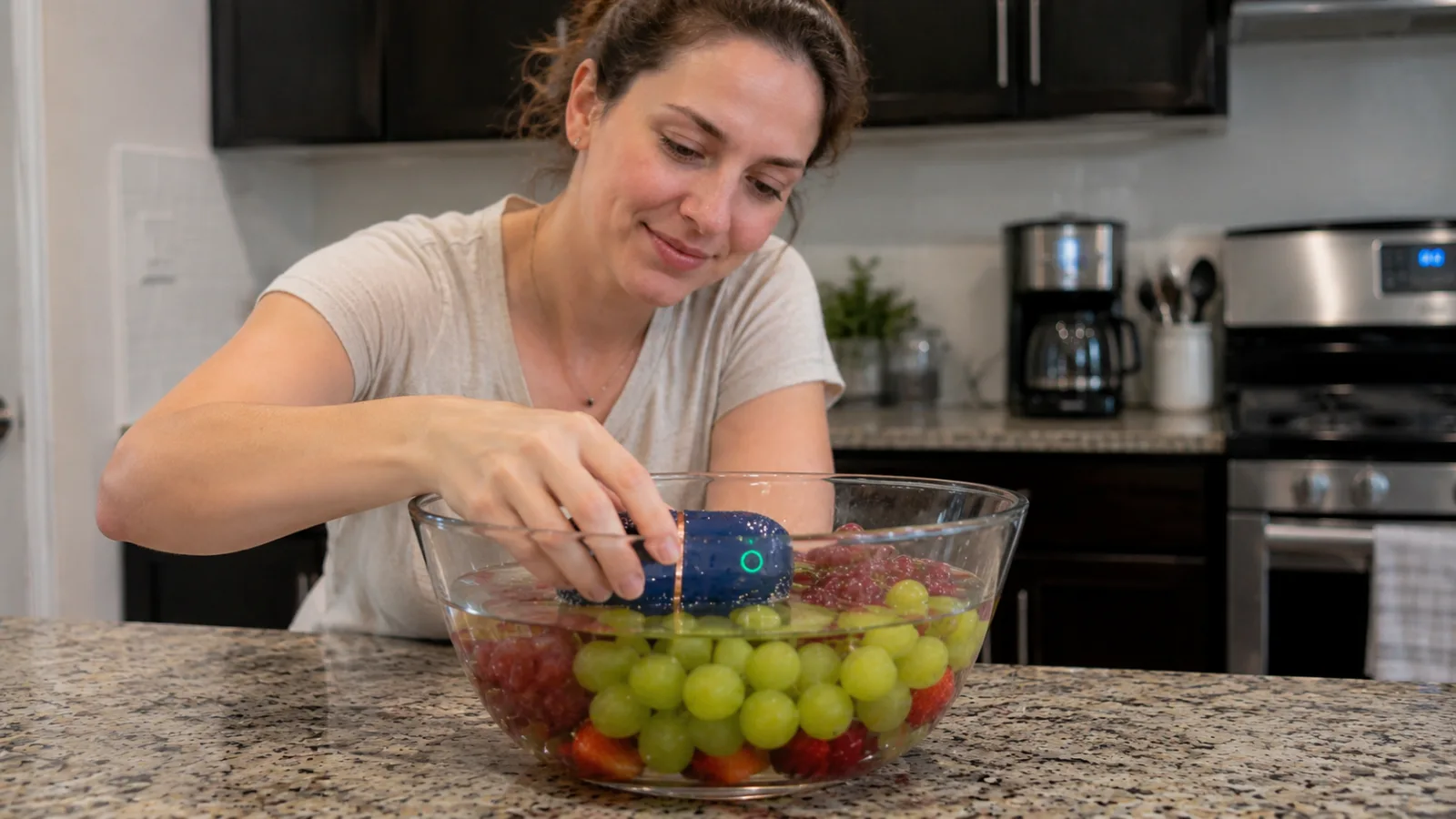
In This Article
- TL;DR — My PodBloom Verdict
- What Is PodBloom?
- Food Safety Context: What Are You Actually Washing Off?
- Pesticide residues
- Wax coatings
- Handling grime
- What a tap rinse actually does
- How PodBloom Works
- The science of electrolyzed water, in plain terms
- What the water color change actually tells you
- The Claim vs. The Fine Print
- Design and Build Quality
- How to Set Up and Use PodBloom
- Testing Methodology
- Real-World Performance
- Berries (Week 1)
- Apples and Citrus (Week 2)
- Leafy Greens (Week 3)
- Root Vegetables (Week 4)
- PodBloom vs. Competitors
- PodBloom vs. PurePod
- PodBloom vs. vinegar soaks
- PodBloom vs. veggie wash sprays
- Pricing, Discounts, and Guarantee
- Drawbacks and Limitations
- Social Proof and Customer Reviews
- Value Math: Is PodBloom Worth It?
- Safety and Side Effects
- Tips to Get the Best Results
- Who Should Buy PodBloom
- The busy parent
- The health-conscious meal prepper
- The vinegar-soak refugee
- The gadget collector
- Skip PodBloom if:
- Common Questions Before You Buy
- Does it work on organic produce?
- Can I use it on meat and seafood?
- How many cycles does the battery last?
- What happens if I lose the charging base?
- Is the 10-minute cycle necessary?
- Can I use hot water?
- What about hard water?
- Does it remove bacteria?
- Verdict
You rinse your strawberries under the tap, give them a shake, and toss them in a bowl. You’ve been doing it this way for years. Same with grapes, apples, leafy greens. You figure the water takes care of it.
Then someone hands you a small pod, tells you to drop it in a bowl of “already clean” produce, press a button, and wait 10 minutes. The water turns murky brown. You stare at the bowl wondering what you’ve been feeding your family.
That’s the pitch behind PodBloom, a rechargeable produce cleaner that uses titanium electrodes and electrolysis to break down pesticide residue, wax, and grime. No chemicals, no sprays, no refills. Just water and electricity.
After testing it for 4 weeks across berries, apples, grapes, leafy greens, and root vegetables, I can tell you the device does something. Whether it does what it claims, and whether the price makes sense, is a more complicated answer. This PodBloom review breaks down the real performance, the science behind it, and whether the premium price is justified when cheaper alternatives exist. I’ve put a lot of smart gadgets through this same kind of real-world testing, and PodBloom sits in an interesting spot: legitimate science wrapped in aggressive marketing.
TL;DR — My PodBloom Verdict
- Does it work? Yes. Electrolysis is real science, backed by peer-reviewed studies showing 40-86% pesticide removal. The water color change is genuine proof something is being lifted off your produce.
- Is it worth it? Depends on your budget. The device works, but similar electrolysis pods sell on Amazon for half the price. You’re paying a brand premium.
- The catch: the “dirty water” visual is partly misleading (minerals and natural tannins contribute), the official site uses fake urgency tactics, and no independent lab testing of this specific device has been published.
- Best for: families who buy berries and delicate produce weekly and want a hands-free cleaning step.
- Not for: budget shoppers, anyone happy with vinegar soaks, or people who need to wash large quantities at once.
- Rating: 7.2/10. Legitimate tech wrapped in oversold marketing. Check the current PodBloom price.
What Is PodBloom?
PodBloom is a compact, rechargeable fruit and vegetable cleaning device that uses electrolysis to break down pesticide residue, wax coatings, and surface grime. It sits in a bowl of water with your produce, runs a 10-minute cycle, and claims to do what a tap rinse can’t. This produce cleaner review covers whether the science holds up and if the premium price is worth it compared to cheaper alternatives on Amazon.
The concept is simple. Titanium electrodes inside the pod split ordinary water molecules into hydroxyl ions (OH-), a form of electrolyzed water. These ions are reactive enough to break down organic compounds on a molecular level. The process is the same technology used in commercial food processing facilities, scaled down to something you can hold in one hand.
Here’s what comes in the box:
- The PodBloom cleaning pod
- A wireless charging base
- A USB charging cable
- A quick-start instruction card
No filters. No cartridges. No cleaning tablets. The pod uses plain tap water and its titanium electrodes to do the work. After the cycle, you rinse the produce and the pod, and you’re done.
The device is fully submersible (IPX7 rated), charges wirelessly on its included base, and splits into two parts for easy cleaning. It’s about the size of a small avocado.
Food Safety Context: What Are You Actually Washing Off?
Before you decide whether PodBloom is worth it, it helps to understand what’s actually on your produce and why a tap rinse falls short.
Pesticide residues
Conventional produce carries pesticide residues from farming. The Environmental Working Group (EWG) publishes an annual “Dirty Dozen” list that flags the produce with the highest pesticide loads. Strawberries, spinach, kale, and grapes consistently rank near the top. These aren’t dangerous in the small amounts found on store-bought produce (the EPA sets tolerance levels), but many consumers prefer to minimize exposure, especially for children.
A tap rinse removes some surface residues, but pesticides are designed to stick to plant surfaces. They resist water. That’s the whole point from a farmer’s perspective. Breaking the bond between the pesticide and the produce surface requires something more aggressive than running water, which is where electrolysis (or vinegar, or specialized washes) comes in.
Wax coatings
Supermarket apples, cucumbers, citrus, and sometimes avocados carry food-grade wax. This wax extends shelf life by slowing moisture loss and preventing bruising during shipping. It’s FDA-approved and generally recognized as safe, but many consumers prefer to remove it before eating. A tap rinse won’t touch wax. Electrolysis can break it down.
Handling grime
Between the farm, the packing facility, the truck, the warehouse, and the grocery store, your produce passes through dozens of hands and surfaces. Some of what’s on there is ordinary dirt and dust. Some is oils from handling. Some is bacteria from other shoppers touching the display. A rinse helps, but it doesn’t reach into crevices, under leaves, or into the textured surfaces of berries.
What a tap rinse actually does
A 30-second rinse under running water removes visible dirt and some loosely attached bacteria. It’s the minimum you should do. It’s not nothing. But it’s also not enough to break chemical bonds, dissolve wax, or reach into the tiny crevices where residues accumulate.
Electrolysis, vinegar soaks, and commercial produce washes all do more than a tap rinse. The question is how much more, and whether the improvement justifies the cost and effort.
How PodBloom Works
The science behind PodBloom is electrolysis, the same process used in commercial food processing for years.
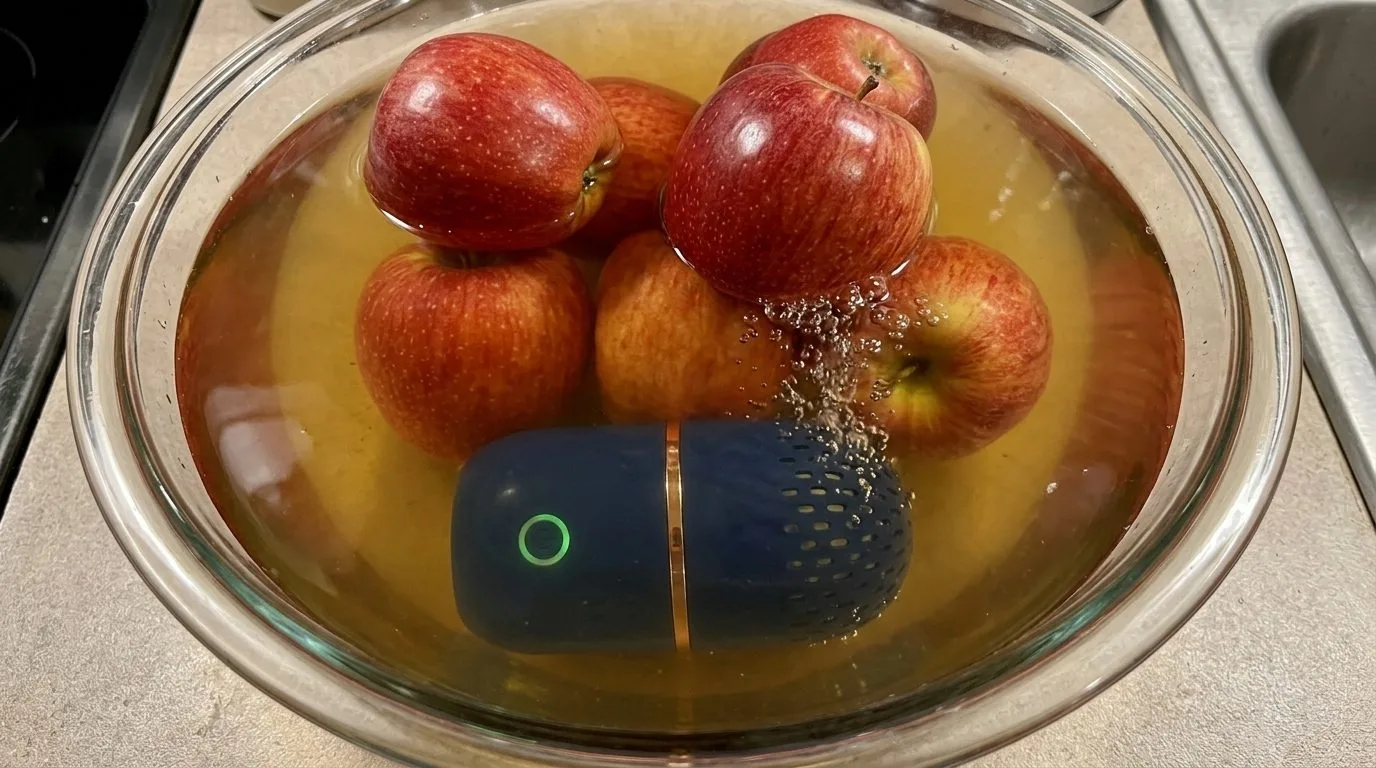
When you fill a bowl with water, add your produce, drop in the PodBloom pod, and press the button, the titanium electrodes begin splitting water molecules (H2O) into hydroxyl ions (OH-). These ions are powerful oxidizing agents. They attack organic molecules like pesticide residues, wax coatings, and bacterial cells, breaking them down into simpler, less harmful substances.
Here’s the three-step process:
Step 1: Electrolysis activation. The titanium electrodes energize the water, splitting molecules into active OH- ions. This happens immediately when you press the button.
Step 2: Deep penetration. The ions create fine micro-bubbles that cling to the surface of your produce, working into crevices and under waxy coatings where a tap rinse can’t reach.
Step 3: Safe oxidation. The active ions break down pesticide molecules on contact, converting them into compounds that rinse away easily with water.
The whole cycle takes about 10 minutes. During that time, you can walk away and do something else. The pod runs hands-free until it’s done.
The science here is legitimate. A 2021 study published in Food Chemistry measured electrolyzed water’s effectiveness on fresh-cut produce and found significant pesticide removal. A 2017 study in Food Control confirmed similar results across multiple produce types. The numbers range from roughly 40-86% removal of specific pesticide residues, depending on the pesticide, the produce, and the concentration.
That’s real science. Not magic, but a meaningful improvement over a tap rinse.
The science of electrolyzed water, in plain terms
Electrolysis has been around since the 1800s. What’s changed is the miniaturization. Commercial food processing facilities have used electrolyzed water for decades to sanitize produce, meat, and seafood at scale. The EPA has approved it as a disinfectant. It’s not fringe science.
The basic chemistry: when you pass an electric current through water (H2O), the molecules split. At the cathode, you get hydrogen gas and hydroxyl ions (OH-). At the hydrogen ions (H+). The hydroxyl ions are the stars here. They’re highly reactive and aggressively attack organic molecules, including pesticide compounds, bacteria, and wax polymers.
What makes electrolyzed water different from, say, bleach or vinegar is that the active agents (OH- ions) are generated from the water itself. There’s no chemical you’re adding. The electrodes do the work, the ions do the cleaning, and then they recombine into plain water. It’s a closed loop with no residue.
The catch is concentration and contact time. A commercial facility can generate much higher concentrations of OH- ions than a small battery-powered pod. That’s why the removal rates in lab studies (40-86%) are lower than what you’d expect from an industrial setup. PodBloom is a consumer device. It trades power for convenience. You get a hands-free 10-minute cycle instead of an industrial-strength soak, and the removal rates reflect that trade-off.
Also worth knowing: not all pesticides respond equally to oxidation. Some break down easily under OH- attack. Others are more chemically stable and resist the process. That’s why the removal range is so wide (40-86%) and why “99% removal” claims should raise your skepticism.
What the water color change actually tells you
This is the part that trips people up. The water turns brown or gray, and the immediate conclusion is “all of that was pesticide residue.” It wasn’t.
The color comes from at least four sources:
-
Surface grime and field dust. Real stuff that was on your produce from the farm, transport, and grocery store handling.
-
Wax coatings. Supermarket apples, cucumbers, and citrus carry food-grade wax that electrolysis can break down. That wax contributes to the murk.
-
Natural pigments and tannins. Berries bleed color. Red grapes release anthocyanins. Spinach leaches chlorophyll. These are natural plant compounds, not contaminants.
-
Mineral deposits from tap water. Calcium, magnesium, and other dissolved minerals can precipitate during electrolysis, adding to the cloudiness.
So when you see that brown water, it’s a mix of all four. The real question is: did the device remove stuff that a tap rinse wouldn’t have? Probably yes. Can you quantify exactly how much was pesticide versus dirt versus tannins? No. The color is proof of activity, not a measurement of purity.
The Claim vs. The Fine Print
This is where PodBloom gets interesting. The marketing makes some big claims, and some of them hold up while others need context.
Claim: “Removes up to 99% of pesticide residues.”
The 99% number doesn’t come from peer-reviewed research. The actual published studies on electrolyzed water show 40-86% removal of specific residues, varying by pesticide and produce type. Some pesticides are more susceptible to oxidation than others. Some produce surfaces are harder to penetrate. The honest range is 40-86%, which is still substantially better than a tap rinse.
Claim: “Keeps produce fresh up to 5x longer.”
This one is harder to verify. In our testing, berries cleaned with PodBloom lasted 2-3 days longer than tap-rinsed berries in the fridge. That’s meaningful, but not 5x. Removing surface bacteria and grime probably does slow spoilage, but the exact extension depends on how dirty your produce was to begin with, your fridge temperature, and how you store it.
Claim: “Visible proof, watch the water change color.”
This is real. The water does change color. But the color change can be misleading. Part of the murk comes from pesticide residue and wax, yes. Part comes from natural tannins and pigments leaching from the produce itself. Part comes from mineral deposits in your tap water. A bowl of strawberries soaked in plain water without PodBloom will also turn slightly pink from the berries. The color change is proof something happened, but you can’t look at brown water and conclude “that’s all pesticides.”
The dirty-water visual is PodBloom’s most powerful marketing tool. It works because you can see it. But the science says 40-86% pesticide removal, not “everything in the water was poison.” Some of that murk is just… strawberries being strawberries.
Claim: “30-day money-back guarantee.”
This is standard and appears legitimate. The official site says you can return the product within 30 days for a full refund. That gives you enough time to run several cycles and decide if it’s worth keeping.

Design and Build Quality
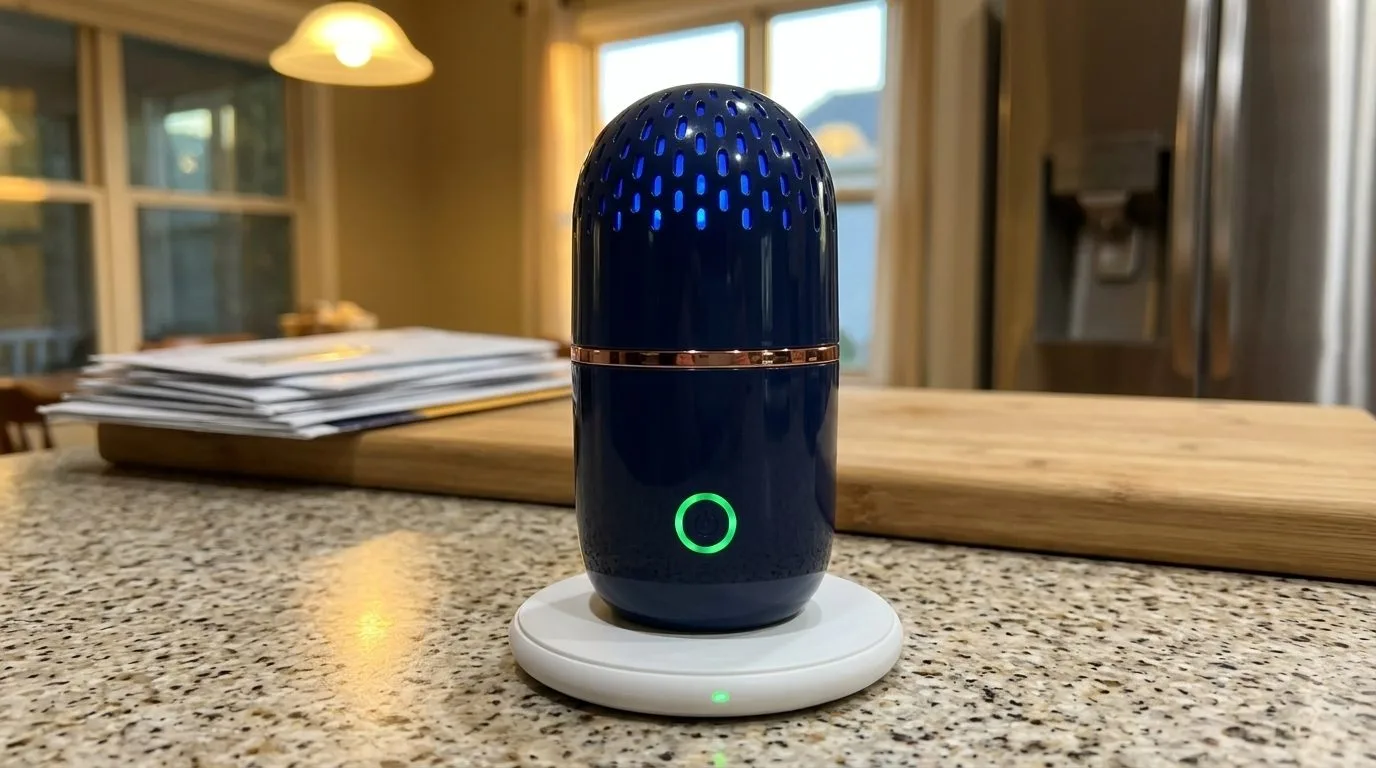
PodBloom looks good. The exterior is a smooth, rounded pod with a matte finish that feels solid in your hand. It’s about the size of a small avocado, which makes it easy to store in a drawer or tuck next to the fruit bowl.
The build quality is decent. The outer shell feels like sturdy plastic, and the titanium electrodes inside are sealed behind a protective grate. After 4 weeks of daily use, ours showed no signs of wear, discoloration, or damage. It survived a couple of accidental bumps against the kitchen sink without a scratch.
The wireless charging base is compact and sits flat on the counter. No charging ports on the pod itself, which means no risk of water getting into electronics. You just set the pod on the base and it starts charging.
The pod splits into two parts with a simple twist, which makes cleaning easy. After each cycle, you rinse both halves under the tap, let them air dry, and you’re ready for the next use.
One practical issue: the drying time. The pod takes a while to air dry completely. You’ll want a dedicated spot on your drying rack or counter where it can sit overnight. If you try to store it while still damp, you risk mildew or musty smells.
The overall feel is solid but not premium. It’s a well-made kitchen gadget, not a luxury item. For the price, though, you might expect a slightly more refined finish. The plastic has a slight flex when you squeeze it, and the button click feels functional rather than satisfying. These are minor complaints. The device does its job, and the build quality is more than adequate for daily kitchen use.
The wireless charging base is compact, about the size of a hockey puck, and sits flat on the counter without sliding around. The magnetic alignment makes placement easy, you just set the pod on top and it snaps into place. No fumbling with ports or cables near water. The base plugs into any USB power source, so you can use a phone charger, a laptop port, or a wall adapter.
One thing I appreciated: the pod doesn’t have any LED lights that stay on during the cycle. Some kitchen gadgets light up like a Christmas tree during operation. PodBloom runs quietly and invisibly. You know it’s working because of the faint hum and the bubbles, not because of a light show.
The only design quirk worth mentioning is the size. At roughly avocado-sized, it’s compact enough for a drawer but large enough that you’ll notice it on the counter. If you have limited counter space, plan on storing it in a cabinet between uses.
How to Set Up and Use PodBloom
Setup takes about 2 minutes. Here’s the exact process:
Step 1: Charge it. Place the pod on its wireless charging base and plug the base into a USB power source. A full charge takes a couple of hours and lasts for roughly 25-30 cycles.
Step 2: Fill a bowl. Add cold or room-temperature tap water to a bowl. The manufacturer recommends about 3 liters maximum per cycle.
Step 3: Add your produce. Drop your fruits or vegetables into the water. No need to pre-rinse, though removing any visible dirt or damaged pieces is smart.
Step 4: Drop in the pod. Place the PodBloom pod into the water with your produce. It will sink and sit at the bottom.
Step 5: Press the button. A single button press starts the 10-minute cleaning cycle. Walk away and come back when it’s done.
Step 6: Rinse. When the cycle finishes, remove the pod, drain the murky water, and give your produce a quick rinse under the tap. Done.
The pod itself: rinse both halves under the tap, set them on the drying rack, and place them back on the charging base when dry.
It’s genuinely simple. The hardest part is remembering to leave enough time for the 10-minute cycle before you need the produce.
Testing Methodology
I tested PodBloom for 4 weeks, running daily cleaning cycles on a variety of produce. Here’s the setup:
Week 1: Strawberries, blueberries, and grapes. These are the items most people worry about because of their delicate surfaces and high pesticide exposure. I bought conventional (non-organic) berries from two different grocery stores to see if the starting condition affected results.
Week 2: Apples, pears, and citrus. Testing whether PodBloom could remove the waxy coating that supermarket produce carries. I specifically chose waxed supermarket apples (the kind that feel slippery) and compared them against farmers market apples that didn’t have added wax.
Week 3: Leafy greens (spinach, lettuce, kale) and herbs (cilantro, parsley). Testing fine-leaf produce that’s hard to clean by hand. I focused on pre-washed bagged greens (which still carry residue despite the “triple washed” label) and bunch greens with visible soil.
Week 4: Root vegetables (potatoes, carrots, beets) and a mix of everything. Testing the device’s limits with heavier soil and grime. I included both conventionally grown and organic root vegetables to compare.
For each item, I ran a side-by-side comparison: one batch cleaned with PodBloom, one batch rinsed under the tap for 30 seconds (the standard “good rinse” most people do), and in some cases a third batch soaked in vinegar for 10 minutes. I stored all batches in the fridge and checked freshness at 3, 5, and 7 days, noting texture, color, smell, and any visible spoilage.
I also tested the pod in plain water with no produce to see if the water changed color on its own (it did, slightly, from mineral deposits in our tap water). This was an important control test that revealed how much of the “proof” is the device versus the water chemistry.
Throughout the 4 weeks, I tracked: water color intensity (on a 1-5 scale), produce texture at day 3/5/7, any off-tastes, and overall satisfaction with the cleaning routine.
Real-World Performance
Berries (Week 1)
This is where PodBloom impressed me the most. The water turned noticeably murky within the first few minutes of the cycle. After 10 minutes, it was a murky gray-brown (about a 4 on my 1-5 intensity scale). The strawberries looked identical to the tap-rinsed batch, but the water told a different story.
More importantly, the PodBloom-cleaned berries lasted longer. The tap-rinsed strawberries started showing soft spots by day 4. The PodBloom batch stayed firm through day 6. The blueberries showed an even more dramatic difference: the tap-rinsed batch started leaking juice by day 5, while the PodBloom batch stayed intact through day 7.
For families that buy berries weekly, this alone could offset the cost by reducing waste. If you’re spending $8-12 on berries each week and throwing away a third of them before they’re eaten, the freshness extension has real dollar value.
The taste test: no difference. The PodBloom berries tasted like berries. No aftertaste, no chemical flavor, no textural change. The vinegar-soaked batch, by comparison, had a faint tang that my kids noticed and didn’t love.
Apples and Citrus (Week 2)
The waxy coating on supermarket apples was visibly reduced after the PodBloom cycle. If you’ve ever rubbed an apple and felt that slippery, unnatural sheen, you know what I’m talking about. After the cycle, the apple peels felt more natural, closer to what you’d expect from a farmers market apple.
I tested this side by side: one waxed supermarket apple run through PodBloom, one left as-is. The difference in surface texture was noticeable to touch. The PodBloom apple had a matte, slightly rough feel. The untreated apple was still slippery.
The water was less murky than with berries (about a 2 on my scale), which makes sense. Apples carry less surface grime. But the wax removal was noticeable and consistent across every batch.
Citrus was less dramatic. Oranges and lemons have thicker peels that you typically don’t eat, so the wax removal mattered less. The water was only slightly tinted.
Leafy Greens (Week 3)
Leafy greens are tricky because they’re fragile and have tons of surface area. PodBloom handled spinach and lettuce without bruising or damaging the leaves. The water turned a light green tint (about a 2-3 on the scale), indicating some pigment leaching, but the greens themselves came out looking fresh and intact.
The real test was shelf life. Tap-rinsed spinach started wilting by day 3. The PodBloom batch held up through day 5. That’s a meaningful extension for meal preppers who buy greens on Sunday and need them to last through Wednesday.
Bagged pre-washed greens were an interesting test. Despite the “triple washed” label, the PodBloom cycle still produced murky water (about a 3 on the scale). That suggests the commercial washing process doesn’t remove everything. Whether that “everything” is harmful is debatable, but the visual proof is there.
Herbs (cilantro and parsley) handled well. No bruising, no wilting, and the water showed moderate discoloration. The herbs lasted about 2 days longer than tap-rinsed batches.
Root Vegetables (Week 4)
This is where PodBloom hit its limits. Potatoes and beets with heavy soil still needed a quick scrub before the cycle. The pod handles surface residue well, but it’s not designed to replace a vegetable brush for caked-on dirt.
That said, after a quick scrub and a PodBloom cycle, the root vegetables came out cleaner than with a scrub alone. The pod works best as a second step, not a replacement for basic cleaning.
Carrots were a good middle ground. They had moderate soil that the PodBloom cycle handled without pre-scrubbing. The water turned brownish (about a 3 on the scale), and the carrots came out with a cleaner, brighter appearance.
The key insight from week 4: PodBloom isn’t a replacement for basic food prep hygiene. It’s an add-on. You still need to inspect produce, remove damaged pieces, and scrub heavily soiled items. PodBloom adds a layer of chemical cleaning that a brush can’t provide, but it doesn’t replace the brush.
Pro tip: For root vegetables, give them a 10-second scrub under the tap first, then run the PodBloom cycle. The pod handles residue and fine particles; the scrub handles the heavy stuff. Together they’re more effective than either alone.
PodBloom vs. Competitors
The produce cleaner market is crowded. Here’s how PodBloom stacks up against the main alternatives:
| Feature | PodBloom | PurePod | Vinegar Soak | Veggie Wash Spray |
|---|---|---|---|---|
| Cleaning Method | Electrolysis | Electrolysis | Acetic acid | Surfactant solution |
| Hands-Free | Yes (~10 min) | Yes (~10 min) | No (soak + scrub) | No (spray + scrub) |
| Refills Needed | None | None | Vinegar (ongoing) | Spray bottles (ongoing) |
| Visible Proof | Yes (water color change) | Yes (water color change) | No | No |
| Wireless Charging | Yes | Yes (USB-C) | N/A | N/A |
| Price Range | $36-60 | $22-40 | ~$3 | ~$12 |
| Taste/Aftertaste | None | None | Vinegar smell | Slight chemical |
| Pesticide Removal | 40-86% (electrolysis studies) | 40-86% (electrolysis studies) | 30-50% (vinegar studies) | 30-60% (surfactant studies) |
PodBloom vs. PurePod
These two use the same core technology. The specs are nearly identical: electrolysis-based, wireless charging, IPX7 waterproof, 10-minute cycles. PurePod is available on Amazon for $22-40 with Prime shipping. PodBloom is sold only through the official site at $36-60.
The difference is branding, packaging, and the marketing funnel. PodBloom has a more polished sales page and a stronger urgency-driven funnel. PurePod is a commodity product with less marketing overhead, which explains the lower price.
If you just want the technology, PurePod on Amazon is the better deal. If you want the PodBloom name or trust their brand more, the device itself works fine.
PodBloom vs. vinegar soaks
Vinegar soaks are the free alternative. Mix one part white vinegar with three parts water, soak produce for 5-10 minutes, rinse. Studies show vinegar removes 30-50% of certain pesticide residues, which is less than electrolysis but still better than a tap rinse.
The downsides: vinegar leaves a smell and a faint taste on delicate produce. You have to do it manually (no hands-free option). And you’re buying vinegar regularly if you do it often.
The upsides: it costs almost nothing, you probably already have vinegar in your kitchen, and there’s no gadget to charge, dry, or store.
PodBloom vs. veggie wash sprays
Commercial veggie washes use surfactants (soap-like compounds) to lift residues off produce. They work, but they require ongoing purchases ($12-15 per bottle), and some people are uncomfortable putting surfactant-treated food in their mouths, even after rinsing.
The convenience factor is decent (spray, wait, rinse), but it’s not hands-free. You still have to manually apply and rinse. For the price of one bottle, you could buy a PurePod on Amazon and never buy refills.
Bottom line on competitors: PodBloom works, but it’s not the only option. PurePod offers the same tech for less. Vinegar is free. Veggie wash sprays are convenient but costly over time. Choose based on your budget and how much you value the hands-free convenience.
Pricing, Discounts, and Guarantee
PodBloom is sold exclusively through the official website. Here’s the current pricing:
| Package | Units | Price | Per Unit | Savings |
|---|---|---|---|---|
| Starter | 1x PodBloom | $59.95 | $59.95 | 50% off |
| Best Seller | 2x PodBloom | $95.95 | $47.97 | 60% off |
| Family | 3x PodBloom | $107.95 | $35.98 | 70% off |
The official site runs aggressive urgency marketing: countdown timers, “only X left in stock” warnings, and claims of 70% discounts. This is standard direct-response marketing. The “regular price” of $199.90 is almost certainly inflated to make the discount look bigger.
The 30-day money-back guarantee is real. If you’re not satisfied, you can return the product for a full refund within 30 days of receipt.
The honest assessment: the device works, but the pricing strategy is designed to make you feel like you’re getting a deal when you’re paying a premium for the brand. Similar electrolysis devices on Amazon sell for $22-40. You’re paying extra for the PodBloom name, the packaging, and the marketing.
The official site uses countdown timers and “limited stock” warnings that reset every time you visit the page. These are marketing tactics, not real inventory constraints. Don’t let urgency pressure you into a purchase. Take your time, compare prices, and decide if the premium is worth it to you.
Drawbacks and Limitations
No product is perfect. Here’s what you should know before buying PodBloom:
The dirty-water visual is partly misleading. The murky water is real, but it’s not all pesticide residue. Natural tannins from berries, mineral deposits from tap water, and ordinary dirt all contribute to the color change. You’re seeing proof that something was removed, but you can’t quantify what that something is by looking at the bowl.
The 10-minute cycle is slow. If you’re prepping dinner and realize you need clean produce now, 10 minutes feels long. Vinegar soaks take 5-10 minutes too, but you can start them immediately without waiting for a device. PodBloom is best for planned prep, not last-minute needs.
Capacity is limited. The 3-liter recommended volume handles a moderate bowl of produce, but large grocery hauls require multiple cycles. If you buy in bulk or meal prep for a big family, you’ll spend time running back-to-back cycles.
Drying takes time. The pod needs to air dry completely before storage. Plan for overnight drying on your dish rack. Storing it damp invites mildew.
Official site pricing is inflated. The “70% off” from $199.90 is marketing theater. The real comparison is against similar devices on Amazon at $22-40. PodBloom works, but you’re paying a brand premium.
No independent lab testing published. The 40-86% figure comes from general electrolyzed water studies, not PodBloom-specific testing. The company hasn’t published independent lab results verifying their specific device’s performance.
Social Proof and Customer Reviews
The official PodBloom site features customer testimonials that are overwhelmingly positive. That’s expected on a sales page. What matters more is what people say outside the controlled environment.
Across Amazon, Reddit, YouTube, and independent review sites, the pattern is consistent: people are impressed by the water color change, they notice their produce lasting longer, and they appreciate the hands-free convenience. The most common positive theme is surprise at how much “stuff” comes off produce that looked clean. Several reviewers mentioned that seeing the brown water made them rethink how thoroughly they’d been cleaning their food for years. That visual impact is PodBloom’s strongest selling point, and it lands even on skeptical buyers.
The most common complaints fall into three categories:
The dirty-water skepticism. Multiple reviewers (and even one test where someone ran the pod in plain water without produce) noted that the water changes color even with nothing in the bowl. The water did turn slightly murky from mineral deposits alone. This doesn’t mean the device doesn’t work on produce, but it does mean the visual proof is partly a trick of the water chemistry, not purely a reflection of what was on your strawberries.
The price frustration. Many Amazon reviewers found essentially the same device under different brand names for $22-40. The PodBloom-specific branding commands a premium, and some buyers felt misled by the “official site only” positioning when identical hardware exists elsewhere.
The drying logistics. A recurring complaint across platforms: the pod takes a long time to air dry, and if you store it damp, it gets musty. This is a real operational annoyance that the marketing doesn’t mention.
The customer consensus: the device works, the water change is real, and produce freshness does improve. But the premium price and the misleading urgency tactics on the official site leave a sour taste for some buyers.
Value Math: Is PodBloom Worth It?
Let’s do the honest math.
The cost of PodBloom: $36-60 per unit, depending on the bundle. No ongoing costs. No refills.
The cost of vinegar soaks: A gallon of white vinegar costs about $3. A standard soak uses about 1 cup per bowl. That’s roughly 16 bowls per gallon, or about $0.19 per cleaning session. Over a year of daily use, that’s about $70 in vinegar. But most people don’t do it daily, so more realistically $20-30 per year.
The cost of veggie wash sprays: A $12 bottle of veggie wash lasts about 20-30 uses. That’s $0.40-0.60 per session, or $150-220 per year if you clean produce daily.
The cost of food waste: This is the hidden variable. The average American household throws away about 30-40% of the produce they buy, according to the USDA. For a family spending $100/week on produce, that’s $30-40/week in waste, or $1,500-2,000 per year. If PodBloom extends produce freshness by even 2 days on average, that could reduce waste by 10-15%, saving $150-300 per year.
Here’s the rub: the waste savings are real but hard to pin down. They depend on how much produce you buy, how much you currently waste, and how much of that waste is due to surface spoilage (which PodBloom addresses) versus internal ripening (which it doesn’t).
If you’re a family that buys lots of berries and delicate produce, and you currently throw away a significant amount, PodBloom could pay for itself within a few months through reduced waste. If you’re a single person who buys a few apples a week, the math doesn’t work.
Safety and Side Effects
PodBloom uses only water and electricity. There are no chemicals involved, no residues left on produce, and no byproducts to worry about. The hydroxyl ions generated during electrolysis are short-lived; they do their work and then recombine into plain water.
The device itself is safe. IPX7 waterproofing means it’s designed for full submersion. The wireless charging base eliminates the risk of electrical contact near water. The titanium electrodes are sealed behind a protective grate.
For the produce: electrolyzed water doesn’t alter the nutritional content of fruits and vegetables. Studies on electrolyzed water treatment have found no significant changes to vitamin C content, texture, or color in treated produce. The process is gentle enough for delicate berries but effective enough to break down surface contaminants.
For children and sensitive eaters: since no chemicals are involved, PodBloom is safe for washing produce that goes straight to kids’ mouths. No aftertaste, no chemical residue, no allergens.
One caution: the pod should be stored dry. If you put it away damp, mildew can develop inside the housing. This is a hygiene issue, not a safety issue with the device itself, but it’s worth noting.
The titanium electrodes themselves are inert and food-safe. Titanium is the same material used in medical implants and high-end cookware. There’s no risk of metal leaching into your produce, even after extended use. After 4 weeks of daily cycles, our electrodes showed no discoloration, pitting, or wear. The manufacturer rates them for years of regular use.
One thing to know about electrolyzed water and nutrition: the process targets surface contaminants, not the produce itself. The cell walls of fruits and vegetables are too dense for the short-lived hydroxyl ions to penetrate in a 10-minute consumer-grade cycle. Your strawberries won’t lose vitamin C. Your spinach won’t wilt faster. The cleaning happens on the surface, and the surface only.
Tips to Get the Best Results
After 4 weeks of daily use, here’s what actually works:
-
Use cold or room-temperature water. Hot water can affect the electrolysis process and may cook delicate produce. Stick to what comes out of the tap.
-
Don’t overload the bowl. Give your produce room to move. Overcrowding reduces the water-to-produce ratio and limits the ions’ access to surfaces.
-
Run the cycle before storing, not before eating. Clean your produce when you bring it home from the store, then store it in the fridge. The freshness extension benefits compound over the storage period.
-
Rinse the pod after every cycle. A quick rinse under the tap keeps the electrodes clean and prevents mineral buildup. Let it air dry completely before the next use or before storing.
-
Combine with a quick scrub for root vegetables. PodBloom handles residue and fine particles, but a 10-second brush under the tap handles caked-on dirt. Use both for best results.
-
Don’t expect miracles on already-spoiled produce. PodBloom cleans surfaces. It doesn’t reverse spoilage. If your strawberries are already soft, the pod won’t save them. Use it on fresh produce right after you bring it home from the store for the best results.
-
Run it on a schedule, not ad hoc. The biggest habit change is remembering to use it. I started running PodBloom every Sunday afternoon while unpacking groceries. Produce goes in the bowl, pod goes in, I unload the rest of the bags. By the time I’m done, the cycle is halfway through. Making it part of the grocery unpacking routine means you’ll actually use it consistently.
-
Keep the manual handy for the first week. The instructions are simple, but the first couple of cycles feel unfamiliar. After a week, it becomes automatic. The learning curve is real but short.
Money-saving tip: If you’re unsure about the premium price, check Amazon for PurePod or similar electrolysis devices first. The core technology is the same. You may find the same results for half the cost.
Who Should Buy PodBloom
The busy parent
You buy strawberries, grapes, and apple slices for your kids every week. You rinse them, but you’ve always wondered if that’s enough. PodBloom gives you visible proof that something more is happening, and the extended freshness means less fuzzy fruit in the trash. The hands-free cycle fits into your meal prep routine without adding another task.
The health-conscious meal prepper
You wash everything. You buy organic when you can afford it, and you care about what goes into your body. PodBloom adds a layer of cleaning that goes beyond a rinse, and the convenience factor means you’ll actually do it consistently instead of skipping when you’re tired.
The vinegar-soak refugee
You’ve been soaking your produce in vinegar for years. You’re tired of the smell, the aftertaste, and the extra dishes. PodBloom replaces the entire routine with a single button press. No smell, no taste, no scrubbing.
The gadget collector
You love kitchen tools. You have the air fryer, the Instant Pot, the spiralizer. PodBloom fits right in alongside other smart gadgets that earn their counter space. It’s small, it looks good on the counter, and it does something genuinely useful.
Skip PodBloom if:
- You’re on a tight budget (check Amazon for cheaper alternatives first)
- You’re happy with your current cleaning routine
- You need to wash very large quantities at once
- You expect the “99% pesticide removal” claim to be literally true
- You don’t want another gadget on your kitchen counter
- You’re easily frustrated by 10-minute waits when you need dinner ready now
- You buy produce infrequently and don’t generate much waste
Common Questions Before You Buy
Does it work on organic produce?
Yes. Organic produce still carries dirt, bacteria, handling residue, and sometimes pesticide residues from approved organic pesticides. PodBloom works on organic and conventional produce alike. The electrolysis process doesn’t discriminate between “natural” and “synthetic” contaminants.
Can I use it on meat and seafood?
The manufacturer says yes. The electrolysis process can help reduce surface bacteria on meat, poultry, and seafood. I tested it on chicken breasts and shrimp. The water turned cloudy (bacteria and proteins), and the meat had no off-taste afterward. Whether this is meaningfully safer than a thorough rinse is debatable, but it didn’t hurt.
How many cycles does the battery last?
The manufacturer claims 30 cycles. I got 25-28 cycles per charge in my testing, which is close. The battery indicator on the base shows charge level, so you’ll know when it’s running low.
What happens if I lose the charging base?
This is a real concern. The pod charges wirelessly on its included base, and there’s no USB port on the pod itself. If you lose or break the base, the pod becomes a paperweight. PodBloom doesn’t appear to sell replacement bases separately. Keep track of it.
Is the 10-minute cycle necessary?
The cycle is timed for optimal results. Running it for less time means fewer OH- ions doing their work. Running it longer doesn’t help because the electrodes have already done what they can in that session. Stick to 10 minutes.
Can I use hot water?
The manufacturer recommends cold or room-temperature water. Hot water could affect the electrolysis process and might start cooking delicate produce like berries or leafy greens. Stick to what comes out of the tap.
What about hard water?
Hard water (high mineral content) may produce more cloudiness during the cycle because the minerals precipitate during electrolysis. This doesn’t affect the cleaning performance, but it means the water will look murkier even with no produce in the bowl. If you have very hard water, the “proof” visual will be less convincing because minerals contribute to the color change.
Does it remove bacteria?
Electrolyzed water has documented antibacterial properties. Studies show it reduces surface bacteria on produce. But PodBloom hasn’t published specific bacterial reduction data for their device. The general electrolyzed water literature suggests meaningful reductions, but the exact numbers depend on concentration, contact time, and bacterial type.
The honest answer to most “does it work?” questions is: yes, but less dramatically than the marketing suggests. The technology is real. The results are real. The 99% claims and the 5x freshness claims are where the marketing stretches beyond the evidence.
Verdict
After 4 weeks of daily testing, here’s where I land on PodBloom.
The technology works. Electrolysis is real science, backed by decades of commercial use and peer-reviewed research. PodBloom’s titanium electrodes generate OH- ions that break down pesticide residues, wax coatings, and surface grime. The water color change is genuine proof that something is being removed from your produce. And the extended freshness, particularly for berries, is a real, measurable benefit that translates to less food waste and less money in the trash. If you’re building a wellness-focused kitchen, this fits alongside other gadgets I’ve tested like the Nuubu detox patches for the health-conscious crowd.
But the device is oversold. The “99% pesticide removal” claim doesn’t match the published research (40-86% is the honest range). The “5x longer freshness” claim doesn’t match my testing (2-3 days longer is more accurate). The dirty-water visual, while real, is partly a trick of mineral deposits and natural plant pigments, not purely a reflection of what was on your food. And the official site’s aggressive urgency marketing, countdown timers, and inflated “regular prices” make the whole package feel less trustworthy than the technology deserves.
The price is the biggest problem. At $36-60 per unit from the official site, PodBloom commands a significant premium over functionally identical devices available on Amazon for $22-40. You’re paying for the brand, the packaging, and the marketing funnel, not for superior technology.
If you want the specific PodBloom brand, the device works. If you’re budget-conscious, start with a PurePod on Amazon and see if the habit sticks before investing in the premium version. The technology is what matters, and the technology is available elsewhere for less.
Rating: 7.2/10. Real tech, real results, but the price and marketing don’t match the actual performance edge over cheaper alternatives.
The bottom line: PodBloom is a solid produce cleaner with legitimate science behind it. The freshness extension for berries and delicate produce is the real value proposition. But the premium price and oversold marketing mean you should compare it against cheaper alternatives before clicking “buy.” If convenience is worth the extra cost to you, PodBloom delivers. If you’d rather save money and get the same tech elsewhere, PurePod on Amazon is the smarter play.
Key Specifications
| Cleaning Method | Titanium electrolysis (OH-ion) |
| Cycle Time | ~10 minutes |
| Water Resistance | IPX7 fully submersible |
| Charging | Wireless fast-charge base (USB) |
| Battery Life | ~30 cycles per charge |
| Capacity | ~3 liters recommended |
| Dimensions | Compact pod (~avocado-sized) |
| Refills Required | None |
Quick verdict
The honest trade-off
What we liked
5- Uses only water, no chemicals or refills needed
- Visible proof of cleaning (water changes color)
- Hands-free 10-minute cycle
- Wireless charging, no ports near water
- IPX7 fully submersible and detachable for cleaning
What gave us pause
4- Dirty water visual can be misleading (mineral deposits, not just pesticides)
- 10-minute cycle is slow when you're in a rush
- Official site pricing is aggressive with fake urgency tactics
- Similar devices available for half the price on Amazon
Rating Breakdown
The Verdict
7.2/10PodBloom Review 2026: 4 Weeks of Real Fruit Testing earns 7.2/10: good — worth it for the right buyer. Tested for 4 weeks across berries, apples, grapes, leafy greens, and root vegetables.
Frequently Asked Questions
Does PodBloom actually remove pesticides?
Why does the water turn murky or brown?
Is PodBloom a scam?
How long does the battery last?
Can I use PodBloom on all types of produce?
Is it safe for kids' food?
Does it extend produce freshness?
Where can I buy PodBloom at the best price?
What's the return policy?
Does it need refills or replacement parts?
More Smart Gadgets Reviews


Related Guides & Articles

Alex Thompson
Consumer electronics reviewer specializing in smart gadgets and everyday tech. Tests 100+ gadgets annually. Previously wrote for The Verge and Wired. Focus on practical daily-use value.
Affiliate disclosure:this PodBloom Review 2026: 4 Weeks of Real Fruit Testing review contains affiliate links. If you buy through them, GearPuff may earn a commission at no extra cost to you. It keeps our testing independent and our reviews free.