
How Much PSI Does Your Car Tire Actually Need?
The number on your tire sidewall is not the one you want. Here is where to find the right PSI and why overinflating is dangerous.

Tech Reviewer
In This Article
The number on your tire sidewall is not the one you need to know. It is the maximum the tire can hold, not what your car recommends. The right PSI is on a small sticker inside your driver-side door frame, and inflating to the wrong number can compromise your safety, your fuel bill, and your tire life.
This guide explains exactly what PSI your tires need, where to find it, and what happens when you get it wrong.
TL;DR
- Door sticker PSI is the one to follow — not the tire sidewall
- Most cars need 32-35 PSI — SUVs 35-45 PSI
- Sidewall PSI is 44-51 PSI — that is the maximum, not the recommendation
- Overinflation reduces grip and causes center wear
- Underinflation causes blowouts and reduces fuel economy by 3-5 percent
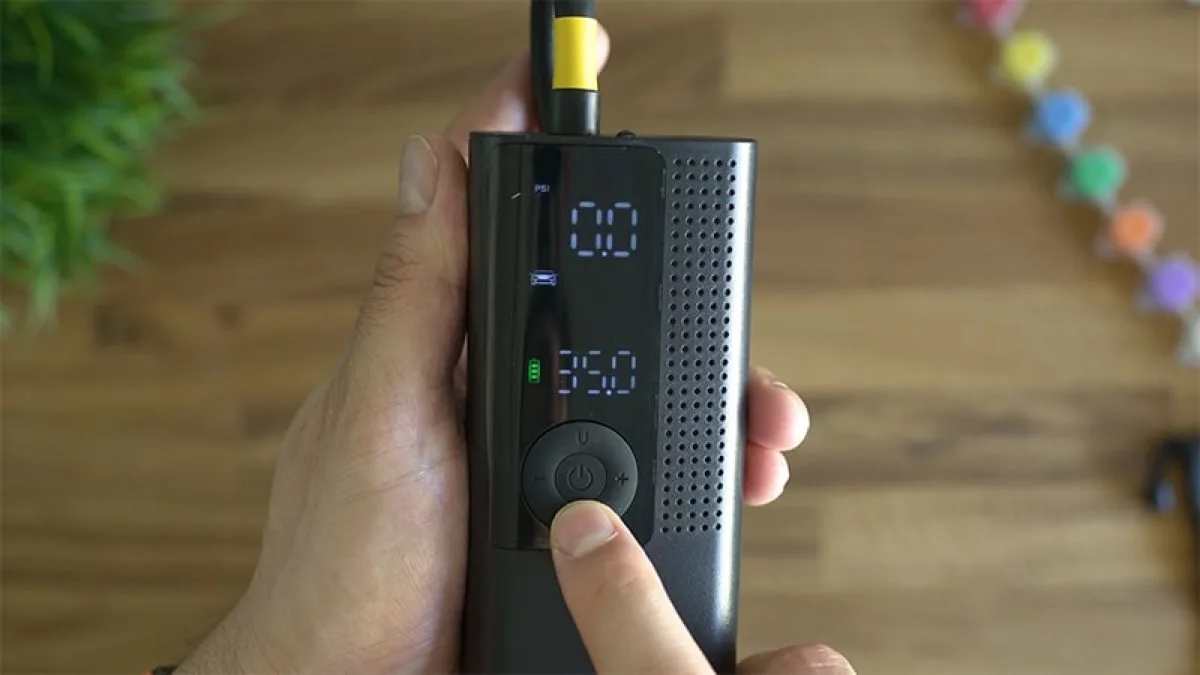
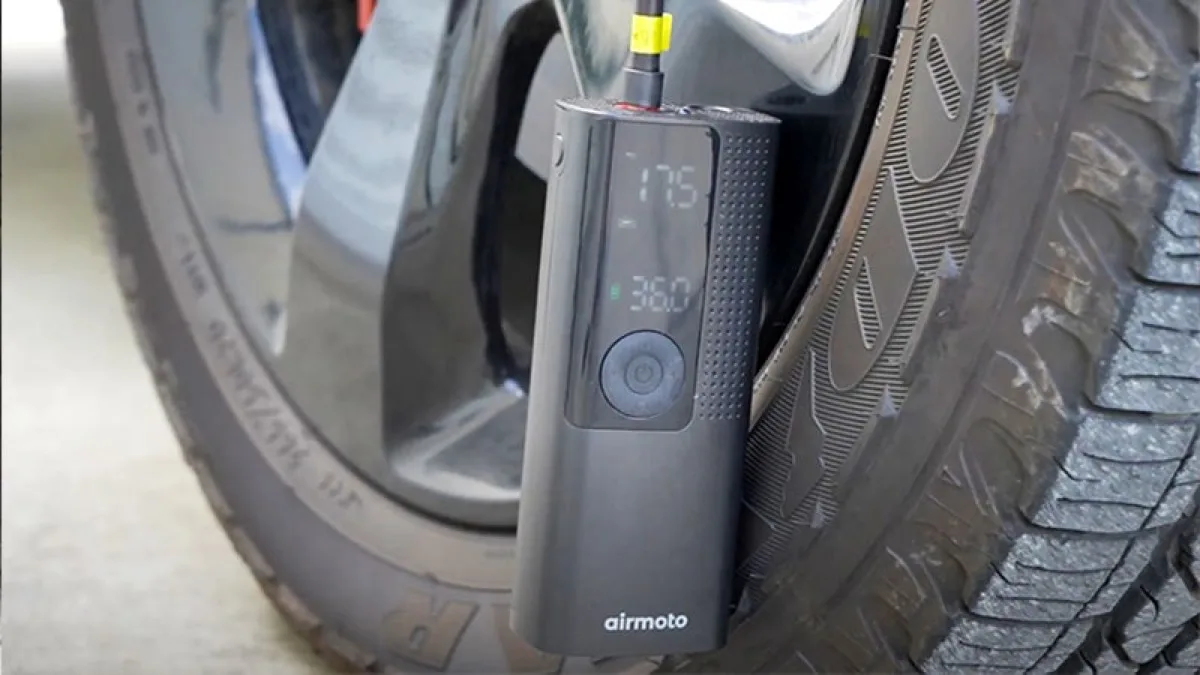
- A 120 PSI inflator like Airmoto covers all standard passenger vehicles
Where to Find Your Car’s Recommended PSI
Look at the driver-side door frame. There is a sticker or plate that says something like “32 PSI” or “35 PSI Max.” This is the pressure your car manufacturer has calculated as optimal for your specific vehicle.
Some cars also list the recommended pressure in the owner manual, on the glove box interior, or on the fuel door. The location varies by manufacturer, but it is always in the driver-accessible area of the car.
Write down your recommended PSI now. Do not guess. The difference between 32 and 35 PSI is small but matters for safety and tire wear.
Why the Sidewall Number Is Not What You Want
The tire sidewall says something like “MAX LOAD 1356 lbs AT 51 PSI.” This tells you the maximum pressure the tire can safely handle when carrying its maximum load. It is not the pressure your car needs.
Inflating to the sidewall number does three bad things:
Reduces the contact patch — the tire only touches the road in the center, losing grip in corners and wet conditions.
Increases blowout risk — an overinflated tire is a harder surface that transmits more impact force from potholes and road debris.
Creates uneven wear — the center of the tire wears faster than the edges, requiring premature replacement.
What Happens When PSI Is Too Low
A tire running below the recommended PSI has a larger contact patch than it should. This sounds like it would be better for grip, but the extra flexing generates heat that damages the tire internally.
Fuel economy drops 3-5 percent — the extra rolling resistance means your engine works harder. Over a year of driving, that adds up to $100-$200 in extra fuel costs.
Tire wear accelerates — the sidewalls flex more, causing sidewall cracking and premature tread wear. A tire that should last 50,000 miles might only last 35,000 miles.
Blowout risk increases — a tire at 25 PSI instead of 32 PSI has a 40 percent smaller contact patch and generates significantly more heat. The AAA reports that 9 percent of roadside flats are caused by chronic under-inflation.
Handling suffers — the tire deforms more in corners, reducing responsiveness. Braking distances increase on wet and dry roads.
What Happens When PSI Is Too High
Overinflation is just as dangerous as underinflation. An overinflated tire only touches the road in the center, which creates several problems:
Center wear — the middle of the tread wears faster than the edges. The tire develops a bald spot in the center while the edges are still deep. This is expensive to replace early.
Reduced wet grip — the smaller contact patch cannot channel water effectively, increasing hydroplaning risk. At 5 PSI above recommended, your wet braking distance increases by 10-15 percent.
Harsher ride — the tire acts as a harder surface, transmitting more road vibration through the suspension and steering wheel. Every pothole feels harder.
Blowout risk from impact — an overinflated tire has less ability to absorb impacts from potholes and debris. The rigid tire surface transmits the full force to the sidewall, which can crack or blow out.
Seasonal PSI Adjustments
Your recommended PSI does not change with the seasons, but the actual pressure in your tires does.
Winter pressure drops — A 20 degree temperature drop reduces tire pressure by 4-8 PSI. If your recommended pressure is 33 PSI and the temperature falls from 70F to 30F, your tires could be at 25-29 PSI without you knowing.
Summer pressure rises — Hot pavement heats tires and increases pressure by 1-3 PSI above the cold reading. Check before summer road trips — if your tires read above the recommended PSI, let a little air out.
The transition seasons matter most — Spring and fall bring the largest temperature swings. This is when most drivers are caught off guard by sudden pressure changes.
PSI for Different Vehicle Types
| Vehicle Type | Typical PSI | Max PSI Range | Notes | |
Frequently Asked Questions
What PSI should my car tires be at?
Why is the PSI on my tire sidewall different from my door sticker?
Can I run lower PSI than recommended for a smoother ride?
Does tire pressure change with temperature?
What PSI do I need for an SUV or truck?
What happens if PSI is too low?
What happens if PSI is too high?
How often should I check my tire pressure?
More Smart Gadgets Articles
Related Product Reviews


Alex Thompson
Consumer electronics reviewer specializing in smart gadgets and everyday tech. Tests 100+ gadgets annually. Previously wrote for The Verge and Wired. Focus on practical daily-use value.
Affiliate disclosure:This article contains affiliate links. If you buy through them, GearPuff may earn a commission at no extra cost to you. It keeps our testing independent and our reviews free.