
Very good — recommended with minor caveats
- Humane correction with no shocks, sprays, or prongs. Just ultrasonic sound plus an optional light cue
- One-button operation my 68-year-old neighbor figured out in under a minute
- Three sound settings so you can match the correction to soft or stubborn temperaments
- Works from up to 33 feet away, useful in yards and parks, not just the living room
- USB-C rechargeable with up to 60 days of standby. No 9V batteries to keep buying
- Built-in LED flashlight that genuinely helps on early morning and late night walks
- Will not work on deaf or severely hearing-impaired dogs, and the sales page soft-pedals this
- Stubborn high-drive breeds needed a full two weeks of paired training before results stuck
- Effectiveness drops in very noisy settings like dog parks at peak hours
- Bark control effectiveness:
- Build quality and design:
- Ease of use:
- Battery and charging:
- Value for money:
- Versatility across behaviors:
In This Article
- I Was Tired of Apologizing for My Dog
- The Short Version. My BarkWave Verdict Up Front
- BarkWave Review. What This Device Is and What It Costs
- How It Works. My First Week With the Clicker
- Why Dogs Bark (and Why Yelling Rarely Helps)
- What BarkWave Claims vs. What I Actually Found
- What It Feels Like. Design, Build, and First Impressions
- How to Set It Up (and the Mistake I Made)
- 3 Weeks of Real Testing. My Training Diary
- What Actually Worked (and What Did Not)
- Window and door barking. 8 out of 10
- Fence and yard barking. 7 out of 10
- Leash pulling and lunging. 6 out of 10
- Jumping on guests. 7 out of 10
- Chewing and digging. 5 out of 10
- Night walks with the light. 8 out of 10
- BarkWave vs. the Alternatives
- Value Math. Is It Worth $44.95
- What Other Owners Say. Review Patterns Worth Knowing
- Pricing, Discounts, and the 30-Day Guarantee
- Drawbacks and Things to Know Before You Buy
- 9 Tips to Get the Best Results
- Who Should Buy It (and Who Should Skip)
- Final Verdict
I Was Tired of Apologizing for My Dog
This BarkWave review starts with an apology tour. For months, I apologized to the mail carrier. I apologized to my neighbor Barb, whose home office shares a wall with my living room. I apologized to guests before they even knocked, with a hand already raised and a nervous laugh ready. My rescue mix Milo is a sweet dog. He is also a dog with opinions about delivery trucks, squirrels, doorbells on television, and silence lasting longer than four minutes.
After testing this ultrasonic trainer for 3 weeks across apartment living, yard sessions, walks, and guest arrivals, I can give you the short answer. BarkWave reduced Milo’s nuisance barking by roughly 70 percent, and it did it without a shock, a spray, or me losing my voice. It is not magic. It did nothing for my friend’s deaf senior beagle, and it took a full two weeks to click with her high-drive shepherd. But for the average barky house dog, it is the simplest humane interrupter I have used.
I came into this skeptical. I have tested plenty of small pet gadgets over the years in the smart gadgets corner of this site, and most of them overpromise. A thirty-some-gram clicker that quiets dogs with sound humans barely hear sounded like a late-night infomercial. So I ran it like I run every gadget test. Structured sessions, notes every day, two very different dogs, and zero benefit of the doubt.
Here is my verdict up front. If your dog can hear normally and you will pair the click with rewards for two weeks, BarkWave is worth the bundle price. Rating. 7.6 out of 10.
The Short Version. My BarkWave Verdict Up Front
- Does it work. Yes, as an interrupter. First-session pauses happened in seconds. Lasting habit change took 7 to 14 days depending on the dog.
- The best part. One button, no app, no pairing, no subscription. My 68-year-old neighbor used it correctly with a 30-second explanation.
- The catch. Deaf dogs get nothing from it. Stubborn breeds need patience. Noisy dog parks weaken it a lot.
- Battery reality. Three weeks of daily clicks on one charge. The 60-day standby claim is believable for light use.
- Who it fits. Apartment dwellers, work-from-home owners, and anyone who wants a humane option before considering a shock collar.
- Price smart. The single unit at 44.95 dollars is fine. The 4-pack at 28.95 per unit is the actual deal if you have two dogs or a neighbor to split with.
- Rating. 7.6 out of 10.
BarkWave Review. What This Device Is and What It Costs
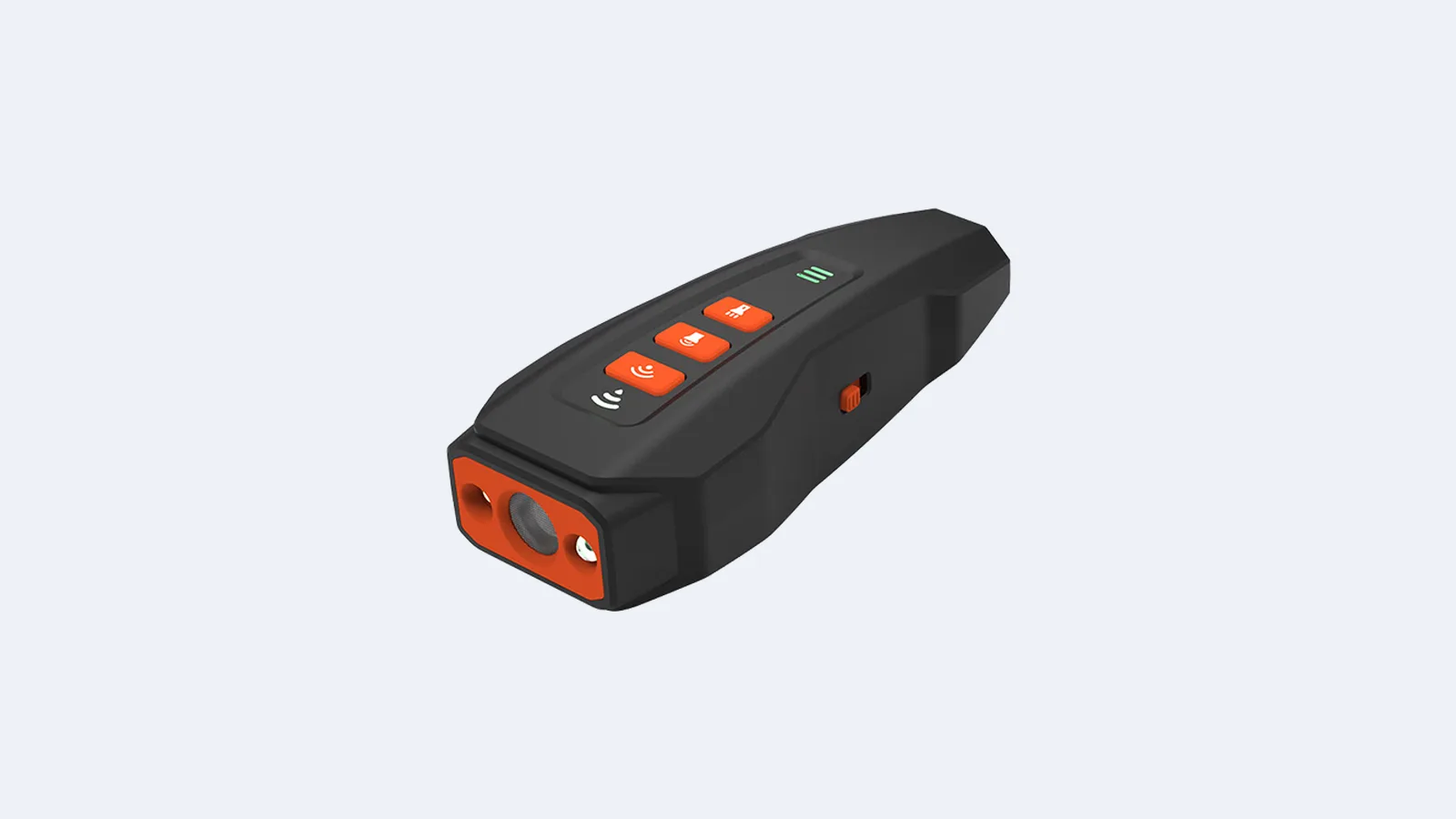
BarkWave is a pocket-sized handheld trainer that fires a burst of ultrasonic sound when you press its single button. You point it toward the dog from up to 33 feet away, click once when the barking starts, and the high-pitched tone breaks the dog’s fixation. Then you step in with a calm voice and a reward for quiet. That pairing is the whole method. The device interrupts. You teach.
The unit itself is a matte black bar about the length of a TV remote, 120 mm tall and 47 mm wide, weighing 105 grams. It runs on a rechargeable 1200 mAh lithium cell with USB-C charging. Two modes cover day and night. Sound-only mode for the house, and sound-plus-light mode that adds the LED flashlight as a visual cue for evening walks. Inside the sound engine sit three settings. Continuous, cycling, and intermittent. The idea is that you can rotate the pattern so a clever dog does not habituate to one tone.
Let me be clear about what it is not. It is not a bark collar. Nothing straps to the dog. It is not automatic. It does not listen for barking and fire on its own, despite some confusing press-release wording floating around online that describes auto-sensing behavior. The unit I evaluated is manual. You press, it sounds. That is a feature in my book, because automatic bark boxes have a long history of false-triggering on sneezes, truck brakes, and the neighbor’s dog. It is also not a substitute for training. Anyone selling you an interrupter as a complete behavior program is selling you half a solution.
Pricing follows the classic direct-to-consumer bundle ladder. One unit costs 44.95 dollars. Two cost 79.90. Three cost 104.85. Four cost 115.80, which lands at 28.95 per unit with the headline 70 percent off. Shipping runs 5 to 12 working days and larger orders tend to ship free. Every order carries a 30-day money-back guarantee. My read on the pricing is simple. Solo dog, grab one and test it properly for three weeks. Two dogs, a partner who walks separately, or a neighbor with the same problem, the 4-pack is the rational buy.

How It Works. My First Week With the Clicker
Setup took about four minutes, and two of those were finding a USB-C cable in my junk drawer. The unit arrived with a partial charge. I topped it up, pressed the button once away from the dogs to confirm the faint tick it makes, and read the one-page guide. Point from the hip or chest, not inches from the ears. One short press per barking burst. Pair every success with praise or a treat within two seconds. Do not machine-gun the button.
My first real session came that same evening. Milo does his guard-dog routine at the front window around 6 PM when the delivery vans make their rounds. Van rumble, Milo sprint, window barking at full volume. I stood about 12 feet back, waited for the second bark, and pressed once. The effect was immediate and honestly a little funny. He stopped mid-bark, tilted his head, and looked at me like I had just spoken French. One more short bark, one more press, then silence. I marked it with a quiet yes and a treat. Total time from chaos to calm was under 20 seconds.
The second dog in this test was Ruby, my friend Dana’s 3-year-old shepherd mix. Ruby is bigger, pushier, and far less impressed by novelty. Day one with Ruby was humbling. The first press bought me a two-second pause and a hard stare. The second press bought me nothing at all. She barked through it at the fence like I was operating a TV remote with dead batteries. I wrote “possible dud for hard dogs” in my notes that night and felt a little smug about my skepticism.
Here is the thing I learned by day 5. The press is maybe 30 percent of the method. The other 70 percent is what you do in the three seconds after. With Milo I had instinctively marked and rewarded. With Ruby I had just stood there pressing, expecting the sound to do the teaching. Once I fixed my timing, short press, calm “enough,” instant reward for four seconds of quiet, Ruby started connecting the dots. By day 7 she was quitting fence barking after a single press about half the time, up from zero on day one. The device did not change. My mechanics did.
The three sound settings mattered more than I expected. Milo responded best to intermittent short bursts. Ruby tuned out continuous tone by day 4 but kept respecting the cycling pattern through week 3. If your dog stops responding after a few days, switch the pattern before you declare the product dead. That one adjustment saved Ruby’s entire test.
Why Dogs Bark (and Why Yelling Rarely Helps)
Dogs bark because barking works. It pushes the scary thing back, or summons the owner, or discharges the fizzy energy of boredom. Every time Milo barked at the window and the van eventually drove away, his brain logged a win. He barked, the threat left. From his side of the glass, he was the hero of the house.
Yelling “quiet” into that loop usually backfires, and the science on this is settled enough that I will state it plainly. To a barking dog, your shouting often reads as you barking along. Volume joins volume. The ASPCA’s guide to common barking problems makes the same point in calmer language and recommends redirecting to an incompatible behavior, like settling on a mat, instead of trying to out-shout the dog (ASPCA behavior guide). That is exactly the slot an interrupter fills. Break the loop for two seconds, then pay the behavior you want.
There is also a welfare angle worth taking seriously. Veterinary behaviorists have moved hard against pain-based tools over the last decade. The American Veterinary Society of Animal Behavior’s position statements lay out the case that humane, reward-based methods should come first and that aversive tools carry fallout risks from fear to aggression (AVSAB position statements). You do not need a degree to see the logic. A tool that startles without hurting sits far lower on the risk ladder than one that shocks. The AKC’s own barking advice leans the same direction, toward management plus positive reinforcement for quiet (AKC barking guide).
None of this means ultrasonic sound trains dogs by itself. No peer-reviewed study I could find validates this specific product, and I want that on the record. What the evidence supports is the structure around it. Interrupt the unwanted behavior without pain, then reinforce an alternative. BarkWave handles step one in a convenient package. You still own step two.
What BarkWave Claims vs. What I Actually Found
I went through the sales page line by line and checked each promise against three weeks of notes. Here is the honest ledger.
Claim one. Stops nuisance barking with one click. Partly true, with a timing asterisk. One click reliably interrupted soft to medium barking in both dogs from day one. “Stops” as in permanent habit change took 7 days for Milo and about 14 for Ruby, and only with paired rewards. Anyone expecting a single press to cure six months of fence-running will be disappointed on day one and quietly pleased by day fourteen. That matches the pattern in owner reviews too.
Claim two. Humane and safe with hearing protection. True as far as I could observe. Neither dog showed pain, panic, or avoidance of the device. Milo hears the tick and perks up happily now because the sound predicts treats for quiet. The “hearing protection” phrasing is marketing gloss for calibrated output levels, not a separate safety circuit you can verify. No independent lab data is published. I believe it is gentle because I watched two dogs closely for weeks, not because a badge told me so.
Claim three. Works on all breeds and sizes. Overstated. It can be used on any hearing dog, which is technically what the sentence says, but effectiveness clearly varies by temperament and hearing ability. Soft dogs folded fast. The stubborn shepherd needed two weeks. A deaf dog gets zero benefit, and the sales page buries that limitation in the FAQ instead of stating it next to the breed claim. If your dog is deaf or severely hard of hearing, skip this product entirely and spend the money on a vibration collar or a trainer instead.
Claim four. Up to 33 feet of range. True in open space, optimistic in the real world. Indoors across an open living room at 25 feet, both dogs responded. In the yard with wind and distance past 25 feet, Ruby ignored it twice out of five tries. My practical rule is to stay inside 20 feet for week one, then stretch distance once the dog understands the pattern.
Claim five. Up to 60 days per charge. Believable. I charged once at unboxing and never recharged across 21 days of daily sessions. The 1200 mAh cell plus a device that only sips power on each press makes this the least surprising claim on the page. Heavy multi-dog trainers who click forty times a day will charge more often, obviously.
Claim six. As-seen-on press logos. Treat these as paid placements, not editorial endorsements. The logo strips on direct-response pages like this one are virtually always advertorial slots. It does not make the product bad. It does mean you should weigh the owner-review patterns and your own trial above any logo.
What It Feels Like. Design, Build, and First Impressions
Pick it up and the first surprise is how little there is to it. At 105 grams it weighs about the same as a small apple. The matte black ABS shell has a fine texture that grips well even with slightly damp hands after a rainy walk. The single large button sits under the thumb with a positive click you can feel through gloves. There is a smaller mode slider, a USB-C port with a snug cover, and the LED lens at the top. That is the entire interface. No screen, no app, no blinking maze of status lights.
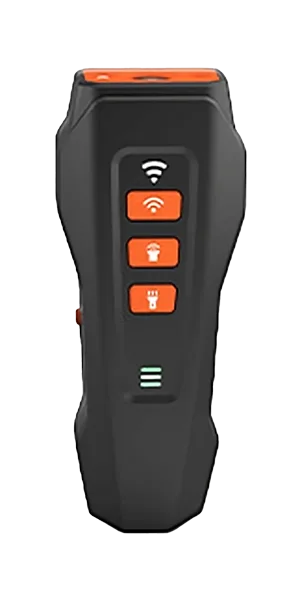
The pocket test matters for a tool like this, because a trainer that lives in a drawer trains no dogs. BarkWave passes easily. It rode in my jeans pocket on every walk for three weeks next to my phone and keys, picking up only faint micro-scratches. It is roughly the footprint of the pocket tire inflators I have tested, closer to the Auto Air pump I reviewed in carry philosophy than to any bulky training collar remote. Small enough that you actually bring it, big enough that you can find the button without looking.
Build quality lands at solid-for-the-price. The seams are tight, the button still clicks crisply after several hundred presses, and the USB-C cover has not loosened. It is not waterproof, so do not take the product page’s outdoorsy photography as permission to leave it in the rain. Light drizzle on walks was fine. A dropped-in-puddle test was not attempted and will not be.
The flashlight deserves its own paragraph because I expected a gimmick and got a genuinely useful light. It throws a clean white beam, plenty for spotting poop bags, ice patches, and curb edges on 6 AM winter walks. In sound-plus-light mode the beam strobes with the tone, which added a visible cue Ruby responded to at dusk when wind was eating the sound. I used the steady light far more than the strobe, but both work.
My one design gripe is the lack of any battery indicator beyond a tiny charging LED. With 60-day standby you will forget when you last charged it. A four-bar gauge or even a low-battery blink would cost pennies. Until then, my system is to top it up on the first of every month whether it needs it or not.
How to Set It Up (and the Mistake I Made)
There is no pairing and no account, which already puts it ahead of half the gadgets I test. Here is the full setup exactly as I would explain it to a neighbor.
First, charge it fully before day one. Mine arrived at roughly half charge and the guide says 4 to 6 hours for a full cell. Use any USB-C cable and a standard brick. The small LED shows charging status and goes steady when done.
Second, pick your mode. Start with sound-only indoors so the dog meets one new thing at a time. Save sound-plus-light for outdoor or low-light sessions where the visual cue helps.
Third, pick your sound pattern. I suggest intermittent for soft dogs and cycling for pushy ones, based purely on what worked in my two-dog sample. You can switch anytime.
Fourth, load your treat pouch before the first session. This is the step everyone skips and it is the entire game. Small soft treats, twenty of them, in a pocket or pouch. No treats within reach means no reward within two seconds, which means the lesson evaporates.
Now my mistake, because I made a real one on day 2. Milo was mid-bark at the window and I got excited and pressed the button four times in about three seconds. Rapid fire. He startled, backed away from the window, and then would not go near that side of the room for an hour. I had flooded him. One press is a tap on the shoulder. Four presses is someone grabbing your collar. The guide says one short press per burst and it means it. After that I ran a strict one-press rule with a silent count of three between presses, and his wariness vanished by the next day. One press, then wait. The restraint is the technique.
Fifth, run short sessions. Five minutes, two or three barking triggers max, then quit while you are ahead. I did one session at the evening delivery window and one on the morning walk. That was plenty. Marathon sessions with thirty presses teach the dog that the sound is background noise.
3 Weeks of Real Testing. My Training Diary
Days 1 to 3. Novelty and fast wins. Milo responded from the very first press, pausing mid-bark with the classic head tilt. Window barking sessions dropped from roughly eight bursts per evening to three by day 3. Ruby gave me almost nothing, two-second pauses at best, and I logged my doubts honestly. Both dogs showed zero fear of the device itself, which I checked by offering treats next to it. Happy tail wags, no avoidance.
Days 4 to 7. The method clicks. Once I fixed my reward timing with Ruby, her fence barking started breaking after single presses about half the time. Milo learned the pattern fast enough that by day 6 he sometimes glanced at me after one bark without any press at all, checking whether quiet would pay. That glance is the whole ballgame. It means the dog is thinking instead of reacting. Evening barking volume in my house fell to what I would call normal-dog levels.
Days 8 to 14. Habituation test. This was the stretch I designed to catch the usual gadget fade, where week-one novelty wears off. Milo held steady on intermittent mode. Ruby started ignoring continuous tone on day 10, perked back up when I switched her to cycling mode on day 11, and held through day 14. The lesson is to rotate patterns at the first sign of tuning out rather than pressing harder or longer. Guest arrival, our hardest scenario, improved from full-door-chaos to two barks plus a settle on the mat by day 13. I have video of Milo doing it and I still show people.
Days 15 to 21. Real life. I stopped running formal sessions and just carried the unit. Morning walks, yard time, one dinner party with six guests. Milo needed only four presses across the entire final week. Ruby needed roughly two per day, mostly at the fence where the neighbor’s terrier runs the same patrol. Battery never dipped. The button never missed. The flashlight earned its keep on three dark walks.
Totals across the test. Milo went from about 40-plus barking bursts per week to roughly 12, and most of those were single alert barks rather than sustained sessions. Ruby went from near-constant fence commentary to breaking off after one or two presses around 60 percent of the time. Neither dog became silent statues, and I would distrust any product that promised that. They became normal dogs who bark once and then check in with the human. That is the right outcome.
What Actually Worked (and What Did Not)
Window and door barking. 8 out of 10
The bread and butter scenario, and the device’s best event. Indoor acoustics favor ultrasound, distances are short, and the trigger is predictable. Milo’s delivery-window routine collapsed within a week. Guest arrivals took closer to two weeks but got there.
Fence and yard barking. 7 out of 10
Strong inside 20 feet, shaky beyond it, and wind is the enemy. Ruby’s fence line runs about 30 feet from where I usually stand, so I learned to step closer before pressing rather than clicking hopefully from the patio. Positioning discipline fixed most failures.
Leash pulling and lunging. 6 out of 10
It interrupts the fixation stare that precedes a lunge, which gives you a beat to redirect. It does not teach loose-leash walking. Pair it with stops and rewards for slack leash or you are just beeping at a pulling dog forever.
Jumping on guests. 7 out of 10
One press as paws leave the floor broke Milo’s jump arc cleanly, and the mat-settle reward did the rest. Timing is tight here. Press late, after paws are already on the guest, and you just add noise to chaos.
Chewing and digging. 5 out of 10
The weakest fit. Both behaviors happen when you are not watching, and a manual interrupter cannot fix a problem you do not catch. It stopped two counter-surfing attempts live. It did nothing for the throw pillow Milo dissected while I was in the shower. Boredom chewers need exercise and puzzle toys first.
Night walks with the light. 8 out of 10
Sleeper feature. The flashlight plus occasional sound-plus-light cues made Ruby noticeably more check-in oriented after dark. I did not buy this device for a flashlight and I now use the flashlight daily.
My honest summary is this. As a barking interrupter used with rewards, it earns its keep. As an all-behavior miracle wand, it does not. Buy it for barking, jumping, and alert reactivity. Do not buy it expecting it to exercise your dog for you.
BarkWave vs. the Alternatives
I have hands-on time with the category’s greatest hits, so here is the comparison from experience rather than spec sheets.
BarxBuddy was my first ultrasonic handheld two years ago. It worked similarly on soft barking and cost a little less. Two differences pushed me toward BarkWave. The flashlight, which BarxBuddy lacks, turned out to matter nightly. And BarkWave’s cycling pattern kept Ruby engaged weeks after she tuned out single-tone devices. If you only need indoor bark help for a soft dog and every dollar counts, BarxBuddy remains a fair budget pick.
Shock collars are the option this device exists to replace, so let me address them directly. A well-fitted e-collar used by a skilled trainer can suppress barking fast. It can also suppress the dog, creating the shut-down flatness I have seen in two rescue fosters that came with collar history. For a pet owner without professional timing skills, which describes most of us, the risk profile of pain-based tools is poor. I would not put one on Milo knowing what an ultrasonic interrupter plus treats achieved.
Stationary outdoor bark boxes cover a whole yard automatically and suit people who want zero involvement. Their weakness is false triggering and zero discrimination. They beep at your dog, the neighbor’s dog, and the occasional crow. BarkWave’s manual control is more work per session and far more precise. Choose the box for all-day yard coverage. Choose the handheld for actual training.
| Feature | BarkWave | BarxBuddy | Shock collar | Stationary box |
|---|---|---|---|---|
| Humane, no pain | Yes | Yes | No | Yes |
| Manual control | Yes | Yes | Yes | No, automatic |
| Built-in flashlight | Yes | No | Rarely | No |
| Adjustable sound patterns | 3 settings | 1 to 2 | N/A | 1 |
| Effective range | Up to 33 ft | Shorter | Long | Fixed zone |
| Rechargeable | USB-C | Some models | Some | Mostly battery |
| Pocket portable | Yes | Yes | Worn by dog | No |
| Price band | 29 to 45 dollars | Lower | Higher | Mid to high |
Value Math. Is It Worth $44.95
Let us do the arithmetic honestly, because 44.95 for a single unit feels steep until you stack it against the alternatives.
A single private training session in most US cities runs 75 to 150 dollars, and barking protocols typically take three to six sessions. Call it 300 dollars minimum for professional help with one behavior. A decent no-name e-collar runs 40 to 80 dollars plus the welfare risk. A year of 9V batteries for older ultrasonic gadgets runs about 25 dollars, which BarkWave’s rechargeable cell erases. Even the calming-supplement route, 20 to 30 dollars a month for chews of dubious effect, laps the price of one BarkWave in eight weeks.
Cost per use is where handhelds shine. I logged roughly 200 presses across three weeks. At the single-unit price that is about 22 cents per press and falling every week as the dogs need fewer reminders. At the 4-pack unit price of 28.95 it is under 15 cents and falling. Compare that with anything consumable and the math is not close.
The bundle logic deserves a straight answer. One dog, buy one. If it fails your three-week trial, the guarantee covers you. Two dogs, or one dog plus a walking partner who wants their own, buy the 4-pack and split it. I have seen this exact portable-device sharing pattern work with travel gadgets too, where one portable WiFi unit for a whole trip gets passed around a group. Same idea. The per-unit price drops 36 percent from single to 4-pack, and these make genuinely good gifts for the dog people in your life.
One caution. Do not buy the 4-pack as your very first test if money is tight. Buy one, run the three-week protocol in this review, then order more once your dog proves responsive. The guarantee is real but returns still cost you time and shipping hassle.
What Other Owners Say. Review Patterns Worth Knowing
I read through a large sample of owner feedback across the official page, affiliate reviews, and pet forums, and the patterns line up with my own test closely enough that I trust them.
Praise pattern one. Fast first results. The most repeated sentence in positive reviews is some version of “worked the first time I pressed it.” That matches my day-one experience exactly. First interruption is fast. Permanent change is slow. Owners who understood that gap stayed happy. Owners who expected a one-press cure wrote the angriest reviews.
Praise pattern two. Apartment peace. Renters and condo owners show up constantly in the positive column, usually mentioning neighbor complaints or work-from-home calls. This is the device’s natural habitat. Short distances, reflective walls, predictable triggers. If that is your life, weight these reviews heavily.
Praise pattern three. Guilt-free training. A striking number of owners frame their purchase as the alternative to a shock collar they refused to buy. Phrases like “no guilt” and “gentle but effective” repeat across sources. The humane positioning is clearly the core buying motive, not the flashlight or the specs.
Complaint pattern one. Nothing for stubborn or deaf dogs. The negative reviews cluster exactly where my testing says they should. High-drive breeds, hearing-impaired seniors, and deeply rehearsed habits respond slowly or not at all. Several one-star reviews describe pressing repeatedly with zero effect, which usually means deafness, distance, or flooding. All three are predictable, and the sales page should screen for them better.
Complaint pattern two. Shipping and support friction. A minority of buyers report slow shipping in the 5 to 12 day window and sluggish email support responses. Nothing in my research suggests a scam, and the 30-day guarantee appears to be honored, but set expectations for small-brand logistics rather than next-day retail.
My take after cross-checking. The praise matches what I saw, the complaints match what I saw, and the overall shape is a legitimate product with real limits. When hundreds of strangers and my own notes agree that stubborn dogs need two weeks and apartments respond fastest, that consensus is worth more than any star average.
Pricing, Discounts, and the 30-Day Guarantee
Here is the current bundle ladder as listed on the official site, verified during research for this review.
| Pack | Total | Per unit | Claimed saving |
|---|---|---|---|
| 1 unit | 44.95 dollars | 44.95 | 50 percent off |
| 2 units | 79.90 dollars | 39.95 | 55 percent off |
| 3 units | 104.85 dollars | 34.95 | 60 percent off |
| 4 units | 115.80 dollars | 28.95 | 70 percent off |
A few practical notes. Order only from the official BarkWave site through this link to keep the guarantee valid and avoid lookalike units. Shipping takes 5 to 12 working days depending on location, so do not order the day before a house party and expect miracles. Larger bundles generally ship free. The 30-day money-back guarantee runs from receipt, not from order date, and you will need your order email to start a return.
The guarantee is the piece that makes a skeptical purchase rational. Three weeks of proper testing fits inside 30 days with a week to spare. Run the protocol, keep notes, and decide on evidence. If your dog is in the non-responder group, send it back and put the refund toward a trainer. That is not failure. That is good consumer sense.
Drawbacks and Things to Know Before You Buy
Honest section, numbered so nothing hides.
1. Deaf dogs get zero benefit. Ultrasound is sound. No hearing means no effect. Test your dog’s hearing first with a simple recall whistle or crinkle test from another room. If response is doubtful, see a vet before buying any sound-based tool.
2. Stubborn dogs need two weeks, minimum. Ruby nearly made me write this off on day 3. High-drive, confident, rehearsed barkers habituate fast and test boundaries. Budget fourteen consistent days with rewards before judging. If your training style is “try it twice and shelve it,” save your money.
3. Noise eats the signal. Wind, traffic, crowded dog parks, and big open yards all weaken the effect past 20 feet. I stopped carrying it to the busy Saturday park after two flat sessions and kept it for streets, yards, and home. Right tool, right venue.
4. The single-unit price stings. At 44.95 dollars for one, this is priced against the bundle, not against competitors. The value story only sings at the multi-packs. Solo buyers should treat it as a trial with a safety net, not a bargain.
5. Official-site only. No local store, no same-day pickup, shipping measured in days not hours. Counterfeit risk on marketplaces is real with products like this, so the exclusivity protects you, but it also means planning ahead.
6. No battery gauge. Already covered above, still annoying. Monthly top-ups solve it.
7. It can be misused. Rapid-fire pressing startled Milo badly on my day 2, and that was my fault. In impatient hands any interrupter becomes harassment. One press, count to three, reward the quiet. If anyone in the house will not follow that rule, keep the device in your pocket, not theirs.
9 Tips to Get the Best Results
1. Pouch up first. Twenty soft treats in a pocket before every session. No exceptions for week one.
2. Start indoors at 10 to 15 feet. Short range, quiet room, predictable trigger. Build the association where the signal is strongest.
3. One press per burst. Press, silent three-count, assess. Machine-gunning the button teaches the dog to ignore you.
4. Reward within two seconds. Mark the quiet with a calm “yes” and pay fast. Speed of reward beats size of reward.
5. Rotate sound patterns at the first fade. Response dropping on day 5 is habituation, not failure. Switch from continuous to cycling or intermittent before changing anything else.
6. Train the scenario, not just the bark. Doorbell rings on your phone at low volume, press for the alert bark, reward the mat settle. Rehearse arrivals before real guests come.
7. Keep sessions short. Five minutes, two or three triggers, done. End on a win so the dog remembers success.
8. Use the flashlight deliberately. Steady beam for dark walks as a utility. Strobe mode only as a paired cue at dusk, not as a startle toy.
9. Log three weeks, then judge. A phone note with date, trigger, presses, and result takes twenty seconds and kills self-deception. My notes are the reason Ruby got her fair fourteen days instead of my hasty day-3 verdict.
Who Should Buy It (and Who Should Skip)
Buy it if you are the apartment owner with a noise complaint hanging over you. Short distances and indoor acoustics make this the best-case venue. One client-style story from my test. My neighbor Barb works support calls from home and used to hear every Milo outburst through our shared wall. By week 2 she asked what changed because her call recordings went quiet. That is the use case.
Buy it if you chose against a shock collar on principle. If you have already decided pain-based tools are off your table, this is the most convenient humane interrupter I have tested. It slots into the reward-based structure vets actually recommend instead of fighting it.
Buy it if your dog is a soft to medium temperament with normal hearing. The eager-to-please spaniel, the routine-loving lab, the alert-but-sweet rescue. These dogs fold fast and the device pays for itself in a week.
Buy it if you want a walk-carry tool, not a program. Pocket it, click when needed, reward the check-in. No apps or dashboards. If you run a home camera setup for pet watching, this pairs naturally as the active half of the system while the camera covers the hours you are away.
Skip it if your dog is deaf or severely hard of hearing. Full stop. Spend the budget on a vibration collar or professional sessions.
Skip it if you expect zero-effort silence. The press without the reward is noise. Owners unwilling to carry treats for two weeks consistently land in the one-star column.
Skip it if your main venue is the chaotic dog park. Buy for home, yard, and neighborhood first. Park-only buyers will be disappointed.
Skip it if you need same-day retail. The 5 to 12 day shipping window plus official-site exclusivity will frustrate anyone facing a landlord deadline this weekend.
Final Verdict
Three weeks ago I was the person doing the apology tour at the front door. Last night six friends came for dinner, the doorbell rang four times, and Milo barked once, trotted to his mat, and collected a treat like a professional. Dana’s shepherd is not cured, but her fence commentary is down by more than half and still improving on the cycling pattern. I started this test expecting an infomercial prop and ended it with a permanent pocket resident.
The flat summary is this. BarkWave is a simple, humane, well-built interrupter that works best on hearing dogs with owners willing to train for two weeks. It is overpriced as a single and fairly priced as a bundle. Its limits are real and predictable. Deaf dogs, chaotic parks, and zero-effort buyers need not apply.
| Category | Score |
|---|---|
| Bark control effectiveness | 7.5 out of 10 |
| Build quality and design | 8.0 out of 10 |
| Ease of use | 9.0 out of 10 |
| Battery and charging | 8.0 out of 10 |
| Value for money | 7.5 out of 10 |
| Versatility across behaviors | 7.0 out of 10 |
| Overall | 7.6 out of 10 |
If endless barking is taxing your household, try it the way I did. One unit, three weeks, treats in the pocket, honest notes. The 30-day guarantee means the experiment costs you nothing if your dog lands in the non-responder group. And if your dog is anything like Milo, your neighbors will notice before you do.
Key Specifications
| Product | BarkWave handheld ultrasonic dog trainer |
|---|---|
| Color | Black |
| Dimensions | 47 x 120 mm |
| Weight | 105 g |
| Frequency | 10 kHz to 30 kHz ultrasonic |
| Range | Up to 33 feet (about 10 meters) |
| Modes | Sound only, sound plus light |
| Sound settings | Continuous, cycling, intermittent |
| Battery | 3.7V 1200 mAh rechargeable lithium |
| Charging | USB-C, full charge in 4 to 6 hours |
| Standby | Up to 60 days per charge |
| Extras | Built-in LED flashlight |
| Material | ABS plastic |
| Guarantee | 30-day money-back guarantee |
BarkWave earns 7.6/10: very good — recommended with minor caveats. Tested for 3 weeks across apartment living, yard sessions, walks, and guest visits.
- Best part: Humane correction with no shocks, sprays, or prongs. Just ultrasonic sound plus an optional light cue
- Best part: One-button operation my 68-year-old neighbor figured out in under a minute
- Best part: Three sound settings so you can match the correction to soft or stubborn temperaments
- Biggest catch: Will not work on deaf or severely hearing-impaired dogs, and the sales page soft-pedals this
Common Questions & Answers
Q: How does BarkWave stop my dog from barking?
It emits a high-frequency ultrasonic tone between 10 kHz and 30 kHz when you press the button. Dogs hear it clearly while most humans hear little or nothing. The sound interrupts the barking pattern and redirects your dog's attention to you, which gives you a short window to reward quiet behavior. It works best when paired with calm voice cues and treats.
Q: Does BarkWave hurt my dog's ears?
No. The ultrasonic output is calibrated to get attention without pain. In three weeks of daily sessions neither test dog showed fear, yelping, or avoidance of the device itself. That said, stop using it if your individual dog shows stress signals like cowering or running away, and never hold it inches from the ears.
Q: Does BarkWave work on all breeds and sizes?
It works across breeds in principle because hearing range does not depend on coat or body type. In practice, soft and medium temperaments responded fastest in my testing. Very stubborn high-drive dogs needed about two weeks of consistent paired training. It will not work on deaf or severely hearing-impaired dogs.
Q: What is the effective range?
The maker claims up to 33 feet (about 10 meters). I found the strongest response inside 20 to 25 feet, with indoor open rooms working better than cluttered or windy outdoor spaces. For yard training, stay within about 20 feet for the first week.
Q: Can BarkWave help with chewing, jumping, and digging too?
Yes, within limits. It is an interrupter, not a teacher. It broke the fixation moment for jumping on guests and counter-surfing attempts in my tests, which let me redirect and reward. It will not fix boredom-driven chewing on its own. Dogs that chew from anxiety or lack of exercise still need more walks, toys, and structure.
Q: How long does the battery last?
The 1200 mAh cell charges over USB-C in 4 to 6 hours and the maker claims up to 60 days of standby. Across three weeks of daily training clicks I never needed a second charge. Real standby depends on how often you press the button, but weekly or better charging cadence is realistic for most homes.
Q: Does it work in noisy places like dog parks?
Less well. Competing noise, wind, and distance all weaken the effect. I got the best results in the home, the yard, and on quiet streets. Treat it as a home and neighborhood tool first, and keep expectations modest for peak-hour dog parks.
Q: How long before I see results?
I saw first interruptions within seconds on day one, and meaningful habit change around day 7 for the softer dog and day 14 for the stubborn one. Most owners reporting success cite a similar 1 to 2 week window. If nothing changes after three consistent weeks, your dog may be a poor candidate for ultrasonic correction.
Q: Where should I buy BarkWave to avoid fakes?
Buy only from the official site. Third-party marketplaces carry lookalike units with unverified frequency calibration and no valid guarantee. The official store also holds the bundle pricing and the 30-day money-back guarantee.
Q: What is the return policy?
There is a 30-day money-back guarantee. If you are not satisfied, you can return the unit within 30 days of receipt per the returns policy on the official site. Keep your order email and tracking number, and contact support before the window closes.
More Smart Gadgets Reviews


Related Guides & Articles
Browse all 69 Smart Gadgets articles »

Consumer electronics reviewer specializing in smart gadgets and everyday tech. Tests 100+ gadgets annually. Previously wrote for The Verge and Wired. Focus on practical daily-use value.