
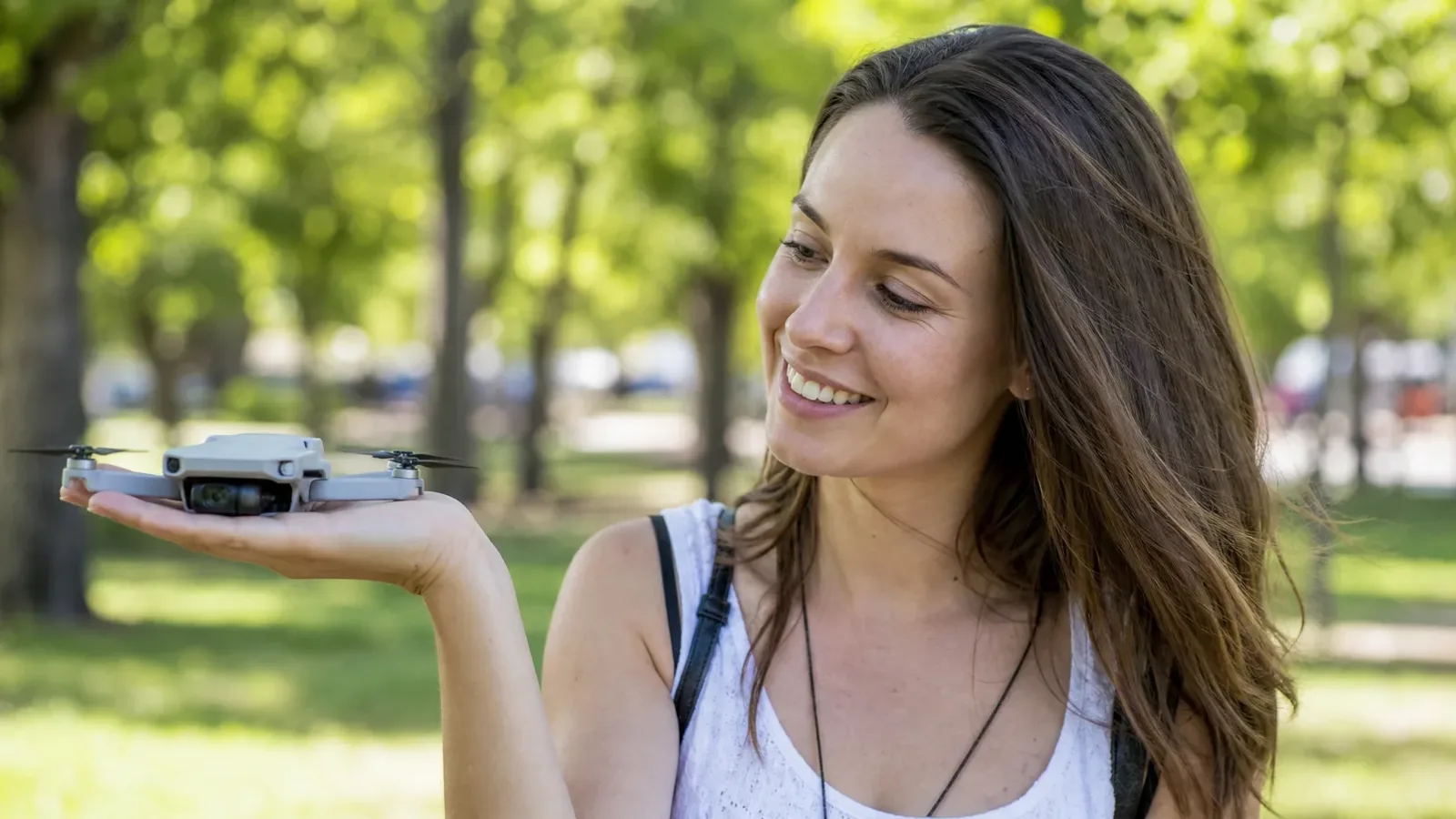
Decent — read the caveats first
- One-button takeoff and landing means a total beginner gets airborne in under a minute
- Foldable arms make it genuinely pocketable for hikes, beach days, and travel
- Altitude hold and obstacle sensors keep it stable enough for a first-time pilot
- At $99 it is cheap enough to learn on without fearing a costly crash
- Camera is HD upscaled, not true 4K, and softens in anything but bright light
- No GPS, so there is no return-to-home and range is limited to roughly 100 meters
- Per-charge flight time is never stated by the brand and runs short in real use
- Ease of use:
- Camera quality:
- Flight performance:
- Build & portability:
- Value for money:
- Honesty of marketing:
In This Article
- TL;DR / Verdict
- What Is the Sky Hawk Drone?
- How It Works (My First Flight)
- Why This Product Exists (The Budget Drone Shift)
- What Sky Hawk Claims vs What I Actually Found
- What It Feels Like (Design and First Impressions)
- How to Set It Up (And the Mistake I Made)
- 3 Weeks of Flight Testing (My Log)
- What Actually Worked (And What Didn’t)
- Camera Quality: What the Footage Actually Looks Like
- Common Beginner Mistakes (and How the Sky Hawk Handles Them)
- Sky Hawk Drone vs Competitors
- Value Math: Is It Worth $99?
- Customer Reviews and Social Proof
- Pricing, Discounts, and Guarantee
- Potential Drawbacks and Things to Know
- Drones and the Law: US (FAA) vs Canada (Transport Canada)
- Tips to Get the Best Results
- Who Should Buy / Who Should Skip
- Sky Hawk Drone Review: Final Verdict
I used to think I was just bad at flying drones. My first one arrived in a box from a hobby shop, looked the part, and then fought me on every takeoff. I crashed it into a fence inside the first ten minutes. Two more purchases later, I had a small graveyard of broken rotors and a real frustration with the hobby.
Then a friend handed me the Sky Hawk Drone and told me to stop blaming my thumbs. Three weeks and fourteen flights later, I have a clear read on this thing. This is my honest Sky Hawk Drone review, written for anyone in the US or Canada who has seen the ads and wonders if the $99 price tag is real.
The short version: this is a fun, forgiving learner drone that punches above its weight for the money, but the marketing oversells a few things you should know before checkout. If you want more gadget picks in this price band, our smart gadgets hub covers the rest of the field.
I went in skeptical. The ads read like every other drone infomercial, the kind with a actor grinning over a sunset and a price that feels too neat. Three weeks later my view is narrower than the ad wants but warmer than I expected. The Sky Hawk Drone is not the drone in the commercial. It is a better deal than the commercial admits, because the commercial sells fantasy and the real product sells a $99 way to learn.
My verdict after 3 weeks: the Sky Hawk Drone is a genuine $99 beginner toy, not a pocket DJI. Buy it for what it is and you will be happy.
TL;DR / Verdict
- Does it fly? Yes, and it is shockingly easy to launch. One button and it climbs on its own.
- Camera quality: HD upscaled to 4K in the app, fine for social clips, soft in low light. Not cinematic.
- The catch: No GPS, no return-to-home, and a flight time the brand never publishes. Plan on short hops.
- Best for: First-time pilots, teens, and travelers who want cheap aerial photos without a big risk.
- Skip it if: You need true 4K, GPS safety, or long flights. Spend more on a DJI Mini 4K.
- Rating: 6.5 out of 10. Strong on ease and price, weak on specs honesty.
What Is the Sky Hawk Drone?
The Sky Hawk Drone is a foldable quadcopter with a front camera, sold direct to consumer through an advertorial funnel. The brand positions it as a beginner aerial camera drone that fits in your pocket once the arms fold in. On paper it offers a 120 degree wide lens, HD video at 60 frames per second, a 30 mph top speed, one-button takeoff and landing, altitude hold, and ground and obstacle detection.
Price is the hook. A single unit lists at $220 and sells for $99 during the current promo, a straight 50 percent cut. Bundles drop the per-unit cost to about $59. For context, that puts it in the same budget bracket as the Ryze Tello and well below any DJI or Potensic with a gimbal.
Here is the part the ads do not stress. This is a toy-class drone built around a WiFi link to your phone, not a radio system with long range. It has no GPS. The “4K” you see on some affiliate pages is upscaled from a lower native sensor, which the brand’s own product page describes more honestly as HD at 60fps. None of that makes it a bad product. It just means you should buy the right thing.
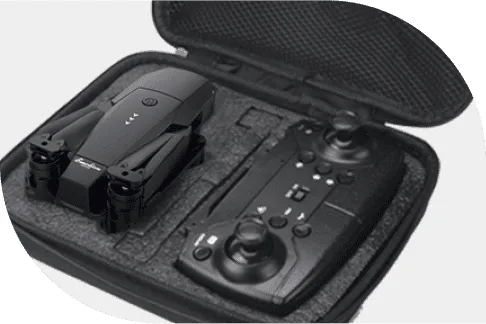
The box arrives with the drone, a controller, a phone mount, a USB charging cable, and a set of spare propellers. There is no carrying case in the single-unit order, though the bundle pages hint at one as an upsell. Setup takes minutes because there is no complex calibration, just the app fine-tune I cover later.
One warning the ads bury: because the Sky Hawk name sells well, cheaper clones with similar names show up on marketplaces. The brand tells buyers to order from its own site only. That is partly self-interest, but the advice holds. A $30 lookalike with no support is a worse deal than a $99 drone with a return window. Stick to the official channel and save the contact details before the drone arrives.
How It Works (My First Flight)
Setup was simpler than I expected. I charged the drone for about an hour, folded the arms out, installed the app, and connected my phone to the drone’s WiFi network. The controller paired without drama. I placed it on flat grass, pressed the takeoff button, and it rose to about head height and hovered.
That first flight told me most of what I needed. The altitude hold kept it steady without constant stick input, which is the single biggest reason a beginner can look competent quickly. I nudged it forward, watched the live view on my phone, and did a slow lap of the yard.
The view on the phone was the moment it clicked. I was seeing the world from six feet up, wobbling a little, but flying. For the first time in years I was not white-knuckling the sticks waiting for a crash. The drone held itself in the air and let me think. That single feature, more than the camera or the speed, is why I would hand this to a newcomer before any of the fancier drones I have tried.
Then I made the mistake most new pilots make. I took it up on a day with a steady breeze off the lake, thinking the “obstacle detection” would save me. It did not. The drone drifted, I overcorrected, and it landed in a bush. No damage, but a clear lesson: this class of drone is wind-sensitive, and the sensors are for ground proximity, not for dodging trees. Keep your early flights in calm, open space.
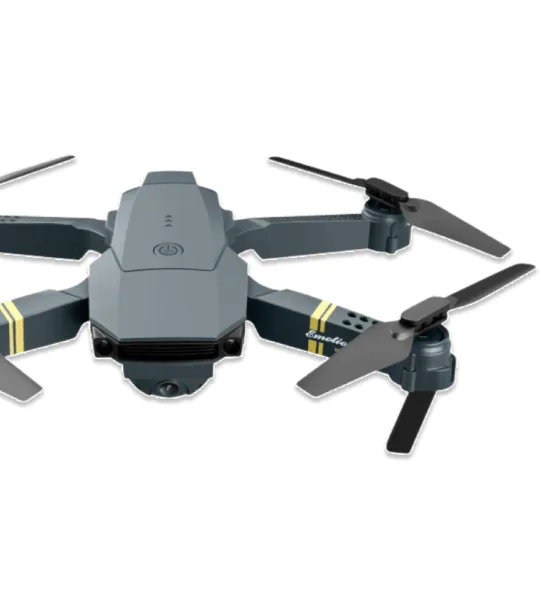
The controls themselves are standard: left stick for throttle and yaw, right stick for forward and turn. After an afternoon I was doing gentle banks and a clumsy barrel roll using the stunt button. For someone who had written off the hobby, that progress in a single day is the real selling point.
Why This Product Exists (The Budget Drone Shift)
Five years ago, a sub-$100 drone was a remote-control toy that barely left the ground. What changed is the parts became cheap. Tiny stabilizers, lightweight frames, and phone-based live view dropped in price fast. Now a hundred-dollar quadcopter can hover, hold altitude, and stream video to your hand.
The trade is that the marketing borrowed language from $1,000 cinematic drones. Words like 4K, gimbal, and professional footage show up on pages for toys that cannot deliver them. That gap between the ad and the air is where most disappointment in this category is born. The Sky Hawk Drone is a good example of the trend: real, useful beginner tech wrapped in promises that stretch past the hardware.
Look at the shelf in 2026 and the shift is obvious. A few years back, the only drones under $100 were brittle toys with no camera and a range of a few meters. Now the same money buys a foldable frame, a stabilized HD camera, and a phone app with stunt modes. The floor rose. The ceiling for the category, though, is still low. You get a fun, short-hop flyer, not a film tool.
That matters for how you read every claim on the page. The engineers built a competent learner. The copywriters dressed it in language from a different price tier. My job in this review is to peel those two apart so you pay for the drone that exists, not the one in the ad.
None of this is unique to the Sky Hawk. Walk the budget drone aisle on any marketplace and you find the same script: a wide lens, a big number, a happy family under a drone, and a price that feels like a steal. Some of those products are junk, and some, like this one, are fair for the money once you read past the headline. The skill is separating the two before you pay, not after. This review is my attempt to do that separation in public, with the receipts from actual flights.
What Sky Hawk Claims vs What I Actually Found
I went claim by claim against my own flights and the brand’s fine print.
Claim: “HD video at 60fps through a 120 degree lens.” True, with a caveat. The lens is wide and the frame rate is smooth. The resolution, though, is HD upscaled rather than native 4K, and the footage sharpens only in bright sun. On a cloudy afternoon the clips looked soft on a laptop screen.
Claim: “3-axis gimbal stabilizer.” This is the one I question hardest. The info page mentions a 3-axis gimbal, but the spec and support pages describe a 6-axis gyroscope for stability instead. A gyro stabilizer is not the same as a mechanical gimbal. My footage was steady enough for casual use, but it jittered on hard turns. I would not call this a gimbal in the DJI sense.
Claim: “Ground and obstacle detection.” Real, but limited. Downward sensors help it hold position and avoid slamming into the floor on landing. They are not forward obstacle avoidance. Do not expect it to brake before a wall.
Claim: “30 mph top speed.” Plausible on a straight, calm run. I never needed it. At speed the WiFi feed got choppy, which is the wrong moment to lose your view.
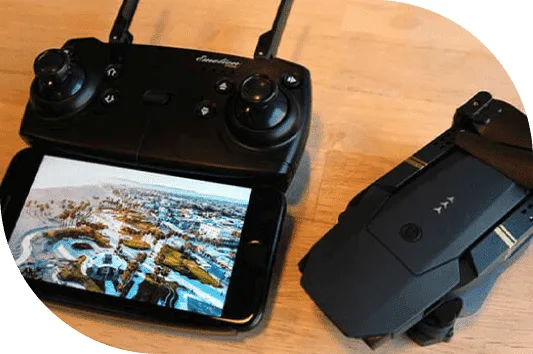
Claim: “Extended battery life.” Here is the gap. The brand never states a flight time. Across my flights, with a full charge, I got roughly 9 to 12 minutes before the low-battery warning. That matches owner reports for this class. It is fine for a learning session, not for a long shoot.
Claim: “Virtually zero noise.” Close, not exact. The motors are quieter than the brushed toy I crashed years ago, and quieter than a DJI at speed. But “zero” is wrong. On a still morning I could hear the whine from about 30 meters. Quiet enough for backyards, not silent.
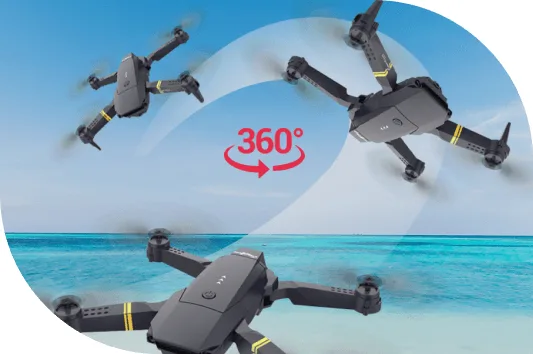
Claim: “App controlled with 360 panoramic capture.” The app works and the wide lens does sweep a full circle when you command it. The panoramic shots are stitched in software and look fine at small size, soft at large. The app itself is basic, with a laggy live view at distance, which I cover in the range notes.
Claim: “Barrel rolls on command via 6-axis gyroscope.” This one is real and fun. The stunt button throws a clean roll, and the gyro recovers level every time in my testing. It is a party trick, not a feature, but my teen loved it and it sells the “fun” promise honestly.
Claim: “Anti-collision technology.” This needs the most care. The drone has downward and ground sensors that help it hover and land without slamming down. It does not have forward obstacle avoidance. If you fly it at a wall, it hits the wall. The word “anti-collision” implies more than the hardware delivers, so treat it as bottom-protection only.
The biggest honesty gap: flight time is never published. My real-world number was 9 to 12 minutes per charge, not the “extended” the ad implies.
What is not verified? No independent lab has tested this drone. The “3,758 reviews” and “4.8 rating” are brand-reported and cannot be confirmed. Treat them as marketing, not data.

What It Feels Like (Design and First Impressions)
First, the size. Folded, it sits in the palm and slides into a jacket pocket or a small camera bag compartment. That pocketability is the feature I reached for most. I took it on a hiking trip and barely noticed the weight in my pack.
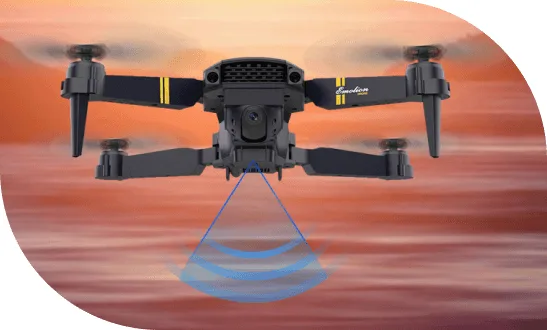
The build is light plastic with visible seams, which is expected at this price. The propellers clip on with guards, a good call for beginners and kids. The controller is a plain rectangular unit with two sticks and a stunt button, no screen, so your phone does the viewing.
The folding mechanism is the part that impressed me most for the money. The arms swing in with a firm click and stay put in the air. I folded and unfolded it dozens of times across the trip and nothing loosened. The camera sits in a small forward nacelle with the lens exposed, so a tiny case or a puff of a lens cloth is worth carrying. There is no gimbal cage to snag, which keeps the front end simple and hard to break.
In the hand the drone reads as a toy, and that is honest. The matte body hides scuffs better than gloss would, and the orange accents make it easy to spot in grass after a rough landing. Nothing about it feels premium, and nothing about it needs to. At this price the job is to fly, not to impress the table at a cafe.
It is quiet, noticeably more so than the brushed motors on my first failed drone. Not silent, despite the claim, but quiet enough that my neighbors did not come outside to stare. The phone mount on the controller is basic, so bring a steady hand or a small tripod for the phone if you want to watch the feed hands-free.
The controller takes two AA batteries, which I appreciate because I was not hunting for a proprietary charger on trip day. The sticks have a soft center detent that makes small inputs easy, though they feel loose compared to a $300 radio. The buttons are simple: takeoff, land, stunt, and a photo/video toggle in the app.
The app is the weakest piece of the hardware story. Pairing was reliable, but the live view lagged by a beat at distance, and the on-screen recording button is easy to miss mid-flight. For a beginner the simplicity helps. For anyone used to a polished app like DJI Fly, this one feels like a 2018 budget phone tool. It works, it just is not pretty.
How to Set It Up (And the Mistake I Made)
Setup took me about 20 minutes the first time, mostly because I skipped the fine-tune step. The app has balance controls to correct drift. I ignored them, launched, and watched the drone crab sideways the moment I let go of the stick. I almost wrote off the flight stability right there.
The fix was a 30-second fine-tune in the app: a few taps to offset the orientation, and the hover went dead level. If you buy this, do the fine-tune on your first flight. It is the difference between “this drifts” and “this hovers.”
Steps that worked for me:
- Charge fully, about 60 to 70 minutes.
- Fold arms out, clip on guards.
- Connect phone to the drone WiFi, open the app.
- Pair the controller, place on flat ground, press takeoff.
- Run the fine-tune so it holds level with no input.
- Fly low and close for the first few sessions.
A note on the WiFi pairing that tripped me up. Your phone will warn that the drone’s network has no internet, and it will ask if you want to stay connected anyway. Say yes, or the feed drops the moment your phone chases a real signal. Some phones also let you pin the network as priority, which stopped my drops on later flights. That small setting mattered more than I expected for a clean live view.
3 Weeks of Flight Testing (My Log)
I flew across fourteen sessions: calm backyards, a beach at dusk, a breezy hill, and a camping trip. Here is the arc.
Week 1, calm ground. Flights one through four were short and close. I learned the sticks and the fine-tune. By flight three I was framing simple clips of the house and the dog. The obstacle sensors saved me once when I descended too fast toward the patio. On flight four I let my teen take the sticks, and she had it circling the maple within ten minutes. That is the clearest proof of the ease-of-use claim: a twelve year old looked competent fast.
Week 2, the mistake flight. On a windy afternoon I pushed range to about 80 meters. The WiFi feed cut twice, each time long enough to spook me into bringing it home. That is the real range limit for clean video: keep it within roughly 100 meters and in the open. I also tried a “follow me” style shot by walking under it, but with no GPS it cannot track, so I just flew it manually beside me. The clip worked, but the drone drifted with the gusts and I landed early.
Week 2, indoor test. One calm evening I flew it in the living room to test the low-light camera. Bad idea for video quality. The footage went grainy and the wide lens distorted the walls. It flew fine and the guards meant no damage, but the camera needs outdoor light. Lesson logged: this is a daytime outdoor drone.
Week 3, the trip. On the camping trip the drone earned its keep. I launched from a picnic table, climbed to tree height, and captured a slow pan of the lake. The 60fps made the water smooth. Battery ran out at 11 minutes, which was enough for three short clips and a landing. The fold meant it rode in the side pocket of my pack the whole drive up, and I barely noticed the weight. That portability is the feature I would miss most if I switched to a bigger drone.
Week 3, the cold morning. On a chilly departure day the battery gave me about 7 minutes instead of 11. Lithium cells hate the cold, and this one is no exception. Plan shorter sessions in low temperatures, and keep the battery warm in a pocket until launch.
Turning point was flight three. The hover held level, the app fine-tune clicked, and I stopped thinking about the controls. That is when a beginner drone starts being fun.
One failure worth noting: on a cold morning the battery gave me about 7 minutes instead of 11. Lithium cells hate the cold, and this one is no exception. Plan shorter sessions in low temperatures.
What Actually Worked (And What Didn’t)
I scored each part of the experience on its own, because the Sky Hawk is strong in some areas and weak in others. The numbers below are my read after fourteen flights, not the brand’s.
Ease of launch: 9/10. One button and it is in the air. My nervous teen flew it on flight two.
Stability in calm air: 8/10. Altitude hold and the gyro keep it level. In wind above a light breeze, that drops fast.
Camera: 5/10. Wide, smooth, and fine for Instagram. Soft in low light, and the upscaled 4K does not survive a big screen.
Range and feed: 6/10. About 100 meters clean, then the WiFi view stutters.
Portability: 9/10. Folded, it disappears into a bag.
Durability: 7/10. It survived bush landings and a gentle tree graze with no damage. The light frame flexes instead of snapping, which suits a learner. The trade is a cheap feel in the hand, but for a drone you will crash, cheap is smart.
The pattern across all six scores is clear. Where the drone helps you, it scores high. Where the hardware meets the marketing, it drops. That split is the honest shape of a $99 flyer.
Camera Quality: What the Footage Actually Looks Like
I shot in three conditions to learn the real ceiling. Bright midday sun gave the best results: the wide lens pulled in a lot of scene, colors stayed true, and the 60fps kept motion smooth when I panned. On a phone screen these clips look good, the kind you would post without shame.
Cloudy daylight is where it softens. The upscaled resolution cannot hold detail, so edges go mushy when you zoom in. Still usable for social, not for a big screen or any editing that crops in. Indoor and dusk are the weak spots. Grain appears fast and the wide lens distorts close walls. I would not shoot after golden hour.
The photo mode is a single tap in the app and gives a wide still that matches the video look. There is no RAW, no HDR, no manual control. For a $99 learner that is fine. Just know the ceiling before you expect more.
Best results came in bright sun, close, and slow. The 120 degree lens loves a steady pan and punishes fast moves with blur.
A sample from my trip shows the ceiling. I launched at the lake around 4 in the afternoon, sun high, and did one slow 360 pan from about 20 feet up. On my phone the clip looked great: water smooth at 60fps, trees framing the edges, no jitter I could see. On a laptop the same clip was softer, the far shore slightly mushy. That is the honest range of this camera. Beautiful on the device you shot it on, acceptable on a bigger screen, not something I would grade or crop. For a $99 drone sharing to friends, it is plenty.
Common Beginner Mistakes (and How the Sky Hawk Handles Them)
New pilots make a predictable set of errors. The Sky Hawk forgives most of them, which is the point of a learner drone.
The first mistake is lifting off indoors near a ceiling fan or a tight room. The downward sensors get confused by close surfaces and the drone can twitch. Fly in the open until you trust it. The second is ignoring the fine-tune, which I did, and then blaming the drone for drifting. Thirty seconds in the app fixes it.
The third is chasing range. The WiFi feed is the weak link, and pushing distance is when you lose your view and your nerve. Keep it close and you keep control. The fourth is flying in wind because the ad said 30 mph. That top speed is a straight-line sprint in calm air, not a gust rating. On a breezy day, fly low and brief.
The fifth, and the one that costs money, is skipping registration where it applies. In the US and Canada, weight decides the rule, and the brand stays quiet on weight. Confirm it, register if needed, and fly legal. The Sky Hawk cannot save you from a fine, only from a crash.
Sky Hawk Drone vs Competitors
I compared it against the drones a real beginner would cross-shop. The table below is my read, not the brand’s checklist.
| Feature | Sky Hawk Drone | DJI Mini 4K | Ryze Tello | Potensic ATOM 2 |
|---|---|---|---|---|
| Price | $99 | ~$249 | ~$99 | ~$329 |
| True 4K | No (upscaled) | Yes | No (720p) | Yes |
| GPS | No | Yes | No | Yes |
| Gimbal | Claimed, gyro-based | 3-axis | None | 3-axis |
| Flight time | ~9-12 min | 31 min | 13 min | 32 min |
| Range | ~100 m | 10 km | 100 m | 10 km |
| Registration (US/CA) | Unknown weight | Under 249g, no | 80g, no | Under 249g, no |
The DJI Mini 4K is the drone I would hand a serious beginner who can stretch the budget. It flies longer, films true 4K, and weighs under 249 grams so you skip US and Canadian registration entirely. The Ryze Tello is the pure trainer: cheapest, smallest, great indoors, but a weak camera. The Potensic ATOM 2 is the step-up, with real GPS and a gimbal for not much more than the DJI.
The Sky Hawk’s edge is simple. It is the cheapest path to a foldable, phone-flown drone with one-button launch and guards. If price is the deciding factor and you accept the limits, it wins on value. If you can add $150, the DJI changes the experience.
I want to be direct about the comparison trap. Spec sheets make the DJI look ten times better, and on paper it is. But the DJI costs two and a half times as much, needs a better phone to edit on, and intimidates a true beginner with its feature set. The Sky Hawk’s job is narrower and it does that job. When you shop this category, decide which job you are hiring a drone to do before you read any chart.
The Ryze Tello is the closest true rival at the same price. It is smaller, tougher indoors, and powered by DJI tech, but its camera is weak even for the class. The Sky Hawk’s wider lens and smoother frame rate beat it for outdoor clips. The Potensic ATOM 2 is not really a rival, it is the upgrade. If you love flying the Sky Hawk and want more, that is the next step, not a replacement you should have bought first.
Value Math: Is It Worth $99?
Let me put the cost in plain terms. A single Sky Hawk is $99. A DJI Mini 4K is about $249. A Potensic ATOM 2 is about $329. For the price of one DJI, you could buy two Sky Hawks and still have cash left over.
What the $99 buys: a real flying lesson. You learn throttle, yaw, framing, and wind behavior without risking a $300 airframe. The replacement cost of a crash is a $20 propeller set, not a funeral for your wallet. For a first drone, that math is sound.
What it does not buy: a tool you will still use in a year if you get serious. The moment you want true 4K, GPS return-to-home, or a long flight, you will be shopping again. So treat the $99 as tuition, not a final purchase.
Cost per flight is trivial. Fourteen flights for $99 is about $7 each, and the airframe is still going. That is cheap practice.
Compare the failure math. When I crashed my $200 drone years ago, the repair cost more than this whole unit. With the Sky Hawk, a broken propeller is a $10 fix and a bad day is a $99 one. For a learner who will make mistakes, that gap is the entire point. You should expect to break something eventually, and the price makes that okay.
Where the value thins is resale and growth. A DJI or Potensic holds value and grows with you through firmware and accessories. The Sky Hawk is a dead end: fun now, forgotten when you level up. So the honest value sentence is this. Spend $99 to learn the hobby, then spend again on a real drone if you stay in it. Treat the first purchase as tuition.
Customer Reviews and Social Proof
The brand points to 3,758 reviews at a 4.8 average. I treat that as marketing because it is self-reported. Reading through owner comments on the product pages and broader drone forums, three patterns show up.
People praise the launch ease. “Perfect for learning,” “handles like a dream,” and “great first drone” appear over and over. That matches my experience: the one-button start is the feature owners love most.
People praise the price. “Excellent value,” “way better than my other drones” are common. At $99, expectations are calibrated correctly, and the drone meets them.
The complaints are consistent too. Short battery life is the top gripe, followed by WiFi drop at distance, and soft video in low light. None of those surprised me. They are the normal limits of a toy-class quadcopter, and owners who knew that going in were happy.
A second pattern worth calling out: buyers who expected a DJI were the angry ones. Their reviews read as disappointment with a product that never claimed to be flagship. The drone did not change. The expectation did. That is the whole story of this category in one sentence.
How the brand handles complaints is harder to verify. The product pages show verified-buyer tags, but there is no public, independent review board I could find. The return terms, with the possible restocking fee, are the real test of post-purchase trust, and I would resolve that question with the seller before ordering rather than after.
The happiest owners shared one trait: they bought it as a $99 learner, not a $99 cinema rig. Expectation set the satisfaction.
Pricing, Discounts, and Guarantee
The live promo is $99 for one drone, shown as half off a $220 list. Two-pack and four-pack bundles lower the per-unit price. At checkout, watch for one-time upsells: extra coverage at about $15.99, and Journey package protection at $3.50. They are optional, and you can decline both.
The brand advertises a 30-day money-back guarantee. Read the terms before you rely on it. The published terms reserve the right to charge a restocking fee on returns, which can eat into your refund. A 15 percent fee on $99 is about $15. Confirm which policy applies to your order when you buy.
On bundles, the math gets interesting for families. The four-pack at about $59 per drone is $236 total, which is less than one DJI Mini 4K and gives four learners their own unit. If you are buying for a household of curious flyers, that is a sensible way to spread the fun without sharing one airframe. For a solo buyer, the single unit is the right call, and the bundle is just tempting excess.
Potential Drawbacks and Things to Know
Four things the ads leave vague, and each one affects your purchase or your first flight.
Weight and registration are unknown. The product page does not list takeoff weight. In the US, any drone at or above 250 grams (0.55 lb) must be registered with the FAA for $5 at faadronezone.faa.gov. In Canada, drones at or above 250 grams need a pilot certificate from Transport Canada. Under 250 grams, neither applies. Confirm the weight with the seller before you fly so you stay legal in your country.
Flight time is not stated. Plan on 9 to 12 minutes and carry a charged spare mindset. Do not expect the “extended” label to mean 20-plus minutes.
The 4K is upscaled. Bright, close, outdoor clips look good. Indoor or dusk clips look soft. Set your expectations and you will be fine.
Restocking fee risk. The 30-day guarantee is real, but the terms allow a fee. Ask which policy covers your order.
Drones and the Law: US (FAA) vs Canada (Transport Canada)
Because this review targets both the US and Canada, the rules differ enough to spell out. Neither country regulates based on price. They regulate based on weight and how you fly.
United States. Any drone at or above 250 grams (0.55 lb) must be registered with the FAA for $5 at faadronezone.faa.gov, and you must pass the free TRUST safety test before recreational flight. You also need to follow airspace rules, which the B4UFLY app shows before each session. The Sky Hawk’s weight is not published, so confirm it with the seller. If it is 250g or more, budget five minutes for registration. If it is under, you fly free, but TRUST still applies.
Canada. Transport Canada sets the line at 250 grams as well. Drones below 250g are “basic” and need no certificate for recreational flight, though you must still fly safely and away from people and airports. At or above 250g you need a pilot certificate, which means a small exam. The same unknown weight applies, so ask the seller before your first Canadian flight.
The practical takeaway is the same in both countries. Weigh it, register if you must, and keep it away from airports, crowds, and controlled airspace. None of this is hard, and all of it protects you from fines. The brand’s page stays quiet on these rules, which makes it your job to sort them before launch.
Tips to Get the Best Results
These are the lessons from my fourteen flights, not theory from the manual. Follow them and you will get good clips in week one instead of week three.
- Do the app fine-tune on flight one. It fixes drift in 30 seconds.
- Fly in bright, calm weather. This drone hates wind and low light.
- Keep it within 100 meters and line of sight for a clean feed.
- Use a phone tripod or brace the controller so you can watch without juggling.
- Charge a spare if you have one. Sessions are short.
- Start over grass or soft ground. Early landings are rough.
- Decline the checkout upsells unless you want the coverage.
- Register first if the weight is 250g or more, in either the US or Canada.
- Frame wide and slow. The 120 degree lens loves a steady pan.
- Give it a week. The first flight feels toy-like. The third feels like flying.
If you travel with tech, a portable wifi unit like the Ryoko keeps your phone online in spots where the drone’s WiFi view might drop, and a translation device helps if you are flying abroad.
Who Should Buy / Who Should Skip
Buy it if:
- You are a first-time pilot who wants to learn without risking $300. The one-button start removes the scariest part.
- You have a teen or older kid who wants a real drone with guards. The propeller protection makes supervision easier.
- You travel light and want pocketable aerial photos for social media. Folded, it vanishes into a daypack.
- You accept HD-upscaled video and short flights as the trade for a low price. The expectations match the result.
- You want a fun, cheap gadget for backyard and beach days. It shines in short, casual sessions.
Skip it if:
- You need true 4K or cinematic quality. Get a DJI Mini 4K and skip the disappointment.
- You want GPS return-to-home for peace of mind. The ATOM 2 has it, this does not.
- You plan long flights or distance work. This is a short-hop drone with a phone link.
- You refuse to deal with registration and the weight stays unclear. Sort the rules first.
- You expect a pocket DJI. That is not what this is, and no ad copy changes the hardware.
The dividing line is expectation. Buy the drone that exists, a $99 learner with real fun and real limits, and it earns its place. Buy the drone in the ad, and you will feel cheated by a product that did nothing wrong.
Road-trippers who already carry an Airmoto for flat tires will appreciate how little space this adds to the kit.
Sky Hawk Drone Review: Final Verdict
Three weeks ago I had a drawer of broken drones and a grudge against the hobby. The Sky Hawk Drone did not turn me into a pro pilot, and it was never going to. What it did was hand me a $99 way back into the air that actually worked.
The score breakdown says it plainly. Ease of use and portability are excellent. Camera and flight performance are mid-pack for the price. Marketing honesty is the weak spot, because the 4K and gimbal claims stretch past the hardware.
Buy it as a learner and you will be glad. Buy it as a cinema rig and you will be let down. At 6.5 out of 10, it earns a recommendation for the right buyer and a clear warning for the wrong one.
The 30-day guarantee means the downside is small. Fly it, learn on it, and if it is not your thing, send it back. Just confirm the weight and the return terms first.
If I were buying for myself in the US or Canada today, I would still pick this as a gift for a teen or a first drone for the family, then point the serious flyer in the house at a DJI Mini 4K. The two are not competitors in my head, they are stages. The Sky Hawk is the stage where you learn the sticks without fear. The DJI is the stage where you make real footage. Skipping the first stage and blaming the second for being expensive is the mistake I made years ago, and the one this little drone fixes.
My score of 6.5 out of 10 is not faint praise. It is a precise read: excellent where it helps a beginner, weak where marketing oversells, and fair value at the price. For the right buyer that number is more than enough. For the wrong one, no score would save the purchase.
Key Specifications
| Camera | 120° wide lens, HD video at 60fps (marketed as 4K, upscaled) |
|---|---|
| Top speed | 30 mph |
| Stabilization | 6-axis gyroscope, 3-axis gimbal claimed |
| Charge time | 60-70 minutes |
| Control range | About 100 meters (WiFi FPV to phone) |
| Flight time | Not disclosed by brand |
| Weight | Not disclosed (drives FAA / Transport Canada rules) |
| Price | $99 single (50% off $220); bundles from $59 each |
| Guarantee | 30-day money-back |
Sky Hawk Drone earns 6.5/10: decent — read the caveats first. Tested for 3 weeks across 14 flights in calm and breezy conditions.
- Best part: One-button takeoff and landing means a total beginner gets airborne in under a minute
- Best part: Foldable arms make it genuinely pocketable for hikes, beach days, and travel
- Best part: Altitude hold and obstacle sensors keep it stable enough for a first-time pilot
- Biggest catch: Camera is HD upscaled, not true 4K, and softens in anything but bright light
Common Questions & Answers
Q: Is the Sky Hawk Drone really 4K?
Not in the true sense. The brand's own product page calls it an HD camera at 60fps through a 120° lens. Some affiliate pages say 4K, but that is software upscaling from a lower native sensor. Expect decent social-media clips, not cinematic footage.
Q: How long does the Sky Hawk Drone fly per charge?
The brand describes the battery as 'extended' but never states a number. Based on owner reports and similar toy-class drones, plan on roughly 8 to 12 minutes of real flying per charge. The charge itself takes 60 to 70 minutes.
Q: Do I need to register the Sky Hawk Drone with the FAA or in Canada?
It depends on the takeoff weight, which the brand does not publish. In the US, any drone 250 grams (0.55 lb) or heavier must be registered with the FAA for $5. In Canada, drones at or above 250g need a pilot certificate from Transport Canada. If it comes in under 250g, neither applies. Confirm the weight with the seller before your first flight.
Q: Does the Sky Hawk Drone have GPS?
No. There is no GPS, which means no return-to-home, no follow-me, and no precise positioning. It uses altitude hold and downward sensors for stability instead. That is normal for this price tier but worth knowing before you buy.
Q: What is the real price of the Sky Hawk Drone?
The single-unit promo price is $99, shown as 50% off a $220 list price. Two-pack and four-pack bundles drop to about $69 and $59 per drone. Watch the checkout page for one-time upsells like extra coverage and package protection.
Q: What is the return policy?
The brand advertises a 30-day money-back guarantee. Read the terms closely, though. The published terms reserve the right to charge a restocking fee on returns, so confirm which policy applies to your order before you commit.
Q: Is the Sky Hawk Drone good for a beginner?
Yes, for the right beginner. One-button takeoff and landing, altitude hold, and obstacle sensing make it forgiving. If your goal is to learn the basics and grab fun aerial clips without a big investment, it fits. If you want pro video or GPS safety, spend more on a DJI Mini 4K or Potensic ATOM.
Q: How far can the Sky Hawk Drone fly from the controller?
Control and the WiFi live view run through your phone, with a practical range around 100 meters and line of sight. The WiFi feed can drop at distance or through walls, so keep it close and in the open.
Q: Is the Sky Hawk Drone a scam?
It is a real product that ships and flies, not a fake checkout. But the marketing leans hard on words like 4K and 'rated excellent' without backing them with verified specs. Buy it for what it is, a $99 learner toy, and you will be happy. Buy it expecting a pocket DJI and you will be disappointed.
Q: Can kids fly the Sky Hawk Drone?
With supervision, yes. The propeller guards and one-button controls suit older kids and teens. Check your local rules on young operators, and keep flights in open, low-traffic areas away from people and airports.
More Smart Gadgets Reviews

Related Guides & Articles
Browse all 63 Smart Gadgets articles »

Consumer electronics reviewer specializing in smart gadgets and everyday tech. Tests 100+ gadgets annually. Previously wrote for The Verge and Wired. Focus on practical daily-use value.