
Do Plug-In Ionic Air Purifiers Work? What EPA and CARB Say
Do plug-in ionic air purifiers work? How ion generators clean air, where they fall short against HEPA, and the ozone rules that matter.

Tech Reviewer
In This Article
- Do Plug-In Ionic Air Purifiers Work? The Quick Answer
- How a Plug-In Ion Generator Cleans Air
- Not All “Ionic” Purifiers Are the Same
- How Air Purifiers Are Actually Tested
- What the Guidance Says
- Ozone in Practice: What It Means for a Bedroom
- Ionizer vs HEPA at a Glance
- Who Should Consider an Ionizer
- HEPA Purifiers With a Built-In Ionizer: Worth It?
- Which Purifier for Which Problem
- Buying in the US vs the UK
- Common Myths About Ionic Air Purifiers
- The Real Cost: Ionizer vs HEPA Over Three Years
- A Short Glossary
- Electrical Safety for Plug-In Units
- What to Tell Your Doctor
- A Two-Week Home Test for Any Plug-In Purifier
- What to Check Before You Buy
- Bottom Line
Plug-in ionic air purifiers are the fastest-growing corner of the air cleaner market, and the pitch is always the same. Plug it into the wall, forget about filters, and breathe cleaner air. So do plug-in ionic air purifiers work, or is it a nice story?
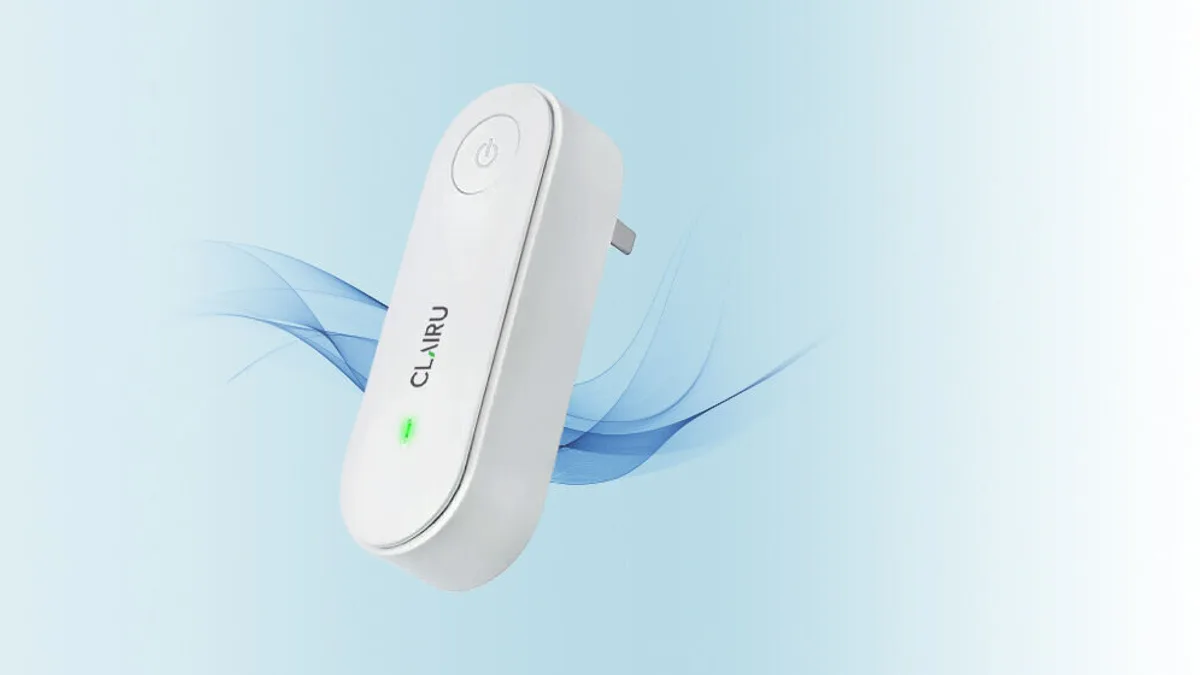
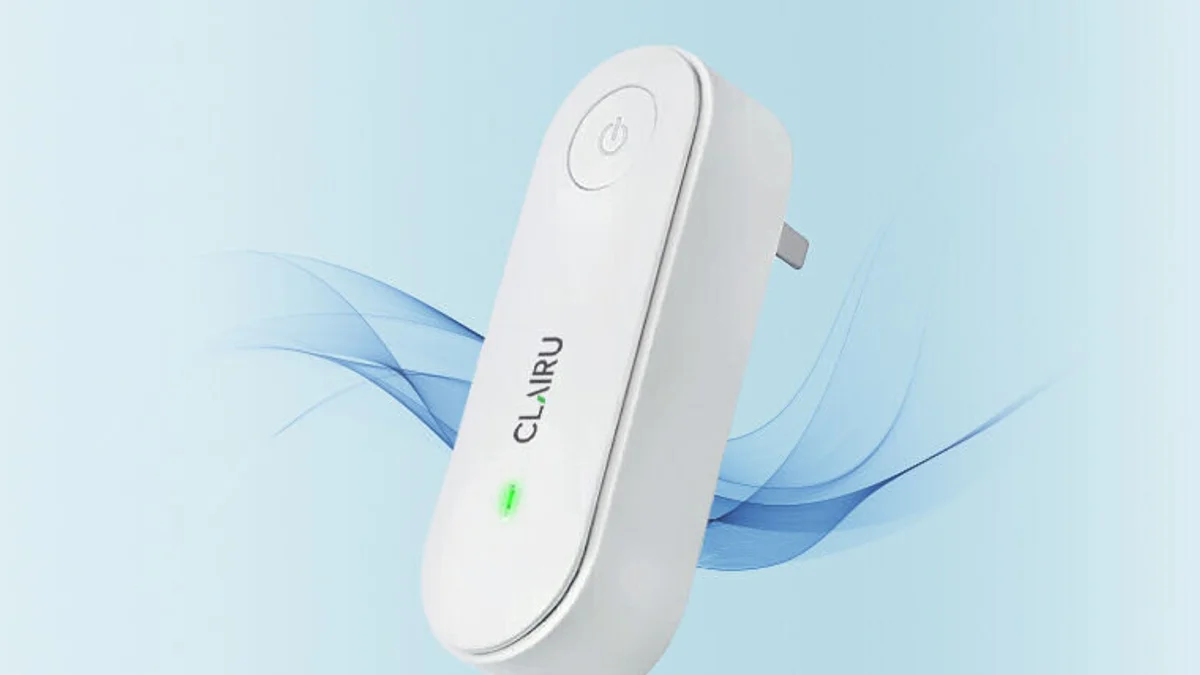
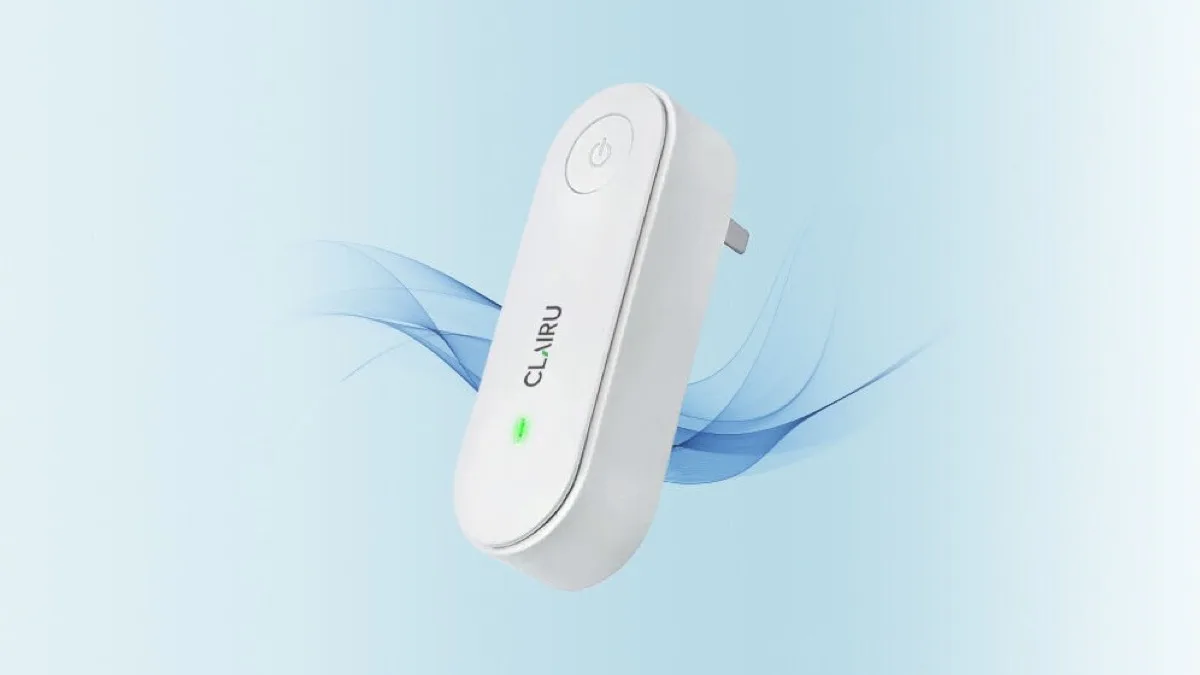
The honest answer is that they do something, they do it less well than a HEPA filter, and one safety question deserves a straight answer before you buy. This guide walks through how they work, what EPA and California CARB say, and how to decide. It is background for our Clairu air purifier review, which looks at one popular model, and our breakdown of Clairu complaints and its Trustpilot score.
Do Plug-In Ionic Air Purifiers Work? The Quick Answer
- How they work. They release negative ions that attach to airborne particles. The particles clump together and settle onto surfaces.
- What they do well. They are silent, small, cheap to run and need no filters.
- What they do less well. They usually cannot match a HEPA filter on particle removal, they do not remove gases and odors the way carbon does, and most publish no CADR.
- The safety flag. Some ionizers produce ozone, a lung irritant.
- Best use. A light supplement in a small room, not a replacement for a HEPA purifier if you have allergies or asthma.
How a Plug-In Ion Generator Cleans Air
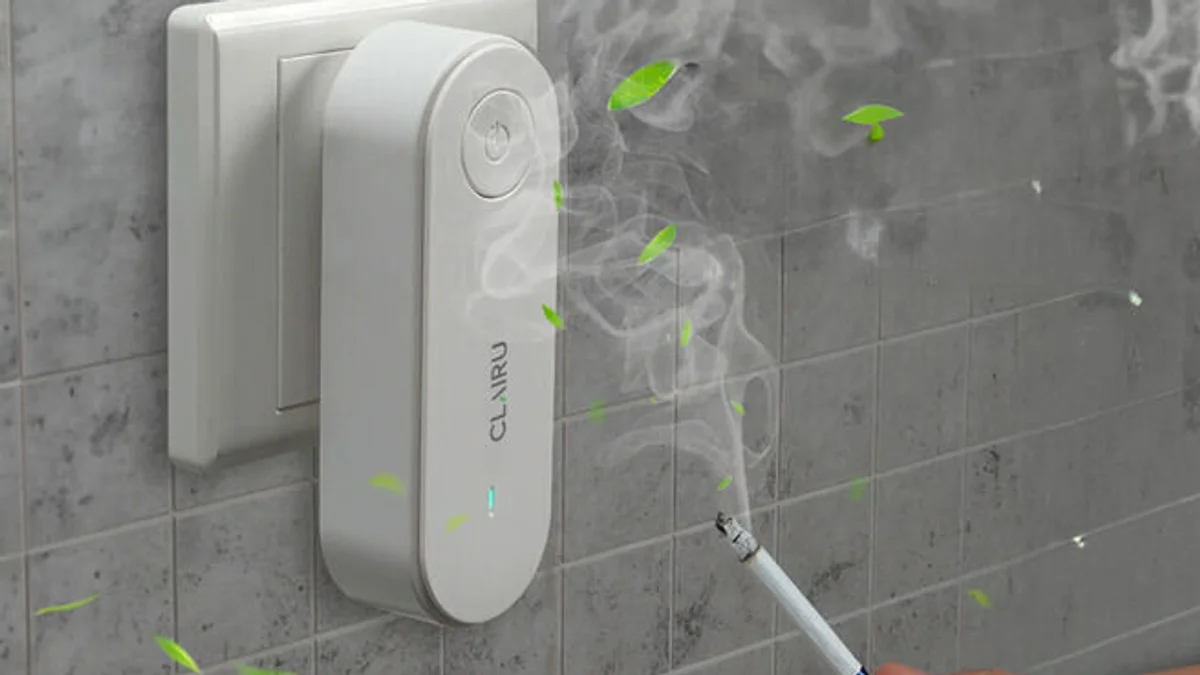
An ion generator uses a small electrical charge to release ions into the room. Those ions stick to tiny airborne particles such as dust, pollen and smoke. Once charged, particles are drawn together into larger clumps, or pulled toward walls, floors and furniture.
Two things follow from that mechanism.
- The particles are not always destroyed. They may land on your bookshelf or on the wall. The air can look and test cleaner while the dust is now on a surface you have to wipe.
- There is no fan or filter, so there is nothing to measure. That is why these units are silent and cheap to run, and also why most of them come with no CADR rating.
A HEPA purifier is built the other way around. A fan pulls room air through a dense filter, the filter traps particles, and clean air is pushed out. The filter and the airflow are measurable, and the result is a published number.
Not All “Ionic” Purifiers Are the Same
The word ionic covers several different designs, and the differences matter for both performance and ozone.
- Plain ion generators. A small unit, often plug-in and fanless, that releases negative ions into the room. These are the cheapest and most common, and they are what most “filter-free” plug-ins are.
- Electrostatic precipitators. These charge particles and then collect them on oppositely charged plates inside the unit. The plates need cleaning. EPA lists electrostatic precipitators among the technologies that may have the potential to emit ozone.
- Bipolar or needlepoint ionization. Often used in ducted or commercial systems, releasing both positive and negative ions. The performance evidence for these systems is mixed and varies a lot by product.
- Plasma and photocatalytic units. Marketed as advanced. EPA’s guide says research has not yet shown that plasma, photocatalytic oxidation or ultraviolet light can remove gases effectively in portable residential air cleaners.
- HEPA purifiers with an optional ionizer. A fan-and-filter purifier with an ionizer switch. The filter does the main work, and the ionizer is an extra you can turn off.
When a listing says “ionic,” find out which of these it is. A plug-in with no fan and no filter is the first type, and it is the hardest to verify.
How Air Purifiers Are Actually Tested
Understanding testing is the fastest way to see why ionizers are hard to evaluate.
CADR. The clean air delivery rate comes from a standard test, where the purifier runs in a sealed chamber and particle levels are measured before and after. It is reported separately for smoke, dust and pollen. EPA says the higher the CADR, the more particles the cleaner will remove. Filter-based units are set up for this test. Many plug-in ionizers publish no CADR at all.
Independent verification. EPA points buyers to the AHAM Verified label, which relies on standardized testing. If a listing carries it, the CADR is more than a marketing number.
Ozone testing. In California, CARB certifies portable indoor air cleaners against an ozone emission limit and electrical safety standards. EPA suggests looking for cleaners that have been tested and shown to emit little or no ozone.
Home testing. You can also test at home with a cheap particle monitor. Log the reading before you switch the purifier on, run it for a few hours with the door closed, and compare. It is imperfect, but a unit that changes nothing in a measured room is telling you something.
An ionizer that offers none of these has left you with the manufacturer’s word alone.
What the Guidance Says
EPA’s guide to air cleaners in the home covers ion generators and other electronic air cleaners alongside filters. Two points from that guidance shape the buying decision. Ozone is a lung irritant that can worsen breathing problems, and some electronic air cleaners produce it. And air cleaners in general work best as part of a plan that also includes controlling sources and ventilating.
EPA also has a separate page on ozone generators sold as air cleaners, which explains that ozone can have harmful health effects and is not an effective way to clean indoor air.
California goes further. CARB states that “all portable indoor air cleaning devices sold in California must be certified by CARB to meet ozone and electrical safety standards.” A CARB certification is the closest thing to a public ozone check that a shopper can look up.
Ozone in Practice: What It Means for a Bedroom
Ozone is easy to dismiss as a technical detail, but it is the reason regulators pay attention to ionizers.
Ozone is a lung irritant. EPA advises avoiding portable air cleaners that intentionally produce it, and notes that it can worsen breathing problems for people with asthma. Small rooms with closed doors are where any emission would build up most, and a bedroom at night is the classic example: small volume, eight hours, no ventilation.
What to look for:
- A CARB certification or AHAM Verified label. These are the closest thing to a consumer-facing ozone check.
- A stated ozone output. Some sellers publish a figure. A number is better than a promise.
- A clear statement that the unit is not an ozone generator. Absence of any mention is a weak signal.
What to do if you already own a plug-in ionizer:
- Use it in a room with ventilation, not a sealed closet or a tiny closed bedroom, until you have confirmed its certification.
- Take note of a sharp, metallic or “electric” smell, and of headaches or throat irritation, and unplug the unit if you notice any.
- Ask the seller for certification in writing.
California’s ozone limit for indoor air cleaners is 0.050 parts per million, and the CARB program page explains the certification requirement and links to the list of certified models.
Ionizer vs HEPA at a Glance
| Plug-in ionizer | True HEPA purifier | HEPA plus carbon | |
|---|---|---|---|
| Particle removal | Moves and clumps particles | Captures particles in a filter | Captures particles in a filter |
| Gases and odors | Weak | Limited | Good, from carbon |
| Published CADR | Rarely | Yes | Yes |
| Filter costs | None | Filter every 6 to 12 months | Filters every 6 to 12 months |
| Noise | Silent | Fan noise | Fan noise |
| Ozone concern | Possible, check certification | None | None |
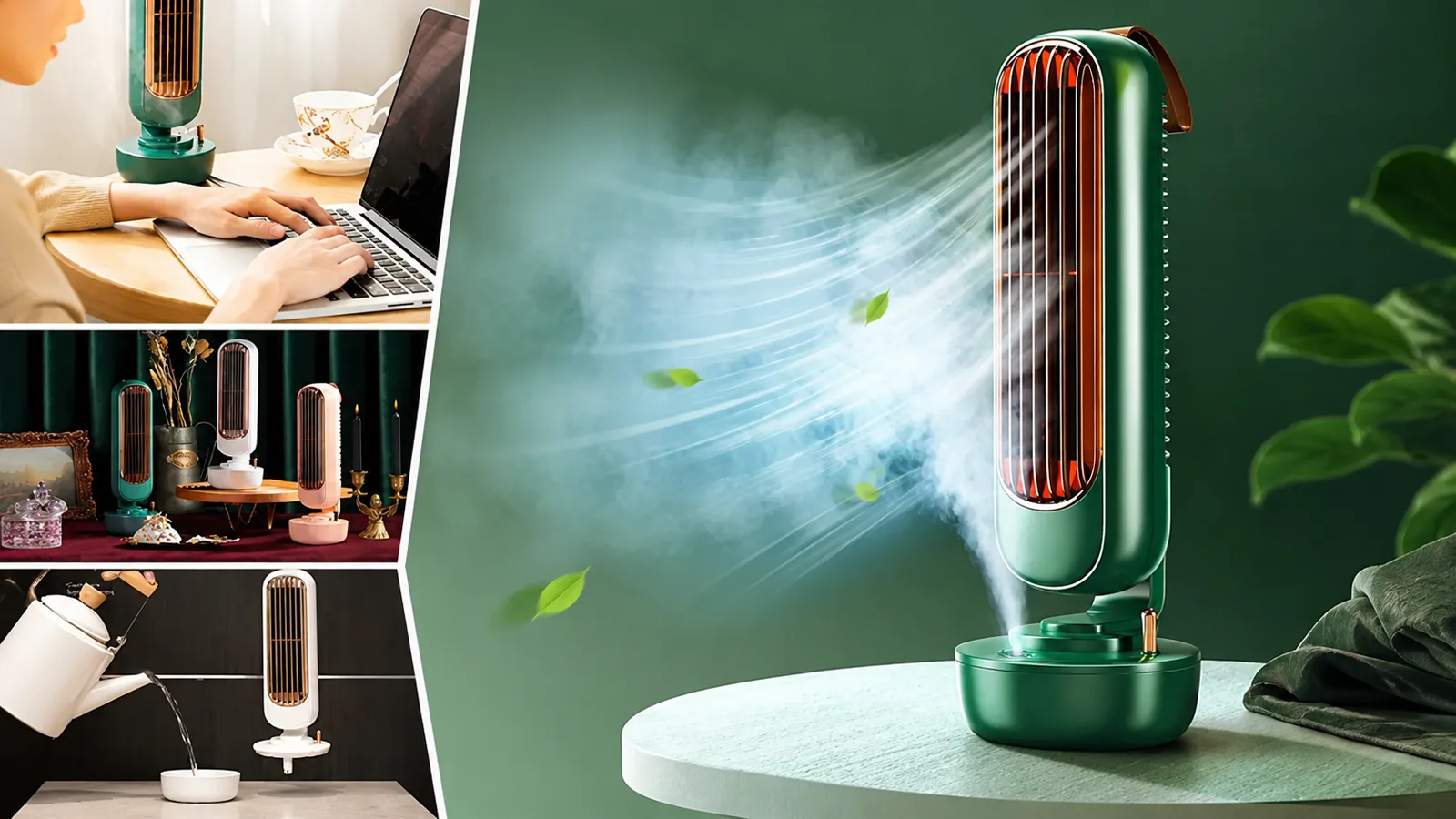
If you are curious how other room-comfort devices compare, our smart home coverage includes cooling and air gadgets tested against the same standard of proof.
Who Should Consider an Ionizer
An ionizer is a reasonable low-stakes experiment if you have a small room, mild concerns and want zero maintenance. Treat it as a supplement, and buy only from a seller with a clear refund policy so you can send it back.
If your real complaint is a stuffy, hot bedroom rather than dust, cooling matters more than purifying, and our guide to windowless air conditioners explains the options. An ionizer is also not the right tool if you have asthma, COPD or serious allergies, if you live with smoke or wildfire haze, or if pet odors are the main problem. In those cases a sealed HEPA purifier with a carbon layer, and a CADR sized for your room, is the safer buy.
HEPA Purifiers With a Built-In Ionizer: Worth It?
Many mainstream HEPA purifiers include an ionizer mode. The useful thing about this design is the switch. You get a full filter and a published CADR as the foundation, and the ionizer is an option, not the whole product.
If you are shopping for one, look for these details.
- An off switch for the ionizer. You should be able to run the purifier as a plain HEPA unit.
- Ozone documentation. Certification or a stated ozone output, since the ionizer is the part that could emit it.
- Real CADR numbers measured with the ionizer off, which is the honest baseline.
In practice, for allergies and dust you can leave the ionizer off and lose nothing, because the filter carries the load. That is the strongest argument for buying filtration first.
Which Purifier for Which Problem
Match the tool to the problem, not the other way around.
| Your main problem | Best first choice | Where an ionizer fits |
|---|---|---|
| Pollen, dust, dust mites | True HEPA sized to the room | Not a substitute |
| Pet dander | True HEPA, regular vacuuming | Might help dander settle, but it lands on surfaces |
| Pet or cooking odors | HEPA plus a substantial carbon layer, ventilation | Weak on gases |
| Wildfire or tobacco smoke | Large-CADR HEPA with carbon, windows closed | Not suitable |
| Musty smell or mold | Fix the damp, then clean the source | Not a fix |
| Small bathroom or hallway freshening | A plug-in can be a light extra | Reasonable, with ozone checks |
| Nursery or asthma bedroom | True HEPA with a published CADR | Avoid uncertified ionizers |
The pattern is consistent. The higher the health stakes, the less sense it makes to rely on an ionizer.
Buying in the US vs the UK
GearPuff readers are mostly in the US and the UK, and a few details differ.
- Certification. CARB certification is a California scheme. It is a useful yardstick in the US, but it does not apply in the UK. In the UK, look for UKCA or CE marking and an electrical safety declaration on the unit and packaging.
- Voltage and plugs. UK mains is 230 volts with a three-pin plug. A unit built for 120 volts and US sockets should not be used in the UK, and the reverse applies too. Confirm rated voltage before ordering, especially from overseas sellers.
- Returns. Cross-border returns can be costly. Check who pays return shipping, and whether the guarantee covers your country.
- Payment protection. Paying by credit card or PayPal gives you a dispute route in both countries, and credit card purchases in the UK can carry additional statutory protection within certain price ranges.
Common Myths About Ionic Air Purifiers
“Filter-free means maintenance-free and better.” It means no filter costs, but it also means no filter performance.
“Negative ions are natural, so they must be safe.” Outdoor ions occur naturally, but an appliance that generates them at high output may also generate ozone. Safety depends on the design and testing, not the word natural.
“It cleans the air instantly.” Ions attach to particles over time, and the effect depends on room size, ventilation and particle type.
“More units means cleaner air.” Multiple uncertified units in a closed home also multiply any emissions.
“Customer reviews prove it works.” Ratings on a seller’s own page are not evidence. In the Clairu research, the same rating and review counts appeared on an unrelated product’s page.
The Real Cost: Ionizer vs HEPA Over Three Years
Price tags mislead, so it helps to compare total cost. The figures below are illustrative assumptions to show the method, not quotes. Swap in real prices.
| Cost item | Filter-free plug-in ionizer | Small-room HEPA purifier |
|---|---|---|
| Purchase price | Low (assumed) | Higher (assumed) |
| Filters over 3 years | None | 3 to 6 replacements at 6 to 12 month intervals |
| Electricity | Very small | Small on low, more on high |
| Verified performance | Usually unpublished | CADR published |
| Resale or refund risk | Depends on seller record | Depends on retailer |
Two conclusions follow. The ionizer really is cheaper to own, and that is a legitimate reason to consider one for a low-stakes room. But if the ionizer does not deliver a measurable benefit, the cheaper unit costs more per unit of clean air than the HEPA purifier, because you are dividing cost by a result you cannot confirm.
A Short Glossary
- CADR. Clean air delivery rate, in cubic feet per minute. A higher number means more filtered air.
- ACH. Air changes per hour. How often a purifier processes the room’s full volume.
- HEPA. A filter standard: at least 99.97 percent capture of 0.3 micron particles for true HEPA.
- Ozone. A lung-irritating gas some electronic air cleaners can produce.
- Ion generator. A device that releases charged particles into the air.
- Electrostatic precipitator. A device that charges particles and collects them on plates.
- AHAM Verified. A label showing CADR claims were independently tested.
- CARB certification. California’s certification that an air cleaner meets ozone and electrical safety standards.
Electrical Safety for Plug-In Units
Because plug-ins sit in a wall socket all day, basic electrical safety matters as much as air quality.
- Look for a recognized safety mark. In the US, that includes marks from testing labs such as UL or ETL. In the UK and EU, look for UKCA or CE. If a listing shows no mark, ask.
- Do not overload sockets. Avoid plugging a unit into a loose or damaged socket, and avoid daisy-chained extension strips.
- Check for heat. A plug-in that feels hot to the touch, smells of burning or trips a breaker should be unplugged and returned.
- Keep it clear. Do not cover it with curtains or furniture.
- Keep it out of reach of small children. A power button at socket height invites curiosity.
One Trustpilot reviewer of a well-known plug-in ionizer brand reported a unit overheating and damaging a socket. That is a single unverified account, and we cannot draw a conclusion from it, but it is why a recognized safety mark matters on any cheap plug-in appliance.
What to Tell Your Doctor
If you or someone in your home has asthma, COPD, allergies or another respiratory condition, air cleaners are one part of a bigger plan. The guidance we found from EPA is that the most effective steps are reducing or removing sources of pollutants and ventilating with clean outdoor air, and that air cleaners can reduce indoor pollution but cannot remove all pollutants.
Before you buy any purifier for a health reason, ask your doctor which triggers matter for you, whether a purifier is likely to help, and whether there are any equipment types you should avoid. That advice should come from someone who knows your medical history.
A Two-Week Home Test for Any Plug-In Purifier
If you do try one, test it honestly.
- Baseline. For three days before, note the room’s smell, how you feel on waking, and any dust or allergy symptoms. If you own a particle monitor, log readings at the same times each day.
- Switch on. Run the unit in the target room with the door closed for a few hours a day at first.
- Watch for warning signs. Any sharp smell or irritation means unplug it.
- Compare. After two weeks, look at the notes and any readings. If you cannot tell a difference, do not assume it needs more time.
- Decide inside the refund window. Return it if it did nothing measurable.
What to Check Before You Buy
Before you add any plug-in air purifier to your cart, look for these four things.
- A CADR or tested particle-removal figure. Without a number, you cannot compare.
- A stated coverage area. “One room” is not a measurement.
- A CARB certification or measured ozone output. Ask the seller if it is not listed.
- A clear refund window and return process. It is your safety net.
Bottom Line
Plug-in ionic air purifiers work in the narrow sense that they charge particles and change where they land. They are not proven substitutes for filtration, they do little for gases, and ozone is a real question that only the manufacturer can answer with data. Buy on those terms, keep the receipt, and choose HEPA if your health is on the line. If you would like to see how one popular plug-in stacks up against every point in this article, our Clairu review works through it line by line.Buy on those terms, keep the receipt, and choose HEPA if your health is on the line.
Frequently Asked Questions
Do plug-in ionic air purifiers really work?
Are ionic air purifiers safe?
Is an ionic air purifier better than HEPA?
Do ionic air purifiers remove odors?
What should I check before buying a plug-in air purifier?
Do ionic air purifiers need filters?
Can I plug an ionic air purifier into an extension cord?
How long does it take an ionic air purifier to work?
More Smart Home Articles
Related Product Reviews
Maya Chen
Smart home enthusiast and IoT specialist. Has automated over 50 homes across different ecosystems. Former smart home consultant for Google Nest and Amazon Alexa. Passionate about making technology accessible.
Affiliate disclosure:This article contains affiliate links. If you buy through them, GearPuff may earn a commission at no extra cost to you. It keeps our testing independent and our reviews free.