
Good — worth it for the right buyer
- Clamp-on guide holds the sharpening angle steady, so every tooth comes out even without filing skill
- Full chain done in minutes with no electricity, no bench, and no shop trip
- 235 gram tool lives in the chainsaw case and works anywhere the saw goes
- Single unit costs $29.95, less than 4 professional shop sharpenings
- Controlled hand grinding runs cool, no burned blue teeth like cheap electric grinders
- The perfect angle on every tooth claim depends on correct clamping, which takes practice
- All on-page reviews are self-hosted with no third-party verification
- Works on ALL chains is overstated, very worn or damaged chains still need a shop or a new chain
- Sharpening Consistency:
- Ease of Use:
- Build Quality:
- Fit and Versatility:
- Speed:
- Value for Money:
In This Article
- The Storm Left Me 40 Branches and a Dull Chain
- TL;DR, My SawShark Verdict
- What Is SawShark?
- How It Works, My First Chain With It
- Why Sharp Chains Matter More Than Saw Power
- What SawShark Claims vs What I Actually Found
- What It Feels Like, Design and Build
- How to Set It Up, and the Mistake I Made
- 3 Weeks of Storm Cleanup, My Sharpening Diary
- What Actually Worked, and What Did Not
- SawShark vs the Competitors
- Value Math, Is $29.95 Worth It?
- Customer Reviews and Social Proof
- Pricing, Discounts, and Guarantee
- Potential Drawbacks and Things to Know
- Tips to Get the Best Results
- Who Should Buy, Who Should Skip
- Final Verdict
The Storm Left Me 40 Branches and a Dull Chain
The oak at the back of our lot drops something every storm. Last month it dropped a lot. I counted 40 limbs on the ground on a Saturday morning, ranging from wrist-thick to thigh-thick, and my chainsaw had the edge of a butter knife. I knew because the saw told me. Fine dust instead of chips. The bar pulling to the left. My shoulders doing the cutting instead of the chain.
I have filed chains by hand for years and I am mediocre at it. My angles wander. One side always ends up sharper than the other, and then the saw cuts in curves. A shop sharpening costs me $8 and two days without the saw. An electric bench grinder costs real money and lives in a workshop I do not have.
So the SawShark pitch got my attention. A clamp-on manual sharpener that bolts to the bar, holds a fixed grinding angle, and evens out every tooth with a hand crank. No power. No filing skill. Thirty bucks. The marketing leans hard on words like perfect and universal, which always makes me squint. I ordered the single unit for $29.95 and spent 3 weeks putting 4 chains through it.
This review is part of our smart home coverage, where I test the gear that keeps a real house and yard running.
My short verdict after 21 days: the SawShark is a genuinely useful field sharpener that fixed my worst habit, uneven hand filing, for less than the cost of 4 shop visits. It is not magic, the perfect-on-every-tooth promise depends on your clamping, and the self-hosted reviews deserve skepticism. But my oak rounds now throw chips again, and that is the only test that matters.
TL;DR, My SawShark Verdict
- Does it work? Yes, for normally dulled chains. My 18-inch chain went from dust to chips in about 15 minutes of cranking. Broken or rock-damaged teeth still need a shop.
- The catch? The fixed angle is only as good as your clamp setup. My first chain took 24 minutes and needed rechecking twice. Technique still counts.
- What does it cost? $29.95 for one unit at the current promo, with 2, 3, and 4-packs dropping the per-unit price. Shipping and tax add on at checkout.
- Who is it for? Firewood cutters, storm-cleanup homeowners, and anyone whose hand filing looks like mine did. Weekly professional sharpeners should look at a Timberline instead.
- My rating? 7.4 out of 10. Strong on consistency and value, docked for overstated universal-fit claims and unverifiable on-page reviews.
What Is SawShark?
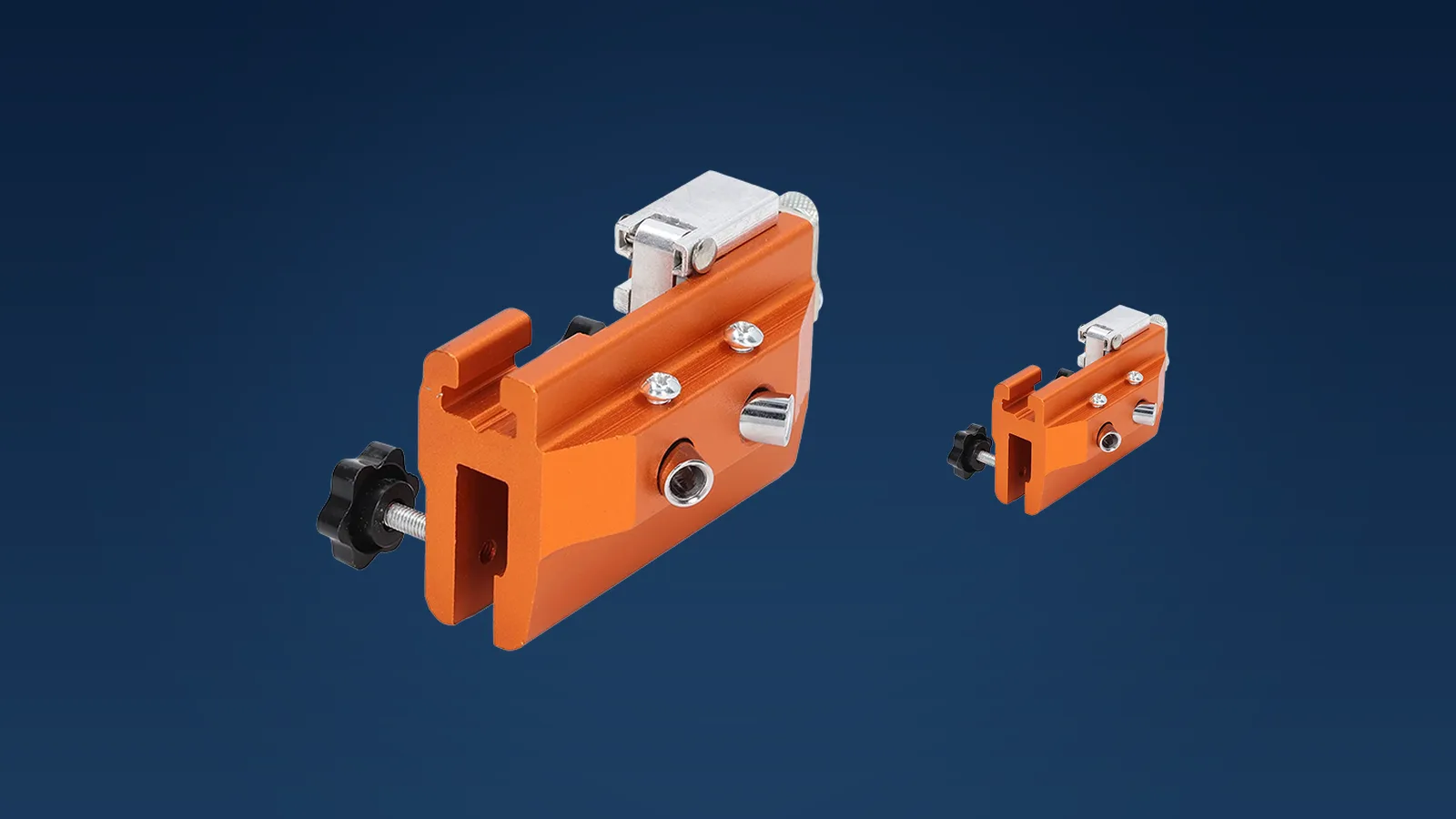
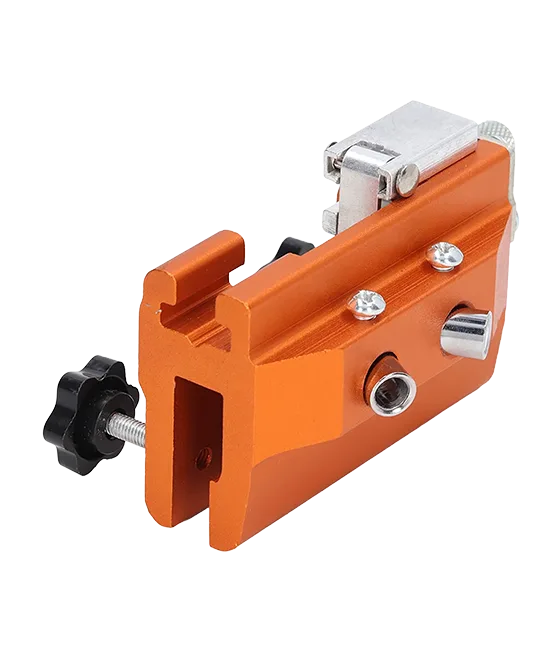
SawShark is a clamp-on manual grinding tool that sharpens chainsaw chains one tooth at a time. It bolts to the chainsaw bar with an M5 threaded pin plus screws, positions a small grinding head against each cutter tooth at a fixed angle, and you turn a hand crank to grind the edge back. Advance the chain by hand, repeat on every tooth, flip sides, done.
The unit I received weighs 235 grams and measures about 70 by 60 by 28mm, roughly the size of a computer mouse with a handle sticking out. The box included the sharpener, a small wrench, mounting screws, and spare mounting pins. Stainless steel and alloy, per the spec sheet. It feels dense in the hand, not tinny. Nothing rattles.
Pricing is bundle-led. One unit runs $29.95 against a $59.95 strikethrough. Two units cost $26.95 each, three cost $23.36 each, and four cost $17.97 each. Those discounts apply to the product price. Shipping and tax settle at checkout, and the order summary I saw did not match the package prices cleanly, so treat the headline number as the starting point and verify the final total before you pay.
The brand makes four big claims. Perfect sharpening angle on every tooth. Full chain sharpened in minutes. Fits all chainsaw brands, bar sizes, and chain types. No electricity or skill needed. I tested each one against 4 real chains, and the results section below goes claim by claim.
How It Works, My First Chain With It
A chainsaw cuts with dozens of small cutter teeth, each one a tiny chisel with a precise top-plate angle. Chain makers publish filing guides with exact angles for each chain type, and Oregon’s published filing charts are the reference most filers learn from. When those angles drift, the saw stops slicing and starts rubbing. Dust instead of chips. That was my saw on day one.
SawShark replaces filing judgment with a clamp. You mount the body to the bar so the grinding head sits on the first cutter tooth. The clamp geometry fixes the approach angle. You crank the handle, the stone kisses the tooth, metal comes off evenly. You loosen slightly, slide the chain forward one tooth, and repeat. Left-hand cutters, then right-hand cutters. The depth gauges, those little nubs ahead of each tooth, are a separate job with a flat file, and SawShark does not touch them. Know that going in.
My first evening with it was slow and fiddly. Mounting took 6 minutes because I kept second-guessing the seating. The first 5 teeth took another 10 minutes because I cranked tentatively, one timid turn at a time, then stopped to squint at each tooth like it might bite me. Somewhere around tooth 12 the motion clicked. Seat, crank three times, advance. Seat, crank three times, advance. A rhythm.
The chain I practiced on was my 16-inch homeowner saw, normally dulled from bucking dry oak. Total time was 24 minutes including my fumbling. The test cut afterward threw mixed chips and dust, better but not great. I had under-cranked the second side from nerves. Lesson one was free. The tool holds the angle. It cannot hold your nerve for you.
Why Sharp Chains Matter More Than Saw Power
Here is the physics nobody argues about. A sharp chain pulls itself into wood. A dull chain gets pushed through wood by your arms. The US Occupational Safety and Health Administration logging guidance documents how dull chains raise fatigue and kickback exposure, because tired operators lean on the saw and force cuts. A sharp chain is a safety device wearing a work disguise.
The efficiency gap is comical once you measure it. On the same 12-inch seasoned oak round, my freshly dulled chain needed 41 seconds and visible body weight to get through. After a SawShark session, the same saw crossed the same wood in 17 seconds with the saw’s own weight doing the work. Same fuel, same bar, same operator, same afternoon. The only variable was the edge.
Dirt is the silent killer. One touch of a tooth to soil and that tooth is done for the day. I kissed a buried root on day 9 and watched the chips turn to powder on one side of the cut within minutes. Rocky ground, sandy bark, and nails in old fence-line trees dull chains faster than any amount of clean wood. If you cut storm cleanup like I do, you are sharpening constantly, which is exactly the use case a $30 field tool is built for.
The UK angle matters too, since GearPuff readers span both sides of the Atlantic. Britain’s Health and Safety Executive publishes dedicated chainsaw operator guidance covering training, protective equipment, and safe working, and its message matches the American one. Sharp chain, right technique, proper gear, every single cut. A sharpener does not replace any of that. It supports it.
A sharp chain pulls itself into wood while a dull chain makes your shoulders do the cutting, and that difference shows up in every tank of fuel you burn.
What SawShark Claims vs What I Actually Found
Claim one is the perfect sharpening angle on every tooth. My finding is mostly yes, with a condition attached. Across 4 chains and roughly 115 teeth, the ground edges looked visually uniform when I finished, and the test cuts pulled straight instead of curving. But the first chain needed two clamp rechecks because I had seated the body slightly crooked. The angle the tool holds is fixed. The angle the tool holds relative to your tooth depends on your mounting. Perfect output needs careful setup. Call it 90 percent true for a careful user, 60 percent for a rushed one.
Claim two is a full chain sharpened in minutes. True after practice. Chain one took 24 minutes. Chain two took 16. Chains three and four took 12 minutes each. The brand never defines the chain length, and a 20-inch pro chain with 70-plus drive links will take longer than my 16-inch homeowner chain. Minutes is honest. Seconds per tooth would be more honest still, and that number is about 20 to 25 seconds once you find the rhythm.
Claim three is universal fit across all brands, bar sizes, and chain types. Partly true. It mounted fine on my 16-inch and 18-inch bars with the included hardware. The clamp design is genuinely adaptable. But I could not test narrow carving bars, and one grinding head ships in the box with no pitch-matching chart. Chains come in different pitches and gauges, and a single stone cannot be ideal for all of them. Treat universal as broad homeowner compatibility, not literal universality. Owners of unusual bars should measure their mounting point before ordering.
Claim four is no skill or electricity needed. Half true. No electricity is fully true, and that is the whole point of a field tool. No skill is marketing. You need to learn mounting, tooth advancing, and pass counting. It took me one full chain to get competent. That is a tiny learning curve compared to freehand filing, which took me two seasons to get mediocre at, but it is not zero.
Then there are the page claims that have nothing to do with sharpening. The 4.9 rating from thousands of verified reviews is self-hosted with no third-party trail. The as-seen-on strip shows generic outlet-shaped graphics with no publication names. The 2000-plus customer count cannot be checked. Every trust badge on the sales page traces back to the seller, so I treated the tool as guilty until my own test cuts proved it innocent. The cuts proved it decent. The badges proved nothing.

What It Feels Like, Design and Build
Pick it up and the first impression is heft. 235 grams is noticeable without being heavy, like a good tape measure. The alloy body has a matte finish with visible machining on the clamp faces. The crank turns with light resistance and no grinding or wobble. The included wrench fits the mounting screws exactly, which sounds trivial until you have stripped a soft screw with a near-fit tool.
The clamp is the whole product, really. Two machined faces close on the bar, the M5 pin sets the position, and the grinding head arm swings into place over the tooth. Everything locks with thumbscrews you can work in gloves. I tested that deliberately on a cold morning with lined work gloves on. Mounting took a minute longer, but nothing required bare fingers. A field tool that needs bare fingers in November is a failed field tool.
Weak points showed up by week three. The grinding head wears, obviously, since it is a consumable stone doing abrasive work. After 4 chains it looks visibly smaller, and the checkout page says nothing clear about replacement stone pricing or availability. That is my biggest product gripe. A consumable with no visible refill path is a countdown timer. The paint on the crank knob also chipped where it knocked against the saw case in transport. Cosmetic, but worth noting at this price.
Size-wise it disappears into the saw case. My 18-inch saw lives in a plastic case with the usual wasted space around the bar, and the SawShark plus wrench tuck into that dead zone. I carried it to every cutting session in week two and three without thinking about it. Tools that travel get used. Tools on a shelf do not.
How to Set It Up, and the Mistake I Made
Setup has five steps. Clear the chain brake off and confirm the saw is off, cold, and spark plug capped for gas saws. Wipe the bar and chain so grit does not grind into the stone. Mount the SawShark body to the bar near the first cutter tooth and snug the clamp. Set the grinding head on the tooth face and lock the arm. Crank 2 to 4 passes, advance one tooth, repeat.
My mistake was step three, and it cost me 20 minutes. I clamped the body to the bar without checking chain direction first, ground 6 teeth happily, then realized I was polishing the backs of the teeth on that side instead of the cutting faces. The chain has a direction. The cutters face it. I knew that, and I still rushed past it because the clamp felt so secure that my brain filed the job under done.
The fix was simple. Pop the clamp, flip my reference, find the first cutter whose face points into the rotation direction, and start there. I marked that tooth with a paint pen afterward, and every later session started from the mark. Total cost of the mistake was 6 wasted teeth worth of stone wear and some pride.
Two more setup notes from experience. Wear gloves even though the stone is small, because chain teeth are still sharp enough to slice a fingertip. And tension the chain correctly before mounting. A sagging chain shifts under the stone and your angles go wandering no matter how good the clamp is.
3 Weeks of Storm Cleanup, My Sharpening Diary
Week one was the learning week. Days 1 through 3 covered the practice chain and the embrassing backwards-tooth episode. Day 4 brought the first real job, 11 wrist-thick oak limbs from the storm pile. The freshly sharpened 16-inch chain ate them in under an hour, chips flying, no leaning on the saw. I timed one 8-inch limb at 11 seconds. That number felt like a gift after months of pushing a dull chain around.
Day 6 delivered the turning point. A thigh-thick oak round, seasoned two years, the kind of wood that punishes dull edges. The old me would have made three cuts and quit for the day. The SawShark-touched chain crossed it in 4 steady passes, pulling straight, throwing fat chips that piled at my boots. I stood there staring at the chip pile like it was a magic trick. It was just a sharp chain. I had forgotten what one felt like.

Week two was the volume week. I worked through the storm pile across 5 sessions, sharpening the 18-inch chain twice as it dulled on dirty bark. Chain three took 12 minutes start to finish, and I stopped timing because the rhythm was automatic. Edge hold looked honest. Each sharpening survived roughly 3 tanks of fuel in dirty storm wood before the dust started creeping back into the chips. Clean wood would stretch that further.
Day 12 brought the failure, and it matters. I hit a buried fence staple in a limb and folded two teeth over completely. No hand sharpener fixes folded steel. I spent 15 minutes trying, made it worse, and admitted defeat. The shop ground those teeth back for $8 and told me the chain had one more life in it. Know the boundary. SawShark maintains edges. It does not repair damage.
Week three was the confirmation week. Chain four, full cycle, 12 minutes, straight cuts, and then I deliberately left the saw alone for 5 days and came back to verify nothing about the edge had been a fluke of fresh grinding. It cut the same. I also loaned the tool to my neighbor for one chain. He mounted it crooked exactly like I had, I corrected him in 30 seconds, and his verdict after one use matched mine. Easy, but not idiot-proof.
What Actually Worked, and What Did Not
Angle consistency gets 8 out of 10. Every finished chain cut straight with even chip flow on both sides, which is the practical definition of even teeth. My hand-filed chains always curved left by the end. The docked points are for the mounting sensitivity. The tool holds its angle perfectly. Getting the tool onto the bar perfectly is your job, and beginners will need a chain or two to learn it.
Ease of use gets 8 out of 10. The crank motion is simple, the thumbscrews work in gloves, and the whole kit fits the saw case. It loses points because the instructions in the box were thin, mostly diagrams with tiny text. I learned more from 20 minutes of trial than from the leaflet. A QR code to a 3-minute setup video would fix this completely.
Build quality gets 7.5 out of 10. The alloy body and steel pin feel made to last. The chipping crank paint and the unclear replacement-stone situation hold it back from higher. I want to know I can buy stones in two years. Right now I cannot confirm that.
Fit versatility gets 7 out of 10. Two bars tested, both fine, adaptable clamp design. But universal is doing heavy lifting on the sales page. One stone, no pitch chart, no narrow-bar evidence. Homeowner saws are covered. Exotic setups are a gamble.
Speed gets 7 out of 10. Twelve minutes per chain with practice is genuinely fast for hand-powered work. It is not bench-grinder fast, and the brand’s minutes framing quietly assumes you already learned the rhythm. First-timers should budget half an hour.
Value for money gets 7 out of 10, covered in detail two sections down. Short version is that the math works for anyone who sharpens more than a few times a year.
SawShark vs the Competitors
I learned hand filing first, the way most saw owners do. A round file, a guide, and a lot of patience. After two seasons I produced chains that cut acceptably and curved gently left. Filing is cheap, around $12 for a file and guide, and it teaches you tooth geometry in your hands. It is also slow and skill-hungry. My angles still wander when I am tired. SawShark beats my filing on consistency and speed. Filing beats SawShark on cost and on teaching you what a tooth actually is.
The Timberline is the precision instrument. My neighbor heats with wood and sharpens weekly, and his Timberline-cut edges are visibly cleaner than my SawShark edges under a magnifier. Carbide shaving beats stone grinding for finish. But his setup cost roughly three times my $29.95, and he owns two Timberline bodies for two chain pitches. For his volume, worth it. For my storm cleanup, overkill with extra steps.
The Stihl 2-in-1 Easy File sits between them. It guides a round file at the right angle and files the depth gauge in the same pass, which SawShark cannot do. It costs less than the SawShark single unit in most shops. But it still runs on your filing hand. If your hand wanders, the guide only partly saves you. I see it as the best pick for someone who already files decently and wants a depth-gauge shortcut.
Shop sharpening remains the quality king for damaged chains. A pro with a bench grinder and years of practice produces the best edge of all, for about $8 and a day or two without your saw. My folded-tooth chain proved the point. But at 4 sharpenings a year the shop costs more than owning a SawShark, and the downtime stings mid-project.
| SawShark | Timberline | Stihl 2-in-1 | Shop visit | |
|---|---|---|---|---|
| Price | $29.95 | Around 3x more | Less than SawShark | $7 to $10 per chain |
| Needs power | No | No | No | N/A |
| Skill needed | Low | Medium | Medium | None |
| Full chain time | 12 min practiced | 15 to 20 min | 20 to 30 min | 1 to 2 days away |
| Handles damage | No | Limited | No | Yes |
| Best for | Field touch-ups | Weekly sharpeners | Existing filers | Occasional users |
Value Math, Is $29.95 Worth It?
Start with the shop. My local shop charges $8 per chain. Four sharpenings a year is $32, which means the SawShark single unit pays for itself before the end of year one for anyone at my volume. Sharpen monthly in cutting season and the payback lands in the first quarter. The math only fails for the saw that comes out twice a year. Two shop visits cost $16 and zero learning. That owner should keep visiting the shop.
Now the tool ladder. A file and guide cost about $12 and last several chains, but they charge you in skill and time instead of money. A bench grinder starts around $60 plus wheels, needs a workshop, and can ruin a tooth in one careless second. The Timberline runs roughly triple the SawShark with pitch-matched models to buy. SawShark sits in the sweet spot of the ladder. Cheapest powered option is still double the price, and the cheapest manual option demands a skill most owners never build.
At $29.95 the SawShark pays for itself after about 4 shop sharpenings, and every chain after that sharpens for the price of ten minutes.
The bundle math favors households with multiple saws. Two units at $26.95 each suit a home with a big saw and a limbing saw, or a gift for the neighbor who keeps borrowing yours. Four at $17.97 each is the crew price. One caution from my checkout reading. Shipping and tax land on top, so add a few dollars mentally to every package price before comparing with the shop. And confirm the final total on screen, because the summary math I saw did not line up neatly with the package prices.
My running-cost note after 4 chains is that stone wear is the only recurring cost, and it is currently an unknown cost. If replacement stones sell for a few dollars, the lifetime math stays excellent. If the stone is irreplaceable, the tool has a finite life measured in dozens of chains. I have asked this question of every sharpener I have owned, and I am asking it here. Budget for the tool, hope for cheap stones.
Customer Reviews and Social Proof
The sales page shows a 4.9 rating from thousands of verified reviews, with named buyers from Chicago, Texas, and Montana praising speed and consistency. Here is the problem. Every review lives on the seller’s own pages. No Trustpilot listing, no Amazon listing with verified purchase badges, no Better Business Bureau thread I could find. Self-hosted testimonials without a third-party trail are claims, not evidence. I read them as ad copy with faces.
That said, the patterns in those testimonials match my experience in the specific places where they overlap with observable fact. Farm users praise consistency across many teeth, which matches what the clamp design delivers. Weekend users praise skipping the hardware store trip, which matches the field-portability story. Nobody on the page complains about anything, which matches nothing in real life and tells you the page is curated. Real products collect real complaints. A wall of five-star praise with like counts attached is a marketing layout, not a review corpus.
The honest social proof for this tool class lives elsewhere. Bar-mount manual sharpeners as a category have years of forum discussion among firewood cutters, and the consensus is stable. Guided sharpening beats freehand for beginners, carbide cutters edge out stones for finish, and no field tool fixes damaged teeth. My 3 weeks landed in exactly that consensus. I did not discover anything the forums would find surprising, and I count that as a good sign. Boring agreement with experienced users beats exciting disagreement.
My neighbor’s single-chain loan test is my favorite data point. He is a worse filer than me, mounted the clamp crooked on his first try, and still produced a straight-cutting chain in under 20 minutes with one correction from me. If the tool survives a careless beginner with minimal coaching, it will survive you.
Pricing, Discounts, and Guarantee
One SawShark costs $29.95 at the current 50 percent off promo, shown against a $59.95 strikethrough. The 2-pack drops to $26.95 per unit, the 3-pack to $23.36, and the 4-pack to $17.97. Those per-unit prices are the real story. The strikethroughs are decoration. Judge the deal on $29.95 out the door plus shipping, not on the size of the claimed discount.
Shipping moves fast on paper. Orders dispatch within 48 hours, and standard delivery runs 5 to 12 working days depending on location. The guarantee is a 30-day return policy from the receipt date. Both terms sit on the official pages now, but promo terms rotate, so verify them in your own checkout session rather than trusting my snapshot. Policies change faster than reviews do.
The seller is Spark-tek, an initiative of Straight Commerce Inc. in New York. A named company with a street address beats an anonymous dropshipper with a contact form. It does not equal a big-brand warranty desk. Set expectations accordingly. If the tool arrives damaged, document it with photos on day one and start the return conversation inside the 30-day window, not after it.
Like the Cyber Heater I tested over 3 cold weeks, where the headline discount hid shipping and tax until checkout, the SawShark headline price is the beginning of the math, not the end. Same habit applies. Screenshot the final total, save the confirmation email, and check the return terms before you need them.
Potential Drawbacks and Things to Know
One, damaged chains are beyond this tool. Folded, cracked, or rock-chewed teeth need a bench grinder or a new chain. I proved this on day 12 with a fence staple. Budget for that reality, not against it.
Two, depth gauges go untouched. As cutters shorten with sharpening, the depth gauges need periodic lowering with a flat file or the chain stops biting no matter how sharp the teeth are. The sales page never mentions this. Every third or fourth sharpening, check your gauges.
Three, replacement stone availability is unclear. The grinding head is a consumable, mine visibly shrank across 4 chains, and I found no clear refill listing or price. Ask before you buy, or accept a finite tool life.
Four, the universal-fit claim overshoots. Standard homeowner bars and common chain pitches are fine. Narrow carving bars, carbide chains, and heavily worn chains are untested territory. Measure your bar and inspect your chain before ordering.
Five, the trust badges are theater. Self-hosted reviews, unnamed press logos, and an unverifiable customer count mean you are buying on the strength of reviews like this one, not the sales page. That is fine as long as you know it.
Tips to Get the Best Results
One, mark your starting tooth with a paint pen. Two, tension the chain properly before clamping. Three, count crank passes out loud and keep them equal. Four, work in good light so you can see the edge forming. Five, clean the chain with a brush before mounting so grit does not load the stone. Six, do all the left cutters first, then all the right cutters, to keep your rhythm steady. Seven, check depth gauges every third sharpening with a flat file. Eight, wipe the stone with a dry cloth between chains to clear metal dust. Nine, store the tool in the saw case so it travels to every job. Ten, retire chains whose cutters have shrunk past the witness marks, since no sharpener restores missing steel.
Storm cleanup around the house I monitor with my GuardHouse camera taught me the highest-value habit of all. Sharpen before the pile, not during it. A fresh chain at the start of a session beats three touch-ups mid-session, because momentum matters with yard work. I now sharpen the night before a cutting day, the same way I charge batteries and check bar oil.
Who Should Buy, Who Should Skip
Buy it if you cut firewood a few weekends a season and your hand filing curves like mine did. You are the core audience. The clamp fixes your exact weakness for thirty bucks.
Buy it if storm cleanup is your life for two months a year. Dirty bark dulls chains fast, the tool lives in the saw case, and field touch-ups beat driving to town.
Buy it if you own two saws and keep lending sharpening gear to neighbors. The 2-pack and 4-pack pricing exists for you, and the tool is simple enough to teach in one chain.
Buy it if you want to learn chain geometry without suffering. The fixed angle shows you what even teeth look and cut like, which makes you a better filer even when you go back to the file.
Skip it if you sharpen weekly to heat your home. You will outgrow a stone grinder within a season and should buy a Timberline-class tool once instead of twice.
Skip it if your chain is already damaged. Folded teeth, missing cutters, and heavy rock rash need a shop bench or a replacement chain first. Buy the new chain, then buy SawShark to maintain it.
Skip it if you only cut twice a year. Two $8 shop visits cost less than the tool and teach you nothing you need to know. Spend the money on good bar oil instead.
Skip it if you need a depth-gauge solution. This tool sharpens cutters only. Pair it with a flat file and gauge tool, or pick the Stihl 2-in-1 that handles both.
Final Verdict
Three weeks ago I was pushing a dull chain through oak and blaming my shoulders. The SawShark fixed the actual problem, which was my filing, not my fitness. Four chains, roughly 115 teeth, and a storm pile that is now stacked firewood. The saw pulls itself into wood again. That transformation is worth thirty dollars to me several times over.
The score breaks down honestly. Sharpening consistency 8, ease of use 8, build quality 7.5, fit versatility 7, speed 7, value for money 7. That averages to 7.4 out of 10. The points it loses are all about overstatement, universal fit that is merely broad, reviews that cannot be verified, and a consumable stone with no visible refill path. The points it earns are all about the work. Even teeth, straight cuts, minutes per chain, no power needed.
Buy it for field maintenance of normally dulled chains. Do not buy it as a damage repair station or a precision instrument. And when it arrives, mark your starting tooth, count your passes, and give yourself one full practice chain before judging it. The tool met me halfway. Meet it halfway back.
Key Specifications
| Product Name | SawShark |
|---|---|
| Type | Clamp-on manual chainsaw chain grinder |
| Weight | 235 grams |
| Unit Dimensions | 70mm long by 60mm high by 28mm deep |
| Material | Stainless steel and alloy body |
| Mounting | M5 threaded pin with screws, wrench, and hardware included |
| Power | None, fully manual hand-crank operation |
| Fit Claim | All chainsaw brands, bar sizes, and chain types |
| Price | $29.95 for one unit at 50 percent off (official checkout) |
| Bundles | 2 units at $26.95 each, 3 at $23.36 each, 4 at $17.97 each |
| Guarantee | 30-day return policy from receipt date |
| Shipping | Dispatched within 48 hours, 5 to 12 working days delivery |
| Seller | Spark-tek by Straight Commerce Inc., New York |
SawShark earns 7.4/10: good — worth it for the right buyer. Tested for 3 weeks across storm-fallen oak limbs, seasoned firewood rounds, and a full dull-to-sharp chain cycle.
- Best part: Clamp-on guide holds the sharpening angle steady, so every tooth comes out even without filing skill
- Best part: Full chain done in minutes with no electricity, no bench, and no shop trip
- Best part: 235 gram tool lives in the chainsaw case and works anywhere the saw goes
- Biggest catch: The perfect angle on every tooth claim depends on correct clamping, which takes practice
Common Questions & Answers
Q: Does SawShark actually work?
Yes, within the limits of any guided hand sharpener. The clamp holds a fixed grinding angle against each cutter tooth, so a careful user gets even, sharp teeth across the whole chain. In my testing a dull 18-inch chain went from throwing dust to throwing chips in about 15 minutes of cranking. It will not rescue a chain with broken teeth or heavy rock damage. That chain needs a bench grinder or a replacement. For normal dulling from wood cutting, it works as advertised.
Q: Will SawShark fit my chainsaw?
It fit both bars I tried, a 16-inch homeowner saw and an 18-inch farm saw, using the included M5 mounting pin and screws. The brand claims all brands, bar sizes, and chain types. My honest caveat is that I could not test every pitch and gauge combination, and very narrow bars or heavily worn chains may seat poorly. Check that your bar has a free mounting point near the chain and that your chain still has usable cutter length. If the teeth are filed down to nubs, no clamp-on tool will save that chain.
Q: How long does it take to sharpen a chain with SawShark?
My first chain took 24 minutes because I kept rechecking the clamp. By the fourth chain I was done in 12 minutes flat, including setup. The brand says minutes, and that checks out once you learn the rhythm. A standard 16 to 18-inch chain has roughly 55 to 62 drive links, so about 27 to 31 cutter teeth to grind. Budget 15 minutes for your first attempt and 10 to 12 once the motion feels natural. That is slower than a bench grinder and far faster than freehand filing for a beginner.
Q: Will SawShark damage my chain?
Hand grinding runs cool, so it avoids the classic electric-grinder failure of overheated blue teeth that lose their temper. The controlled crank removes a small, even amount of metal per tooth. The risk runs the other way. An impatient user can over-grind one side by cranking extra passes on some teeth, which unbalances the chain. Count your passes per tooth and keep them equal. I did 3 passes per tooth and the cutters measured visually even when I finished.
Q: SawShark vs Timberline, which sharpens better?
The Timberline I borrowed cuts the more precise edge. Its carbide cutter shaves the tooth instead of grinding it, and the preset angle stops are machined, not clamped. But it costs roughly three times the SawShark single-unit price and you must buy the model matched to your chain pitch. SawShark wins on price, portability, and forgiveness. Timberline wins on edge quality for experienced users. A weekend firewood cutter should buy SawShark. Someone heating a whole house with wood who sharpens weekly will outgrow it and want the Timberline.
Q: Is SawShark better than an electric bench sharpener?
Different jobs. A bench grinder sharpens faster and handles damaged chains better, and decent ones start around $60. But bench grinders demand a workshop, electricity, and a light touch, since one heavy pass overheats a tooth. SawShark lives in the saw case and works at the woodpile. I see them as complements, not rivals. Field touch-ups with SawShark, full restorations on the bench grinder, and a shop visit when a tooth breaks.
Q: How much does SawShark cost?
One unit costs $29.95 at the current 50 percent off promo, against a $59.95 strikethrough. Two units drop to $26.95 each, three to $23.36 each, and four to $17.97 each. Shipping and tax are added at checkout, so the headline price is not the out-the-door price. The order summary math on the page looked inconsistent when I checked, so confirm your final total before paying. At $29.95 the tool pays for itself after about 4 shop sharpenings.
Q: What is the SawShark return policy?
The official site states a 30-day return policy counted from the date you receive the order. Orders ship within 48 hours and standard delivery takes 5 to 12 working days. Before ordering, read the returns page and confirm who pays return shipping and whether the original shipping fee is refundable, since promo terms change. Screenshot the policy at checkout. My order confirmations folder has saved me real money more than once, and this checkout deserves the same habit.
Q: Do I need experience to use SawShark?
No filing experience needed, but give yourself one practice chain. The clamp and angle guide do the skilled part. Your job is mounting it square, advancing tooth by tooth, and keeping pass counts equal. My first attempt was clumsy and slow. My fourth was smooth and fast. Watch one full chain cycle before judging it. Total beginners should still read a basic chainsaw safety guide first, because a sharp chain on a careless saw is more dangerous, not less.
Q: Does SawShark work on all chain types?
The brand says all brands, bar sizes, and chain types, and one grinding head ships in the box. Standard full-chisel, semi-chisel, and low-profile homeowner chains all present the same basic cutter geometry to a grinding stone, so the claim is plausible for common chains. The edge cases are damaged chains, carbide-tipped rescue chains, and chains filed past their witness marks. Those need professional equipment or replacement. If your chain still has visible cutter length and intact teeth, SawShark has something to work with.
More Smart Home Reviews


Related Guides & Articles
Browse all 27 Smart Home articles »

Smart home enthusiast and IoT specialist. Has automated over 50 homes across different ecosystems. Former smart home consultant for Google Nest and Amazon Alexa. Passionate about making technology accessible.