
In This Article
- TL;DR: Portable AC Drainage & Leaks
- Why Portable ACs Collect Water
- The Portable AC Drain Hose: What It Actually Does
- The 4 Most Common Leak Causes
- 1. Full water tank
- 2. Clogged drain hose or port
- 3. Dirty air filter
- 4. Kinked or badly sloped hose
- How to Drain a Portable AC Properly
- How to Stop It Leaking: The Prevention Checklist
- When a Leak Means Something Bigger
- Verdict
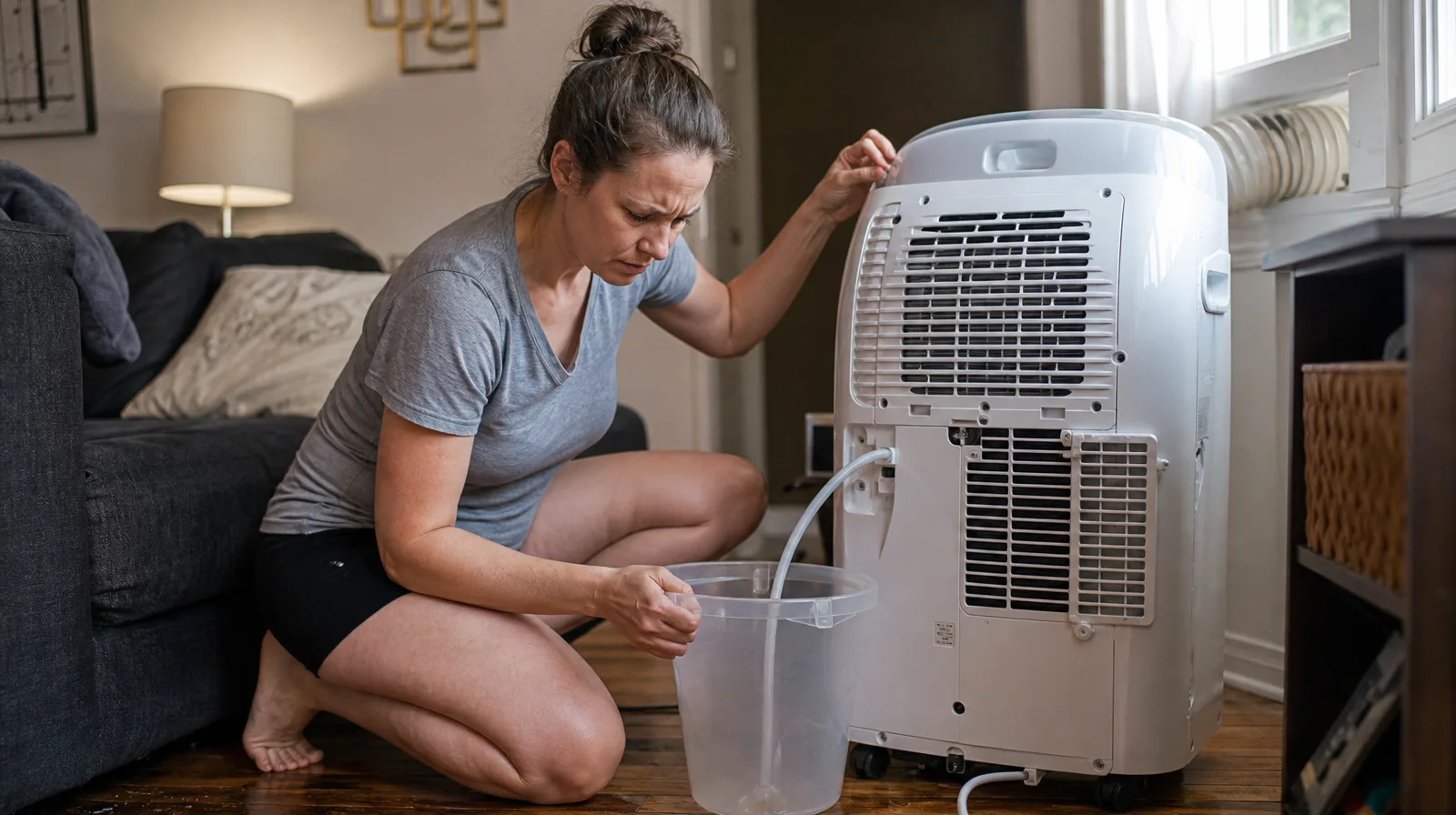
There is a puddle under your portable AC and you want it gone before it reaches the baseboard. That is the situation behind most support questions for these units, and the fix is usually simpler than people expect. I went through it myself when my compressor unit started dripping on week three of a heat wave, so this guide walks through why portable ACs collect water, what the drain hose actually does, and how to stop the leaks for good.
This article is part of our smart home cooling coverage, where we test and review every type of home comfort device that does not need a contractor.
The short version: a portable AC pulls moisture out of the air as it cools, that moisture has to leave the machine somehow, and when it does not, it ends up on your floor. Figure out where the water should be going and the leak usually fixes itself.
TL;DR: Portable AC Drainage & Leaks
- Every portable AC makes condensation. The drain hose routes it out while the internal tank catches what the hose misses.
- The four common leak causes are a full tank, a clogged or kinked hose, a dirty filter, and an unlevel unit. Each has a 10-minute fix.
- Heat-exchange units like the BlizzAir condense water and re-evaporate it internally, so there is no drain hose and no tank to empty.
Why Portable ACs Collect Water
Condensation is just physics doing its job. Warm air holds more water vapor than cool air. When a portable AC pulls humid room air across cold coils, the moisture condenses into liquid water, the same way a glass of iced tea sweats in July. The Department of Energy explains that air conditioners cool by removing heat and moisture from indoor air, which is why condensate production is not a defect, it is the system working as designed (DOE air conditioning basics). A compressor unit running in a humid room can pull a surprising amount, think a cup or two per day in heavy humidity, sometimes more.
Where that water goes separates the design types. Traditional compressor portable ACs self-evaporate some of it and route the rest to a removable tank or a drain hose. Evaporative and heat-exchange units handle water differently, and that difference drives most of the “why is mine leaking” questions. If you want the full breakdown of the two technologies, our explainer on windowless air conditioners covers which type actually cools a room and which only cools a person.
The key thing to know: a leak is usually a routing problem, not a broken machine. The unit made water on purpose. The issue is that the water is not getting to where the design sends it.
The humidity tells you how fast it will fill. On a normal day my unit’s tank took most of a workday to fill. On a muggy 90°F afternoon it filled in about four hours. Check the tank before you check anything else when a leak appears mid-heatwave.
The Portable AC Drain Hose: What It Actually Does
A portable AC has two hoses and people mix them up. The exhaust hose is the big corrugated one that vents hot air through a window kit. The drain hose is the smaller one, often clear or black, that carries condensate from the unit’s drain port down to a bucket, a floor drain, or outside.
The two jobs are unrelated. The exhaust hose gets rid of heat. The drain hose gets rid of water. If your machine drips, the problem is almost always on the water side.
Gravity drains need the hose to slope downward continuously. No loops, no sagging middle, no uphill stretches. Water will not climb, so any bend that forms a low point becomes a trap that fills with water and eventually backs up into the unit.
Some units use a small pump to push water up and out, which makes window mounting easier, but pump models fail more often because there are more moving parts. The classic gravity setup is simpler and has fewer ways to break.
The whole reason the drain hose exists is so you do not have to empty the tank. Some units rely on the tank alone and shut off when it fills, which is fine until 2 AM. Others gravity-drain continuously. When the hose is in place and clear, you basically forget the water exists.
And if the hose-and-bucket routine sounds like a chore, that is exactly why the best portable ACs without a hose exist. We tested five of them in real rental apartments, and the entire point of the category is deleting the vent-and-drain setup altogether.
The 4 Most Common Leak Causes
Work through these in order and you will fix nine out of ten leaks.
1. Full water tank
The most common cause, especially on hot days. A unit that shut itself off with a full tank still holds a few cups of water, and tipping it, tilting it, or running it past the shutoff pushes that water out of the overflow.
The fix takes a minute: unplug, slide a shallow pan under the drain plug, open it, and let the tank empty. Then check whether the auto-shutoff actually kicked in. If your unit runs and leaks at the same time, the float switch may be stuck, and that is a repair, not a drain.
2. Clogged drain hose or port
Dust, mold, and hard-water scale build up inside the drain port and hose over a season. The water has nowhere to go, so it backs up and spills from the unit instead.
Clear it with a thin wire or a zip tie pushed through the hose, then flush with warm water and mild soap. If the port itself is gummed, a cotton swab reaches most of it. A blocked drain is the reason my own unit leaked, and the wire trick fixed it in about ten minutes. Standing water and damp buildup are exactly what the EPA warns about for indoor mold, so a clear hose is a health habit, not just a convenience.
3. Dirty air filter
This one is sneaky. A dirty filter restricts airflow across the coils, which means the coils run colder and condense more moisture than the unit can re-evaporate. You get extra water with worse cooling at the same time.
Most portable AC filters slide out from the back or front, rinse clean under a tap, and air-dry in an hour. Do this every 1 to 2 weeks during heavy use and the water output drops noticeably.
4. Kinked or badly sloped hose
Gravity drains demand a continuous downhill path. If the hose loops down and back up, or has a kink at the window, water pools in the low point and eventually leaks.
Re-route the hose so it falls steadily from the unit to the bucket. Shorten it if you have to; a hose that is too long and sagging is a leak waiting to happen. Secure it so it cannot flop into an S-shape overnight.
| Cause | How it shows up | The fix |
|---|---|---|
| Full water tank | Unit shuts off or drips at the base, worst on humid days | Unplug, drain the port into a pan, check the float switch |
| Clogged drain hose or port | Water backs up and spills from the unit | Run a wire or zip tie through the hose, flush with soap |
| Dirty air filter | Extra condensation with weaker cooling | Rinse the filter and air-dry, repeat every 1 to 2 weeks |
| Kinked or badly sloped hose | Water pools at a low point in the hose | Re-route it on a steady downhill line, shorten if needed |
That table is the whole troubleshooting loop. Match your symptom to a cause and you go straight to the fix instead of guessing.
When to suspect something else. If water appears inside the housing, around the power cord, or under the unit on a day you have not run it, stop using it. Water and electronics do not mix, and a leak in those spots is a repair job, not a cleaning job.
How to Drain a Portable AC Properly
If your unit uses a tank, here is the cleanest way to empty it without mopping the floor afterward.
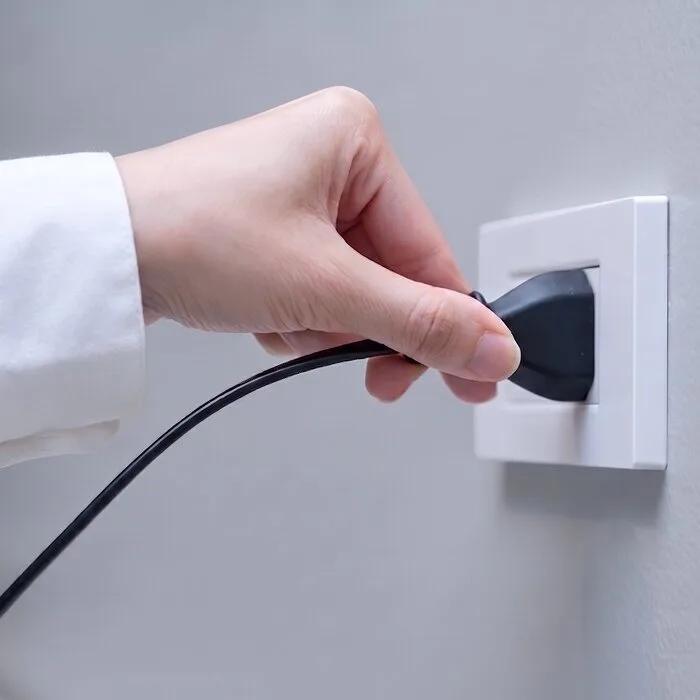
- Turn the unit off and unplug it. Never open the drain port while it is running.
- Find the drain port. It is usually on the back or bottom edge, capped with a rubber or plastic plug. Some units hide it behind a small cover.
- Put a shallow pan underneath. A paint tray or a flat roasting pan works because it is wide enough to catch drips from the port without splashing.
- Remove the plug and let it drain. Tilt the unit gently toward the port if it does not drain on its own, but only a few degrees. Tipping it hard spills water out the overflow.
- Replace the plug and wipe the port dry. A dry port means no drips later and less chance of mold around the opening.
- For continuous drainage, attach the hose. Fit the drain hose onto the port, run it in a steady downhill line to a bucket or floor drain, and check the slope once more before you turn the unit back on.
That is the whole procedure. Ten minutes once you know where the port lives.
What you will notice reading through those steps is how much of the routine exists because of the tank. Units that re-evaporate their condensation internally skip the draining step entirely, which is a real quality-of-life difference during a two-month heatwave.
How to Stop It Leaking: The Prevention Checklist
Leaks are easier to prevent than to clean up. This is the routine I now run on every portable AC I test.
- Empty the tank before it fills. Get in the habit during high humidity, not after the shutoff trips.
- Check the drain hose slope weekly. Any new sag or kink after moving the unit is a future leak.
- Clean the filter every 1 to 2 weeks. Less dust on the coils means less condensation the unit has to manage.
- Keep the unit level. Most units tolerate a small tilt, but a lean toward the back pushes water toward the overflow.
- Clear the drain port at season start. A 30-second pass with a zip tie before summer beats discovering the clog in August.
- Run a dehumidifying pass after storms. In humid weeks, run the unit in dry mode if it has one; it pulls water out of the air faster than the tank fills.
Prevention is boring and it works. Every leak I have fixed on my own units traced back to one of these five habits.
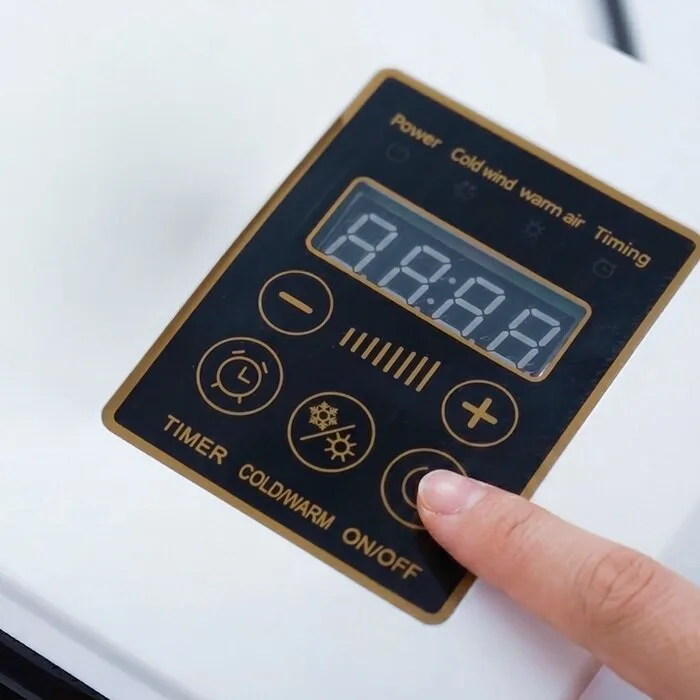
The prevention angle matters even more with evaporative coolers, where water is a feature, not a byproduct. The ChillWell 2.0 we tested has a small tank you refill every 2 to 3 hours on high, so the discipline there is the opposite: keep it filled, keep the tank clean, and never let the pad run dry. Either way, understanding where the water is supposed to be is the whole game.
When a Leak Means Something Bigger
Most leaks are routing problems. Some are not. Where the water shows up tells you which one you have.
- Water at the base, tank full: routing. Empty it and check the shutoff.
- Water at the back near the hose: routing. Unkink it and re-slope.
- Water inside the housing or near the cord: stop using the unit. This is a cracked condensate tray, a failed pump, or a seal issue, and it is a repair.
- Water after the unit has been off for hours: not condensation. Look for a leak in the condensate tray or a pump that drips when idle.
The repair-versus-replace math is blunt. A condensate tray or a pump on a $250 unit can cost $60 to $120 in parts and labor, and the machine is often years old by the time it fails. A new unit at that price point buys a fresh filter, a cleaner system, and a warranty. When a repair quote passes half the price of a new unit, replacing it is the honest call.
The other path is to stop fighting the drain entirely. Heat-exchange units like the BlizzAir Portable AC condense moisture on their coils and re-evaporate it internally, so there is no tank to empty, no drain hose to slope, and no clog to clear. In three weeks of testing, I never once touched a drain port on ours.
Verdict
A leaking portable AC is almost never a broken one. Nine times out of ten it is a full tank, a clogged or kinked hose, a dirty filter, or a unit sitting unlevel, and each of those fixes is under ten minutes.
Learn where your unit’s water is supposed to go and the whole problem loses its mystery. If you would rather the water problem not exist at all, hose-free heat-exchange units evaporate the condensation themselves and never ask you to touch a drain again.
Common Questions & Answers
Q: How do I drain a portable air conditioner?
Turn the unit off and unplug it. Locate the drain port on the back or bottom, remove the plug, and let the tank empty into a shallow pan. For continuous drainage, attach the drain hose so it slopes steadily downhill to a bucket or floor drain. A clogged port is the usual reason water backs up, so check it when the tank empties slowly.
Q: Why is my portable AC leaking water?
Nine out of ten leaks come from a full water tank, a clogged drain hose, a kinked hose, a dirty air filter, or an unlevel unit. A full tank is the most common on hot, humid days because the unit pulls more moisture from the air. Work through those five causes in order and you will fix the leak without calling anyone.
Q: Do all portable ACs have a drain hose?
No. Compressor portable ACs have both an exhaust hose and an optional condensate drain hose, and they stop cooling when the tank fills. Evaporative coolers like the ChillWell 2.0 use a water tank you refill instead. Heat-exchange units like the BlizzAir re-evaporate condensation internally, so they have no drain hose and no tank to empty.
Q: How often should I empty a portable AC water tank?
In normal humidity, most compressor units fill their tank in 8 to 12 hours and shut off when full. In heavy humidity you may need to empty it every 4 to 6 hours. A continuous drain hose removes the need to empty it at all, as long as the hose slopes downhill and stays clear.
Q: Can a clogged drain cause a portable AC leak?
Yes, and it is the second most common cause after a full tank. Dust, mold, and hard-water scale build up inside the drain port and hose, blocking the water from leaving. Run a thin wire or a zip tie through the hose, or flush it with warm water and mild soap, and the leak usually clears.
Q: Is there a portable AC with no drain hose?
Yes. Heat-exchange units like the BlizzAir condense moisture on their cooling coils and re-evaporate it internally, so nothing ever needs draining. Evaporative coolers like the ChillWell 2.0 also have no drain hose, but they need a water tank refilled every 2 to 3 hours instead. Both delete the drain hose problem entirely.
Q: How do I stop my portable AC from leaking?
Empty the tank before it fills, keep the drain hose sloping continuously downhill with no loops, clean the filter every 1 to 2 weeks in heavy use, and make sure the unit sits level. If water collects inside the housing or around the electrical parts, unplug the unit and do not use it again until the cause is fixed.
Q: Why does my portable AC leak after being off all night?
If water appears while the unit is idle, condensation is not the cause. A cracked condensate tray or a pump that drips when powered down usually is, and that is a repair, not a draining task. Stop using the unit and get it serviced before you run it again.
Q: Is it normal for a portable AC to make a lot of water?
Yes, and the amount tracks humidity. In muggy weather a compressor unit can pull a cup or two of condensate per day from the air, and that water has to leave through the tank or the drain hose. The problem is never the water being made; it is the water not getting out. If you do not want to manage it, heat-exchange units re-evaporate the condensation internally.
More Smart Home Articles
Related Product Reviews

Smart home enthusiast and IoT specialist. Has automated over 50 homes across different ecosystems. Former smart home consultant for Google Nest and Amazon Alexa. Passionate about making technology accessible.