
What to Avoid When Buying an Air Purifier: 11 Costly Mistakes
What to avoid when buying an air purifier: ozone makers, missing CADR, fake HEPA, undersized units and hidden costs, with a checklist.
In This Article
- Quick Answer: The Traps in One List
- 1. Ozone-Producing or Uncertified Units
- 2. No CADR Published
- 3. HEPA-Type Labels Instead of True HEPA
- 4. A Unit Too Small for Your Room
- 5. Expecting One Purifier to Fix Odors and Gases
- 6. Ignoring Filter Cost and Availability
- 7. Buying on Star Ratings Alone
- 8. Hidden Prices, Countdown Timers and Multi-Pack Pressure
- 9. Ignoring Noise and Running Cost
- 10. Believing Energy Labels Measure Cleaning Power
- 11. Skipping the Seller Check and the Refund Terms
- How to Read a Spec Sheet Line by Line
- Match the Purifier to Your Situation
- Refurbished, Second-Hand and Off-Brand Filters
- Buying in the US vs the UK
- Warranty, Support and What to Do When Something Goes Wrong
- Is There a Downside to Using an Air Purifier?
- Which Air Purifier Is Best? A Method Instead of a Brand
- Red Flags in a Listing: A Quick Scan
- Questions to Ask the Seller
- Printable Pre-Purchase Checklist
- The One-Minute Summary
- Bottom Line
Air purifier shopping is a minefield. Some models are excellent. Others are a small plastic box with a big claim on the front. If you are trying to work out what to avoid when buying an air purifier, the good news is that the traps repeat, and you can spot them with a short checklist.
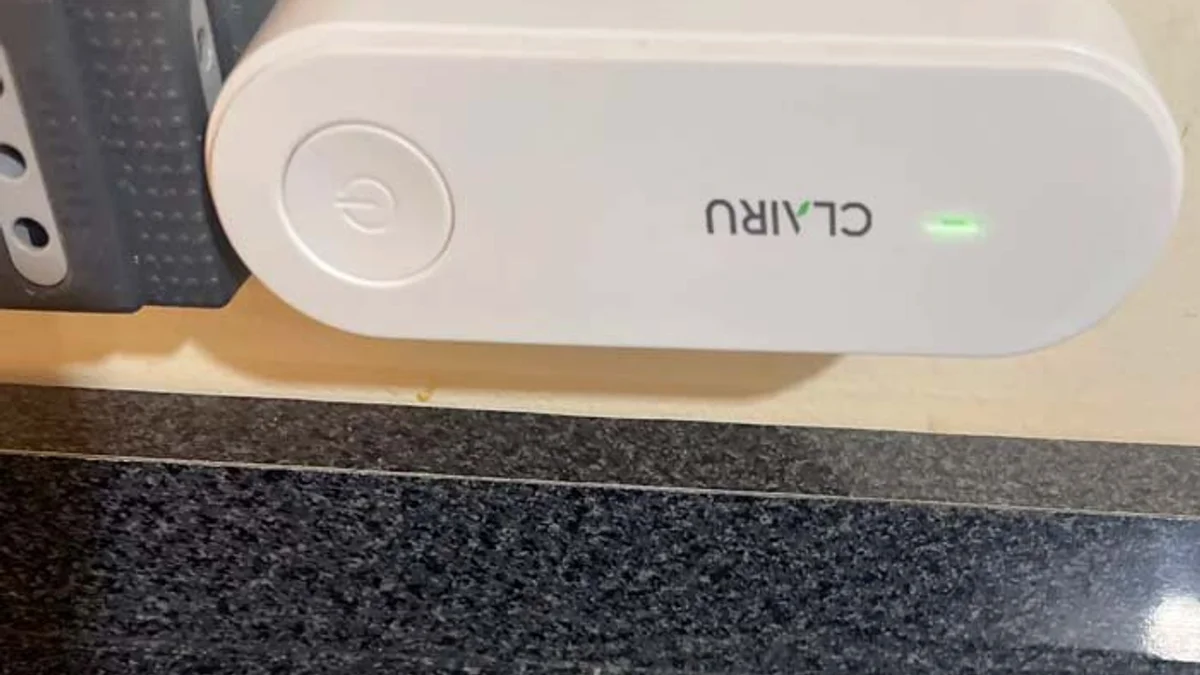
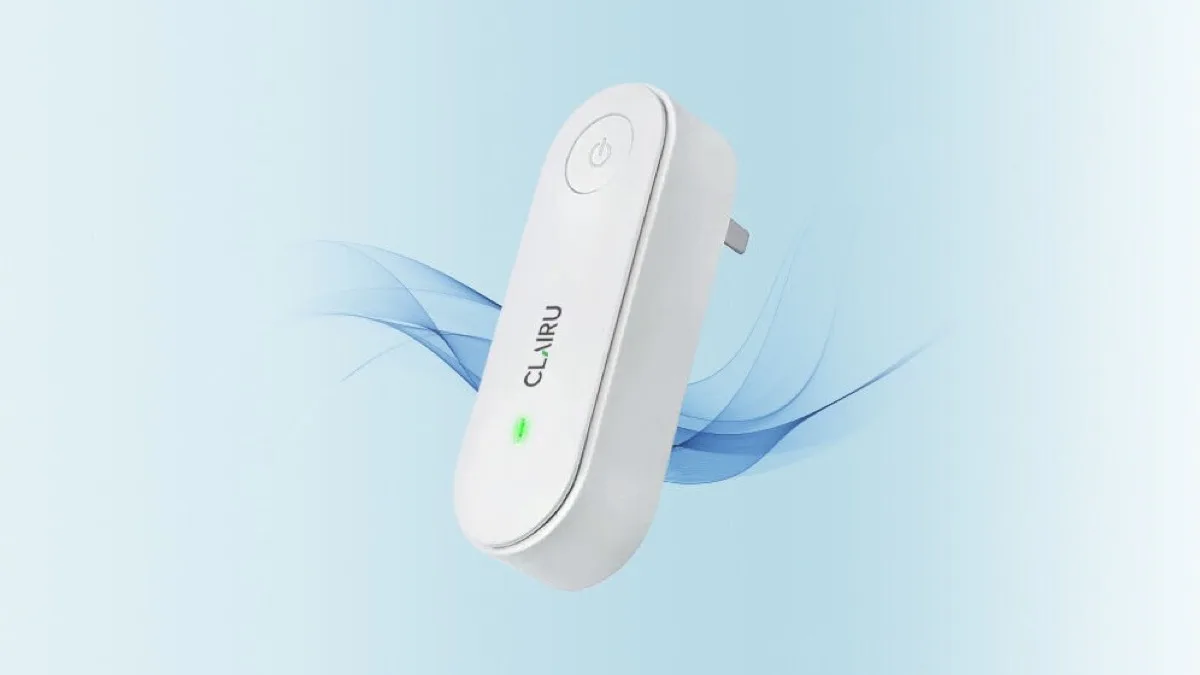
This guide covers eleven mistakes, from ozone to fake HEPA labels to the cost of filters, and finishes with a printable checklist. It draws on EPA’s guide to air cleaners in the home, and it links to our Clairu air purifier review as a case study, because that product commits several of these sins at once. More home-comfort reviews sit in our smart home category.
Quick Answer: The Traps in One List
- Ozone-producing or uncertified units
- No CADR published
- HEPA-type labels instead of true HEPA
- A unit too small for your room
- Expecting one purifier to fix odors and gases
- Ignoring filter cost and availability
- Buying on star ratings alone
- Hidden prices, countdown timers and multi-pack pressure
- Ignoring noise and running cost
- Believing energy labels measure cleaning power
- Skipping the seller check and the refund terms
1. Ozone-Producing or Uncertified Units
This is the most important item on the list. Ozone is a lung irritant, and EPA says plainly to avoid portable air cleaners that intentionally produce it.
EPA’s guide also explains that some technologies have the potential to emit ozone, including electrostatic precipitators, ionizers, plasma air cleaners and UV lights without adequate lamp coatings. Not every unit in those groups produces meaningful amounts. The point is that you need evidence.
What to do:
- Look for certification from the California Air Resources Board, and for the AHAM Verified label. EPA suggests looking for air cleaners that have been tested and shown to emit little or no ozone.
- Check the seller’s page for a stated ozone output. If ozone is never mentioned, ask.
- Skip anything sold as an “ozone generator” for use around people. EPA’s page on ozone generators sold as air cleaners explains why.
California goes a step further. CARB states that all portable indoor air cleaning devices sold in California must be certified to meet ozone and electrical safety standards.
2. No CADR Published
CADR, the clean air delivery rate, is the number that lets you compare purifiers honestly. EPA’s guide says the higher the CADR, the more particles the air cleaner will remove, and that it should be matched to the size of the room.
If a listing gives you “covers up to 1,000 square feet” with no CADR behind it, you cannot check the claim. This is a common gap with filter-free plug-ins. In our Clairu review, the sales page published no coverage area, no wattage and no CADR, so none of its performance claims could be verified.
Rule of thumb: no CADR, no deal.
3. HEPA-Type Labels Instead of True HEPA
A true HEPA filter is defined by a performance standard: it captures at least 99.97 percent of particles 0.3 microns in size. Marketing phrases such as “HEPA-type,” “HEPA-like,” “HEPA-style” and “99% HEPA” do not carry that guarantee.
Look for the words true HEPA or HEPA H13 (or an equivalent standard) and a CADR. If a listing says only “advanced filtration,” ask what the filter actually is.
4. A Unit Too Small for Your Room
An undersized purifier struggles all day and never gets ahead. EPA’s rule of thumb is that the CADR should be about two thirds of the floor area in square feet, for rooms with 8 foot ceilings, with EPA’s examples being 195 for a 300 square foot room and 390 for 600 square feet.
We show the math, and a lookup chart, in our guide on how many hours a day to run an air purifier. The short version is to measure your room before you shop.
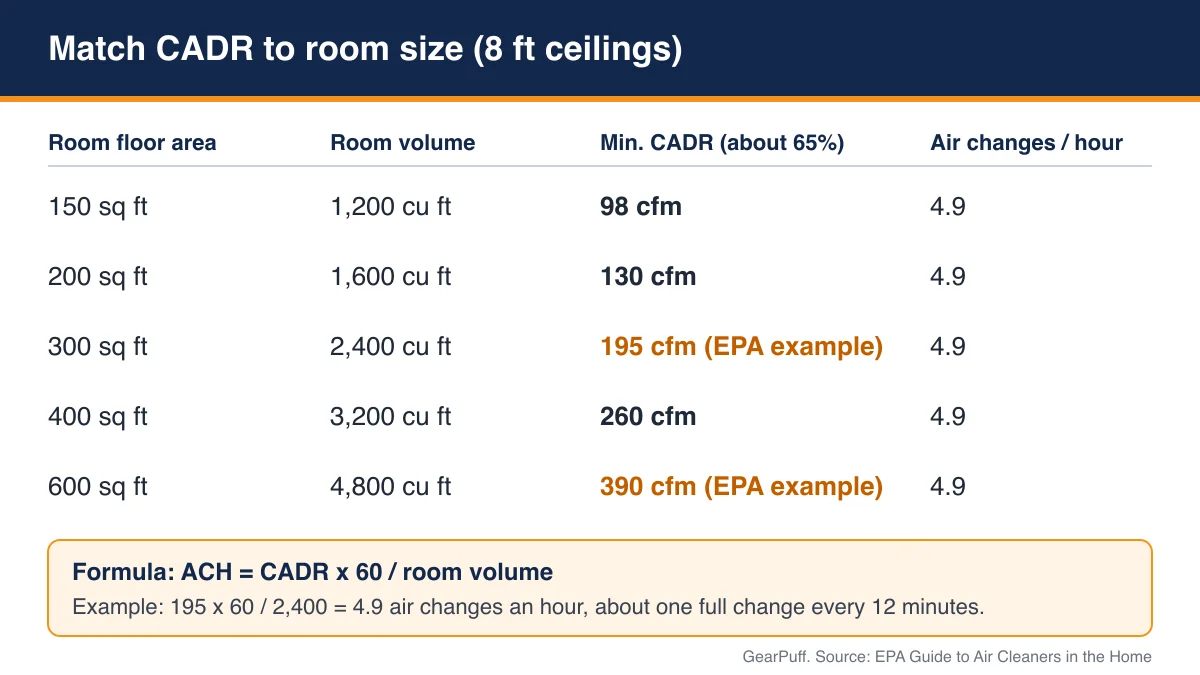
The chart above is a quick way to check any purifier’s CADR against your room. If the listing’s CADR is well below the number for your floor area, keep looking.
5. Expecting One Purifier to Fix Odors and Gases
People often buy a purifier for a smell. Odors and many chemical pollutants are gases, and a particle filter does not remove them. EPA’s guide notes that some filters address gases, including some with odors, and that activated carbon filters work when a large amount of material is used in the filter.
That has two consequences.
- A HEPA-only purifier will not fix a cooking or pet smell.
- A thin carbon “sheet” in a cheap unit will do little.
If smell is your main problem, look for a purifier with a substantial carbon layer, and combine it with source control and ventilation. EPA is clear that no air cleaner removes all pollutants, and that reducing or removing sources and ventilating with clean outdoor air are the most effective ways to improve indoor air.
6. Ignoring Filter Cost and Availability
The purchase price is only the start. EPA’s guide states that all filters need regular replacement, and that a dirty, overloaded filter will not work well. Before you buy:
- Find the replacement interval, often every 6 to 12 months for HEPA.
- Look up the replacement price and check it is in stock.
- Check whether the model uses a proprietary filter you can only buy from one seller.
A cheap purifier with expensive filters can cost more over three years than a pricier one with common filters. Filter-free units avoid this cost, but they give up a filter’s measurable performance, which is a trade to weigh, not a free lunch.
7. Buying on Star Ratings Alone
Star ratings on a seller’s own site are not independent evidence. In our Clairu research, the sales page claimed 4.7 out of 5 from 8,258 reviews, while the Trustpilot profile for getclairu.com showed 1.6 out of 5 from 72 reviews. We also found that the same rating and review counts appear on the sales page of an unrelated product we reviewed.
Better evidence:
- Reviews that publish measurements, such as particle counts, noise and running cost.
- Independent testers that explain their method.
- Long-term owner feedback on filter cost, durability and support.
Check the date, since models and filters change. Also be careful with “top 5” and “best according to” lists: check whether the ranking is for your room size and budget, and whether the source tests products or just summarizes ratings.
8. Hidden Prices, Countdown Timers and Multi-Pack Pressure
Watch the buying experience itself. Warning signs include a price that only appears at checkout, “70 percent off” with no original price, countdown timers that reset, and pushing multi-packs.
Buy one unit first, and check the refund terms before you pay. Pay by credit card or PayPal rather than a debit card or transfer, so you can dispute an order that never arrives. In the UK, consumer credit rules can add protection for card purchases in some price ranges, so check the current terms.
9. Ignoring Noise and Running Cost
A purifier you switch off because it is loud does nothing. EPA offers a useful yardstick, saying around 50 decibels is roughly the operating noise of a modern refrigerator. Look for decibel levels on both low and high settings, and be wary of a quiet claim with no number.
Running cost matters too. Multiply watts by hours, divide by 1,000 and multiply by your electricity rate. Most purifiers cost pennies a day on low, and more on high.
10. Believing Energy Labels Measure Cleaning Power
An ENERGY STAR label sounds like a quality mark, but EPA notes that it means the unit meets strict energy efficiency guidelines and does not refer to the air-cleaning effectiveness in any way. Use it as a tie-breaker between two purifiers that already have a good CADR, not as a substitute for one.
11. Skipping the Seller Check and the Refund Terms
The last trap is the seller. Read the returns policy in full, check who pays return shipping, and look for independent feedback on delivery and refunds. Screenshot the product page and your order confirmation, and photograph the parcel when it arrives.
Cheap plug-in ionizers deserve extra scrutiny here. Their sales pages often say little about specifications, and some carry poor seller records. We break down the complaint pattern for one such product in our Clairu complaints and Trustpilot analysis.
How to Read a Spec Sheet Line by Line
Spec sheets look intimidating, but every line answers a simple question. Here is a sample listing and how to decode it.
| Spec line | What it tells you | What to watch for |
|---|---|---|
| CADR (smoke, dust, pollen) | How much filtered air per minute | Missing entirely, or only one number given |
| Recommended room size | Marketing coverage | Often based on a low air-change rate, so compare with the two thirds rule |
| Filter type | Physical capture method | ”HEPA-type,” “HEPA-like” and “advanced filtration” |
| Carbon layer | Odor and gas capacity | A thin sheet, or “activated carbon” with no weight |
| Noise (dB) | Loudness on each speed | A single “as low as” number only |
| Power (watts) | Running cost | Missing, or only “energy saving” |
| Filter life | Replacement cost | ”Lifetime” or “washable” claims with no detail |
| Certifications | Safety and performance checks | AHAM Verified, CARB, recognized safety mark |
| Warranty and returns | Your safety net | Short terms, unclear return address |
If more than two lines are missing or vague, the listing is telling you something. A product that is proud of its numbers publishes them.
Match the Purifier to Your Situation
The right purchase depends on your main problem. Use this as a decision guide.
I have allergies or asthma. Choose a true HEPA purifier with a published CADR that meets the two thirds rule for your room. Avoid ozone-emitting or uncertified units. Talk to your doctor about which triggers matter, since EPA’s guidance is that source control and ventilation come first.
I have pets. Look for true HEPA plus a substantial carbon layer, and plan on vacuuming and washing bedding as well. A cheap plug-in will not fix dander or smell.
I live near wildfire smoke or in a city with heavy pollution. Buy a high-CADR HEPA unit with carbon, and keep windows closed on bad days. Size up if you can.
I have a small bedroom. A compact true HEPA unit is enough. Prioritize a quiet low setting, and check that decibels are published.
I have a nursery. Choose a HEPA unit with published ozone safety information, no exposed cords within reach, and quiet operation.
I just want a small freshener for a bathroom or hallway. A plug-in may be reasonable here, as long as you have checked certification, accept that the benefit is unproven and the stakes are low, and buy a single unit from a seller with a solid record.
Refurbished, Second-Hand and Off-Brand Filters
Cost pressure pushes many people towards second-hand units and cheap replacement filters. A few cautions apply.
- Second-hand purifiers. A used unit may have a spent filter or a weak motor, and you cannot check its history. If you buy one, replace the filter immediately and confirm it still delivers the published CADR.
- Off-brand replacement filters. Some are fine, but many do not match the original’s HEPA rating or carbon load, and a poor seal lets air bypass the filter. If you use third-party filters, look for independent test claims.
- Counterfeits. Very cheap “genuine” filters on marketplaces can be fakes. Buy from the manufacturer or an authorized seller where you can.
Buying in the US vs the UK
- Certification. CARB certification is the yardstick in the US, since California requires it for portable air cleaners. In the UK, look for UKCA or CE marking, and ask sellers about ozone.
- Voltage. UK mains is 230 volts. Confirm the unit’s rating matches.
- Filter availability. Check that replacement filters are sold in your country, at a price you accept.
- Consumer rights. Paying by credit card or PayPal gives you a dispute route in both countries. In the UK, distance-selling rules and credit card protections can help, so check the current terms for your purchase.
Warranty, Support and What to Do When Something Goes Wrong
A good purchase includes an exit route. Before you buy:
- Read the warranty length and what it covers, including the motor and electronics.
- Check whether the brand has a proper contact address and phone number, not only a web form.
- Look for independent feedback on how the company handled refunds, since a 1.6 out of 5 Trustpilot score with refund complaints tells you more than a 4.7 on the seller’s own page.
- Keep every email, photo and receipt for at least the warranty period.
If a problem arises, contact the seller in writing first, set a clear deadline, and then escalate to your card issuer or PayPal with your evidence.
Is There a Downside to Using an Air Purifier?
Yes, and it helps to be honest about them.
- Cost. Filters, electricity and the unit itself.
- Noise. Fans make sound, especially on high.
- Maintenance. Filters need replacing or cleaning.
- Ozone risk with some technologies.
- False security. A purifier does not remove damp, mold, or smoking indoors. It supplements source control and ventilation, as EPA puts it.
- Coverage limits. A closed door cuts the effect, and a small unit will not clean a large open space.
None of these are reasons to avoid purifiers. They are reasons to buy one that fits your room, comes with published numbers, and is used alongside the basics.
Which Air Purifier Is Best? A Method Instead of a Brand
Because rankings vary by room size, budget and pollutant, the most reliable approach is a method.
- Identify the main problem: particles, smells, smoke, or a mix.
- Measure the room.
- Shortlist models with a CADR that meets the two thirds rule.
- Keep only true HEPA models, and add carbon if smells matter.
- Remove anything without ozone safety information.
- Compare noise, filter cost and warranty.
- Read independent tests and long-term owner feedback.
- Buy one, keep the receipt, and test it for two weeks.
If you want to talk to a professional, ask a doctor about your health situation. The guidance we found from EPA is that air cleaners can help reduce airborne pollutants but cannot remove all of them.
Red Flags in a Listing: A Quick Scan
Before you read a single review, scan the listing for these warning signs.
- “Covers up to X square feet” with no CADR. The coverage claim cannot be checked.
- “Medical-grade,” “hospital-grade” or “military-grade.” These are marketing words with no standard behind them.
- A rating that is suspiciously perfect. Thousands of reviews and almost no low ratings deserve a second look.
- Pressure tactics. Countdown timers that reset, “only 3 left” banners and discounts with no original price.
- Vague safety claims. “Non-toxic” and “chemical-free” say nothing about ozone.
- No physical address or phone number, or only a web form.
- Multi-pack pushes before you have tried one.
- Endorsements without credentials. A named “expert” with no employer or link.
One or two of these on a small brand is common. Five or six together mean you should walk away or buy the smallest possible order.
Questions to Ask the Seller
You can tell a lot about a seller by how they answer. Send these before you buy.
- What is the CADR, and where was it tested?
- Is the unit CARB certified, or is there a measured ozone output?
- What is the rated voltage and plug type for my country?
- What is the filter replacement interval and price?
- Who pays return shipping under your guarantee, and where do returns go?
A confident seller answers in a sentence or two. A slow, generic or automated reply is a preview of your support experience after you pay.
Printable Pre-Purchase Checklist
- I know my main problem (particles, smells, smoke).
- I measured my room and know its volume.
- The CADR meets the two thirds rule for my room.
- It is a true HEPA filter, and I know the replacement price.
- Carbon is included if smells matter.
- There is ozone safety information, or CARB or AHAM certification.
- Noise is listed in decibels for low and high.
- I know the wattage and running cost.
- Returns are clear and I am paying by a method that allows disputes.
- I read independent feedback, not only the seller’s ratings.
The One-Minute Summary
If you remember nothing else, remember five things. Ask for a CADR. Insist on true HEPA for particles and carbon for smells. Avoid anything that produces ozone or cannot show ozone safety. Size the unit to the room using the two thirds rule. And buy from a seller whose refund terms and track record you have checked.
A final tip on timing. Do not buy during a pollen or smoke emergency if you can help it, because urgency is when shoppers skip the checks above and sellers raise prices. Do your research on a calm day, shortlist two or three models with a CADR that fits your room, and keep the receipt so you can return anything that disappoints.
Bottom Line
The best protection against a bad air purifier purchase is a habit of asking for numbers. CADR, filter type, ozone safety, noise, running cost and refund terms tell you nearly everything you need. Avoid products that will not show them, keep expectations realistic, and treat a purifier as one part of a plan that also includes source control and ventilation.
Frequently Asked Questions
Is there a downside to using an air purifier?
What should I avoid when buying an air purifier?
Which brand of air purifier is best?
What do doctors say about air purifiers?
Which air purifier is best for removing toxins?
How do I read air purifier reviews and rankings?
Is HEPA-type the same as true HEPA?
How many air purifiers do I need in my home?
More Smart Home Guides
Related Product Reviews

Maya Chen
Smart home enthusiast and IoT specialist. Has automated over 50 homes across different ecosystems. Former smart home consultant for Google Nest and Amazon Alexa. Passionate about making technology accessible.
Affiliate disclosure:This article contains affiliate links. If you buy through them, GearPuff may earn a commission at no extra cost to you. It keeps our testing independent and our reviews free.