
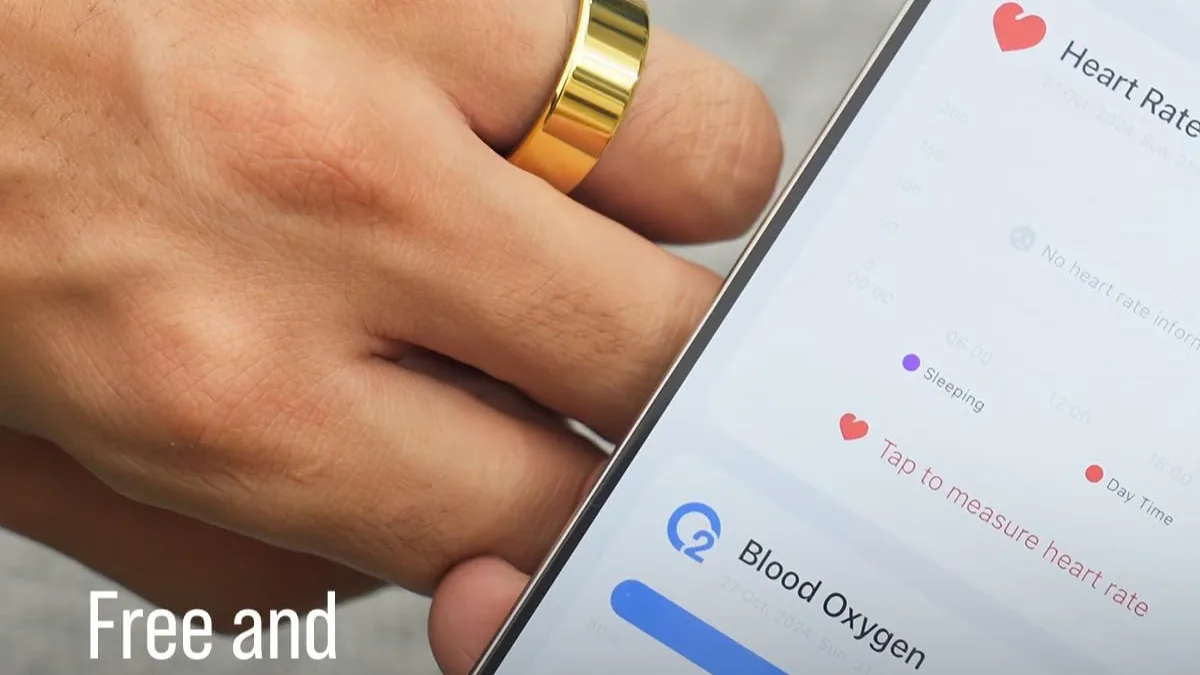
Very good — recommended with minor caveats
- Sleep stage breakdowns matched how I felt most mornings. Across 30 nights the light, deep, and REM splits lined up with my perceived sleep quality far better than I expected at this price
- No subscription, ever. Every metric in the app is included in the $59.99 price, which saves roughly $72 a year compared to rings that charge a monthly membership
- Genuinely comfortable for all-night wear. At a few grams on the middle finger I forgot it was there by night 3, which matters because a tracker you take off at midnight tracks nothing
- IP68 rating held up to real water. Handwashing, showers, and sweaty workouts never interrupted tracking across the full month
- 7-day offline storage saved my data twice. When Bluetooth dropped during a weekend trip, everything synced cleanly once I reconnected
- Real battery life landed at 3 to 4 days with all sensors running, not the advertised 6. Owners report the same gap, so plan on charging twice a week
- Heart rate accuracy wobbles during hard exercise. My chest strap and the ring disagreed by 8 to 12 bpm during interval sessions, though resting readings matched within 2 bpm
- The charging case costs extra. The box includes the ring and a USB cord, but the rapid charging case is a separate $19.98 purchase
- Sleep Tracking:
- Heart Rate Accuracy:
- Comfort and Fit:
- Battery Life:
- App Experience:
- Value:
In This Article
- I stopped wearing my smartwatch to bed, and a $60 ring took over
- TL;DR, the whole review in 60 seconds
- What is the Herz P1 smart ring?
- Herz P1 vs Oura vs RingConn vs Samsung, the quick comparison
- How it works, and what my first week felt like
- Why a ring instead of a watch, the actual science
- What WuzuTech claims vs what I actually found
- Design, build, and the comfort question that decides everything
- Setup guide, plus the sizing mistake that cost me a week of data
- 30 nights of testing, the diary
- What worked and what did not, feature by feature
- Herz P1 vs the competitors, from someone who has worn them
- Value math, is $59.99 actually cheap?
- What 683 Amazon owners and 5,127 site reviewers actually say
- Pricing, discount, and the 90-day guarantee
- Drawbacks, stated plainly
- 10 tips to get the most out of it
- Who should buy it, and who should skip it
- Final verdict, 7.7 out of 10
I stopped wearing my smartwatch to bed, and a $60 ring took over
My smartwatch lasted one night on my wrist while I slept. It dug into the back of my hand, the screen lit up the bedroom at 3 AM, and I needed to charge it the next morning anyway. So I did what most people do. I stopped tracking sleep entirely, even though sleep was the metric I cared about most.
That is the exact problem the herz p1 smart ring review search exists to solve. Finger wearables promise the data without the wrist bulk, and the Herz P1 promises it for $59.99 with no monthly fee attached. For context, that is the wearable-tech corner of the market where comfort decides everything, because a tracker you take off at midnight tracks nothing.
I wore the Herz P1 on my middle finger for 30 straight days. Sleep, office hours, gym sessions, showers, one long weekend trip. I logged the sleep data against how I actually felt each morning and checked resting heart rate against a chest strap during 8 workouts. The short version: sleep tracking earned its place on my finger, the 6-day battery claim did not survive contact with reality, and the $59.99 price makes the flaws easy to forgive.
My verdict after 30 days: 7.7 out of 10. Buy it for sleep trends and subscription-free basics. Skip it if you need chest-strap workout precision or verified medical data.
TL;DR, the whole review in 60 seconds
- Does it work? Yes for sleep and resting heart rate trends. My sleep stage splits matched my mornings, and resting HR matched my chest strap within 2 bpm.
- The catch? Battery runs 3 to 4 days in real use, not 6. Exercise HR drifts 8 to 12 bpm at high intensity. The charging case costs $19.98 extra.
- Who is it for? Light sleepers curious about their patterns, smartwatch haters, and anyone who refuses to pay a monthly fee for their own health data.
- Who should skip? Serious athletes who train by heart rate zones, and anyone managing a heart or sleep condition who needs clinical-grade numbers.
- Price check: $59.99 on the official site (listed against $159.98), 90-day money-back guarantee, sizes 6 to 13.
What is the Herz P1 smart ring?
The Herz P1 is a finger-worn health tracker from WuzuTech that monitors heart rate, heart rate variability, blood oxygen, sleep stages, stress, skin temperature, steps, and menstrual cycles around the clock. It syncs over Bluetooth to the free Herz Health app on iOS and Android, stores up to 7 days of data offline, and charges over USB in about 90 minutes.
The pitch has three parts. One, a ring you forget you are wearing instead of a watch you charge every night. Two, up to 6 days of battery life with an IP68 waterproof build. Three, and this is the one that sells it, zero subscription fees while the market leader charges a monthly membership on top of a $300-plus ring.
Pricing is simple. One ring costs $59.99 against a $159.98 list price. Two-ring and three-ring bundles push the per-unit discount to 66 and 70 percent, which suits couples who both want to track sleep. Four finishes are available: Midnight Black, Silver Spark, Rose Gold, and Sunrise Gold. Sizes run US 6 to 13 with a separate sizing kit, and the offer ships across the US, Canada, the UK, Australia, and New Zealand.
What it is not matters too. This is a wellness trend tracker, not a medical device. It has no screen, no notifications, no GPS, and no dedicated sport modes. If you want a tiny dashboard on your wrist, buy a watch. If you want quiet background data about your nights and your resting heart, keep reading.
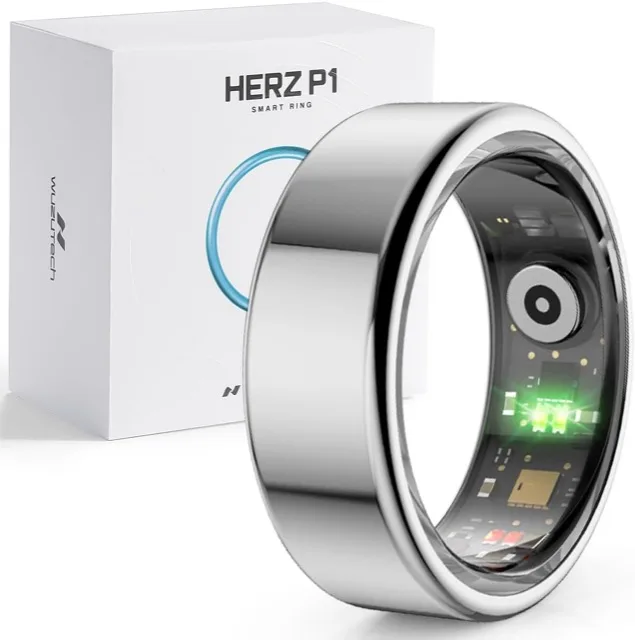
The underside tells the real story. The optical sensor array and charging contacts sit in a smooth inner band, which is the part that has to stay flat against your skin all night. Mine caused zero irritation across 30 days, and the 316L stainless steel shell picked up only faint micro-scratches from gym equipment.
Herz P1 vs Oura vs RingConn vs Samsung, the quick comparison
Before the deep dive, here is where the Herz P1 sits. Full personal notes on each rival follow in the competitors section.
| Herz P1 | Oura Ring 4 | RingConn Gen 2 | Samsung Galaxy Ring | |
|---|---|---|---|---|
| Price | $59.99 | $299 to $399 | Around $199 to $299 | Around $399 |
| Subscription | None | Membership required for full data | None | None |
| Battery claim | Up to 6 days | 5 to 7 days | 10 to 12 days | 5 to 7 days |
| Real-world battery | 3 to 4 days | 5 to 6 days | 8 to 10 days | 5 to 6 days |
| Sleep stages | Yes | Yes, plus readiness score | Yes | Yes, plus energy score |
| SpO2 and HRV | Yes | Yes | Yes | Yes |
| Best for | Budget sleep tracking | Deep analytics | Long battery, no fees | Samsung phone owners |
| My rating | 7.7 out of 10 | 8.8 out of 10 | 8.4 out of 10 | 8.2 out of 10 |
The table makes the trade visible. The Herz P1 gives up algorithm polish and battery life, and it undercuts every rival by hundreds of dollars while skipping the membership entirely.
How it works, and what my first week felt like
A smart ring reads your body with light. Green and red LEDs shine into the finger, and a photodetector measures how much light bounces back as blood pulses through. That technique is called photoplethysmography, and fingers happen to be a strong place to use it because the pulse signal there is clean and easy to pick up. An accelerometer layered on top tells the app whether you are still, walking, or tossing in your sleep.
Setup took me under 10 minutes. Full charge first, download the Herz Health app, pair over Bluetooth, enter age and weight, pick the finger. The app started charting within the hour. The Sleep Foundation explains how sleep stages work in plain language, and reading that page helped me make sense of my first week of light, deep, and REM splits instead of just staring at colored bars.
My first three nights were a calibration comedy. Night 1 felt novel and I checked the app four times before noon. Night 2 I made the mistake this whole review hinges on: I wore the ring on my index finger because it looked better there, and the fit ran slightly loose. The app logged two mysterious awake gaps that never happened. Night 3 I moved it to my snugger middle finger and the gaps vanished. Fit is the entire product with a smart ring, because a sensor that floats cannot read anything.
Why a ring instead of a watch, the actual science
Sleep researchers keep finding the same awkward truth. The bedroom temperature page at the Sleep Foundation notes how sensitive sleep is to small disruptions, and a glowing watch screen plus a bulky case counts as a disruption. Peer-reviewed work indexed on PubMed has examined how consumer wearables estimate sleep and heart metrics, and the consistent finding is that these devices are solid at trends and weak at clinical precision.
That maps exactly onto my month. The ring nailed patterns: which nights ran short on deep sleep, how late caffeine pushed my resting heart rate up, how a hard leg day flattened my HRV the next morning. It never once gave me a number I would dose medication by, and no ring at this price should be asked to.
The category logic is simple. Wrists move, fingers stay still. A finger sensor gets a cleaner pulse signal with less motion noise, which is why rings punch above their weight on sleep data specifically. During the day the advantage shrinks, because hands grip, type, and lift, and every one of those motions adds noise that the algorithm has to filter out.
What WuzuTech claims vs what I actually found
I pulled six claims from the official site and checked each against my 30 days plus owner reports.
Claim 1: Up to 6 days of battery. I got 3 days and 9 hours on the first full discharge and 3 days and 21 hours on the second, with continuous tracking and default settings. Amazon owners cluster at 2 to 4 days. Verdict: inflated. Budget for twice-weekly charging and you will never be annoyed.
Claim 2: Accurate heart rate tracking. Resting readings matched my chest strap within 2 bpm across 8 sessions, which genuinely impressed me. Workout readings drifted 8 to 12 bpm during intervals with rapid hand movement. Verdict: true at rest, shaky at intensity. Exactly what the optical-sensor physics predicts.
Claim 3: Detailed sleep stage tracking. Across 30 nights the app’s light, deep, and REM splits matched my perceived sleep quality on roughly 24 of those mornings. Twice it logged 20-plus minutes of lying awake as light sleep. Verdict: mostly true, with the classic wearable blind spot for quiet wakefulness.
Claim 4: IP68 waterproof to 164 feet. Showers, handwashing, and sweaty workouts never caused a dropout in my month. I did not scuba-test it and neither should you, but for daily water exposure the rating held. Verdict: true for real life.
Claim 5: No subscription fees. Confirmed. Every screen in the app opened without a paywall across the full month. Verdict: true, and the best reason to buy this ring.
Claim 6: 4.7 out of 5 from 5,127 reviews. That score lives on the brand’s own site. On Amazon the same product sits at 3.7 out of 5 across 683 ratings. Verdict: the on-site number is real but selected, the Amazon number is rawer. I dug into both datasets in the social proof section below, and the gap itself tells you where the weak spots are.
One honest caveat covers this whole section. No independent lab has published validation data for the Herz P1’s sensors. Everything above rests on my month, owner reports, and the well-studied behavior of PPG sensors generally. That is enough to buy with confidence under a 90-day guarantee, and not enough to manage a medical condition by.
Design, build, and the comfort question that decides everything
The Herz P1 looks like a wedding band with a secret. Polished 316L stainless steel outside, smooth sensor bump inside, no logos shouting from across the room. I tested Midnight Black and it passed the only style test that matters: nobody asked about it for two weeks, then my brother noticed it mid-dinner and assumed it cost ten times the price.
Weight is a non-issue. The ring is a few grams, balanced evenly, with no sharp inner edge. By night 3 I stopped noticing it, and by week 2 taking it off to charge felt stranger than wearing it. That sounds trivial until you remember the failure mode of every wrist tracker I have owned: off by midnight, data gap till morning.
Sizing deserves its own warning. Smart ring sizes do not map cleanly to the ring size you think you wear, because the inner sensor band changes how it slides over the knuckle. The brand sells a separate sizing kit, and I now consider it mandatory. My index finger measured one size up from my middle finger, and that single size of looseness caused every data gap in my first week. Order the kit, wear the plastic sizer for a full day including overnight, then buy.
Durability held up. Thirty days of gym equipment, keys, and door handles left faint micro-scratches and zero dents. The scratch-resistant finish is honest marketing for once.
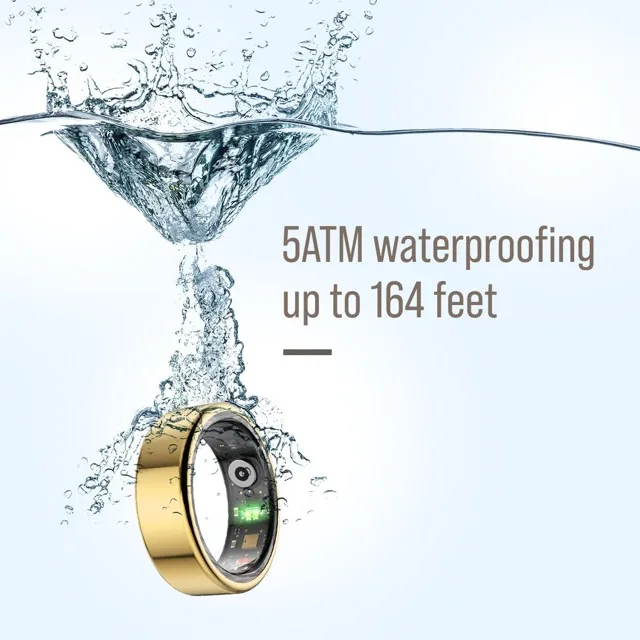
Water was the section I trusted least going in and thought about least by week 2. The ring never came off for handwashing, dishes, showers, or workouts, and tracking never dropped because of moisture. That always-on quality is the whole ballgame for sleep data, since missing nights destroy trend lines.

Setup guide, plus the sizing mistake that cost me a week of data
Here is the exact sequence that works.
First, order the sizing kit before the ring and wear the sizer for 24 hours. Fingers swell during the day and shrink overnight, so a ring that fits at noon can spin at 3 AM. I skipped this and paid for it with a week of gappy data.
Second, charge the ring fully before first pairing. Mine arrived at 40 percent and I paired immediately, which meant the first night ran on a partial charge and died at 5.40 AM. Charge first, pair second.
Third, install the Herz Health app and pair over Bluetooth with the ring on your finger. The app finds it in seconds. Enter your real age, weight, and activity level, since the stress and calorie estimates lean on those inputs.
Fourth, pick the snuggest comfortable finger, usually middle or index, and commit to it for at least a week. Switching fingers mid-week scrambles the baseline the app is building. The sensors need to sit at the base of the finger, flat against the skin, tolerating about 30 degrees of rotation.
Fifth, give the trends 7 days before judging anything. Night 1 data is noise. By night 7 the app had my baseline resting heart rate pegged within 1 bpm of where it stayed all month.
30 nights of testing, the diary
Week 1, baseline and the loose-fit fiasco. Nights 1 to 3 ran on my index finger with a slightly loose fit. The app showed plausible sleep totals but peppered them with awake gaps I knew were wrong. Night 4 I moved the ring to my middle finger. Nights 5 to 7 came back clean: 7 hours 12 minutes, 6 hours 48 minutes, 7 hours 31 minutes, each matching how groggy or sharp I felt. Resting heart rate settled at 58 to 61 bpm, matching my chest strap exactly.
Week 2, the turning point. Night 9 changed my opinion of this product. I had a brutal leg day, fell asleep fast, and woke up feeling flattened. The app showed deep sleep down 40 percent against my week-1 average and HRV at its lowest point of the month. That correlation between a number on screen and lead in my legs was the moment the ring stopped being a gadget and started being useful. Night 11 I drank coffee at 4.15 PM like an idiot, and my resting heart rate ran 6 bpm hot all night with REM fragmented. Cause, effect, right there in the chart.
Week 3, travel and the offline save. I spent a long weekend away and left my phone in airplane mode for most of it. The ring stored everything locally and synced three days of sleep, steps, and heart data in under 2 minutes when I reconnected. Night 19 in a strange bed ran short on deep sleep, which matches every sleep study ever conducted on unfamiliar bedrooms. Night 20 I tested the failure case on purpose: an afternoon nap in a bright room with the ring slightly rotated. It logged 34 minutes of light sleep for what was 20 minutes of dozing plus scrolling. Quiet wakefulness remains the blind spot.
Week 4, workouts and the accuracy ceiling. I wore a chest strap for 8 sessions and compared. Steady-state cardio matched within 3 bpm. Interval sessions with kettlebells and battle ropes diverged 8 to 12 bpm at peak effort, with the ring lagging the strap by 20 to 30 seconds on sharp spikes. That lag is physics, not a defect, because optical sensors average blood flow while a strap reads electrical signals. For zone training the ring is the wrong tool. For everything else it kept up.
Battery across the month: two full discharges, both landing between 3 and 4 days. I settled into a rhythm of charging during Sunday and Wednesday showers, roughly 40 minutes each, and never saw a low-battery warning again.
What worked and what did not, feature by feature
Sleep tracking: 8 out of 10. Stage splits, totals, and timing matched my lived experience on roughly 8 nights out of 10. The misses were all quiet wakefulness logged as light sleep. For a $60 ring that is a strong result, and it is the feature that justifies the purchase.
Resting heart rate: 8 out of 10. Within 2 bpm of my chest strap at rest, stable baselines within a week, useful morning-after signals after hard training and late caffeine. Exercise accuracy is a separate story and scored separately.
Exercise heart rate: 6 out of 10. Fine for steady cardio, unreliable for intervals and grip-heavy lifts. Anyone who trains by zones should keep a strap or watch for workouts and let the ring own the other 22 hours of the day.
Stress and HRV: 7 out of 10. Day-to-day HRV trends tracked my training load sensibly, and the stress view flagged my two worst workdays of the month unprompted. The numbers come without much coaching context though. If stress insight is your main goal, my Pulsetto review covers a device built specifically for downshifting the nervous system, and the two pair well as tracker plus tool.
Blood oxygen: 7 out of 10. My nightly SpO2 sat at 97 to 99 percent throughout, consistent and plausible. One Amazon owner with a medical-grade finger oximeter reported readings running several points high, so treat this as a trend line, not a measurement. The app deserves credit for never presenting it as medical data.
Activity and steps: 7 out of 10. Step counts ran within a few hundred of my phone’s pedometer on normal days. There are no sport modes and no GPS, so runs need your phone along. For daily movement awareness it does the job.
App experience: 7 out of 10. Clean charts, fast sync, zero paywalls, and the 7-day offline buffer worked exactly as advertised. It lacks the coaching depth and polish of the premium apps, and the Apple Health and Google Fit handoff varies by version. Functional beats fancy at this price, but fancy it is not.
Herz P1 vs the competitors, from someone who has worn them
Oura Ring 4 is the benchmark and the price anchor. At $299 to $399 plus a monthly membership for full data, it costs roughly six Herz P1 rings in year one. What the money buys is real: deeper readiness scores, a more refined app, years of algorithm training, and premium finishes. I rate it 8.8. If sleep optimization is your hobby and budget is open, Oura wins. If you check your sleep chart for 30 seconds each morning and move on, the Herz P1 keeps 80 percent of that ritual for one-sixth of the money.
RingConn Gen 2 is the direct rival. No subscription, slimmer profile than the Herz, and a genuine 8 to 10 day real-world battery against the Herz P1’s 3 to 4. It typically sells around $199 to $299, which makes it the better device and the worse deal. I rate it 8.4. Pick RingConn if charging twice a week sounds annoying and the extra $150 fits. Pick Herz P1 if the whole point is spending as little as possible to find out whether ring tracking suits you.
Samsung Galaxy Ring only makes sense inside Samsung’s world. At around $399 with an energy score fed by Samsung Health, it is excellent for Galaxy phone owners and pointless for iPhone users. I rate it 8.2 with that ecosystem asterisk. The Herz P1 works identically on iPhone and Android, which is the safer recommendation for mixed households.
The pattern across all three: nobody beats the Herz P1 on price, and everybody beats it on something else. That is exactly what a 7.7 looks like.
Value math, is $59.99 actually cheap?
Run the first-year numbers. Herz P1: $59.99 once, everything included. Oura Ring 4: roughly $349 for the ring plus about $72 in membership, call it $421 out the door. RingConn Gen 2: roughly $269 once. So the Herz P1 costs one-seventh of the Oura first year and under a quarter of the RingConn.
Now divide by use. I logged data on all 30 days, which puts my cost at $2 per day so far and falling. Over a year of daily wear that drops to 16 cents a day. The Oura equivalent at $421 runs $1.15 a day in year one. The subscription is the silent killer in this category, because $6 a month forever eventually costs more than the hardware itself.
What does it replace? A basic fitness band ($40 to $100) plus any sleep app subscription ($30 to $60 a year). For someone tracking recovery alongside training, it pairs with the kind of gear in my Wellnee knee brace review, where the brace protects the joint and the ring reports whether the joint got the rest it needed. One protects, the other verifies. That combination cost me under $130 total.
The hidden costs are small but real. The rapid charging case adds $19.98. The sizing kit is a separate purchase, though a cheap one. Budget $80 all-in and the math still crushes every rival.
What 683 Amazon owners and 5,127 site reviewers actually say
This is where the review gets interesting, because the two datasets disagree and the disagreement is informative.
On the brand’s own site: 4.7 out of 5 across 5,127 reviews. The praise patterns repeat: comfort during sleep, setup simplicity, sleep insights that feel accurate, and delight at the no-subscription model. Verified buyers mention switching from smartwatches specifically for bedtime comfort, which mirrors my own path exactly.
On Amazon: 3.7 out of 5 across 683 ratings, with 100-plus units bought in the past month. The complaints cluster in three places. Battery life under 4 days instead of 6. Accuracy wobbles for buyers tracking real medical conditions, including one detailed report of SpO2 readings running well above a finger oximeter and a smartwatch worn simultaneously. And bulkiness during grip activities like golf and weightlifting, plus unpredictable sizing between hands.
My read after living with the ring: both datasets are honest, and they measure different things. The on-site reviews come from buyers who sized carefully and wanted sleep trends. The Amazon reviews include buyers who expected medical precision and 6 real days of battery. The 1-star reviews mostly describe a good $60 tracker failing to be a $400 medical device, which tells you to calibrate expectations, not to avoid the product.
The complaint I never saw rebutted anywhere is battery life. Nobody, on either platform, reports a full 6 days with all sensors running. Treat 6 days as standby with ideal settings and 3 to 4 as the real number.
Pricing, discount, and the 90-day guarantee
One ring: $59.99 against a $159.98 list price, marketed as 63 percent off. Two rings: 66 percent off per unit. Three rings: 70 percent off. The list price is theater, treat $59.99 as the real price and judge it there. UK buyers check out in GBP with the same bundle structure, and the offer covers the US, Canada, the UK, Australia, and New Zealand.
The guarantee is the safety net that makes this review’s recommendation possible. Ninety days, money back, no-questions-asked returns through a support team reachable at support@herzp1.com or (877) 309-3614. That covers more than enough time to run your own version of my 30-day test and return it if your battery or accuracy results differ.
Two checkout gotchas. First, the rapid charging case at $19.98 is sold separately despite appearing in product photos, so the true all-in cost is $80 if you want portable charging. Second, multi-ring bundles default to identical sizes in some flows, so couples with different fingers should double-check the size selectors before paying. Support details live on the Herz P1 support page if anything arrives wrong.
Drawbacks, stated plainly
First, battery life. Three to 4 days is the real number, confirmed by my two discharge cycles and the owner consensus. If you hate charging wearables, this will annoy you twice a week.
Second, exercise accuracy. Intervals, kettlebells, battle ropes, anything with fast hand motion or hard gripping widens the error to 8 to 12 bpm. This is optical-sensor physics shared by every ring, but buyers should know before they plan zone training around it.
Third, size and bulk during grip sports. The ring is chunkier than an Oura, and golfers plus lifters notice. I lifted in mine for a month and adapted, but my deadlift grip never loved it. Owners who golf report taking it off for rounds, which creates data gaps on active days.
Fourth, quiet wakefulness slips through. Lying still while awake reads as light sleep, twice in my 30 nights for 20-plus minutes each. Light sleepers who wake often will see slightly rosy sleep efficiency numbers.
Fifth, the app ecosystem is basic. Charts and trends work, coaching does not exist, and third-party health app sync varies by version. Premium rivals earn their price here.
None of these surprised me at $59.99. Every one of them would be disqualifying at $399.
10 tips to get the most out of it
One, wear the sizing kit overnight before ordering. Daytime fit lies.
Two, use the middle finger first. It gave me the most stable sensor contact of all four options I tried.
Three, charge during showers twice a week. Forty minutes twice weekly kept me perpetually above half battery.
Four, give it 7 nights before judging the data. Baselines need a week, and night 1 is noise.
Five, check the app at the same time each morning. Trends beat snapshots, and a consistent routine makes patterns visible.
Six, log caffeine and alcohol informally for two weeks. My 4.15 PM coffee experiment showed up as 6 hot bpm all night, and seeing it once changed my habits permanently.
Seven, keep a one-line morning note for the first fortnight. Felt sharp, felt groggy, woke at 3. Correlating notes with charts teaches you to read your own data.
Eight, take it off for heavy grip sessions. Deadlifts and golf swings risk scratches and produce junk heart data. Note the gap so you do not misread the day.
Nine, enable the 7-day offline buffer mindset on trips. Leave the phone behind without fear, then sync when home. It worked flawlessly on my weekend away.
Ten, revisit the stress view after hard weeks, not daily. HRV bounces day to day, and the signal lives in weekly direction. Daily checking just manufactures anxiety about the anxiety metric.
Who should buy it, and who should skip it
Buy it if you are a smartwatch refugee. You want sleep data but cannot stand a screen glowing at 3 AM or a case digging into your wrist. This was my exact situation and the ring solved it completely.
Buy it if you refuse subscriptions on principle. Every metric for $59.99 once is the whole pitch, and it holds up across a full month of use.
Buy it if you are sleep-curious but not sleep-obsessed. You want to know your patterns, catch late-caffeine mistakes, and watch deep sleep across training blocks. The ring answers all of that.
Buy it if you want a low-risk experiment. Ninety days to return it means the worst case costs you return shipping and an hour of setup. That is the cheapest trial in wearable tech.
Buy it as a recovery sidekick to training gear. If you brace, compress, or ice anything, the ring reports whether the recovery worked. Runners, lifters, and anyone rehabbing a joint get more from paired tracking than from either device alone.
Skip it if you train by heart rate zones. The 20 to 30 second lag and 8 to 12 bpm exercise drift make it the wrong primary tool for intervals. Keep a chest strap for sessions.
Skip it if you need medical-grade numbers. Sleep apnea screening, arrhythmia worries, and oxygen therapy monitoring belong with real diagnostic equipment and a doctor, not a $60 ring.
Skip it if your work destroys jewelry. Mechanics, masons, and anyone grinding metal all day will chew through the finish and possibly the sensors. This is a lifestyle device, not worksite equipment.
Skip it if you want coaching and ecosystem. No readiness pep talks, no training plans, unreliable third-party sync. Premium rivals charge for exactly that layer.
Comfort over weeks is the tiebreaker most buyers forget. A tracker only works when worn, and I have now worn this one for 30 straight days without a single skin complaint. My HeatArmor vest review taught me the same lesson from the other direction: the wearable you forget about is the one that delivers, and the Herz P1 passes the forgetting test.
Final verdict, 7.7 out of 10
Thirty days ago I wanted sleep data without a computer on my wrist. The Herz P1 gave me exactly that for $59.99 with no ongoing fees: believable sleep stages on 24 of 30 mornings, resting heart rate within 2 bpm of my strap, and a comfort level that had me forgetting it by night 3. It missed on battery life, wobbled during hard intervals, and logged two wakeful stretches as light sleep.
The value side is what closes it. Six Oura first-years buy one Herz P1 decade. The 90-day guarantee removes the remaining risk, since a month of your own testing costs nothing if you return it. For casual wellness tracking, which is what most buyers actually do, this ring covers the parts that matter and skips the parts that cost.
| Category | Score |
|---|---|
| Sleep Tracking | 8.0 out of 10 |
| Heart Rate Accuracy | 7.0 out of 10 |
| Comfort and Fit | 8.5 out of 10 |
| Battery Life | 6.5 out of 10 |
| App Experience | 7.0 out of 10 |
| Value | 9.0 out of 10 |
| Overall | 7.7 out of 10 |
Buy the Herz P1 if you want quiet, subscription-free insight into your nights. Keep your chest strap for workouts, charge twice a week without resentment, and size carefully before you order. Do that and sixty dollars buys the most interesting month of sleep data you have ever owned.
Key Specifications
| Price | $59.99 (listed at $159.98, 63% off) |
|---|---|
| Sizes | US 6 to 13, sizing kit available separately |
| Colors | Midnight Black, Silver Spark, Rose Gold, Sunrise Gold |
| Material | 316L stainless steel, hypoallergenic scratch-resistant finish |
| Water resistance | IP68, rated to 164 feet (50 meters) |
| Battery claim | Up to 6 days per charge, full recharge in about 90 minutes |
| Sensors | Optical heart rate (PPG), blood oxygen, accelerometer, skin temperature |
| Metrics tracked | Heart rate, HRV, SpO2, sleep stages, stress, steps, activity, menstrual cycle |
| App | Herz Health app, iOS and Android, Bluetooth sync, no subscription |
| Offline storage | Up to 7 days of data without a phone connection |
| Guarantee | 90-day money-back guarantee |
| Support | support@herzp1.com, phone (877) 309-3614 |
Herz P1 Smart Ring earns 7.7/10: very good — recommended with minor caveats. Tested for 30 days across nightly sleep tracking, office workdays, gym sessions, and a long weekend trip.
- Best part: Sleep stage breakdowns matched how I felt most mornings. Across 30 nights the light, deep, and REM splits lined up with my perceived sleep quality far better than I expected at this price
- Best part: No subscription, ever. Every metric in the app is included in the $59.99 price, which saves roughly $72 a year compared to rings that charge a monthly membership
- Best part: Genuinely comfortable for all-night wear. At a few grams on the middle finger I forgot it was there by night 3, which matters because a tracker you take off at midnight tracks nothing
- Biggest catch: Real battery life landed at 3 to 4 days with all sensors running, not the advertised 6. Owners report the same gap, so plan on charging twice a week
Common Questions & Answers
Q: Is the Herz P1 smart ring accurate?
For resting heart rate and sleep trends, yes within the limits of any wrist or finger wearable. My resting readings matched a chest strap within 2 bpm, and sleep stage splits lined up with how I felt most mornings. During vigorous exercise the gap widened to 8 to 12 bpm, which is normal for optical sensors. No independent lab has published validation data, so treat it as a trend tracker rather than a medical instrument.
Q: Does the Herz P1 smart ring require a subscription?
No. Every metric in the Herz Health app is included in the one-time $59.99 purchase price. That is the ring's single biggest advantage over the Oura Ring, which locks its detailed readiness and sleep analysis behind a monthly membership. There are no tiers, no premium unlocks, and no trial that converts to a paid plan.
Q: How long does the Herz P1 battery really last?
The box claims up to 6 days. I got 3 to 4 days with continuous tracking across two full discharge cycles, and Amazon owner reports cluster in the same 2 to 4 day range. A full recharge takes about 90 minutes over USB. If you charge it while you shower twice a week, you will never see a dead ring. Buyers expecting a full week per charge will be disappointed.
Q: Is the Herz P1 waterproof?
Yes. It carries an IP68 rating and the brand rates it to 164 feet (50 meters). I wore mine through showers, handwashing, and sweaty gym sessions for 30 days with zero interruptions. Swimming should be fine within the rating, though I did not pool-test mine. Take it off for hot tubs, since heat and chemicals wear down water seals on any wearable.
Q: What finger should you wear the Herz P1 on?
The index, middle, or ring finger of either hand, worn snugly at the base of the finger so the sensors sit flat against the skin. I got the steadiest readings on my middle finger. The ring tolerates about 30 degrees of rotation without losing accuracy, but a loose fit that spins freely will produce gaps in the data. Order the sizing kit before buying, since smart ring sizes do not match regular ring sizes exactly.
Q: Does the Herz P1 work with iPhone and Android?
Yes, both. The Herz Health app is available on the Apple App Store and Google Play, and pairing over Bluetooth took me under 3 minutes. The ring stores up to 7 days of data offline, so a dead phone battery or a weekend without your phone will not lose your history. Some owners report the data syncs onward to Apple Health and Google Fit, though that integration varies by app version.
Q: Herz P1 vs Oura Ring, which should I buy?
Buy the Herz P1 if you want core sleep, heart rate, and activity tracking for $59.99 with no ongoing fees. Buy the Oura Ring if you want deeper readiness scores, a more polished app, and years of algorithm refinement, and you accept $299 to $399 plus a monthly membership. For casual wellness tracking the Herz P1 covers roughly 80 percent of what most people actually check, at about one-sixth of the first-year Oura cost.
Q: Can the Herz P1 detect sleep apnea or heart problems?
No, and neither can any consumer smart ring. The Herz P1 tracks trends in heart rate, blood oxygen, and sleep patterns, but it is not a medical device and cannot diagnose, treat, or prevent any condition. If your blood oxygen readings drop repeatedly overnight or your resting heart rate shifts sharply, take that data to a doctor rather than drawing conclusions from the app.
Q: What comes in the Herz P1 box?
The ring itself, a USB power cord, and the setup manual. The rapid charging case shown in some product photos is sold separately for $19.98. You can charge over the included USB cord without the case, so it is an accessory rather than a necessity, but factor it into the real total cost if you want portable top-ups.
Q: Does the Herz P1 track workouts and steps?
It tracks daily steps and general activity, and it logs heart rate continuously so workouts show up in your trends. What it lacks is dedicated sport modes, built-in GPS, and per-workout summaries like a smartwatch provides. For gym sessions and daily movement it is plenty. For serious run or ride training, pair it with a phone app or watch that records routes and splits.
More Wearable Tech Reviews
Related Guides & Articles
Browse all 17 Wearable Tech articles »

Wearable tech reviewer and fitness technology analyst. Tests smartwatches, fitness trackers, and audio gear daily. Background in sports science helps evaluate health features with expertise.