
HeatArmor vs Ororo Heated Vest: Which One Actually Worth It in 2026?
HeatArmor vs Ororo heated vest compared head to head. I tested both for 3 weeks each, covering heating speed, battery life, build quality, and value. Here's which one wins.

Tech Reviewer
In This Article
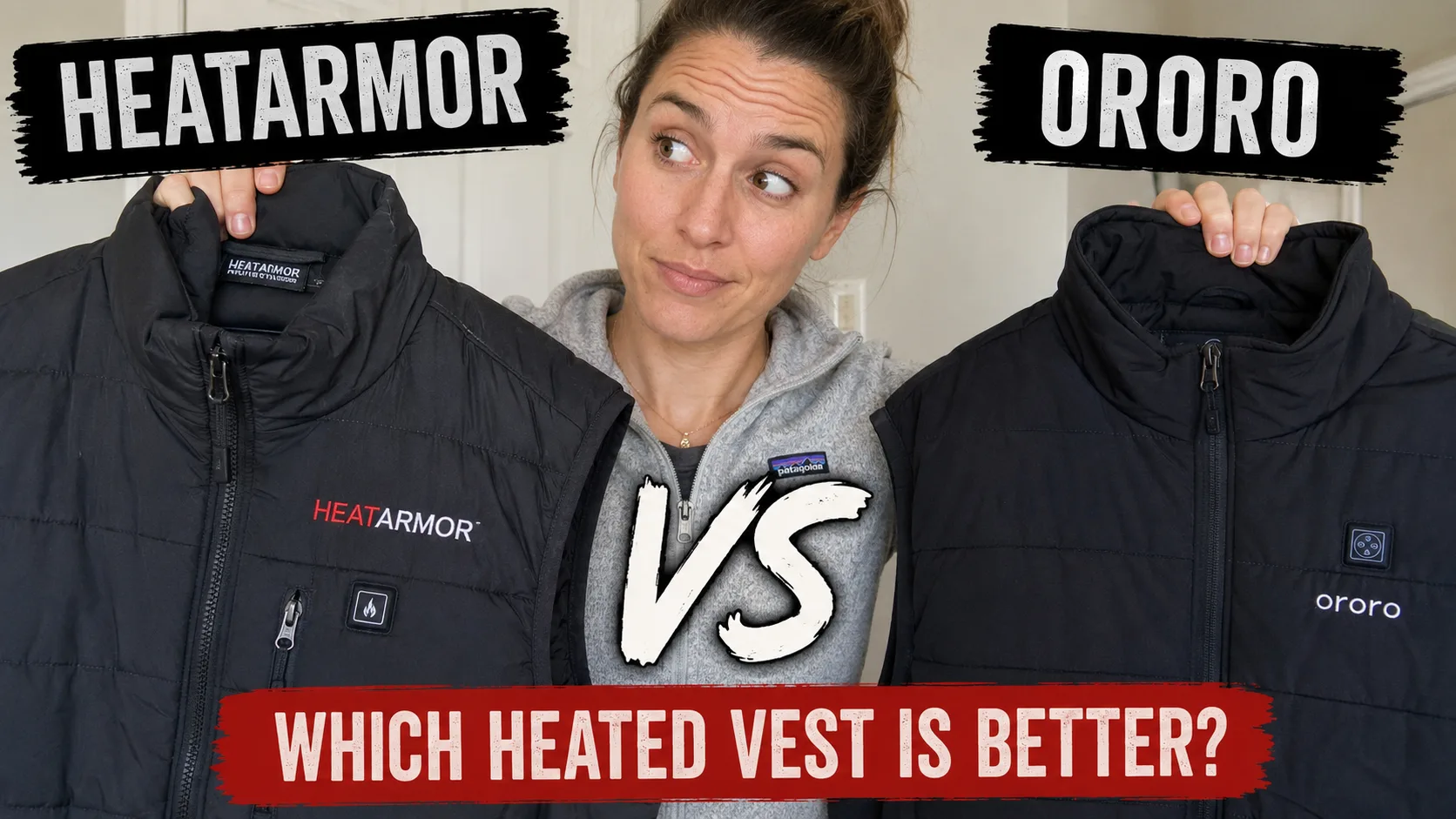
I tested the HeatArmor heated vest for 3 weeks and the Ororo Lightweight Heated Vest for another 3 weeks through the same winter conditions. Same temperatures, same layering, same commute. The goal was simple: find out which one actually earns your money.
Both vests heat your core. Both use carbon fiber heating elements. Both claim all-day battery. But the details are different, and those details matter when you’re standing at a bus stop in 28°F weather wondering why your back is cold.
Here’s the full comparison.
Quick Verdict
Ororo wins for most people. The included battery, heated collar, and phone charging capability justify the higher price if you plan to use a heated vest regularly. HeatArmor wins on raw price and has more heating zones, but the missing battery and shorter battery life on high make it the budget pick, not the best pick.
| HeatArmor | Ororo Lightweight | |
|---|---|---|
| Price | ~$60 (promo) | ~$160 |
| Battery included | No | Yes |
| Heating zones | 5 | 4 (incl. collar) |
| Battery life (low) | ~7.5hr | ~10hr |
| Battery life (high) | ~3.2hr | ~3.5hr |
| Weight | ~1.5 lbs | ~1.2 lbs |
| Heated collar | No | Yes |
| Phone charging | No | Yes (battery doubles as power bank) |
| Machine washable | Yes | Yes |
| Sizes | S-XXXL | XS-XXL |
Heating Performance
Both vests heat up fast. I timed the HeatArmor at 2.8 seconds to initial warmth. Ororo was slightly slower at about 4 seconds, but the heated collar kicks in almost immediately and makes the whole vest feel warmer than the spec sheet suggests.
HeatArmor’s five zones cover more surface area. The chest, back, and neck regions all get targeted warmth. Ororo’s four zones are slightly less coverage, but the collar zone is the differentiator, cutting heat loss from your neck significantly, which makes the whole vest feel warmer even with fewer total zones.
In practice at 28°F with a base layer, both kept my core comfortable. The Ororo felt warmer overall because of the collar. The HeatArmor felt more evenly heated across the back. Neither is enough for extreme cold without a shell layer.
Battery Life: The Real Numbers
This is where the comparison gets interesting. I tracked runtime on each setting with a stopwatch in actual winter conditions.
| Setting | HeatArmor | Ororo |
|---|---|---|
| High | 3.2 hours | 3.5 hours |
| Medium | 5.8 hours | 7.5 hours |
| Low | 7.5 hours | 10 hours |
Ororo wins on every setting. The gap is smallest on high (both around 3.5 hours) and widest on low (2.5 hours difference). Cold weather cuts both by roughly 10-15%.
The bigger difference is what happens when the battery dies. Ororo’s included battery doubles as a phone charger, so you can top up your phone while you warm up. HeatArmor’s separate power bank doesn’t have that feature unless you buy a specific model. And since HeatArmor’s battery isn’t included, you’re carrying a separate device that adds to the real cost.
Build Quality and Comfort
Ororo feels like a $160 vest. The nylon shell is water-resistant and handles light rain without issue. The stitching is clean, the zippers are solid, and the interior lining is soft enough to wear against a base layer. At 1.2 pounds, it layers easily without adding bulk. If you’re comparing it to other heated outerwear, the best heated vests of 2026 ranks the full field.
HeatArmor feels like a $60 vest. The shell is synthetic and water-resistant, the stitching is acceptable, and the zippers work but aren’t premium. At 1.5 pounds with a battery, it’s slightly heavier. The control button requires multiple presses to cycle through settings, which gets annoying when you’re wearing gloves.
Both are machine washable after removing the battery. I ran each through three wash cycles with no issues.
Where Each One Wins
HeatArmor wins on:
- Price (roughly $100 less at promo)
- Number of heating zones (5 vs 4)
- Sizing range (S-XXXL vs XS-XXL)
Ororo wins on:
- Included battery (no separate purchase needed)
- Battery life on every setting
- Heated collar (HeatArmor doesn’t have one)
- Phone charging capability
- Build quality and materials
- Weight (1.2 lbs vs 1.5 lbs)
Who Should Buy Which
If you’re still unsure which heated vest fits your situation, the complete guide to choosing a heated vest walks through the decision factors beyond just these two brands.
Buy HeatArmor if:
- You want a heated vest for occasional use, not daily wear
- You already own a compatible USB power bank
- Budget matters more than build polish
- You need extended sizes (up to XXXL)
Buy Ororo if:
- You want a heated vest for regular daily use
- You want the battery included without extra purchases
- A heated collar matters to you (it should, it makes a real difference)
- You want your vest battery to double as a phone charger
For the full HeatArmor breakdown, read the complete HeatArmor review.
Frequently Asked Questions
Is HeatArmor or Ororo better?
How does HeatArmor battery life compare to Ororo?
Can I use any power bank with HeatArmor?
Which heated vest has more heating zones?
Are heated vests safe to wear?
What makes a smart gadget worth buying in 2026?
How long do smart gadgets typically last before needing replacement?
Are expensive smart gadgets always better than budget alternatives?
More Wearable Tech Articles



Related Product Reviews

Jordan Rivera
Wearable tech reviewer and fitness technology analyst. Tests smartwatches, fitness trackers, and audio gear daily. Background in sports science helps evaluate health features with expertise.
Affiliate disclosure:This article contains affiliate links. If you buy through them, GearPuff may earn a commission at no extra cost to you. It keeps our testing independent and our reviews free.