
In This Article
- TL;DR
- 5 Big Tire Inflators Compared
- How I Tested Volume Instead of Trusting Listings
- Why CFM Beats PSI for Big Tires
- 1. VIAIR 400P, Around $226
- 2. Smittybilt 2781, Around $177 to $230
- 3. VIAIR 88P, Around $90
- 4. Fanttik X8 Apex, Around $60 to $90 on Sale
- 5. Airmoto, Around $89
- Trailer Tires Play by Stricter Rules
- Noise, Neighbors, and Early Mornings
- Sizing Guide: Match Your Tire to the Tier
- Verdict
A pocket pump that tops off a Civic in 3 minutes can take 15 minutes per tire on an F-150 and quit from heat before the job ends. I learned the volume math the embarrassing way, watching a thermal cutoff blink at me beside a half filled 33 inch tire. Big tires do not need more pressure. They need more air, and only displacement delivers it. My best portable inflators roundup covers every tier, while this guide ranks the five units that actually finish truck, SUV, and trailer jobs.
TL;DR
- A 35 inch truck tire holds several times the air of a sedan tire. Small pistons cannot keep up.
- You need 2.5 CFM or higher for trucks and trailers. Pocket pumps move around 1 CFM.
- The VIAIR 400P is the best overall big tire pick. The Smittybilt 2781 moves the most air per dollar.
- The VIAIR 88P covers SUVs and crossovers. Pocket pumps are emergency top off only on big tires.
- Run the engine for every big fill. Voltage sag plus huge volume equals dead batteries and slow pumps.
5 Big Tire Inflators Compared
| Inflator | Airflow | Max PSI | Realistic big tire job | Around |
|---|---|---|---|---|
| VIAIR 400P | 2.3 CFM | 150 | Trucks, trailers, RVs, 30 min runs | $226 |
| Smittybilt 2781 | 5.65 CFM | 150 | Fastest fills, off road air-ups | $177 to $230 |
| VIAIR 88P | 1.47 CFM | 120 | SUVs, crossovers, all four | $90 |
| Fanttik X8 Apex | ~1 CFM class | 150 | Car top offs, SUV emergency only | $60 to $90 |
| Airmoto | ~1 CFM class | 120 | Car top offs, truck emergency only | $89 |
CFM decides this table, not PSI ceilings. Every unit here reaches adequate pressure. Only the top three move enough volume to finish big tires inside their duty ratings. The bottom two earn their rows through honesty about their limits, not capability.
How I Tested Volume Instead of Trusting Listings
CFM figures get measured under generous conditions, so I tested with a stopwatch and a big tire. Each unit filled the same 33 inch all terrain from 20 to 35 PSI starting cold, engine running for the clamp units. I timed the fill, felt the hose, and recorded every slowdown. Then each unit topped off four SUV tires from 30 to 35 to simulate the realistic maintenance job.
The results split cleanly. The 400P finished the big fill in about 6 minutes, warm but comfortable. The Smittybilt did it in about 4 minutes, loud and proud. The 88P needed 11 minutes with a heat pause I chose rather than one it forced. The Fanttik tripped thermal cutoff at 31 PSI and needed 12 minutes before finishing. The Airmoto tripped twice and took 25 minutes total. My workload testing method with full numbers is documented in the duty cycle guide, where pocket pump limits get the full treatment.
A 35 inch all terrain tire encloses roughly three times the air volume of a compact sedan tire at the same pressure. That multiplier is the entire reason CFM matters more than PSI for trucks. Pressure is the target, volume is the workload.
Why CFM Beats PSI for Big Tires
Shoppers compare PSI ceilings because the number is printed biggest. For trucks that is backwards. Nearly every pump here reaches 120 PSI, far above any truck target. The difference is how many cubic feet per minute each pushes through the hose. A 5.65 CFM compressor finishes a tire in roughly a fifth the time of a 1 CFM pocket pump, which means a fifth of the heat buildup and zero cutoff drama.
Duty cycle follows the same logic. Big clamp units publish 25 to 33 percent duty at 100 PSI, meaning 15 to 30 minutes of continuous work per hour. Pocket pumps publish nothing and survive about 10 minutes. Match the workload to the rating and heat never enters the story.
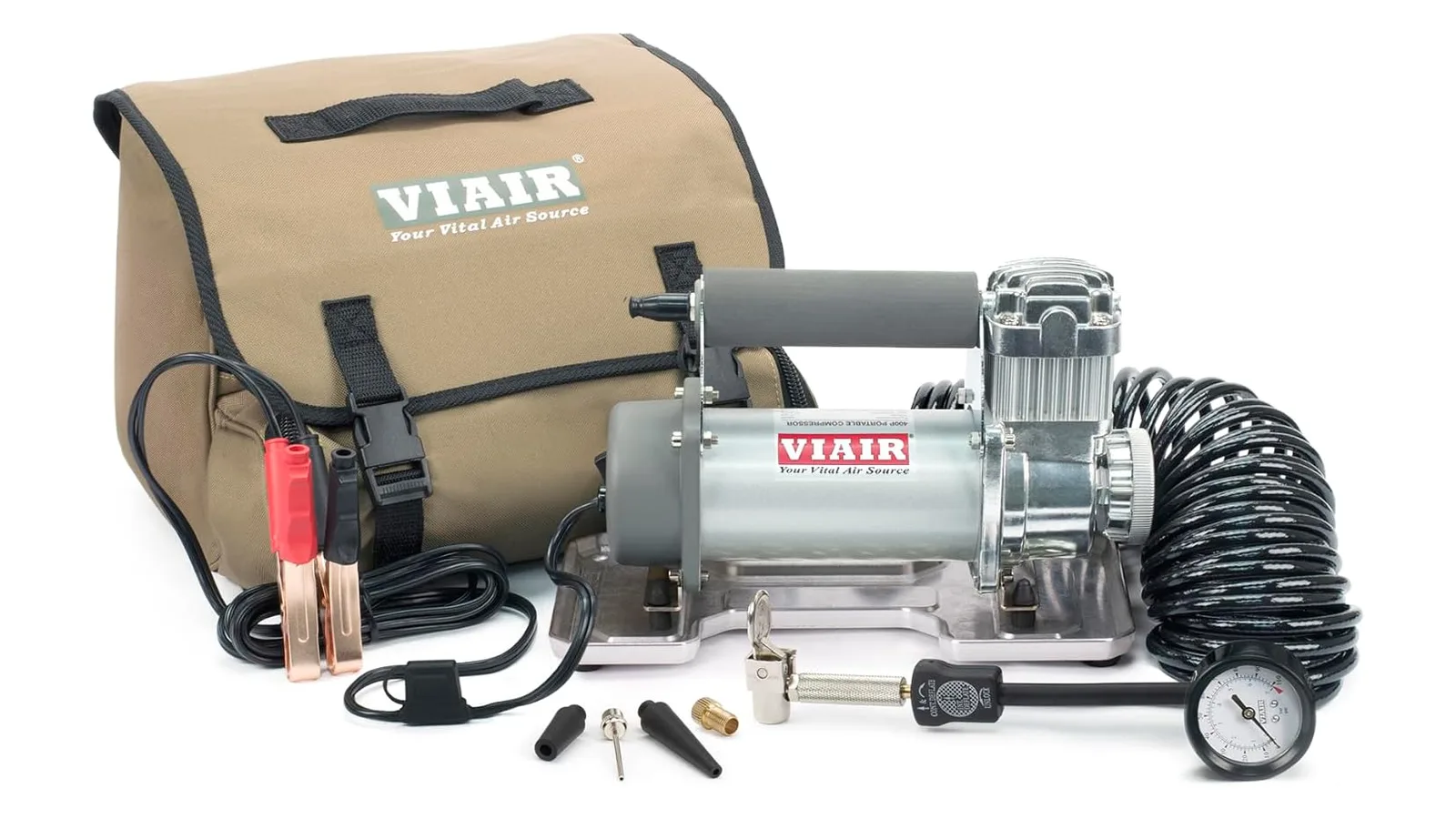
1. VIAIR 400P, Around $226
Why it earns the best overall spot: the right blend of airflow, pressure ceiling, duty envelope, and proven reliability for everything short of commercial rigs.
The 400P is the default answer on every truck forum for a reason. Rated 4.7 across more than 1,600 owner ratings at last check, its battery clamps feed a motor that sustains 2.3 CFM, the 150 PSI ceiling covers trailer tires most pumps cannot touch, and the 40 minute runtime rating swallows multi-tire jobs whole. It carries a 45 foot total reach with its hose and power cord combined, so one parking position serves a truck and trailer together. The price stings after $89 pocket pumps, and it is loud enough that neighbors notice dawn fills. For truck, SUV, trailer, and RV owners, it is the last inflator purchase for a decade.
2. Smittybilt 2781, Around $177 to $230
Why it earns the maximum airflow spot: 5.65 CFM moves more air per dollar than anything in this comparison, making it the off road air-up king.
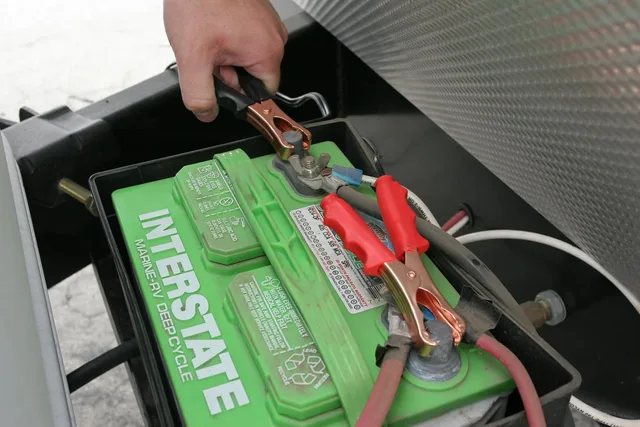
Coming off the trail at 15 PSI per tire is where the Smittybilt earns its keep. Four 35s back to street pressure in the time pocket pumps finish one, without breaking stride. The 72 quart per minute output figure translates to real speed you feel immediately. Tradeoffs are size, noise, and thirst: it is the biggest unit here, the loudest, and draws up to 45 amps, so the engine runs and the clamps go on clean terminals. Prices swing with sales, and stock comes and goes, so check availability before planning around it. For aired-down off roaders, nothing else is close.
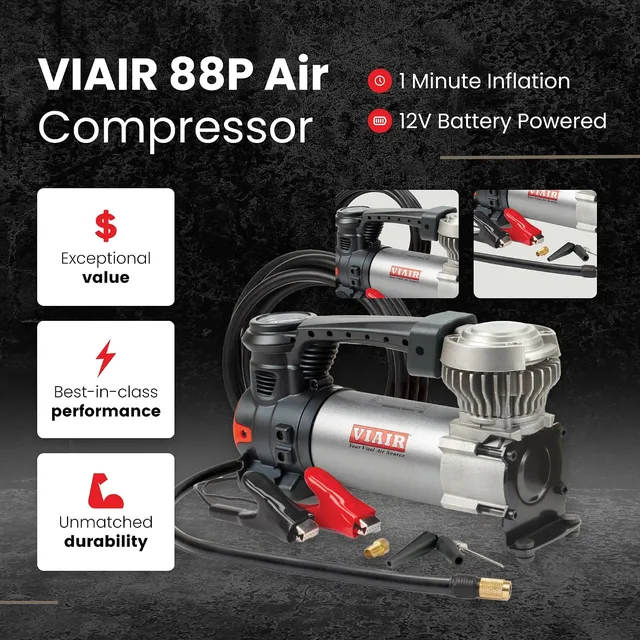
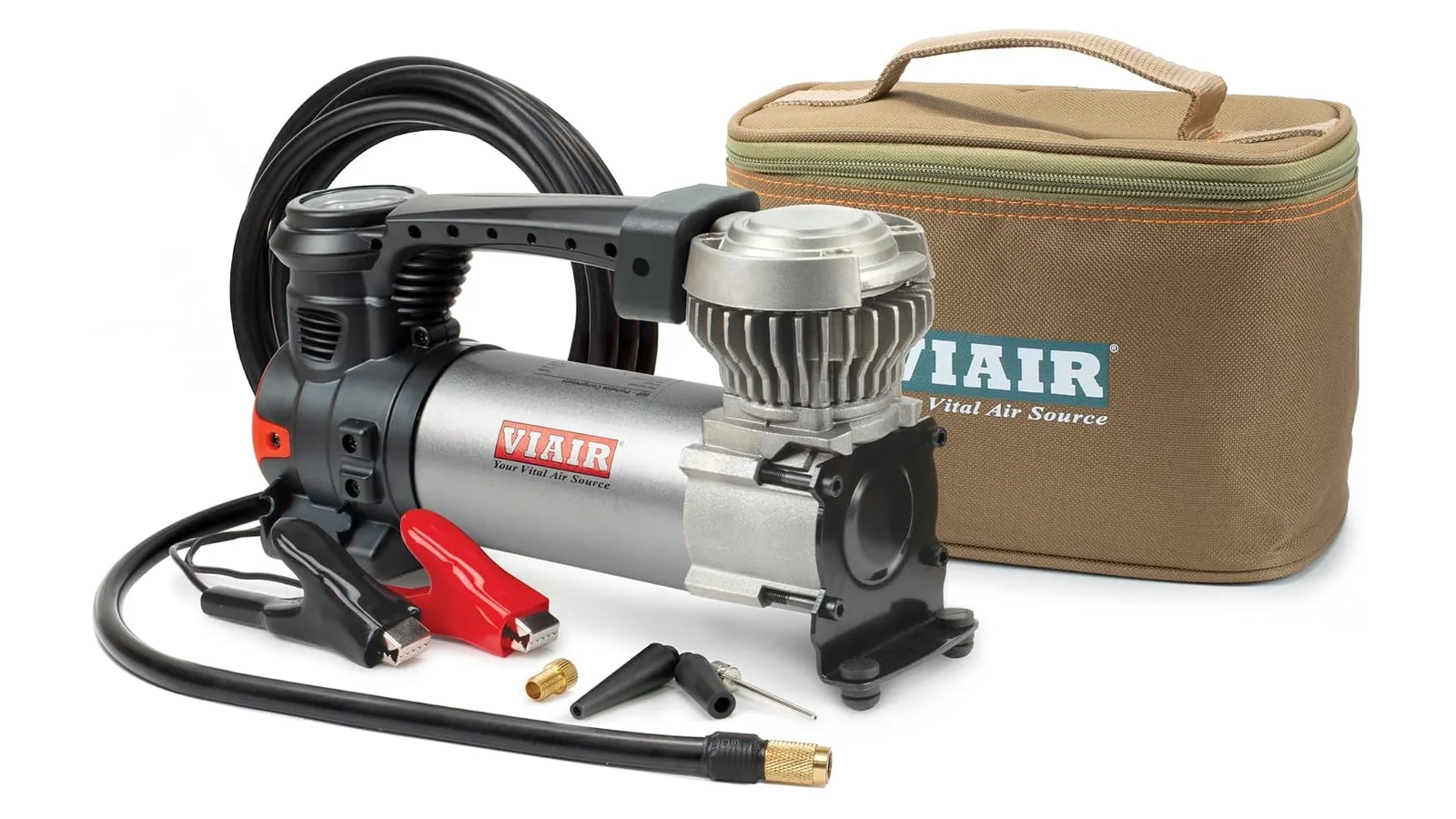
3. VIAIR 88P, Around $90
Why it earns the SUV and crossover spot: enough airflow for mid-size tires at a third of the big unit price, with the same clamp reliability.
Most SUV owners do not need the 400P. The 88P’s 1.47 CFM fills standard SUV and crossover tires in a few minutes each, does all four back to back, and costs around $90. The 120 PSI ceiling covers every passenger tire target with margin. It draws a modest 20 amps through fused alligator clamps, safe on any car with the engine running. Step up only for 33 inch plus tires, heavy towing, or trailer duty. My power type comparison crowns this same unit overall winner for car owners, and the logic holds one tier up.
4. Fanttik X8 Apex, Around $60 to $90 on Sale
Why it earns the honest cordless spot: the strongest pocket class pump for car duty, listed here to mark exactly where cordless stops coping.
Include this one for expectations, not truck fills. The X8 Apex is genuinely the best cordless top off tool I have tested, faster and cooler per tire than pocket minis. On SUV tires it manages small corrections acceptably. On 33 inch rubber from low pressure it overheats, exactly as physics predicts. Buy it as your daily driver pump for cars and keep a clamp unit for the truck. Sale prices in the low $60s make that two pump garage cheap to build.
5. Airmoto, Around $89
Why it earns the emergency only spot on this list: every truck owner should know what their pocket pump can and cannot do when it is the only tool at hand.
The Airmoto can add a few PSI to a truck tire to reach a gas station. Set the target, expect slow progress, rest it every 5 minutes, and confirm with a gauge since heat skews its display upward. That honest emergency role beats a flat spare situation. It is not a truck tire solution and pretending otherwise melts pumps. Keep it in the truck as the backup, not the plan. Full behavior notes are in my Airmoto review.
Trailer Tires Play by Stricter Rules
Trailer tires deserve their own paragraph because the stakes differ. A tow vehicle with a soft tire handles badly. A trailer with a soft tire overheats at highway speed and blows, often damaging the fender and anything nearby. Trailer placards usually specify pressures near the tire maximum, 50 to 65 PSI being common, and those numbers assume cold checks before every tow.
The routine is simple and non negotiable. Check all trailer tires cold before every trip, not monthly. Carry the clamp compressor in the tow vehicle, since trailer spares and gas station hoses are often missing when you need them. Set pressures to the placard, not to what looks right. Underinflation is the leading cause of trailer blowouts, and a $90 compressor prevents a $900 roadside repair plus a ruined weekend.
Noise, Neighbors, and Early Mornings
Big compressors are loud, and honesty requires saying so. The Smittybilt at full song carries across a quiet street, and the 400P announces itself too. Pocket pumps hum politely by comparison. If you leave for work at 5 AM in a dense neighborhood, the cordless pump topping off in near silence is genuinely the better tool for small corrections.
For planned big fills, noise management is easy. Work midday, close the garage door to muffle the sound, and warn nobody because a 6 minute job ends before it annoys. Never run a gas engine in a closed garage for compressor power, since carbon monoxide builds faster than the job finishes. Driveway air with the door open is the safe routine.
Sizing Guide: Match Your Tire to the Tier
- Compact and midsize cars: any pocket pump. Volume is small and fills are quick.
- Crossovers and mid-size SUVs: 88P for comfort, strong cordless acceptable for top offs.
- Full-size SUVs and half-ton trucks: 88P minimum, 400P if tires exceed 33 inches.
- Heavy duty trucks and trailers: 400P or Smittybilt. High pressures plus big volumes demand both.
- Aired-down off road rigs: Smittybilt first, 400P second. Speed matters when four tires wait.
When trailer pressures confuse you, my tire size and vehicle matching guide walks through placards and load ratings with examples.
Verdict
Buy airflow, not PSI. The VIAIR 400P at around $226 is the best all around answer for trucks, trailers, and big SUVs, with the Smittybilt 2781 winning pure speed per dollar for off road use. SUV-only drivers save $130 with the 88P and lose nothing that matters. Pocket pumps stay in the truck as emergency backups with honest expectations. Size the pump to the tire and heat stops being part of the story.
Tall sidewalls are a volume problem with a volume answer. Now you know the numbers behind it.
Common Questions & Answers
Q: Can I use a portable tire inflator on truck tires?
For small top offs of a few PSI, yes in a pinch. For real fills, no. A 35 inch truck tire holds several times the air of a sedan tire, so a pocket pump needs 10 to 15 minutes per tire and usually overheats before finishing. Truck owners need a high CFM 12V compressor with battery clamps, such as the VIAIR 400P, which moves enough air to finish big tires inside its duty rating.
Q: What CFM do I need for truck tires?
Look for 2.5 CFM or higher for full-size trucks and SUVs. Pocket pumps move around 1 CFM or less, which is why they crawl on big tires. The VIAIR 88P delivers about 1.47 CFM and handles SUVs fine, while the 400P pushes 2.3 CFM and covers trucks and trailers. Higher CFM means shorter runs, less heat, and finishes instead of thermal cutoffs.
Q: What PSI do truck tires need?
Check the door jamb sticker first, exactly like cars. Many half-ton trucks list 35 to 40 PSI empty and higher when loaded or towing, while heavy duty trucks can specify 60 to 80 PSI in the rear. The sidewall maximum is a safety ceiling, not a target. Trailer tires often run at their maximum listed pressure, so read the trailer placard rather than guessing.
Q: Why does my inflator take so long on SUV tires?
Air volume, not pressure. An SUV tire at the same 35 PSI as a sedan holds considerably more cubic feet of air, so a small piston needs many more strokes. A 3 minute sedan fill becomes an 8 to 12 minute SUV fill on a pocket pump, and heat builds the whole time. A bigger piston finishes before heat becomes the story.
Q: Is the VIAIR 88P enough for an SUV?
For most mid-size SUVs and crossovers, yes. Its 1.47 CFM output and 120 PSI ceiling cover standard SUV tires and top offs without drama. Full-size trucks with 33 inch or larger tires, heavy towing loads, and trailer duty all point to the 400P instead. If your SUV wears oversized off road tires, buy the bigger unit.
Q: Can I inflate trailer tires with a portable compressor?
Yes with the right unit. Trailer tires often need 50 to 65 PSI or more, which exceeds comfortable pocket pump territory and demands sustained output. A clamp compressor like the VIAIR 400P with its 150 PSI ceiling handles trailer pressures routinely. Always check trailer tires cold before towing, since heat buildup at highway speed on underinflated trailer tires is a leading blowout cause.
Q: Do I need to run the engine when inflating truck tires?
Absolutely. Big fills draw heavy current for many minutes, which drains a stationary battery fast. A running engine holds voltage near 14 volts for full pump speed and prevents a dead battery surprise on top of low tires. For multi-tire truck jobs, the engine runs the entire time. No exceptions.
Q: How long does it take to fill a truck tire from flat?
With a proper high CFM clamp compressor, roughly 5 to 8 minutes from flat to 35 PSI on a full-size truck tire. With a pocket cordless pump, expect 12 to 18 minutes if it finishes at all, usually with a cooldown break in the middle. Those numbers assume a healthy pump at moderate ambient temperature. Cold thick air and a weak battery stretch both.
More Smart Gadgets Articles
Related Product Reviews



Consumer electronics reviewer specializing in smart gadgets and everyday tech. Tests 100+ gadgets annually. Previously wrote for The Verge and Wired. Focus on practical daily-use value.