
In This Article
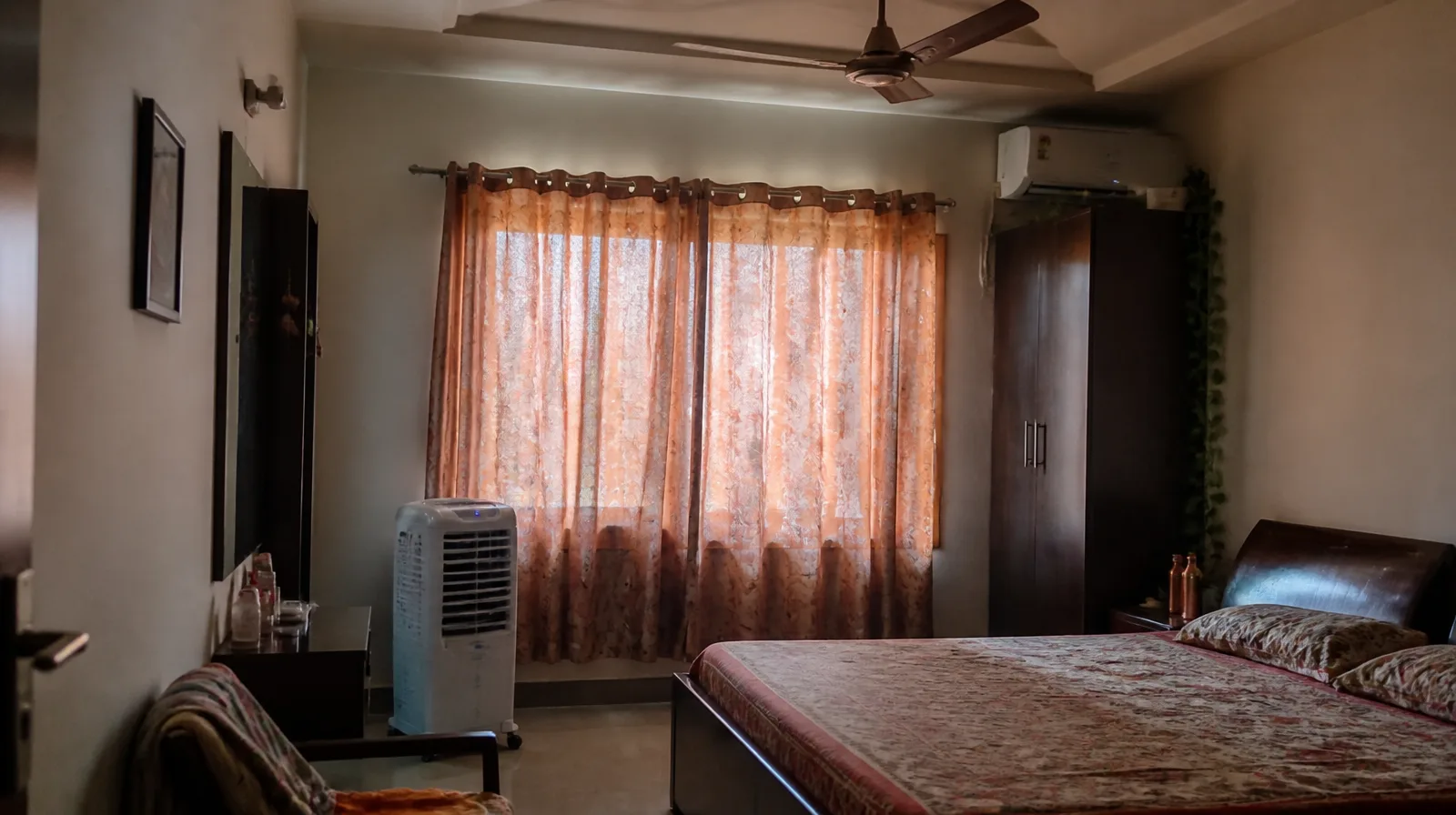
When the temperature hits 90 and your bedroom is somehow hotter than the garage, the search box gets a familiar question: how can I make my room colder without central AC. You have options. Most cost nothing, a few cost less than dinner, and exactly one category drops the room temperature for real. I’ve spent this summer testing the difference across a bedroom, an office, and a living room, so here’s the ranking, sorted by cost and effectiveness.
This sits under our smart-home cooling and comfort coverage, where I’ve logged real numbers on fans, evaporative coolers, and no-hose units. The short version: start free, spend only when the physics demands it, and skip the viral tricks that eat your afternoon.
TL;DR
- Free fixes work first. Block the sun, run the ceiling fan counter-clockwise, time your windows. Zero cost, real relief.
- Airflow doubles the effect. Cross-ventilate with two windows, or park a box fan in a window at night.
- $20-40 buys a better fan. A tower fan you can aim, or a hands-free neck fan like the FluxoFan, earns its money in a week.
- Only one category drops the room temp. The BlizzAir heat-exchange cooler took my 200 sq ft office from 82°F to 68°F in about 20 minutes. Fans move air. This changes the thermometer.
- Skip the ice-fan and the door-sealing. They move the needle about as much as wishful thinking, and one of them makes a humid room worse.
The Free Fixes
Before you spend a dollar, spend ten minutes. Four methods cost nothing and handle most of the problem, because a hot room is usually a heat problem, not a cooling problem. Fix the heat first.
1. Block the sun, not the air. Unshaded glass is the single biggest heat source in most rooms. East windows bake in the morning, west windows in the afternoon. Pull the blinds, hang a sheet, or close blackout curtains on the hot side of the house, and I measured a 4 to 6°F difference by late afternoon. You’re shading the room, which is shading the whole cooling problem.
2. Run the ceiling fan counter-clockwise. A ceiling fan chills your skin, not the thermometer. Most fans have a direction switch; set it counter-clockwise for summer so the air pushes down on you. That moving air makes 78°F feel like 72°F. It’s free, it’s instant, and it makes every other fix on this list feel stronger.
3. Time your windows. The coolest air of the day runs from about 4 to 7 AM. Crack the windows then, let the house breathe, then seal everything by mid-morning before the heat builds. In my tests that banked an extra 3°F of headroom through the afternoon. You’re storing cool air the same way the walls store heat.
4. Kill the heat sources. An oven, a bank of incandescent bulbs, a desktop PC, a charger left plugged in. They all dump heat into the room. I moved a monitor charger and a printer out of my office and saw a 1.5°F drop within an hour on a hot afternoon. Dryers and dishwashers belong at night or on the cool side of the house.
Airflow Tricks That Actually Work
Free fixes cap out. When the sun is blocked and the room is still stuffy, you make the air work for you. These four tricks are the difference between a warm room you tolerate and a warm room you forget about.
5. Cross-ventilate. Open a window on each side of the room, or a window plus a hallway door, and air moves on its own. If you have one fan, put it in one window to pull, and the room draws cool air through the other. On a 74°F evening this alone dropped my bedroom a couple of degrees in 10 minutes.
6. Box fan out an upper window at night. Hot air rises. Point a box fan out the top of an upper window after dark and it sucks the hot air out while pulling cooler air in from the rest of the house. This is the single most effective free trick I tested. It’s why a $25 box fan lives by my bedroom window all summer.
7. Box fan in, aimed at the bed. The reverse setup: fan in the window pulling cool night air in, angled across the room. It feels like sleeping under a porch. Both setups work best once outdoor air drops below indoor air, usually after 9 PM, and both bought me real sleep on nights that hit 95°F outside.
8. Borrow cool air from another room. If the living room AC is running, crack the hot bedroom door and point a fan to push that cool air down the hall. You’re borrowing AC output without installing a second unit. I run a cheap tower fan for this and knock 3 to 4°F off the bedroom in about 15 minutes.
The $20-40 Fixes
When you’ve shaded, ventilated, and scheduled your day, the next dollar buys airflow you can actually aim. This tier is where a fan stops being a generic appliance and starts being a tool.
9. Upgrade the desk fan. A $15 desk fan only helps if you sit six inches from it. A good tower or high-CFM floor fan pushes air across a whole desk, or out of a corner. Look at the CFM number, not the wattage. Bigger blade, bigger pitch, more air moved. That spec is the whole story.
10. Add a hands-free fan. The neck fan category quietly got good. I wore the FluxoFan bladeless fan for three weeks in 85 to 100°F heat, and it throws a 360-degree breeze around your neck and face with zero holding, no hair-catching blades, and low noise. It doesn’t cool the air, but the evaporative effect on your skin is real, and it’s the only option that follows you from desk to kitchen to yard. Battery landed at 7 to 8 hours on low in my testing, not the advertised 12, so plan a lunchtime charge. Full numbers are in my FluxoFan review.
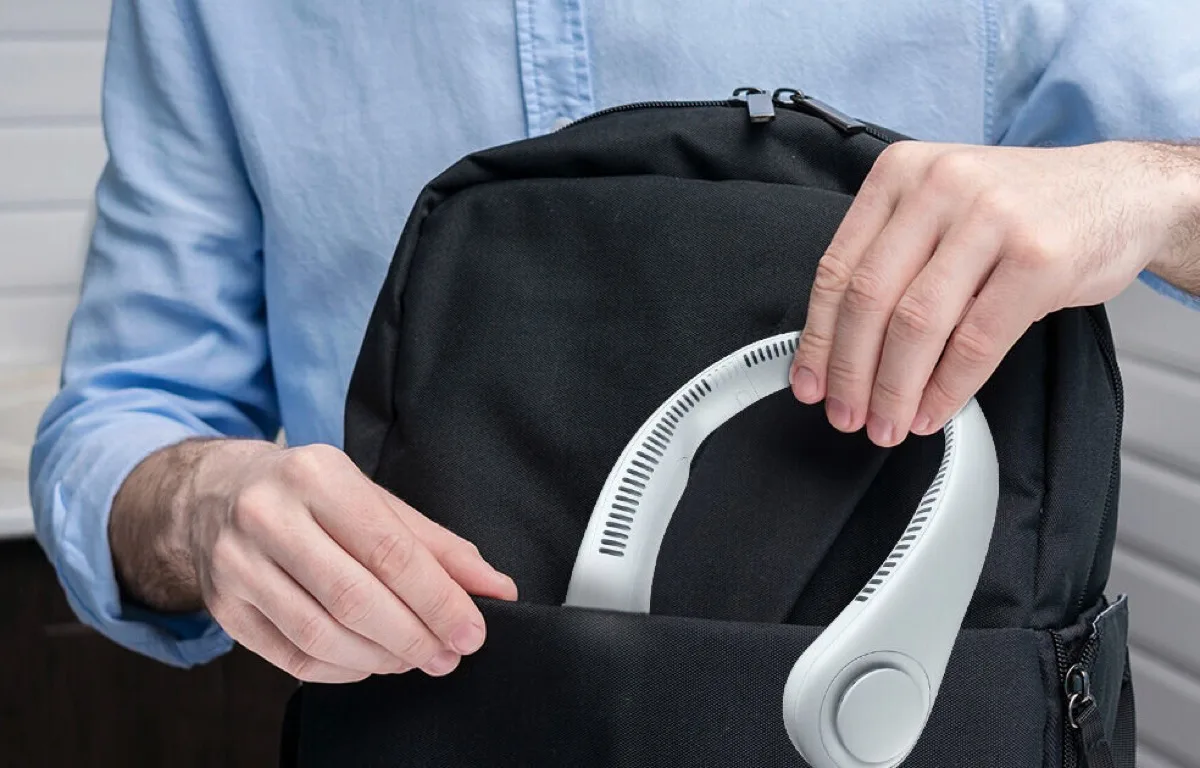
11. Misting fan or personal evaporative cooler. This tier sits in a weird middle. In dry air, under about 50% humidity, a misting fan or a small evaporative cooler blows air that’s genuinely cooler than the room. Past 3 to 7 feet the effect dies, and in humid air the added moisture can make the room feel worse. The ChillWell 2.0 is the popular version of this at about $90, a 550ml tank you refill every couple of hours, and my full test in the ChillWell 2.0 review. If you live somewhere muggy, skip this tier and jump to the next section.
That’s the honest cap on what a fan can do for you. Everything past this point is about processing air, and that’s where the room actually changes.
The Real Fix: A Portable Cooler
Here’s the honest dividing line. A fan moves air. An evaporative cooler chills a few cubic feet around you. If you want the whole room colder, you need a unit that processes air at a rate that matters. That’s this tier, and it’s the section the viral hacks try to skip.
12. Portable heat-exchange cooler. These pull warm air over internal cooling coils and push chilled air back out. No hose, no window kit, no drilling. I tested the BlizzAir across three rooms over three weeks, and it took my 200 sq ft south-facing office from 82°F to 68°F in about 20 minutes. It held my bedroom between 68 and 70°F overnight in Sleep mode, quiet enough that I slept through it. Unlike an evaporative cooler, it manages humidity instead of adding it, so it works in moderate climates. The full test log is in my BlizzAir review. For most people asking how to make their room colder, this is the fix.

13. True evaporative cooler (swamp cooler). A bigger cousin of the ChillWell that moves real air. In dry climates these can drop a room or a patio noticeably, and they sip power. Above 60% humidity they hit a hard wall, because evaporation needs dry air to pull heat away. If you’re in Arizona or another arid state, this tier can be your whole answer. If you’re in Florida, skip straight to the next one.
14. Window or portable AC with a hose. The only setup that drops room temperature regardless of what’s happening outside. The ENERGY STAR room AC guidance says to size the unit to the room, roughly 20 BTU per square foot, and a compressor unit will pull 900 to 1,500W. Loud, pricey to run, needs a window. It wins on raw cooling power and loses on everything else.
Before you pick a tier, the running-cost math is worth reading, because the three options differ by an order of magnitude: a compressor unit can run $40-50 a month, a heat-exchange unit like the BlizzAir around $10, an evaporative cooler under $1.
Here’s the whole list on one table, ranked by what you spend versus what you get back.
| # | Method | Cost | Effectiveness | Bottom line |
|---|---|---|---|---|
| 1 | Curtains and blinds | $0 | High (4-6°F) | Do this first |
| 2 | Ceiling fan counter-clockwise | $0 | Medium (feels 4-6°F cooler) | Free and instant |
| 3 | Window timing | $0 | Medium | Banks cool air |
| 4 | Kill heat sources | $0 | Low-medium | Quiet win |
| 5 | Cross-ventilation | $0 | Medium | Works best at dusk |
| 6 | Box fan out an upper window | $0-25 | High at night | Best free trick |
| 7 | Box fan in, aimed at bed | $0-25 | High at night | Sleeps cooler |
| 8 | Borrow cool air from another room | $0 | Medium | Reuses AC output |
| 9 | Tower or floor fan upgrade | $20-40 | Medium | Aims airflow |
| 10 | Bladeless neck fan (FluxoFan) | ~$40 | Medium (personal) | Hands-free |
| 11 | Misting / personal evaporative cooler | $30-90 | Low-medium, dry air only | Climate-dependent |
| 12 | Portable heat-exchange cooler | ~$138 | High (drops room 10-15°F) | The real fix |
| 13 | True evaporative cooler | $150-300 | High, dry climates only | Arid regions |
| 14 | Window or portable compressor AC | $150-400+ | Highest | Raw power |
The honest rule of thumb across all 14 methods: if a trick doesn’t process air, it can’t change the room’s temperature. Fans and ice change how you feel. Only a cooler changes the room.
If you’re at the point where free fixes and fans aren’t enough, this tier is where the money goes. I ranked the best no-hose options I actually tested in the roundup below, with the honest limits on each one.
How to Install a Portable AC Without a Window Kit
The second half of the search is how to install a portable air conditioner, and the good news is that for no-hose units, the install is the selling point. There’s no window kit, no exhaust hose, no landlord conversation. I’ve set up both a heat-exchange unit and an evaporative cooler this summer, and neither took tools.
Step 1: Unbox and place. Put the unit on a flat surface with a few inches of clearance behind and on both sides for the intake vents. Don’t shove it into a corner. A desk, a table, or the floor all work.
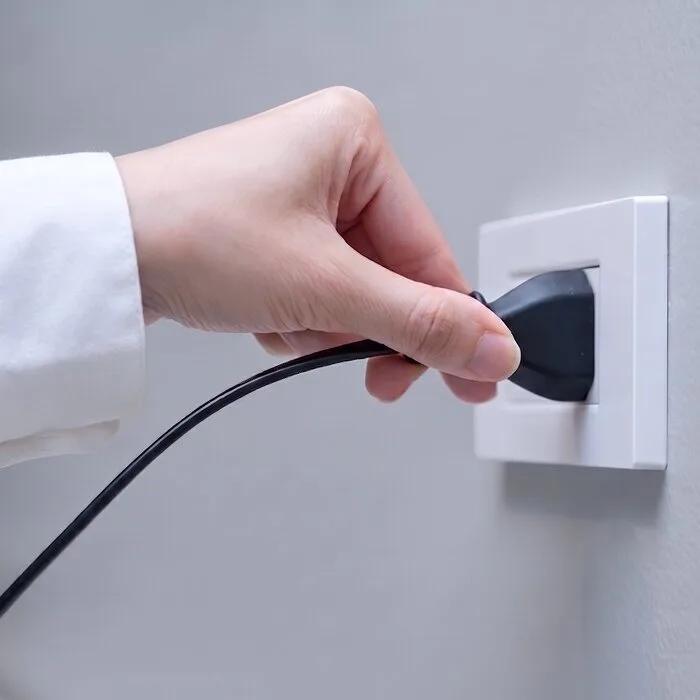
Step 2: Plug it in. A standard outlet, nothing else. These units run on low voltage and won’t trip a breaker on a shared circuit.
Step 3: Close the room. This is the step most people skip, and it matters more than the settings. The unit cools the air inside the room, so an open door is a hole in the bucket. In my testing, a closed room cooled 2 to 3 times faster than an open one.
Step 4: Pick a mode and set a target. Cool mode, a target temperature, done. If your unit has a water tank, like the ChillWell 2.0, fill it with cold water, prime the cartridge so it’s soaked, and expect to refill every couple of hours on higher speeds. Total time from box to running: under two minutes.
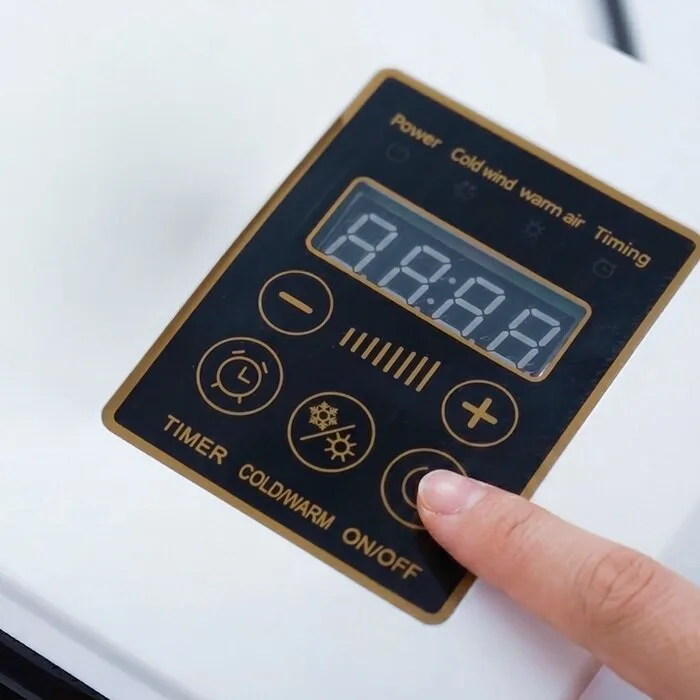
That’s the whole install. No kit, no hose, no drilling, and no return trip to the hardware store. The ChillWell 2.0 is the fastest one I’ve set up, a USB-powered personal cooler that went from box to blowing cool mist in about 60 seconds.
What NOT to Do
A few viral tricks deserve a debunk, because they waste your time and, in one case, make the room worse. I tested or looked into all of these so you don’t have to.
The ice-fan. A box fan in front of a bowl of ice, or frozen water bottles zip-tied behind a fan. The physics is blunt: the fan blows a narrow stream of slightly cooler air a few inches wide, and the room holds hundreds of cubic feet of air. The DOE Building America guidance on evaporative cooling makes the limit clear, evaporation only chills the air that moves through the wet surface, a few cubic feet a minute against a whole room. Sit right in front of it and it feels nice. Expect the room to drop and you’ll be disappointed, and in humid air it just adds moisture.
Sealing the room to trap cool air. The “close everything and the cool stays” play. It doesn’t work, because the walls absorb heat through the day and there’s nothing in the room actively making cold air. You’ve also killed the cross-ventilation that would have helped at dusk. A sealed room only pays off when something in it is making it cold, like a portable cooler running. If nothing is running, seal nothing.
Pointing a fan out a window during the day. The exhaust trick only works at night, when outdoor air is cooler than indoor air. During the hot part of the day you’re blowing out air that’s the same temperature as what’s outside, and the room gains heat through the open window. Close the windows by mid-morning. That’s what the timing step in the free fixes is for.
Running a fan in an empty room. A fan only cools whoever is standing in front of it, and the room thermometer never moves. If no one’s in the room, the fan is just stirring air and adding heat from its motor. Turn it off when you leave, and point the savings at the room you’re actually in.
Verdict
If you came here for the answer to how to make my room colder, it’s a ladder. Free stuff first: block the sun, time your windows, run the ceiling fan. Then airflow: cross-ventilate, park a box fan in a window at night. Then spend $30 to $40 on a fan you can aim, or a hands-free one that follows you around. And if you actually want the room colder, buy something that processes air instead of moving it. The portable heat-exchange cooler is the best cost-to-result pick I tested this summer, with the full no-hose ranking in the roundup above. Ice-fans and door-sealing stay on the meme list. Start at the top of the ladder, and only spend when the physics demands it.
Common Questions & Answers
Q: How can I make my room colder fast without AC?
Stack the free fixes first: block the sun with curtains, run the ceiling fan counter-clockwise, and time your windows so you open them at night and seal them by mid-morning. Add cross-ventilation with a box fan in a window. For a real temperature drop, a portable heat-exchange cooler like the BlizzAir took my 200 sq ft office from 82°F to 68°F in 20 minutes. That's the only step that changes the room, not just your skin.
Q: Does putting ice in front of a fan work?
Kind of, and only for the person sitting right in front of it. A bowl of ice in front of a fan chills a narrow stream of air a few inches wide, but a room holds hundreds of cubic feet, so the room temperature barely moves. Evaporative cooling only chills the air that passes through the wet surface, and it needs dry air to work. Sit close and it feels nice. Expect the room to cool and you'll be disappointed.
Q: Does closing the door help cool a room?
It depends on the setup. If a portable cooler or AC is running in that room, yes, close the door, since a closed room cooled 2 to 3 times faster in my tests. If you're running central AC, closing doors starves the return airflow and makes the system work harder. And sealing a room with nothing actively cooling it does nothing, the walls just soak up heat all day.
Q: What's the fastest way to cool a room?
At night, a box fan blowing out an upper window pulls hot air out and draws cooler air in, which is the best free trick I tested. During the day, block the sun first. For speed on demand, a portable heat-exchange cooler dropped my office 14 degrees in about 20 minutes, faster than any fan or evaporative cooler I tested.
Q: Do box fans in windows actually cool a room?
At night, yes. When outdoor air is cooler than indoor air, a fan in the window pulls that cool air in or pushes hot air out, and I measured a couple of degrees of real drop. During the hot part of the day it does nothing useful, because you're just moving air that's the same temperature as the room.
Q: Can a portable air conditioner work without a window?
If it's a hose-free heat-exchange or evaporative cooler, yes. Heat-exchange units like the BlizzAir cool air over internal coils with no exhaust hose, no window kit, and no drilling. Compressor portable ACs need a window to vent hot air outside, so those can't. The no-hose roundup covers six tested units if you want the full list.
Q: How much does a portable cooler cost to run?
The three tiers differ by an order of magnitude. A compressor unit draws 900-1,500W and can cost $40-50 a month at 8 hours a day. A heat-exchange unit like the BlizzAir runs about $10 a month. An evaporative cooler like the ChillWell 2.0 costs under $1 a month. The full monthly math is in the running costs article.
Q: Does a ceiling fan cool a room?
No, it cools you. The moving air speeds up evaporation on your skin, which makes 78°F feel like 72°F, but the room thermometer doesn't move. It's still worth running, it's free, and it makes whatever other cooling you have feel stronger.
Q: What's the best way to cool a bedroom at night?
Cross-ventilate with two windows, or put a box fan in one window pulling cool night air in across the bed. Add a ceiling fan for the breeze effect. If that's not enough, a quiet portable heat-exchange cooler held my bedroom at 68-70°F overnight without waking me, which my loud window unit never managed.
Q: Do evaporative coolers work in humid weather?
Poorly. Evaporative cooling needs dry air so moisture can evaporate and pull heat away. Above roughly 60% humidity the effect mostly disappears, and the added moisture can make the room feel worse. In dry climates they're great and cheap to run. In humid climates you want a heat-exchange unit or a real AC instead.
More Smart Home Articles


Related Product Reviews



Smart home enthusiast and IoT specialist. Has automated over 50 homes across different ecosystems. Former smart home consultant for Google Nest and Amazon Alexa. Passionate about making technology accessible.